Late Night Retro Television Review: Pacific Blue 4.1 “Glass Houses”


Welcome to Late Night Retro Television Reviews, a feature where we review some of our favorite and least favorite shows of the past! On Tuesdays, I will be reviewing Pacific Blue, a cop show that aired from 1996 to 2000 on the USA Network!  It’s currently streaming everywhere, though I’m watching it on Tubi.

This week, we start season 4!

Episode 4.1 “Glass Houses”

(Dir by Michael Levine, originally aired on July 26th, 1998)

The fourth season of Pacific Blue opens with many changes.

Palermo and Victor have retired.  Cory is now dating Doug Fraser (Owen McKibbin).  At the start of the episode, Cory and Doug accompany TC and Chris to Vegas, where they are married by — you guessed it! — an Elvis impersonator.

TC is now in charge of Pacific Blue and, while Chris and Cory both make plans to take the sergeant’s exam, TC focuses on bringing in some new blood.  At the police academy, he recruits two recent graduates — hyper-competent Jaime Strickland (Amy Hunter) and edgy rebel Russ Granger (Jeff Stearns).  He asks and gets undercover cop Monica Harper (Shanna Moakler) transferred to Pacific Blue so that she can go undercover to break up a meth operation at the local college.  Everyone is shocked when Monica turns out to be young and blonde.  Were they expecting a 40 year-old undercover college student?

Not happy about having to ride a bicycle, Russ decides to insert himself into Monica’s undercover operation.  Monica and Russ meet the two main dealers, Quincy (Joe Michael Burke) and Cherry (Michelle Beauchamp).  They discover that they’re getting their drugs from a chemistry professor (Robin Thomas).  What they don’t do is make an arrest.  Quincy and Cherry murder the professor and escape after setting off a bomb in the chemistry lab.

TC is not happy with his new cops.  In fact, the episode ends with him telling them that he has doubts about whether or not to keep them at Pacific Blue.  Fortunately, we the viewers know that they’ll be okay because they are all now listed in the opening credits.

Also listed in the opening credits is Bobby Cruz (Mario Lopez), the campus cop who drags Monica out of the laboratory right before it explodes.  Bobby has a history.  He was a member of the LAPD but, disgusted by the anti-Mexican racism that he saw, he became a campus cop instead.  (Where I went to college, the campus cops were the biggest joke around.)  TC offers Bobby a chance to be a member of Pacific Blue.  Bobby says that he’ll think about it.  We all know that means yes.

And that’s a good thing because this show could definitely use more Mario Lopez!  In fact, the only reason I started reviewing this stupid series was because I knew Mario would be joining the cast eventually.  Let’s hope Mario’s magic starts to make things better soon!

As for this episode, it was …. well, it wasn’t good.  Other than Lopez, none of the new characters really made much of an impression.  But, I am an optimist.  I have hope.

Never give up hope.

Retro Television Review: Saved By The Bell: The New Class 1.13 “Running the Max”


Welcome to Retro Television Reviews, a feature where we review some of our favorite and least favorite shows of the past!  On Tuesdays, I will be reviewing Saved By The Bell: The New Class, which ran on NBC from 1993 to 2o00.  The show is currently on Prime.

Today, we finish up season one of Saved By The Bell: The New Class.

Episode 1.13 “Running The Max”

(Dir by Don Barnhart, originally aired on December 4th, 1993)

The season one finale of Saved By The Bell: The New Class opens with Scott talking directly the audience.  Hey, that’s something that Scott hasn’t done for a while….

When he goes into his Social Studies class (which is being taught by Mr. Belding because Mr. Tuttle is appearing on Oprah to discuss teachers who overeat), he has to pick a group  to join.  Lindsay says, “Hey, Scott, why don’t you join us?”  She says it as if Scott is still a relatively new acquaintance as opposed to the friend who is always a part of the main group.

Despite having made up with each other several episodes ago, Scott and Tommy D suddenly don’t like each other again.

Vicki suddenly has a crush on Scott again, even though that plotline was abandoned episodes ago.

Weasel suddenly has a crush on Megan, despite the fact that plotline was also abandoned shortly after the first season started.

Oh, and Weasel is again making jokes that sound like they were originally written for Screech.

Watching this episode, it quickly becomes apparent that it was meant to air much earlier in the season but it was instead used as the season finale.  That says a lot about how shoddy the first season of Saved By The Bell: The New Class really was.  The finale was an episode that was originally meant to air when everyone was still getting to know one another.  Vicki’s crush on Scott is a major subplot in this episode, despite the fact that the writers eventually abandoned the idea.  By moving this episode to the end, the show wrecks havoc on its continuity but then again, when has continuity ever mattered at Bayside?

On top of all that, this is a dumb episode.  Three businesses agree to let the students run things for a week.  Who would agree to such a stupid idea?  Scott, Tommy, Megan, Weasel, Vicki, and Lindsay end up running the Max.  The Max appears to be open 24 hours a day so I’d love to know how they’re running the Max and still going to class.  For that matter, how are only six students going to run an entire restaurant?  Anyway, long story short: Scott is a bad boss, everyone quits except for Weasel (so, do they all fail the class?), but then they change their mind after they hear that Scott feels bad about his behavior.  The gang hosts a banquet for the football team.  Tommy comes up with the idea of turning into a Country-and-Western-themed barbecue.  Wait a minute — TOMMY’S ON THE FOOTBALL TEAM!  Why isn’t he at the banquet?

This was a dumb ending to a dumb season.  Half of the cast was fired at the end of season one.  Robert Sutherland Telfer, Isaac Lidsky, and Bonnie Russavage would not return as Scott, Weasel, and Vicki for season two.  (Indeed, none of their character would ever be mentioned again, despite Tommy D, Lindsay, and Megan still being around.)  I can’t say that I disagree with the decision.  Telfer was miscast as the new Zack Morris.  Russavage never made much of an impression.  (In all fairness, she wasn’t helped by the fact that the show’s writers didn’t really seem to know what to do with Vicki.)  Lidsky probably did as well as anyone could with the role of Weasel but, from the second season onward, Saved By The Bell didn’t need a new Screech.  New students would take their places and they would be joined by a familiar face.

We’ll start season two next week!

Icarus File No. 27: Con Man (dir by Bruce Caulk)


Originally filmed in 2010 but not released until 2018, Con Man is one of the strangest vanity projects that I’ve ever seen.

Originally entitled Minkow, Con Man tells the story of Barry Minkow.  When Minkow was a teenager, he started a carpet cleaning business and he quickly learned how to both promote himself and how to lie about how much money he was making.  The media ate up the story of the teenager became a millionaire by cleaning carpets.  His father (Mark Hamill) was proud of him.  His mother (Talia Shire) worried that he was moving away from God.  A local mobster (Armand Assante) decided to get involved.  It was eventually discovered that Barry was kiting checks, lying to insurance companies, and massively defrauding both his investors and his employees.  After being busted by the FBI (represented here by James Caan), Barry Minkow was sent to prison.

In the film, teenage Barry Minkow is played by a young, handsome, and charismatic Justin Baldoni.  When Barry gets out of jail, he’s suddenly been transformed into …. well, Barry Minkow.  That’s right.  Barry Minkow plays himself.  Needless to say, Barry Minkow looks nothing like Justin Baldoni.  It’s not just that the two men are different ages.  It’s also that there’s no way to imagine Justin Baldoni transforming into the gargoyle that is Barry Minkow.

In prison, Barry Minkow is converted to Christianity by a prisoner named Peanut (Ving Rhames).  After Minkow serves his sentence, he not only helps the FBI track down other con artists but he becomes the pastor of his local church.  Despite his past, everyone loves and trusts Barry Minkow.  Everyone talks about how charismatic he is, despite the fact that the adult Barry Minkow delivers his lines in a flat monotone and looks like he should be sitting over the entrance of a cathedral.  People who suspect that they’ve been a victim of financial fraud start to come to Barry, asking him for advice.  The always humble Barry is concerned that he’ll let people down but, in the end, even James Caan says that Barry is a great guy.  “I’m doing the work of God!” Barry proclaims.

Yes, the film is fueled by pure ego.  Unfortunately, it took more than ego to pay the bills so Minkow embezzled money from his own church, stole money from his congregation, and resorted to his old track of “clipping” checks to finance the whole thing.  Shortly after the film was completed, Minkow was arrested and sent back to prison.  (A hot mic caught Minkow bragging to James Caan about how he financed the film.  After his arrest, Minkow denied he had ever said that and dared anyone with proof to turn it over.  The film’s director proceeded to do just that.  Barry Minkow was not only a criminal.  He was a stupid criminal.)

As for the film, it sat in limbo for eight years.  Eventually, talking head interview with Minkow’s actual victims talking about how much they disliked Barry were sprinkled throughout the film.  (Shortly before Minkow starts playing himself, we hear one of his business partners say that everyone told him not to play himself.)  The original film ended on a triumphant note.  The new film — which was retitled Con Man — ended with real people talking about Barry Minkow going back to jail and casting doubt as to whether or not Barry ever even knew a prisoner named Peanut.

The film is a vanity project and not a very good one.  Minkow is a terrible actor and, just in case we forget that fact, he reminds us by trying to hold the screen opposite James Caan and Ving Rhames.  (Even Elisabeth Rohm manages to outact him.)  As bad as the film is, the story behind it is endlessly fascinating.  Barry Minkow was determined to become a star.  (Spielberg’s Catch Me If You Can was an obvious inspiration.)  Instead, he went back to prison and his vanity project was transformed into a roast.  And it probably couldn’t have happened to a more deserving guy.


Previous Icarus Files:

  1. Cloud Atlas
  2. Maximum Overdrive
  3. Glass
  4. Captive State
  5. Mother!
  6. The Man Who Killed Don Quixote
  7. Last Days
  8. Plan 9 From Outer Space
  9. The Last Movie
  10. 88
  11. The Bonfire of the Vanities
  12. Birdemic
  13. Birdemic 2: The Resurrection 
  14. Last Exit To Brooklyn
  15. Glen or Glenda
  16. The Assassination of Trotsky
  17. Che!
  18. Brewster McCloud
  19. American Traitor: The Trial of Axis Sally
  20. Tough Guys Don’t Dance
  21. Reach Me
  22. Revolution
  23. The Last Tycoon
  24. Express to Terror 
  25. 1941
  26. The Teheran Incident

4 Shots From 4 Films: Special Nico Mastorakis Edition


4 Or More Shots From 4 Or More Films is just what it says it is, 4 shots from 4 of our favorite films. As opposed to the reviews and recaps that we usually post, 4 Shots From 4 Films lets the visuals do the talking!

Today is the 85th birthday of Greek filmmaker, Nico Mastorakis.  And that means that it’s time for….

4 Shots From 4 Nico Mastorakis Films

Island of Death (1975, dir by Nico Mastorakis, DP: Nikos Gardelis)

Death Has Blue Eyes (1976, dir by Nico Mastorakis, DP: Nikos Gardelis)

Blind Date (1984, dir by Nico Mastorakis, DP: Andreas Bellis)

In the Cold of the Night (1990, dir by Nico Mastorakis, DP: Andreas Bellis)

Late Night Retro Television Review: CHiPs 5.17 “Alarmed”


Welcome to Late Night Retro Television Reviews, a feature where we review some of our favorite and least favorite shows of the past!  On Mondays, I will be reviewing CHiPs, which ran on NBC from 1977 to 1983.  The entire show is currently streaming on Prime!

This week, a supporting character steps into the spotlight.

Episode 5.17 “Alarmed”

(Dir by Phil Bondelli, originally aired on February 14th, 1982)

While chasing a stolen sports car, Officer Bonnie Clark (Randi Oakes) finds herself stuck behind a van that will simply not stop blocking her pursuit.  When the van stops for a red light, Bonnie jumps out of her patrol car to tell the driver of the van to get out of the way.  The driver of the van turns out to be Toni (Christina Hart), an old classmate from the Academy.  A visibly nervous Toni tells Bonnie that she’s working undercover and then speeds off.  Bonnie, suspicious of her former friend, makes some calls and discovers that Toni is no longer with the Highway Patrol.  Bonnie thinks that Toni is a part of a car theft ring.  Bonnie becomes obsessed with putting Toni in prison.

And when I say obsessed, I mean that Bonnie seems to be positively unhinged about proving that Toni is now a criminal.  The way that Bonnie grins while telling her plans to Getraer really makes you wonder if maybe there’s something more to this story than just Bonnie wanting to capture a cop-turned-crook.  I mean, I dislike a lot of people who I went to school with but I wouldn’t ever call the cops on them.  It bothered me that Bonnie wasn’t even curious as to why Toni had become a criminal.  And CHiPs, as a show, wasn’t that interested in it either.  To me, though, that’s really the only interesting thing about Toni.

Bonnie joined the Highway Patrol at the start of the third season.  This is the first episode in which she’s really had the spotlight and, as I watched, I could kind of understand why it took so long.  While she certainly wasn’t helped by the show’s writers, there was still absolutely nothing convincing about Randi Oakes’s performance.  She delivered her lines in an excited rush and she seemed to be oddly giddy at times.  I would not want Bonnie carrying a gun.

This episode also featured cranky old Simon Oakland as a car security specialist who was trying to create a car that couldn’t be stolen.  He was upset that his daughter (Elizabeth Daily) wanted to go into the family business.  Ponch helped him see the error of his ways.

Finally, there was an odd scene where Baker and Ponch took two dates to a mud wrestling match.  Bonnie tagged along with her date.  Bonnie was disgusted by the mud wrestling, calling it degrading.  Of course, when Bonnie later arrested Toni, the two of them ended up fighting in a muddy puddle.

“Degrading!” Ponch said before Bonnie pulled both him and Baker into the mud.  As Toni was led away in handcuffs, Bonnie laughed and laughed.

The highlight of this episode?  Ponch’s bike got damaged and burst into flames while he was pursuing Toni.  Luckily, there  was a lake nearby.  Ponch’s plunge into the water was filmed in slow motion.  By the standards of CHiPs, it was actually pretty cool.

As for the rest of the episode, it featured what one would probably want from the show.  There were a lot of car chases and not a lot of plot.  Hopefully, this was not only the first Bonnie-centric episode but also the last one as well.

Retro Television Review: Crime Story 1.1 “Pilot”


Welcome to Retro Television Reviews, a feature where we review some of our favorite and least favorite shows of the past!  On Mondays, I will be reviewing Crime Story, which ran on NBC from 1986 to 1988.  The entire show can be found on Tubi!

In 1986, riding high on the success of Miami Vice, Michael Mann signed on as executive producer of Crime Story, a cop show that Mann imagined would run for five seasons and which would follow a group of cops and gangsters from 1960s Chicago to 1980s Las Vegas.  The show was co-created by former Chicago cop Chuck Adamson and it starred another former Chicago cop, Dennis Farina.

Though generally well-received by critics, Crime Story struggled in the ratings.  The show’s highly serialized-nature made it difficult for audiences to follow.  (This was in the pre-streaming age, when viewers couldn’t just get online and catch up with what they may have missed.)  Crime Story only lasted for two seasons but it has since developed a strong cult following and is now regularly listed as one of the best cop shows ever made.

I’m going to find out if that’s true over the next few months.  Two weeks ago, I finished up Miami Vice.  Now, it’s time for Crime Story.

Episode 1.1 “Pilot”

(Dir by Abel Ferrara, originally aired on September 18th, 1986)

In Chicago, on a rainy night in the early 1960s, a group of masked robbers hold up a fancy restaurant and then try to escape with a group of terrified hostages.  On the scene is the Major Crimes Unit, led by the grim Lt. Torello (Dennis Farina, a former real-life cop).  The end result is that all of the robbers end up dead, the hostages end up traumatized, and one of Torello’s men, the obviously doomed Wes Connelly (William Russ), appears to be losing his mind over the violence that he has to deal with every day.

The plot of the pilot is actually pretty simple.  A gang of thieves is holding up restaurants, banks, and stores in Chicago.  Torello believes that an ambitious gangster named Ray Luca (Tony Denison) is behind the robberies and Torello is correct.  The cool and sociopathic Ray is working with Johnny O’Donnel (David Caruso).  O’Donnel may be a childhood friend of Luca’s but his parents are friends with Torello.  When gangster Phil Bartoli (Jon Polito) orders Luca to kill O’Donnel after the latter robs one of Bartoli’s jewelry stores, it’s personal all-around.

Plot-wise, it’s pure Michael Mann.  The cops and the gangsters are both obsessive.  Luca will kill anyone to get ahead in the underworld.  Oddly, his only real loyalty seems to be to his dumbest henchman, Pauli Taglia (John Santucci, a real-life former jewel thief who was once arrested by Dennis Farina).  Torello may be fighting on the side of the law but he’s often just as quick to resort to violence as Luca.  Director Abel Ferrara’s style can be seen in a scene where Torello is visited by the ghost of the recently murdered Wes Connelly.  Torello is burned out and paranoid, flying into a rage when he sees his wife, Julie (Darlanne Fluegel), dancing with another man at a wedding.  (The man in question turns out to be Torello’s cousin, whom Torello didn’t even recognize because he apparently doesn’t have much of a connection to anyone outside of the police force.)  Towards the end of the episode, there’s a shoot-out in a department store and it’s hard not to notice that neither the crooks nor the cops seem to be all that concerned with the innocent bystanders trying to not get caught in the crossfire.

The pilot is dark, gritty, and, in its way, as stylized as any episode of Miami Vice.  It never seems to stop raining and, even during the day, the skies are permanently gray and dark.  The early 60s are recreated like a fever dream of pop culture, with rock and roll on the soundtrack, cars with tail fins screeching down the street, and Bartoli living in a house that looks more like a tacky diner then a true home.  Torello and his men wear their dark suits and trenchcoats the way that soldiers wear their uniforms.

It’s an effective pilot, though we don’t really get to know much about the men working with Torello at the Major Crimes Unit.  Bill Smitrovich, in the role Detective Danny Krycheck, establishes himself as being Torello’s second-in-command but that’s about it.  Stephen Lang appears in a handful of scenes as David Abrams, a liberal public defender who is the son of a prominent gangster.  Both Luca and Torello seem to want to make David into an alley and the episode hints that he will eventually have to make a choice.  The episode ends with Luca in sunny Florida, meeting with veteran gangster Manny Weisbord (Joseph Wiseman).  Torello, meanwhile, remains in dark Chicago.

The Crime Story pilot was deemed good enough to be released as a feature film in Europe.  It also led to a series on NBC, which I will be reviewing here, every Monday!  On the basis of the pilot, I’m looking forward to it.

Join #MondayMania For An Amish Murder


Hi, everyone!  Tonight, on twitter, I will be hosting one of my favorite films for #MondayMania!  Join us for 2013’s An Amish Murder, starring Neve Campbell!

You can find the movie on Prime and then you can join us on twitter at 9 pm central time!  (That’s 10 pm for you folks on the East Coast.)  See you then!

Scenes I Love: Burt Young in Rocky III


With Burt Young’s birthday just three days away, now seems like a good time to pay tribute to the man who was Paulie, Rocky Balboa’s best friend and occasional frenemy.

Today’s scene that I love is a classic Paulie scene.  Rocky Balboa may be the world’s most popular boxer but Paulie’s getting a little tired of him.  A pinball machine is about to pay the price.  From Rocky III, here is a scene that I love.


4 Shots From 4 Films: Special Alien Invasion Edition


4 Shots From 4 Films is just what it says it is, 4 shots from 4 of our favorite films. As opposed to the reviews and recaps that we usually post, 4 Shots From 4 Films lets the visuals do the talking!

The aliens are here …. or are they?

4 Shots From 4 Alien Invasion Films

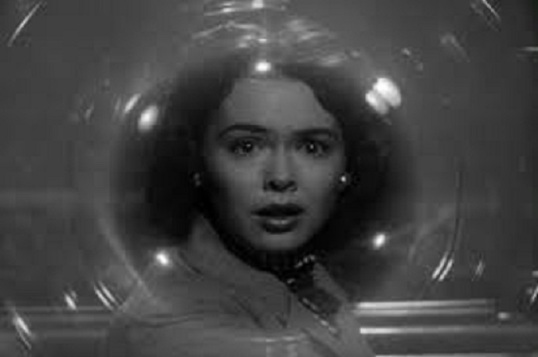
It Came From Outer Space (1953, dir by Jack Arnold, DP: Clifford Stine)

It Conquered The World (1956, dir by Roger Corman, DP: Fred E. West)

Starman (1984, dir by John Carpenter. DP: Donald M. Morgan)

Predator (1987, directed by John McTiernan, DP: Donald McAlpine)