Cleaning Out The DVR #37: A Room With A View (dir by James Ivory)


(For those following at home, Lisa is attempting to clean out her DVR by watching and reviewing 38 films by the end of today!!!!!  Will she make it?  Keep following the site to find out!)

Room_with_a_View

Poor Cecil Vyse.

The 1986 film A Room With A View is a love story.  It’s about a young woman who meets a young man in Florence, Italy and then, upon returning to England, she discovers that the same young man and his father are now her neighbors.  From the minutes they meet, it’s obvious that the young man and the young woman are destined to be together.  The only thing that’s standing in their way is the strict culture of conformity of Edwardian England.  That and the fact that the young woman is engaged to Cecil Vyse.

Cecil represents the establishment.  He comes from a good family.  He’s well-educated.  He talks about the right subjects.  He holds all the right opinions.  He’s not an exciting man but he’s a good man who is destined to have successful but not very interesting life.  From the minute that we meet him, we know that our heroine is not meant to stay with Cecil.

And it’s heart-breaking because the film goes out of its way to show that Cecil is not a bad person.  In his own befuddled way, he’s one of the most likable people in the entire film.  He may not have an interesting mind but he does have a good heart.  When the moment comes that Cecil’s heart is broken, the film treats him with respect.

Of course, it helps that Cecil was played, in one of his first roles, by Daniel Day-Lewis.  Day-Lewis plays the role with a quiet dignity.  Instead of just turning Cecil into a mere nuisance that has to be pushed out of the way in the name of love, Day-Lewis emphasizes Cecil’s humanity.  There’s a quiet scene where the recently heart-broken Cecil ties his shoes that is an example of truly great acting.

As for the two young lovers, Lucy Honeychurch is played by Helena Bonham Carter while George Emerson is played by Julian Sands.  Both of them are achingly beautiful and, even more importantly, they both look as if they belong in Edward England and with each other.  Still, seeing this film today, it takes a little while to adjust to seeing both Bonham Carter and Sands playing such … normal characters.  We’re so used to seeing Helena killing people in Tim Burton movies that it’s nice to see her getting to rather sweetly fall in love for once.

The entire film is full of great British actors, all at their best.  Denholm Elliott plays George’s father and gets to deliver a rousing defense of both true love and free thought.  Maggie Smith plays Lucy’s overprotective aunt while Rosemary Leach is Lucy’s supportive mother.  And then you’ve got Simon Callow as an eccentric vicar.  (Because every British film needs an eccentric vicar.)  Lucy’s younger brother is played by an actor named Rupert Graves and he’s so adorable that I kind of found myself wishing that he could have had a spin-off movie of his own.

A Room With A View is a wonderfully romantic film, one that I could easily see myself spending days just watching over and over again.  A Room With A View was nominated for best picture but it lost to the far less romantic Platoon.

(For those following at home, I now have one more review to go to reach my goal of reviewing 38 films in 10 days!)

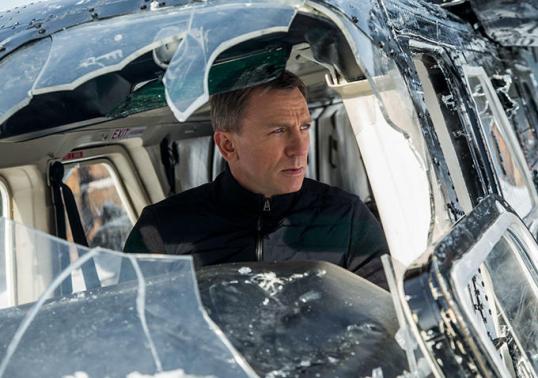
James Bond Film Review: SPECTRE (dir by Sam Mendes)


Spectre_poster

(SPOILERS)

Three years ago, Arleigh, Leonard, Chris Mead, and I reviewed every single James Bond films up to Skyfall.  Leonard often refers to this as being our Avengers moment and it remains one of my fondest memories of my time here at the Shattered Lens.  It really doesn’t matter who is playing the role or what the villain’s evil plan may be, or whether the individual film was made in the 60s or just last year, the Bond films are a lot of fun.  Some of them are better than others.  Sometimes, you get lucky and you get something like For Your Eyes Only and sometimes you have to settle for Die Another Day.  Ultimately, every Bond film is an event and, in many ways, they are critic proof.  As long we hear the iconic music, as long as Bond gets a few good quips, as long as the villain chuckles while explaining his evil plan, as long as there’s an exciting chase and a big explosion, and as long as there’s a lot of gorgeous clothes to look at and at least one tastefully lit sex scene, most viewers will be happy.

If it’s not broken…

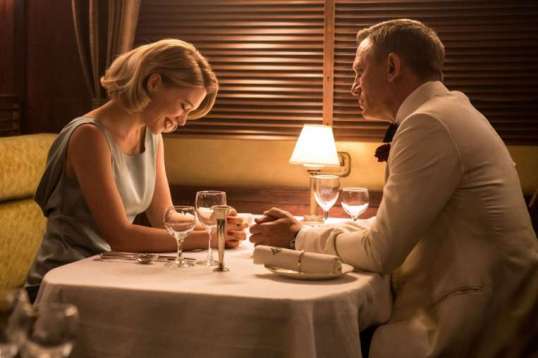
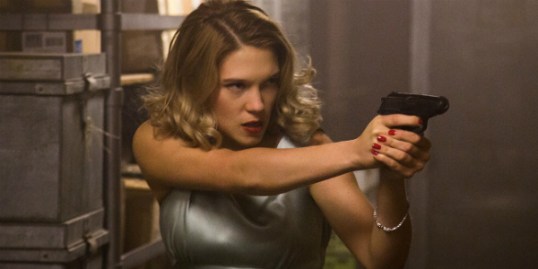
Most viewers will probably be happy with SPECTRE, the latest Bond film.  I saw the film yesterday and, even if it won’t ever make my list of top ten Bond films, I enjoyed it.  Daniel Craig is back as Bond, Christoph Waltz fulfills his destiny by becoming the 9th actor to play the iconic villain Blofeld, Dave Bautista is a properly intimidating henchman, and Lea Seydoux is the strongest Bond girl since Eva Green.  One thing that I especially appreciated about the film is that, in the roles of M, Miss Moneypenny, and Q, Ralph Fiennes, Naomie Harris, and Ben Whishaw are actually given an opportunity to get involved in the film’s action and all three of them are a lot of fun to watch.  The film has an absolutely brilliant opening, featuring Bond assassinating a man in Mexico City and destroying a city block in the process.  There’s an exciting chase scene, there’s a few moments of genuine wit, and there’s even one of those patented Bond train journeys, where sex and violence are mixed with intoxicating results.  And yes, the clothes are to die for…

To Die For

To Die For

It’s good and undeniably enjoyable in so many ways and yet somehow, SPECTRE still left me feeling slightly disappointed.  Some of that is because SPECTRE exists in the shadow of Skyfall.  After Skyfall (which I feel should have been one of the films nominated for best picture of 2012), expectation were sky high for SPECTRE.  Those expectations were so high that there was no way that SPECTRE could have hoped to meet them.  (You could argue that Quantum of Solace faced the same problem when it had to follow Casino Royale.)  SPECTRE is no Skyfall but, then again, few films are.

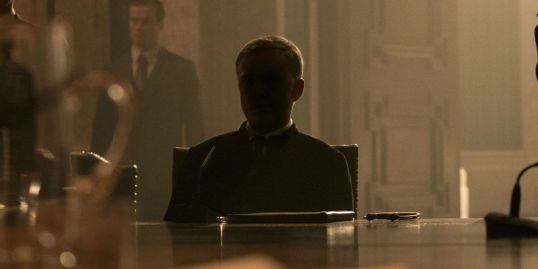
Speaking of high expectations, I think we were all expecting Christoph Waltz to be one of the best Bond villains.  After all, Waltz is a legitimately great actor and he specializes in the type of cheerful arrogance that has epitomized some of Bond’s greatest antagonists.  (One can easily imagine Waltz playing Auric Goldfinger.)  Add to that, Waltz is playing Blofeld, the ultimate Bond bad guy.  As it is, Waltz gives a good performance but SPECTRE‘s Blofeld just isn’t that interesting.  He has a lot more in common with the generic baddie from Quantum of Solace than with Goldfinger or the fascinated Raoul Silva of Skyfall.

As well, it wasn’t just enough for Blofeld to be the leader of a secret organization bent on world domination.  It wasn’t enough that Blofeld was secretly responsible for everything that happened in Casino Royale, Quantum, and Skyfall (which, as much as some critics have complained about this particular plot twist, is actually a clever reference to Blofeld’s shadowy presence in all of Sean Connery’s Bond films).  For some reason, the film’s writers decided it would be a good idea to make him Bond’s jealous stepbrother.  Blofeld’s past relationship to Bond feels incredibly superfluous.  I like to think that I’m pretty good at suspending my disbelief (especially when it comes to a Bond film) but I have to admit that I found myself rolling my eyes while Blofeld talked about how jealous he was when Bond came to live with his family.

We all know it's you, Christoph...

We all know it’s you, Christoph…

(As well, Blofeld’s jealousy was a bit too reminiscent of Raoul Silva’s jealousy of Bond.  It worked in Skyfall because we weren’t expecting a Bond villain to have a vulnerable side and Javier Bardem’s perversely charismatic performance caught the viewers off guard.  In SPECTRE, it just feels like something that should have been eliminated during a rewrite.)

Daniel Craig, of course, is the sixth actor to officially play the role of James Bond.  It’s always interesting to see how each actor interprets the role.  The most successful Bond films are always built around the actor’s individual interpretation.  For instance, it would be difficult to imagine Roger Moore in any of Sean Connery’s Bond films and, at the same time, it would be hard to imagine Sean Connery in The Spy Who Loved Me.  Sean Connery was the Ruthless Bond.  George Lazenby was the Insecure Bond.  Roger Moore was the Bemused Bond.  Timothy Dalton was the Boring Bond.  Pierce Brosnan was the Suave Bond.  Depending on which one of his films you see, Daniel Craig is either the Professional Bond or the Whiny Bond.  SPECTRE continues the pattern that we’ve seen in the previous Craig films of presenting a James Bond who is struggling to balance his humanity with his job.  When it works, like in Skyfall, it’s riveting.  When it doesn’t work, like in Quantum of Solace, it runs the risk of getting rather tedious.  SPECTRE finds Craig in between those two extremes.  It’s an uneven performance.  Craig and Seydoux have great chemistry and the scenes where Craig interacts with Fiennes, Harris, and Whishaw are fun to watch.  But there are other scenes where Daniel Craig just comes across like he’s bored with the whole thing.  Craig’s Bond has spent four films trying to figure out how he feels about his job.  If Craig returns for a fifth film (and, as of right now, that seems to be a big if), he will hopefully have finally gotten over it.

(That said, SPECTRE was definitely written for Craig’s bond.  At the end of the film — SPOILER, obviously — Bond has the choice between executing a man in cold blood or allowing the authorities to arrest him.  Craig allows the man to be arrested.  Connery would have put a bullet in his head and then smirked about it.)

He totally would...

He totally would…

And if it seems that I’m being critical of SPECTRE — well, I am.  It’s one of the more uneven films in the Bond franchise, one that especially suffers when compared to some of the other spy films (Kingsman, MI: Rogue Nation) released this year.  But, at the same time, SPECTRE does deliver the basics of what we expect from a Bond film.  It’s entertaining and it has its fun moments.  It’s no Skyfall but at least it’s better than Quantum of Solace.

Incidentally, I want to be Lea Seydoux when I grow up...

Incidentally, I want to be Lea Seydoux when I grow up…

Other Bond Reviews on TSL:

  1. Casino Royale (TV version)
  2. Dr. No
  3. From Russia With Love
  4. Goldfinger
  5. Thunderball
  6. You Only Live Twice
  7. Casino Royale (excessive version)
  8. On Her Majesty’s Secret Service
  9. Diamonds Are Forever
  10. Lisa’s Review of Live and Let Die
  11. Arleigh’s Review of Live and Let Die
  12. The Man With The Golden Gun
  13. The Spy Who Loved Me
  14. Moonraker
  15. For Your Eyes Only
  16. Octopussy
  17. Never Say Never Again
  18. A View To A Kill
  19. The Living Daylights
  20. Licence to Kill
  21. Goldeneye
  22. Tomorrow Never Dies
  23. The World Is Not Enough
  24. Die Another Day
  25. Casino Royale (Craig version)
  26. Quantum of Solace
  27. Skyfall

Here Are The 2013 SAG Nominations!


This morning the SAG Award nominees were announced and, perhaps not surprisingly, the story is less who was nominated and more who was snubbed.  For instance, Oscar front-runner Robert Redford’s performance in All Is Lost was ignored while Forest Whitaker’s rather one-note turn in The Butler was nominated.  Tom Hanks was not nominated for Saving Mr. Banks but the late and missed James Gandolfini picked up a nomination for Enough Said. Myself, I’m more surprised that Octavia Spenser was not nominated for her performance in Fruitvale Station.

As has been pointed out over at Goldderby, the SAG Awards are no longer the fool-proof Oscar prediction tool that they used to be.  Getting a SAG nomination no longer guarantees you an Oscar nomination and, by that same standard, getting snubbed is no longer an automatic cause for concern.

That said, the SAG winners do typically end up receiving an Oscar nomination in January.

The film nominees can be found below:

BEST FILM ENSEMBLE
“12 Years a Slave”
“American Hustle”
“August: Osage County”
“The Butler”
“Dallas Buyers Club”

BEST FILM ACTOR
Bruce Dern, “Nebraska”
Chiwetel Ejiofor, “12 Years a Slave”
Tom Hanks, “Captain Phillips”
Matthew McConaughey, “Dallas Buyers Club”
Forest Whitaker, “The Butler”

BEST FILM ACTRESS
Cate Blanchett, “Blue Jasmine”
Sandra Bullock, “Gravity”
Judi Dench, “Philomena”
Meryl Streep, “August: Osage County”
Emma Thompson, “Saving Mr. Banks”

BEST FILM SUPPORTING ACTOR
Barkhad Abdi, “Captain Phillips”
Daniel Bruhl, “Rush”
Michael Fassbender, “12 Years a Slave”
James Gandolfini, “Enough Said”
Jared Leto, “Dallas Buyers Club”

BEST FILM SUPPORTING ACTRESS
Jennifer Lawrence, “American Hustle”
Lupita Nyong’o, “12 Years a Slave”
Julia Roberts, “August: Osage County”
June Squibb, “Nebraska”
Oprah Winfrey, “The Butler”

BEST FILM STUNT ENSEMBLE*
“All is Lost”
“Fast & Furious 6”
“Lone Survivor”
“Rush”
“The Wolverine”

The full list of nominees can be found here.

—-

* Isn’t it about time that stunt performers get an Oscar category all their own?

12 Years A Slave Wins In Boston


The Boston Society Of Film Critics voted earlier today and 12 Years A Slave — which, so far, has been underperforming with the critics’ groups — swept the awards.  The Wolf of Wall Street came in second for most of the major awards.

BEST PICTURE
“12 Years a Slave”
Runner-up: “The Wolf of Wall Street”

BEST DIRECTOR
Steve McQueen (“12 Years a Slave”)
Runner-up: Martin Scorsese (“The Wolf of Wall Street”)

BEST ACTOR
Chiwetel Ejiofor (“12 Years a Slave”)
Runner-up: Leonardo DiCaprio (“The Wolf of Wall Street”)

BEST ACTRESS
Cate Blanchett (“Blue Jasmine”)
Runner-up: Judi Dench (“Philomena”)

BEST SUPPORTING ACTOR
James Gandolfini (“Enough Said”)
Runner-ups:
Barkhad Abdi (“Capt. Phillips”) and Jared Leto (“Dallas Buyers Club”) tie for second.

BEST SUPPORTING ACTRESS
June Squibb (“Nebraska”)
Runner-up:
Lupita Nyong’o (“12 Years a Slave”)

BEST SCREENPLAY
Nicole Holofcener (“Enough Said”)
Runner-up:
“The Wolf of Wall Street”

BEST FOREIGN LANGUAGE FILM
“Wadjda”
Runner-up: “Blue Is the Warmest Color”

BEST DOCUMENTARY
“The Act of Killing,” Josh Oppenheimer
Runner-ups:
“Blackfish,” “Leviathan,” “At Berkeley,” “Crash Reel,” “20 Feet from Stardom ”

BEST ANIMATED FEATURE
“The Wind Rises,” Hayao Miyazaki
Runner-up:
“Frozen”

BEST NEW FILMMAKER
Ryan Coogler (“Fruitvale Station”)
Runner-up: Josh Oppenheimer (“Act of Killing”)

BEST CINEMATOGRAPHY
Emmanuel Lubezki (“Gravity”)
Runner-up:
Phillippe Le Sourd (“The Grandmaster”)

BEST EDITING
Daniel P. Hanley, Mike Hill (“Rush”)
Runner-up: Thelma Schoonmaker (“The Wolf of Wall Street”)

BEST USE OF MUSIC IN A FILM
“Inside Llewyn Davis”
Runner-up: “Nebraska”

I Got Your Golden Globes Right Here…


We’re halfway through Oscar season and that means that it’s time for the Golden Globes to weigh in.  To be honest, I think the Golden Globes are somewhat overrated as an Oscar precursor.  For the most part, the Golden Globes usually honors the films that are on everyone’s radar and then they come up with one or two nominations that nobody was expecting.  However, those surprise nominations rarely seem to translate into anything once it comes to time to announce the Oscar nominations.

So, while Salmon Fishing In The Yemen did receive a few surprise nominations (and those nominations were deserved, by the way), I doubt that we’ll see the movie mentioned on January 10th when the Oscar nominations are announced.

From the reaction that I’ve seen on the usual awards sites,  a lot of the usual suspects are upset that Beasts of the Southern Wild was completely snubbed.  Actually, they’re not just upset.  They’re about as outraged about this as they were when The Social Network lost best picture to King’s Speech.  The way they’re carrying on, you would think that someone had just informed them that David Fincher’s version of The Girl With The Dragon Tattoo was a thoroughly unneccessary rehash of an already brilliant film.  Seriously, the facade of Stone has fallen and tears are being shed.

Myself, I’m more annoyed that neither The Cabin In The Woods nor Anna Karenina are getting the love that they deserve.

Anyway, with all that in mind, here are the Golden Globe nominations!

BEST DRAMA
“Argo”
“Django Unchained”
“Life of Pi”
“Lincoln”
“Zero Dark Thirty”

BEST DRAMA ACTOR
Daniel Day-Lewis, “Lincoln”
Richard Gere, “Arbitrage”
John Hawkes, “The Sessions”
Joaquin Phoenix, “The Master”
Denzel Washington, “Flight”

BEST DRAMA ACTRESS
Marion Cotillard, “Rust and Bone”
Jessica Chastain, “Zero Dark Thirty”
Helen Mirren, “Hitchcock”
Naomi Watts, “The Impossible”
Rachel Weisz, “The Deep Blue Sea”

BEST COMEDY/MUSICAL PICTURE
“The Best Exotic Marigold Hotel”
“Les Miserables”
“Moonrise Kingdom”
“Silver Linings Playbook”
“Salmon Fishing in the Yemen”

BEST COMEDY/MUSICAL ACTOR
Jack Black, “Bernie”
Bradley Cooper, “Silver Linings Playbook,”
Hugh Jackman, “Les Miserables”
Ewan McGregor, “Salmon Fishing in the Yemen”
Bill Murray, “Hyde Park on Hudson”

BEST COMEDY/MUSICAL ACTRESS
Emily Blunt, “Salmon Fishing in the Yemen”
Jennifer Lawrence, “Silver Linings Playbook”
Judi Dench, “Best Exotic Marigold Hotel”
Maggie Smith, “Quartet”
Meryl Streep, “Hope Springs”


BEST SUPPORTING ACTOR 
Alan Arkin, “Argo”
Philip Seymour Hoffman, “The Master”
Christoph Waltz, “Django Unchained”
Leonardo DiCaprio, “Django Unchained”
Tommy Lee Jones, “Lincoln”

BEST SUPPORTING ACTRESS
Anne Hathaway, “Les Miserables”
Helen Hunt, “The Sessions”
Amy Adams, “The Master”
Sally Field, “Lincoln”
Nicole Kidman, “The Paperboy”

BEST DIRECTOR
Ben Affleck, “Argo”
Ang Lee, “Life of Pi”
Steven Spielberg, “Lincoln”
Quentin Tarantino, “Django Unchained”
Kathryn Bigelow, “Zero Dark Thirty”

BEST SCREENPLAY
“Silver Linings Playbook”
“Argo”
“Django Unchained”
“Zero Dark Thirty”
“Lincoln”

BEST ORIGINAL SCORE
“Anna Karenina”
“Life of Pi”
“Argo”
“Lincoln”
“Cloud Atlas”

BEST ORIGINAL SONG
“For You” from “Act of Valor”
Music by: Monty Powell, Keith Urban Lyrics by: Monty Powell, Keith Urban

“Not Running Anymore” from “Stand Up Guys”
Music by: Jon Bon Jovi Lyrics by: Jon Bon Jovi

“Safe and Sound” from “The Hunger Games”
Music by: Taylor Swift, John Paul White, Joy Williams, T Bone Burnett Lyrics by: Taylor Swift, John Paul White, Joy Williams, T Bone Burnett

“Skyfall” form “Skyfall”
Music by: Adele, Paul Epworth Lyrics by: Adele, Paul Epworth

“Suddenly” from “Les Miserables”
Music by: Claude-Michel Schonberg Lyrics by: Alain Boublil, Claude-Michel Schonberg

BEST ANIMATED FILM 
“Brave”
“Frankenweenie”
“Wreck-it Ralph”
“Rise of the Guardians”
“Hotel Transylvania”

BEST FOREIGN LANGUAGE FILM 
“The Intouchables”
“Amour”
“A Royal Affair”
“Rust and Bone”
“Kon-Tiki”

By the way, here are the Satellite Award Nominations…


Moonrise

In even more Oscar season news, the International Press Association announced their nominations for the Satellite Awards yesterday.  Les Miserables led with 10 nominations.

If you’re like most people who don’t obsess over film awards then chances are that you’ve never heard of the International Press Association.  And that’s okay.  The main thing to know is that it’s Oscar season and that means that everyone’s giving out an award.  The Satellites are a lot like the Golden Globes, just with less credibility.  As far as serving as a precursor is concerned, a Satellite win can help a film maintain momentum but a loss doesn’t really hurt.

That said, for the past few years, I’ve always ended up agreeing more with the Satellite Nominations than with either the Oscars or the Golden Globes.  For instance, back in 2010, the Satellites nominated Noomi Rapace for her performance in the original (and the best) version of The Girl With The Dragon Tattoo.

BEST PICTURE
“Argo”
“Beasts Of The Southern Wild”
“Life Of Pi”
“Lincoln”
“Les Misérables”
“Moonrise Kingdom”
“The Sessions”
“Silver Linings Playbook”
“Skyfall”
“Zero Dark Thirty”

BEST DIRECTOR
Ben Affleck, “Argo”
Steven Spielberg, “Lincoln”
Kim Ki-duk, “Pieta“
Ben Lewin, “The Sessions”
David O. Russell, “Silver Linings Playbook”
Kathryn Bigelow, “Zero Dark Thirty”

BEST ACTRESS
Laura Birn, “Purge”
Jessica Chastain, “Zero Dark Thirty”
Emilie Dequenne, “Our Children”
Keira Knightley, “Anna Karenina”
Jennifer Lawrence, “Silver Linings Playbook”
Laura Linney, “Hyde Park On Hudson”
Emmanuelle Riva, “Amour”

BEST ACTOR
Bradley Cooper, “Silver Linings Playbook”
Daniel Day-Lewis, “Lincoln”
John Hawkes, “The Sessions”
Hugh Jackman, “Les Misérables”
Joaquin Phoenix, “The Master”
Omar Sy, “The Intouchables”
Denzel Washington, “Flight”

BEST SUPPORTING ACTRESS
Amy Adams, “The Master”
Samantha Barks, “Les Miserables“
Judi Dench, “Skyfall”
Helene Florent, “Café De Flore”
Anne Hathaway, “Les Misérables”
Helen Hunt, “The Sessions”

BEST SUPPORTING ACTOR
Javier Bardem, “Skyfall”
Robert De Niro, “Silver Linings Playbook”
John Goodman, “Flight”
Philip Seymour Hoffman, “The Master”
Tommy Lee Jones, “Lincoln”
Eddie Redmayne, “Les Misérables”

BEST ORIGINAL SCREENPLAY
John Gatins, “Flight”
Eric Toledano and Olivier Nakache, “The Intouchables”
Paul Thomas Anderson, “The Master”
Roman Coppola and Wes Anderson, “Moonrise Kingdom”
Kim Ki-duk, “Pieta”
Mark Boal, “Zero Dark Thirty”

BEST ADAPTED SCREENPLAY
Tom Stoppard, “Anna Karenina”
Chris Terrio, “Argo”
David Magee, “Life Of Pi”
Tony Kushner, “Lincoln”
Ben Lewin, “The Sessions”
David O. Russell, “Silver Linings Playbook”

BEST FOREIGN LANGUAGE FILM
“Amour” (Austria)
“Beyond The Hills” (Romania)
“Caesar Must Die” (Italy)
“The Intouchables” (France)
“Kon-Tiki” (Norway)
“Our Children” (Belgium)
“Pieta” (South Korea)
“A Royal Affair” (Denmark)
“War Witch” (Canada)

BEST ANIMATED OR MIXED-MEDIA FILM
“Brave”
“Frankenweenie”
“Ice Age 4: Continental Drift”
“Madagascar 3: Europe’s Most Wanted”
“Paranorman”
“Rise Of The Guardians”
“Wreck-It Ralph”

BEST DOCUMENTARY FEATURE
“Ai Weiwei: Never Sorry”
“The Central Park Five”
“Chasing Ice”
“The Gatekeepers”
“Marina Abramovic: The Artist Is Present”
“The Pruitt-Igoe Myth”
“Searching For Sugar Man”
“West Of Memphis”

BEST CINEMATOGRAPHY
Seamus McGarvey, “Anna Karenina”
Ben Richardson, “Beasts Of The Southern Wild”
Claudio Miranda, “Life Of Pi”
Janusz Kaminski, “Lincoln”
Mihai Malaimare, Jr., “The Master”
Roger Deakins, “Skyfall”

BEST PRODUCTION DESIGN
Sarah Greenwood, Niall Moroney, Thomas Brown, Nick Gottschalk and Tom Still, “Anna Karenina”
Nathan Crowley, Kevin Kavanaugh, James Hambidge and Naaman Marshall, “The Dark Knight Rises”
Rick Carter, Curt Beech, David Crank and Leslie McDonald, “Lincoln”
David Crank and Jack Fisk, “The Master”
Eve Stewart and Anna Lynch-Robinson, “Les Misérables”
Niels Sejer, “A Royal Affair”

BEST COSTUME DESIGN
Jacqueline Durran, “Anna Karenina”
Kym Barrett and Pierre-Yves Gayraud, “Cloud Atlas”
Christian Gasc and Valerie Ranchoux, “Farewell, My Queen”
Paco Delgado, “Les Misérables”
Manon Rasmussen, “A Royal Affair”
Colleen Atwood, “Snow White And The Huntsman”

BEST FILM EDITING
Alexander Berner, “Cloud Atlas”
Jeremiah O’Driscoll, “Flight”
Chris Dickens, “Les Misérables”
Lisa Bromwell, “The Sessions”
Jay Cassidy, “Silver Linings Playbook”
Dylan Tichenor, “Zero Dark Thirty”

BEST ORIGINAL SCORE
Dario Marianelli, “Anna Karenina”
Alexandre Desplat, “Argo”
Dan Romer and Benh Zeitlin, “Beasts Of The Southern Wild”
John Williams, “Lincoln”
Jonny Greenwood, “The Master”
Thomas Newman, “Skyfall”

BEST ORIGINAL SONG
“Learn Me Right,” “Brave”
“Fire In The Blood/Snake Song” “Lawless”
“Love Always Comes As A Surprise,” “Madagascar 3: Europe’s Most Wanted”
“Suddenly,” “Les Misérables”
“Still Alive,” “Paul Williams: Still Alive”
“Skyfall,” “Skyfall”

BEST SOUND (EDITING AND MIXING)
“Flight”
“Les Misérables”
“Snow White And The Huntsman”
“Kon-Tiki”
“Life Of Pi”
“Prometheus”

BEST VISUAL EFFECTS
“Cloud Atlas”
“The Dark Knight Rises”
“Flight”
“Life Of Pi”
“Prometheus”
“Skyfall”

James Bond Review: Quantum of Solace (dir. by Marc Foster)


So, here we are at the end of all things.

About 22 days ago, The Shattered Lens started a project to cover all of the Bond Films in order leading up to the release of the 23rd film, Skyfall. Spearheaded by Lisa Marie and Arleigh, It’s been a fun ride seeing everyone’s thoughts on James Bond over the movies and it’s cool to know that after 50 years, they still (well, most of them) hold their own. Today, we cover the second Daniel Craig film, Quantum of Solace.

Quantum of Solace reunites the same writing team from Casino Royale – Neal Purvis, Robert Wade and Paul Haggis (Academy Award Winner for 2006’s Crash), and brings on Monster’s Ball director Marc Foster for filming duties. As far as I can tell, it seems to be the first 007 film to start not far from the previous film ended. Literally, there could be a 20 minute difference between the end events of Casino Royale and the opening sequence here. The movie veers away from the classic gun barrel sequence and gets the audience right into the action with Bond avoiding villains in his Aston Martin DBS. The chase leads into a quarry, where he manages to get rid of his opponents. It’s only when he arrives in an unknown location within Siena, Italy that we find he’s had Mr. White in the trunk of his car the entire time. Mr. White was the individual that Bond wounded and introduced himself at the end of Casino Royale.

We basically find James Bond dealing with the loss of Vesper Lynd (Eva Green), and though she never makes any kind of appearance in the film, her presence (or lack thereof) is certainly felt. While Quantum of Solace has some remarkable scenes, for me it suffered from at least one major problem early on. Near the beginning of the film, after the credits, there is a chase between Bond and a villian, as always. At the same time, we’re given shots of a bullfight that’s occurring. While I understand that we’re supposed to see the similarities between both actions, I felt as if I was being pulled away from the story at hand. Foster does this a number of times, including one in the middle of an opera scene. That seemed really strange to me, though others may appreciate it.

Bond is told by M (Dame Judi Dench), after securing Mr. White that she has a lead on Vesper’s boyfriend, but also believes that he’s not quite dead. She asks Bond to leave it alone, but being someone who sees things through, he takes a copy of his photograph. It’s revealed that Mr. White is part of a larger group called Quantum, similar to SPECTRE in some respects. Although Bond loses Mr. White, he gets a clue that leads him to Haiti.

The Haiti sequences were done prior to the earthquake that happened there, and it makes Quantum of Solace one of the last films to show how that area looked before the devastation. 007 is able to find his suspect, but in the course of fighting, he kills him. This becomes something of a thread in Quantum of Solace. Just about anyone that Bond encounters is either killed by him or because of him and at some point, restraint needs to be made. At some point, it goes so far that it becomes something of a “Bond Goes Rogue” tale in the vein of License to Kill. There’s a slight reference to The Spy Who Loved Me with a rooftop fall that’s interesting, as well as a great one for the movie Goldfinger. The Craig Bond stories seem to want to make sure they remind us of all the films before it, though it’s hardly the first 007 story to do so.

The Bond Girls in Quantum of Solace are Olga Kurlyenko and Gemma Arterton. Kurlyenko’s Camille has a mission of her own, as she’s trying to avenge the death of her mother. Arterton’s character, Miss Fields (who’s first name I believe may be Strawberry, but don’t quote me on that) is send in by MI6 to bring Bond back in for debriefing (as he’s been avoiding M’s requests). The actual villain of the movie is played by Mathieu Amalric (Munich), who is more of a hands-off baddie with tons of henchmen at his side.

The problem I had with Quantum of Solace is that it seemed like the Vesper angle was a side note. Yes, we know Quantum is out there, and we learn there’s a plot to control the water of a small area, but outside of all that, it didn’t seem like much of a revenge story. This is unless, of course, it wasn’t meant to be. I’m not a big fan of Quantum of Solace overall. It’s not as bad as Die Another Day (which a number of people consider to be one of the worst) by a longshot, but after what we were given in Casino Royale, it almost seems like it builds on things in the wrong direction.

This weekend, Skyfall is out, and by the time the weekend is up, we’ll have a review for it. We leave you the theme song to Quantum of Solace, “Another Way to Die” by Jack White and Alicia Keys. The Instrumental version of this song is actually really good, though the actual song itself was just a little off.

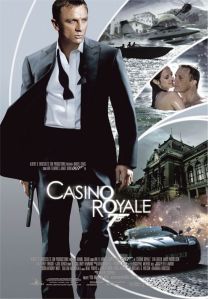
James Bond Review: Casino Royale


Welcome, one and all! Leading up to the North American release of the latest James Bond film, Skyfall, The Shattered Lens has taken on the task of reviewing each and every one of the twenty two James Bond films that precede it. Today’s is the penultimate review, Casino Royale, the first film of the series to star current-iteration Bond Daniel Craig. It serves as a reboot of the James Bond character, looking back to the beginning of his career, and entirely unconnected from all of the previous films in the series. The only returning actor is Dame Judi Dench, who reprises her role as M, in a more maternal overseer role looking out for a young Bond, despite his rash actions potentially causing trouble for MI6.

Our cold open this time has a black and white Bond confronting a crooked MI6 section chief – one who has been selling secrets to make money on the side. Bond kills both the section chief and his contact, which is enough to earn him his 00-status. The freshly minted 007 heads to Madagascar in pursuit of an international bomb maker. He attempts to find a way to apprehend the bomb maker alive, but is made, and is forced to pursue this man across the city. Bond eventually corners the bomb maker in an embassy building and kills him, blowing up part of the wall, and effecting his escape.

Back in England, M chides Bond for his itchy trigger finger, pointing out that while the world has one less small-time terrorist, they had hoped to get information which would let them fight international terrorism on the organisational level. Bond seems suitably chastened, but M goes further, asserting that she promoted Bond too early, that he is reckless, and a danger. Bond coldly replies that, since the 00-agent’s life is not typically a long one, she will not have to live with her mistake for long.

That’s the sort of Bond that we’re dealing with under the handling of Daniel Craig. While the character is still capable of being charming, he’s a very far cry from Sean Connery’s easy smile and one liners, or Pierce Brosnan’s especially terrible puns. This is sort of the crux of the movie; what controversy exists surrounding its qualities is heavily tied into how you respond to this new take on James Bond. Like all things 2000s, our hero is much grittier than before. Absent is all of Q’s high tech wizardry, and as I stated before, we are not even dealing with a seasoned killer in James Bond, but rather a freshly minted 00 agent. As a result of all these factors, this film has a distinctly different feel from every Bond produced before it. If you like the changes, everything is cool. If you don’t, you may still find yourself appreciating Casino Royale, which has a relatively simple plot, but spends quite a bit of effort on setting up and establishing its characters, including this new James Bond, for the audience.

The main plot of Casino Royale revolves around a high-stakes Texas Hold ‘Em tournament held at the titular casino, located in Montenegro. James Bond is assigned to win the tournament which is being staged by terrorist financier Le Chiffre (Mads Mikkelsen) to recoup the terrible losses he suffered when he used the money of his clients to short sell stock, predicting that a terrorist strike which he himself had planned would send prices into free fall. M hopes that by pushing Le Chiffre to the point of desperation, they can force him to cut a deal with MI6 – sanctuary in exchange for everything he knows about terrorists around the world. Bond is assisted in his goal by fellow MI6 agent Rene Mathis (Giancarlo Giannini) and Vesper Lynd (Eva Green), this iteration’s Bond girl, an agent from HM Treasury, who is assigned to manage Bond’s $10M buy-in, and to provide him with a $5M re-buy if she believes it would be a good investment. However, since a failure on Bond’s part would mean that Her Majesty’s Treasury was directly funding international terrorism, there is incentive to be cautious.

It takes us nearly an hour to begin to engage in the meat of the film, at the titular Casino Royale. Or, at least, this should be the meat of the film. However, the structure of Casino Royale is a little bit off. It feels like it has enough action, but it doesn’t feel properly paced, with the front half of the film (really just a series of subplots to get us to Montenegro) feels like classic “action Bond”. The scenes in the Casino could have been pulled (well, if Daniel Craig could smile, at any rate) from any other Bond film, as his history is littered with a rich litany of casino sequences. Before and after the casino sequences, however, are framing bits that involve idyllic locations, and if I may be so bold, it doesn’t exactly zoom along. The spacing between the casino sequences and the finale, in particular, made the final act feel very tacked on and a little out of place, even as deliberately intended setup for Quantum of Solace. This can also be off-putting, as it feels like there are two different movies going on here.

For the most part though, I think Casino Royale works. If you can live with a grimmer, grittier, low-talking James Bond, you may really appreciate this low-tech return to basics for our favourite 00-agent.

Tomorrow you’ll get a healthy dose of Quantum of Solace, but before I sign off, let me leave you with the theme from Casino Royale, one of the cooler James Bond themes in the franchise, performed by Chris Cornell.

James Bond Review: The World Is Not Enough


But it is such a perfect place to start.

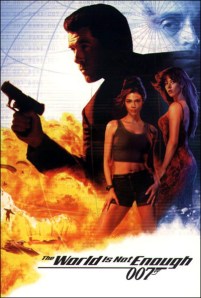
Hello everyone! As a prelude to the North American release of Skyfall, we here at The Shattered Lens have been reviewing each and every single James Bond film in the history of the franchise. Today we examine the nineteenth film in the James Bond franchise, and the third to feature Pierce Brosnan as the titular super spy, Ian Fleming’s James Bond. Its title? The unpretentious The World is Not Enough.

This time our cold open has Bond in negotiations with a Swiss banker for the return of a significant amount of money belonging to British Knight, Sir Robert King, who is a personal friend of M (Dame Judi Dench). Negotiations break down quickly, when Bond reveals that King was buying a report over which an MI6 agent was killed. The banker not only refuses to disclose information, but actually threatens Bond. Bond takes control of the situation in predictable fashion, offing the Banker’s underlings and capturing the man in question. However, before the banker can give up the name of the man who hired him, he is picked off by his own assistant – revealed to be a lovely young assassin (Maria Grazia Cucinotta), who disappears before Bond can do much in the way of response. With the police already on their way, Bond escapes out a window, and heads back to jolly old England.

When Bond returns to MI6 headquarters, Sir King takes possession of his money. However, Bond deduces seconds too late that the money has been trapped with a binary compound explosive that King inadvertently triggers, blowing up the suitcase of money, Robert King, the entire room he is present in, and a huge chunk of the wall of MI6 headquarters. Bond arrives just in time to see the same assassin outside in a speed boat, aiming a mounted gun his direction. Upon seeing Bond, she opens fire, but then quickly turns tail and flees the scene. Bond seizes a speed boat from Q and goes in pursuit. After a truly remarkable chase sequence (by sea, by land, and by air!) Bond catches up with the assassin, who commits suicide by firing into the tanks of her own hot air balloon rather than risk being taken alive. Bond falls and is heavily injured, and the assassin is killed.

Bond convalesces under the care of one Dr. Molly Warmflash (Serena Scott Thomas), but unwilling to actually wait for his wounds to heal, he “persuades” the good doctor into giving him a clean bill of health, the way only James Bond can. Medically cleared, he invites himself into a high level planning session with M where they trace the assassination of Robert King back to its likely perpetrator – a notorious Soviet terrorist, Renaud (Robert Carlyle). Recognizing the danger he represents, M sent 009 to kill Renaud. Although the agent got a shot in, and it struck Renaud in the head, the bullet miraculously failed to kill the terrorist right away. Instead, it slowly burrows through the matter of his brain, dampening and destroying his senses one by one. Dr. Warmflash speculates that while Renaud will eventually die from his wound, in the meantime he feels no pain, and is particularly dangerous as a result. Renaud had previously abducted and held hostage King’s beautiful daughter, Elektra (Sophie Marceau), for ransom. M believes that Renaud is attempting to strike against the King family again. Concerned with Elektra’s safety, she assigns 007 to personally see to her security.

Things ramble on quickly from there. Like Tomorrow Never Dies, there are no shortage of action pieces in The World is Not Enough. The film has a healthy dose of plot twists and is finely paced, never really descending into a lull. It has excellent set pieces, including a kind of cart racing down an oil pipeline, a battle in a caviar factory (which includes a notable cameo from our old friend Valentine, first introduced in Goldeneye [a fun role that is heartily embraced by actor Robbie Coltrane]), and even climactic showdown aboard a Soviet nuclear submarine Unfortunately, The World is Not Enough suffers from a couple of limitations that hold it back from being a truly great Bond film. Yes, that’s right folks, it’s time we talked about one of the more infamous Bond girls… Dr. Christmas Jones (Denise Richards).

Now, I don’t necessarily hate Denise Richards, but she’s not what I’d call a paragon of acting ability. She doesn’t bring a ton of range to a character that is already a bit on the weak side. Dr. Jones, a short-short short-dress short-skirt clad nuclear physicist, is not short on brains. She’s also athletic, and able to keep up with 007’s crazy antics for the most part. She’s also a patently unbelievable character, a stretch even for James Bond, even for latter-day Pierce Brosnan James Bond. She doesn’t ever really fit into this film, and while the movie’s plot ultimately deals with a nuclear threat (as always, I won’t spoil the film’s more important plot details!) and it seems like Dr. Jones’ expertise might be useful… mostly, she just offers some rather obvious exposition, and serves as a sexual object for one important sequence in the film’s final third. So, hooray? Compared to ass-kicking Chinese secret agent Wai Lan, the main thing that Denise Richards’ character brings to the James Bond franchise is cup size. And more easy puns on her name than you can shake a stick at.

This film is also notable for being the tragic final appearance of Desmond Llewelyn in his long time role as “Q”. Although the film … “humourously” … introduces John Cleese as Q’s successor early in the film, there were no official plans to cut Desmond Llewelyn from future Bond films, and he had not announced plans to retire. Unfortunately, Llewelyn was killed in a traffic collision shortly after the film’s premiere. R.I.P.

That having been said, I still very much like this movie. For reasons which are not entirely clear, I think I’ve seen it a dozen times or so (maybe it’s just on BBC a lot?) and nothing about it ever makes me want to turn the film off. In fact, vibrant performances by the film’s villains and an energetic Judi Dench as M (more active in this film than in … probably any other) kind of bring this one to life for me. Of course, this film definitely telegraphed a possible dive off the cliff’s edge… something which we may or may not journey through together in tomorrow’s film, the much-maligned Die Another Day.

In the meantime, let me leave you with my all-time favourite James Bond theme, presented by Garbage:

A Quickie With Lisa Marie: My Week With Marilyn (dir. by Simon Curtis)


My Week With Marilyn is apparently based on a true story. 

We know this because the film not only uses the opening title card to tell us that the story is true but the movie itself is narrated by Colin Clark (played by Eddie Redmayne) and Colin tells us pretty much the same thing, over and over again. (Seriously, this film reminded me of why I usually don’t care much for first person narration.)  Anyway, the film takes place in the late 1957.  Colin is the 3rd Assistant Director, working with Laurence Olivier (a haughty and pompous yet oddly touching performance from Kenneth Branagh) on a film called The Prince and the Showgirl.  The film stars Marilyn Monroe (Michelle Williams) who quickly starts to annoy Olivier when it becomes obvious that she’s painfully insecure, self-destructive, and dominated by her agent, acting coach, and cold husband.  Colin, however, is smitten with Marilyn and, despite the ominous warnings delivered by everyone else in the film, he soon finds himself falling in love with her and giving this film a title by spending a week with Marilyn.

My Week With Marilyn has been getting a lot of attention lately because many Oscar watchers are expecting to see Michelle Williams receive a Best Actress nomination for her performance as Marilyn Monroe.  Lately, Kenneth Branagh has become something of a dark horse for a best supporting actor nomination and personally, I would say that Julia Ormond (as a paranoid Vivien Leigh) and Judi Dench (as a supportive actress) both deserve some consideration as well. 

The film is ultimately dominated by Michelle Williams and it works whenever she’s on-screen. (And, unfortunately, it pretty much falls apart whenever she’s not.)  Williams has the daunting job of playing an icon here and she manages to be both believable as an icon and as a very fragile and poignant human being.  The script, to be honest, doesn’t give her much help.  As written, Marilyn is alternatively presented as being a helpless damsel in need of a white knight, a calculating seductress who threatens to lead Colin off of the straight and narrow path (represented here by Emma Watson as the girl that Colin treats quite badly)  and a convenient symbol of a lost age.  The brilliance of Michelle Williams is in how she manages to use these three conflicting characterizations to create one very believable Marilyn Monroe.

The main problem with this film is that it’s not called Marilyn.  Instead, it’s My Week With Marilyn and, as a result, the film is actually about the male gaze of the “My” of the title.  As good a performance as Williams gives, it’s hard to avoid the fact that, as far as this film is concerned, Marilyn ultimately exists just to teach Colin a few life lessons.  Unfortunately, as a character, Colin Clark is so thinly written that he’s never all that compelling and, as the film progresses, it’s hard not to feel that he’s ultimately using Marilyn just as surely as everyone else is. 

(In all honestly, however, I have to admit that one of my issues with Colin is that he’s played by Eddie Redmayne.  Don’t get me wrong, Redmayne is a good actor and he manages to make Colin almost likable but I simply cannot look at him without flashing back to Redmayne’s performance in Savage Grace.  That’s the movie where he plays a schizophrenic who has an incestuous relationship with his mother (Julianne Moore) before murdering her.  Redmayne was so effectively creepy in that film that, as unprofessional as it may be for a film critic, I had a hard time accepting him in the role of white knight.)  

I’ve read a lot of reviews that have complained that this film is basically just a big budget Lifetime Movie and, in many ways, it is.  Director Simon Curtis is a veteran of television and the film has the crisp but flat look of a tv show.  But even more than just the cinematography, My Week With Marilyn feels like a TV movie because its script hesitates to raise any issues that can’t be resolved in two hours.  That said, it’s really not sordid or silly enough to be a great Lifetime movie and it’s far too well acted to be a waste-of-time.  Ultimately, this is a flawed film that deserves to be seen for its performances.  If only the entire film was as compelling and interesting as the performances of Kenneth Branagh, Julia Ormond, and especially Michelle Williams.