Review: Munich (dir. by Steven Spielberg)


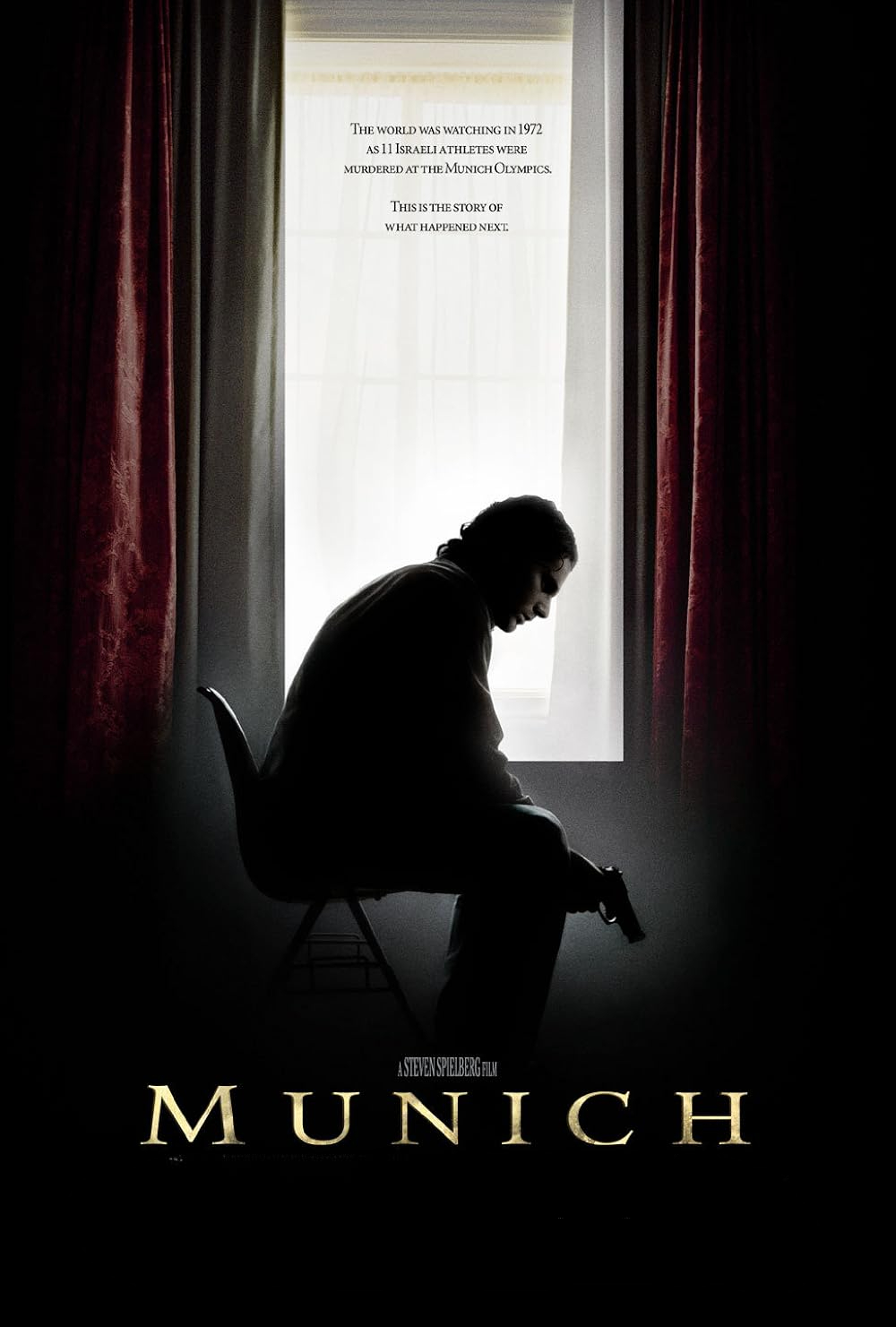
If you’re looking for a comfortable, easily digestible thriller with clear-cut heroes and villains, Munich is going to be a tough sit. This 2005 film, now two decades old, finds Steven Spielberg operating at a peak level of craft, but it’s a cold and angry kind of mastery. It’s a dense, paranoid, and deeply unsettling historical drama that feels less like a movie and more like a wound that’s been picked at for years. Based on the book Vengeance, the film dramatizes the secret Israeli mission, “Operation Wrath of God,” to hunt down and assassinate the Palestinian militants responsible for the massacre of 11 Israeli athletes at the 1972 Munich Olympics. But here’s the kicker: this isn’t an action movie about a bunch of spies getting revenge and feeling good about it. Spielberg isn’t making a war film about who is right and who is wrong. Munich is a film about the ugly, corrosive nature of state-sponsored violence and the way it eats away at the soul of everyone involved. It’s a thriller, sure, but the tension isn’t built around whether the team will succeed, but around the psychological and moral cost of their success. There’s no triumph here, no victory lap—just the sinking realization that for every target they eliminate, the wound in the world only seems to get deeper.

The movie is anchored by a phenomenal performance from Eric Bana as Avner, the team’s leader. He’s a man of deep patriotism, handpicked for this mission by Prime Minister Golda Meir (Lynn Cohen) herself, but he’s completely unprepared for the psychological toll the job will take. He’s joined by a fantastic ensemble that includes Daniel Craig as a brutal and cold-blooded South African operative, and Mathieu Kassovitz as a toymaker turned reluctant bomb expert. They’re a tight, desperate group, and as they move from one European capital to the next, meticulously planning and executing assassinations, the initial sense of righteous duty slowly curdles into paranoia, guilt, and nihilism. The film doesn’t shy away from the violent acts, but it presents them not as a cause for celebration, but as messy, brutal affairs that often have unintended, horrific consequences—like a scene where a bombing intended for a target gets dangerously close to an innocent child. You can feel the weight of every decision pressing down on these men, and Spielberg makes sure you sit with that discomfort rather than brushing past it for the sake of pacing.

One of the most crucial—and still controversial—aspects of Munich is its willingness to humanize the Palestinian perspective. This isn’t a film that paints the Black September terrorists as caricatures of evil. In one of the film’s most powerful scenes, Avner and a PLO member named Ali (Omar Metwally) engage in a tense, philosophical debate about their respective claims to the land. Avner warns that the world will see the Palestinians as “animals” for their actions, to which Ali chillingly replies, “Yes, but then the world will see how they’ve made us into animals. They’ll start to ask questions about the conditions in our cages.” The film doesn’t excuse the terrorism, but it forces the audience to understand the desperation and statelessness that fuels it, presenting a horrifying symmetry where both sides see themselves as victims fighting for survival. It’s a gutsy move for a mainstream Hollywood director, especially in the mid-2000s, and it’s precisely that moral even-handedness that made the film so divisive upon release—and still makes it so damn compelling today.

And that’s where this film connects to a larger, darker moment in Spielberg’s career. Munich was released at the tail end of what some critics have rightly called his “Post-9/11 triptych,” alongside Minority Report (2002) and War of the Worlds (2005). These aren’t just three random films. They are all steeped in a profound sense of paranoia and fear of the outsider that was so prevalent in America after 9/11. Minority Report imagines a society where you’re arrested for a crime before you commit it; War of the Worlds literalizes the fear of a sudden, devastating attack on American soil; and Munich transposes those anxieties onto the Israeli-Palestinian conflict. Spielberg used this triptych to explore the American psyche’s newfound sense of vulnerability and its willingness to embrace extreme, morally ambiguous measures—like torture and preemptive strikes—in the name of security. It was a director grappling with a changed world, and Munich, with its focus on a secret, government-approved assassination squad, feels like his most potent and cynical entry in the series. You can almost hear the echo of post-9/11 rhetoric in every scene, as if Spielberg was holding up a dark mirror to his own country’s creeping acceptance of extrajudicial killing.

But the bleakest part of Munich is how it transcends even that specific historical and political moment. The film relentlessly returns to the theme of the “violence loop.” The team assassinates one target, and he is immediately replaced by someone even more radical. They get a hit, and there’s a retaliatory bombing. It’s a terrifyingly accurate depiction of what has continued to happen for decades after the film’s events. Avner realizes that their entire operation, the endless cycle of state-sponsored revenge, is ultimately pointless for achieving peace. It’s a desperate, bloody game of whack-a-mole that only ensures the conflict continues in perpetuity, a cycle of vengeance that simply feeds on itself. As the film shows, and as is still plain to see today, the violence doesn’t end when the “list” is completed; it just regenerates. The final scenes, where Avner finds himself unable to even sleep in his own bed, watching his young daughter with a haunted look, drive home that the real casualty of state-approved assassination isn’t just the targets—it’s the humanity of the people pulling the trigger. He’s won the tactical war, but he’s lost every single battle that actually mattered.

Ultimately, Munich is a masterclass in filmmaking that offers no easy answers, and watching it today, with the current geopolitical landscape looking more fractured than ever, its relevance hasn’t faded one bit—if anything, it’s sharper and more painful now than it was in 2005. The same arguments, the same grievances, the same bloody score-settling between Israel, the Palestinians, and their Arab allies are still playing out in real time, with no end in sight. And yet, for all its brutal honesty, the film also exposes a tragic truth: this movie, like so much of the discourse surrounding the conflict, will probably only deepen the divide between the two groups watching it, as each side can point to it and say, “See? That’s what they do to us. That’s our pain validated.” It becomes another piece of ammunition in an endless argument rather than a bridge toward understanding. The brilliant cinematography from Janusz Kaminski and the chilling, minimalist score from John Williams only add to that oppressive, paranoid atmosphere, making it not a film that will make you feel good about anything, but one that will make you think—and perhaps that’s exactly why it remains so damn relevant decades later.

So what’s the way out? The film doesn’t give you a manual, but it does whisper a desperate question between its frames: can either side actually step back from the brink long enough to see the loop they’re both trapped in? Because the violence loop isn’t a natural disaster—it’s a human creation, and what humans build, humans can theoretically unbuild. But that would require something infinitely harder than pulling a trigger or planting a bomb—it would require acknowledging that your own righteous suffering doesn’t cancel out the other side’s legitimate pain, it would require looking at the face of your enemy and seeing not a monster but a person who also loves their children and believes they’re fighting for survival. The film dares to suggest that the only real break in the cycle might come from exhaustion, from the sheer soul-crushing fatigue of burying one more generation, or from a moment of radical, almost insane empathy that makes someone say “enough” before the next retaliation.

Spielberg doesn’t offer that moment in the movie, because he knows it hasn’t happened yet in real life—Munich isn’t a prescription; it’s an autopsy. Every few years, when the news cycle inevitably rolls around to another flare-up in that tortured corner of the world, this movie comes back to mind not as a prophecy, but as a painfully accurate diagnosis. It’s a powerful, haunting reminder that the echo of old violence is never truly silent, and that in the long run, vengeance is often a debt that can never be repaid. If you go in expecting a straightforward revenge fantasy, you’ll walk out exhausted and conflicted. But if you go in ready to wrestle with some of the ugliest questions about justice, morality, and state power, then Munich will stick with you like a splinter you just can’t dig out—and maybe, just maybe, that splinter is the first tiny crack in the loop that someone, someday, will have the courage to break.
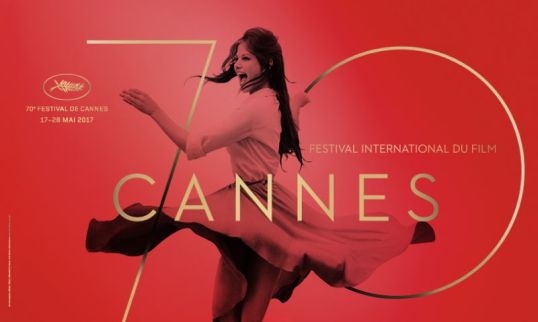
Here’s What Won At Cannes!


Here’s what won at this year’s Cannes Film Festival!  As always, the list is full of intrigue and surprises.

Also, as always, it’s debatable whether any of this will actually effect that Oscar race.  To be honest, other than The Tree of Life, it’s hard to think of any recent Oscar nominee that was undeniably helped by a victory at Cannes.  During the Festival, both Robert Pattinson and Adam Sandler (yes, Adam Sandler) started to receive some Oscar buzz but neither of them — nor their films, Good Time or The Meyerowitz Stories — were honored.

(As enjoyably weird as it would be for Adam Sandler to become an Oscar nominee, I imagine The Meyerowitz Stories will be ignored come Oscar time because it’s a Netflix film.  If the Academy couldn’t even give one nomination to the previous Netflix contender — the powerful and important Beasts of No Nation — I doubt that they’re going to surrender their bias for a film starring Adam Sandler and Ben Stiller.)

That said, I am very, very happy to see that one of my favorite artists, Sofia Coppola, was honored!  I can’t wait to see The Beguiled!

Here’s the winners:

2017 Main Competition winners: 

Palme d’Or: The Square (Ruben Ostlund)
Gran Prix: “BPM (Beats Per Minute)” (Robin Campillo)
Jury Prize: “Loveless” (Andrey Zvyagintsev)
Best Director: Sofia Coppola — The Beguiled
Best Actor: Joaquin Phoenix — You Were Never Really Here
Best Actress: Diane Kruger — In The Fade
Best Screenplay: “The Killing of a Sacred Deer” (Yorgos Lanthimos, Efthimis Filippou) and “You Were Never Really Here” (Lynne Ramsay)

OTHER PRIZES

Camera d’Or: “Jeune femme” (Montparnasse-Bienvenüe) (Léonor Serraille)

Short Films Palme d’Or: “Xiao Cheng Er Yue” (Qiu Yang)

Short Films Special Mention: “Katto” (Teppo Airaksinen)

Golden Eye Documentary Prize: “Faces Places” (Visages Villages) (Agnès Varda, JR)

Ecumenical Jury Prize: “Radiance” (Naomi Kawase)

2017 Un Certain Regard winners: 

Un Certain Regard Prize: Mohammad Rasoulof – A Man of Integrity
Best Actress: 
Jasmine Trinca – Fortunata
Best Poetic Narrative:
 Mathieu Amalric – Barbara
Best Direction: 
Taylor Sheridan – Wind River
Jury Prize:
 Michel Franco – April’s Daughter

2017 International Critics Week winners:

Nespresso Grand Prize: Emmanuel Gras – Makala
France 4 Visionary Award: Fellipe Gamarano Barbosa – Gabriel and the Mountain
Leica Cine Discovery Prize for Short Film: Laura Ferrés – Los Desheredados
Gan Foundation Support for Distribution Award: Fellipe Gamarano Barbosa – Gabriel and the Mountain
SACD Award: Léa Mysius – Ava
Canal+ Award: Aleksandra Terpińska – The Best Fireworks

2017 Director’s Fortnight winners:

Art Cinema Award: Chloé Zhao – The Rider
SACD Award: Claire Denis – Let the Sunshine In, Philippe Garrel – Lover for a Day
Europa Cinemas Label Award: Jonas Carpignano – A Ciambra
Illy Prize for Short Film: Benoit Grimalt – Back to Genoa City

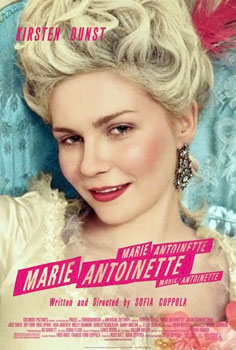
Cleaning Out The DVR Yet Again #25: Marie Antoinette (dir by Sofia Coppola)


(Lisa recently discovered that she only has about 8 hours of space left on her DVR!  It turns out that she’s been recording movies from July and she just hasn’t gotten around to watching and reviewing them yet.  So, once again, Lisa is cleaning out her DVR!  She is going to try to watch and review 52 movies by the end of Tuesday, December 6th!  Will she make it?  Keep checking the site to find out!)

marie-antoinette_poster

On November 12th, I recorded 2016’s Marie Antoinette off of Starz.

Before I review Marie Antoinette, I think it’s important that you know that I am an unapologetic Sofia Coppola fan.  I love every film that she’s made and I look forward to her upcoming remake of The Beguiled.  At the same time, I can also understand why some people feel differently.  Sofia Coppola’s films are not for everyone.  For one thing, almost all of her films deal with rich people.  The existential angst of the wealthy and/or famous is not a topic that’s going to fascinate everyone.  When you watch a Sofia Coppola film, you never forget that you’re watching a film that’s been directed by someone who largely grew up in the spotlight and who knows what it’s like to have money.  An ennui born out of having everything and yet still feeling empty permeates almost every scene that Sofia Coppola has ever directed.  (If you have to ask what ennui is, you’ve never experienced it.)  Many viewers look at Sofia Coppola’s filmography and they ask themselves, “Why should we care about all these materialistic people?”

However, while Sofia Coppola may not know what’s it’s like to be poor (or even middle class for that matter), she does understand what it’s like to feel lonely.  Her filmography could just as easily be called “the cinema of isolation.”  It doesn’t matter how much money you may have or how famous you may or may not be, loneliness is a universal condition.  A typical Sofia Coppola protagonist is someone who has everything and yet still cannot connect with the rest of the world.  More often that not, they turn to excessive consumption in order to fill the void in their life.  To me, the ultimate Sofia Coppola image is not, regardless of how much I may love them, Bill Murray and Scarlett Johansson in Lost in Translation.  Instead, it’s Stephen Dorff (playing a far less likable version of Bill Murray’s Translation character) standing alone in the desert at the end of Somewhere.

Marie Antoinette, which was Sofia’s follow-up to Lost in Translation, is technically a historical biopic, though it makes little effort to be historical or accurately biographical.  Kirsten Dunst plays Marie Antoinette, the final queen of France before the French Revolution.  It was Marie Antoinette was accused of dismissing starving French peasants by announcing, “Let them eat cake!”  (For the record, it’s probable that Marie Antoinette never said that.  It’s certainly never heard in Coppola’s film.)

Marie Antoinette opens with the title character arriving in France at the age of 14.  She’s an Austrian princess who has been sent to marry the future king of France, Louis XVI (Jason Schwartzman).  From the minute we meet her, Marie Antoinette is portrayed as being a pawn.  Her mother arranges the marriage as a way to seal an alliance with France.  The king of France (played by Rip Torn) expects Marie Antoinette to get produce an heir to the throne as quickly as possible.  Meanwhile, her new husband is an infantile and immature fool who doesn’t even know how to make love.  Marie Antoinette finds herself isolated in a strange country, expected to be all things to all people.

And so, Marie Antoinette does what I always do whenever I’m feeling unsure of myself.  She hangs out with her girlfriends.  She throws expensive parties.  She gambles.  She flirts.  She shops.  She has fun, regardless of whether it’s considered to be proper royal behavior or not.  Occasionally, she is warned that she is losing popularity with the French people but she’s not concerned.  Why should she be?  She doesn’t know anything about the French people.  All she knows about is the life that she was born into.  She didn’t choose to be born in to wealth and power but, since she was, why shouldn’t she have a good time?

The French Revolution doesn’t occur until near the end of Marie Antoinette and when it does happen, it happens quickly.  And yet, the shadow of the revolution hangs over the entire film.  We watch the knowledge that neither Marie Antoinette nor her husband possess: eventually, they are both going to be executed.  And knowing that, it’s hard not to cheer Marie Antionette on.  She may be destined for a tragic end but at least she’s having a little fun before destiny catches up with her.

Kirsten Dunst makes no attempt to come across as being French or Austrian but then again, neither does anyone else in the film.  After all, this is a movie where Rip Torn plays the King of France without once trying to disguise his famous Texas accent.  Coppola isn’t necessarily going for historical accuracy.  Instead, in this film, Marie Antoinette serves as a stand-in for countless modern celebrities.  In the end, Marie Antoinette is portrayed as not being much different from Paris Hilton or Kardashian.  Meanwhile, the people who eventually show up outside the palace, carrying torches and shouting threats, are the same as the viewers who loudly condemn reality television while obsessively watching every episode of it.

Coppola’s stylized direction results in a film that is both thought-provoking and gorgeous to look at and which is also features several deliberate anachronisms.  (In many ways, Marie Antoinette blatantly ridicules the very idea that history can be accurately recreated.)  Perhaps because it was following up the beloved Lost In Translation, Marie Antoinette has never got as much praise as it deserves but I think it’s a film that is totally deserving of a reevaluation.

(Sidenote: Fans of Italian horror should keep an eye out for Asia Argento, who has a small but very important supporting role.)

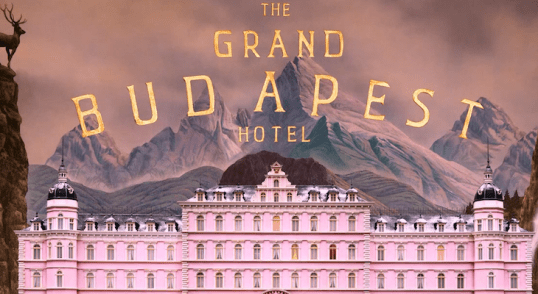
A Few Very Late Thoughts On Wes Anderson’s The Grand Budapest Hotel


grand-budapest-hotel

It took me a while to come around to appreciating The Grand Budapest Hotel.

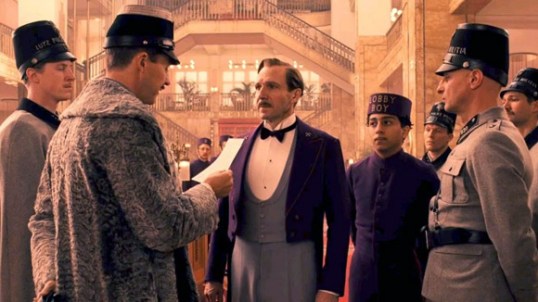
When I first saw Wes Anderson’s latest film, way back in March, I have to admit that I was somehow both impressed and disappointed.  The film’s virtues were obvious.  Ralph Fiennes gave a brilliant lead performance as Gustave, the courtly and womanizing concierge of the Grand Budapest Hotel.  As played by Fiennes, Gustave came to represent a certain type of old world elegance that, I’m assuming, died out long before I was born.  As is typical of Anderson’s film, The Grand Budapest Hotel was visual delight.  Even when the film’s convoluted storyline occasionally grew self-indulgent, The Grand Budapest Hotel was always interesting and fun to watch.

At the same time, I had some issues with The Grand Budapest Hotel.

One of the major ones — and I will admit right now that this will seem minor to some of you — is that halfway through the film, a cat is killed.  The evil Dimitri Desgoffe von Taxis (Adrien Brody) is attempting to intimidate a nervous lawyer, Kovacs (Jeff Goldblum).  Kovacs’s owns a cat and, at one point, Dimitri’s henchman, Jopling (Willem DaFoe), tosses the cat out of a window.  Kovacs runs to window and sees his dead cat splattered on the sidewalk below…

And this is when the audience in the theater laughed and I got very angry.

To me, there was nothing funny about killing that man’s cat.  But the more I’ve thought about it, the more that I’ve come to realize that my reaction had more to do with the audience than the film.  The film was not saying that the cat’s death was funny.  The film was saying that Dimitri and Jopling were evil and dangerous, as their actions throughout the film would demonstrate.  It was the audience that decided, since Grand Budapest Hotel is full of funny moments and has the off-center style that one has come to expect from Wes Anderson, that meant every scene in the film was meant to be played strictly for laughs.  The fact of the matter is that a typical Wes Anderson film will always attract a certain type of hipster douchebag.  They were the ones who loudly laughed, mostly because they had spent the entire movie laughing loudly in order to make sure that everyone around them understood that they were in on the joke.

But that’s not the fault of the film.  Despite what you may have heard and what the Golden Globes would have you believe, The Grand Budapest Hotel is not a comedy.  For all the deliberately funny and quirky moments, The Grand Budapest Hotel is actually a very serious film.  For all of the slapstick and for all of Ralph Fiennes’s snarky line readings, The Grand Budapest Hotel ultimately ends on a note of deep melancholy.

When I first saw The Grand Budapest Hotel, it seemed like it was almost too quirky for its own good.  And, to be honest, I could still have done without some of Anderson’s more self-indulgent touches.  The sequence at the end, where Gustave, who has been framed for murder, gets help from a series of his fellow hotel concierges started out funny but, as everyone from Bill Murray to Owen Wilson put in an appearance, it started to feel less like the story of Gustave and more like the story of all of Wes Anderson’s famous friends.

However, the more I’ve thought about it (and The Grand Budapest Hotel is a film that I’ve thought about a lot over the past year), the more I’ve realized that the quirkiness is only a problem if you made the mistake of thinking that the film is meant to be taken literally.

The more I thought about it, the more obvious it became that the most important scenes in The Grand Budapest Hotel were to be found at the beginning and the end of the film.

The film opens with a teenage girl sitting in front of the grave of a great author.  She opens a book and starts to read.

As soon as the girl starts to read, we flashback 29 years to 1985 where the author (Tom Wilkinson) sits behind his office desk and starts to talk about the time that he visited the Grand Budapest Hotel.  

We flashback again to 1969, where we see how the author (now played by Jude Law) met the owner of the Grand Budapest Hotel, a man named Zero (played by F. Murray Abraham).  Over dinner, Zero tells the author the story of how he first came to the Grand Budapest and how he eventually came to own the hotel.

And again, we go back in time, this time to 1932.  We see how the young Zero (Tony Revolori) first met and came to be the protegé of Gustave (Ralph Fiennes).  We see how Gustave taught Zero how to be the perfect concierge.  Eventually, Gustave would be framed for murdering a guest, Zero would meet and fall in love with Agatha (Saoirse Ronan), and then Zubrowska (the fictional Eastern European country in which this all takes place) would be taken over by fascists who would eventually claim the hotel as their own.

After the story of Gustave, Zero, and Agatha has been told, we suddenly flash forward to the author talking to Zero and then to the old author telling the story to his grandson and then finally back to the teenage reader sitting in the cemetery.

In other words, the Grand Budapest Hotel may be the story of Zero but we’re experiencing it through the memories of the author as visualized by the reader.  Gustave, Zero, and the entire Grand Budapest Hotel are not just parts of a story.  Instead, they become symbols of an old way of life that, though it may have been lost, still exists in the memories of old travelers like the author and the imaginations of young readers like the girl in the cemetery.

As I said at the start of this, I was vaguely disappointed with The Grand Budapest Hotel when I first saw it but, perhaps more than any other movie that I saw last year, this has been a film that I haven’t been able to get out of my mind.  Having recently rewatched the film on HBO, I can also attest that both The Grand Budapest Hotel and Ralph Fiennes’s performance not only hold up on a second viewing but improve as well.

I still stand by some of my original criticisms of The Grand Budapest Hotel.  I still wish that cat had not been thrown out the window, even though I now understand that Anderson’s main intent was to show the evil of Dimitri and Jopling.  And I still find some of the cameos to be jarring, precisely because they take us out of the world of the film.

But you know what?

Despite those flaws, The Grand Budapest Hotel is still a unique and intriguing film.  When I sat down tonight and made out my list of my top 26 films of 2014, I was not surprised that Grand Budapest Hotel made the list.  But I was a little bit surprised at how high I ended up ranking it.

But then I thought about it and it all made sense.

The-Grand-Budapest-Hotel-580


Film Review: Venus in Fur (dir by Roman Polanski)


One of the best films to be released in American theaters last year was also one that never really got as much recognition as it deserved.

Roman Polanski’s Venus In Fur (which, itself, is based on a play by David Ives that was loosely adapted from a novel written by Leopold von Sacher-Masoch, whose name and book would inspire the term masochism) features only two characters.  Thomas (Mathieu Almaric) is a neurotic playwright and director whose latest production is based on Sacher-Masoch’s book, Venus in Furs.  Vanda (Emmanuelle Seigner) is an actress who shows up late to audition for a lead role.

At first, Thomas is annoyed with and condescending towards the actress.  After all, she shows up late for the audition and gives a rather long and convoluted explanation as to why.  (It involves a dog wanting to fuck her.)  Despite the fact that she’s auditioning for a play set in the 19th century and featuring repressed members of the upper class, she shows up for the audition wearing leather and a dog collar.  (“I’m usually really demure and shit…” she assures him.)  At first, Thomas refuses to allow her to audition and says that there’s nobody in the theater for her to read with. Vanda suggests that he read with her.  Reluctantly, Thomas agrees…

And suddenly, Vanda goes from begging for his permission to taking control of the situation.  It turns out that she’s brought a period costume with her.  Before going up to the stage, she skillfully sets the stage lights to create the perfect effect.  (A stunned Thomas admits that he’s not even sure how the lighting board works.)  And when they’re on stage together, Vanda stuns Thomas by suddenly transforming herself into the character that he wrote.

The audition itself quickly becomes a not-quite friendly game between the two.  (This is a film that anyone — even little community theater actresses like me — who has ever auditioned for a role should be able to relate to.)  Vanda frequently interrupts the audition to question what Thomas has written and Thomas finds himself growing more and more disoriented as he’s frequently pulled out of the world he created and into reality.

Whenever challenged by Vanda, Thomas argues that the play has no deeper meaning.  It’s simply an adaptation of a work of literature.  However, as the audition continues, it becomes apparent that there’s more to the play and to the two people on stage than was originally apparent…

Venus in Fur is a fascinating film.  In its way, it’s also a playful one.  (You have to love the scene where a lingerie-clad Vanda suddenly takes on the role of therapist and perfectly psychoanalyzes Thomas’s fiancee.  Never has the invoking the name of Jacques Derrida led to so much laughter.)  Intelligently filmed by Polanski and wonderfully acted by both Amalric and Seigner, the power struggle between Thomas and Vanda makes for compelling viewing.

And hey, it’s currently on Netflix so you can watch it anytime you want.  Of course, it is subtitled but so what?  If you don’t know how to read, how did you make it through this review?

Seriously, find 93 minutes to spare and watch Venus In Fur.

James Bond Review: Quantum of Solace (dir. by Marc Foster)


So, here we are at the end of all things.

About 22 days ago, The Shattered Lens started a project to cover all of the Bond Films in order leading up to the release of the 23rd film, Skyfall. Spearheaded by Lisa Marie and Arleigh, It’s been a fun ride seeing everyone’s thoughts on James Bond over the movies and it’s cool to know that after 50 years, they still (well, most of them) hold their own. Today, we cover the second Daniel Craig film, Quantum of Solace.

Quantum of Solace reunites the same writing team from Casino Royale – Neal Purvis, Robert Wade and Paul Haggis (Academy Award Winner for 2006’s Crash), and brings on Monster’s Ball director Marc Foster for filming duties. As far as I can tell, it seems to be the first 007 film to start not far from the previous film ended. Literally, there could be a 20 minute difference between the end events of Casino Royale and the opening sequence here. The movie veers away from the classic gun barrel sequence and gets the audience right into the action with Bond avoiding villains in his Aston Martin DBS. The chase leads into a quarry, where he manages to get rid of his opponents. It’s only when he arrives in an unknown location within Siena, Italy that we find he’s had Mr. White in the trunk of his car the entire time. Mr. White was the individual that Bond wounded and introduced himself at the end of Casino Royale.

We basically find James Bond dealing with the loss of Vesper Lynd (Eva Green), and though she never makes any kind of appearance in the film, her presence (or lack thereof) is certainly felt. While Quantum of Solace has some remarkable scenes, for me it suffered from at least one major problem early on. Near the beginning of the film, after the credits, there is a chase between Bond and a villian, as always. At the same time, we’re given shots of a bullfight that’s occurring. While I understand that we’re supposed to see the similarities between both actions, I felt as if I was being pulled away from the story at hand. Foster does this a number of times, including one in the middle of an opera scene. That seemed really strange to me, though others may appreciate it.

Bond is told by M (Dame Judi Dench), after securing Mr. White that she has a lead on Vesper’s boyfriend, but also believes that he’s not quite dead. She asks Bond to leave it alone, but being someone who sees things through, he takes a copy of his photograph. It’s revealed that Mr. White is part of a larger group called Quantum, similar to SPECTRE in some respects. Although Bond loses Mr. White, he gets a clue that leads him to Haiti.

The Haiti sequences were done prior to the earthquake that happened there, and it makes Quantum of Solace one of the last films to show how that area looked before the devastation. 007 is able to find his suspect, but in the course of fighting, he kills him. This becomes something of a thread in Quantum of Solace. Just about anyone that Bond encounters is either killed by him or because of him and at some point, restraint needs to be made. At some point, it goes so far that it becomes something of a “Bond Goes Rogue” tale in the vein of License to Kill. There’s a slight reference to The Spy Who Loved Me with a rooftop fall that’s interesting, as well as a great one for the movie Goldfinger. The Craig Bond stories seem to want to make sure they remind us of all the films before it, though it’s hardly the first 007 story to do so.

The Bond Girls in Quantum of Solace are Olga Kurlyenko and Gemma Arterton. Kurlyenko’s Camille has a mission of her own, as she’s trying to avenge the death of her mother. Arterton’s character, Miss Fields (who’s first name I believe may be Strawberry, but don’t quote me on that) is send in by MI6 to bring Bond back in for debriefing (as he’s been avoiding M’s requests). The actual villain of the movie is played by Mathieu Amalric (Munich), who is more of a hands-off baddie with tons of henchmen at his side.

The problem I had with Quantum of Solace is that it seemed like the Vesper angle was a side note. Yes, we know Quantum is out there, and we learn there’s a plot to control the water of a small area, but outside of all that, it didn’t seem like much of a revenge story. This is unless, of course, it wasn’t meant to be. I’m not a big fan of Quantum of Solace overall. It’s not as bad as Die Another Day (which a number of people consider to be one of the worst) by a longshot, but after what we were given in Casino Royale, it almost seems like it builds on things in the wrong direction.

This weekend, Skyfall is out, and by the time the weekend is up, we’ll have a review for it. We leave you the theme song to Quantum of Solace, “Another Way to Die” by Jack White and Alicia Keys. The Instrumental version of this song is actually really good, though the actual song itself was just a little off.