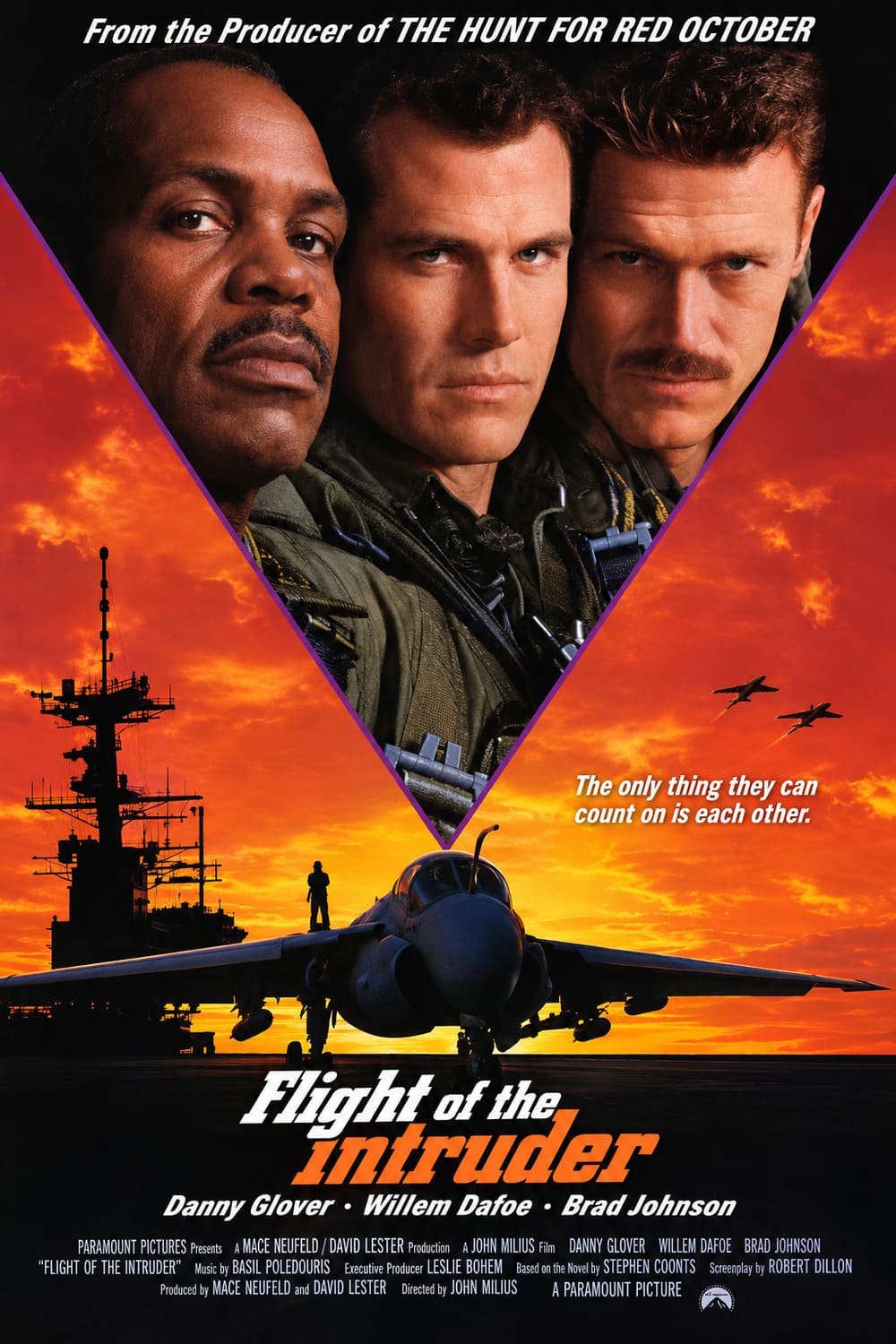
Film Review: Flight of the Intruder (dir. by John Milius)


“I do know the difference between dying for something and dying for nothing.” — Jake Grafton

There is a difference between knowing how to fly into danger and knowing what that danger is supposed to accomplish. That gap gives Flight of the Intruder its most interesting material. John Milius’s 1991 war film follows men who trust their training, their aircraft, and each other far more than they trust the decisions sending them into combat. Adapted from Stephen Coonts’s novel of the same name, it mixes a story of wartime disillusionment with an old-fashioned action adventure. Those two sides do not always fit together, but the friction gives this uneven movie more personality than a routine military thriller.

Brad Johnson plays Lieutenant Jake Grafton, a Navy pilot flying an A-6 Intruder during the Vietnam War. When his bombardier is killed on a mission against a seemingly worthless target, Grafton begins questioning the purpose behind the daily cycle of takeoffs, bombing runs, and dangerous returns. He is not afraid of doing his job. He is angry that doing it well might make no difference. That distinction gives the character an accessible emotional foundation. Even when the screenplay pushes him toward predictable acts of rebellion, his initial frustration feels like something more substantial than the usual action hero’s dislike of authority.

The film’s central idea is that Grafton needs to recover a sense of purpose, but it gets into trouble when it starts treating that need as its own justification. His answer is an unauthorized strike against a missile depot in Hanoi, undertaken with veteran bombardier Virgil Cole. It is an exciting premise because the mission carries both military danger and personal consequences. As an answer to Grafton’s disillusionment, though, it feels suspiciously convenient. The movie raises difficult questions about waste and obedience, then suggests that choosing a better target might settle them. The action becomes clearer just as the thinking becomes fuzzier.

Johnson gives Grafton a restrained, earnest quality that generally suits the role. He looks comfortable playing someone who expresses himself more easily through work than conversation. That reserve helps sell the character’s professionalism, although it also limits the emotional impact of scenes that need him to reveal more. There are moments when Grafton seems less like a man struggling with grief than a leading man waiting for the next plot development. Johnson is never a fatal weakness, but he does not consistently provide the intensity needed to make every stage of Grafton’s transformation feel fully earned.

Willem Dafoe is much more immediately engaging as Cole. He brings an unpredictable edge that keeps their partnership from becoming a simple arrangement between an inexperienced hothead and a wise veteran. Cole has experience, certainly, but Dafoe makes that experience look potentially dangerous rather than automatically reassuring. His confidence suggests someone who has spent enough time around death to develop an unusual relationship with it. That gives his scenes with Johnson a welcome tension. Grafton wants reassurance that his anger means something, while Cole seems ready to turn that anger into action without offering much comfort about the consequences.

Danny Glover gives the movie another useful source of resistance as commanding officer Frank Camparelli. His job is partly to stand between frustrated men and the decisions they might make when frustration takes over. Glover brings enough authority to prevent Camparelli from feeling like a cardboard obstacle placed in the heroes’ path. You can understand why Grafton resents restrictions while also recognizing that somebody has to think beyond the emotional needs of one crew. The film is more interesting whenever it allows that disagreement to remain unresolved. It becomes less interesting when military discipline is treated mainly as something adventurous men must work around.

Once the aircraft leave the carrier, the movie becomes noticeably more assured. The cockpit sequences give the action a sense of process: these men have equipment to manage, threats to interpret, and very little time to make decisions. That practical detail makes the danger engaging. Instead of relying entirely on spectacle, the better scenes build suspense around what the crews can see, what they cannot see, and how quickly their situation might change. Some effects have aged better than others, but the flying still supplies the film’s strongest argument for watching it. Competence under pressure remains compelling even when the visuals look dated.

The ground-level material is considerably patchier. Drinking, banter, and romantic interludes are meant to show what these men do with the time between missions, but too much of it feels borrowed from other military movies. The romantic subplot involving Rosanna Arquette is especially thin, offering a softer side of Grafton without developing much emotional momentum of its own. These scenes should make the next flight matter more by showing what exists outside the cockpit. Instead, they sometimes make you impatient for another launch. The issue is not that a combat film needs constant action; its quieter moments simply need more individuality.

Milius is better at conveying loyalty than examining the assumptions behind it. The bonds between the aviators have weight, and the later rescue-centered action draws real energy from their refusal to abandon one another. Yet the film’s perspective stays narrow. Vietnamese lives remain largely outside its emotional focus, while American courage receives sustained attention. That imbalance matters because the story wants its heroes’ frustration to carry moral significance, not merely dramatic interest. It understands how war damages these men, but seems less curious about what their determination might cost anyone else. The result is emotionally direct without being especially searching.

By the end, Flight of the Intruder has made a stronger case for the men’s devotion to each other than for the decisions they make. That is both its saving grace and its limitation. Dafoe’s sharp presence, Glover’s authority, and the tense flying sequences give it enough substance to remain watchable through the slower stretches. Still, the film keeps reaching for complicated questions and accepting action-movie answers. It is worth seeing as an imperfect combat adventure, especially for its cockpit tension, but its most revealing moments occur when skill and courage stop being enough—when getting home safely cannot explain why the mission mattered.
4 Shots From 4 Films: Special Russ Meyer Edition


4 Or More Shots From 4 Or More Films is just what it says it is, 4 shots from 4 of our favorite films. As opposed to the reviews and recaps that we usually post, 4 Shots From 4 Films lets the visuals do the talking!

104 years ago, on the very day, Russ Meyer was born in San Leandro, California.  Meyer would get his start filming newsreels during World War II, with much of his newsreel footage later showing up in films like the 1970 Oscar winner, Patton.  When he returned to the United States, he continued to make films, though the subject matter changed a bit.  Meyer was one of the pioneers of the adult film industry, though his once controversial films now seem rather quaint and innocent when compared to the industry’s later films.  Meyer’s strong visual sense and his intentionally over-the-top plots made him a favorite amongst underground critics.  In the 70s, he was briefly embraced by mainstream Hollywood but, unhappy with having to deal with the studio bosses, Meyer returned to making the type of independent, grindhouse films that made him famous.

Russ Meyer was 82 years old when he died in 2004.  He was acclaimed as one of America’s first and most iconic independent filmmakers.

Here are 4 Safe-For-Work Shots From 4 Russ Meyer Films.

4 Shots From 4 Russ Meyer Films

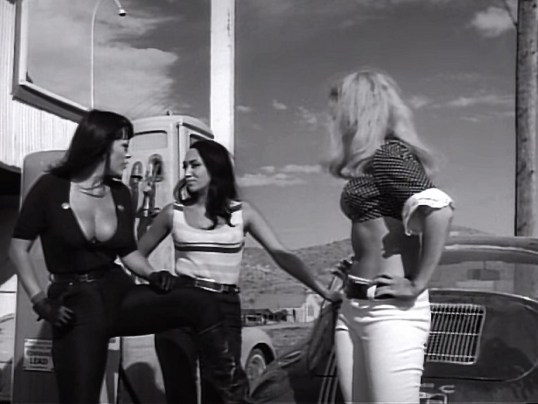
Faster, Pussycat! Kill! Kill! (1965, dir by Russ Meyer, DP: Walter Schenk)

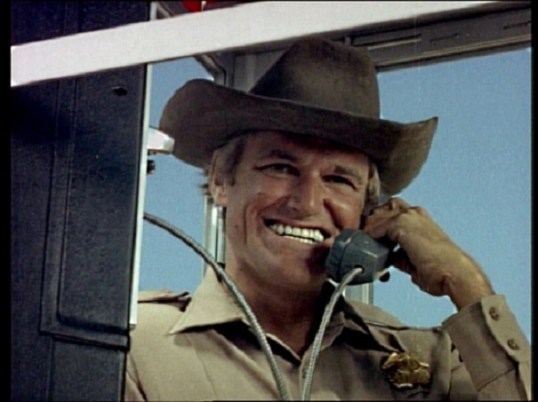
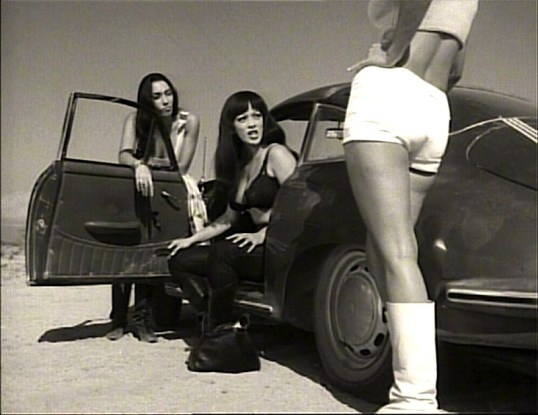
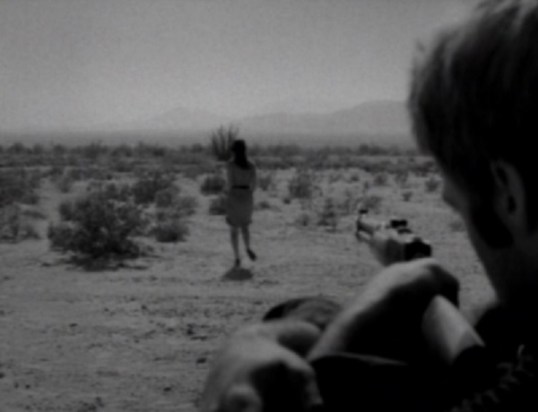
Motorpsycho (1965, dir by Russ Meyer, DP: Russ Meyer)

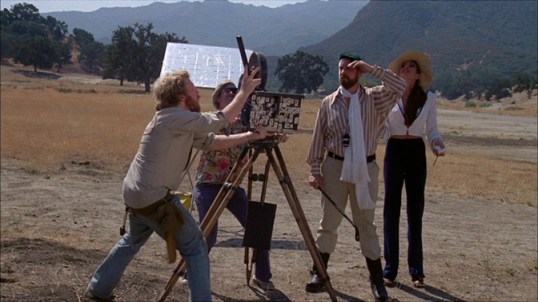
Cherry, Harry, & Raquel! (1970, dir by Russ Meyer, DP: Russ Meyer)

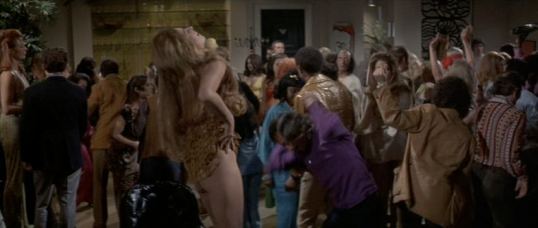
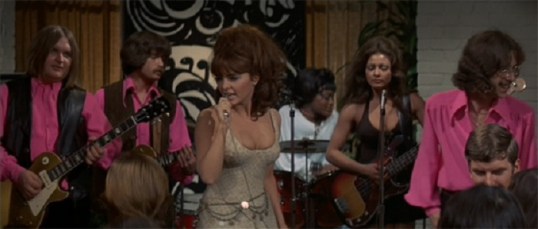
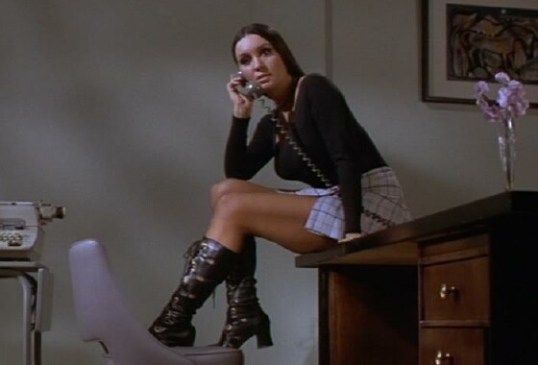
Beyond The Valley Of The Dolls (1970, dir by Russ Meyer, DP: Fred J. Koenekamp)

4 Shots From 4 Films: Special Hollywood Edition


4 Or More Shots From 4 Or More Films is just what it says it is, 4 shots from 4 of our favorite films. As opposed to the reviews and recaps that we usually post, 4 Shots From 4 Films lets the visuals do the talking!

Today, we pay tribute to Hollywood with 4 shots from 4 films!

4 Shots From 4 Films About Hollywood

Beyond The Valley Of The Dolls (1970, dir by Russ Meyer, DP: Fred J. Koenekamp)

Hollywood Boulevard (1976, dir by Allan Arkush and Joe Dante, DP: Jamie Anderson)

Mulholland Drive (2001, dir by David Lynch, DP: Peter Deming)

Once Upon A Time In Hollywood (2019, dir by Quentin Tarantino, DP: Robert Richardson)

4 Shots From 4 Films: Special Disaster Edition


4 Shots From 4 Films is just what it says it is, 4 shots from 4 of our favorite films. As opposed to the reviews and recaps that we usually post, 4 Shots From 4 Films is all about letting the visuals do the talking.

Today, we pay honor to one of my favorite genres, the disaster film!

It’s time for….

4 Shots From 4 Disaster Films

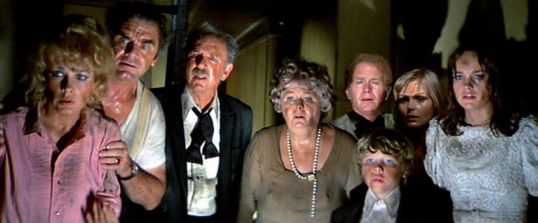
The Poseidon Adventure (1972, dir by Ronald Neame, DP: Harold E. Stine)

The Towering Inferno (1974, dir by John Guillermin and Irwin Allen, DP: Fred J. Koenekamp and Joseph Biroc)

Airport 1975 (1974, dir by Jack Smight, DP: Philip H. Lathrop)

The Swarm (1978, dir by Irwin Allen, DP: Fred J. Koenekamp)

4 Shots From 4 Films: Special Carol Reed Edition


4 Shots From 4 Films is just what it says it is, 4 shots from 4 of our favorite films. As opposed to the reviews and recaps that we usually post, 4 Shots From 4 Films lets the visuals do the talking.

Today, we celebrate the birth of the great British director, Carol Reed!  It’s time for….

4 Shots From 4 Carol Reed Films

Odd Man Out (1947, dir by Carol Reed, DP: Robert Krasker)

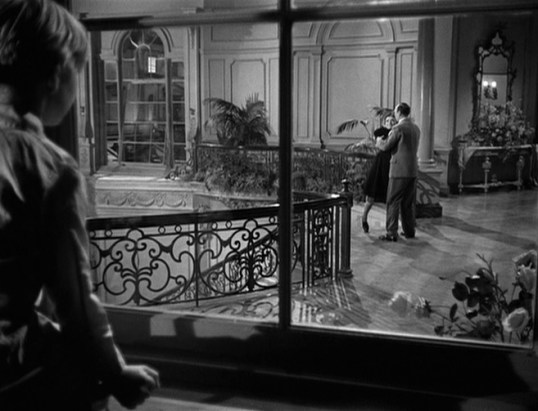
The Fallen Idol (1948, dir by Carol Reed, DP: Georges Perinal)

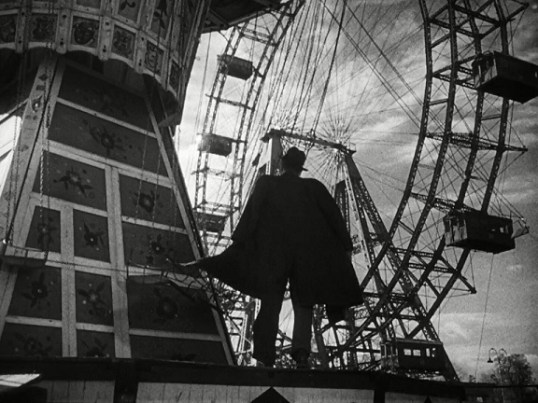
The Third Man (1949, dir by Carol Reed, DP: Robert Krasker)

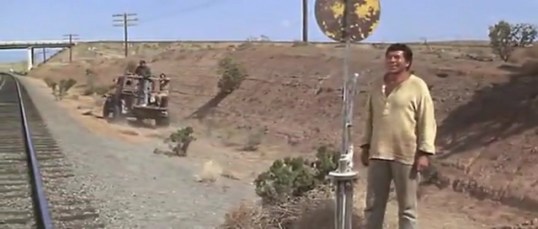
Flap (1970, dir by Carol Reed, DP: Fred J. Koenekamp)

4 Shots From 4 Films: Special Russ Meyer Edition


4 Or More Shots From 4 Or More Films is just what it says it is, 4 shots from 4 of our favorite films. As opposed to the reviews and recaps that we usually post, 4 Shots From 4 Films lets the visuals do the talking!

103 years ago, on the very day, Russ Meyer was born in San Leandro, California.  Meyer would get his start filming newsreels during World War II, with much of his newsreel footage later showing up in films like the 1970 Oscar winner, Patton.  When he returned to the United States, he continued to make films, though the subject matter changed a bit.  Meyer was one of the pioneers of the adult film industry, though his once controversial films now seem rather quaint and innocent when compared to the industry’s later films.  Meyer’s strong visual sense and his intentionally over-the-top plots made him a favorite amongst underground critics.  In the 70s, he was briefly embraced by mainstream Hollywood but, unhappy with having to deal with the studio bosses, Meyer returned to making the type of independent, grindhouse films that made him famous.

Russ Meyer was 82 years old when he died in 2004.  He was acclaimed as one of America’s first and most iconic independent filmmakers.

Here are 4 Safe-For-Work Shots From 4 Russ Meyer Films.

4 Shots From 4 Films

Faster, Pussycat! Kill! Kill! (1965, dir by Russ Meyer, DP: Walter Schenk)

Motorpsycho (1965, dir by Russ Meyer, DP: Russ Meyer)

Cherry, Harry, & Raquel! (1970, dir by Russ Meyer, DP: Russ Meyer)

Beyond The Valley Of The Dolls (1970, dir by Russ Meyer, DP: Fred J. Koenekamp)

4 Shots From 4 Films: Special Carol Reed Edition


4 Shots From 4 Films is just what it says it is, 4 shots from 4 of our favorite films. As opposed to the reviews and recaps that we usually post, 4 Shots From 4 Films lets the visuals do the talking.

Today, we celebrate the birth of the great British director, Carol Reed!  It’s time for….

4 Shots From 4 Carol Reed Films

Odd Man Out (1947, dir by Carol Reed, DP: Robert Krasker)

The Fallen Idol (1948, dir by Carol Reed, DP: Georges Perinal)

The Third Man (1949, dir by Carol Reed, DP: Robert Krasker)

Flap (1970, dir by Carol Reed, DP: Fred J. Koenekamp)

4 Shots From 4 Films: Special Russ Meyer Edition


4 Or More Shots From 4 Or More Films is just what it says it is, 4 shots from 4 of our favorite films. As opposed to the reviews and recaps that we usually post, 4 Shots From 4 Films lets the visuals do the talking!

101 years ago, on the very day, Russ Meyer was born in San Leandro, California.  Meyer would get his start filming newsreels during World War II, with much of his newsreel footage later showing up in films like the 1970 Oscar winner, Patton.  When he returned to the United States, he continued to make films, though the subject matter changed a bit.  Meyer was one of the pioneers of the adult film industry, though his once controversial films now seem rather quaint and innocent when compared to the industry’s later films.  Meyer’s strong visual sense and his intentionally over-the-top plots made him a favorite amongst underground critics.  In the 70s, he was briefly embraced by mainstream Hollywood but, unhappy with having to deal with the studio bosses, Meyer returned to making the type of independent, grindhouse films that made him famous.

Russ Meyer was 82 years old when he died in 2004.  He was acclaimed as one of America’s first and most iconic independent filmmakers.

Here are 4 Safe-For-Work Shots From 4 Russ Meyer Films.

4 Shots From 4 Films

Faster, Pussycat! Kill! Kill! (1965, dir by Russ Meyer, DP: Walter Schenk)

Motorpsycho (1965, dir by Russ Meyer, DP: Russ Meyer)

Beyond The Valley Of The Dolls (1970, dir by Russ Meyer, DP: Fred J. Koenekamp)

The Seven Minutes (1971, dir by Russ Meyer, DP: Fred Mandl)

4 Shots From 4 Films: Special Russ Meyer Edition


4 Or More Shots From 4 Or More Films is just what it says it is, 4 shots from 4 of our favorite films. As opposed to the reviews and recaps that we usually post, 4 Shots From 4 Films lets the visuals do the talking!

100 years ago, on the very day, Russ Meyer was born in San Leandro, California.  Meyer would get his start filming newsreels during World War II (many of his newsreel footage were used in the 1970 Oscar winner, Patton).  When he returned to the United States, he continued to make films.  Meyer was one of the pioneers of the adult film industry, though his films seem rather quaint and innocent when compared to the industry’s later films.  Meyer’s strong visual sense and his intentionally over-the-top plots made him a favorite amongst underground critics.  In the 70s, he was briefly embraced by mainstream Hollywood but, unhappy with having to deal with studio bosses, Meyer returned to making the type of independent, grindhouse films that made him famous.

Russ Meyer was 82 years old when he died in 2004.  He was acclaimed as one of America’s first and greatest independent filmmakers.

Here are 4 Safe-For-Work Shots From 4 Russ Meyer Films.

4 Shots From 4 Films

Faster, Pussycat! Kill! Kill! (1965, dir by Russ Meyer, DP: Walter Schenk)

Motorpsycho (1965, dir by Russ Meyer, DP: Russ Meyer)

Cherry, Harry, & Raquel! (1970, dir by Russ Meyer, DP: Russ Meyer)

Beyond The Valley Of The Dolls (1970, dir by Russ Meyer, DP: Fred J. Koenekamp)