Review: The Distinguished Gentleman (dir. by Jonathan Lynn)


“With all this money coming in from both sides, how does anything ever get done?” — Thomas Jefferson Johnson

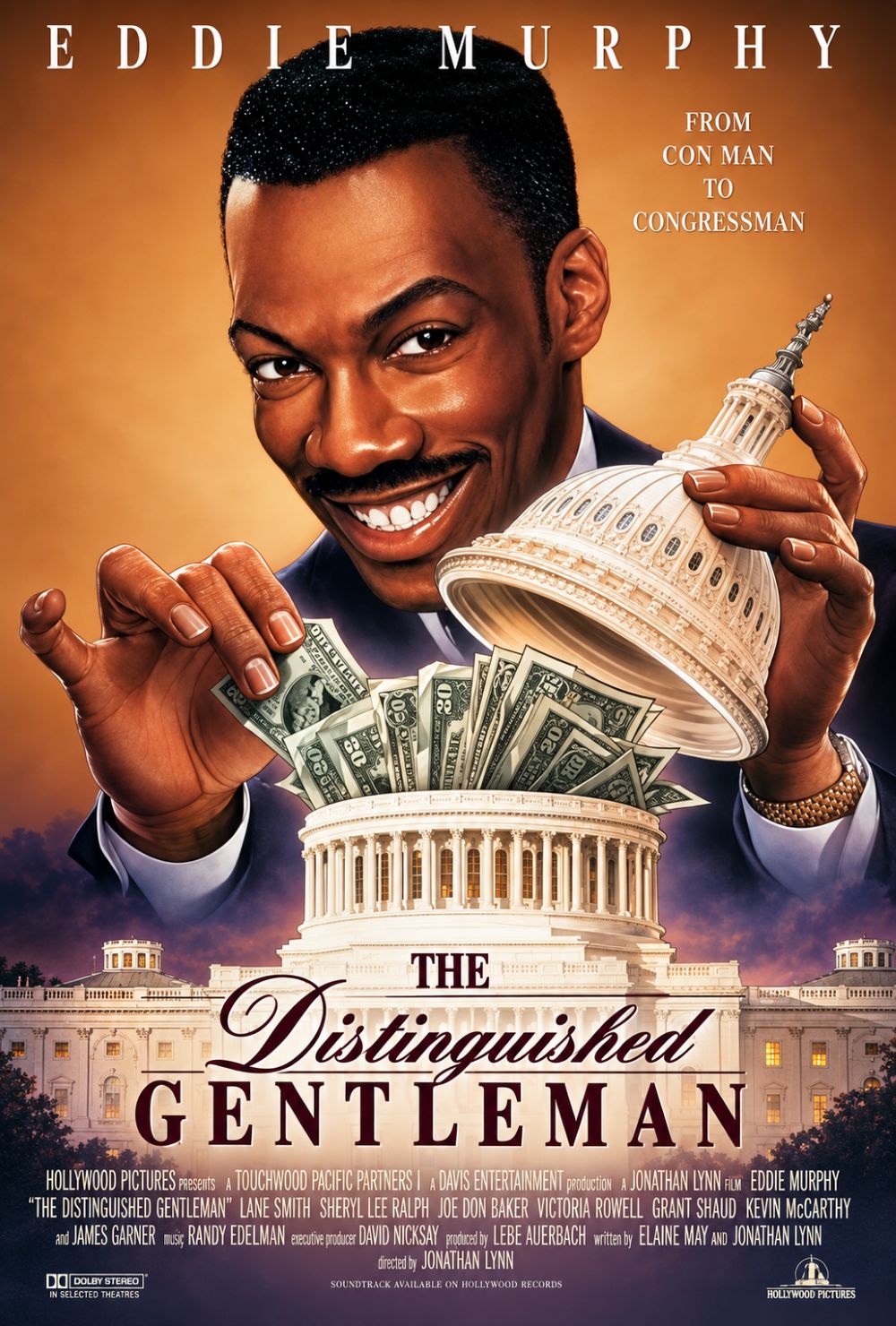
The Distinguished Gentleman is an uneven but enjoyable Eddie Murphy comedy whose premise has become more relevant with time. Directed by Jonathan Lynn, the 1992 film casts Murphy as Thomas Jefferson Johnson, a Florida con man who discovers that a recently deceased congressman had the exact same name. Seeing a shortcut to money and status, Johnson runs for the vacant House seat, wins largely on name recognition, and enters Washington with no meaningful political experience. In 1992, that premise played as broad political satire. Today, it carries a more uneasy edge, because its suggestion that image, recognition, and confidence can outrun scrutiny does not seem nearly as far-fetched.

That change in perspective makes the film’s central joke more interesting. Johnson begins as a small-time hustler who understands scams, pressure, ego, and persuasion. Once he reaches Congress, however, he discovers a political world that runs on many of the same instincts. The people around him do not call their dealings scams. They talk about donations, access, relationships, opportunities, and constituent concerns. But Johnson sees the transaction beneath the polished language immediately. The movie’s sharpest idea is that he may be a con man, yet he is not automatically the least honest person in Washington. He merely lacks the expensive suits and professional vocabulary used to make self-interest look respectable.

Murphy is exactly the right actor to make that contradiction work. Thomas Jefferson Johnson has to be selfish enough for the premise to hold together, clever enough to survive in an unfamiliar environment, and charming enough that the audience still wants to follow him after he wins office through deception. Murphy brings all of those qualities to the role. Johnson enjoys the attention, travel, influence, and special treatment attached to public office because he sees Congress as the biggest score he has ever found. At the same time, Murphy gives him enough quickness and warmth that he never becomes unpleasant. Even when Johnson does not understand what is happening around him, he moves through Washington with the confidence of someone who assumes he belongs there.

That confidence drives the movie’s strongest material. Johnson may not know committee procedure, legislative language, or public policy, but he knows people. He can recognize when praise is a setup, when a favor comes with strings attached, and when a supposedly helpful figure is treating him as an investment. This makes him an effective comic guide through Washington’s rituals. He is unqualified in the usual sense, but he is unusually qualified to identify the self-dealing hidden behind political formality. Jonathan Lynn understands the humor in that contrast and keeps the early scenes moving briskly through offices, hearings, fundraisers, press events, and lobbyist meetings. His direction is functional rather than visually distinctive, but it gives Murphy room to work and makes the political setting clear without drowning the comedy in procedure.

The problem is that the movie gradually moves away from the very idea that gives it its satirical bite. Johnson’s election is a pointed joke about name recognition, voter inattentiveness, and political branding. He wins because his name is familiar enough to inspire trust, not because anyone has evaluated his experience, policies, or character. That setup could have supported a more sustained comedy about campaigns, media manipulation, and the ease with which public image can substitute for qualification. Instead, the film shifts into a more conventional pharmaceutical-company corruption plot, giving Johnson an external villain and a clear reason to become more responsible.

That shift is understandable, since the story needs stakes beyond Johnson simply enjoying the perks of Congress. It also gives Murphy a more sympathetic character arc. Once Johnson sees the real-world consequences of corporate influence and political favors, he begins to use his instincts against people whose schemes are more damaging than his own. The change works because he does not become a completely different person. He remains fast-talking, opportunistic, and alert to every available angle. What changes is his sense of scale: his scams are about quick money, while the larger political and corporate schemes around him can hurt ordinary people while remaining hidden behind legal language and respectable appearances.

Still, making the conflict so clear-cut also weakens the satire. The opening suggests that corruption is part of a broader culture of money, access, public relations, and political influence. The later plot makes it easier to imagine that the problem lies mainly with a few especially corrupt people. Lane Smith’s Dick Dodge represents that polished form of corruption effectively. Dodge has the calm authority and practiced respectability of a politician who can make unethical behavior sound like normal procedure. He is a good villain precisely because he does not need to look obviously sinister; he simply treats power as something to be managed for private benefit.

Dodge’s presence becomes more useful because the film gives him a genuine counterweight in Charles S. Dutton’s Congressman Elijah Hawkins. Hawkins is almost Dodge’s opposite: plainspoken, principled, and committed to the idea that public office should mean public service. Dutton gives the role enough strength that Hawkins does not come across as a bland symbol of virtue. He is not there simply to lecture Johnson. Instead, he demonstrates that integrity and competence can exist within the same institution that has rewarded Dodge’s cynicism. Through these two men, Johnson sees both versions of political life: Dodge shows how power can be abused, while Hawkins shows what it is supposed to accomplish.

That contrast helps the film’s best themes land even when the plot becomes more routine. Johnson starts out believing that public office is just another hustle, only with better benefits and larger payouts. Hawkins gives him a reason to see the job differently, while Dodge proves that the cynicism Johnson brought to Washington is not entirely misplaced. Johnson’s eventual decision to push back against corruption therefore feels earned, even if the film resolves the conflict more neatly than its setup deserves. He does not become an idealist so much as a hustler who finally recognizes that the people above him are running a far bigger and more harmful game.

Viewed now, that idea carries more weight than it did in 1992. George Santos’s rise and eventual expulsion from Congress following repeated revelations about his background and finances offered a modern example of political presentation outpacing public scrutiny. Tommy Tuberville’s move from high-profile college-football coach and broadcaster into the U.S. Senate reflects a different but related reality: name recognition built outside politics can be a major electoral asset. The point is not that either man is literally comparable to Thomas Jefferson Johnson. It is that the film’s basic concern—how easily familiarity and confidence can be mistaken for qualification—has become harder to dismiss as mere comic exaggeration.

The same pattern can be seen beyond Congress. Donald Trump reached the presidency after decades as a celebrity businessman and television personality, while Arnold Schwarzenegger’s worldwide fame as a bodybuilder and movie star became a significant advantage in his successful run for governor of California. Celebrity alone never explains an election, and prior careers in sports or entertainment do not automatically make someone unfit for public office. Still, those examples show why the film’s name-recognition joke now feels more pointed. A highly recognizable candidate begins with a built-in audience, a simple public identity, and the kind of familiarity that many traditional candidates spend years trying to earn.

That dynamic has only become more visible as media personalities from different ideological camps seek office. Television hosts, pundits, podcasters, athletes, entertainers, and online figures can launch campaigns with established audiences, fundraising networks, and brand recognition already in place. In that environment, Johnson’s path to office feels less like an impossible gag and more like a deliberately exaggerated version of a real political tendency. The Distinguished Gentleman is not predicting every modern development, but it understands that voters may attach trust to a familiar name or face before they ask harder questions about qualifications, judgment, or policy.

This added relevance does not erase the film’s flaws. The comedy is still inconsistent, and the lobbyists, politicians, and corporate villains are often broader than they are funny. Murphy can make routine scenes entertaining, particularly when Johnson bluffs through official settings with total confidence despite not knowing the rules. But the movie often settles for familiar Washington stereotypes when it could push its satire further. It is rarely dull, yet it repeatedly avoids the messier implications of its best idea.

Even so, The Distinguished Gentleman remains worth revisiting as a mid-tier Murphy vehicle with more ambition than its reputation suggests. It does not have the comic consistency of Trading Places, the invention of Coming to America, or the effortless momentum of Beverly Hills Cop. Its pharmaceutical-company plot is too conventional, and its ending is more reassuring than genuinely sharp. Yet Murphy gives it a strong center, Dutton and Smith create an effective moral and political contrast, and the premise has gained resonance with time. What began as a funny story about a con man finding his way into Congress now plays as a reminder that political satire becomes less comfortable when reality starts catching up to it.
Q&A (1990, directed by Sidney Lumet)


Al Reilly (Timothy Hutton) is the son of a New York cop and a former cop himself.  Having put himself through law school, Reilly is now an assistant district attorney.  When Reilly is assigned the case of Mike Brennan (Nick Nolte), a popular detective who claims to have killed a Puerto Rican drug dealer in self-defense, everyone assumes that Al will come down on the side of Brennan.  Instead, Al discovers that Brennan is corrupt and that the shooting is connected to a drug lord named Bobby Texador (Armand Assante).  Bobby just happens to be married to Nancy (Jenny Lumet), who is Al’s ex-girlfriend.

Nobody was better at capturing the hustle and the gritty language of New York City politics than Sidney Lumet and some of the best scenes in Q&A are the ones where characters like Al, Brennan, and even Bobby are just hanging out and being the New Yorkers that they are.  The dialogue in those scenes crackle with cynicism, as everyone knows better than to trust anything that anyone says.  Coming after Serpico and The Prince of the City, this was Lumet’s third film to focus on corruption in the NYPD.  It was a world that Lumet obviously knew well and he brings the eye for detail that a story like this needs to hold our attention.

Unfortunately, the plot of Q&A is often too dependent on melodrama and coincidence.  Asking us to believe that Bobby would just happen to be married to Al’s ex is asking a lot.  As opposed to the documentary feel of Serpico and especially The Prince of the City, Q&A feels like an extended episode of a cop show, with little of the moral ambiguity that Lumet brought to his best films.  Q&A is good but its never as good as it could have been.

As an actress Jenny Lumet doesn’t really have the depth necessary to make Nancy a believable character.  (Francis Ford Coppola wasn’t the only director to miscast his daughter in 1990.)  But the rest of the cast is uniformly excellent, with Luis Guzman, Fyvush Finkel, Lee Richardson, Paul Calderon, Charles S. Dutton, and Patrick O’Neal all turning in good supporting performances.  Of the leads, Hutton is often overshadowed by the more flamboyant performances of Nolte and Assante but, overall, he does a good job of anchoring the film’s story.  Nolte is excellent in the role of Mike Brennan.  It’s just too bad that the film eventually turns him into a standard movie villain.

Sidney Lumet would return to theme of New York political corruption with the underrated Night Falls On Manhattan.

Retro Television Review: Homicide: Life On The Street 5.3 “Prison Riot”


Welcome to Retro Television Reviews, a feature where we review some of our favorite and least favorite shows of the past!  On Sundays, I will be reviewing Homicide: Life On The Street, which aired from 1993 to 1999, on NBC!  It  can be viewed on Peacock.

This week, we have one of Homicide’s best episodes.

Episode 5.3 “Prison Riot”

(Dir by Kenneth Fink, originally aired on October 18th, 1996)

At the Maryland State Prison, convicted murderer Claude Vetter (Mark Rogers) accidentally bumps into another murderer, James Douglas (Tim McAdams), in the cafeteria.  James pulls a knife and stabs Vetter in the stomach.  As Vetter collapses, a riot breaks out.  By the time the guards have forcefully restored order, Vetter and James Douglas are dead.  Everyone knows who killed Vetter.  But who stabbed James in the back?

Lewis, Munch, Howard, Bayliss, Kellerman and Giardello head down to the scene.  (Pembleton, who is still struggling with his up-coming shooting test, is left behind.)  Munch and Lewis don’t care about solving Douglas’s murder.  As far as they’re concerned, both Claude Vetter and James Douglas got what they deserved.  Munch gets annoyed and returns to the station.  Lewis sticks around to help Bayliss with a few interrogations before he also leaves.  Bayliss, however, is determined to solve the murder of James Douglas and Kellerman, looking to make up all the ill will that has existed between him and Bayliss, does his best to help.

Bayliss is convinced that Elijah Sanborn (Charles S. Dutton) saw who killed James.  Sanborn is serving a life sentence for shooting a drug dealer who previously shot and killed Elijah’s wife in drive-by.  (Elijah’s wife was an innocent bystander.)  Elijah has been in prison for 14 years.  He’s never getting out and he sees no reason why he should help the police.  However, when Elijah’s 14 year-old son is arrested for a petty theft, Bayliss offers a deal.  If Elijah tells Bayliss who killed James Douglas, Elijah’s son will only do 6 months at a juvenile facility.  If Elijah refuses to talk, his son will be charged as an adult.

Elijah is outraged that Bayliss would “use my own son against me!”  It’s only after his estranged daughter (Heather Alicia Simms, giving a wonderful performance) visits that Elijah agrees to share what he knows.  He has one condition.  He wants to see his son.  When Elijah’s son turns out to be a sullen and uncommunicative wannabe gangster who tells his father that he doesn’t care about him, Elijah announces, “I killed James Douglas.”

Bayliss knows that Elijah is lying but he also knows that Elijah’s confession is enough to send him to the gas chamber.  With no prospects of ever walking free and having been rejected by both his daughter and his son, Elijah has decided to use the system to kill himself.

Fortunately — or unfortunately, depending on how you look at things, another prisoner, Tom Marans (Dean Winters), beats Trevor Douglas (John Epps) into a coma.  Trevor was James’s cousin and Marans reveals that Trevor is also the one who killed James because he thought James had stolen a carton of cigarettes from him.  Marans explains that he was James’s “wife” in prison.

As the episode ends, Giardello congratulates Bayliss before adding that it’ll only be a matter of time before Trevor’s people seek revenge and they all have to return to the prison to investigate the murder of Tom Marans.

This was a great episode.  After spending the past few seasons as Pembleton’s sidekick, Bayliss finally got a chance to step up and show off his own abilities as a homicide detective.  Kellerman assisting him turned out to be an inspired move, as it allowed Kellerman to finally be something more than just a kind of goofy frat boy detective.  Working together, Kyle Secor and Reed Diamond had great comedic timing, which kept this rather grim episode from getting too dark.  (Kellerman: “Do you want a hug?”  Bayliss: “Do you and Lewis often hug?”)

One thing that made this episode interesting was that the victims, the suspects, and most of the witnesses were all murderers who were previously arrested on this show.  It was interesting to see how prison had changed or, in some cases, not changed them.  The once preppy Tom Marans now had bright yellow hair, scarred knuckles, and some really nasty facial sores.  Meanwhile, James and Trevor Douglas were still the same punks that they were on the outside, when they used to film themselves committing murder.

Finally, what made this episode truly powerful was the performance of Charles S. Dutton.  A Baltimore native who served time in prison before becoming an acclaimed stage actor, Dutton has not always been served well by television and the movies.  He’s very much a theatrical actor and, when cast in the wrong role, he can come across as being a bit over-the-top.  In this episode, though, Dutton is perfectly cast and he gives a truly moving performance of as an inherently decent man who does what he has to do in order to survive as a prisoner in a system that has been constructed specifically to break and destroy him.  Elijah’s fury feels earned and deserved but, in the end, he’s ultimately just a father who wants things to be better for his son and his daughter.  When Elijah’s son rejected him, it was one of Homicide’s most heart-breaking moments.

Prison Riot has a reputation for being one of Homicide’s best episodes.  The reputation is very much deserved.

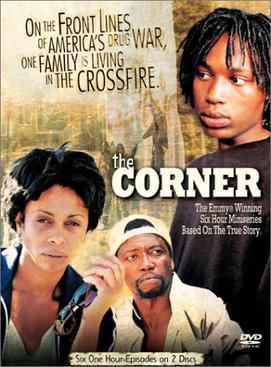
Miniseries Review: The Corner (dir by Charles S. Dutton)


Actor T.K. Carter died on January 9th.  He was 69 years old and his passing really didn’t get the notice that he deserved.

T.K. Carter may not have been a household name but I imagine that most people would recognize him if they saw him.  He appeared on a lot of television shows.  He did his share of movies.  He was usually cast in comedic roles, often playing the best friend who would inevitably provide some sort of gentle commentary on the problems of his friends or coworkers.  I just recently finished reviewing Good Morning, Miss Bliss, which featured Carter as Milo.  I’m not really sure what Milo did at John F. Kennedy Junior High but he was certainly more likable than Miss Bliss.

Carter appeared in some films as well.  Ironically, his two best-known films were not comedic at all.  He plays Nauls in John Carpenter’s The Thing, a film that pretty much ends with Kurt Russell and Keith David freezing to death while wondering whether or not one of them is actually a killer alien.  And he also played Cribbs, a pot-smoking member of the National Guard who finds himself lost in the Louisiana bayou in Walter Hill’s Southern Comfort.  I have to admit that, after having watched both of those films more than once, it was a bit strange to see Carter exchanging jokes with Hayley Mills and Dennis Haskins on Good Morning Miss Bliss.

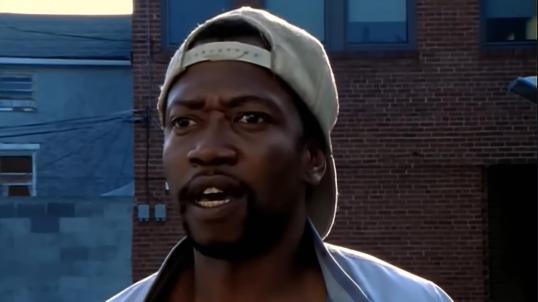
That said, if I had to pick Carter’s best performance, I would probably go with his work in the 2000 HBO miniseries, The Corner.  Based on a nonfiction book by David Simon, The Corner follows several characters over the course of one year in Baltimore.  Almost all of the characters are involved in the drug trade in some way or another.  DeAndre McCullough (Sean Nelson) is a fifteen year-old drug dealer who, despite his obvious intelligence, seems to be destined to become yet another statistic.  DeAndre’s parents are Fran (Khandi Alexander) and Gary (T.K. Carter).  At the start of the miniseries, both Fran and Gary are drug addicts and both of them make the effort to get clean.  Both have moments where their lives appear to be improving.  They both have moments where they relapse and have to start all over again.  Tragedy follows both of them.

The Corner is often described as being a forerunner to The Wire and indeed, there are definite similarities.  Like The Wire, The Corner was shot on location in Baltimore.  Like The Wire, The Corner emphasizes that futility of trying to wage a war on drugs.  As well, several members of The Corner‘s cast also appeared on The Wire.  Clarke Peters, Lance Reddick, Reg E. Cathey, Corey Parker Robinson, Delaney Williams, and Robert F. Chew are among the many Wire actors who appear in The Corner.  Interestingly enough, many of The Wire‘s cops and politicians appear as addicts in The Corner.  Clarke Peters and Reg E. Cathey play two long-time drug addicts who serve as a bit of a chorus for the neighborhood.  Lane Reddick appears as a recovering addict who tries to take advantage of Fran.

That said, The Corner doesn’t trust its audience in the same way that The Wire did.  That’s largely because The Corner was directed by Charles S. Dutton, who has never been a particularly subtle actor or director.  Dutton does a good job capturing the grit of Baltimore but he also includes “interviews” with various characters in which he asks questions while off-camera.  It feels a bit too on-the-nose, as if each episode of The Wire opened with a dramatic monologue from McNulty or Stringer Bell.  We don’t need the characters to look straight at the camera and tell us that things are bad.  We can see that for ourselves.

The entire cast does a good job but the best performance undoubtedly comes from T.K. Carter, who plays Gary as being an intelligent man, a good man, a hopeful man, but also a man who cannot escape his addiction.  With his gentle smile, his pleading eyes, and the almost shy way that he asks people to help him when he needs a fix, Carter gives a heart-breaking performance and one that shows that Gary truly is a prisoner of his addiction.  He doesn’t want to be an addict.  He wants to get clean.  But he also lives in a world where drugs are not only everywhere but they’re also the only escape that he and so many other people have from their oppressive existence.  With the government and the police treating the drug crisis as a war as opposed to a public health emergency, Gary’s two options really are either prison or the basement of his mother’s home.  The police view Gary as being nothing more than an criminal as opposed to someone with a sickness.  The dealers, meanwhile, view Gary as being a marketing opportunity.  T.K. Carter captures both Gary’s desperation and his sadness.  It’s a great performance and one that deserves to be remembered.  As played by T.K. Carter, Gary is the battered heart of The Corner.

T.K. Carter, RIP.


Brad reviews JACK REED: A SEARCH FOR JUSTICE (1994), starring Brian Dennehy!


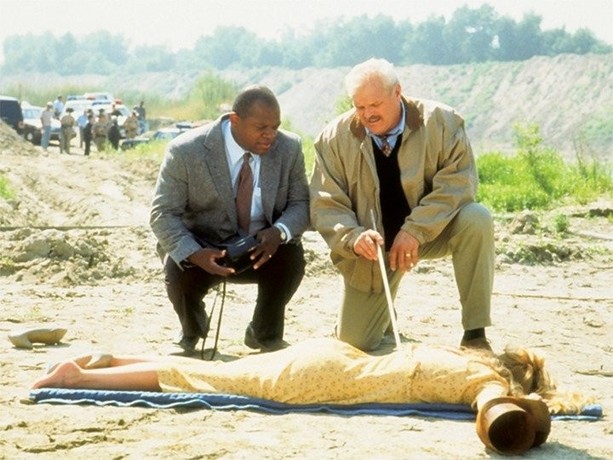
Brian Dennehy directed, co-wrote and starred in this made-for-TV movie about Chicago homicide detective Jack Reed. This is the third TV movie based on Reed’s exploits, following 1992’s DEADLY MATRIMONY, and 1993’s BADGE OF HONOR. In A SEARCH FOR JUSTICE, Jack Reed (Brian Dennehy) investigates the murder of pregnant stripper Lorelei Bradley (Marjorie Monaghan), who also happens to love children, even running a daycare center in the trailer park she lives in. Reed’s investigation quickly identifies the politically connected businessman and strip club owner, Win Carter (Miguel Ferrer), as the prime suspect. As if trying to solve the murder isn’t tough enough, Reed must also deal with corrupt superiors within his own department and train his new boss Charles Silvera (Charles S. Dutton), the latest in a long line of men to be promoted over him. No matter what obstacles Reed encounters, he remains determined to bring the killer to justice!

JACK REED: A SEARCH FOR JUSTICE, is my first “Jack Reed” film, and I enjoyed it. The character of Jack Reed is based on real life Cook County, Illinois Sheriff John “Jack” Reed, with each of the different movies loosely based on cases that Reed investigated throughout his career. As you might imagine, Brian Dennehy is excellent in the lead role as the tough, principled cop who will stop at nothing to catch criminals. The Chicago backdrop adds a nice wrinkle to the proceedings with its strong reputation for corruption, something that plays strongly into this installment and makes Reed’s job that much harder. I also really like Charles S. Dutton’s character, Lieutenant Charles Silvera. Initially promoted due to the color of his skin, and as a way to stick it to Reed, Silvera turns out to be an incorruptible lawman who develops a great working relationship with Reed. I’ve always been a fan of Dutton as an actor, mainly because of his ability to project decency and integrity on screen, and I’m looking forward to seeing them work together in future installments. Miguel Ferrer is also a good villain. He doesn’t go over the top here, rather he plays the part as low key, politically connected, amoral, and ultimately, very dangerous. It’s a good choice.

The fact that JACK REED: A SEARCH FOR JUSTICE is based on real life cases helps bring a little more realism than you might get in most TV movie cop movies of the time. As an example, our cops are more concerned about putting together solid evidence and getting a conviction over anything else. There is some action, but after watching this installment, I realize that these movies are just as likely to end with lawyers cutting a deal than with a big shootout. On the flip side, there are elements of the story that don’t seem realistic at all, such as Reed’s wife Arlene (Susan Ruttan) doing her own undercover work at one point, and our victim’s unlikely dual life as a stripper and daycare operator. What can I say, it’s not a perfect movie, but if you enjoy 90’s TV cop dramas like I do, you should enjoy this film and this series. The cast is good, and the characters are men of integrity trying to bring justice to a corrupt world. That’s a recipe for enjoyment as far as I’m concerned, and I’m looking forward to watching the rest of the film series! 

RUDY! RUDY! RUDY!! 


It’s Good Friday and I’ve taken the day off from work to relax and spend some time in reflection and prayer on this important day on the Christian calendar. I woke up this morning and wasn’t quite ready to get out of bed, so I started flipping through Netflix’s selection and came across RUDY (1993). I try not to overwatch RUDY because I love the way it makes me feel, and I don’t want it to become so familiar that I lose that feeling. But it’s been a couple of years, so I decided to give it another spin. 

As I’m sure most of you know, RUDY is based on the life of Daniel “Rudy” Ruettiger (Sean Astin), the 3rd of 14 children from a family in Joliet, IL, who dreamed of playing football at Notre Dame. There were a number of obstacles to that dream, namely that his family didn’t have much money, he didn’t have good grades, he was 5’6” tall and he didn’t have much football talent. What he did have was heart, and we watch Rudy persevere as he goes to school at neighboring Holy Cross while trying to get accepted in Notre Dame. Nothing ever comes easy for Rudy, but through determination, hard work, and sheer will he eventually makes his way to Notre Dame, joins the football team’s practice squad, and gets to suit up for one game in his senior year. 

RUDY is a movie that affects me deeply. It really shouldn’t come as a surprise as it was written by Angelo Pizzo and directed by David Anspaugh, the team behind HOOSIERS (1986), one of my very favorite movies of all time. While there will never be a movie about my life, I know all too well what it’s like to love something so much, but not really be designed for it. In RUDY, the character Fortune, played by Charles S. Dutton in an incredible performance, tells a discouraged Rudy, “You’re 5 foot nothin’, 100 and nothin’, and you have barely a speck of athletic ability. And you hung in there with the best college football players in the land for 2 years.” Those were basically my specs when I was a senior playing high school basketball in a small town in Central Arkansas (5’7,” 125 and I couldn’t jump). I loved the game so much and put everything I had into it during my pee wee, junior high and senior high years. In 1991, I was named to the Arkansas’ All-State high school basketball team. Due to my lack of athleticism, I would not be able to play at the collegiate level, but I’ve always felt pride that I was able to maximize what talent God did bless me with in the game of basketball. That hard work ethic has served me well throughout my life. It’s so inspiring to watch a movie where a person perseveres against difficult odds, faces disappointments, keeps moving forward, works harder than everyone else, faces more obstacles, and then finally gets to see that work pay off. In a day and time where so many want all the rewards that life has to offer, without putting in any of the work, the story of RUDY stands the test of time and needs to be seen and heard. 

#SundayShorts with SURVIVING THE GAME!


Since Sunday is a day of rest for a lot of people, I present #SundayShorts, a weekly mini review of a movie I’ve recently watched.

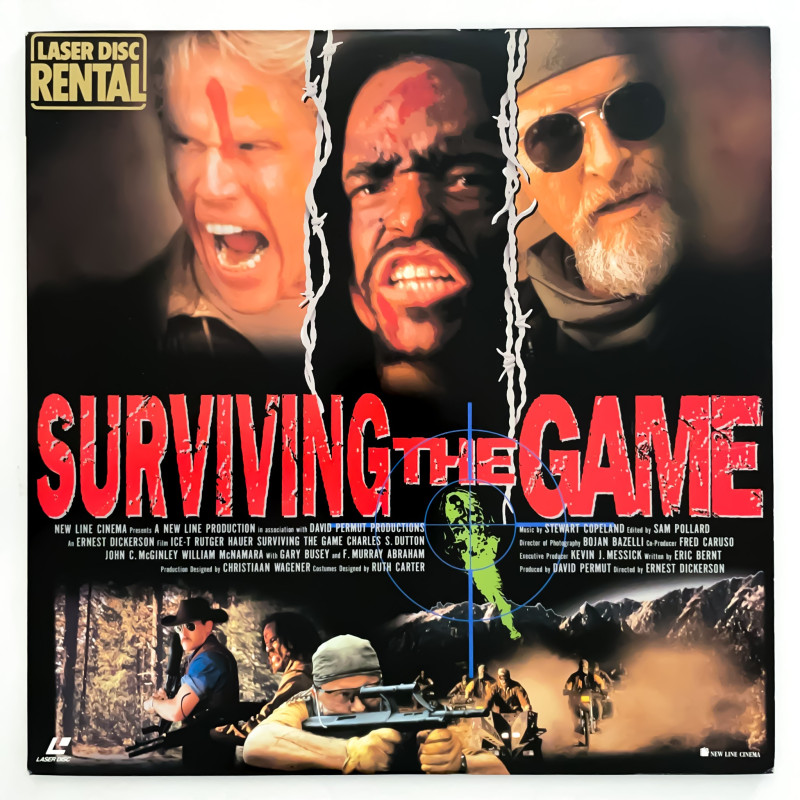
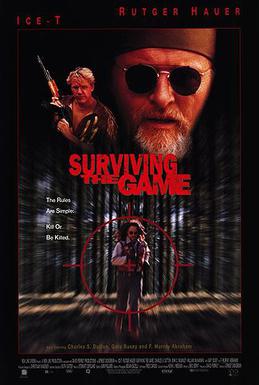
Jack Mason (Ice-T) is a homeless man who’s having a very bad day. His dog and best friend both die so he’s ready to give up on life. Just in the nick of time, a kind gentleman named Walter Cole (Charles S. Dutton), who works at the 7th Street mission, shows up, saves his life, and tells him about a potential job opportunity, even giving Jack his partner’s business card. The job would consist of helping out a group of hunters as a survival guide. Soon, Jack is meeting with rich businessman Thomas Burns (Rutger Hauer), who tells him all about the responsibilities of the job and hires him for the position. It looks like things are finally turning Jack’s way as he finds himself on a charter flight out into the mountains, where the hunters are waiting. The night he arrives, they have a huge feast as he gets to know the guys. It’s a strange lot, but hey, he’s got food in his belly and money in his pocket, so he can put up with some odd behavior for a few days. This very short period of happiness turns out to be fool’s gold as Jack is roused from his sleep early the next morning and told to run. They’re going to be playing a game, and the rules are simple… kill or be killed!

SURVIVING THE GAME was released to theaters on April 15th, 1994, when I was 20 years old. As one of Rutger Hauer’s biggest fans, I went to see it in the movie theater of course. As a fan of B-movies filled with action and violence, I had a good time with it. A big part of that fun came from it’s cast of interesting actors. I’d watch Hauer in any role, and I pretty much have. There’s not a lot asked of him in SURVIVING THE GAME in terms of heavy lifting, but I still enjoy watching him on screen. He looks pretty cool riding his motorcycle with his big goatee and ponytail. I just like Ice-T. There’s something I’ve always found appealing about him on screen, and the same can be said here. Charles S. Dutton is so capable of projecting good on screen. The fact that his character is working at a charity mission as a front to set up homeless men to be hunted and killed was a nice bit of casting. And finally, with other actors like Gary Busey, F. Murray Abraham and John C. McGinley playing the hunters, you just know you’re in for an over-the-top, scenery chewing good time. I also want to shout out one particularly disturbing and graphic scene that involves Charles S. Dutton and a blown up 4-wheeler. It’s the one scene from the film that I’ve remembered ever since saw it that first time at the theater.   

Five Fast Facts:

  1. SURVIVING THE GAME was released about eight months after John Woo’s HARD TARGET starring Jean-Claude Van Damme. Both films are re-tellings of THE MOST DANGEROUS GAME. Woo’s higher budgeted film did much better at the box office.
  2. It was Rutger Hauer’s idea that his character rides a motorcycle rather than a 4-wheeler, like the other hunters in the film. He felt the bike looked like an iron horse, giving him the appearance of a warrior knight!
  3. There’s not a single female character in the film.
  4. Near the end of the movie, there’s a shot of a cityscape with a caption on the screen that reads “Three Days Later in Seattle.” The cityscape is actually that of Philadelphia.
  5. Prior to directing his own films, director Ernest R. Dickerson had been the cinematographer for the Spike Lee joints SHE’S GOTTA HAVE IT, SCHOOL DAZE, DO THE RIGHT THING, MO’ BETTER BLUES, JUNGLE FEVER, and MALCOLM X.

Retro Television Review: Miami Vice 3.5 “The Good Collar”


Welcome to Retro Television Reviews, a feature where we review some of our favorite and least favorite shows of the past!  On Mondays, I will be reviewing Miami Vice, which ran on NBC from 1984 to 1989.  The entire show can be purchased on Prime!

This week, even more innocent lives are destroyed by an unwinnable war on drugs.

Episode 3.5 “The Good Collar”

(Dir by Mario DiLeo, originally aired on October 24th, 1986)

This week’s episode of Miami Vice tells the story of several wars playing out on the streets of Miami.

One of the wars is the skirmish between two street gangs, made up exclusively of teenagers.  Led by Count Walker (Samuel Graham), the Regular Fellas are pushing drugs and even forcing a promising football star named Archie Ellis (Keith Diamond) to deliver a package of black tar heroin for them.  The Regular Fellas are at war with The Apostles.  Among the members of the Apostles is Ramirez (Jsu Garcia), an undercover cop who is actually 23 but who is pretending to be seventeen.

When Crockett and Tubbs bust Archie, all three of them find themselves dragged into the National War On Drugs.  Assistant State Attorney William Pepin (Terry Kinney) wants to take Count Walker down, if just so he can claim a rare victory.  When Archie helps Crockett and Tubbs make a bust and also saves them from getting shot in a back alley, Pepin agrees to drop all the charges against Archie.  But after Ramirez is blown up by the Regular Fellas, Pepin decides that he’s going to go ahead and charge Archie unless Archie wears a wire and gets Count Walker to confess to his crimes.

Crockett, the former football star, is outraged by Pepin’s decision to put Archie in danger.  Crockett even offers to doctor the records so that Archie’s arrest will be dismissed by the courts.  However, Archie refuses.  Archie says that he’s responsible for his own mistakes and he’ll deal with the consequences.  Unfortunately, in this case, the consequences involve Archie being shot and killed by Count Walker, though not before getting Walker to confess on tape.  Walker is arrested and his gang is destroyed but at the cost of Archie’s life.  Pepin is happy.  Ramierz’s supervisor, Lt. Lee Atkins (John Spencer), is happy.  But social worker Ed McCain (Charles S. Dutton) blames Crockett for Archie’s death.  And Archie’s grandmother slams the door in Crockett’s face when he attempts to come by to pay his final respects.

What a dark episode!  However, it does get to the truth of the matter.  There was no way to win the War on Drugs.  Even the victories in this episode feel hollow.  Regular viewers of Miami Vice would have understood that someone else would eventually step into the vacuum left by Walker’s arrest.  Meanwhile, Archie — a good kid with the athletic talent necessary to win a college scholarship and have a chance to escape from the poverty that he grew up in — is shot and killed because a state’s attorney needed to notch up at least one victory.  Miami Vice was at its best when it was cynical and it doesn’t get much more cynical than this heartbreaking episode.

Retro Television Reviews: Miami Vice 2.1 and 2.2 “The Prodigal Son”


Welcome to Retro Television Reviews, a feature where we review some of our favorite and least favorite shows of the past!  On Mondays, I will be reviewing Miami Vice, which ran on NBC from 1984 to 1989.  The entire show is currently streaming on Tubi!

This week, the second season with a two-hour long premiere!  Crockett and Tubbs are going to New York!

Episode 2.1 and 2.2 “The Prodigal Son”

(Dir by Paul Michael Glaser, originally aired on September 27th, 1985)

The second season premiere of Miami Vice opens with a series of set pieces.

In Panama, Crockett and Tubbs visit a secret military base in the jungle and are disgusted to learn how the Panamanian military gets information about drug smugglers.  Tubbs and Crockett find one horribly tortured man in a tent.  Tubbs gives him a drink of water and gets what information he can from the man.  Crockett and Tubbs leave the tent.  A gunshot rings out as the involuntary informant is executed.  When the shot rings out, both Crockett and Tubbs turn back to the tent in slow motion, stunned by the brutality of their allies in the Drug War.  Indeed, it’s hard not to compare the scene to the famous photograph of a South Vietnamese general executing a communist during the Vietnam War.

The Vietnam analogy continues with the next scene.  In the Everglades, Crockett, Tubbs, and the entire Vice Squad work with the DEA to ambush the Revilla cousins as they bring drugs into the U.S.  Sitting in the swamp, Crockett compares the experience to Vietnam, suggesting that the war on the drugs is just as futile and as costly.  And indeed, it’s hard not to notice that every drug dealer that Crockett and Tubbs has taken down over the course of this show has immediately been replaced by another.  The Revillas are just another in a long line of people getting rich off of other people’s addictions.

After the bust goes down, Crockett and Tubbs arrives at a celebratory party, just to discover that almost of all of the undercover DEA agents have been murdered and Gina has been seriously wounded.  There is something very haunting about this scene, with Crockett and Tubbs rushing through a penthouse and seeing a dead body in almost every room.

At a meeting in a stark office, the head DEA agent explains that his agency has been compromised and all of his undercover agents have been unmasked.  Someone has to go to New York and work undercover to take down the Revillas but it can’t be any of his people.  Since the Revillas are smuggling their stuff in through Miami, Miami Vice has jurisdiction.  Paging Crockett and Tubbs!

Working undercover as Burnett and Cooper, Crockett and Tubbs visit a low-level drug dealer (played by Gene Simmons) who lives on a yacht and who gives them the name of a connection in New York City.

From there, Miami Vice moves to New York City, where Crockett and Tubbs meet a low-level criminal named Jimmy Borges (played by an almost impossibly young Penn Jillette) and they try to infiltrate the Revilla organization.  Along the way, Tubbs meets up with Valerie (Pam Grier) and discovers that she has apparently lost herself working undercover.  Meanwhile, Crockett has a brief — and kind of weird — romance with a photographer named Margaret (Susan Hess).

(“I like guns,” she says when Crockett demands to know why she stole his.)

With Crockett and Tubbs leaving Miami for New York in order to get revenge for a colleague who was wounded during an operation, The Prodigal Son almost feels like the pilot in reverse.  Also, much like the pilot, the exact details of The Prodigal Son‘s story are often less important than how the story is told.  This episode is full of moody shots of our heroes walking through New York while songs like You Belong To The City play on the soundtrack.  (There’s also a song from Phil Collins, undoubtedly included to bring back memories of the In The Air Tonight scene from the pilot.)  It’s all very entertaining to watch, even if the story itself doesn’t always make total sense.  Indeed, you really do have to wonder how all of these criminals keep falling for Sonny’s undercover identity as Sonny Burnett.  You would think that someone would eventually notice that anyone who buys from Sonny Burnett seems to get busted the very next day.

Stylish as the storytelling may be, this episode actually does have something on its mind.  Those lines comparing the War on Drugs to the Vietnam Conflict was not just throwaways.  Towards the end of the episode, Crockett and Tubbs follow a lead to the offices of J.J. Johnston (Julian Beck, the ghost preacher from Poltergeist II).  The skeletal Johnston is an investor of some sort.  He has no problem admitting that he’s involved in the drug trade, presumably because he knows that there’s nothing Crockett and Tubbs can do to touch him.  Upon meeting the two cops, he immediately tells them exactly how much money they have in their checking accounts.  He points out that they’re poor and they’re fighting a losing war whereas he’s rich and he’s making money off of a losing war.  Beck gives a wonderfully smug performance as Johnston and it should be noted that, of all of the episode’s villains, he’s the only one who is not brought to any sort of justice.  Val almost loses herself.  Tubbs and Crockett don’t even get a thank you for their hard work.  The somewhat sympathetic Jimmy Borges ends up dead while the Revillas were undoubtedly been replaced by even more viscous dealers.  Meanwhile, J.J. Johnston relaxes in his office and counts his money.  This is the No Country For Old Men of Miami Vice episodes.

This episode is also full of familiar faces.  Charles S. Dutton, Kevin Anderson, Anthony Heald, Miguel Pinero, James Russo, Bill Smtirovich, Zoe Tamerlis, Paul Calderon, and Louis Guzman, they all show up in small roles and add to show’s rather surreal atmosphere.  This is Miami Vice at its most dream-like, full of people you think you might know despite the fact that they’re doing things of which you don’t want to be a part.

As for the title, The Prodigal Son is Tubbs and he is tempted to stay in New York City.  But, in the end, he joins Crockett on that flight back to Miami.  It’s his home.

A Movie A Day #332: Surviving The Game (1994, directed by Ernest R. Dickerson)


Jack Mason (Ice-T) has been living on the streets of Seattle ever since the death of his wife and daughter.  When Cole (Charles S. Dutton), the friendly man at the soup kitchen, tells Mason that he can get him a job, the suicidal Mason accepts.  It turns out that a group of wealthy men are going on a hunting trip and they need a guide to lead them through the wilderness.  Mason accepts but, upon arriving, he discovers that the men (who are played by Rutger Hauer, F. Murray Abraham, William McNamara, John C. McGinley, and, of course, Gary Busey) are actually planning on playing the most dangerous game and hunting him for the weekend.

There are definitely better versions out there of Richard Connell’s famous short story.  One of the best, John Woo’s Hard Target, was released a year before Surviving the Game.  Both films share the idea of rich men hunting down the homeless for fun.  Surprisingly, it is Woo’s film that seems to take the idea, with all of its societal implications, more seriously.  Surviving the Game may present Jack Mason as being a suicidal homeless man but there is never any doubt that he is actually Ice-T, everyone’s favorite rapper and all-around badass.  But it’s precisely because Ice-T has such a recognizable persona that Surviving the Game is a guilty pleasure.  There is never any doubt that Ice-T can survive the game because Ice-T is the fucking game.  Matching Ice-T every step of the way is a rogue’s gallery of recognizable character actors, all of whom bring a different type of crazy to the proceedings.  When a movie delivers the spectacle of Ice-T being hunted by and then hunting Gary Busey and Rutger Hauer, it is easy to forgive whatever plot holes might be present in the script.

One final note: Surviving the Game was directed by Ernest R. Dickerson.  Dickerson got his start of Spike Lee’s cinematographer so it’s not surprising that Surviving the Game looks great.