Film Review: Kelly’s Heroes (dir by Brian G. Hutton)


1970’s Kelly’s Heroes takes place in France during the Second World War.  The American army is moving through the country, liberating it town-by-town.  Private Kelly (Clint Eastwood) is a former lieutenant who was busted down in rank after leading a disastrous raid on the wrong hill.  (It was the fault of the generals but Lt. Kelly was set up as a scapegoat.)  When Kelly learns that the Germans are hiding a huge amount of gold in an occupied town, he gathers together a team of weary soldiers, misfits all, and plans to go AWOL to steal the gold for themselves.

Kelly’s Heroes was one of the big budget studio films that Eastwood made after finding stardom in Europe with Sergio Leone’s Spaghetti westerns.  This is very much an ensemble film, in the vein of The Dirty Dozen.  Indeed, Eastwood’s co-star, Telly Savalas, was in The Dirty Dozen.  Here, Savalas plays Big Joe, the sergeant who isn’t sure that he wants to put his men in danger for gold that may or may not exist.  Don Rickles plays Crapshoot who is …. well, imagine Don Rickles in the middle of World War II and you have a pretty good idea of who Crapshoot is.  Stuart Margolin, Harry Dean Stanton, Perry Lopez, Gavin MacLeod shows up as soldiers.  Carroll O’Connor plays the bombastic general who mistakes Kelly’s attempts to go AWOL for a brilliant tactical maneuver,  Like all of the senior officers in this film, O’Connor’s general is a buffoon.  Kelly’s Heroes was made during the Vietnam War and, much like Patton (released the same year), it attempts to appeal to both the establishment and the counterculture by making the heroes soldiers but their bosses jerks.

And that brings us to Donald Sutherland, who plays a tank commander named Oddball.  You may not have know this but apparently, there were hippies in the 40s!  Actually, I don’t think that’s true but there’s really no other way to describe Oddball than as a Hollywood hippie.  He’s a blissed-out, spacey guy who thinks nothing of accidnetally driving his tank through a building.  The films ask us to believe that the long-haired and bearded Oddball is a World War II tank commander and Sutherland is such a likable presence that it’s temping to just go with it.  Oddball was obviously included to bring in “the kids” but he does generate some needed laughs.  This is a very long movie and the comedic moments are appreciated.

Kelly’s Heroes is two-and-a-half hours long and it definitely could have been shorter.  Director Brian Hutton allows some scenes to drag on for a bit too long and he sometimes struggles to balance the moments of comedy with the moments of violent drama (quite a few character dies) but he does get good performances from his ensemble.  Eastwood’s taciturn acting style is nicely matched with Savalas’s more expressive style and it’s hard not smile at Don Rickles, insulting everyone as if they were guests at Joe Gallo’s birthday party.  The film, at times, doesn’t seem to know if it wants to be a satire or a straight heist film but the cast keep things watchable.  Eastwood even gets to show a few hints of the dry sense of humor that always hid behind the perpetually bad mood that often seemed to hang over him in his early films.  Whatever flaws the film may have, it was a box office success.  One year after this release of Kelly’s Heroes, Eastwood would make history as Dirty Harry.
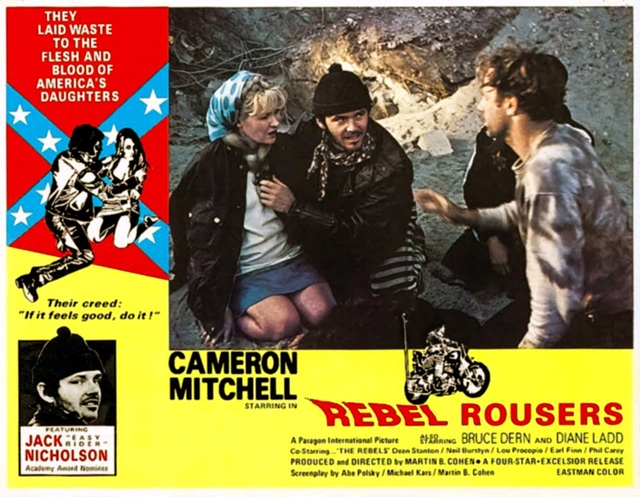
The TSL Grindhouse: Rebel Rousers (dir by Martin B. Cohen)


1970’s Rebel Rousers tell the story of what happens when Paul Collier (Cameron Mitchell) arrives in a small desert town, searching for his girlfriend, Karen (Diane Ladd).  Karen ran away when she discovered she was pregnant because she was scared that Paul would attempt to force her to get an abortion.  While Paul talks to Karen in a cheap motel, a motorcycle gang rides into town.  The members of the gang include Randolph (Harry Dean Stanton) and Bunny (Jack Nicholson), who wears striped prison pants and a stocking hat.  The leader of the gang is J.J. Weston (Bruce Dern), who went to high school with Paul.  They even played on the same football team but their lives have since followed differing paths.  (How exactly 30ish Bruce Dern and 50ish Cameron Mitchell could have been in the same high school class is not an issue that the film chooses to explore.)

Paul reunites with Karen and swears his love for her.  However, when Paul and Karen run into the motorcycle gang, Karen is kidnapped.  Bunny wants to force himself on Karen but J.J. wants to set her free.  J.J. challenges Bunny to a series of motorcycle games on the beach.  The winner decides what happens to Karen.  Meanwhile, Paul heads back to the town in search of help but discovers that almost everyone is too much of a coward to help him out.  Only Miguel (Robert Dix), the leader of a rival gang is willing to step up and save the community from the Rebels!

Rebel Rousers was filmed in 1967 but was considered to be so bad that it was put on a shelf and forgotten about until Jack Nicholson suddenly became a star in Easy RiderRebel Rousers was released on the drive-in circuit as a Jack Nicholson movie, even though Nicholson is barely in the film and he gives a pretty one-note performance as Bunny.  The movie’s star is Cameron Mitchell, who usually played villains and doesn’t seem to be too invested in this film.  (Mitchell has such a naturally sinister screen presence that I was actually worried about Paul finding Karen.  Bruce Dern and Diane Ladd are the sole members of the cast who really stand out, with Dern taking on the type of cool rebel role that was usually played by Peter Fonda while Ladd (pregnant at the time with Laura Dern) actually manages to bring some real emotional depth to her character. The movie itself was obviously made for next to nothing and it seems like it was shot in a hurry.  Everything feels like a first take or, even worse, like a rehearsal that was deemed “good enough.”  The competition between Bunny and J.J. ultimately feels mostly like filler than anything else.

Rebel Rousers is one of the more obscure entries in Jack Nicholson’s filmography.  If not for the success of Easy Rider, it never would have been released at all.  By the time Rebel Rousers did come out, Jack Nicholson was too busy establishing himself as one of the best leading men of the 70s to spend too much time looking back.  Today, watching this film can make it easier to understand why Nicholson was considering dropping out of Hollywood all together before he was cast in Easy Rider.  That said, the film today serves as a reminder that everyone started somewhere and sometimes, the somewhere is the second feature at the grindhouse.

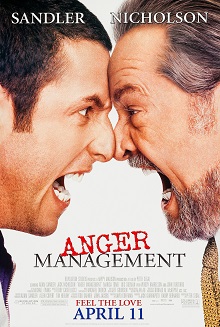
Anger Management (2003, directed by Peter Segal)


Dave (Adam Sandler), a timid man who has never gotten over being humiliated when he was a teenager, is sentenced to anger management after a slight argument on a plane is blown out of proportion by a taser-wielding shy marshal.  His therapist is Dr. Buddy Rydell (Jack Nicholson), whose techniques only seem to exacerbate Dave’s growing anger.  Among Dr. Rydell’s methods are giving Dave an unstable “anger buddy” named Chuck (John Turturro), ordering Dave to get revenge on the guy (John C. Reilly) who humiliated on his as a teenager, and also encouraging Dave to cheat on his girlfriend Linda (Maria Tomei) with a woman (Heather Graham) that they meet at bar.  Dave goes from timid to angry, Dr. Rydell starts dating Linda, and the whole thing is wrapped up with a totally implausible ending.

The idea of the star of Chinatown and Five Easy Pieces co-starring in an Adam Sandler comedy sounds like it should be exhibit #1 when it comes to talking about the decline of American cinema but I’ve always liked Anger Management.  Casting Jack Nicholson as the seemingly insane Dr. Rydell was an inspired choice and Nicholson gives a real performance in the film as opposed to just coasting on his already-established persona.  Anger Management came out a year after Adam Sandler’s first dramatic film, Punch-Drunk Love, and, even though Anger Management is a raunchy comedy from the start to finish, Sandler’s performance actually finds the reality in Dave’s situation.  Sandler plays Dave as being someone who is sincerely trying his best to get through his court-mandated anger management without losing control.  Nicholson and Sandler make for a surprisingly good team.

Of course, it’s an Adam Sandler comedy so it’s not for everyone.  The humor is often crude and the film’s final twist is so ridiculous that it can actually leave you feeling like you might need anger management.  But Anger Management does show how Jack Nicholson improves anything that he’s involved with and it also shows that Adam Sandler can act when he feels like it.  Anger Management also gave us the meme of Jack Nicholson nodding his approval, meaning the film and the performance will live forever.

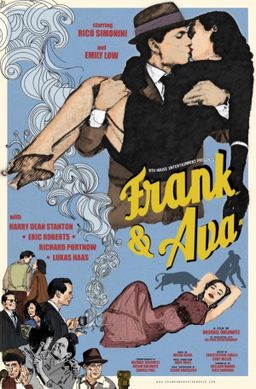
Love On The Shattered Lens: Frank and Ava (dir by Michael Oblowitz)


2018’s Frank & Ava tells the story of the tempestuous love affair and marriage of Frank Sinatra (Rico Simonini) and Ava Gardner (Emily Elicia Low).

The film opens with Sinatra at his lowest point.  His records are no longer selling.  His marriage to Nancy is in trouble.  The government is now investigating him for supposed communist sympathies (say it ain’t so, Frank!) and also his connections to the Mafia.  Hedda Hopper (Joanne Baron), Louella Parsons (Joanna Sanchez), and Walter Winchell (Richard Portnow) all pop up throughout the film, breathlessly reading the latest gossip into radio microphones.  Frank’s voice is weakening and it looks like he’s about to lose his fanbase to Eddie Fisher and Perry Como.  As for his acting career, everyone knows that he can’t act.  (At one point, even Frank’s friends laugh at the idea of Siantra ever winning an Oscar.)  Frank knows that he would be perfect for the role of Maggio in From Here To Eternity but the film’s director wants to cast someone like Harvey Lembeck or Eli Wallach.

As for Ava Gardner, she’s just gotten out of a relationship with Howard Hughes.  More famous for her then-scandalous personal life than her film roles, Gardner drinks too much, curses too much, and is too open about her affairs for the sensibilities of much of 1950 America.

When Frank and Ava meet, it’s love at first sight.  They drive around while drinking champagne straight from the bottle.  They crash cars.  When they’re arrested, they charm a local sheriff (Harry Dean Stanton, in his final film role).  They fight.  They make love.  They fight more.  They make love more.  Frank obsesses on the possibility of Ava being unfaithful to him while continually cheating on her with everyone from Lana Turner to Marilyn Maxwell.

The first thing that you notice about Frank & Ava is that it is full of references to real Hollywood gossip.  Names are dropped.  Real celebrities are depicted and the portrayals are not always positive.  The second thing that you notice is that, with the exception of Emily Elicia Low, no one is particularly convincing.  The actress who plays Marilyn Monroe not only looks nothing like Marilyn but her attempt to imitate Marilyn’s trademark voice made me laugh out loud.  Actors appear as Lana Turner, Montgomery Clift, Howard Hughes, and a host of mafiosos and none of them are the least bit convincing.  Much of the film is like attending a costume party where no one could spend more than five bucks on their costume.  Rico Simonini, who was so charming in My Dinner With Eric, is not particularly convincing as Frank Sinatra.  That said, Emily Elicia Low is well-cast as Ava Gardner and Eric Roberts shows up for two scenes as producer Harry Cohn.  In real life, Cohn was a notorious bully.  The old anecdote about everyone showing up at an unpopular man’s funeral to make sure that he’s actually dead is often said to have been inspired by Cohn.  In the film, Roberts plays Cohn as being a surprisingly reasonable guy.  If Fred Zinnemann wants Sinatra, he can have Sinatra.  If he wants Eli Wallach, he can have Eli Wallach.  Just make sure they aren’t communists!

Probably the most interesting thing about this film is its attempt to recreate the 50s without spending a good deal of money.  This is a low-budget movie and there’s an obvious artificiality to many of the sets and costumes that gives the entire film an oddly dream-like feel.  It’s less a recreation of the past and more a look at how the past might look in our fantasies.  All the men wear suits.  Ava dresses and talk as if she just stepped out of a parody of a film noir.  Famous scenes from Goodfellas and La Dolce Vita are awkwardly recreated by Santini and the cast.  The film, which was made by people who obviously loved the legend of Frank and Ava, ultimately transcends the conventional definition of good and bad and instead becomes a work of outsider art, a look into the hazier regions of the American cultural psyche.

Previous Eric Roberts Films That We Have Reviewed:

  1. Star 80 (1983)
  2. Blood Red (1989)
  3. The Ambulance (1990)
  4. The Lost Capone (1990)
  5. Love, Cheat, & Steal (1993)
  6. Voyage (1993)
  7. Love Is A Gun (1994)
  8. Sensation (1994)
  9. Dark Angel (1996)
  10. Doctor Who (1996)
  11. Most Wanted (1997)
  12. Mercy Streets (2000)
  13. Wolves of Wall Street (2002)
  14. Mr. Brightside (2004)
  15. Six: The Mark Unleased (2004)
  16. Hey You (2006)
  17. In The Blink of an Eye (2009)
  18. Enemies Among Us (2010)
  19. The Expendables (2010) 
  20. Sharktopus (2010)
  21. The Dead Want Women (2012)
  22. Deadline (2012)
  23. The Mark (2012)
  24. Miss Atomic Bomb (2012)
  25. Bonnie And Clyde: Justified (2013)
  26. Lovelace (2013)
  27. The Mark: Redemption (2013)
  28. Self-Storage (2013)
  29. This Is Our Time (2013)
  30. Inherent Vice (2014)
  31. Road to the Open (2014)
  32. Rumors of War (2014)
  33. Amityville Death House (2015)
  34. A Fatal Obsession (2015)
  35. Stalked By My Doctor (2015)
  36. Enemy Within (2016)
  37. Joker’s Poltergeist (2016)
  38. Prayer Never Fails (2016)
  39. Stalked By My Doctor: The Return (2016)
  40. The Wrong Roommate (2016)
  41. Dark Image (2017)
  42. Black Wake (2018)
  43. Stalked By My Doctor: Patient’s Revenge (2018)
  44. Clinton Island (2019)
  45. Monster Island (2019)
  46. The Savant (2019)
  47. Seven Deadly Sins (2019)
  48. Stalked By My Doctor: A Sleepwalker’s Nightmare (2019)
  49. The Wrong Mommy (2019)
  50. Exodus of a Prodigal Son (2020)
  51. Free Lunch Express (2020)
  52. Her Deadly Groom (2020)
  53. Top Gunner (2020)
  54. Deadly Nightshade (2021)
  55. The Elevator (2021)
  56. Just What The Doctor Ordered (2021)
  57. Killer Advice (2021)
  58. The Poltergeist Diaries (2021)
  59. The Rebels of PT-218 (2021)
  60. A Town Called Parable (2021)
  61. Bleach (2022)
  62. My Dinner With Eric (2022)
  63. Aftermath (2024)
  64. The Wrong Life Coach (2024)

Film Review: The Straight Story (by David Lynch)


Released in 1999, The Straight Story is one of the greatest films ever made about America.

Alvin Straight (Richard Farnsworth) is an elderly veteran of World War II.  He lives in Iowa, a kind but rather taciturn man who doesn’t have time for doctors and would rather live on his own terms.  That said, when his daughter (Sissy Spacek) finally does manage to drag Alvin to a doctor, he’s told to stop smoking and to start using a walker to get around.  Alvin refuses, though he does start using two canes.  Alvin is an old man.  He’s lived a long time and, in his opinion, he knows best about what he needs to do.

For instance, when Alvin hears that his long-estranged brother Lyle (Harry Dean Stanton), has had a stroke, Alvin decides that he need to go Wisconsin to see him.  The only problem is that Alvin can barely see and he can’t walk and there’s no way anyone is going to give him a car or even a driver’s license.  His solution is to ride a lawnmower from Iowa to Wisconsin.

It’s based on a true story and if The Straight Story sounds like a film that will make you cry, it is.  Richard Farnsworth was terminally ill when he was offered the role of Alvin and he accepted because he admired Alvin’s determination to live life his own way.  As portrayed in the film, Alvin is not one to easily betray his emotions.  He grew up as a part of that stoic generation.  He saw his share of violence and death while he was serving during World War II and one gets the feeling that his attitude has always been that, if he could survive that, he can survive anything.  (The closest Alvin gets to becoming openly emotional is when he meets another veteran in a bar and it becomes obvious that the two of them share a bond that, as people who seen and survived war, only they can really understand.)  Farnsworth so completely becomes Alvin Straight that it’s easy to forger that he was a veteran actor who had a long career before starring in The Straight Story.  Alvin may not show much emotion but Farnsworth communicates so much with just the weariness in his eyes and his slow but determined gait that we feel like we know everything about him.

The film follows Alvin on his way to Wisconsin.  Along the way, he meets various people and, for the most part, they’re all good folks.  Even the runaway hitchhiker (Anastasia Webb) turns out to be a kind soul.  When Alvin momentarily loses control of his lawn mower, a group of stranger run out to help him.  They don’t know who he is or why he was riding his lawnmower down the street.  All that matter is that, at that moment, he’s a person who needs help.  The Straight Story celebrates both the beauty and the people of America.  It’s one of the most sincere and life-affirming films ever made, one that contains not a trace of cynicism and which is all the better for it.  And while many people might be shocked to discover that this film was directed by David Lynch, the truth of the matter is that a strong love for America and Americana runs through all of Lynch’s films.  Lynch was an artist who believed that people could surprise you with their kindness and that’s certainly the case with The Straight Story.

The Straight Story was the only one of David Lynch’s films to receive a G-rating.  It was also the only film that Lynch made for Disney.  It’s interesting to look at Lynch’s filmography and see this heartfelt and deeply touching film sitting between Lost Highway and Mulholland Drive.  But The Straight Story really does feature David Lynch at his best.  It also reveals him as a filmmaker who could do something unexpected without compromising his signature vision.  There’s a lot of beautiful, Lynchian images in The Straight Story.  But there’s also a lot of heart.

Down Periscope (1996, directed by David S. Ward)


After being passed over twice as a result of both a “brushing incident” with a Russian submarine and an embarrassing tattoo, Lt. Commander Thomas Dodge (Kelsey Grammer, playing Dodge as being the laid back opposite of Frasier Crane) has finally been promoted and given his own submarine to command.  The catch is that the submarine is a rusty piece of junk from World War II and he’s been assigned a crew of misfits.  Captain Dodge is to take part in a war game.  Admiral Winslow (Rip Torn) wants Dodge to prove that even an out-of-commission submarine can be dangerous by infiltrating Charleston Harbor undetected and then blowing up a dummy warship in Norfolk Harbor.  If Dodge is successful, he’ll get a nuclear submarine to command.  If he fails, he’ll be assigned of desk job and probably leave the Navy.  While the sympathetic Winslow encourages Dodge to “think like a pirate,” the antagonistic Admiral Graham (Bruce Dern) pulls out all the stops to make sure Dodge fails.

I imagine that Down Periscope was probably pitched as Police Academy In The Navy and it follows the general rules of the Police Academy films, right down to casting Lauren Holly as the one woman on the submarine who has to overcome her own insecurities and prove herself to all the men.  Unfortunately, none of the misfits on the crew are as memorable as the cadets from Police Academy and the movie’s attempts to mix juvenile humor with suspenseful naval action are not at all successful.  Having Rob Schneider go totally over the top as Dodge’s second-in-command while having William H. Macy give a serious performance as the captain assigned to prevent Dodge from reaching the harbor indicates that Down Periscope has a definite identity problem.

Harry Dean Stanton plays Howard, who is the submarine’s chief engineer and who uses whiskey as a fuel to keep the submarine moving.  Toby Huss has a few amusing moments as the electrician who keeps electrocuting himself.  Grammer, Dern, and Macy have more than proven their talents in other projects and Rip Torn will always be remembered for bringing Artie to profane life on The Larry Sanders Show.  Director David Ward also directed Major League and wrote The Sting.  A lot of talent went into making Down Periscope so it’s a shame the film wasn’t more memorable.

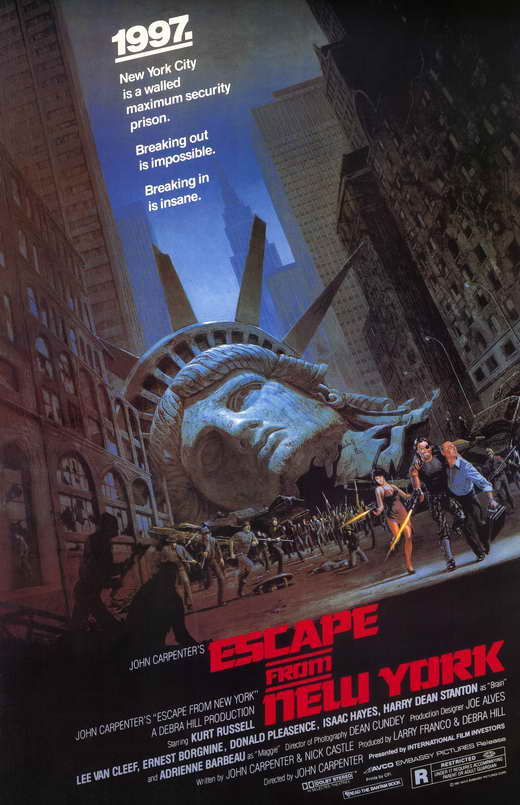
Scenes That I Love: The Duke Makes Quite An Entrance in Escape From New York


Continuing our celebration of John Carpenter’s birthday, today’s scene that I love comes from one of my favorite Carpenter movies, 1981’s Escape From New York.

In this scene, The Duke of New York makes quite an entrance.  Not only does he have an entourage but his car comes with its own chandeliers and a disco ball!  Along with writing and directing this film, Carpenter also composed the score.

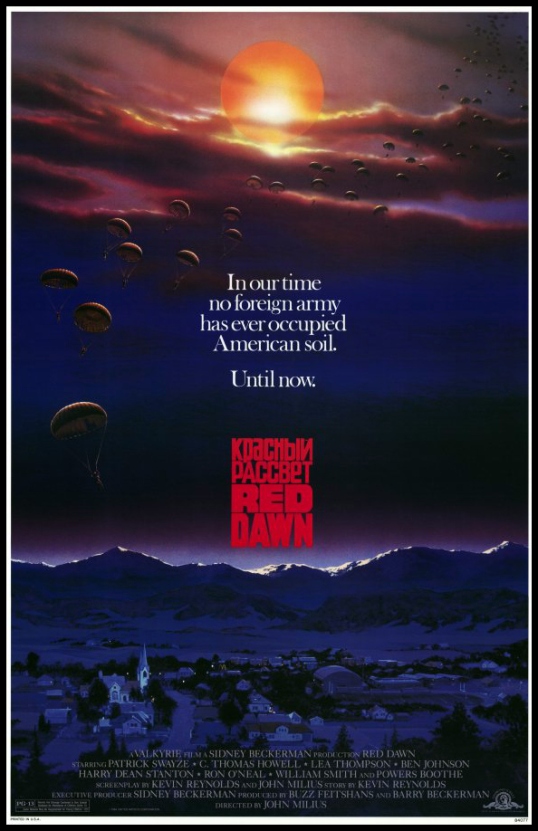
Scenes I Love: “Avenge Me!” from Red Dawn


Today, the Shattered Lens wishes a happy birthday to a true Hollywood iconoclast, John Milius!  In honor of Milius and his career and his legacy, today’s scene that I love comes from Milius’s 1984 film, Red Dawn.

After their small town is taken over by a combination of Cuban and Russian soldiers, a group of teenagers flee to the hills.  After a few months, they sneak back into town.  In this scene, two brothers (Patrick Swayze and Charlie Sheen) discover that their father (Harry Dean Stanton) is one of the many townspeople who have been sentenced to a reeducation camp.  Their dad says a few final words to them, knowing that he’ll probably never see them again.  He leaves them with one final instruction: “AVENGE ME!”  Not even the propaganda film playing in the background can cover the sound of their father demanding vengeance.

And, of course, they do get their revenge, sacrificing their lives so that America might once again be free.  It’s a classic John Milius moment and an appropriate scene with which to celebrate his birthday.

Lisa Reviews a Palme d’Or Winner: Paris, Texas (dir by Wim Wenders)


With the 2022 Cannes Film Festival coming to a close in the next few days, I’ve been watching some of the films that previously won the prestigious Palme d’Or.  They’re an interesting group of films.  Some of them have been forgotten.  Some of them are still regarded as classics.  Some of them definitely deserve to be seen by a wider audience.  Take for the instance that winner of the 1984 Palme d’Or winner, Paris, Texas. This is a film that is well-regarded by cineastes but it definitely deserves to be seen by more people.

Though released in 1984, Paris, Texas opens with an image that will resonate for many viewers today.  A dazed man stumbles through the desert while wearing a red baseball cap.  Though the cap may not read “Make America Great Again,” the sight of it immediately identifies the owner as being a resident of what is often dismissively referred to as being flyover country, the long stretch of land that sits between the two coasts.  Travis (Harry Dean Stanton) is lost, both figuratively and literally.  After he stumbles into a bar and collapses, he’s taken to a doctor (played by German film director Bernhard Wicki) who discovers that Travis has a phone number on him.  When the doctor calls the number, he speaks to Travis’s brother, Walt (Dean Stockwell).  Walt has not seen Travis for three years and the viewer gets the feeling that Walt spent those years assuming that Travis was dead.  Walt agrees to travel to West Texas to retrieve his brother and take him back to Los Angeles.

When Walt retrieves his brother, he’s annoyed that Travis refuses to explain where he’s been for the past three years.  In fact, for the first fourth of the film, Travis doesn’t say anything.  He just stares into space.  Finally, when he does speak, it’s to tell Walt that he wants to go to Paris.  Walt tells him that going to Paris might have to wait.  Travis elaborates that he wants to go to Paris, Texas.  He owns an empty parking lot in Paris, Texas.

It takes a while to learn much about Travis’s past.  Like many of Wim Wenders’s films, Paris, Texas moves at its own deliberate pace and it features characters who tend to talk around their concerns instead of facing them head-on.  What we do eventually learn is that Travis has a son named Hunter (Hunter Black).  Travis’s wife, Jane, (played by Natassja Kinski) disappeared first.  Travis disappeared afterwards, leaving Walt and his wife (Aurore Clement) to raise his son.  At first, when Travis arrives in Los Angeles, he struggles to reconnect with Hunter but eventually, he does.  He tries to be a father but, again, he sometimes struggles because, while Travis has a good heart, he’s also out-of-step with the world.

As for Jane, we eventually learn that she’s in Houston.  She’s working in a tacky sex club, one where the customers and the strippers are separated by a one-way mirror.  The customer can see and talk to the stripper but the stripper can’t see the customers.  It’s all about manufactured intimacy.  The customer can delude themselves into thinking that the woman is stripping just for him while the woman doesn’t have to see the man who is watching her.  There are no emotions to deal with, just the illusion of a connection.

Even as Travis begins to make a life for himself in Los Angeles, he finds himself tempted to return to Houston to search for his wife….

As I said, Paris, Texas is a deliberately paced film.  With a running time of 2 hours and 20 minutes, it feels like it’s actually three films linked together.  We start with Travis and Walt traveling back to Los Angeles.  The second film deals with Travis’s attempts to bond with his son.  And the third and most powerful film is about what happens when Travis finally finds Jane.  It all comes together to form a deceptively low-key character study of a group of lost souls, all of whom are dealing with the mistakes of the past and hoping for a better future.  The film’s most memorable moment comes when Travis delivers a long and heartfelt monologue about his marriage to Jane.  Beautifully written by Sam Shephard (who co-wrote the script with L.M. Kit Carson) and wonderfully acted by Harry Dean Stanton, it’s a monologue about regret, guilt, forgiveness, and ultimately being cursed to wander.

Despite the heavy subject matter, Paris, Texas is an undeniably joyful film.  In a rare leading role, Harry Dean Stanton plays Travis as someone who is full of regrets but who, at the same time, retains a spark of hope and optimism.  Life has beaten him down but he has yet to surrender.  Once he reaches Los Angeles and Travis starts to fully come out of his fugue state, there’s a playful energy to Stanton’s performance.  The scene where he dresses up as what he thinks a dad should look like is a highlight.  For Travis, being a responsible adult starts with putting on a suit and walking his son home from school.  Stanton’s excellent performance is matched by good work from Dean Stockwell and, especially, Natassja Kinski.

Visually, the film is all about capturing the beauty and the peculiarity of the landscape of the American southwest.  Like many European directors, Wim Wenders seems to be a bit in love with the combination of rugged mountains and commercialized society that one finds while driving through the west.  In the scenes in which Stanton wanders through West Texas, the landscape almost seems like it might consume him and, later, in Los Angeles and Houston, the garishness of the city threatens to do the same.  Wherever he is, Travis is slightly out-of-place and the viewer can understand why Travis is compelled to keep wandering.  At times, it seems like Travis will never fit in anywhere but the fact that he never gives up hope is comforting.  In many ways, Travis’s own journey mirrors Stanton’s career in Hollywood.  He had the talent of a leading man but the eccentric countenance of a great character actor.  He may have never been quite fit in with mainstream Hollywood but he never stopped acting.

The film itself never visits Paris, Texas.  Travis just talks about the fact that he owns an empty lot in the town and that he would like to see it.  Still, I like to think Travis eventually reached Paris and I like to think that he did something wonderful with that lot.

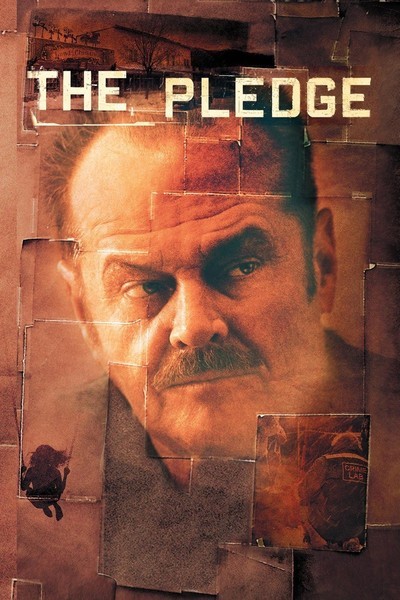
The Pledge (2001, directed by Sean Penn)


Jerry Black (Jack Nicholson) is a detective who, on the verge of retirement, goes to one final crime scene.  The victim is a child named Ginny Larsen and when Ginny’s mother (Patricia Clarkson) demands that Jerry not only promise to find the murderer but that he pledge of his immortal soul that he’ll do it, it’s a pledge that Jerry takes seriously.  Jerry’s partner, Stan (Aaron Eckhart), manages to get a confession from a developmentally disabled man named Jay Wadenah (Benicio del Toro) but Jerry doesn’t believe that the confession is authentic.  When Wadenah commits suicide in his cell, the police are ready to close the case but Jerry remembers his pledge.  He remains determined to find the real killer.

Even though he’s retired, the case continues to obsess Jerry.  He becomes convinced that Ginny was the latest victim of a serial killer and he even buys a gas station because it’s located in the center of where most of the murders were committed.  Jerry befriend a local waitress named Lori (Robin Wright) and, when Lori tells him about her abusive ex, he invites Lori and her daughter to stay with him.  Lori’s daughter, Chrissy (Pauline Roberts), is around Ginny’s age and when she tells Jerry about a “wizard” who gives her toys, Jerry becomes convinced that she’s being targeted by the same man who killed Ginny.  Even as Jerry and Lori fall in love, the increasingly unhinged Jerry makes plans to use Chrissy as bait to bring the killer out of hiding.

The Pledge was Sean Penn’s third film as a director.  As with all of Penn’s directorial efforts, with the notable exception of Into The Wild, The Pledge is relentlessly grim.  Freed, by virtue of his celebrity, from worrying about whether or not anyone would actually want to sit through a depressing two-hour film about murdered children, Penn tells a story with no definite resolution and no real hope for the future.  The Pledge is a cop film without action and a mystery without a real solution and a character study of a man whose mind you don’t want to enter.  It’s well-made and it will keep you guess but it’s also slow-paced and not for the easily depressed.

The cast is made up of familiar character actors, most of whom probably took their roles as a favor to Penn.  Harry Dean Stanton, Tom Noonan, Patricia Clarkson, Sam Shephard, Vanessa Redgrave, Helen Mirren, and Mickey Rourke have all got small roles and they all give good performances, even if it’s sometimes distracting to have even the smallest, most inconsequential of roles played by someone familiar.  Most importantly, The Pledge actually gives Jack Nicholson a real role to play.  Jerry Black is actually an interesting and complex human being and Nicholson dials back his usual shtick and instead actually makes the effort to explore what makes Jerry tick and what lays at the root of his obsession.

Though definitely not for everyone, The Pledge sticks with you and shows what Jack Nicholson, who now appears to be retired from acting, was capable of when given the right role.