Review: Sicario (dir. by Denis Villeneuve)


“You should move to a small town where the rule of law still exists. You will not survive here. You are not a wolf. And this is the land of wolves now.” — Alejandro

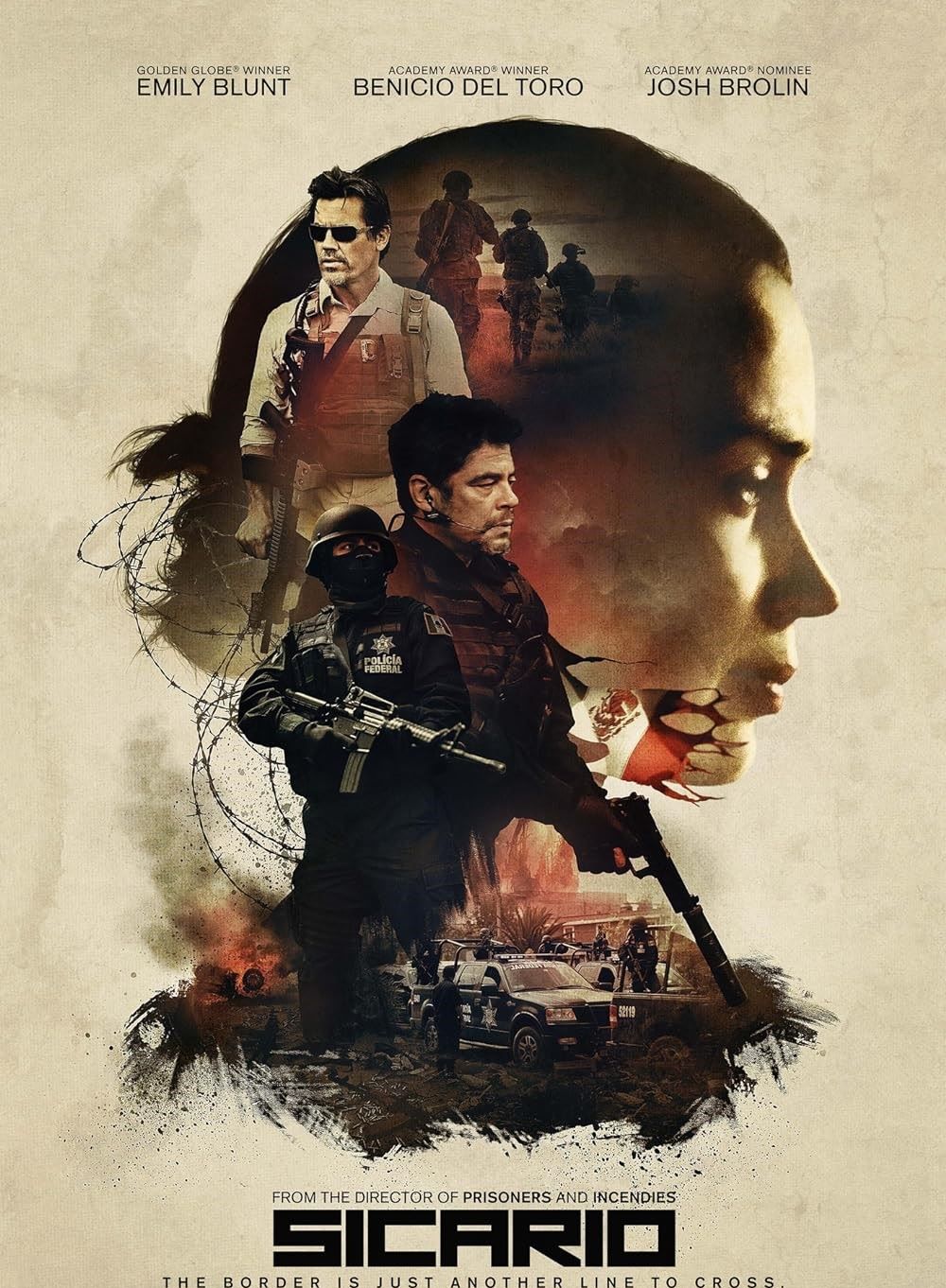
Sicario is one of those thrillers that doesn’t just try to get your pulse up; it wants to leave you sitting there afterward, uncomfortable and a little hollowed out. Set in the murky world of the U.S.–Mexico drug war, it follows an idealistic FBI agent pulled into a “by any means necessary” operation and slowly realizing she’s basically a pawn in a much bigger, much uglier game. It’s not a movie about slick heroes taking down bad guys so much as a slow, grim spiral into the realization that the system is rigged on every level, and that’s where the film is both at its most impressive and its most uncompromising. Overall, it leans heavily positive as a piece of craft—beautifully shot, superbly acted, tightly directed—and its refusal to blink at where its story logically leads is a big part of what gives it power.

The basic setup is simple enough: Kate Macer, played by Emily Blunt, is an FBI agent used to doing things by the book, raiding cartel safe houses in Arizona with her partner Reggie. After a grisly opening operation that turns up corpses hidden in the walls and a deadly booby trap, she’s recruited into a joint task force helmed by Josh Brolin’s Matt Graver, a flip‑flop‑wearing CIA type who treats international borders and legal constraints as suggestions. The team’s official mission is to go after a cartel lieutenant, Manuel Díaz, but very quickly Kate realizes she’s only being told a fraction of what’s really going on. The more she pushes for answers, the more obvious it becomes that Matt and his mysterious associate Alejandro (Benicio Del Toro) are running their own agenda and using her badge and presence as cover.

From the start, Denis Villeneuve frames this story as a descent, and he does it by locking us into Kate’s perspective for most of the film. We’re as confused and kept in the dark as she is: we don’t fully know why the team is crossing into Juárez, why everyone is so tense at the border, or what the deeper objective is besides “disrupt the cartel.” That choice pays off in a huge way during the film’s standout sequences, whether it’s the convoy inching through traffic surrounded by armed federales or the nighttime tunnel infiltration lit by thermal and night‑vision photography. Those scenes aren’t just “cool action beats”; they’re engineered to make you feel boxed in and outmatched, like violence could erupt at any second and no one really has control. Even when nothing is technically happening, you can feel the nerves jangling under the surface.

One of the most striking things about Sicario is how it weaponizes space. The way the film uses its wide, open desert vistas isn’t just pretty scenery—it adds this creeping, suffocating dread to everything, as if the characters are tiny figures swallowed up by forces they can’t hope to understand or control. Those long shots of trucks threading their way across the landscape, or helicopters gliding over seemingly endless scrub, make the world feel vast, ancient, and totally indifferent to whoever’s spilling blood on it today. In those moments, the movie almost channels a kind of Lovecraftian horror, the same cosmic, indifferent menace that Cormac McCarthy managed to weave through his Westerns, where the land itself feels old, hostile, and utterly unmoved by human morality or suffering. It’s not supernatural, but that sense of something bigger, colder, and permanent presses down on every decision these characters make.

Roger Deakins’ cinematography is a huge part of why that dread lands so well. The desert is captured in these wide, ominous skyline shots with tiny vehicles creeping along the horizon, giving Sicario a sense of menace that feels baked into the environment. Even the daylight scenes feel threatening, all washed‑out heat and harsh sun flattening everything into a kind of moral no‑man’s‑land. Then the movie flips into night, and suddenly you’re plunged into infrared and silhouettes, which fits perfectly with the story’s obsession with secrecy and invisible lines being crossed. This is one of those films where you could watch with the sound off and still feel the tension just from how the images are composed, but the use of space and light also nudges the movie into that McCarthy‑adjacent territory where the West is less a backdrop and more a silent, malevolent presence.

The performances match that level of craft. Emily Blunt plays Kate as tough and competent, but not in a superhero way—she’s brave, but she’s also human, constantly trying to reconcile what she’s seeing with what she believes law enforcement is supposed to be. You can see the frustration mounting as she keeps demanding clarity and hitting a wall of smirks, deflections, and “you’ll understand later.” Benicio Del Toro, meanwhile, walks off with the film as Alejandro, this quiet, haunted figure who initially seems like just another operative but reveals layers of trauma and ruthlessness as the story goes on. The script is smart about keeping his backstory mostly hinted at until late in the film, which makes it all the more chilling when you finally see what he’s really there to do. Josh Brolin is the third pillar, playing Matt as casually flippant on the surface but utterly cold about collateral damage, the kind of guy who laughs through briefings because he already knows the moral lines are going to be erased.

On a thematic level, Sicario is very much about complicity and the idea that in this particular “war,” there are no clean hands. Kate comes in thinking she’s going to help nail cartel leadership through some kind of legal, targeted operation; what she slowly figures out is that the task force is really trying to destabilize one cartel to empower another, consolidating power into a more “manageable” single organization. That logic—“create one devil we can deal with instead of many we can’t”—is chilling, and the movie doesn’t really offer a comforting counterargument. Instead of pulling back or softening that stance, it commits to showing what that philosophy looks like in practice, all the way to the bitter end. By the time Alejandro reaches his personal endgame and we see what “justice” looks like in this world, any illusions about moral clarity are gone, and the film refuses to apologize for following that line through.

Where some films might hedge their bets or try to inject a last‑minute note of optimism, Sicario is deliberately straight‑backed about where its story logically leads. The CIA needs Kate’s FBI status to legitimize their operation on U.S. soil, but they don’t actually want her input; she’s there to sign off and be lied to, not to shape policy. Every time she pushes back—like when she tries to build a traditional case after the task force raids a cartel‑connected bank—she’s shut down because “that’s not what this mission is.” Even the brief subplot with the corrupt local cop Silvio is there to underline how the drug war trickles down: this isn’t just cartel bosses and shadowy agents, it’s working‑class people pulling double duty as mules because they’re desperate, and they end up as expendable as anyone else. Rather than treating that as background noise, the movie leans into the bleak implications and lets them sit with you.

The same goes for Kate’s arc. Some viewers see the film as sidelining its female lead in the third act, shifting the narrative fully over to Alejandro just when things are coming to a head. Structurally, that is what happens: the viewpoint tilts from Kate’s confused horror to Alejandro’s mission, and she becomes more of a witness than an active participant. But that shift feels of a piece with the movie’s overall approach—she has been outmaneuvered and used from the start, and Sicario isn’t interested in pretending otherwise just to deliver a more empowering or conventionally satisfying ending. There’s something bracing about the way the film sticks to its guns here; it says, “this is the world we’ve shown you for two hours, and this is how someone like Kate gets treated in it,” and then follows through.

All of this could have tipped into empty cynicism if the film didn’t feel so precise and purposeful. Jóhann Jóhannsson’s score, all pounding, low‑end rumble and ominous strings, practically turns the highway scenes into horror set‑pieces; it feels like the sound of something massive grinding forward that you can’t stop. Villeneuve keeps the pacing deliberate but never sluggish, using long stretches of quiet to make the explosions of violence feel random and brutal instead of exciting. Even small scenes, like Kate’s attempted hookup with a local cop who turns out to be on the cartel payroll, are staged to underline how deeply compromised everything is. There’s no safe space, no “off the clock” moment where the larger conflict doesn’t intrude, and the movie doesn’t pretend there is just to make you feel better walking out.

If you go into Sicario looking for a clean, cathartic crime thriller where the good guys outsmart the bad guys, you’ll probably come away irritated or even angry. The movie’s whole point is that those categories don’t really apply in this corner of the world, and it’s committed enough to that idea that it never gives you an easy out. But if you’re up for something more sobering—an incredibly well‑crafted, morally grim look at the drug war with standout work from Blunt, Del Toro, Brolin, Deakins, and Villeneuve—it’s a pretty exceptional ride. Its worldview is harsh, but it’s also coherent and honestly pursued, and that level of conviction is a big part of why the film lingers. It may not be the kind of movie you “enjoy” in a traditional sense, but it’s one that sticks with you, and in this genre, that counts for a lot.

Spider-Man: Across the Spider Verse (dir. by Joachim Dos Santos, Kemp Powers and Justin K. Thompson)


I broke a few rules with Spider-Man: Across the Spider Verse last Thursday at my local theatre. It was near empty, so thankfully, I didn’t disrupt things too much. I became that guy down in front that needed to be shushed because he was either finger pointing at something or exclaimed “Oh crap!” a little too loud. 2023 has given us many great films so far, but right now, Spider-Man: Across the Spider Verse is the frontrunner for the any awards for animation. As the ending credits rolled, I took a deep breath & rose on shaky legs, an experience that only hits me when I’m up very high staring over a ledge or adrenaline kicks in. I lost myself in that movie.

Or perhaps I’m just growing old.

Either way, Across the Spider Verse takes everything great about the Academy Award Winner Into the Spider Verse and turns it up a notch. The best experience is to go in as blind as you can. There are no real spoilers here (or at least, only a few), though times are changing. Within 20 hours of the film’s release, we already had videos on YouTube to help understand the ending and tons of Tiktokers posting in-theatre video. There’s almost no real reason to ever have to watch a movie in the theatre or maybe even write about one, although the experience is worth it. I’m somewhat jaded, though writing about movies is still fun, at least. Across the Spider Verse and it’s message of doing one’s own thing is inspiring. This is less of a review and more of just my experience with the movie.

Across the Spider Verse continues the tale of Miles Morales (Shameik Moore, Dope), the Official Spider-Man for his universe. Where the first story helped to flesh out the notion that anyone can put on the mask and use their abilities, this film focuses on the weight of responsibility that comes with it. Miles is doing great for himself. He’s come into his own with his powers, and does good with the city. He’s okay with his grades, but his relationship with his parents Rio (Luna Lauren Velez, The First Purge) and Jefferson (Brian Tyree-Henry, Bullet Train) could use some help since he’s keeping his other identity a secret . When Miles is visited by Gwen (Hailee Steinfeld, Bumblebee) on a mission of her own, he finds himself thrust into an adventure he’s not quite ready for. I missed the main trailers for this, which does give away some major plot points. That could also be a factor in why I enjoyed it so much. Everything, or most of it was new to me.

Three new directors are taking on the mantle for this sequel. This time around we have Avatar: The Legend of Korra’s Joachim Dos Santos, Cloudy With a Chance of Meatballs Producer Justin K. Thompson (who also was a producer for Into the Spider Verse) and One Night In Miami’s Kemp Powers (who also wrote Disney/Pixar’s Academy Award Winner, Soul). The story still belongs to Christopher Miller and Phil Lord, who are best known for the 21 Jump Street , The Lego Movies and most recently, The Mitchells vs. The Machines. I still argue that Lord Miller’s version of Solo could have been magic, but that’s another story.

The story in Across the Spider Verse builds off of the original in a number of ways, and the cast helps to flesh things out. New additions include Oscar Isaac’s (Triple Frontier) Miguel O’Hara, a Spider Man charged with protecting the Spider Verse. We also have Issa Rae (HBO’s A Black Lady Sketch Show, Little) as the motorcycle riding Jessica Drew, Academy Award Winner Daniel Kaluuya (Judas and the Black Messiah) as a punk rock Spider-Man named Brodie. As everyone’s seen in the trailers, Jake Johnson (Tag) is back as Peter B. Parker with a new addition in his life. The film is peppered with other cast members and cameos – much like the party sequence in The Lego Batman Movie, but ultimately, it’s Moore and Steinfeld’s characters that carry the most weight. It felt great and nerve wracking to worry about the fates of these characters.

My cousin would be particularly happy to find that the film passes what she refers to as the “Supernatural” Test. From her point of view, when Bela Talbot was introduced to the series Supernatural, Sam and Dean Winchester were rendered stupid in her presence. It was almost as if they just discovered hunting monsters. Miles and Gwen make for a great pair while still managing to be amazing at what they do separately. This doesn’t mean there’s a lack of vulnerability and/or quirkiness between the two, but when it counts, they both manage to bring something to the table.

There’s love and creativity flowing through every frame of Across the Spider Verse. Much like the original, colors are vibrant, and you truly feel as if you’re moving through the pages of your favorite comic book (dots and all). There are tons of blink-and-you’ll-miss-them moments thoughout the movie that warrant a 2nd (or 3rd) viewing or at least a major scrub through when the film reaches streaming. The cities are full of life and the action sequences are wonderful to behold. I can’t begin to wonder how any of it looks on an IMAX screen.

Composer Daniel Pemberton (The Bad Guys) also deserves a lot of love, as well as as the additional side music. He builds on the original themes, while adding some new ones in the process. If anything, some of the music may have been too loud.

Overall, Spider-Man: Across the Spider Verse is a near perfect sequel that had me cheering on the heroes and biting my nails at the unfolding story.

It’s the little things that has Sony Pictures Animation and Spider-Man: Across the Spider Verse working some magic.

Here Are The Oscar Winners!


Best Picture — Nomadland

Best Director — Chloe Zhao for Nomadland

Best Actor — Anthony Hopkins In The Father

Best Actress — Frances McFormand in Nomadland

Best Supporting Actor — Daniel Kaluuya, Judas and the Black Messiah

Best Supporting Actress — Yuh-jung Youn in Minari

Best Adapted Screenplay — Christopher Hampton and Florian Zeller for The Father

Best Original Screenplay — Emerald Fennell for Promising Young Woman

Best Animated Feature — Soul

Best Documentary Feature — My Octopus Teacher

Best International Feature Film — Another Round

Best Live Action Shot Subject — Two Distant Strangers

Best Animated Short Subject — If Anything Happens, I Love You

Best Documentary Short — Collette

Best Original Score — Soul

Best Original Song — “Fight For You” from Judas and the Black Messiah

Best Cinematography — Mank

Best Costume Design — Ma Rainey’s Black Bottom

Best Editing — Sound of Metal

Best Makeup and Hair Styling — Ma Rainey’s Black Bottom

Best Production Design — Mank

Best Sound — Sound of Metal

Best Visual Effects -Tenet

My Final 2020 Oscar Predictions


Since today is Oscar Sunday and all, I guess it’s time for me to make my final predictions for what will win tonight! Here we go! No guts, no glory!

Best Picture: Nomadland

Best Director: Chloe Zhao for Nomadland

Best Actor: Chadwick Boseman in Ma Rainey’s Black Bottom

Best Actress: Carey Mulligan in Promising Young Woman

Best Supporting Actor: Daniel Kaluuya in Judas and the Black Messiah

Best Supporting Actress: Youn Yuh-jung in Minari

Best Original Screenplay: Promising Young Woman

Best Adapted Screenplay: Nomadland

Best Animated Film: Soul

Best International Feature Film: Another Round

Best Documentary Feature: Collective

Best Documentary Short: A Concerto is a Conversation

Best Live Action Short Film: Two Distant Strangers

Best Animated Short Film: If Anything Happens I Love You

Best Original Score: Soul

Best Original Song: Husavik from Eurovision Song Contest: The Story of Fire Saga

Best Sound: Sound of Metal

Best Production Design: Mank

Best Cinematography: Mank

Best Makeup and Hairstyling: Ma Rainey’s Black Bottom

Best Costume Design: Ma Rainey’s Black Bottom

Best Editing: The Trial of the Chicago 7 (bleh)

Best Visual Effects: Tenet

If I score 100% accuracy on my predictions, here’s how the night will end in totals:

3 Oscars — Ma Rainey’s Black Bottom, Nomadland

2 Oscars — Mank, Promising Young Woman, Soul

1 Oscar — Another Round, Collective, A Concerto is A Conversation, Eurovision Song Contest: The Story of Fire Saga, If Anything Happens I Love You, Judas and the Black Messiah, Minari, Sound of Metal, Tenet, The Trial of the Chicago 7, Two Distant Strangers

In another few hours, we shall discover how good I am at guessing.

Lisa Reviews An Oscar Nominee: Judas and the Black Messiah (dir by Shaka King)


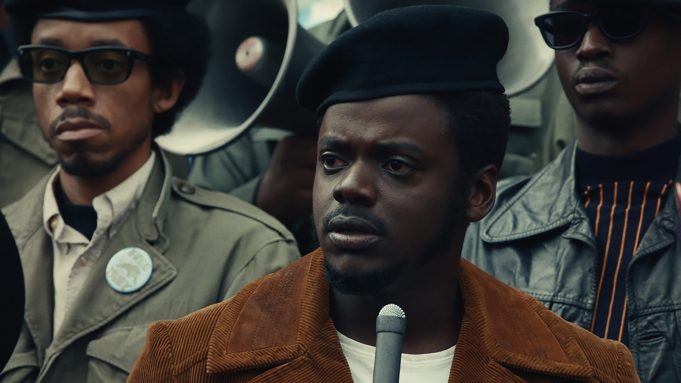
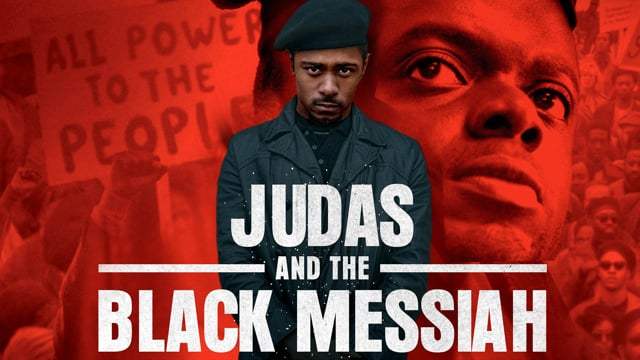
Judas and the Black Messiah is currently an Oscar nominee for Best Picture, Best Original Screenplay, Best Cinematography, Best Original Song, and Best Supporting Actor. (In a move that left quite a few people feeling confused, the Academy nominated both of the film’s leads — LaKeith Stanfield and Daniel Kaluuya — in the supporting category.) In detailing how, in 1969, Black Panther leader Fred Hampton (played by Kaluuya) was assassinated by the FBI and the Chicago police, it tells a true story that should leave any viewer, regardless of political orientation, shaken.

What’s interesting is that, in several Oscar categories, Judas and the Black Messiah will be competing with another fact-based film about 60s activists, Aaron Sorkin’s The Trial of the Chicago 7. In fact, Hampton briefly appears as a character in The Trial of the Chicago 7 and a key scene involves lawyer William Kunstler and Black Panther Bobby Seale discussing Hampton’s murder. Of course, in Sorkin’s film, the Black Panthers don’t get to say much. They appear in the background of the courtroom a few times and it’s hard not to feel that Sorkin is largely using them as props, as a way to let us know that he and the Chicago 7 are all on “the right side of history.” After the scene in which he learns that Hampton’s been murdered, Bobby Seale basically disappears from the film and the rest of The Trial of the Chicago 7 focuses on seven rich white guys debating whether or not it’s better to be serious while protesting or to try to have fun. I point this out not merely to criticize The Trial of the Chicago 7 but also to illustrate that, though they deal with the same time period and the same themes, Judas and the Black Messiah and The Trial of the Chicago 7 are as different as night and day. Judas and the Black Messiah is an angry and unapologetically political film, one that reveals just how anodyne The Trial of the Chicago 7 actually is. If The Trial of the Chicago 7 is carefully calculated to be a crowd pleaser, Judas and the Black Messiah is about leaving the audience outraged. If The Trial of Chicago 7 is about ultimately assuring the audience that the system works even if it is occasionally corrupted, Judas and the Black Messiah is a call to burn the entire system down.

The film opens with Bill O’Neal (LaKeith Stanfield) getting arrested for both auto theft and impersonation of a federal officer in Chicago. He’s approached by FBI agent Roy Mitchell (Jesse Plemons). Mitchell has an offer for Bill. Mitchell is willing to have the charges dropped if Bill will agree to work undercover for the FBI. Bill accepts Roy’s offer and is assigned to infiltrate the Illinois chapter of the Black Panthers. The chapter is currently led by Fred Hampton, a charismatic revolutionary who has been going around to all of the other activist groups and gangs in Chicago and building a multi-racial coalition, one dedicated to social justice and economic equality. Under the direction of J. Edgar Hoover (Martin Sheen, made up to look as grotesque as possible), the FBI is looking to destroy the Black Panthers from within.

Bill agrees to work for the FBI and infiltrate the Black Panther Party. Soon, he not only wins Hampton’s trust but he also works his way up the ranks until he’s promoted to being head of security. He also grows close to Hampton and starts to respond to Hampton’s message of self-determination. However, Mitchell insists that Bill continue to inform on the Panthers, arguing that the Panthers will kill Bill if they ever discover that he’s working with the FBI and also that Hampton himself is a dangerous radical. (Mitchell brags about how he worked to solve the murder of three civil right workers in Mississippi before then comparing Hampton and the Panthers to the KKK.) With Hampton gathering more followers and Hoover demanding that something be done to “neutralize” him, Bill is ordered to betray the man that many have come to view as being the black messiah.

Daniel Kaluuya gives a mesmerizing performance as Fred Hampton. It’s one thing to play a character who everyone insists is a charismatic leader but it’s another thing to give a performance that convinces the audience that the character is a charismatic leader before anyone else has even said a word about him. Kaluuya strides through the film, playing Hampton as a man who knows that he’s destined to change the world. The scenes where he meets with gang leaders and other activist leaders and recruits them into his Rainbow Coalition could have played like simple agitprop (just imagine if Aaron Sorkin had written or directed them!) but Kaluuya is so convincing that you never have any doubt that people actually would abandon their prejudices and their rivalries to follow him. Unlike the quippy activists at the heart of The Trial of the Chicago 7, Kaluuya-as-Hampton actually discusses what his ideology means and also why the system cannot be depended upon to sort itself out. Kaluuya’s Hamtpon challenges not only the film’s villains but also the complacency of the viewers, something that definitely cannot be said of the characters in Aaron Sorkin’s far more comforting film.

LaKeith Stanfield has a difficult role because Bill is a character who most viewers are going to feel ambiguous about but he does a good job of capturing both Bill’s growing consciousness and his growing desperation as he comes to realize that there’s no way to escape the situation in which he’s found himself. Finally, Jesse Plemons is well-cast as Roy Mitchell, who is alternatively threatening and consoling to Bill. A lesser actor would have played Mitchell as just being a straight-up villain but Plemons plays him as someone who truly does believe that he’s one of the good guys, which makes Mitchell’s actions all the more disturbing.

Judas and the Black Messiah is a powerful and angry film. One need not even agree with every bit of Hampton’s ideology to be outraged by the federal government’s efforts to silence his voice and end his life. Judas and the Black Messiah is not expected to win much on Sunday night and, indeed, by nominated both Kaluuya and Stanfield in the same category, the Academy has created a situation in which the two could potentially split the vote and prevent either one from winning. Still, regardless of what it does or doesn’t win this weekend, Judas and the Black Messiah a film that will probably continue to resonate after many of the other nominees have been forgotten.

The Black Reel Awards Honor Judas and the Black Messiah


The 2020 winners of the Black Reel Awards have been announced, with Judas and the Black Messiah taking the prize for best film.

Here are all the nominees and winners:

OUTSTANDING MOTION PICTURE
DA 5 BLOODS
JUDAS AND THE BLACK MESSIAH
MA RAINEY’S BLACK BOTTOM
ONE NIGHT IN MIAMI
SOUL

OUTSTANDING ACTOR
KINGSLEY BEN-ADIR – ONE NIGHT IN MIAMI
CHADWICK BOSEMAN – MA RAINEY’S BLACK BOTTOM
DELROY LINDO – DA 5 BLOODS
ROB MORGAN – BULL
LAKEITH STANFIELD – JUDAS AND THE BLACK MESSIAH

OUTSTANDING ACTRESS
NICOLE BEHARIE – MISS JUNETEENTH
VIOLA DAVIS – MA RAINEY’S BLACK BOTTOM
ANDRA DAY – THE UNITED STATES VS. BILLIE HOLIDAY
TESSA THOMPSON – SYLVIE’S LOVE
ZENDAYA – MALCOLM & MARIE

OUTSTANDING DIRECTOR
RADHA BLANK – THE FORTY-YEAR-OLD VERSION
REGINA KING – ONE NIGHT IN MIAMI
SHAKA KING – JUDAS AND THE BLACK MESSIAH
SPIKE LEE – DA 5 BLOODS
CHANNING GODFREY PEOPLES – MISS JUNETEENTH

OUTSTANDING SUPPORTING ACTOR
CHADWICK BOSEMAN – DA 5 BLOODS
COLMAN DOMINGO – MA RAINEY’S BLACK BOTTOM
ALDIS HODGE – ONE NIGHT IN MIAMI
DANIEL KALUUYA – JUDAS AND THE BLACK MESSIAH
LESLIE ODOM JR. – ONE NIGHT IN MIAMI

OUTSTANDING SUPPORTING ACTRESS
ALEXIS CHIKAEZE – MISS JUNETEENTH
DOMINIQUE FISHBACK – JUDAS AND THE BLACK MESSIAH
KIKI LAYNE – THE OLD GUARD
TRACEE ELLIS ROSS – THE HIGH NOTE
GABOUREY SIDIBE – ANTEBELLUM

OUTSTANDING SCREENPLAY
THE FORTY-YEAR-OLD VERSION – RADHA BLANK
JUDAS AND THE BLACK MESSIAH – WILL BERSON & SHAKA KING
MA RAINEY’S BLACK BOTTOM – RUBEN SANTIAGO-HUDSON
ONE NIGHT IN MIAMI – KEMP POWERS
SOUL – PETE DOCTER, MIKE JONES & KEMP POWERS

OUTSTANDING DOCUMENTARY FEATURE
ALL IN: THE FIGHT FOR DEMOCRACY
JOHN LEWIS: GOOD TROUBLE
MLK/FBI
TIME
THE WAY I SEE IT

OUTSTANDING FOREIGN-LANGUAGE FILM
HIS HOUSE
NIGHT OF THE KINGS
THE LIFE AHEAD

OUTSTANDING ENSEMBLE
DA 5 BLOODS
JUDAS AND THE BLACK MESSIAH
MA RAINEY’S BLACK BOTTOM
MISS JUNETEENTH
ONE NIGHT IN MIAMI

OUTSTANDING VOICE PERFORMANCE
ANGELA BASSETT – SOUL
JAMIE FOXX – SOUL
MAYA RUDOLPH – THE WILLOUGHBYS
OCTAVIA SPENCER – ONWARD
PHYLICIA RASHAD – SOUL

OUTSTANDING SCORE
THE FORTY-YEAR-OLD VERSION – GUY C. ROUTTE
JINGLE JANGLE: A CHRISTMAS JOURNEY – JOHN DEBNEY
THE PHOTOGRAPH – ROBERT GLASPER
SOUL – TRENT REZNOR, ATTICUS ROSS & JON BATISTE
SYLVIE’S LOVE – FABRICE LECOMTE

OUTSTANDING ORIGINAL SONG
FIGHT FOR YOU – JUDAS AND THE BLACK MESSIAH
MAKE IT WORK – JINGLE JANGLE: A CHRISTMAS JOURNEY
POVERTY PORN – THE FORTY-YEAR-OLD VERSION
SPEAK NOW – ONE NIGHT IN MIAMI
TIGRESS & TWEED – THE UNITED STATES VS. BILLIE HOLIDAY

OUTSTANDING INDEPENDENT FEATURE
AMERICAN SKIN
FAREWELL AMOR
THE FORTY-YEAR-OLD VERSION
MISS JUNETEENTH
SYLVIE’S LOVE

OUTSTANDING SHORT FILM
BROTHER
CANVAS
THE CYPHER
GRAB MY HAND: A LETTER TO MY DAD
THE PANDEMIC CHRONICLES

OUTSTANDING INDEPENDENT DOCUMENTARY
MR. SOUL!
THE SIT-IN: HARRY BELAFONTE HOSTS THE TONIGHT SHOW
WITH DRAWN ARMS

OUTSTANDING EMERGING DIRECTOR
EUGENE ASHE – SYLVIE’S LOVE
RADHA BLANK – THE FORTY-YEAR-OLD VERSION
REGINA KING – ONE NIGHT IN MIAMI
SHAKA KING – JUDAS AND THE BLACK MESSIAH
CHANNING GODFREY PEOPLES – MISS JUNETEENTH

OUTSTANDING BREAKTHROUGH PERFORMANCE, MALE
YAHYA ABDUL-MANTEEN II – THE TRIAL OF THE CHICAGO 7
KINGSLEY BEN-ADIR – ONE NIGHT IN MIAMI
DUSAN BROWN – MA RAINEY’S BLACK BOTTOM
ELI GOREE – ONE NIGHT IN MIAMI
NTARE MWINE – FAREWELL AMOR

OUTSTANDING BREAKTHROUGH PERFORMANCE, FEMALE
RADHA BLANK – THE FORTY-YEAR-OLD VERSION
ALEXIS CHIKAEZE – MISS JUNETEENTH
ANDRA DAY – THE UNITED STATES VS. BILLIE HOLIDAY
DOMINIQUE FISHBACK – JUDAS AND THE BLACK MESSIAH
ZENDAYA – MALCOLM & MARIE

OUTSTANDING FIRST SCREENPLAY
THE FORTY-YEAR-OLD VERSION – RADHA BLANK
MA RAINEY’S BLACK BOTTOM – RUBEN SANTIAGO-HUDSON
MISS JUNETEENTH – CHANNING PEOPLES GODFREY
ONE NIGHT IN MIAMI – KEMP POWERS
SYLVIE’S LOVE – EUGENE ASHE

OUTSTANDING CINEMATOGRAPHY
DA 5 BLOODS
JUDAS AND THE BLACK MESSIAH
MALCOLM & MARIE
ONE NIGHT IN MIAMI
TENET

OUTSTANDING COSTUME DESIGN
JINGLE JANGLE: A CHRISTMAS JOURNEY
MA RAINEY’S BLACK BOTTOM
ONE NIGHT IN MIAMI
SYLVIE’S LOVE
THE UNITED STATES VS. BILLIE HOLIDAY

OUTSTANDING PRODUCTION DESIGN
JINGLE JANGLE: A CHRISTMAS JOURNEY
JUDAS AND THE BLACK MESSIAH
MA RAINEY’S BLACK BOTTOM
ONE NIGHT IN MIAMI
TENET

Lisa Marie’s Final 2020-2021 Oscar Predictions


The 2020 Oscar nominations are finally going to be announced on March 15th and then the Oscars themselves are going to be awarded at the end of April.  To be honest, we should call these the 2020-2021 Oscars because I refuse to think of Nomadland, Minari, or The Father as being 2020 films.  Because of the extended eligibility window, they’re all Oscar-eligible but still….

That means that it’s time for me to make my final Oscar predictions for this latest awards cycle.  Last night, The Golden Globes cleared up a few races and suggested that a few others are still in a state of flux.  Of the three big surprise winners from last night (Andra Day, Jodie Foster, and Rosamund Pike) Day seems to be the most likely to benefit from her victory.  I also think that Foster might benefit as well, just because she’s Jodie Foster and she doesn’t appear in a lot of films nowadays.  I’m also willing to say that, based on his getting a GG nom and a SAG nom, I think Jared Leto has a better chance than some might realize of picking up another Oscar nomination.

What about Glenn Close?  On the one hand, Close has never won an Oscar and she gives a very awards baity performance in Hillbilly Elegy.  On the other hand, Hillbilly Elegy was critically-blasted and both the film and Close’s performance were included on the Razzie longlist, which was released earlier today.  (The Razzies suck but that’s a topic for another post.)  I would feel better about Close’s chances if she had won a Golden Globe last night but I’m still inclined to include her in my predictions.

(To be honest, up until Close lost, I still thought there was a chance that Hillbilly Elegy could pick up an Extremely Loud and Incredibly Close-style best picture nomination, the type of nomination that comes as a result of voters watching a critically lambasted film for one performance and saying, “Well, that wasn’t as bad as everyone says!”)

Finally, I’m going to continue to predict a surprise Best Picture nomination for Borat Subsequent Moviefilm, just because it’ll be another chance for the same voters who nominated Vice to express their feelings about Donald Trump and Rudy Guiliani.

If you want to see how my thinking has evolved over this long awards season, check out my predictions for January (2020)February (2020), March (2020AprilMayJuneJulyAugustSeptemberOctoberNovember, December, and January (2021)!

Here are my final predictions:

Best Picture

Borat Subsequent Moviefilm

Ma Rainey’s Black Bottom

Mank

Minari

News of the World

Nomadland

One Night In Miami

Promising Young Woman

The Trial of the Chicago 7

(I’m predicting 9 best picture nominees. I’m looking forward to the Academy going back to having a set number of best picture nominees.  It breaks my heart not to include First Cow and Sound of Metal among my predicted nominees.)

Best Director

Lee Isaac Chung for Minari

Emerald Fennell for Promising Young Woman

Regina King for One Night in Miami

Aaron Sorkin for Mank

Chloe Zhao for Nomadland

Best Actor

Riz Ahmed in Sound of Metal

Chadwick Boseman in Ma Rainey’s Black Bottom

Anthony Hopkins in The Father

Gary Oldman in Mank

Steven Yeun in Minari

Best Actress

Viola Davis in Ma Rainey’s Black Bottom

Andra Day in The United States vs. Billie Holliday

Vanessa Kirby in Pieces of a Woman

Frances McDormand in Nomadland

Carey Mulligan in Promising Young Woman

Best Supporting Actor

Sacha Baron Cohen in The Trial of the Chicago 7

Chadwick Boseman in Da 5 Bloods

Daniel Kaluuya in Judas and the Black Messiah

Jared Leto in The Little Things

Leslie Odom Jr. in One Night In Miami

Best Supporting Actress

Maria Bakalova in Borat Subsequent Moviefilm

Glenn Close in Hillbilly Elegy

Jodie Foster in The Mauritanian

Amanda Seyfried in Mank

Youn Yuh-jung in Minari

We’ll find out how right or wrong I am on March 15th!

Here Are The Golden Globe Winners!


Supporting Actor, Motion Picture — Daniel Kaluuya, Judas and the Black Messiah

Supporting Actor, Television — John Boyega, Small Axe

Actress, TV Music or Comedy — Catherine O’Hara, Schitt’s Creek

Motion Picture, Animated — Soul

Actor, TV Limited Series or Movie — Mark Ruffalo, I Know This Much Is True

Screenplay, Motion Picture — Aaron Sorkin, The Trial of the Chicago 7

Actress, TV Series, Drama — Emma Corrin, The Crown

Original Song, Motion Picture — lo Si, The Life Ahead

Original Score, Motion Picture — Trent Reznor, Atticus Ross, Jon Batiste, Soul

Actor, TV Series, Musical or Comedy — Jason Sudeikis, Ted Lasso

TV Series, Musical or Comedy — Schitt’s Creek

Actress. Musical or Comedy Film — Rosamund Pike, I Care A Lot

Actor, TV Series, Drama — Josh O’Connor, The Crown

Foreign Language Film — Minari

TV Series, Drama — The Crown

Supporting Actress, Film — Jodie Foster, The Mauritanian

Supporting Actress, TV Drama — Gillian Anderson, The Crown

Actress, TV Limited Series or Made-For-Television Film — Anya Taylor-Joy, The Queen’s Gambit

Limited Series or TV Movie — The Queen’s Gambit

Actor, Motion Picture Drama — Chadwick Boseman, Ma Rainey’s Black Bottom

Director, Motion Picture — Chloe Zhao, Nomadland

Motion Picture Comedy — Borat Subsequent Moviefilm

Actor, Motion Picture Comedy — Sacha Baron Cohen, Borat Subsequent Moviefilm

Actress, Motion Picture Drama — Andra Day, The United States vs. Billie Holliday

Motion Picture Drama — Nomadland

The Nevada Film Critics Society Honors Promising Young Woman


Earlier today, The Nevada Film Critics Society announced their picks for the best of 2020–early 2021 and what’s interesting is that Nomadland didn’t win a thing.  Instead, Promising Young Woman took the awards for Best Film, Best Actress, Best Director, and Best Original Screenplay.

Meanwhile, in the supporting races, Daniel Kaluuya picked up another win for Judas and the Black Messiah while Glenn Close won for Hillbilly Elegy.  Kaluuya has been coming on strong during the latter half of this extended awards season, to the point where he’s now pretty much eclipsed other potential nominees like Paul Raci and Leslie Odom Jr..  Meanwhile, Glenn Close seems more and more likely to pick up her first Oscar with each passing day, regardless of what the overall critical response to Hillbilly Elegy may have been.

Here are the winners from Nevada:

Best Film – Promising Young Woman
Best Actor – Riz Ahmed for Sound of Metal & Anthony Hopkins for The Father (TIE)
Best Actress – Carey Mulligan – Promising Young Woman
Best Supporting Actor – Daniel Kaluuya – Judas and the Black Messiah
Best Supporting Actress – Glenn Close – Hillbilly Elegy
Best Director – Emerald Fennell – Promising Young Woman
Best Original Screenplay – Emerald Fennell – Promising Young Woman
Best Adapted Screenplay – Florian Zeller and Christopher Hampton – The Father
Best Documentary – The Dissident
Best Animated Movie – Soul
Best Production Design – Donald Graham Burt – Mank
Best Cinematography – Hoyte van Hoytenna – Tenet
Best Visual Effects – Tenet

Here Are The 2020 Nominees of the Vancouver Film Critics Circle!


The never-ending awards season continues with the Vancouver Film Critics announcing their nominees for the best of 2020!  Apparently, up in Vancouver, they really, really like Mank.  I guess it’s because of the whole drunk socialist thing, I don’t know.

The Vancouver nominations are kind of strange because, in most of the categories, there’s only three nominees.  I mean, that just seems kind of pointless to me.  When other groups are nominating a 100 movies for best picture before selecting Nomadland, why would you only nominate three?  It’s especially strange when you consider that the eligibility period has been extended to such an extent that it seems to be practically begging everyone to give into excess.  The three nominee thing is odd and it’s going to leave me thinking for the next few hours or so.  Of course, as well all know, Vancouver is never less than intriguing.

Anyway, the winners will be announced on February 22nd!  Here are the nominees:

Best Picture
Mank
Nomadland
Promising Young Woman

Best Director
Thomas Vinterberg – Another Round
David Fincher – Mank
Chloe Zhao – Nomadland

Best Screenplay
Jack Fincher – Mank
Emerald Fennell – Promising Young Woman
Aaron Sorkin – The Trial of the Chicago 7

Best Actor
Anthony Hopkins – The Father
Gary Oldman – Mank
Chadwick Boseman – Ma Rainey’s Black Bottom
Riz Ahmed – Sound of Metal

Best Actress
Viola Davis – Ma Rainey’s Black Bottom
Frances McDormand – Nomadland
Carey Mulligan – Promising Young Woman

Best Supporting Actor
Daniel Kaluuya – Judas and the Black Messiah
Leslie Odom Jr. – One Night in Miami
Sacha Baron Cohen – The Trial of the Chicago 7

Best Supporting Actress
Maria Bakalova – Borat Subsequent Moviefilm
Amanda Seyfried – Mank
Yuh-jung Youn – Minari

Best Documentary
Athlete A
Collective
Totally Under Control

Best Foreign Language Film
Another Round
Dear Comrades
Minari