4 Shots From 4 Films is just what it says it is, 4 shots from 4 of our favorite films. As opposed to the reviews and recaps that we usually post, 4 Shots From 4 Films is all about letting the visuals do the talking.
Happy birthday, Clint Eastwood!
4 Shots From 4 Clint Eastwood Films
A Fistful of Dollars (1964, dir by Sergio Leone)
The Outlaw Josey Wales (1976, dir by Clint Eastwood)
Tightrope (1984, dir by Richard Tuggle and Clint Eastwood)
Everyone had to start somewhere and for Clint Eastwood, that somewhere was 1955’s Revenge of the Creature. Here he is, making his uncredited film debut as a lab technician who has discovered something odd. Even in his very first role, Eastwood’s physicality made him stand out. And check out that gorgeous hair!
“It’s what people know about themselves inside that makes ’em afraid.” — The Stranger
Mythic Outsiders and the Shape of the Stranger
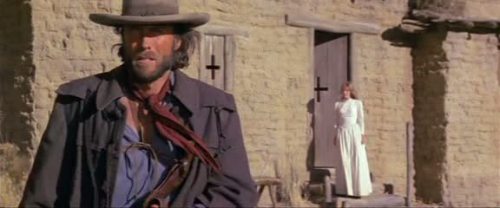
Clint Eastwood’s High Plains Drifter and Pale Rider both revolve around the arrival of a mysterious outsider whose presence destabilizes and reconfigures a frontier community already burdened by moral pressure, economic vulnerability, or buried violence. In High Plains Drifter, the Stranger arrives with the weight of something closer to metaphysical judgment than human intention. He is introduced not as a conventional protagonist but as an unsettling disruption of reality itself, a figure who seems to exist slightly outside the normal rules governing cause and consequence. His relationship to the town of Lago is immediately adversarial, but not in a personal sense—it is structural, almost cosmic, as though he is less reacting to the town than fulfilling a prewritten moral outcome.
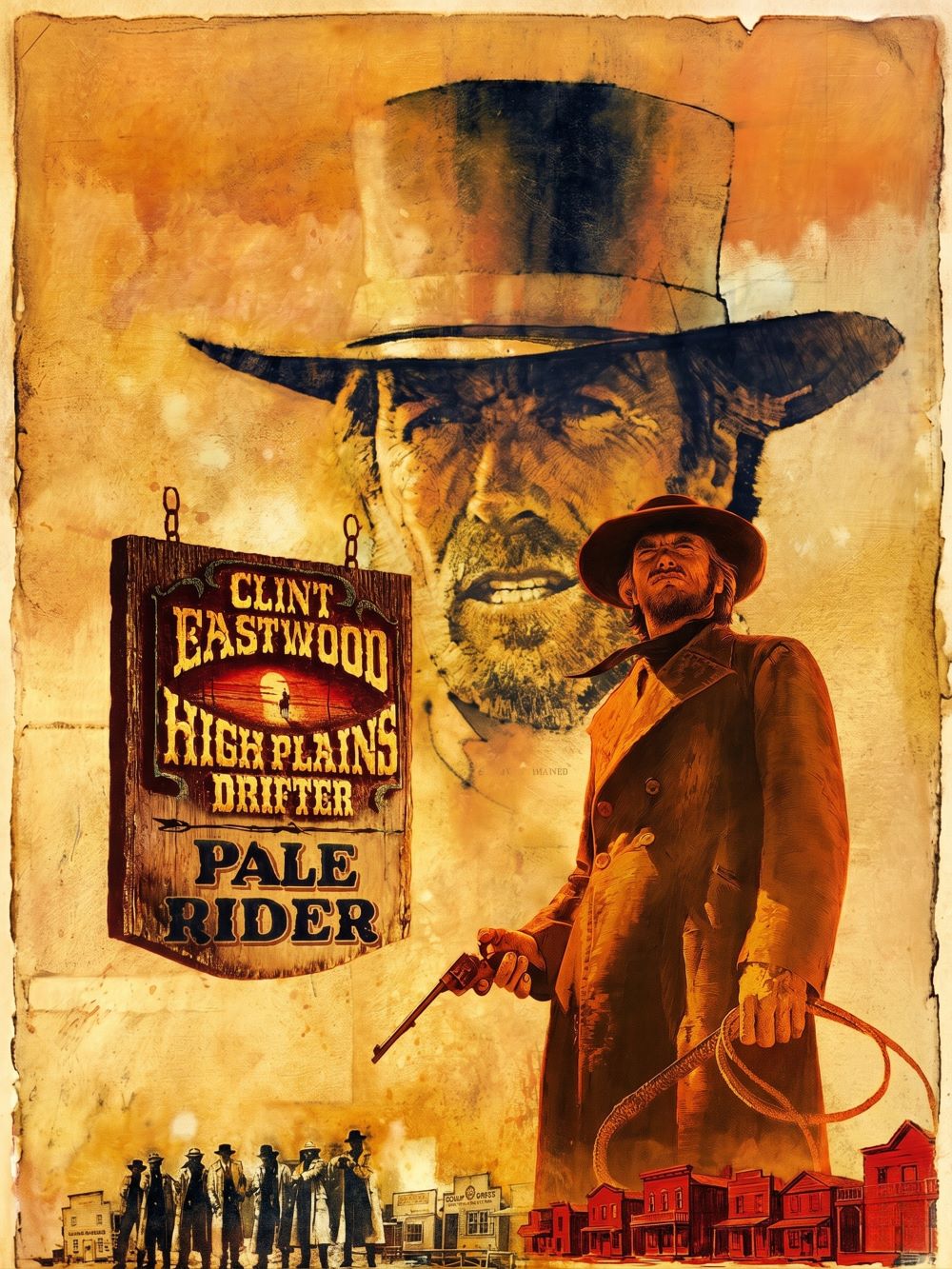
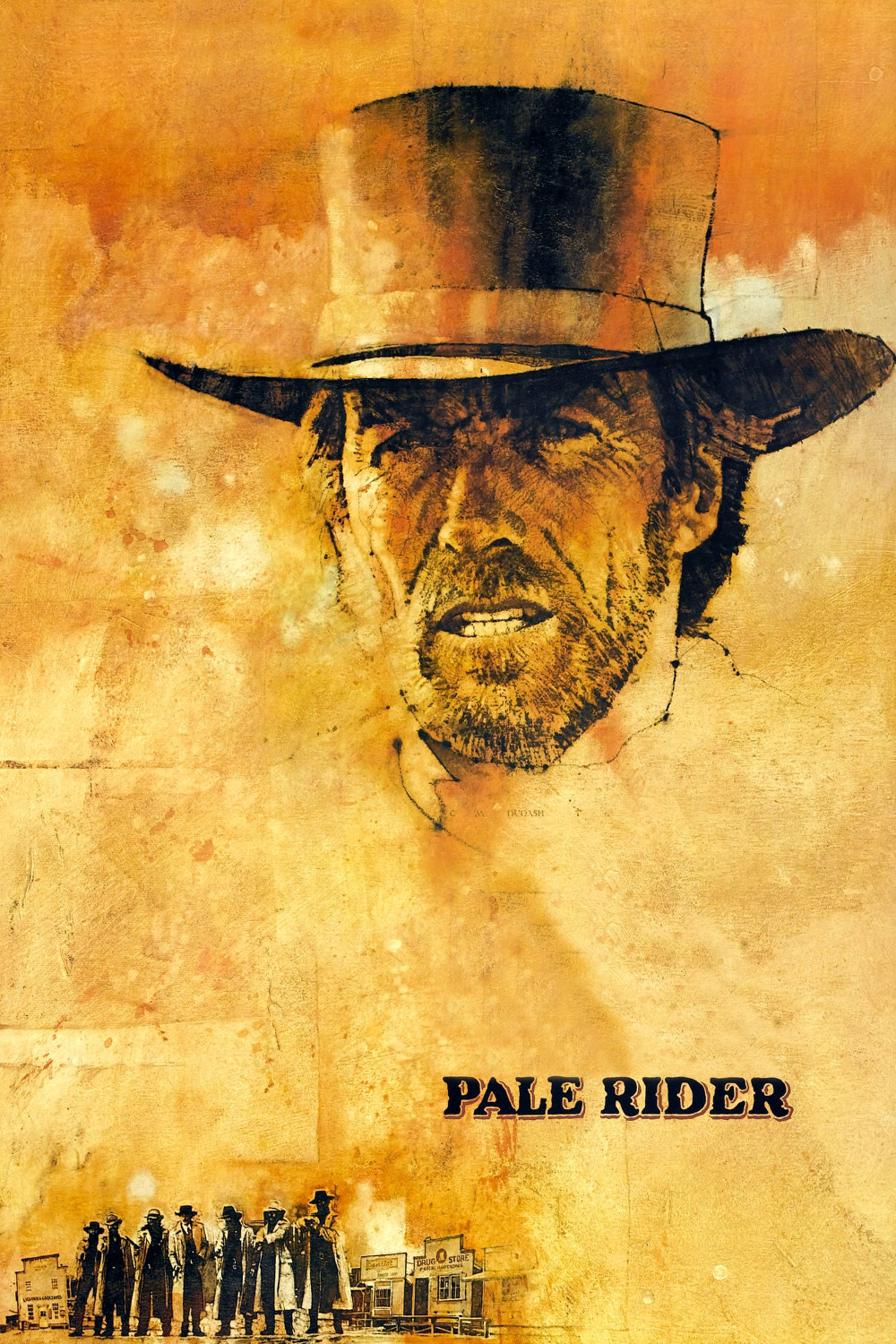
By contrast, Pale Rider preserves the same narrative skeleton but shifts the emotional and moral emphasis toward intervention rather than judgment. The Preacher still carries ambiguity—his scars, his sudden appearance, and his almost supernatural timing all suggest something beyond ordinary human agency—but his role is fundamentally protective. He enters a world defined by industrial pressure and economic coercion rather than buried collective sin, and his presence functions as a counterweight to imbalance rather than an execution of moral sentence. The result is that both films feel like variations of the same mythic story, but one is written as condemnation while the other reads as reluctant guardianship.
Old Testament Retribution vs. Folkloric Myth
One of the most revealing ways to distinguish the two films is through their mythic grammar. High Plains Drifter reads like an Old Testament narrative of retribution, where morality is absolute, guilt is inherited collectively, and punishment is not only justified but structurally inevitable. The Stranger operates like a figure of divine wrath, not because he explicitly claims divine authority, but because the world of the film behaves as though such authority is implicit. Lago is not a community undergoing moral testing; it is a community already judged. Every act the Stranger commits feels like the unfolding of a sentence that predates his arrival. Violence in this framework is not expressive or emotional—it is procedural, almost liturgical, as though the town is being dismantled according to a moral code that does not permit negotiation.
The Old Testament quality of High Plains Drifter is also evident in its treatment of time and consequence. The past is not past—it is active, invasive, and inescapable. The town’s buried crime against its former marshal is not simply a backstory element; it functions as a theological stain that structures everything that follows. The Stranger does not introduce justice into the world; he reveals that justice was already waiting, dormant and inevitable.
Pale Rider, by contrast, operates within a folkloric mode that feels less doctrinal and more narrative in the oral-tradition sense. The Preacher is not a judge delivering sentence but a figure who appears within a story because the story requires balance. Folklore does not insist on moral finality in the same way scripture does; instead, it preserves ambiguity, repetition, and interpretive openness. The Preacher’s identity remains unresolved not because the film withholds information, but because resolution itself is not the point. He resembles figures from frontier legend—wandering spirits, unnamed avengers, or protective ghosts whose purpose is understood only through their effects on a community rather than through explicit explanation.
Where High Plains Drifter insists on inevitability, Pale Rider allows for contingency. The Preacher arrives in response to suffering rather than in fulfillment of punishment. His presence suggests that moral intervention is episodic rather than absolute, something that occurs when imbalance becomes intolerable rather than something decreed in advance. The result is a world that feels open-ended rather than sealed.
Moral Worlds: Guilt Versus Vulnerability
The moral architecture of each film is constructed through the condition of its community. In High Plains Drifter, Lago is defined by collective guilt so pervasive that it erases meaningful individuality. The townspeople are not simply flawed characters; they are components of a shared moral collapse. Their original crime—the betrayal and murder of their marshal—functions as the foundation of their identity. The Stranger’s arrival does not introduce new moral tension; it activates an existing one that has been suppressed but never resolved. The town’s psychology is therefore circular: guilt produces fear, fear produces complicity, and complicity guarantees punishment.
This circularity is what gives High Plains Drifter its claustrophobic quality. There is no outside moral perspective capable of altering the town’s fate. Even resistance or survival strategies feel complicit in the same moral structure. The town is effectively trapped inside its own ethical architecture.
In Pale Rider, however, the mining community is framed through vulnerability rather than guilt. These characters are not haunted by a collective sin but threatened by external forces—specifically Coy LaHood’s industrial expansion, which seeks to displace them through economic pressure and intimidation. The moral stakes are therefore asymmetrical: a powerful industrial entity versus a fragile group of independent miners. This reframing is crucial because it transforms the Preacher’s role from agent of punishment to agent of protection. He does not expose corruption within the miners; he resists corruption directed toward them.
Tone and Philosophical Direction
The tonal difference between the films reflects Eastwood’s evolving relationship with the Western mythos. High Plains Drifter is austere, surreal, and deliberately disorienting. The town of Lago feels less like a historical location than a moral construct, a space designed to contain judgment. The visual and narrative isolation of the town reinforces its status as a closed system, one in which moral consequence operates without interference from broader social or geographic context. The result is a film that feels almost metaphysical in its severity, as though it is staging a moral experiment rather than telling a grounded story.
Violence in this context becomes an instrument of revelation. Each act performed by the Stranger peels back layers of denial and self-deception, leaving only the raw structure of guilt beneath. The tone is not merely dark—it is stripping, reductive, and final.
Pale Rider, while still restrained and often somber, introduces a more grounded emotional texture. The mining settlement feels materially real, shaped by labor, scarcity, and interpersonal bonds. This grounding prevents the film from collapsing into abstraction. Even when supernatural ambiguity is present, it is embedded within a world that feels historically and physically tangible. This creates a tonal tension between myth and realism that softens the absolutism found in High Plains Drifter. Instead of moral vacuum, Pale Rider offers moral friction.
The Outsider as Moral Force
Eastwood’s performances in both films embody the evolution of the outsider archetype. In High Plains Drifter, the Stranger is almost entirely detached from human relatability. His silence is not contemplative but destabilizing, creating unease in every interaction. He functions like a moral solvent, dissolving social bonds and exposing hidden structures of guilt. There is no suggestion that he belongs to the world he enters; instead, he appears to impose a structure upon it.
In Pale Rider, the Preacher retains the same controlled economy of expression, but his presence is tempered by moments of relational meaning. His connection to the miners, particularly the young girl whose prayer summons him, introduces a reciprocal dimension absent from High Plains Drifter. He is not simply an external force acting upon the world; he is a figure whose arrival is framed as response. This responsiveness is what aligns him more closely with folkloric tradition, where characters are defined not by origin but by function within a narrative ecosystem.
Violence as Judgment vs. Necessity
Violence in High Plains Drifter operates as moral inevitability. It is structured, ritualized, and unavoidably recursive. Each act feels like the continuation of a moral sequence already underway, as though the Stranger is simply advancing toward a predetermined conclusion. The emotional effect is one of inevitability without catharsis.
In Pale Rider, violence is repositioned as necessity rather than inevitability. It emerges only when economic exploitation and coercion leave no viable alternatives. This reframing is subtle but significant: violence becomes situational rather than cosmic. The Preacher does not embody judgment; he responds to imbalance. As a result, even the film’s climactic confrontations carry a different emotional charge—they feel like interruptions in injustice rather than fulfillments of destiny.
Supporting Communities and Narrative Focus
Both films maintain a strong central focus on Eastwood’s outsider, which inevitably limits the depth of supporting character development. However, the implications of this limitation differ between them. In High Plains Drifter, the flattening of the townspeople reinforces the idea of collective moral identity. Individual psychology is irrelevant because the town functions as a single ethical organism. The lack of distinction between characters serves the film’s allegorical purpose.
In Pale Rider, the miners are more individualized in performance even if not fully developed in script. Actors such as Michael Moriarty and Carrie Snodgress bring emotional specificity that suggests lives extending beyond the frame. This helps ground the film’s mythic structure in human stakes, preventing it from becoming purely symbolic. Even if the characters are archetypal, they are not abstract.
Visual Mythmaking
Cinematographically, the two films articulate their mythic identities through environment. High Plains Drifter constructs a space that feels artificially isolated, as though removed from ordinary geography and placed into a moral void. The town becomes a sealed chamber in which ethical consequences unfold without external interference. This abstraction reinforces its Old Testament quality: a world governed by decree.
Pale Rider, shot by Bruce Surtees, leans into environmental tactility. The forests, mountains, and mining encampments feel embedded in a larger natural system. This grounding creates a sense of narrative openness. Rather than existing as a moral stage, the landscape feels like a lived world in which myth temporarily emerges before receding again into ordinary life. This is essential to its folkloric tone.
Conclusion: Two Mythic Languages of the Western
Ultimately, High Plains Drifter and Pale Rider function as two distinct mythic languages within Clint Eastwood’s evolving critique of the Western. One articulates itself through Old Testament logic—absolute judgment, collective guilt, and irreversible consequence. The other speaks in folkloric terms—episodic intervention, narrative ambiguity, and moral imbalance temporarily corrected rather than permanently resolved. Together, they form a sustained meditation on the Western outsider as both executioner and legend: one who arrives to complete a sentence already written, and another who arrives like a story that briefly becomes real before fading back into myth.
“And I looked, and behold a pale horse. And his name that sat on him was Death. And Hell followed with him.” — Megan Wheeler
Clint Eastwood’s Pale Rider occupies a fascinating space within the Western genre—both a reverent homage to the traditions that shaped classic frontier storytelling and a quiet dismantling of the myths those stories often upheld. Released in 1985, the film arrived during a period when the Western had largely faded from mainstream prominence, regarded by many as a relic of an earlier cinematic era. Yet Eastwood, by then already firmly associated with the genre through his work in Sergio Leone’s Dollar Trilogy and films like High Plains Drifter and The Outlaw Josey Wales, proved that the Western still had room for reinvention. With Pale Rider, he crafted something that feels both deeply familiar and subtly haunting: a film that embraces the iconography of the Old West while draping it in an almost supernatural atmosphere, creating one of the most enigmatic and compelling entries in his directorial career.
In many ways, Pale Rider also feels like a spiritual successor—or even an unofficial companion piece—to High Plains Drifter. Both films center around a mysterious outsider who seemingly emerges from nowhere to confront a corrupt and morally rotten community. In both stories, Eastwood plays a figure who feels less like an ordinary man and more like an embodiment of vengeance itself, a ghostly gunslinger whose true nature is never fully explained. The similarities in narrative structure are impossible to ignore: isolated frontier settlements under siege, powerful men abusing authority, and Eastwood’s near-mythic drifter arriving as a reckoning for buried sins. But where High Plains Drifter leans into bitterness and outright surrealism, portraying the Old West as a place consumed by cruelty and hypocrisy, Pale Rider takes a more restrained and spiritual approach. The Preacher is still intimidating and otherworldly, but he possesses a moral center that the Stranger in High Plains Drifter deliberately lacked. It feels almost as if Eastwood revisited the earlier film’s core ideas over a decade later with greater maturity and reflection, transforming the wrathful ghost story of High Plains Drifter into something more meditative about redemption and justice.
On its surface, Pale Rider follows a relatively straightforward Western premise. A group of struggling gold prospectors in the mountains of California are being terrorized and pressured by a wealthy mining magnate, Coy LaHood, who seeks to drive them off their land so he can exploit the area’s resources for himself. Into this conflict rides a mysterious preacher, played by Eastwood, whose sudden appearance seems almost divinely summoned after a young girl prays for deliverance. This unnamed “Preacher” becomes the reluctant protector of the miners, standing against LaHood and the corrupt marshal Stockburn and his deputies. The bones of the story echo classic Western structures—outsiders defending vulnerable settlers from ruthless power—but Pale Rider imbues this framework with a somber, spiritual weight that elevates it beyond genre familiarity.
One of the film’s most striking strengths is Eastwood’s central performance. By this point in his career, Eastwood had perfected a specific screen persona: laconic, observant, physically economical, and quietly threatening. Yet the Preacher in Pale Rider may be one of his most mysterious variations on that archetype. Unlike the swaggering Man with No Name or even the wounded determination of Josey Wales, the Preacher seems almost detached from ordinary human concerns. His calm demeanor and sparse dialogue give him an ethereal quality, and Eastwood plays him with just enough warmth to avoid complete abstraction. There is kindness in his interactions with the miners, especially the young Megan Wheeler, but it always feels measured, as if the character is passing through rather than fully participating in the world around him. The film deliberately hints at something supernatural—his sudden arrival after prayer, his unexplained scars, his near spectral presence—and Eastwood wisely resists any definitive explanation. The ambiguity is what gives the character his power.
This supernatural undercurrent is central to what makes Pale Rider unique. The title itself references the Four Horsemen of the Apocalypse, specifically Death riding a pale horse, and the biblical symbolism permeates the film without overwhelming it. Eastwood uses religious imagery sparingly but effectively, allowing viewers to wonder whether the Preacher is simply a man with a violent past or something more symbolic: an agent of justice, vengeance, or divine reckoning. The film never commits fully to fantasy, but it constantly suggests that the Preacher exists somewhere between myth and mortal reality. This ambiguity transforms ordinary Western confrontations into something more unsettling and poetic.
Visually, Pale Rider is one of Eastwood’s most beautiful films. Shot by cinematographer Bruce Surtees, whose work with Eastwood had already become legendary, the film makes remarkable use of natural landscapes. The mountainous terrain, dense forests, and rugged mining camps provide a setting that feels less romanticized than the sweeping deserts often associated with traditional Westerns. There is a chill to the environment, both literal and emotional. The forests seem shadowed and secretive, and the mining settlements feel fragile, temporary, vulnerable to destruction. Surtees’ lighting contributes significantly to the film’s tone, bathing many scenes in muted, earthy colors and allowing darkness to linger at the edges of the frame. The result is a Western that often feels ghostly, as though the past itself is haunting every image.
Eastwood’s direction demonstrates his confidence and restraint. He avoids excessive spectacle, choosing instead to let tension build gradually through atmosphere, silence, and careful pacing. Action scenes are brief but impactful, and the violence carries genuine consequence. Unlike many earlier Westerns that glorified gunfights as heroic climaxes, Pale Rider treats violence as something grim and almost inevitable. When the Preacher finally unleashes his skills, it feels less like triumphant empowerment and more like a dark necessity. Eastwood understands that his character’s power is amplified by how sparingly he uses it.
Still, despite how effective the film is overall, Pale Rider is not without flaws. Some viewers may find the pacing overly deliberate, particularly in the middle section where the story spends considerable time with the miners and their daily struggles before major plot developments occur. Eastwood prioritizes mood and atmosphere over narrative momentum, which works artistically but can occasionally make the film feel slower than necessary. The supporting characters, while likable, are also somewhat thinly sketched compared to the larger thematic ideas surrounding them. Hull Barret, Sarah Wheeler, and several of the miners are defined more by their place within the story’s moral framework than by deeply layered characterization. They are ordinary people standing against corruption, but the script does not always give them enough individuality or complexity outside of that central conflict.
What ultimately compensates for this is the strength and sincerity of the performances themselves. Michael Moriarty gives Hull Barret a gentle awkwardness and vulnerability that make him feel genuinely human rather than simply “the good-hearted miner.” There is an understated sadness in the way Moriarty carries himself, as if Hull already expects to lose against forces larger than himself, which makes his gradual courage more affecting. Carrie Snodgress similarly brings warmth and grounded realism to Sarah Wheeler, helping the character feel emotionally authentic even when the screenplay does not explore her inner life in great detail. The miners as a collective also benefit from Eastwood’s direction, which emphasizes camaraderie and shared hardship through small interactions and visual storytelling rather than extensive dialogue or backstory.
In many respects, the relative simplicity of the supporting characters may even be intentional. Pale Rider operates less like a conventional ensemble drama and more like a mythic folk tale or ghost story, where ordinary people encounter a figure who seems larger than life. The miners are not meant to overshadow the Preacher’s mystery; they function as representatives of vulnerable frontier communities trapped between survival and exploitation. Their emotional straightforwardness creates a contrast with Eastwood’s enigmatic presence. Because the supporting cast plays these roles with sincerity and restraint rather than melodrama, the film avoids feeling emotionally hollow even when some characters are not deeply developed on the page. The performances ground the story just enough to keep the supernatural and allegorical elements emotionally believable.
The film’s thematic concerns are nevertheless surprisingly rich. At its heart, Pale Rider is a story about greed and resistance. Coy LaHood represents industrial expansion and unchecked capitalism, using wealth and intimidation to crush smaller, independent prospectors. The miners symbolize ordinary people fighting to preserve their livelihoods and dignity. This conflict gives the film a subtle populist edge, framing the Western frontier not merely as a site of adventure but as a battleground between concentrated power and communal perseverance. Eastwood does not overstate these themes, but they lend the story a resonance that extends beyond genre convention.
There is also an interesting undercurrent of moral ambiguity. The Preacher protects the innocent, but he is hardly a traditional moral hero. His past appears stained by violence, and the scars on his back suggest suffering, punishment, or perhaps sins that remain unresolved. The film implies that redemption may be possible, but only through confrontation with one’s own darkness. This is where Pale Rider aligns with Eastwood’s broader body of work, which often interrogates the mythology of masculine heroism. His protagonists are rarely clean symbols of virtue; they are damaged, haunted men whose capacity for violence complicates their acts of justice.
Richard Dysart makes Coy LaHood more than a simple villain, imbuing him with entitlement and cold pragmatism rather than cartoonish cruelty. But perhaps most memorable among the antagonists is John Russell as Marshal Stockburn, whose quiet menace and personal history with the Preacher add another layer of mystery and inevitability to the film’s final act. Stockburn in particular feels almost like a mirror image of the Preacher himself—another ghost from a violent past returning for unfinished business.
What makes Pale Rider endure is its ability to function on multiple levels simultaneously. It works perfectly well as a classic Western, complete with horseback arrivals, frontier justice, and dramatic showdowns. It also succeeds as a meditation on mortality, redemption, and the fading mythology of the American frontier. Eastwood understands the genre deeply enough to honor its traditions while gently questioning them. The Preacher is both an embodiment of the old Western hero and a ghostly reminder that such heroes may never have truly existed outside of legend.
In many ways, Pale Rider feels like a bridge between Eastwood’s earlier Westerns and the more explicit deconstruction he would later achieve with Unforgiven. Where Unforgiven strips away nearly all romanticism, Pale Rider still allows for mystery and myth, but it tempers them with melancholy and introspection. It recognizes the allure of the gunslinger while quietly suggesting that such figures are often defined by pain and isolation.
Nearly four decades after its release, Pale Rider remains one of Clint Eastwood’s most compelling achievements, both as actor and director. It is a Western that understands the power of silence, shadow, and suggestion. It trusts its audience to sit with uncertainty and to appreciate heroism that comes wrapped in ambiguity. More than just a revival of a fading genre, it is a thoughtful and atmospheric meditation on justice, violence, and the strange figures we summon when ordinary courage is no longer enough. In the vast landscape of Eastwood’s Western legacy, Pale Rider stands as one of his most haunting and quietly profound works.
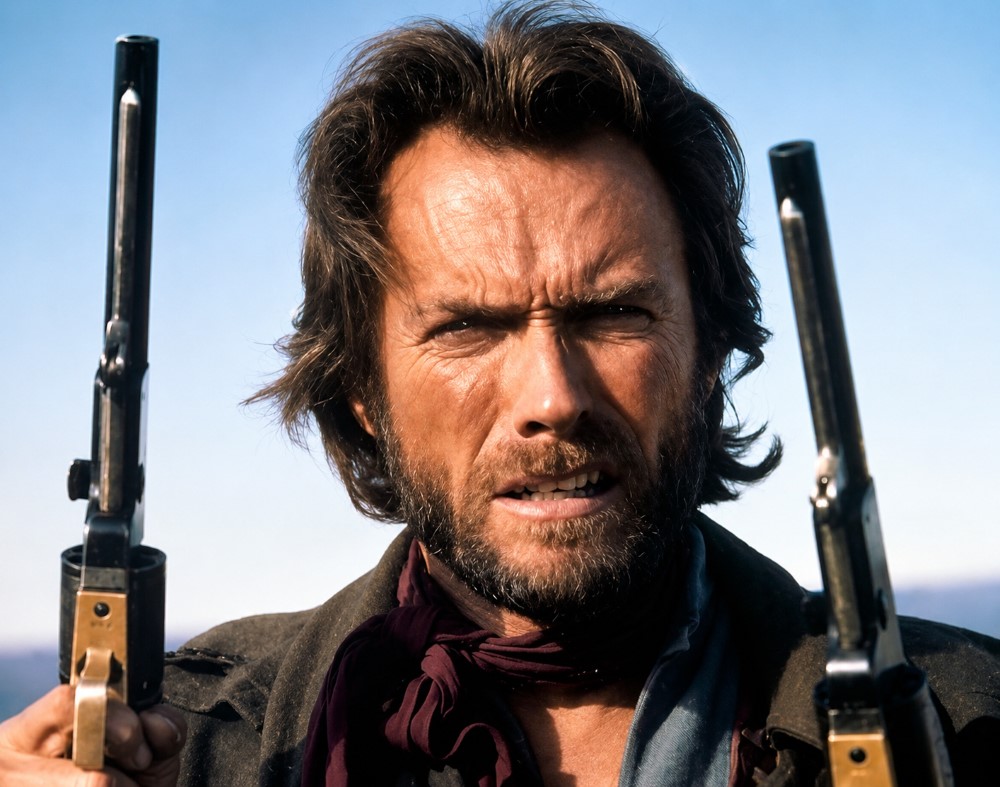
In the pantheon of American cinematic heroes, Josey Wales—the stoic, vengeance-driven farmer turned outlaw portrayed by Clint Eastwood in The Outlaw Josey Wales (1976)—stands as a uniquely compelling figure. Unlike the clean-cut, morally unambiguous heroes of classical Westerns, Wales is forged in the crucible of tragic loss. After Union raiders murder his wife and child and destroy his Missouri farm, Josey joins a Confederate guerrilla unit, only to watch his comrades massacred while trying to surrender. This backstory does not simply justify his violence; it transforms him into a melancholic ghost, a man who has already lost everything that once gave his life meaning. What makes him immediately charismatic is not his toughness, but his profound, wounded humanity—a man who rarely smiles, yet whose weary eyes carry the weight of a world that has betrayed him.
A second source of Josey’s charisma is his radical, almost spiritual independence. Throughout the film, he is hunted by Union soldiers, bounty hunters, and carpetbaggers, yet he refuses to bend to any authority. When a Union captain demands he “change his way of thinking,” Josey’s reply—“I reckon so”—is an empty promise spoken with a cigarette in his mouth and a pistol in his hand. He operates according to a private moral code rather than the law of the state. This rebellion against institutional power resonates deeply because Josey is not an anarchist or a nihilist; he is a man who has seen government-sanctioned terror and chooses instead to trust only his own judgment. In an era of disillusionment following Vietnam and Watergate, audiences embraced Wales as a hero who would never again place his faith in flags or orders.
Paradoxically, what makes Josey Wales most interesting is his quiet, reluctant capacity for community. Despite his vow of solitude, he accumulates a ragtag family: a Navajo elder named Lone Watie, a young Kansas woman seeking refuge, and even a grizzled old bear of a man. Josey never seeks followers—they gravitate toward him because they sense his integrity beneath the flinty exterior. In one of the film’s most touching sequences, he teaches a young, traumatized girl how to prepare food, his gruffness softening into something resembling paternal tenderness. This tension—between the lone avenger and the accidental patriarch—gives Josey a dramatic complexity that pure antiheroes lack. He wants to be left alone, but he cannot ignore suffering; he carries death on his hip, yet he plants seeds for the future.
Beyond his immediate charisma, Josey Wales established a template for the unglamorous, psychologically examined gunslinger that would define the next generation of Westerns and beyond. Unlike the mythic, invincible cowboys of John Ford’s era, Wales is tired, grieving, and physically fallible—his violence carries weight and consequence, not spectacle. This raw, de-glamorized portrait directly influenced Eastwood’s own Unforgiven (1992), where William Munny echoes Josey’s haunted past and reluctant violence, and Tombstone (1993), where Kurt Russell’s Wyatt Earp struggles with similar moral weariness beneath the badge. Most notably, the Red Dead Redemption video game series (2010–2018) owes an immense debt to Josey Wales: protagonist John Marston, a former outlaw dragged back into violence to protect his family, and Arthur Morgan, a dying gunslinger questioning his own loyalty and morality, both embody that same melancholic, code-driven solitude. Josey’s influence transformed the Western hero from a cartoon of virtue into a tragic figure wrestling with his own demons.
Josey Wales endures as a charismatic and interesting hero because he embodies a set of contradictions that feel authentically human: he is brutal yet gentle, solitary yet communal, vengeful yet merciful. He does not seek redemption through love or law, but through an unspoken understanding that some wounds can never heal—and yet life must go on. By the film’s end, when he faces his nemesis and chooses not to kill in cold blood, Josey completes an arc that is less about revenge fulfilled than about a man deciding that his future need not be defined by his past. And by rejecting the glamorous myth of the gunslinger, Josey Wales paved the way for a more honest, sorrowful vision of the Old West—one where heroes bleed, doubt, and sometimes simply walk away, leaving their spurs in the dust.
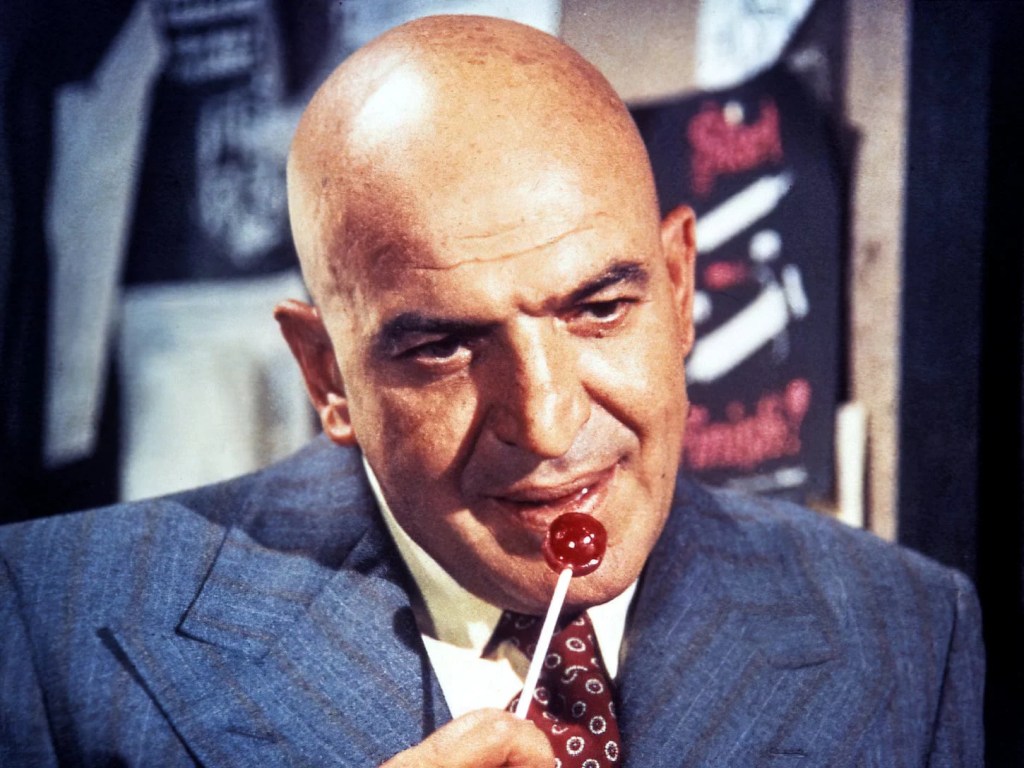
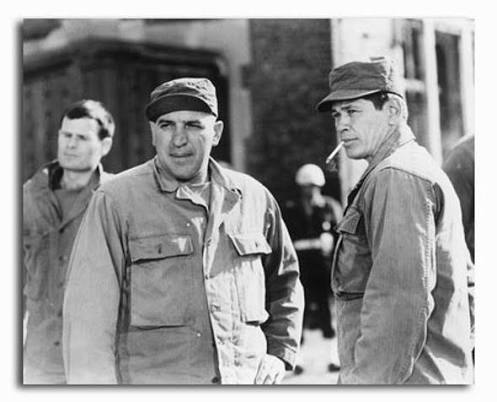
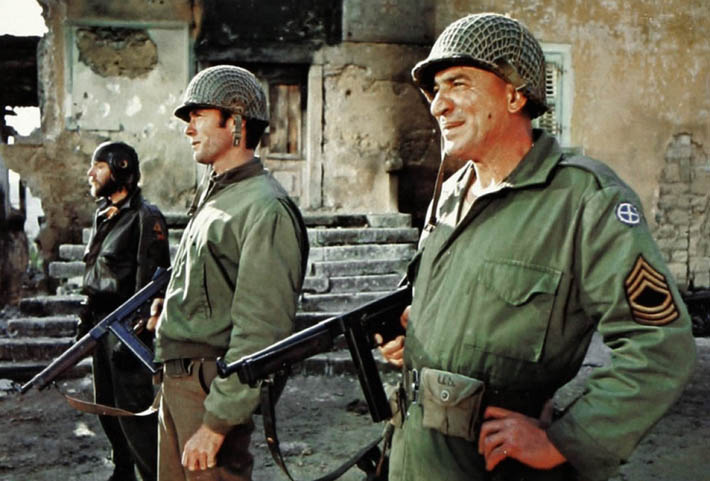
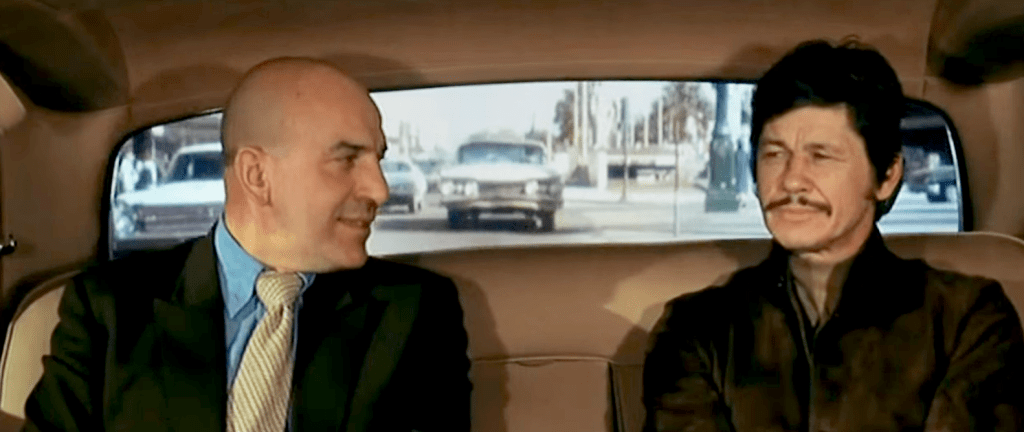
Telly Savalas would have been 104 years old today. He’s been in many of my favorite movies so I’m glad to celebrate him today with 4 Shots from 4 of my favorites!
Who loves ya, baby? (Telly Savalas as Kojak!)With Charles Bronson in THE DIRTY DOZEN!With Clint Eastwood & Donald Sutherland in KELLY’S HEROES!With Charles Bronson in VIOLENT CITY!
“You want to shoot me, go ahead. It won’t matter. I’ve seen things you wouldn’t believe.” — The Stranger
The Western Wound: Horror, History, and the Haunting of Frontier Mythology
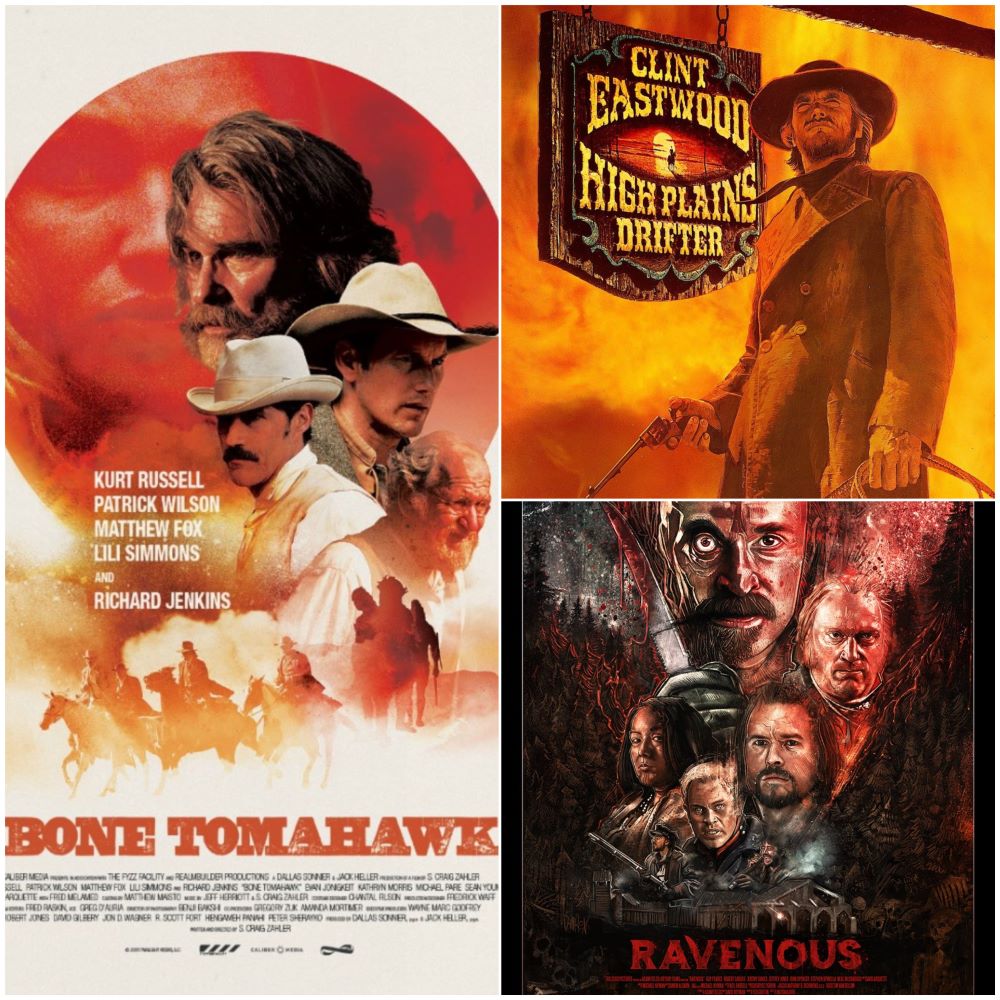
Horror profoundly shapes, distorts, and reframes the American Western, complicating familiar narratives of lawmen and outlaws with the uncanny specter of trauma, dread, and evil. Few films demonstrate this transformation more powerfully than Ravenous (1999), Bone Tomahawk (2015), and High Plains Drifter (1973). These three Westerns push beyond genre conventions, leveraging horror’s capacity to unsettle, destabilize, and haunt—creating experiences that are as philosophically provocative as they are viscerally unsettling. Rather than merely incorporating horror aesthetics into a Western setting, each film employs horror as a core thematic device to interrogate violence, community, morality, and the dark legacies of frontier expansion.
The Haunted Frontier: Atmosphere and the Specter of Evil
High Plains Drifter’s isolation in the arid Nevada desert is more than a physical setting; it externalizes the moral barrenness and guilt festering within the town of Lago. The oscillation between relentless sunlight and dense fog creates a hallucinatory space where natural laws are suspended, and supernatural retribution manifests. Central water imagery—the fog rolling off the lake, the lake itself—serves as a liminal zone, symbolizing the boundary between life and death, past and present, justice and vengeance. The Stranger’s spectral emergence from the desert heat haze hints at his otherworldly nature, turning the town’s landscape into a haunted battleground where redemption is elusive and suffering endemic.
Ravenous’s setting in the snowy Sierra Nevada mountains during the Mexican-American War imbues its horror with claustrophobic dread. Fort Spencer’s remoteness in the face of towering, hostile peaks and unrelenting winter transforms the natural environment into a gothic prison. This wilderness is both physical and psychological, oppressive in its vastness and merciless in its cold. The film uses this setting to amplify the existential terror wrought by cannibalism, suggesting an inescapable cycle of consumption where survival becomes monstrous. Deep shadows, filtered natural lighting, and long quiet scenes evoke dread as much as extreme violence.
In Bone Tomahawk, the stark, sunbaked deserts and towering rock formations of the American Southwest form an ominous landscape embodying ancient and unknowable horror. The frontier town is a fragile outpost at civilization’s edge, surrounded by a wild, menacing wilderness. The deep canyons serve as metaphorical gateways to past atrocities, echoing the silent histories of indigenous trauma and colonial violence. The oppressive silence and vastness underscore humanity’s diminutiveness and vulnerability, while the jagged terrain symbolizes the harshness of both nature and history’s brutal forces.
Monstrous Transformation: The Horror Within
The Stranger in High Plains Drifter manifests the blurring boundaries between justice and vengeance, heroism and monstrosity. His actions—including an unsettling rape scene—force a confrontation with the darkest aspects of human nature, showing how violence corrupts even those who claim righteousness. His ghostly status and ruthless methodology suggest he is a representation of collective guilt made tangible, punishing the town’s sins with otherworldly finality. The film invites viewers to question whether vengeance restores balance or merely perpetuates horror.
In Ravenous, cannibalism literalizes the primal urge to consume not only flesh but identity and sanity, transforming survivors into monsters. The character Ives, charismatic and terrifying, embodies this transformation, seducing others into a vortical descent of brutality. The film’s psychological horror arises from the contagion of hunger and madness, the breakdown of social and moral order amid desolation. It probes existential questions about survival, morality, and the dissolution of self.
Bone Tomahawk depicts transformation through the confrontation with an ancient, savage tribe whose brutality transcends ordinary human evil. The characters’ exposure to this primordial terror strips away civilized facades, forcing characters and viewers to acknowledge the latent barbarity within humanity. The film’s horror is both external—in the violent acts of the tribe—and internal—in the psychological unravelling of the rescue party. This duality highlights the wilderness as both physical terrain and psychic landscape of primal fear.
The Community and the Failures of Civilization
The communal failure in High Plains Drifter reveals how collective cowardice and betrayal corrupt society. Lago’s townsfolk enable the marshal’s murder and face the Stranger’s supernatural justice as a consequence. Their moral bankruptcy transforms the town into a cursed locus of horror, symbolizing how collective sin corrupts the social fabric and invites ruin.
Ravenous portrays community breakdown within the remote outpost, where isolation breeds paranoia, selfishness, and violence. The collapse of trust and order mirrors the broader failure of frontier society to contain human baseness under extreme conditions, suggesting society itself is a fragile construct vulnerable to collapse.
In Bone Tomahawk, the fragile rescue party embodies the precariousness of social cohesion facing profound evil. Their doomed mission stresses how thin the veneer of civilization is, shattering under pressure from ancient horrors. The film critiques assumptions of order and control, emphasizing the ease with which human society can crumble.
Violence, Justice, and the Ethical Horror
Violence in High Plains Drifter is unending, spectral, and morally ambiguous. The Stranger’s vengeance refuses neat closure, illustrating cycles of violence that leave deeper scars rather than justice. The film redefines violent retribution as torment, destabilizing conventional heroic narratives.
Ravenous entwines violence with survival horror and existential dread. The ritualistic cannibalism is a metaphor for moral and spiritual corrosion, forcing characters and audiences to face the horrors wrought by the primal fight for survival at civilization’s edge.
Bone Tomahawk presents violence as slow, ritualistic, and ancient—an elemental force indifferent to human ethics. Its stark, realistic depiction immerses viewers in fear and helplessness, rejecting conventional catharsis and highlighting the terror of primal brutality.
Subtext and Symbolism: Horror as the Depths of Humanity
High Plains Drifter blends ghostly and surreal imagery to explore unresolved sin and cultural guilt. The Stranger is both avenger and specter of collective trauma, with symbolic elements—such as the red-painted town and unmarked graves—that deepen the meditation on punishment and desolation.
Ravenous uses cannibalism and wilderness as symbols of consumption and destruction intrinsic to frontier expansion. Horror here reflects existential struggles with survival, cultural annihilation, and moral ambiguity, set against an environment of engulfing nature and history.
Bone Tomahawk evokes frontier horror as a metaphor for repressed histories and cultural erasure. The savage tribe symbolizes ancestral trauma, while the desolate landscapes underscore the lingering presence of buried horrors that haunt the Western imagination.
The Western Genre as a Wound Haunted by Horror
Ravenous, Bone Tomahawk, and High Plains Drifter deepen the Western genre’s reckoning with violence, morality, and civilization’s fragility. Ravenous allegorizes hunger and expansion’s destructive appetite through cannibalism, revealing survival’s costs to identity and culture. Bone Tomahawk exposes historical violence and trauma encoded in landscape and myth, demonstrating Western justice’s limits. High Plains Drifter dramatizes unresolved guilt and vengeance through spectral retribution, challenging sanitized Western heroism.
The films’ central horrors—the Stranger’s merciless vengeance, the cannibal’s transformative hunger, and the doomed rescue mission into darkness—serve as meditations on violence, communal complicity, and the absence of redemption. They unmask the American West and America itself as terrains haunted by deep, unresolved sins and moral ambiguity. In marrying supernatural and psychological horror, these films offer a complex, layered critique of frontier myth, turning the Western from a tale of conquest into a haunted narrative of trauma, survival, and moral reckoning.
Supernatural vs Psychological Readings
High Plains Drifter uniquely embodies ambiguity between supernatural revenge and psychological torment. The Stranger’s ghostlike qualities and resurrection to avenge his murder firmly anchor a supernatural interpretation. His eerie manifestations—such as the bullwhip’s sound triggering vivid nightmares and his mysterious appearance from the desert heat—signal a spectral force beyond human comprehension. Yet, on a psychological level, the Stranger can be viewed as the materialization of the town’s collective guilt and suppressed trauma. This duality enriches the narrative, allowing viewers to interpret the horror as either literal supernatural vengeance or a psycho-spiritual reckoning of internal moral collapse.
Ravenous blurs supernatural and psychological horror by mixing the tangible terror of cannibalism with metaphysical dread. The figure of Ives carries almost mythic qualities—his charismatic yet monstrous presence suggests an otherworldly evil, a contagion consuming the souls of men. The mountain wilderness functions as a liminal space transcending reality, where madness and primal urges surface. This ambiguity invites readings of the horror as both external supernatural curse and internal psychological disintegration, reflecting survival’s dehumanizing cost amidst isolation and guilt.
Bone Tomahawk grounds itself mostly in realistic terror but invokes mythic supernatural threads through the savage tribe’s almost fantastical menace. Their brutal, ritualized violence carries residues of ancestral curses and primal fears that exceed mere human malevolence. The film explores psychological horror through the characters’ terror and helplessness confronting an unknowable evil, making the wilderness and tribe a metaphor for the abyss of human and historical trauma. Thus, horror emerges as both a tangible threat and a psychological abyss threatening identity and sanity.
This interplay of supernatural and psychological horror amplifies these films’ thematic depth. By refusing to confine horror to one domain, they portray the Western frontier as a space haunted simultaneously by ghosts—whether spiritual, historical, or personal—and inner demons manifesting as guilt, fear, and madness.
Ultimately, horror in these Westerns is not merely a matter of frightening events but a profound engagement with unsettled histories and psyches. This dynamic makes their terror resonate long after the screen fades to black, marking the Western as a genre haunted not only by outlaws and the wilderness but by the specters within us all.
Horror profoundly alters the Western genre’s narrative, revealing it as a cultural wound, a landscape haunted by the ghosts of its own violent history and moral contradictions. By challenging sanitized myths and exposing the fragility beneath civilization’s veneer, Ravenous, Bone Tomahawk, and High Plains Drifter not only frighten but provoke deep reflection on the legacies of violence and the nature of justice itself—capturing the horror at the heart of the American story.
“Don’t count on me to make you feel safe.” — The Stranger
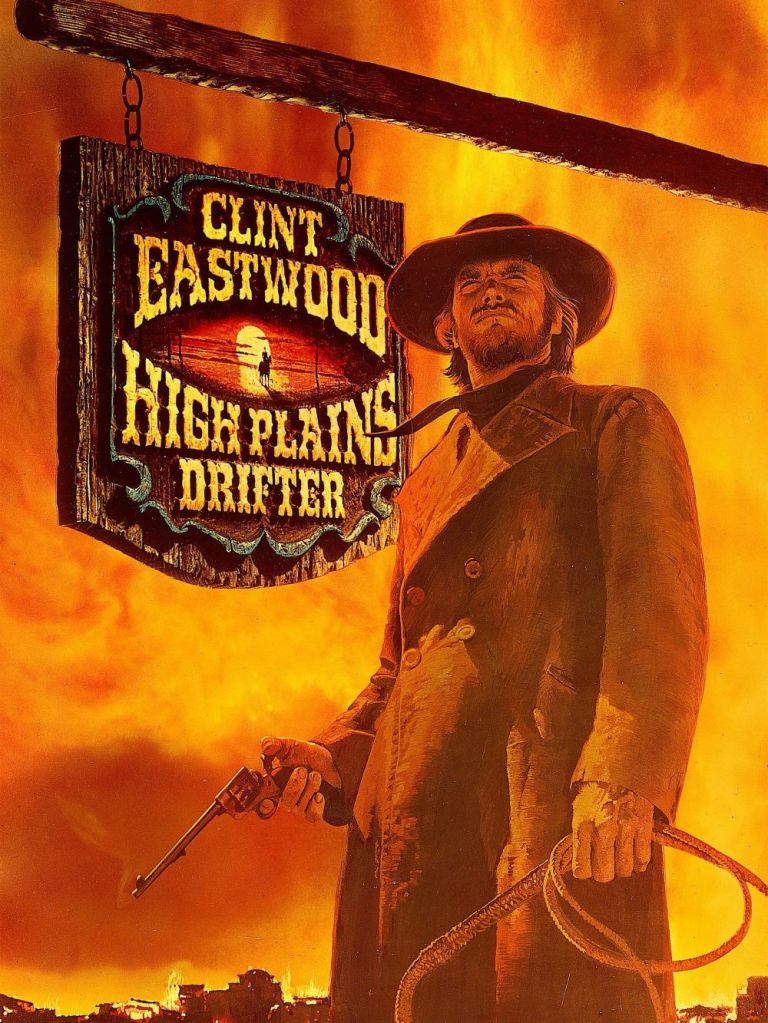
High Plains Drifter stands as one of the bleakest, most enigmatic entries in Clint Eastwood’s filmography—a Western that bleeds unmistakably into the realms of psychological and supernatural horror. This 1973 film is not just another dusty tale of lone gunfighters and frontier justice. It’s a nightmare set in broad daylight, a morality play whose hero is more monster than man.
Eastwood’s Stranger comes riding into the town of Lago from the shimmering desert, a silhouette both akin to and apart from his famed Man With No Name persona. The townsfolk are desperate, haunted by fear—less afraid of imminent violence, more of the sins they’ve half-buried. This is a place where a lawman was brutally murdered by outlaws while the townspeople looked away, their silence paid for with cowardice and greed. When the Stranger assumes command, he does so with often-gleeful sadism—kicking people out of their hotel rooms, replacing the mayor and sheriff with the dwarf Mordecai, and ordering that the entire town be painted red before putting “Hell” on its welcome sign.
There’s a surface plot: the Stranger is hired to protect Lago from the same three outlaws who once butchered its marshal. But he’s there for far more than that. The story unspools through dreamlike sequences, flashbacks that suggest the Stranger may well be an avenging spirit or a revenant—the dead lawman, spectral and merciless, returned to claim what the townsfolk owe to Hell itself.
The horror here isn’t about jump scares or gothic haunted houses. The supernatural lurks everywhere and yet nowhere. The Stranger moves with the implacable calm—and violence—of a slasher villain, transforming Lago into his personal stage for retribution. His nightmares, full of images of past atrocities, are painted with the same vivid brutality as the daytime violence. Eastwood’s use of silence, the squint of a face, the twitch of a pistol replaces musical cues in amplifying dread. The sound design evokes otherness—a howling wind, footsteps echoing across empty streets—that builds a shadow of terror around the Stranger’s presence.
This violence is hurried and brutal; its sexual politics unflinching. When the Stranger enacts revenge, he punishes not just the outlaws, but the townsfolk complicit in their crimes. There is little comfort in his sense of justice—the pleasures he takes border on sadistic. The film’s moral ambiguity cuts deeper than most Westerns or horrors: this is not a clear-cut tale of good versus evil, but a brutal reckoning of collective guilt, cowardice, and corruption.
Lago itself acts almost like a town stuck in purgatory—a holding pen between redemption and eternal damnation. The infamous “Welcome to Hell” sign the Stranger paints at the town’s entrance serves as a grim message. It’s no welcome to law and order, but a symbolic beacon to the very outlaws the Stranger is hired to confront, suggesting that Lago is a place where sin festers and punishes itself. The town’s dance with Hell is both literal and metaphorical. The inhabitants aren’t just awaiting judgment; they have invited it in their desperate attempts to hide their cowardice and greed under the guise of civilization.
This notion of Lago as purgatory stands in sharp contrast to other recent horror Westerns, which serve as prime examples of the genre’s thematic spectrum. These films tend to focus on the primal terror of nature barely held at bay by the fragile veneer of civilization the settlers claim. They pit human beings against the ancient, untamed forces of the wilderness—whether monstrous creatures or surreal phenomena—emphasizing that the supposed order and progress of the West remain fragile and constantly threatened. This dynamic symbolizes the uneasy balance between civilization’s reach and nature’s primal power, often revealing how thin and tenuous that barrier truly is.
Among these, Bone Tomahawk and Ravenous stand out as vivid examples. Bone Tomahawk confronts menacing cannibals lurking in the wild, reminding viewers that the West’s order is fragile and under perpetual threat from untamed wilderness. Ravenous uses cannibalism and survival horror as metaphors for nature’s savage predation hidden beneath the polite façade of civilization—nature’s horrors masked but not erased.
By contrast, High Plains Drifter directs its horror inward, exposing the corruption that manifest destiny imposed on settlers themselves. Instead of fearing nature as an external force, the film presents settlers as haunted by their own moral failures and complicity in violence and betrayal. The Stranger’s vengeance is a reckoning with the darkness festering inside the community, a brutal meditation on guilt, collective cowardice, and the price of greed disguised as progress.
Eastwood’s film strips away the mythic promises of the American West as a land of freedom and opportunity, revealing instead the brutal reality of communities locked in complicity, violence masquerading as justice, and the moral rot at the heart of manifest destiny. This moral ambiguity and psychological depth give High Plains Drifter a unique position in the horror Western subgenre, elevating it beyond simple scares to a profound exploration of American cultural myths.
The Stranger is not a traditional hero but a spectral judge, embodying divine or supernatural retribution. His calm yet ruthless punishment exposes the cruelty, cowardice, and malevolence within Lago’s population, meting out a justice that is neither neat nor forgiving. His supernatural aura and sadistic tendencies make him an unforgettable figure of terror and fate.
Visually, the film’s harsh daylight contrasts with the romanticized Western landscapes of earlier films. Instead of shadows hiding evil, blinding light exposes the town’s moral decay. Characters are reduced to symbols of greed, fear, and cruelty, highlighting that the true horror lies within human nature and the failure to uphold justice.
High Plains Drifter operates on multiple levels—a Western, a ghost story, a horror film, and a dark morality play. It is a relentless meditation on justice and punishment and a dismantling of the traditional Western hero myth. Through layered narrative, stark visuals, and Eastwood’s chilling performance, it remains an essential entry in the horror Western canon.
For those seeking a Western that doesn’t just entertain but unsettles and challenges, High Plains Drifter offers an unforgiving descent into darkness. It strips away the comforting myths of the frontier and exposes the raw, rotting core beneath. Unlike other modern horror Westerns such as Bone Tomahawk and Ravenous, which confront external terrors lurking in the wilderness, this film turns its gaze inward—on the moral decay, guilt, and violence festering within the settlers themselves. It’s a brutal, haunting reckoning, and Eastwood’s Stranger is the cold, relentless agent of that reckoning. This is a journey into a hell both literal and psychological, where justice is merciless and safety is a long-forgotten promise.
Just when I thought I was through with Clint Eastwood, they pull me back in!
Actually, Clint Eastwood may have directed Invictus but that’s not why I’m writing about it today. I’m writing about it because today is Morgan Freeman’s 88th birthday. Everyone knows Morgan Freeman, of course, He’s the man with the amazing voice. If you ever want to hear someone narrate your life, you want that narrator to Morgan Freeman. Freeman is also one of our greatest actors and, for my money, Invictus is his best and more important performance.
Morgan Freeman plays the role of Nelson Mandela in Invictus. Taking place in 1994 and 1995, Invictus centers around the early days of the former political prisoner’s presidency of South Africa and how he used the 1995 Rugy World Cup to bring the tension-filled country together. While Afrikaner Francois Pinneaur (Matt Damon) unexpectedly leads South Africa to the finals of the World Cup, Mandela tries to guide South Africa into the post-Apartheid era.
Playing a role like Nelson Mandela would have to intimidate even the most confident of actors but Freeman gives a warm, humorous, and believable performance of a man who became a living icon. Freeman captures both Mandela’s humanity and his canny political instincts and he never allow the performance to become a caricature. Freeman projects the wisdom that comes from a lifetime of refusing to be broken or defeated, despite the best efforts of both the Apartheid regime and the activists who think that, as president, Mandela is too much of a moderate and too quick to forgive. Freeman (and Matt Damon) give performances that help the film get over a few spots where it falls into the typical clichés of the sports genre. Invictus is a good tribute to both Mandela and the way competition can bring people together.
One final note: Invictus was filmed on location in South Africa. When Matt Damon’s character is shown the cell were Mandela spent 27 years of his life, Eastwood shows us the actual cell and it’s a reminder of the strength of Mandela that he not only survived but that he went on to lead his country.