“It’s a hell of a thing, killing a man. You take away all he’s got and all he’s ever gonna have.” — William Munny
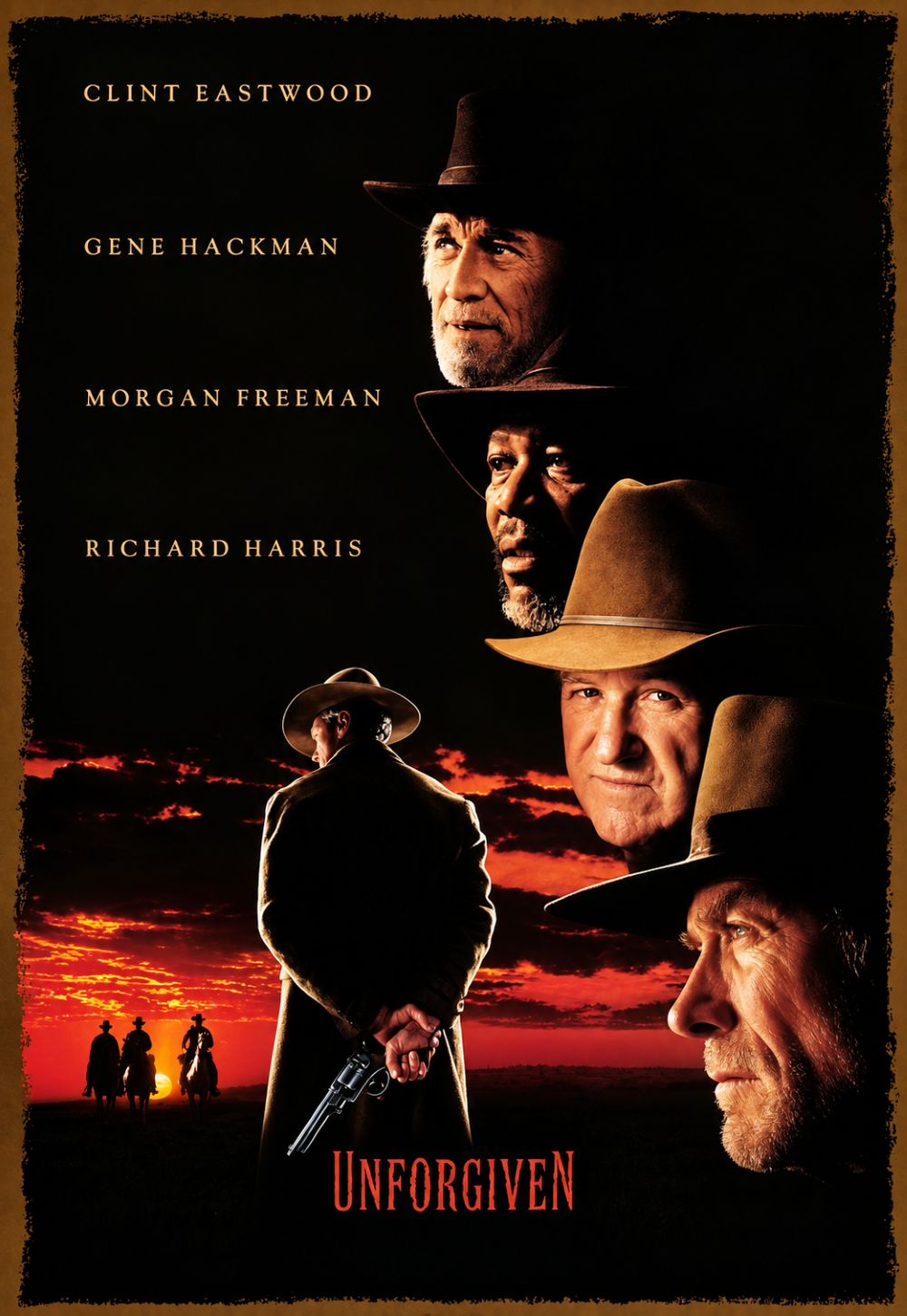
There is a point in Unforgiven when the familiar fantasy of the Western gunfighter finally collapses under the weight of what killing actually means. Clint Eastwood’s 1992 masterpiece is a revenge story, a character study, and an unusually merciless critique of the myths that turned killers into folk heroes. It takes nearly every image associated with the classic Western—the lone rider, the righteous bounty, the corrupt frontier town, the feared gunslinger, the climactic saloon showdown—and asks what those images would look like if the people involved had to suffer the consequences afterward. The answer is bleak, often grimly funny, and far more powerful than a simple “anti-Western” label suggests.
Eastwood stars as William Munny, a former outlaw and murderer trying to survive as a widowed pig farmer in Kansas. He has two young children, a failing farm, and little talent for the peaceful life he has supposedly embraced. At the beginning of the film, Munny is practically the opposite of the cool, razor-sharp gunfighters Eastwood played in his younger years. He falls into mud, cannot shoot straight, and looks exhausted before the real journey even begins. That physical decline matters because Eastwood wants the audience to see the distance between a Western legend and the actual, aging human being beneath it.
Munny’s chance to return to violence arrives when the Schofield Kid, an arrogant young would-be gunslinger, offers him a share of a bounty. In the town of Big Whiskey, Wyoming, two cowboys have viciously cut up a prostitute named Delilah Fitzgerald. The town’s sheriff, Little Bill Daggett, punishes them with a fine paid to the brothel owner rather than giving Delilah anything resembling justice. Furious, the other prostitutes gather money and put out a reward for the men responsible. Munny initially hesitates, but the bounty is enough to draw him out of retirement. He convinces his old partner Ned Logan to ride with him, and the three men head toward Big Whiskey.
On paper, that setup sounds like the start of a traditional revenge Western. The crime is vicious, the local law is corrupt, and armed men set out to punish the guilty. Unforgiven, though, immediately complicates every part of that formula. The women have every reason to be furious, but their bounty does not turn the mission into a clean act of justice. Munny and Ned may be targeting cruel men, but they are still going to kill them for money. The Schofield Kid talks about the bounty like it is an adventure, but he has no real idea what killing another person does to someone. The film keeps refusing the easy emotional release that a more conventional Western would offer.
Eastwood’s direction is particularly sharp whenever violence finally breaks out. There are no elegant shootouts designed to make the viewer cheer. Guns misfire, men miss, people panic, and the victims do not fall over conveniently after being hit. When Munny and Ned shoot one of the cowboys, the sequence is awkward, tense, and almost miserable to watch. The wounded man suffers for a long time, calling out for water while his companions are too frightened to help him. Munny does not suddenly look like an unbeatable hero. He looks like a man who has made a terrible choice and now has to stand there listening to the result.
That approach makes Unforgiven feel much harsher than most Westerns, but it also gives the film its emotional weight. It is not saying that violence is never understandable. The cowboys who attacked Delilah are not treated as innocent victims, and Little Bill’s indifference to her suffering is infuriating. What the movie understands is that a justified act can still be ugly, frightening, and spiritually damaging. Killing someone may solve a practical problem, but it does not automatically restore dignity or erase pain. The movie’s view of revenge is not that it never works; it is that it always costs more than the stories promise.
Eastwood’s performance is one of the reasons the film lands so hard. William Munny is clearly connected to the Eastwood screen persona audiences knew from earlier Westerns, but he is a far sadder and more frightening version of it. Munny’s past is revealed gradually through other characters’ stories. Before he married Claudia, he was drunk, violent, and seemingly capable of killing anyone who got in his way. Claudia helped turn him toward a better life, and after her death he has tried to honor that change. Yet the movie never suggests that redemption has erased who he was. It only suggests that he has managed to keep that part of himself under control.
As the story moves forward, Munny becomes increasingly sick, angry, and emotionally stripped down. His old skills come back, but the return is not triumphant. It is more like watching someone relapse into a destructive part of themselves. Eastwood plays this change with remarkable restraint. He does not overdo the anger or announce the transformation with long speeches. Instead, Munny’s face gets harder, his voice becomes flatter, and his decisions become more final. By the end, he has become the frightening killer people said he was, and the movie makes that feel tragic rather than exhilarating.
Gene Hackman gives one of the film’s best performances as Little Bill Daggett, the sheriff of Big Whiskey. Little Bill is cruel, blunt, and completely convinced that he is the only person keeping the town from falling apart. He sees himself as a realist. In his mind, the cowboys have paid for their crime, the prostitutes are causing unnecessary trouble, and every outside gunman is a threat to the peace he has built. But his “peace” depends on denying Delilah justice and beating anyone who challenges his authority. He is not a noble lawman protecting civilization from barbarism. He is a violent man with a badge who has decided that his version of order matters more than anyone else’s pain.
Hackman makes Little Bill compelling because he never plays him as a cartoon villain. The character can be funny, conversational, and even oddly charming when he is talking about building his house or explaining how a gunfight really works. Those ordinary details make his cruelty more believable. Little Bill is not a monster because he twirls his mustache or enjoys evil for its own sake. He is a monster because he has made violence routine. He can beat a man nearly to death, then return to discussing carpentry as if nothing meaningful has happened.
The movie’s fascination with mythmaking is another reason it remains so great. Unforgiven constantly contrasts what people say about gunfighters with what gunfighters are actually like. Richard Harris appears as English Bob, an aging outlaw who has turned himself into a storybook figure. He travels with W. W. Beauchamp, a writer who records exaggerated tales of duels, bravery, and glamorous frontier violence. English Bob wants to be remembered as the sort of man old Westerns love: a polished, fearless killer who can outdraw anyone in a fair fight.
Little Bill quickly destroys that image, humiliating English Bob and explaining that most gunfights are not won by the fastest hand or the bravest heart. They are won by whoever gets lucky, whoever fires first, or whoever is less scared at the right moment. That speech is one of the clearest examples of what Unforgiven is doing with the genre. It does not merely say that the old stories were exaggerated. It shows why people prefer exaggeration. The truth is messy, cowardly, and often too ugly to make a satisfying legend.
The Schofield Kid represents the danger of believing those legends too completely. He talks big about killing men, insists he is a famous gunfighter, and assumes the bounty will make him rich and important. But when the moment comes, he cannot handle the reality of what he has done. After taking a life, he drinks heavily and admits that he has never killed anyone before. His fantasy collapses almost instantly. Munny’s response is one of the film’s coldest and most honest moments: when you kill a man, you take away everything he has and everything he is ever going to have. There is no speech about courage, justice, or glory. There is only the permanent fact of death.
Morgan Freeman is excellent as Ned Logan, Munny’s old partner and closest friend. Ned has a quiet decency that does not erase his violent past but makes clear that he wants no part of it anymore. His scenes with Munny feel lived-in, as if the two men understand each other without needing to explain their history. Ned knows exactly what Munny used to be, and that knowledge makes him nervous about what his friend may become again. Freeman brings warmth and humor to the movie, which makes the eventual loss of that warmth feel devastating.
Ned is especially important because he shows that a person can decide not to keep living by old violent rules. He has a life with Sally Two Trees, and when the killing becomes real, he chooses to leave rather than continue. That choice separates him from Munny. Both men have done terrible things, but Ned recognizes that he has reached the point where he cannot go back. Munny, on the other hand, is eventually pulled all the way back into the identity he thought he had escaped.
Visually, Unforgiven is one of Eastwood’s most beautiful films, although “beautiful” may not be the first word that comes to mind while watching it. The landscapes are often gray, rainy, muddy, and lonely. Big Whiskey is not a romantic frontier town full of colorful saloons and grand main streets. It is wet, cramped, and miserable. The open country does not feel liberating either. It feels empty and dangerous, a place where a wounded man can die slowly because help is too far away. Cinematographer Jack N. Green gives the film a somber, dusk-like look that fits its mood perfectly.
The final confrontation in the saloon is one of the most famous scenes in Eastwood’s career because it briefly gives viewers the kind of gunfighter moment they have been waiting for. Munny walks into Big Whiskey through the rain, enters the saloon, and becomes the nightmare Little Bill and the others have feared. He kills with shocking speed and delivers lines that sound immediately iconic. For a few minutes, the old Eastwood myth appears to return in full. The silent killer is back, the bad men are terrified, and the audience can feel the raw force of the scene.
But Unforgiven refuses to turn that climax into a victory lap. Munny’s rampage is not heroic liberation. It is grief, rage, alcohol, and guilt exploding through a man who has lost the fragile stability he built after leaving violence behind. He is not reclaiming some glorious identity. He is becoming the worst version of himself again. The scene is undeniably thrilling in a purely cinematic sense, but Eastwood makes sure the thrill feels contaminated. We are watching a legend come alive, but the movie has spent two hours teaching us that legends are usually built on suffering.
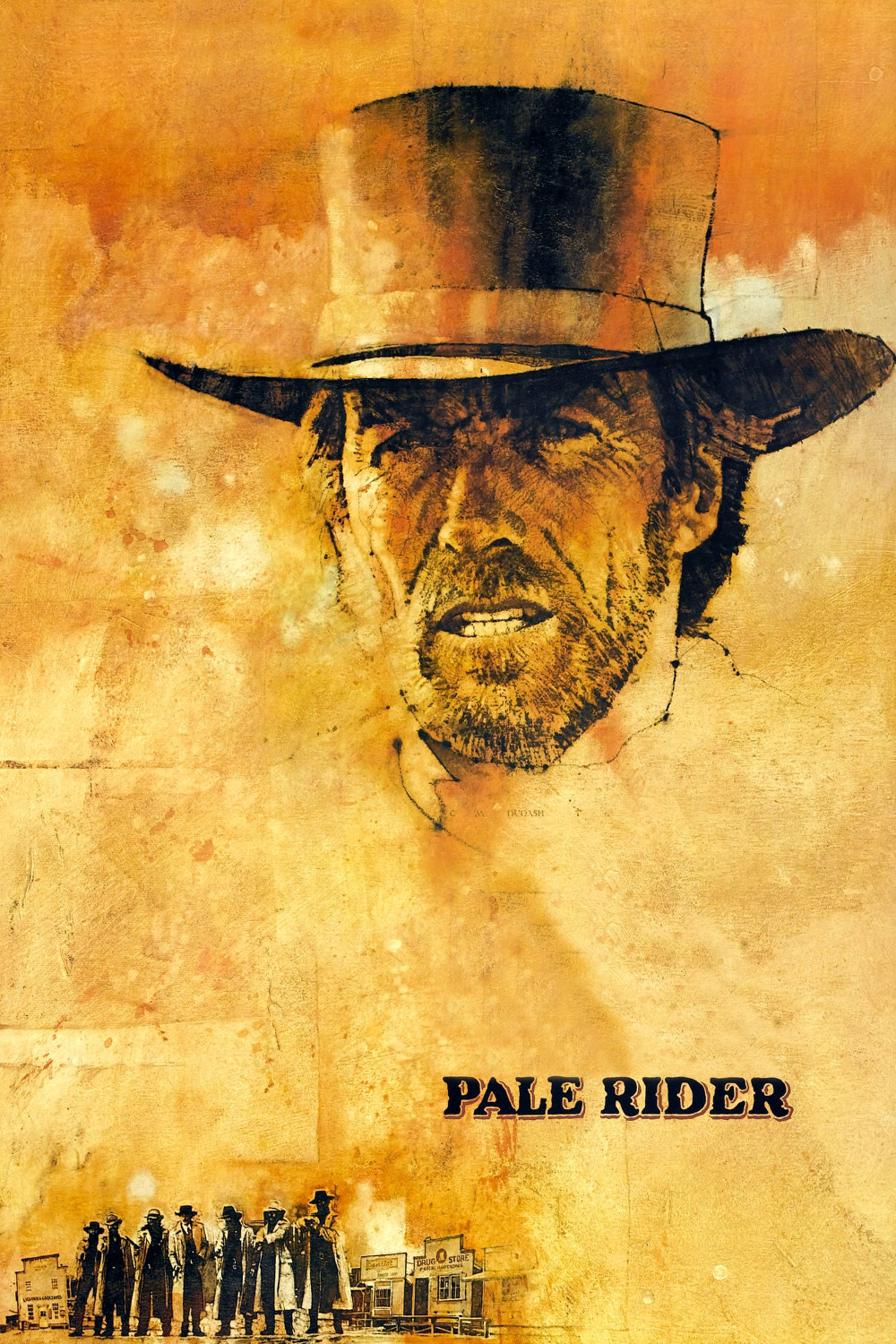
That is why Unforgiven became Eastwood’s Western magnum opus. It is not just a great Western made by a star who knew the genre inside out; it is the film where he fully confronted the meaning of his own Western image. Eastwood began deconstructing that image with High Plains Drifter, where the mysterious stranger was less a traditional hero than a ghostly, cruel force of revenge. He continued the process in The Outlaw Josey Wales, a more expansive and emotional film that questioned authority and showed an outlaw finding a kind of community, even while preserving much of the old gunslinger charisma. With Unforgiven, Eastwood completes that deconstruction of the Western film genre.
In Unforgiven, there is no clean heroism left behind the gunfighter’s reputation. The lone rider is exhausted and morally compromised. The sheriff is a bully. The bounty is not justice in any simple sense. The famous gunfighter is often a fraud, a coward, or simply lucky. And the man who really is capable of becoming a legend is also capable of committing horrifying acts. Eastwood does not dismiss the Western’s power; if anything, he understands that power better than almost anyone. He knows why audiences respond to the image of a lone man walking into a saloon to face impossible odds.
What makes the film so enduring is that it asks viewers to look beyond that image. Who dies so the hero can become a legend? Who gets turned into a footnote in someone else’s story? What does the survivor carry afterward? Those questions give Unforgiven a moral weight that few Westerns, revisionist or otherwise, can match. It is a film about violence, but it is also about memory, regret, masculinity, and the lies people tell to make brutality seem noble. By its final fade-out, Unforgiven leaves the Western standing not as a celebration of violence, but as a haunted reckoning with everything violence destroys.