Playing Catch-Up: Aloha (dir by Cameron Crowe)


Well, Christmas is over and soon 2015 will be over as well!  And our long time readers know what that means — its time for Lisa to desperately try to get caught up on reviewing all of the films that she’s seen this year!  After all, it will soon be time for me to post my “Best of” and “Worst of” lists and who knows?  Some of these films might make a list!

Anyway, with all that in mind, let’s take a quick look at Aloha!

Say what you will about Aloha as a movie, I would have loved to have been a part of the production.  Not only is the cast full of performers that I absolutely adore (Bradley Cooper, Emma Stone, John Krasinski, Bill Murray, Rachel McAdams, and Danny McBride, just to name a few) but the film itself was shot in Hawaii, which is one of the most beautiful places on Earth.  And let’s give director Cameron Crowe some credit for capturing some truly beautiful images of Hawaii.

As for the film itself, it’s a bit of a self-indulgent chore to sit through.  Aloha feels like a dozen different films, all mashed together and the end result is something of a mess.  Bradley Cooper is Brian Gilchrest, a defense contractor who is haunted by a mistake that he made while in Afghanistan.  (It’s the equivalent of Jerry Maguire writing that memo and Orlando Bloom making those shoes in Elizabethtown.)  Disillusioned and cynical, Brian is now working for a billionaire Carson Welch (Bill Murray), who wants to build his own private space center in Hawaii.  Brian’s job is to get the support of the native Hawaiians.

Brian’s Air Force liaison is Alison Ng (Emma Stone) and she’s as idealistic as Brian is cynical.  Brian and Alison are soon falling love but, at the same time, Brian has also reconnected with his ex-girlfriend, Tracy (Rachel McAdams).  Tracy is now married to Woody (John Krasinski), an Air Force captain who has difficulty expressing his feelings.  Tracy also has a 12 year-old daughter and Brian might be the father.

That may sound like enough for any movie to deal with but Aloha also wants to be a political satire as well as a relationship dramedy.  So, of course, there’s all sorts of ethical questions about the satellite that Carson wants to launch and, as a character, Carson is so incredibly inconsistent that you’re just happy that he’s being played by Bill Murray, one of the few actors who can make inconsistency charming.

Aloha is such a frustrating film, largely because of all the talent involved.  With that cast and all the beautiful scenery, it should have at least been an enjoyable lark.  Instead, it’s a huge and self-indulgent mess.

And, naturally enough, it features Alec Baldwin.  Baldwin always seems to show up in films like this and, as I watched him bellow his way through Aloha, I found myself wondering how Alec Baldwin can be so good in some films and so amazingly awful in others.  Baldwin’s a talented actor but, when a director allows him to go overboard, he can be difficult to watch.  In Aloha, Cameron Crowe lets Alec Baldwin go totally overboard.

When Aloha was first released, there was a lot of controversy over Emma Stone playing a character who supposed to be a quarter Chinese and a quarter Hawaiian.  At the time, Cameron Crowe stated that: “As far back as 2007, Captain Allison Ng was written to be a super-proud one-quarter Hawaiian who was frustrated that, by all outward appearances, she looked nothing like one. A half-Chinese father was meant to show the surprising mix of cultures often prevalent in Hawaii. Extremely proud of her unlikely heritage, she feels personally compelled to over-explain every chance she gets. The character was based on a real-life, red-headed local who did just that.”  That’s something that I — as a pale redhead who happens to be very proud of being a fourth Spanish — could relate to so it didn’t particularly bother me that Emma Stone was playing a character named Alison Ng.

Instead, what bothered me was that Alison Ng was never really allowed to emerge as an individual character with her own hopes, dreams, and ambitions.  Her character pretty much only existed to give Brian a reason to believe in life again.  Emma Stone’s a good actress but, as a film, Aloha lets her down.

Still, at least she got to spend sometime in Hawaii!

Here Are The Very Confusing SAG Nominations!


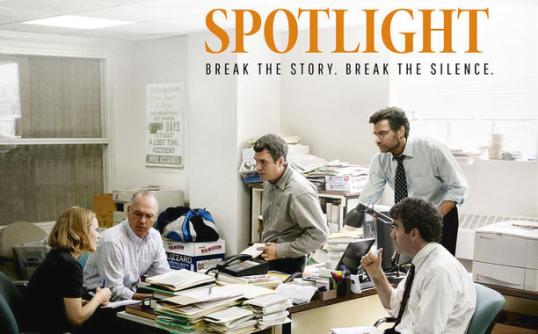
Spotlight

The nominees for the SAG Awards were announced earlier today!  The SAG Awards are usually one of the more accurate of the various Oscar precursors.  Because so many members of the Academy are also members of the Screen Actors Guild, the SAG Awards are usually a pretty good indication of what films are on the Academy’s radar and which ones aren’t.  Occasionally, an actor will be nominated by SAG and then snubbed by the Academy.  Last year, for instance, SAG nominated Jake Gyllenhall for Nightcrawler, Jennifer Aniston for Cake, and Naomi Watts for St. Vincent.  None of those three received any love from the Academy.  But, for the most part, SAG is one of the most reliable precursors out there.

And that’s why so many of us are in shock today!  The SAG Awards in no way resembled what many of us were expecting.  Other than Spotlight, none of the film’s that many of us expected to be nominated for best ensemble (the SAG’s equivalent of the Academy’s best picture) were nominated (and even Spotlight only received one other nomination, for Rachel McAdams who, up to this point, hasn’t really figured into the Oscar discussion).  The Martian was not nominated for best ensemble or anything else for that matter.  Creed was totally snubbed.  Brooklyn was nominated for actress but not ensemble.  Mad Mad: Fury Road was nominated for its stunt work and nothing else.  Helen Mirren received two nominations, for films that hardly anyone (outside of the SAG, obviously) was really paying any attention to.  Sarah Silverman received a best actress nomination for I Smile Back, which I hadn’t even heard of until about a week ago.  It’s an unexpected and strange group of nominees.

Keep in mind, it’s not necessarily a bad thing that the nominees are unexpected.  Beasts of No Nation and Straight Outta Compton will both receive deserved boosts in their hunt for Oscar gold.  At the same time, I have to admit that I wasn’t happy to see either The Big Short or Trumbo nominated for best ensemble because I know I’m going to feel obligated to see them and they both look so freaking tedious and blandly political!  But consider this: if The Big Short and Trumbo are both huge Oscar contenders, we may face a situation where both Jay Roach and Adam McKay are nominated for best director in the same year.  I think that’s one of the signs of the apocalypse and, at this point, I’m kind of ready to welcome the end of the world.

Anyway, here are the SAG nominations!  Look them over and, after the Golden Globe nominations are announced tomorrow, update your Oscar predictions accordingly.

Best Performance by a Cast Ensemble in a Motion Picture

Best Performance by a Male Actor in a Leading Role

Best Performance by a Female Actor in a Leading Role

  • Cate Blanchett – Carol
  • Brie Larson – Room
  • Helen Mirren – Woman in Gold
  • Saoirse Ronan – Brooklyn
  • Sarah Silverman – I Smile Back

Best Performance by a Male Actor in a Supporting Role

Best Performance by a Female Actor in a Supporting Role

  • Rooney Mara – Carol
  • Rachel McAdams – Spotlight
  • Helen Mirren – Trumbo
  • Alicia Vikander – The Danish Girl
  • Kate Winslet – Steve Jobs

Best Performance by a Stunt Ensemble in a Motion Picture

Best Performance by an Ensemble in a Drama Series

  • Downton Abbey
  • Game of Thrones
  • Homeland
  • House of Cards
  • Mad Men

Best Performance by a Male Actor in a Drama Series

  • Peter Dinklage – Game of Thrones
  • Jon Hamm – Mad Men
  • Rami Malek – Mr. Robot
  • Bob Odenkirk – Better Call Saul
  • Kevin Spacey – House of Cards

Best Performance by a Female Actor in a Drama Series

  • Claire Danes – Homeland
  • Viola Davis – How to Get Away with Murder
  • Julianna Marguilles – The Good Wife
  • Maggie Smith – Downton Abbey
  • Robin Wright – House of Cards

Best Performance by an Ensemble in a Comedy Series

  • The Big Bang Theory
  • Key and Peele
  • Modern Family
  • Orange is the New Black
  • Transparent
  • Veep

Best Performance by a Male Actor in a Comedy Series

  • Ty Burrell – Modern Family
  • Louis CK – Louie
  • William H. Macy – Shameless
  • Jim Parsons – The Big Bang Theory
  • Jeffrey Tambor – Transparent

Best Performance by a Female Actor in a Comedy Series

  • Uzo Aduba – Orange is the New Black
  • Edie Falco – Nurse Jackie
  • Ellie Kemper – Unbreakable Kimmy Schmidt
  • Julia Louis-Dreyfus – Veep
  • Amy Poehler – Parks and Recreation

Best Performance by a Male Actor in a TV Movie or Mini-Series

  • Idris Elba – Luther
  • Ben Kingsley – Tut
  • Ray Liotta — Texas Rising
  • Bill Murray – A Very Murray Christmas
  • Mark Rylance – Wolf Hall

Best Performance by a Female Actor in a TV Movie or Mini-Series

Best Performance by a Stunt Ensemble in a Comedy or Drama Series

  • Blacklist
  • Game of Thrones
  • Homeland
  • Marvel’s Daredevil
  • The Walking Dead

In Praise of Stripes’ Sergeant Hulka


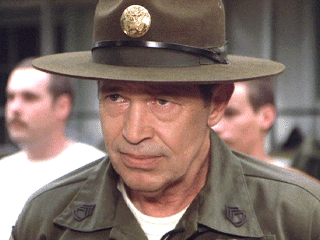
HulkaIn the army comedy Stripes, we never learn Sgt. Hulka’s first name but we do learn to never call him “sir.”  As Hulka himself puts it, “You don’t say sir to me, I’m a sergeant, I work for a living!”

It’s true.  Sgt. Hulka never stops working.  He’s the toughest drill sergeant this side of R. Lee Ermey and he’s going to turn this latest raw batch of recruits into a worthy collection of soldiers.  When he tells you to move, you’ll move fast.  When he tells you to jump, you’re going to ask, “How high!?”  And make no mistake. He don’t care where you come from, he don’t care what color you are, he don’t care how smart you are, he don’t care how dumb you are, ’cause he’s gonna teach every last one of you how to eat, sleep, walk, talk, shoot, shit like a United States soldier. Understand!?

I have lost track of how many times I have watched Stripes.  It’s one of my favorite comedies, a movie that can be quoted in almost every situation.  (“Lighten up, Francis.”)  Not only does it star Bill Murray and Harold Ramis at their anarchistic best but it also features everyone from John Candy to Judge Reinhold to John Larroquette.  Sean Young and P.J. Soles make for two of the sexiest MPs in military history.  But, for me, the best thing about Stripes is Sgt. Hulka and the man who played him.

Ironically, considering that he was famous for being a pot-smoking wild man who hung out with fellow anti-establishment rebels like Peter Fonda, Dennis Hopper, and Sam Peckinpah, Warren Oates played his share of no-nonsense military men.  (Oates actually had experience, having served in the Marines before becoming an actor.)  Of all the army roles that Warren Oates played, Sgt. Hulka is the best remembered.

And why not?  His performance in Stripes is a master class of good film acting.  Watch him as he does a stone-faced double take at the latest bit of insubordination from Murray and Ramis.  Watch the way he grins as he barks out his tough drill sergeant dialogue, hinting that Sgt. Hulka understands and has come to accept the lunacy of army life.  Originally, Hulka was supposed to be killed halfway through Stripes but both Warren Oates and his performance proved to be so popular with the film’s cast and crew that Hulka was given a reprieve.

Warren Oates and Bill MurrayIn Stripes, Sgt. Hulka accomplishes something that few other film characters have done.  He gets one over on Bill Murray.  After spending almost all of basic training dealing with John Winger (Bill Murray) and his bad attitude, Hulka confronts Winger in the latrine.  Hulka tells Winger that he’s concerned with “discipline and duty and honor and courage” and that Winger “ain’t got none of it!”  Hulka dares Winger to take a swing at him.  When Winger does it, Hulka floors him with one punch.

This is the only dramatic scene in Stripes.  It was so dramatic that nervous Columbia studio execs asked director Ivan Reitman to cut it.  Wisely, Reitman did not listen to them and the latrine scene is one of the best in the film.  When John eventually emerges as enough of a leader that he is able to invade Czechoslovakia in an armor-plated RV, we all know that it goes back to getting punched in the latrine.

(This was also the first “serious” scene that Bill Murray ever appeared in.  His subsequent work in films like Rushmore, Lost in Translation, and St. Vincent can all be linked back to that tense confrontation he played with Warren Oates.)

At the end of Stripes, Sgt. Hulka retires from the army and opens up a chain a Hulkaburger restaurants.  Here’s hoping that Sgt. Hulka had a happy retirement.  He earned it.

2013-07-04-warren_oates_sgt_hulka-533x299


Neon Dream #9: Air – Alone in Kyoto


Sofia Coppola’s Lost in Translation left a strange impression on me. In a way I can only really compare to Casablanca, it burrowed into my memory like an actual personal experience. I don’t review movies, and I am ill equipped to explain what made it such a special film for me, but the bond that Bob Harris (Bill Murray) and Charlotte (Scarlett Johansson) forge over a few days in Tokyo is something I’ll always carry with me and look back on fondly. That’s pretty weird, but I’m not complaining.

Music was essential to Lost in Translation, embedded into scenes as a part of what Bob and Charlotte actually experience. The hotel lounge has a live jazz band. “The State We’re In” by The Chemical Brothers plays in the club they visit. Phoenix’s “Too Young” pumps over the stereo when they go to a friend’s apartment. A woman dances to Peaches’ “Fuck the Pain Away” at the strip club. The actors aren’t just seen singing karaoke; they perform it at length. Coppola was pretty clever about extending this integration to the more traditionally situated background music. Happy End’s “Kaze wo Atsumete” enhances the feeling that Bob and Charlotte are winding down from an exhausting night, but it drifts faintly into the hallway, as if playing from the karaoke room. Charlotte is wearing headphones when we first hear Air’s “Alone in Kyoto”. The Jesus and Mary Chain’s “Just Like Honey” kicks off as Bob enters his cab. The encore of “Kaze wo Atsumete” in the credits could easily be playing in Bob’s head. Almost every song in the movie functions within the environment, not just as a peripheral enhancement.

Garden State tried something like this a year later, though I don’t recall the extent of it beyond the awkward Shins sequence. The effect was a sort of garish, in-your-face endorsement of director Zach Braff’s favorite tunes. It didn’t really cut it for me, in spite of the soundtrack’s impressive cast. In Lost in Translation, Coppola was a lot more attentive to creating continuity between songs and bringing musicians on board with the film’s atmosphere. She didn’t stop at using “Sometimes” by My Bloody Valentine; she dug founder Kevin Shields out of relative obscurity to compose four original pieces. A lot of the other artists formed a pre-existing community of sorts, suited to engage the project as art rather than a quick paycheck. Soundtrack supervisor Brian Reitzell performed drums for Air on their 2001 album 10 000 Hz Legend. Both Air and Roger Joseph Manning Jr, a fellow studio musician on that album, contribute original music to Lost in Translation. Phoenix previously performed with Air, and Sofia Coppola ultimately married their singer. While their contribution was recycled (“Too Young” appears in the context of young adults who would have been familiar with obscure but up and coming artists; using Phoenix’s first single made sense), the band was still involved in Coppola’s social sphere of musicians.

“Alone in Kyoto” plays as Charlotte travels through the classic side of Japan, visiting shrines and observing ancient customs. While that could possibly put it at odds with my theme, Air’s approach keeps the feeling modern, casting tradition as a subtle, delicate element of the present rather than as a form of escapism. It also occurs in a sequence without character interaction, permitting a pure sense of exploration. Within Lost in Translation‘s soundtrack, “Alone in Kyoto” reaches closest to that Japanese dream that still permeated a lot of American subcultures in 2003. The movie itself brought many of us the closest we would ever come to actually living that dream.

Shattered Politics #89: Hyde Park on Hudson (dir by Roger Michell)


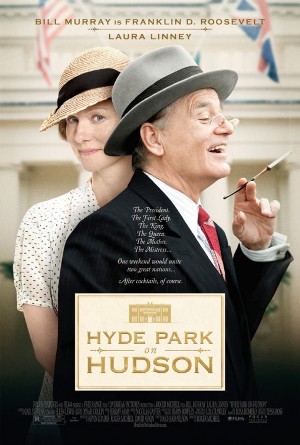
Hyde_park_on_hudson_poster

Is there anything more frustrating than a film that should have been good but yet somehow turned out to be … well, to be rather awful?

Case in point: 2012’s Hyde Park On Hudson.  In this slow-moving and almost painfully old-fashioned film, Bill Murray plays President Franklin D. Roosevelt.  When the film opens in 1939, Roosevelt is being visited by his sixth cousin, Margaret (Laura Linney).  It’s been several years since Roosevelt and Margaret last saw each other.  Franklin’s mother (Elizabeth Wilson) thinks that Margaret’s company could cheer up her melancholy son.  So, FDR and Margaret go out for a drive and, sitting atop a nice green hill, Margaret gives him a hand job.

And it is the most stately and respectable hand job to ever be quaintly portrayed in an American film.

Anyway, the rest of the film deals with FDR’s affair with Margaret.  Eventually, Margaret discovers that FDR has many mistresses but, before she does that, she helps FDR to charm England’s King George VI (Samuel West).  In the days leading up to World War II, George and his wife (Olivia Colman) visit Roosevelt out at his Hyde Park estate.  As we all know from watching The King’s Speech, George is insecure about his stutter.  But, fortunately, FDR points out that, despite the fact that he’s in a wheelchair, people still view him as being a strong leader and therefore, people will view George in the same way, regardless of his stutter.

And, speaking as a former stutterer, I have to say that it’s amazing to witness how poorly Hyde Park On Hudson deals with subject matter that was so brilliantly handled in The King’s Speech.

When I first heard about Hyde Park On Hudson, I had high hopes for it.  After all, I love history.  I love royalty.  I love gossip and I love scandal.  And, really. FDR was one of our more gossip-worthy Presidents, a spoiled rich kid who could not reach his full potential until after he was struck down by polio and who regularly cheated on his wife while battling both the Great Depression and the Nazis.  FDR was a dynamic and controversial figure and none of that comes through in Hyde Park on Hudson.

(Seriously, Bill Murray is totally wasted in this film.  If you’re going to cast an iconic actor in an iconic role, at least give him some good dialogue.)

In the end, Hyde Park on Hudson fails because it’s just too respectful.  It’s a slow, visually unimaginative film that manages to make an exciting time feel dull.  FDR deserves better and so does Bill Murray.

http://www.youtube.com/watch?v=RqQzNyxSShM

A Few Very Late Thoughts On Wes Anderson’s The Grand Budapest Hotel


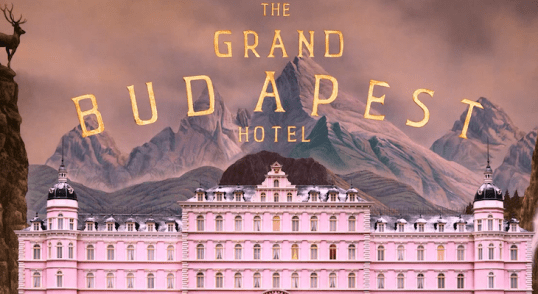
grand-budapest-hotel

It took me a while to come around to appreciating The Grand Budapest Hotel.

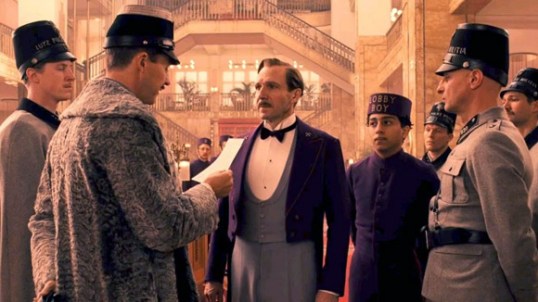
When I first saw Wes Anderson’s latest film, way back in March, I have to admit that I was somehow both impressed and disappointed.  The film’s virtues were obvious.  Ralph Fiennes gave a brilliant lead performance as Gustave, the courtly and womanizing concierge of the Grand Budapest Hotel.  As played by Fiennes, Gustave came to represent a certain type of old world elegance that, I’m assuming, died out long before I was born.  As is typical of Anderson’s film, The Grand Budapest Hotel was visual delight.  Even when the film’s convoluted storyline occasionally grew self-indulgent, The Grand Budapest Hotel was always interesting and fun to watch.

At the same time, I had some issues with The Grand Budapest Hotel.

One of the major ones — and I will admit right now that this will seem minor to some of you — is that halfway through the film, a cat is killed.  The evil Dimitri Desgoffe von Taxis (Adrien Brody) is attempting to intimidate a nervous lawyer, Kovacs (Jeff Goldblum).  Kovacs’s owns a cat and, at one point, Dimitri’s henchman, Jopling (Willem DaFoe), tosses the cat out of a window.  Kovacs runs to window and sees his dead cat splattered on the sidewalk below…

And this is when the audience in the theater laughed and I got very angry.

To me, there was nothing funny about killing that man’s cat.  But the more I’ve thought about it, the more that I’ve come to realize that my reaction had more to do with the audience than the film.  The film was not saying that the cat’s death was funny.  The film was saying that Dimitri and Jopling were evil and dangerous, as their actions throughout the film would demonstrate.  It was the audience that decided, since Grand Budapest Hotel is full of funny moments and has the off-center style that one has come to expect from Wes Anderson, that meant every scene in the film was meant to be played strictly for laughs.  The fact of the matter is that a typical Wes Anderson film will always attract a certain type of hipster douchebag.  They were the ones who loudly laughed, mostly because they had spent the entire movie laughing loudly in order to make sure that everyone around them understood that they were in on the joke.

But that’s not the fault of the film.  Despite what you may have heard and what the Golden Globes would have you believe, The Grand Budapest Hotel is not a comedy.  For all the deliberately funny and quirky moments, The Grand Budapest Hotel is actually a very serious film.  For all of the slapstick and for all of Ralph Fiennes’s snarky line readings, The Grand Budapest Hotel ultimately ends on a note of deep melancholy.

When I first saw The Grand Budapest Hotel, it seemed like it was almost too quirky for its own good.  And, to be honest, I could still have done without some of Anderson’s more self-indulgent touches.  The sequence at the end, where Gustave, who has been framed for murder, gets help from a series of his fellow hotel concierges started out funny but, as everyone from Bill Murray to Owen Wilson put in an appearance, it started to feel less like the story of Gustave and more like the story of all of Wes Anderson’s famous friends.

However, the more I’ve thought about it (and The Grand Budapest Hotel is a film that I’ve thought about a lot over the past year), the more I’ve realized that the quirkiness is only a problem if you made the mistake of thinking that the film is meant to be taken literally.

The more I thought about it, the more obvious it became that the most important scenes in The Grand Budapest Hotel were to be found at the beginning and the end of the film.

The film opens with a teenage girl sitting in front of the grave of a great author.  She opens a book and starts to read.

As soon as the girl starts to read, we flashback 29 years to 1985 where the author (Tom Wilkinson) sits behind his office desk and starts to talk about the time that he visited the Grand Budapest Hotel.  

We flashback again to 1969, where we see how the author (now played by Jude Law) met the owner of the Grand Budapest Hotel, a man named Zero (played by F. Murray Abraham).  Over dinner, Zero tells the author the story of how he first came to the Grand Budapest and how he eventually came to own the hotel.

And again, we go back in time, this time to 1932.  We see how the young Zero (Tony Revolori) first met and came to be the protegé of Gustave (Ralph Fiennes).  We see how Gustave taught Zero how to be the perfect concierge.  Eventually, Gustave would be framed for murdering a guest, Zero would meet and fall in love with Agatha (Saoirse Ronan), and then Zubrowska (the fictional Eastern European country in which this all takes place) would be taken over by fascists who would eventually claim the hotel as their own.

After the story of Gustave, Zero, and Agatha has been told, we suddenly flash forward to the author talking to Zero and then to the old author telling the story to his grandson and then finally back to the teenage reader sitting in the cemetery.

In other words, the Grand Budapest Hotel may be the story of Zero but we’re experiencing it through the memories of the author as visualized by the reader.  Gustave, Zero, and the entire Grand Budapest Hotel are not just parts of a story.  Instead, they become symbols of an old way of life that, though it may have been lost, still exists in the memories of old travelers like the author and the imaginations of young readers like the girl in the cemetery.

As I said at the start of this, I was vaguely disappointed with The Grand Budapest Hotel when I first saw it but, perhaps more than any other movie that I saw last year, this has been a film that I haven’t been able to get out of my mind.  Having recently rewatched the film on HBO, I can also attest that both The Grand Budapest Hotel and Ralph Fiennes’s performance not only hold up on a second viewing but improve as well.

I still stand by some of my original criticisms of The Grand Budapest Hotel.  I still wish that cat had not been thrown out the window, even though I now understand that Anderson’s main intent was to show the evil of Dimitri and Jopling.  And I still find some of the cameos to be jarring, precisely because they take us out of the world of the film.

But you know what?

Despite those flaws, The Grand Budapest Hotel is still a unique and intriguing film.  When I sat down tonight and made out my list of my top 26 films of 2014, I was not surprised that Grand Budapest Hotel made the list.  But I was a little bit surprised at how high I ended up ranking it.

But then I thought about it and it all made sense.

The-Grand-Budapest-Hotel-580


Here Are The Golden Globe Nominees!


214053-the-2013-golden-globe-award-nominations

The Golden Globe nominations were announced this morning and the big news is that Angelina Jolie’s Unbroken was totally and completely snubbed.  Knowing the Hollywood Foreign Press Association, I figured that they’d nominate Jolie just to get her and Brad Pitt on the show.

(Does anyone remember when they nominated The Tourist for Best Comedy Film of 2010?  For that matter, does anyone remember The Tourist?)

Also, it’s interesting to note that David Fincher was nominated for best director for Gone Girl but Gone Girl itself did not receive a nomination for best picture.

(As of this writing, Sasha Stone has yet to post her analysis on Awards Daily but I’m sure when she does, it will be depressing.)

Anyway, below you can find the Golden Globe nominations for the best films of 2014.  (If you want to see a complete list with all of the television nominations, you can click here.)

BEST DRAMA FILM
“Boyhood”
“Foxcatcher”
“The Imitation Game”
“Selma”
“The Theory of Everything”

BEST DRAMA ACTOR
Steve Carell, “Foxcatcher”
Benedict Cumberbatch, “The Imitation Game”
Jake Gyllenhaal, “Nightcrawler”
David Oyelowo, “Selma”
Eddie Redmayne, “The Theory of Everything”

BEST DRAMA ACTRESS
Jennifer Aniston, “Cake”
Felicity Jones, “The Theory of Everything”
Julianne Moore, “Still Alice”
Rosamund Pike, “Gone Girl”
Reese Witherspoon, “Wild”

BEST MUSICAL/COMEDY FILM
“Birdman”
“The Grand Budapest Hotel”
“Into the Woods”
“Pride”
“St. Vincent”

BEST MUSICAL/COMEDY ACTOR
Ralph Fiennes, “The Grand Budapest Hotel”
Michael Keaton, “Birdman”
Bill Murray, “St. Vincent”
Joaquin Phoenix, “Inherent Vice”
Christoph Waltz, “Big Eyes”

BEST MUSICAL/COMEDY ACTRESS
Amy Adams, “Big Eyes”
Emily Blunt, “Into the Woods”
Helen Mirren, “The Hundred-Foot Journey”
Julianne Moore, “Maps to the Stars”
Quvenzhane Wallis, “Annie”

BEST FILM SUPPORTING ACTOR
Robert Duvall, “The Judge”
Ethan Hawke, “Boyhood”
Edward Norton, “Birdman”
Mark Ruffalo, “Foxcatcher”
J.K. Simmons, “Whiplash”

BEST FILM SUPPORTING ACTRESS
Patricia Arquette, “Boyhood”
Jessica Chastain, “A Most Violent Year”
Keira Knightley, “The Imitation Game”
Emma Stone, “Birdman”
Meryl Streep, “Into the Woods”

BEST DIRECTOR
Wes Anderson, “The Grand Budapest Hotel”
Ava Duvernay, “Selma”
David Fincher, “Gone Girl”
Alejandro Gonzalez Inarritu, “Birdman”
Richard Linklater, “Boyhood”

BEST SCREENPLAY
“Birdman”
“Boyhood”
“Gone Girl”
“The Grand Budapest Hotel”
“The Imitation Game”

BEST ANIMATED FEATURE
“Big Hero 6”
“The Book of Life”
“The Boxtrolls”
“How to Train Your Dragon 2”
“The Lego Movie”

BEST SCORE
“Birdman”
“Gone Girl”
“The Imitation Game”
“Interstellar”
“The Theory of Everything”

BEST SONG
“Big Eyes” from “Big Eyes” (Lana Del Ray)
“Glory” from “Selma” (John Legend, COmmon)
“Mercy Is” from “Noah” (Patty SMith, Lenny kaye)
“Opportunity” from “Annie”
“Yellow Flicker Beat” from “The Hunger Games, Mockingjay Part 1” (Lorde)

Film Review: St. Vincent (dir by Theodore Melfi)


St_Vincent_poster

It’s the craziest thing.

Every year, we get another Black List.  Despite the name, the Black List is not the annual list of actors and directors who need to be run out of America because of their political beliefs.  Instead, the Black List is a survey of the “most liked” unproduced scripts that are currently floating around Hollywood.

Now, of course, to a large extent, the Black List is basically just another marketing gimmick.  A lot of the scripts that have appeared on the Black List were already in development at the time that they appeared and, undoubtedly, there are clever studio execs who think to themselves, “Juno might be a difficult sell so let’s make sure it gets on the Black List!”

However, every year, there are a few films that are put into production directly as a result of the script appearing on the Black List.  What’s interesting is just how many of these films turn out to be, if not quite terrible, at least rather forgettable.  Transcendence, for instance, was on the Black List.  Cedar Rapids was on the Black List.  Broken City was on the freaking  Black List. Consider this: The Beaver would never have been made except for the fact that it was on The Black List!

What’s particularly interesting is that the script was often the worst thing about these films.  These were films with overly complicated scripts that often tried too hard to be both crowd pleasing and quirky.  If nothing else, the Black List proves that being the “most liked” doesn’t mean that a script is good, interesting, or intelligent.  It just means that it covered all the bases.

Case in point: the new film St. Vincent.  St. Vincent sat on top of the Black List and was apparently so “well-liked” that screenwriter Theodore Melfi not only saw his script produced but he also got to direct it.  And wouldn’t you know it — the two biggest failings of St. Vincent are the script and the direction.

It’s easy to point out why the direction is bad so I’ll start there.  St. Vincent essentially looks like the pilot for one of those sitcoms that would be described as being edgy just because it was about a cranky old man.  There is no visual flair to the film.  The images just sit there flat on the screen.

As for the script, it would be likable if it didn’t try so hard.  St. Vincent is about a guy named Vincent, a war hero who is now a cantankerous old alcoholic and a pathological gambler.  His best friend is a pregnant Russian stripper.  He owes money to a violent bookie.  Every weekend, he visits his wife in a nursing home and he pretends to be a doctor.  His wife no longer recognizes him.  When the recently divorced Maggie and her awkward son Oliver move in next door, Vincent agrees to babysit after school.  At first, Vincent just does it for the money but, as the movie progresses, he teaches Oliver how to stand up for himself and Oliver makes Vincent a little less grumpy.  Eventually, Oliver has to do a report for a school about someone in his life that he considers to be a real-life saint and guess who he picks?

St. Vincent tells the type of story that would usually bring me to tears and I’ll admit that there were a few times when I did get teary-eyed.  But, ultimately, the script was too heavy-handed for me to maintain those tears.  I love crying at movies but, at the same time, I resent it when a movie demands that I cry just because it happens to be mashing down on all of the right buttons.  This is one of those movies that doesn’t trust the audience.  Instead of letting us react to the characters, it just keeps piling on development after development.  It’s not enough that Maggie is a single mother who feels guilty about not being able to pick her son up from school.  Instead, Maggie’s ex-husband has to suddenly sue for custody.  It’s not enough that Vincent is struggling to pay the bills.  Instead, he has to have a bookie who shows up at random and threatens to kill him.  There’s more to an effective dramedy than just having half of your cast act as if they’re in a sitcom while the other half acts as if they’re appearing in an old episode of Law & Order.

And yet, despite the script and despite Melfi’s direction, St. Vincent does work and it really works only for one reason.  Melfi has managed to assemble a truly outstanding cast.  In the role Maggie, Melissa McCarthy proves that she deserves better than having to spend her career making movies like Identity Thief.  Jaeden Lieberhrer is likable and sympathetic as Oliver.  Playing the pregnant Russian stripper, Naomi Watts does the best that anyone probably could do with that poorly written character.

But, ultimately, the film is totally about Bill Murray.  Bill Murray plays Vincent and he saves the entire film.  Whether he’s being funny or being serious, Bill Murray gives the type of great performance that justifies his reputation for being a national treasure.  When those tears did come to my eyes, it was all due to Murray’s performance.

St. Vincent is a deeply flawed film but it’s worth seeing for Bill Murray.

Back to School #54: Rushmore (dir by Wes Anderson)


rushmore-play

It’s an understatement to say that Wes Anderson’s films tend to divide viewers.  It seems like critics either love his excessively stylized and quirky vision or else they dismiss him as being a pretentious, overrated, and overly concerned with the problems of the rich and the suburban.  Even among the writers here at the Shattered Lens, there are conflicting opinions.  Leon the Duke gave Moonrise Kingdom a rave review.  On the other hand, I know that Ryan The Trashfilm Guru is not particularly a fan of Anderson’s films.

Myself, I always find it usually takes me a while to warm up to an Anderson film.  With the exception of The Fantastic Mr. Fox, I always seem to find myself somehow both impressed and slightly disappointed after seeing an Anderson film for the first time.  Perhaps it’s because Anderson is such a highly praised director with such a recognizable style that I always tend to go into his film with my expectations set way too high.  And so, I often times end up watching the latest Anderson film and thinking about how much I loved the film’s production design and some of the performances but often times feeling that, narratively, there was something missing.  On first viewing, Anderson’s trademark quirkiness can be overwhelming.  Usually it’s not until a second or third viewing that I really start to appreciate an Anderson film for something more than just the way it looks.  Eventually, I came to love Moonrise Kingdom and The Grand Budapest Hotel but it took me a while.

However, there is an exception to every rule.  And, as far as my reaction to Wes Anderson’s films are concerned, 1998’s Rushmore is that exception.  Rushmore is a film that I have unquestionably loved since the very first time I saw it.  Maybe it’s because, while Rushmore is undeniably quirky, that quirkiness doesn’t overwhelm the human aspect of the film’s story.  Maybe it’s because Rushmore — along with Bottle Rocket — is the most identifiably Texan of all of Anderson’s films.  Or maybe it’s just because Bill Murray gives such a great performance.

Seriously, Bill Murray makes any movie better.

02-rushmore-max-and-mr-blume

Rushmore is named after Rushmore Academy, a private school in Houston.  (Rushmore is quite obviously based on St. Mark’s, which is perhaps the most exclusive private school down here in Dallas.  Owen Wilson, who collaborated on Rushmore‘s script with Anderson, was expelled from St. Mark’s in the 10th Grade.)  15 year-old Max Fischer (Jason Schwartzman, who gives a sympathetic performance as a potentially off-putting character) loves attending Rushmore.  He’s involved in a countless number of extracurricular activities and has written and directed several plays, the majority of which are based on films from the 70s.  (We see his stage version of Serpico and it’s hilarious.)

tumblr_mcasy9Qj4S1r5l2jyo1_400

Unfortunately, Max has a few problems.  For one thing, unlike most of his peers, he’s not rich.  He tells everyone that his father (Seymour Cassel) is a neurosurgeon but actually, he’s a barber.  Even more seriously, Max spends so much of his time starting clubs and writing plays that he doesn’t ever bother to study.  Max is on the verge of flunking out and, despite numerous warnings from Dr. Guggenheim (Brian Cox), he refuses to do anything to improve his grades.

Instead, Max is more interested in pursuing a crush he has on an older teacher, the widowed Rosemary Cross (Olivia Williams).  What Max doesn’t realize is that his mentor, industrialist Herman Blume (Bill Murray), also has a crush on Ms. Cross.

rushmore02

While Max may be the film’s main character, Herman Blume is, without a doubt, the film’s heart.  Blume is a Viet Nam vet (“You were in the shit?” Max asks.  “Yes, I was in the shit,” Blume replies) who has literally gone from rags to riches.  And now that he is rich, he finds himself living an empty life with a wife who doesn’t respect him and two sons who are total idiots.  When Blume starts to mentor Max and pursue Ms. Cross, he starts to care about living once again.

rm61

Meanwhile, Max attempts to impress Ms. Cross by building an aquarium on the school’s baseball field.  This leads to Max getting expelled and having to enroll in a public school.  (Max continues to wear a suit and tie, even after being expelled.)  However, Max then discovers that Blume has been seeing Ms. Cross and soon, the mentor and the student become rivals…

And a lot of other stuff happens but you know what?  I’m not going to tell you what because if you haven’t seen Rushmore, you need to see it and discover all of this for yourself.  You won’t be sorry!

It may be named after the school but Rushmore is ultimately about how love and our dreams make life worth living.  For Max, Rushmore is his fantasy ideal, a world that he loves because it provides him a sanctuary from the harshness of the real world.  When Mr. Blume says, about Ms. Cross, “She’s my Rushmore,” we understand exactly what he means.  But, and this is what distinguishes Rushmore from so many other films about quirky love triangles, is that Ms. Cross is just as independent and important a character as Max and Mr. Blume.  Blessed with excellent performances from Seymour Cassel, Brian Cox, Jason Schwartzman, Olivia Williams, and especially Bill Murray, Rushmore is one of Wes Anderson’s best films.

rushmore-1999-movie-poster1