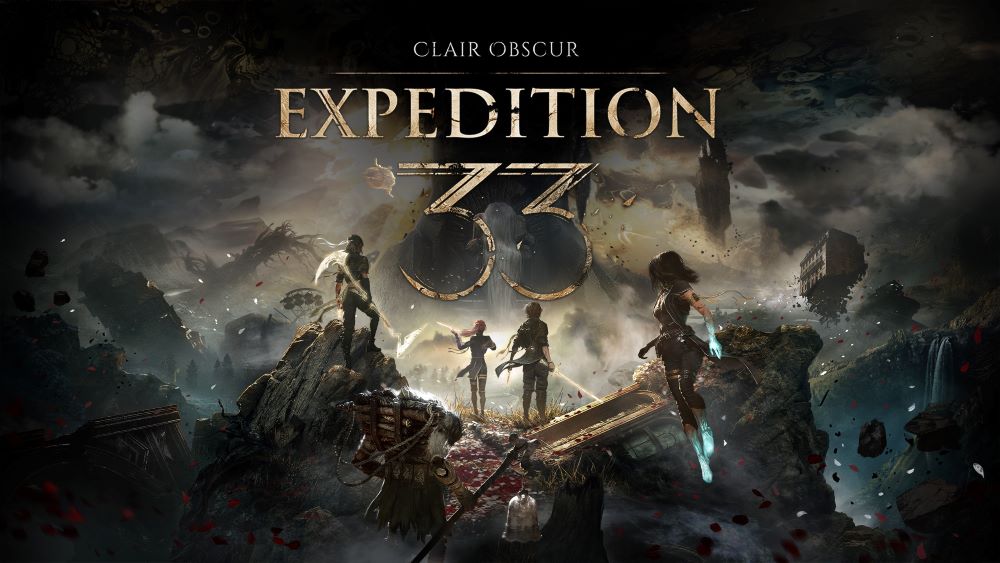
Clair Obscur: Expedition 33 Review


“Life keeps forcing cruel choices.” — Verso

I’ve now played through and finished Sandfall Interactive’s Clair Obscur: Expedition 33, and it stands out as a captivating entry in the JRPG space, blending a deeply melancholic storyline with eye-catching visuals and a combat setup that mixes thoughtful planning with split-second decisions, all within a richly detailed world evoking a fading era of grandeur. At its heart lies the chilling concept of the Paintress, a mysterious entity who annually inscribes a number across the heavens, causing all who reach that age to fade from existence without fanfare or trace. The game’s protagonists band together for a high-stakes voyage aimed at scaling her towering domain and halting this grim tradition before it strikes Year 33, transforming a familiar quest motif into an extended reflection on life’s brevity, rebellion against destiny, and the customs societies invent to endure tragedy. The tone stays approachable, laced with sharp-witted exchanges amid the gloom, while gameplay keeps players actively involved, and echoes of iconic JRPG influences from Hironobu Sakaguchi—like the sweeping epics of Final Fantasy and the poignant depth of Lost Odyssey—shine through in its design choices.

The plot progresses as a gripping blend of escalating peril and introspective pauses, opening in communities that have woven the Paintress’s decree into their daily fabric. Local celebrations honor remaining time, households tally days with subdued anxiety, and affluent districts ponder existence over lavish artworks meant to defy forgetting. Your team gathers from those scarred by previous culls—bereaved kin, displaced souls, wanderers—infusing the group with individual wounds that amplify the shared plight. The path forward involves sidetracks through abandoned sites, fraught dealings with devotees viewing the Paintress as a benevolent force, and ethical dilemmas such as granting mercy to those facing obliteration. Closer to the summit, layers of lore unfold, suggesting the Paintress could stem from a misguided origin or embodied sorrow, prompting the crew to debate whether victory redeems or merely reshuffles catastrophe.

This storytelling prowess draws clear lines to Hironobu Sakaguchi’s legacy, the visionary behind early Final Fantasy triumphs and the overlooked masterpiece Lost Odyssey. The grand-scale conflicts and heartfelt interpersonal ties of Final Fantasy resonate in how Clair Obscur intertwines global peril with private sorrows. Yet Lost Odyssey provides the closest parallel, with its focus on ageless wanderers burdened by sorrow—mirrored here by time-bound lives—employing ethereal sequences and subdued musings to delve into mourning’s toll. The short, evocative tales in Lost Odyssey‘s “Thousand Years of Dreams” parallel the game’s archival entries and memory glimpses, which breathe life into vanished souls: versifiers halted in flow, tinkerers forsaking unfinished marvels, youths denied basic legacies. Studio insights highlight Sakaguchi’s skill in rendering eternal burdens profoundly mortal as a guiding light for crafting the party’s resilient yet fractured ideals.

Central motifs pit surrender to fate against willful resistance, threading seamlessly through dialogues at rest stops and chance meetings to avoid heavy-handedness. Communal resignation appears as sensible resilience rather than weakness—resisting an annual wave proves futile, so adaptation prevails. The travelers represent the flip side: audacious optimism teetering on folly, fueled by unyielding curiosity, akin to Lost Odyssey‘s undying figures rediscovering purpose amid oblivion’s threat. A comrade might grip a memento from a lost relative as rage’s spark; another embraces excess, seeking fleeting thrills since futures dissolve; yet another serves as ethical anchor, cautioning that unchecked revolt harms bystanders. These paths collide poignantly—fractures from panic, mends through peril’s forge, hushed admissions of battling for vitality over triumph, capturing Sakaguchi’s fusion of mythic scope and visceral feeling.

Sorrow and recollection anchor further layers, via retrospective visions and elective records that personalize the toll, nodding to Sakaguchi’s use of intimate narratives to anchor vast realms. This juxtaposes against vibrant holdouts—opulent dances beneath ominous vaults, buskers flaunting flames to taunt twilight—fueling an overarching idea of enactment drawn from his dramatic sensibilities. Existence morphs into a drama directed by the Paintress, participants ad-libbing parts: resolute captain veiling dread, comic veiling remorse in quips, thinker unraveling legends pre-finale. The script deftly merges genuineness and showmanship; raw outpourings yield to lush scores, probing if sentiments endure or merely peak performances—reminiscent of Lost Odyssey‘s detached eternals reenacting humanness.

Optimism faces scrutiny, portrayed with nuance rather than idealization, honoring Sakaguchi’s shift from Final Fantasy‘s luminous quests to Lost Odyssey‘s jaded realism. Initially a binding flame, it frays amid reversals—raids by adherents, glimpses of doomed prior ventures—exposing vulnerabilities. Does opposition uplift, or burden allies with delusion? Nuanced moments abound: euthanizing a settlement embracing mass erasure to spare agony ignites clashes mirroring life’s terminal choices, akin to Lost Odyssey‘s eternal-versus-finite contemplations. Kinship and affection weave closeness—a divided pair riven by self-offering, budding connection strained by farewell drafts—revolving around fleeting hours. Cling or release kin? Impact stems from narrative faith in interpretive space, shunning neat closures per Sakaguchi’s player-trusting ethos.

The orchestral soundtrack stands as one of the game’s true triumphs, composed by the talented Lorien Testard with contributions from a full symphony orchestra that captures the Belle Époque essence in every sweeping string section and haunting motif. Testard’s score masterfully shifts from delicate piano interludes during quiet camp reflections—evoking fragile hope amid numbered days—to thunderous brass crescendos during tower ascents and boss confrontations, perfectly syncing with the emotional highs of defiance and loss. Guest artists like Alice Duport-Percier on vocals add ethereal layers to key themes, such as the Paintress’s ritual melody, which recurs as a leitmotif tying personal grief to cosmic dread. Recorded live with meticulous attention to period instrumentation, including harps and woodwinds for that ornate, fading-elegance vibe, the music doesn’t just accompany; it immerses, turning traversal into symphonic poetry and battles into operatic clashes that linger long after the controller’s down.

Performances soar across the board, with standout work from Charlie Cox as the determined Gustave, bringing a grounded intensity to the engineer’s final-year desperation, and Ben Starr as the enigmatic Verso, delivering a layered mix of menace and vulnerability that keeps you guessing. Jennifer English shines as the fiery Maelle with raw emotional power, while Shala Nyx’s calm yet fierce Sciel adds a steady anchor amid chaos. These voices, alongside gravel-voiced wisdom akin to Andy Serkis and resilient fire reminiscent of others in the cast, lend real heft to reflections on purpose in a counted world, elevating every dialogue into something memorable.

The opulent, twilight-era backdrop enriches motifs, merging Sakaguchi-esque fantasy with continental lavishness for novelty. Elaborate towers rend misty expanses, attire upholds decorum in wreckage, vessels glide as innovation’s specters—all painting a realm in refined decline, staging poise toward closure. Playful quirks—a trader morphing beasts for barter scraps, an aeronaut spouting verse aloft—highlight stubborn spirit, easing gravity sans dilution. Runtime hits 20 hours core, concise yet hinting at untapped depths—like genesis tales or foe quests—primed for expansions, echoing Sakaguchi’s potent brevity.

Gameplay propels via evolved hybrid vigor, building on Sakaguchi-defined norms: menu selections via vibrant dial (strikes, resource skills for ruptures/chains, targeted blasts, aids) merge with instant retorts through evades, counters, leaps versus foe cues, like Lost Odyssey‘s strategy plus timing. Flawless guards restore fuel for climaxes, crafting battles as hazard-harmony flows syncing with tale strains. Traversing covers sparse hubs with patrolling threats in flexible areas—bypass for pace, engage for growth—stats tilt to quickness/endurance edges, execution overriding setups. Initial timing hurdles test, end patterns exact, glitches annoy, yet synergy evokes tale revolt and Sakaguchi innovation.

Aesthetics dazzle: interfaces flare in spectacle—delays, bursts—rendering wins grand, saluting Final Fantasy pomp. Taken as a whole, Sandfall Interactive’s Clair Obscur: Expedition 33 takes a well-established brand of RPG mechanics and storytelling, polishes it with modern hybrid twists, introspective depth, that masterful orchestral score, and stellar voice work, modernizing it into one of the best games of recent years—a somber treasure where fate-drama depths, keen casts, and dynamic clashes in compact form outshine sheer scale, flaunting its Sakaguchi nods boldly while standing tall on its own. Shortfalls in ancillary tales and timing tilt persist, yet for evocative RPGs melding soul and vigor, it endures memorably—affirming grace persists, counted or not.

Brad’s Scene of the Day – The Dwarves sing “Misty Mountains” in THE HOBBIT: AN UNEXPECTED JOURNEY (2012)!


To celebrate the 54th birthday of actor Richard Armitage, I decided to watch this awesome scene from THE HOBBIT: AN UNEXPECTED JOURNEY where he plays the badass Thorin. This is such a cool scene and a highlight of the series. Enjoy!

Film Review: Luther: The Fallen Sun (dir by Jamie Payne)


A serial killer (Andy Serkis) is terrorizing London.

With the help of a worldwide network of hackers, the Killer is able to spy on random people and catch them doing and saying things online that they wouldn’t want their friends, families, and coworkers to find out about.  The Killer than blackmails his targets, forcing them into committing bigger and bigger crimes for him.  The Killer pushes his victims to their limits and then he arranges for them to die.  Sometimes, he kills them.  Sometimes, he forced them to kill themselves.  The Killer is a smirking sadist, a force of chaos who is empowered by the isolation and loneliness of the modern world.

The Killer’s latest victim is a young cleaner who disappears on a rainy night.  Assigned to the case is DCI John Luther (Idris Elba), a detective who is famous for both his brilliance and his determination.  Luther promises the missing cleaner’s mother (Hattie Morahan, giving a poignant performance in a small but important role) that he will find her son.  The Killer is frustrated to discover that Luther doesn’t spend much time online and, hence, cannot be blackmailed.  However, the Killer’s associates discover that Luther has frequently broken the law in order to catch criminals.  When this information is released to the press, Luther is not only kicked off the force but he also ends up in prison.  All of his fellow prisoners want to kill him.  The police view him as being a disgrace.  Luther has very few allies left in the world but he’s determined to keep the promise that he made to the cleaner’s mother.  When the Killer himself starts to send taunting messages to Luther, Luther decides that his only option is escape from prison and bring the Killer to justice himself.

Luther: The Fallen Sun is a follow-up to the BBC television series, which followed Luther as he worked for London’s Metropolitan Police Service and as he struggled with his own personal demons.  The film begins by bringing Luther’s career as a police detective to a close but it also ends with the suggestion of new career path for John Luther.  In between, we watch as Luther chases the Killer through London and eventually across Europe.  Sometimes opposing  him and sometimes helping him is his former boss, Martin Schenk (Dermot Crowley), and his replacement, DCI Odette Raine (Cynthia Erivo).

Luther: The Fallen Sun is at its best when the action is centered on Luther searching for the Killer in London.  A confrontation between the two in Piccadilly Circus is especially well-done and it leads to genuinely exciting chase through the London Underground.  Idris Elba displays both his fierce intelligence and his exciting physicality, while also doing a good job of suggesting that Luther is always just a frustration or two away from mentally snapping.  Elba is entertaining to watch, a perfect hero for these chaotic times.  Andy Serkis, meanwhile, plays the Killer without a hint of subtlety but that approach works for the character.  The Killer is someone who is evil because he enjoys it.  And, throughout the majority of this film, the Killer really does seem to be having the time of his life.

The film gets off to a good start, with plenty of action and atmosphere.  (This is one of those films where nothing happens unless it’s also raining.)  The aerial shots of London capture a certain neon grandeur that suggests a city that is in the process of transitioning into a brightly lit dystopia.  Serkis’s crimes are genuinely disturbing, with a scene involving a burning building feeling nightmarish in its intensity.  Unfortunately, the film loses its way a bit when the action moves away from England and into Europe.  The more that is revealed about Serkis’s plans, the less sense they make and the more the viewer is forced to suspend their disbelief.  In the end, the film’s third act feels as if it belongs in a totally different movie from everything that came before it.

That said, the mystery is still an intriguing one and Luther: The Fallen Sun actually does have something relevant to say about the illusion of privacy in our extremely online world.  One of the better scenes features hundreds of hackers, all sitting at their cubicles and watching as random people across the world go about their lives.  (“Potential target,” one hacker types.)  Andy Serkis is appropriately creepy and Idris Elba shows off the tough but sensitive screen presence that made him a star.  Luther: The Fallen Sun serves as both an effective continuation of the show and, for the viewers who may be meeting him for the first time, an intriguing introduction to John Luther.

The Batman (dir. by Matt Reeves)


I slept on it before writing this, to let the euphoria pass.

Matt Reeves’ The Batman surprised me in a number of ways, some of which can’t be mentioned without throwing spoilers. I’ll perhaps write a second piece on this, but for now, understand that this film has effectively pushed The Dark Knight to the side as my favorite live-action Batman film (The Lego Batman Movie stands on a pedestal all it’s own above all the rest). My favorite Batman stories are the detective tales. Gotham by Gaslight. The Long Halloween. Hush.

On film, the Caped Crusader has moments of investigation, but they often took a backseat either to the action or the resolution came as quickly as a Batcomputer search. For me, The Batman had closer ties to films like David Fincher’s Seven, Alan J. Pakula’s Klute, Bruce Malmuth’s Nighthawks, and even Shane Black’s The Nice Guys to some degree. It does all this legwork while finding a way to avoid giving us the same clip of the Monarch Shooting of the Waynes. That alone is worth it for me. This is Batman. After more than 9 films, you’d be hard pressed to find anyone on the planet younger than maybe six who doesn’t know how he got that way.

Living in NYC, I can relate to Gotham City. On the surface, it’s beautiful. For those who can afford it, there are tons of amenities available to its citizens. Peel back that layer, though, and you’ll always have Crime in a city holding 9 million people. It’s a constant as rain. Gotham City is on the verge of breakdown. Looking at the torn poster filled streets and I was reminded of a cross between Walter Hill’s Streets of Fire and Alex Proyas’ The Crow .and the way most of Manhattan looks now with it’s closed down stores. The city almost serves as a character itself in The Batman. It’s a throwback to some of the classic black and white detective movies my parents grew up on like 1947’s Kiss of Death. For all his gadgets and resources, there’s an argument suggesting the Batman can never really save his beloved city, though we love his efforts.

“Forget it, Bruce. It’s Gotham.” one might as well say.

Visually, the movie is a little dark, but that makes sense given the tone of the film. Cinematographer Greig Fraser (Dune, Zero Dark Thirty) is somewhat new to me, but I’m liking his work, which felt a little like Janusz Kaminski’s Lost Souls. It wasn’t dark to the point where I couldn’t make out elements (and I was sitting in the front row, far left side in my theatre), I’ll say that much. I’ll keep an eye on him in the future.

The Batman takes place in our hero’s second to third year, according to an early narration (much like Blade Runner). Batman has a good rapport with Lt. James Gordon (Jeffrey Wright, No Time to Die) and his butler, Alfred (Andy Serkis, reuniting with Reeves since Dawn of the Planet of the Apes), for the most part, there are some results. Criminals flee when the bat symbol shines in the night sky, because no one really knows where The Dark Knight will strike. A new murder brings both Gordon and the Batman into play, as his opponent leaves various riddles for them to solve. The mystery brings Batman into various circles, including those of Selina Kyle (Zoe Kravitz, Kimi), crime boss Carmine Falcone (John Turturro, The Big Lebowski) and Oz (Colin Farrell, The Gentlemen). They all bring in great performances, including Peter Sarsgaard (Green Lantern), but it’s Paul Dano (Ruby Sparks, There Will Be Blood) who really runs away with things as The Riddler. I’ve never considered The Riddler to be a creepy villain, but this was quite dark, even for DC’s standards. I can’t imagine how it would have turned out if this was a Rated R film. I’m really curious to know.

Lt. James Gordon (Jeffrey Wright) and The Batman (Robert Pattinson) do some Detective work in Matt Reeves’ The Batman

Bruce Wayne has never been an easy character to handle on screen.

There are whole books written on the Psychology of the Batman. Here you have an individual who witnessed his parents being murdered as a kid and grows up in a near empty mansion with butlers and maids. The individual decides to dedicate his life (and vast resources) to studying criminal investigation techniques, martial arts and even Ninjitsu for a singular focus: To rid Gotham City of Crime. Add to this the concept of instilling fear in one’s enemies, and dressing up like a Bat to pummel thugs with fists and gadgets just adds to Wayne’s madness. Pattinson honed in on this and turns Bruce Wayne into a pretty isolated and brooding individual. For someone with nearly unlimited resources, he doesn’t seem happy with any of it at all. At least Keaton pretended to party and Clooney’s Wayne truly did party. Bale’s Wayne let Fox focus on research and development. Hell, even Affleck’s Wayne recognized he was rich and flaunted it like a superpower all its own. Pattinson’s Batman is lean and really looks like the kind of guy you might find stepping out of the shadows just past Wall Street late at night. No offense to Affleck’s Batman, who for some is the pinnacle of what the character should be, but I’ve always associated that look with the older, fresh out of retirement Batman of Frank Miller’s The Dark Knight Returns.

Together, Pattinson and Kravitz’ chemistry was really nice on screen. I’ll admit, I enjoyed the romance between the two. Both characters accept tha they’re Creatures of the Night, and there’s this sweet give and take between the two as they nudge each other. Selina doesn’t have to do crime, and Batman doesn’t have to be the spirit of Vengeance, but they’re caught up in what works best for them. I enjoyed that aspect.

At first listen (about a week ago), I thought Michael Giacchino’s theme needed something outside of the four note motif it had. Hearing the music with the movie is a different beast, and I have to say, it works really well here. In some places, it’s as minimalistic as Hans Zimmer’s Nolan scores.

Now, a little Devil’s Advocate. The main problem I had with The Batman was the same I had with Spider-Man: No Way Home. I understand DC & Warner Bros. want to draw people into the theatre, but in this age where every element of a trailer is scanned and studied, I’d argue that 40% of the action you watched on screen were already somewhat spoiled by the trailer (or trailers, if you watched every one the Warners released). I’m not saying one should refrain from watching trailers – I only watched the teaser and the main trailer – but I would have liked if they held some scenes back. One might also argue The Batman was lighter on action than the other films, but it’s the detective work and the character performances that make up for it.

There’s also a lot of rain. Almost too much. Remember the sequence in Jurassic Park with the first appearance of the T-Rex? I would say that most of The Batman is set under somewhat similar conditions. It felt like it either just rained, was about to, or you were in the middle of a downpour. Then again, so did The Crow. Perhaps that’s just a nitpick on my part.

Also, clocking in at 2 hours and 56 minutes, it’s a long film. You might not really notice it, but I’d go so far to say that the time didn’t feel wasted. I noticed 3 or 4 people who left for the restroom in my showing, if that’s any indication.

Overall, The Batman was a wonderful surprise from the DC side of things, and I’m liking the direction it’s going. It might not be a completely connected universe like Marvel’s lineup, but they’re proving they can still weave some amazing stories with the characters they have.

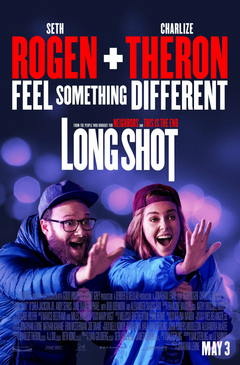
Love on the Shattered Lens: Long Shot (dir by Jonathan Levine)


2019’s Long Shot is a film that truly took me by surprise.

I have to admit that, when I first saw the trailer for Long Shot, I had my concerns.  First off, it was an American political comedy and it’s been a while since there’s really been a good one of those.  There’s been many attempts, especially after Donald Trump was elected in 2016.  But, for the most part, the American films are always at their weakest when they try to be overly political.  There’s always a disturbing lack of self-awareness that, when mixed with the type of strident tone that can only be maintained by people who have never seriously had their ideas challenged, tends to make for a very boring viewing experience.  And, no, don’t you dare say, “What about Vice?” because Vice was freaking terrible.

Secondly, the trailer emphasized that Charlize Theron was playing the Secretary of State and that she was running to become the first woman elected President.  This led me to suspect that the film might essentially be Hillary Clinton fanfic.  Over the past few years, there’s actually been quite a few films and television show that have featured idealized versions of Hillary Clinton — i.e., all of the accomplishments without the albatross of her husband or the reputation for being casually corrupt.  (For six seasons, there was a TV show called Madam Secretary that basically only existed to present an idealized version of Hillary.)  Hillary fanfic, with its attempt to rehabilitate the image of a candidate so inept that she actually lost to Donald Trump, is always cringey.

Finally, as much as I hate to admit it, I was concerned that the film not only starred but was produced by Seth Rogen.  And don’t get me wrong.  I love Seth Rogen.  Seth Rogen is literally my favorite stoner.  I think that, with the right material, he can be one of the funniest performers around.  The problem is that, in the past, Seth Rogen has always been brilliant as long as he wasn’t talking about politics.  Whenever he started talking politics, he just turned into every other wealthy and rather self-righteous progressive.  While Rogen’s political tweets were never as banal as the thoughts of uberboomer Stephen King, there was still nothing about them that suggested that Rogen would be capable of producing one of the funniest and most good-hearted political comedies to come out in the past few years.

And so, like a lot of people, I skipped Long Shot when it was playing in theaters.  I waited until it was released on video to watch Long Shot and you know what?  It turned out that almost everything that I had assumed about Long Shot was incorrect.

Yes, it’s a very political movie but it’s also far more self-aware than I was expecting it to be.  Seth Rogen apparently knows that he has a reputation for being a very loud, knee-jerk leftie because he actually does a very good job of poking fun at his own image.  Rogen plays Fred Flarsky, a loud and crude journalist who quits his job when he discovers that the underground newspaper that he was working for has been purchased by Parker Wembley (Andy Serkis, playing a not-at-all disguised version of Rupert Murdoch).  Fred is about as far to the Left as one can be and he tends to assume that all of his associates agree with him, even though he never bothers to ask them.  One of the best scenes in the film comes when his best friend, Lance (O’Shea Jackson, Jr.), reveals to a stunned Fred that he’s not only a Republican and a Christian but that he’s been one the entire time that he’s known Fred.  Fred never caught on because he just assumed that Lance, being black, would naturally be a Democrat.  When Lance asks Fred why he thought Lance wore a cross around his neck, a befuddled Fred can only reply that he thought it was “cultural.”  It’s a great scene and one that’s wonderfully played by Rogen and Jackson and it works precisely because it remains true to what we’ve seen of both characters.  Almost everything that Lance says over the course of the movie does reflect a traditionally conservative mindset but, like Fred, we don’initially don’t notice because Lance is being played by Ice Cube’s son.  When Fred discovers that Lance is a Republican, it doesn’t change Fred’s mindset but it does teach him that progressives can be just as guilty as conservatives when it comes to making assumptions about people based on where they’re from or what they look like.  As a stunned and chastened Fred puts it, “I’m a racist, you’re a Republican, I don’t know what the fuck’s going on.”

Secondly, the film’s romance is incredibly charming.  Charlize Theron plays Charlotte Field, the Secretary of State who used to be Fred’s babysitter.  After they run into each other at a reception, Charlotte hires Fred to work as a speech writer for her nascent presidential campaign.  You would not expect Charlize Theron and Seth Rogen to have a ton of romantic chemistry but they do.  Theron is an underrated comedic actress and there’s a lot of fun to be had in just listening to her and Rogen bounce lines off of each other.  In fact, as funny as Rogen is, I’d have to say that Charlize Theron is even funnier.  One of the highlights of the film is when Fred and Charlotte sneak away to a club, where they dance and end up taking ecstacy.  Over course, as soon as the drugs kick in, a major diplomatic crisis breaks out and an extremely high Charlotte has to deal with a hostage crisis.  Theron appears to be having a ball with the role and really, this is the film for which she should have been Oscar nominated.  Theron convinces us that 1) she’s a masterful diplomat, 2) that she could be elected President of the United States, and 3) that she could fall in love with someone as messy as Fred without sacrificing her own ambitions.

Long Shot has its flaws, of course.  Andy Serkis is a bit too over-the-top in his villainy and the film has a 125-minute running time, which is way too long for what is essentially a fairly simple romantic comedy.  Some of the scenes of Fred and Charlotte traveling around the world probably could have been cut without harming the story.  There’s an environmental subplot that feels a bit too obvious and there’s a joke about Fred accidentally ejaculating on his own face that’s never as funny as the film seems to think that it is.

That said, Long Shot is often a surprisingly charming film.  (I know what some of you are saying: “Yes. Lisa Marie, Seth Rogen ejaculating on his beard sounds really charming.”  I know, I know.  But the majority of the film is charming.)  If you missed it when it came out the first time, give it another chance.

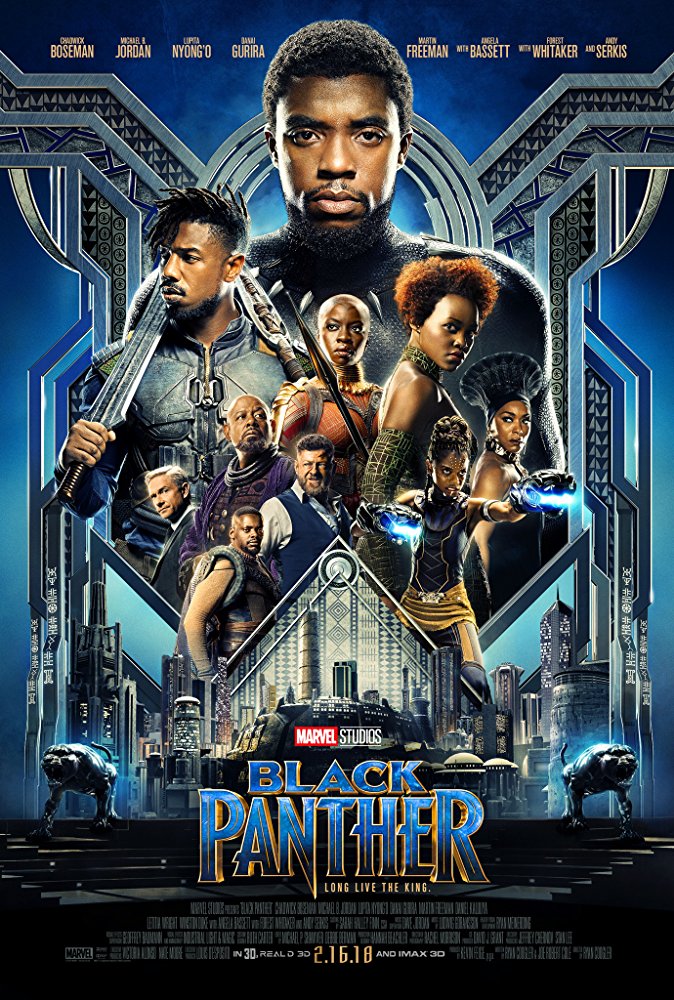
“Black Panther” : Hail To The King


Let’s be honest — as was the case with last year’s Wonder Woman (in fact probably to an even greater degree), Black Panther was a cultural phenomenon before it was even released, and in future it will be examined as such. As something more than a movie. As something that resonated within, and reverberated throughout, the zeitgeist. Its trajectory in that regard is largely unwritten to this point, but can be predicted with a fair amount of certainty : near-universal praise will come first, followed by the inevitable backlash, followed by an almost apologetic, “ya know, maybe we were too hard on this thing that we loved at first” sort of acceptance. If we could just skip all that, and take it as a given, it would save us all a lot of time and effort — but it’s on the way, so tune in or out of all that as you see fit. My concerns here are considerably more prosaic : to talk about the movie as what it began “life” as, to wit — “just” a movie.

For what it’s worth (which may not be much), I’m tempted to agree, to an extent, with those who are pointing out that simply seeing this flick is in no way an act of “resistance” in and of itself : after all, if the fact that the first thing that runs in theaters before the film starts is a commercial for Lexus cars featuring Chadwick Boseman in full Panther gear isn’t enough to clue you in to the reality that, at the end of the day, this is much more about profits than it is about politics, then the product placement within the film itself should do the job — and at the end of the day, one of the largest corporations in the world, founded by noted racist Walt Disney, is still the one making all the money off it. If, then, shelling out ten or fifteen bucks to watch Black Panther is an inherently defiant or dissident act (and I’m not saying it is), then it’s a highly commodified and co-opted one.

All that being said, when a film is released out into the world, particularly a film with as much fanfare attached to it as this one, there are gonna be ripples that emanate out from it — and among the millions of kids, in particular, who watch this flick, the seeds of an interest in African culture are sure to be sown, and the more they follow the metaphorical stalks that grow and flower from those seeds, the more they’ll discover things like historical resistance to colonialism, exploitation, capitalism, and the like. So while Black Panther may not be a radical (or even a particularly political) work in and of itself, it may inspire some radicalism in the future — one can only hope, at any rate.

But that’s pure speculation at this point, so let’s talk about what we know for certain.

One thing anyone who follows this site, or my work anywhere else, absolutely knows is that I’m no fan of Marvel Studios product in general. Unlike, apparently, most people, I find the overwhelming majority of Marvel flicks to be hopelessly redundant, formulaic, lowest-common denominator fare directed in a flat and lifeless “house style” with no particular visual flair, no particularly standout performances, no particular vision to do anything but get audiences keyed up for the next one. They exist as a self-perpetuating celluloid organism, one with no distinct personality but a lot of business sense and promotional muscle. This has been going on for so long, and with so much box office success, that I went into flick essentially expecting more of the same — sure, I knew it had a predominantly-black cast, and was set in Africa (albeit in a fictitious country), but that doesn’t mean that director Ryan Coogler was going to break the mold in any appreciable way. Hell, it doesn’t even mean that he would be allowed to do so. Happily, my pessimism was turned on its ear almost from word the word “go” here.

Black Panther looks different, feels different, because it is different. Coogler and co-screenwriter Joe Robert Cole certainly capture the dynamism, the energy, the Afro-futurism that has been a part of King T’Challa’s backstory since Jack Kirby created the character and his world (nope, we don’t lay any credit at Stan Lee’s feet around these parts, but I’m not getting into the “whys and wherefores” of that right now because, shit, I don’t have all night), but advance it all considerably, absorbing the extra layers added onto the mythos by the likes of Don McGrregor, Billy Graham, Christopher Priest, Reginald Hudlin, and Ta-Nehisi Coates over the years, and coming out with something uniquely suited to cinema and very much of the “now.” There’s a hard-driving and kinetic sense of energy to this film that the so-called “MCU” has been missing since it inception, and if you’re among the small number of those who agree with my assessment that most of these flicks play out more like two-hour TV episodes than proper movies, you can relax : this is as bold, brash, and big as it gets. This is blockbuster fare not only in name, but in execution, with visual effects that amaze, sets that inspire awe, cinematography that commands attention, action that sizzles, a script that charges forward, and music that slicks that trajectory along. This is arresting cinema that doesn’t even give you the option to leave your seat.

But what of the acting, you ask? It ranges from good to great, and thankfully the great includes the key players : Chadwick Boseman is regal yet human, fallible, relatable in the film’s central role: Forest Whitaker embodies aged wisdom tinged with regret as high priest Zuri; Michael B. Jordan is the first truly formidable villain, crucially one with a compelling backstory and some entirely valid philosophical viewpoints, as Killmonger; Martin Freeman not only reprises, but considerably expands, his already-extant “MCU” role of CIA agent Everett K. Ross with heart, humor, and brains; Sterling K. Brown makes the most of limited but significant screen time as T’Challa’s late uncle, N’Jobu; Andy Serkis — as a human this time! — chews up the screen with dangerous charm as Ulysses Klaue (or “Klaw,” as the comics would have it). These guys are all tops, really. And yet —

It is the women that carry this film. Whether we’re talking about Lupita Nyong’o as T’Challa’s love interest Nakia, a determined, fiercely independent, and soulful force that isn’t just her partner’s “equal,” but his conscience; Danai Gurira as General Okoye, head warrioress of the Dora Milaje, who embodies martial discipline and loyalty with the controlled fury of a hurricane ready to strike at any moment; Angela Basset as Queen Mother Ramonda, a living embodiment of grace, stature, and tradition; or Letitia Wright as younger sister Shuri, part “Q” to T’Challa’s “Bond,” part grounding and humanizing influence, part Moon Girl-style intellectual prodigy — as in life, it is the women that both make this movie’s men what they are, while also being complete and fully-realized in and of themselves. African history is far less patriarchal than is commonly believed, and in Wakanda that proud matriarchal lineage is exemplified, modernized, magnified — and honored.

Most films reflect the moment. Others define the moment. Black Panther goes one further by creating the moment. It’s as near to flawless as big-budget blockbusters get and eschews the too-common-flaw that movies made on this scale have of dumbing things down to appeal to the masses. Coogler and company instead trust those same masses to be intelligent enough to meet them on their level, and to respond to being talked “up,” rather than “down,” to. By believing that the world was not just ready, but eager, for something that goes far beyond mere spectacle — something that challenges the intellect while speaking to the heart — they have woken what could very well be a sleeping giant.

Now, let’s just keep our fingers crossed they’ve spurred that giant to do something more than simply go out and buy luxury cars.

What If Lisa Picked The Oscar Nominees: 2017 Edition


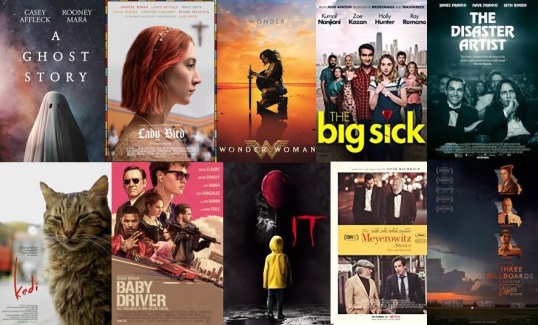
With the Oscar nominations due to be announced tomorrow, now is the time that the Shattered Lens indulges in a little something called, “What if Lisa had all the power.” Listed below are my personal Oscar nominations. Please note that these are not the films that I necessarily think will be nominated. The fact of the matter is that the many of them will not. Instead, these are the films that would be nominated if I was solely responsible for deciding the nominees this year. Winners are starred and listed in bold.

(You’ll also note that I’ve added four categories, all of which I believe the Academy should adopt — Best Voice-Over Performance, Best Casting, Best Stunt Work, and Best Overall Use Of Music In A Film.)

(Click on the links to see my nominations for 201620152014201320122011, and 2010!)

Best Picture

Baby Driver

The Big Sick

The Disaster Artist

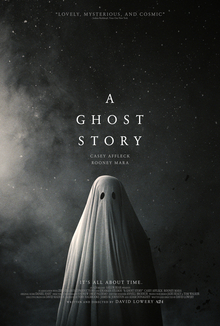
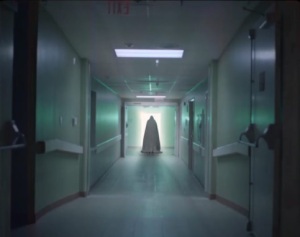
*A Ghost Story*

It

Kedi

Lady Bird

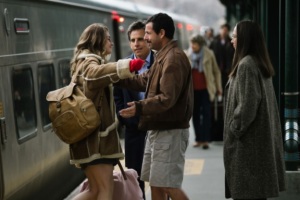
The Meyerowitz Stories

Three Billboards Outside Ebbing, Missouri

Wonder Woman

Best Director

Greta Gerwig for Lady Bird

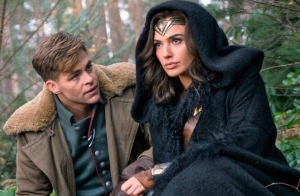
Patty Jenkins for Wonder Woman

*David Lowery for A Ghost Story*

Martin McDonagh for Three Billboard Outside Ebbing, Missouri

Andy Muschietti for It

Edgar Wright for Baby Driver

Best Actor

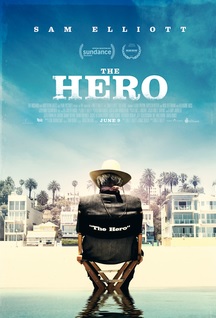
*Sam Elliott in The Hero*

James Franco in The Disaster Artist

Jake Gyllenhaal in Stronger

Daniel Kaluuya in Get Out

James McAvoy in Split

Robert Pattinson in Good Time

Best Actress

Gal Gadot in Wonder Woman

Sally Hawkins in Maudie

Frances McDormand in Three Billboards Outside Ebbing, Missouri

Cynthia Nixon in A Quiet Passion

Aubrey Plaza in Ingrid Goes West

*Saoirse Ronan in Lady Bird*

Best Supporting Actor

Woody Harrelson in Three Billboards Outside Ebbing, Missouri

Sam Rockwell in Three Billboards Outside Ebbing, Missouri

Adam Sandler in The Meyerowitz Stories

Bill Skarsgard in It

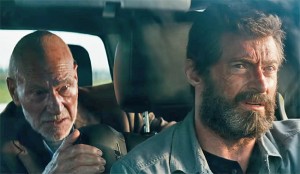
*Patrick Stewart in Logan*

Jason Sudekis in Colossal

Best Supporting Actress

Holly Hunter in The Big Sick

Catherine Keener in Get Out

Sophia Lillis in It

*Laurie Metcalf in Lady Bird*

Carey Mulligan in Mudbound

Ella Rumpf in Raw

Best Voice-Over or Stop Motion Performance

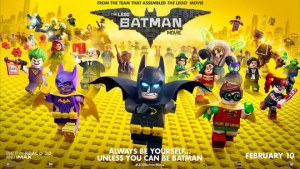
Will Arnett in The LEGO Batman Movie

Gael Garcia Bernal in Coco

Bradley Cooper in Guardians of the Galaxy, Volume 2

Doug Jones in The Shape of Water

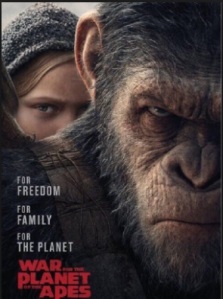
*Andy Serkis in War for the Planet of the Apes*

Dan Stevens in Beauty and the Beast

Best Original Screenplay

The Big Sick

Get Out

A Ghost Story

*Lady Bird*

The Meyerowitz Stories

Three Billboards Outside Ebbing, Missouri

Best Adapted Screenplay

Before I Fall

*The Disaster Artist*

It

Logan

Their Finest

Wonder Woman

Best Animated Film

Cars 3

Coco

*The Lego Batman Movie*

Leap!

Best Documentary Feature

Karl Marx City

*Kedi*

Risk

Step

Strong Island

32 Pills: My Sister’s Suicide

Best Foreign Language Film

First They Killed My Father

Frantz

*Kedi*

Raw

Best Casting

The Big Sick

Detroit

Dunkirk

Get Out

Lady Bird

*The Meyerowitz Stories*

Best Cinematography

Blade Runner 2049

Dunkirk

*A Ghost Story*

It

Lost City of Z

Three Billboards Outside Ebbing, Missouri

Best Costume Design

Beauty and the Beast

The Beguiled

Free Fire

Thor: Ragnarok

Victoria & Abdul

*Wonder Woman*

Best Editing

*Baby Driver*

Before I Fall

Dunkirk

A Ghost Story

It

Wonder Woman

Best Makeup and Hairstyling

The Disaster Artist

Guardians of the Galaxy Volume 2

Lady MacBeth

Logan Lucky

My Cousin Rachel

*Thor: Ragnarok*

Best Original Score

Blade Runner 2049

A Ghost Story

*Good Time*

Dunkirk

The Shape of Water

Wind River

Best Original Song

“Buddy’s Business” from Brawl In Cell Block 99

“Evermore” from Beauty and the Beast

“Friends are Family” from The Lego Batman Movie

“How Does A Moment Last Forever” from Beauty and the Beast

“Myron/Byron” from The Meyerowitz Stories

*”The Pure and the Damned” from Good Time*

Best Overall Use Of Music

Atomic Blonde

*Baby Driver*

The Disaster Artist

Guardians of the Galaxy Volume 2

Thor: Ragnarok

T2: Trainspotting

Best Production Design

*Beauty and the Beast*

The Beguiled

Blade Runner 2049

It Comes At Night

Logan

Thor: Ragnarok

Best Sound Editing

Baby Driver

*Dunkirk*

Kong: Skull Island

Spider-Man: Homecoming

War For The Planet of the Apes

Wonder Woman

Best Sound Mixing

Baby Driver

*Dunkirk*

Kong: Skull Island

Spider-Man: Homecoming

War For The Planet of the Apes

Wonder Woman

Best Stuntwork

Baby Driver

Dunkirk

Logan

Spider-Man: Homecoming

Thor: Ragnarok 

*Wonder Woman*

Best Visual Effects

Blade Runner 2049

Guardians of the Galaxy Vol. 2

Spider-Man: Homecoming

Thor: Ragnarok

Valerian and the City of a Thousand Planets

*War For The Planet of the Apes*

Films Listed By Number of Nominations

9 Nominations — Wonder Woman

7 Nominations — Baby Driver, Dunkirk, It, Three Billboards Outside Ebbing Missouri

6 Nominations — A Ghost Story, Lady Bird, Thor: Ragnarok

5 Nominations — Beauty and the Beast, The Disaster Artist, The Meyerowitz Stories

4 Nominations — The Big Sick, Blade Runner 2049, Get Out, Guardians of the Galaxy Vol. 2, Logan, Spider-Man: Homecoming, War For The Planet Of The Apes

3 Nominations — Good Time, Kedi, The LEGO Batman Movie

2 Nominations — Before I Fall, The Beguiled, Coco, Kong: Skull Island, Raw, Shape of Water

1 Nominations — Atomic Blonde, Brawl in Cell Block 99, Cars 3, Colossal, Detroit, First They Killed My Father, Frantz, Free Fire, The Hero, Ingrid Goes West, It Comes At Night, Karl Marx City, Lady MacBeth, Leap!, Logan Lucky, Lost City of Z, Maudie, Mudbound, My Cousin Rachel, A Quiet Passion, Risk, Split, Step, Strong Island, Stronger, T2: Trainspotting, Their Finest, 32 Pills: My Sister’s Suicide, Valerian and the City of a Thousand Planets, Victoria & Abdul, Wind River

Films Listed By Number of Wins

3 Oscars — A Ghost Story, Lady Bird

2 Oscars — Baby Driver, Dunkirk, Good Time, Kedi, War For the Planet of the Apes, Wonder Woman

1 Oscar — Beauty and the Beast, The Disaster Artist, The Hero, The LEGO Batman Movie, Logan, The Meyerowitz Stories, Thor: Ragnarok

Will the Academy be smart enough to agree with me?  Probably not.  We’ll see what happens tomorrow!
 

Finally, Here Are The Winners From The Indiana Film Journalists Association!


Okay, one final precursor to share with everyone today.  The Indiana Film Journalists Association announced their picks for the best of 2017 on Monday.  They really liked Lady Bird and The Shape of Water.  They also liked Harry Dean Stanton for his final film role.

Best Film

Winner: “Lady Bird”
Runner-up: “The Shape of Water”

Other Finalists (listed alphabetically):

“Blade Runner 2049”
“Brigsby Bear”
“Dunkirk”
“The Florida Project”
“Get Out”
“The Post”
“Star Wars: The Last Jedi”
“Three Billboards Outside Ebbing, Missouri”

Best Animated Feature

Winner: “Coco”
Runner-Up: “Loving Vincent”

Best Foreign Language Film

Winner: “Faces Places”
Runner-Up: “BPM (Beats Per Minute)”

Best Documentary

Winner: “Let It Fall: Los Angeles 1982-1992”
Runner-Up: “Liyana”

Best Original Screenplay

Winner: Greta Gerwig, “Lady Bird”
Runner-up: Jordan Peele, “Get Out”

Best Adapted Screenplay

Winner: Scott Frank, James Mangold and Michael Green, “Logan”
Runner-up: Hampton Fancher and Michael Green, “Blade Runner 2049”

Best Director

Winner: Greta Gerwig, “Lady Bird”
Runner-up: Guillermo del Toro, “The Shape of Water”

Best Actress

Winner: Saoirse Ronan, “Lady Bird”
Runner-up: Sally Hawkins, “Maudie”

Best Supporting Actress

Winner: Laurie Metcalf, “Lady Bird”
Runner-up: Allison Janney, “I, Tonya”

Best Actor

Winner: Harry Dean Stanton, “Lucky”
Runner-up: Gary Oldman, “Darkest Hour”

Best Supporting Actor

Winner: Willem Dafoe, “The Florida Project”
Runner-up: Doug Jones, “The Shape of Water”

Best Vocal/Motion Capture Performance

Runner-up: Sean Gunn & Bradley Cooper, “Guardians of the Galaxy, Vol. 2”

Best Ensemble Acting

Winner: “The Florida Project”
Runner-up: “The Post”

Best Musical Score

Winner: Alexandre Desplat, “The Shape of Water”
Runner-up: Hans Zimmer and Benjamin Wallfisch, “Blade Runner 2049”

Breakout of the Year

Winner: Timothée Chalamet, “Call Me by Your Name” and “Lady Bird”
Runner-up: Kogonada, “Columbus”

Original Vision Award

Winner: “Loving Vincent”
Runner-up: “Brigsby Bear

The Hoosier Award

Winner: “Columbus”
(As a special award, no runner-up is declared in this category.)

The Los Angeles Online Film Critics Society Honors The Shape of Water and Hugh Jackman!


The Los Angeles Online Film Critics Society has named their picks for the best of 2017!

Best Picture
“The Shape of Water”

Best Actress
Sally Hawkins – “The Shape of Water”

Best Actor
Gary Oldman – “Darkest Hour”

Best Supporting Actress
Allison Janney – I, Tonya

Best Supporting Actor – TIE
Patrick Stewart – “Logan ”
Michael Stuhlbarg – “Call Me by Your Name”

Best Adapted Screenplay
Aaron Sorkin – “Molly’s Game”

Best Original Screenplay
Jordan Peele – “Get Out”

Best Male Director
Guillermo del Toro – “The Shape of Water”

Best Female Director
Greta Gerwig – “Lady Bird”

Best Animated Film
“Coco”

Best Foreign Film
“The Square”

Best Documentary – TIE
“Jane”
“Jim & Andy: The Great Beyond”

Best Visual Effects
“War for The Planet of the Apes”

Best Cinematography
Roger Deakins, “Blade Runner 2049”

Best Blockbuster
“Wonder Woman”

Best Independent Film
“Lady Bird”

Best First Feature
Jordan Peele, “Get Out”

Best Comedy or Musical
“The Big Sick ”

Best Action/War
“Baby Driver”

Best Sci-Fi/Horror
“Get Out ”

Best Actor or Actress 23 and Under
Saoirse Ronan, “Lady Bird”

Best Stunt Work
“Baby Driver”

Best Score
Alexandre Desplat, “The Shape of Water”

Best Editing
Paul Machliss and Jonathan Amos, “Baby Driver”

Best Visual Effect Performance
Andy Serkis, “War for the Planet of the Apes”

Special Awards 

Trailblazer Award: Jessica Chastain

LAOFCS Achievement Award: Hugh Jackman

The Utah Film Critics Tell A Ghost Story


The Utah Film Critics Association picked one of my favorite films of the year for best picture!  Good for them!

Check out the winners below:

Best Picture
A Ghost Story
runner-up: Dunkirk

Best Director
Christopher Nolan, Dunkirk
runner-up: David Lowery, A Ghost Story

Best Actor, Female
Sally Hawkins, The Shape of Water
runner-up: Frances McDormand, Three Billboards Outside Ebbing, Missouri

Best Actor, Male
Andy Serkis, War for the Planet of the Apes
runner-up: James Franco, The Disaster Artist

Best Supporting Actor, Female
Tatiana Maslany, Stronger
runner-up: Allison Janney, I, Tonya

Best Supporting Actor, Male
Willem Dafoe, The Florida Project
runner-up: Sam Rockwell, Three Billboards Outside Ebbing, Missouri

Best Adapted Screenplay
Hampton Fancher and Michael Green, Blade Runner 2049
runner-up: Scott Neustadter & Michael H. Weber, The Disaster Artist

Best Original Screenplay
Jordan Peele, Get Out
runners-up: Greta Gerwig, Lady Bird and Martin McDonagh, Three Billboards Outside Ebbing, Missouri (tie)

Best Cinematography
Roger Deakins, Blade Runner 2049
runner-up: Hoyte van Hoytema, Dunkirk

Best Score
Alexandre Desplat, The Shape of Water
runner-up: Hans Zimmer & Benjamin Wallfisch, Blade Runner 2049

Best Documentary Feature
Jane
runner-up: Chasing Coral

Best Animated Feature
Coco
runner-up: The LEGO Batman Movie

Best Non-English Language Film
Thelma
runners-up: Raw and A Fantastic Woman (tie)