Brad reviews NOTTING HILL (1999), starring Julia Roberts and Hugh Grant!


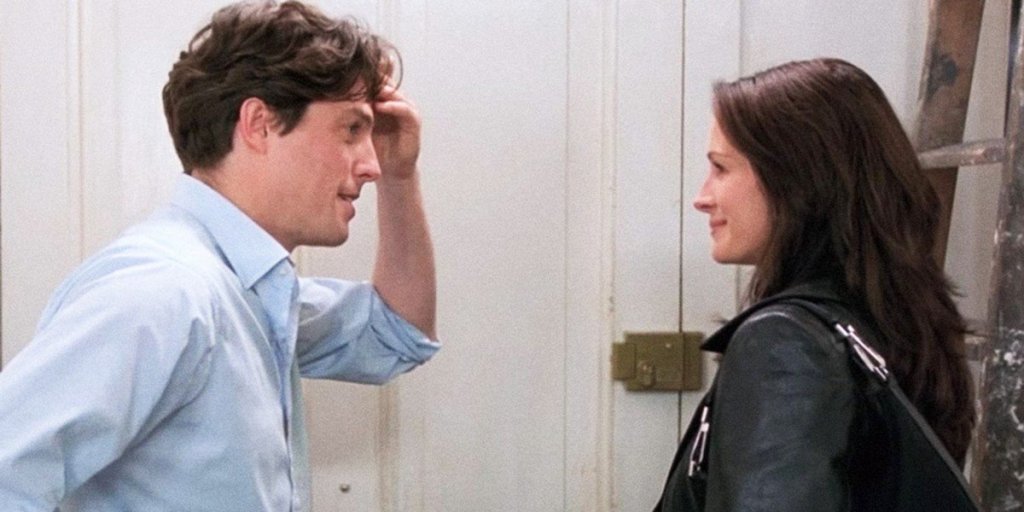
Life takes an unexpected turn for the reserved Englishman William Thacker (Hugh Grant) when the hugely popular American movie star Anna Scott (Julia Roberts) wanders into his humble little travel book shop in the district of Notting Hill in West London. When the initial meeting is followed up by some coincidentally spilled orange juice and an unexpected kiss, William finds himself completely smitten. After Anna leaves, and still in a state of disbelief, William struggles focusing on his normal life with his eccentrically odd flat mate Spike (Rhys Ifans). When Anna surprisingly reaches back out to him wanting to get back together, the sweet and shy William is ecstatic, but he remembers that he’s already obligated himself to attend his sister Honey’s (Emma Chambers) birthday party that night. Wanting to be part of something normal, Anna goes to the party as William’s date, where she has a wonderful, relaxing evening with Honey and their close-knit group of best friends that includes Max (Tim McInnerny), Bella (Gina McKee) and Bernie (Hugh Bonneville), even if she did give them quite the shock when she walked through the door. Everything seems to be going beautifully, but the life of an international film icon tends to be complicated, and William soon finds himself caught up in a whirlwind that includes her “boyfriend,” the arrogant American actor Jeff King (Alec Baldwin). He’s not really her boyfriend anymore, but that seems of little consequence to the press. And then there’s the sudden emergence of racy pictures of Anna from her past in the British tabloids. As much as William loves Anna, will he ever be able to deal with life in Anna’s superstar spotlight?

NOTTING HILL is part of a trilogy of modern-day love stories that I’m sure to watch every year, with the other two being RETURN TO ME (2000) and HITCH (2005). I’ve noticed that these three movies have plot points in common that I find extremely appealing. First, both NOTTING HILL and RETURN TO ME feature main characters who have a group of loyal family and friends who offer uncompromising love and support. William Thacker’s sister and friends clearly care about him and want what’s best for him. If necessary, they’re willing to prove it by being honest with him when he’s unwilling to be honest with himself. One of the best scenes of the film occurs near the end when William tells his group of friends that he’s turned down Anna’s request to continue their relationship, even after she says the famous lines, “I’m also just a girl, standing in front of a boy, asking him to love her.” While his friends struggle to find the right words, the flaky Spike, played superbly by Rhys Ifans, rushes into the meeting and when asked his opinion, says these three words to William, “You daft prick!” A memorable song on the movie’s excellent soundtrack reminds us sometimes that “you say it best when you say nothing at all,” but sometimes words need to be spoken, and Spike cares enough to tell William what he needs to hear. I’ve said it before, but I love it when a movie surrounds its characters with the type of people we’d love to have in our corner in real life. Second, both NOTTING HILL and HITCH feature plot lines that show a “star” falling for a sweet nobody. Maybe it’s because I’m a nobody myself, but the idea of the rich and powerful falling in love with regular people like me always strikes a nerve. Sure, it may be a fantasy, but it’s a fantasy I’m perfectly willing to roll with. 

As far as I’m concerned, Julia Roberts and Hugh Grant have never been more appealing than they are in NOTTING HILL. Julia is so beautiful, and I fell in love with her myself for the first time when I watched this movie at the theater in 1999. There are scenes where William is watching Anna Scott on the big screen and the small screen, whether it be a love story or a science fiction movie, and he’s clearly in complete awe of her. As a film buff going back to my early teens, I can relate so easily to his character, whether it be my crush on Elizabeth Shue in the 80’s or Salma Hayek in 90’s. Heck, as recently as a couple of years ago, after interviewing the lovely Jan Gan Boyd who starred with Charles Bronson in ASSASSINATION (1987), I can still identify with a man completely smitten with a beautiful actress. And Hugh Grant is so sweet, witty and funny as William Thacker. This was a big film for Grant, as a few years earlier his promising Hollywood career had somewhat stalled due to his arrest on Sunset Strip in Los Angeles for “lewd conduct in a public place” with a prostitute named Divine Brown. With the irony not lost on me, if you’ve seen NOTTING HILL before you’ll understand that my inclusion of this matter of public record proves the character of Anna Scott to be correct when she explains to William just how difficult it can be to live life in the public eye. Regardless of all that, Hugh Grant is great in the film, and with a few years separating the events, it seems the filmgoing public was ready for forgiveness. NOTTING HILL was a runaway box office success, raking in $365 million dollars at the worldwide box office. 

The final thing I want to point out about NOTTING HILL is the incredible talent behind the scenes. Director Roger Michell helmed one of my very favorite Jane Austen adaptations, PERSUASION from 1995, starring Amanda Root and Ciaran Hinds. It’s a perfect movie as far as I’m concerned, and I watch it several times every year. Writer Richard Curtis has written the wonderful films FOUR WEDDINGS AND A FUNERAL (1994), BRIDGET JONES’S DIARY (2001), and LOVE ACTUALLY (2003), and he clearly knows how to push our love buttons. Both Michell and Curtis do the most successful work in their careers here. Now whether or not it’s their very best is a matter of opinion, but it’s definitely great work that I can confidently recommend to anyone. 
Review: The Hunt for Red October (dir. by John McTiernan)


“I’m a politician. Which means that I am a cheat and a liar, and when I’m not kissing babies, I’m stealing their lollipops.” — Dr. Jeffrey Pelt, National Security Advisor

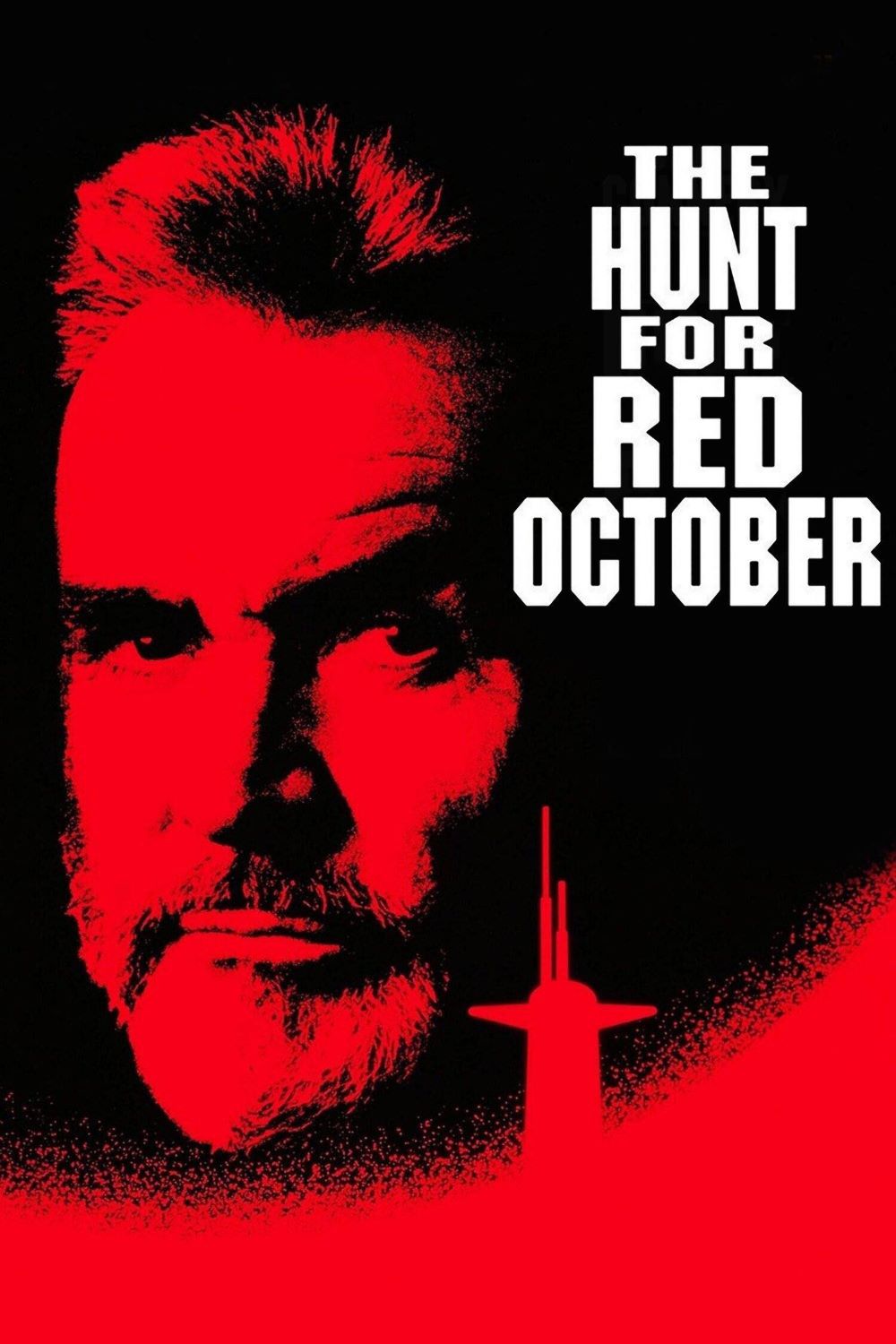
The Hunt for Red October glides into the tail end of Cold War cinema like a stealthy sub cutting through midnight swells, packing a smart mix of spy intrigue and nail-biting underwater showdowns that keep you locked in from the opening credits. Directed by John McTiernan, fresh from helming Die Hard, this 1990 adaptation of Tom Clancy’s doorstopper novel smartly distills pages of naval geekery into a taut, propulsive thriller where Soviet skipper Marko Ramius—Sean Connery in full brooding mode—pilots the formidable Red October, a behemoth sub with a hush-mode propulsion system that ghosts past detection like a shadow in fog.

McTiernan shines in wrangling the script from Clancy’s tech-heavy tome, slicing through the babble to propel the story with crisp momentum and unrelenting suspense, turning potential info-dumps into pulse-quickening beats that hook casual viewers and sub nerds alike. The premise grabs fast: Ramius’s bold maneuvers ignite a transatlantic frenzy, with U.S. and Soviet forces locked in a paranoid standoff over what looks like an imminent crisis. That ’80s-era distrust simmers perfectly here, crammed into a runtime that pulses with fresh urgency decades later, amplified by those dim-lit sub corridors in steely teal tones that squeeze the air right out of the room.

Alec Baldwin embodies Jack Ryan as the reluctant brainiac from CIA desks, sweaty and green around the gills yet armed with instincts that cut through official noise like a periscope through chop. Pulled from family downtime—teddy bear in tow—he injects everyday stakes into the global chessboard, proving heroes don’t need camo or cockiness, just smarts and stubbornness. Connery’s Ramius dominates as a haunted vet with a personal chip on his shoulder, steering a tight-knit officer corps including Sam Neill’s devoted second-in-command, their quiet bonds hinting at deeper loyalties amid the red menace.

Standouts fill the roster seamlessly: James Earl Jones lends gravitas as the steady Admiral Greer backing Ryan’s wild cards; Scott Glenn commands the American hunter sub with laconic steel; Jeffrey Jones brings quirky spark to the sonar savant whose audio tricks flip the script on silence. The dialogue crackles with shorthand lingo and understated jabs, forging a crew dynamic that’s as pressurized as the hull plates, pulling you into hushed command post vibes without a whiff of cheesiness.

​​

McTiernan elevates the genre by leaning on wits over blasts—thrilling pursuits deliver without dominating, letting mind games and split-second calls drive the dread, all while streamlining Clancy’s minutiae into seamless propulsion. Gadgetry gleams without overwhelming: the sub’s whisper-quiet tech sparks clever cat-and-mouse in hazard-filled depths, ramping uncertainty to fever pitch. Pacing builds masterfully from war-room skepticism—Ryan battling brass skepticism—to heart-in-throat ocean dashes, every frame taut as a bowstring. Practical models and effects ground the peril in gritty tangibility, no digital gloss, evoking Ice Station Zebra‘s frosty traps but streamlined into a relentless machine that dodges the older film’s drag. It’s a clinic in balancing spectacle and smarts, where tension coils from isolation’s cruel math: one ping too many, and it’s lights out.

On the eyes and ears front, the movie plunges into submersed nightmare fuel—consoles pulsing crimson in battle stations, scopes piercing mist-shrouded waves, silo bays looming like sleeping leviathans. McTiernan tempers his action flair for thinker-thrills; Basil Poledouris’s great orchestral score surges with iconic power through the chases—those brooding horns, choral swells, and rhythmic pulses echoing engine throbs have etched into legend, pounding your chest like incoming cavitation and elevating every dive. Audio wizardry seals the immersion: hull groans, ping echoes, bubble roars craft a metallic tomb where errors echo eternally. Flaws peek through—early scenes drag with setup chatter, foes skew broad-stroked—but the core hunt erases them, surging to a sharp, satisfying close that nods to Ryan’s budding legend without overplaying the hand.

’90s tentpole lovers and thaw-era history fans find a benchmark here, as the film plays the long con of trust amid torpedoes, fusing bombast with nuance that reboots chase in vain. It bottles superpower jitters spot-on—frantic commands clashing with strike debates—yet softens adversaries via Connery’s world-weary depth and Neill’s subtle conviction. Endless rewatches uncover gems: crew hints dropped early, sonar hacks foreshadowing real tech leaps. Baldwin’s grounded Ryan—chopper-barfing, suit-clashing, chaos-navigating—earns triumphs the hard way, contrasting Das Boot‘s bleak grind with upbeat ingenuity that feels won, not waved. Poledouris’s motifs linger post-credits, a symphonic anchor boosting replay pulls.

Endurance stems from mastering sub-horror’s essence: solitude sharpening choices, where flubs invite apocalypse. Ramius embodies defector realism—war-weary idealist mirroring history’s turncoats—while Clancy’s specs (sub classes, velocities) anchor without anchoring down. McTiernan sidesteps flags; zero flag-waving, pure operator craft in dodges and climactic finesse that blends brains with boom. Quirks delight—the premier’s bluster, aides’ cool calculus—padding a 134-minute gem that exhales you surfacing, amped. Expands on score’s role too: “Hymn to Red October” choral rise mirrors Ramius’s quiet rebellion, threading emotional undercurrents through mechanical mayhem, a Poledouris hallmark outlasting the film.

Bottom line, The Hunt for Red October captivates via cerebral kick—shadow games in fluid physics, intellect over muscle, audacious plays punking empire folly. Sparks post-view chin-strokes on allegiances and risks. Connery’s gravelly “One ping only, Vasily” endures as gold; storm-watch it, trade sofa for sonar station—raw thrill spiked with savvy. Sub saga staple? This silent stalker nails every target.

Brad’s Scene of the Day – “I’ve made the wrong decision” from NOTTING HILL (1999)!


I love the movie NOTTING HILL. Directed by Roger Michell and written by Richard Curtis, it’s one of my all time favorite romantic comedies. I especially enjoy the close relationships that William Thacker (Hugh Grant) shares with his group of friends. The movie creates a world where these people truly love and care about each other. We all need a group of friends like this. 

In honor of the late Roger Michell’s birthday, I share this clip from NOTTING HILL:

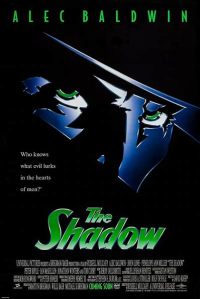
Guilty Pleasure No. 82: The Shadow (dir. by Russell Mulcahy)


As Guilty Pleasures go, The Shadow is a movie that has absolutely everything you need for a fun, campy ride. An Al Leong cameo, alongside James Hong? Check. Heroes and Villains taking time out to discuss their wicked plans (and how they’ll be stopped) over a glass of fine American Bourbon? Check. Early 90s Era CGI? Mark it down. Duel Wielding Pistol shooting action? Got it. Tim Curry just being there? Sweet.

After the wild success of Tim Burton’s Batman in 1989, Hollywood was scrambling to squeeze what they could out of the Superhero Movie. The Punisher, with Dolph Lundgren, would come out the same year. We’d end up with The Rocketeer (one of my personal favorites), BarbWire, Dick Tracy,The Crow, The Mask, and The Phantom, among others leading into the mid-90s. Among these was 1994’s The Shadow, based off the 1930’s character from Walter B. Gibson. Pre-dating all of the before mentioned characters (including DC’s Batman by almost a decade), The Shadow started as a series of radio stories before moving on to other forms of media. The movie didn’t do very well on it’s original release. Much like the magic that clouds men’s minds, audiences were more enraptured with The Crow months before and The Lion King. Some may remember a Shadow movie was made, but it was eclipsed by more popular films at the time.

At the same time, there were major advances happening in audio technology, thanks to a tiny Universal film called Jurassic Park. Jurassic Park helped to usher in an update in sound quality known as The Digital Experience (which we now know as DTS for short). As theatres coverted to the new sound system, various films in the early to mid nineties would make use of it, such as The Crow, The Mask, Timecop and The Shadow. By the time my family picked up their first Laserdisc player, DTS quality sound was available at home. My dad had a series of speakers lined around the living room of our house so that regardless of where you sat, the sound would move around you. One of the best tests of it was with John Carpenter’s The Thing, where Blair is standing off against the crew. The gunfire from his pistol would richochet from the front to the rear speakers, making the kids duck down.

The Shadow also made of use of this in certain areas, particularly with the way voices carried in a room. The part with Shiwan Khan’s voice moving over the city at night was amazing to hear with the right sound system. Just about any scene where The Shadow spoke had this sweet spatial effect that I loved.

The Shadow is the tale of Ying Ko (Alec Baldwin, The Getaway), a.k.a. Lamont Cranston. Living high in the Opium Fields of Tibet, he is a man of darkness, having inflicted great evil over time. Kidnapped and brought to a Tulku (a wise man) who has decided it’s time for redemption, Cranston is taught to cloud men’s minds, bending people to his will and to hide every aspect of himself save for one thing, his Shadow. He then returns seven years later to that “most wretched lair of villainy we know as” New York City, for we all know that the weed of crime bears bitter fruit.

Cranston spends most of his nights at The Cobalt Club with his Uncle Wainwright (Jonathan Winters, It’s a Mad, Mad, Mad, Mad World), who also happens to be the Police Commissioner. It allows him to keep up appearances while making sure the police don’t put The Shadow in their spotlight. When he meets the beautiful Margot Lane (Penelope Ann Miller, The Relic), he’s not only smitten, but finds her ability to read minds a dangerous threat to him.

When a metal casket from Tibet arrives at the New York Museum of Natural History, it reveals Shiwan Khan (John Lone, The Last Emperor), the last descendant of Genghis Khan. Gifted with the same abilities as Cranston, Khan has plans for the city and the world. He would rather have Cranston join him than to kill him. This turns the story into a classic Bond-like cliche where the hero and villain spend the bulk of the movie explaining their plans.

Enjoying the successes of Death Becomes Her and Jurassic Park, writer David Koepp was on a roll. The Shadow doesn’t take itself too seriously. Koepp and director Russell Mulcahy (Highander) splash moments of light comedy at just about every turn, mostly through the witty banter between characters. Some are over the top, particularly with Tim Curry’s character, while others are more subtle, like with Ian McKellan (The Lord of the Rings). If you’re looking for a serious drama in your superhero film, this isn’t it. Additionally, there are one or two elements that make no sense whatever. Mongol warriors walking around in full armor that no one ever seems to notice and taking rides in taxicabs (unless we assume they’re masked by Khan’s magic).

Most of the movie was filmed on the Universal Studios New York backlot, which explains why some scenes look like they were borrowed from Walter Hill’s Streets of Fire (that also used it years before). The mystical Tibetan Phurba dagger that echoes the disposition of its owner was a variant of the one used in Eddie Murphy’s The Golden Child in the late 80s.

if the movie’s climax between The Shadow and Khan feels a bit abbreviated, it’s because of a last minute change in filming. The original plan for the ending involved a series of mirrors, but an earthquake earlier in the year caused damage to the props the production team planned to use. So, what we get is a quicker scene, still falling in line with Mulcahy’s penchant for glass shattering, but leaving the audience to partially wonder what we could have had if everything worked out.

Finally, the real gem in all this is Jerry Goldsmith’s score. Although out of print, you can still find most of the tracks on YouTube, and the songs keep the immersion flowing. While I don’t see the film getting any kind of remakes in the near future, it’s nice to know everything came together (as well as it could) for this entry. Then again, who knows?

Previous Guilty Pleasures

  1. Half-Baked
  2. Save The Last Dance
  3. Every Rose Has Its Thorns
  4. The Jeremy Kyle Show
  5. Invasion USA
  6. The Golden Child
  7. Final Destination 2
  8. Paparazzi
  9. The Principal
  10. The Substitute
  11. Terror In The Family
  12. Pandorum
  13. Lambada
  14. Fear
  15. Cocktail
  16. Keep Off The Grass
  17. Girls, Girls, Girls
  18. Class
  19. Tart
  20. King Kong vs. Godzilla
  21. Hawk the Slayer
  22. Battle Beyond the Stars
  23. Meridian
  24. Walk of Shame
  25. From Justin To Kelly
  26. Project Greenlight
  27. Sex Decoy: Love Stings
  28. Swimfan
  29. On the Line
  30. Wolfen
  31. Hail Caesar!
  32. It’s So Cold In The D
  33. In the Mix
  34. Healed By Grace
  35. Valley of the Dolls
  36. The Legend of Billie Jean
  37. Death Wish
  38. Shipping Wars
  39. Ghost Whisperer
  40. Parking Wars
  41. The Dead Are After Me
  42. Harper’s Island
  43. The Resurrection of Gavin Stone
  44. Paranormal State
  45. Utopia
  46. Bar Rescue
  47. The Powers of Matthew Star
  48. Spiker
  49. Heavenly Bodies
  50. Maid in Manhattan
  51. Rage and Honor
  52. Saved By The Bell 3. 21 “No Hope With Dope”
  53. Happy Gilmore
  54. Solarbabies
  55. The Dawn of Correction
  56. Once You Understand
  57. The Voyeurs 
  58. Robot Jox
  59. Teen Wolf
  60. The Running Man
  61. Double Dragon
  62. Backtrack
  63. Julie and Jack
  64. Karate Warrior
  65. Invaders From Mars
  66. Cloverfield
  67. Aerobicide 
  68. Blood Harvest
  69. Shocking Dark
  70. Face The Truth
  71. Submerged
  72. The Canyons
  73. Days of Thunder
  74. Van Helsing
  75. The Night Comes for Us
  76. Code of Silence
  77. Captain Ron
  78. Armageddon
  79. Kate’s Secret
  80. Point Break
  81. The Replacements

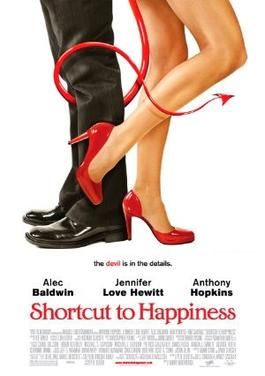
Insomnia File #70: Shortcut to Happiness (dir by Alec Baldwin)


What’s an Insomnia File? You know how some times you just can’t get any sleep and, at about three in the morning, you’ll find yourself watching whatever you can find on cable or streaming? This feature is all about those insomnia-inspired discoveries!

If you’re having trouble getting to sleep tonight, you can always jump over to Tubi and watch Shortcut to Happiness, a.k.a. The Devil and Daniel Webster.

When was Shortcut to Happiness released?  There’s some debate about that.  Though the film’s credited director is Harry Kirkpatrick, it was actually directed by Alec Baldwin.  (Please, no Rust jokes.)  The film was shot in 2001, in New York City.  However, shortly before filming could be completed, the film’s financiers were arrested and charged with bank fraud which led to the film ending up in limbo.  A rough cut of the movie appeared at a few film festivals in 2003.  By that point, Baldwin had started to distance himself from the film, claiming that he wasn’t given a chance to shoot all of the scenes that he needed to and that the film was taken away from him in post-production.  A newly edited version of the film was finally released in 2007, six years after filming began.

Alec Baldwin not only directed the film but starred as Jabez Stone, an aspiring writer who makes a deal with the devil (Jennifer Love Hewitt) to become a successful published author.  Stone gets his wish but it comes with a price.  In ten years, he will have to give up his soul.  Stone becomes rich and successful, writing books that have absolutely no literary merit.  He loses all of his friends and, by the time the ten year deadline rolls around, Stone is miserable.  Stone sues to keep his soul.  He’s defended by Daniel Webster (Anthony Hopkins), a man who Stone thought was just a publisher but who apparently is actually the famed 19th century statesman.  (The film is rather vague on this point.)  In one of the film’s few funny moments, the jury is revealed to be made up of deceased writers, including Ernest Hemingway and Mario Puzo.  The trial plays out and …. well, again, it’s hard to really follow any of the arguments made by either Webster or the Devil.  The film is so tonally inconsistent and poorly directed that I was often left wondering if Hopkins and Hewitt had even been on the set at the same time.

Both Hopkins and Hewitt give good performances.  The problem is that they both seem to be appearing in different films.  Hewitt gives a broadly comedic performance as the Devil, pouting whenever Webster argues with her.  Hopkins, meanwhile, seems to be recycling his dignified and very serious performance from Amistad.  Meanwhile, Baldwin the director totally miscasts Baldwin the actor.  For the film to work, Jabez needs to be young and hungry.  Instead, Baldwin comes across as someone who is already old enough to know better than to make a deal with the Devil.

It’s a true mess of a film but worth seeing just because of the story behind it.  That said, the 1941 version of The Devil and Daniel Webster remains the one to beat.

Previous Insomnia Files:

  1. Story of Mankind
  2. Stag
  3. Love Is A Gun
  4. Nina Takes A Lover
  5. Black Ice
  6. Frogs For Snakes
  7. Fair Game
  8. From The Hip
  9. Born Killers
  10. Eye For An Eye
  11. Summer Catch
  12. Beyond the Law
  13. Spring Broke
  14. Promise
  15. George Wallace
  16. Kill The Messenger
  17. The Suburbans
  18. Only The Strong
  19. Great Expectations
  20. Casual Sex?
  21. Truth
  22. Insomina
  23. Death Do Us Part
  24. A Star is Born
  25. The Winning Season
  26. Rabbit Run
  27. Remember My Name
  28. The Arrangement
  29. Day of the Animals
  30. Still of The Night
  31. Arsenal
  32. Smooth Talk
  33. The Comedian
  34. The Minus Man
  35. Donnie Brasco
  36. Punchline
  37. Evita
  38. Six: The Mark Unleashed
  39. Disclosure
  40. The Spanish Prisoner
  41. Elektra
  42. Revenge
  43. Legend
  44. Cat Run
  45. The Pyramid
  46. Enter the Ninja
  47. Downhill
  48. Malice
  49. Mystery Date
  50. Zola
  51. Ira & Abby
  52. The Next Karate Kid
  53. A Nightmare on Drug Street
  54. Jud
  55. FTA
  56. Exterminators of the Year 3000
  57. Boris Karloff: The Man Behind The Monster
  58. The Haunting of Helen Walker
  59. True Spirit
  60. Project Kill
  61. Replica
  62. Rollergator
  63. Hillbillys In A Haunted House
  64. Once Upon A Midnight Scary
  65. Girl Lost
  66. Ghosts Can’t Do It
  67. Heist
  68. Mind, Body & Soul
  69. Candy

Days of Paranoia: Glengarry Glen Ross (dir by James Foley)


“Always be closing!” Alec Baldwin shouts at a group of seedy salesman in 1992’s Glengarry Glen Ross and, as tempting as it can be to be snarky about Alec Baldwin, I have to admit that he delivered that line so well that even I briefly worried about my job and I was just watching the movie!

Baldwin plays Blake, the top salesman at a company that sells worthless real estate to people who are dumb enough or trusting enough to believe what its salesmen tell them about always pursuing their dreams.  Murray and Mitch, the never-seen but often-mentioned owners of the company, send Blake to the New York office to try to inspire its salesmen to stop whining about their terrible leads and to actually start selling.  Blake inspires through bullying.  Coffee isn’t for losers, he hisses.  The salesman who makes the most money will win a car.  The salesman who makes the second-most money will get a set of steak knives.  (Blake even brings the knives with him.)  Everyone else will get fired.  Blake’s speech and Baldwin’s cameo are justifiably famous.  Baldwin is only in the film briefly but he’s unforgettable, whether he’s bragging about how much his watch costs or if he’s holding up a pair of brass balls to tell the salesmen (and they are all men) what they’re lacking.  He not only attacks them for not being good at their jobs.  He also attacks their masculinity.  It’s a totally ludicrous speech but it works because the film is taking place in a ludicrous world, one where desperate men try to appear confident as they sell worthless land.

The only salesman who misses Blake’s speech is Ricky Roma (Al Pacino), who is busy conning a friendly but nervous fellow named James Lingk (Jonathan Pryce) out of his money.  Roma is probably the only salesman who could have stood up to Blake and that’s because Roma is the only one who has any confidence.  Roma’s on a streak.  Roma’s winning that car!

Dave Moss (Ed Harris) isn’t going to win that car.  Moss is steak knife bound.  Moss is bitter and angry and won’t stop talking about how he’s not being treated with enough respect by Murray and Mitch.  When the hated office manager, John Williamson (Kevin Spacey), hands out a bunch of leads, Moss is quick to point out that the leads are worthless.  When Williamson refuses to hand out the leads identifying prospective customers for the “Glengarry Heights Development,” Moss tells another salesman, the neurotic and weak-willed George Aaronow (Alan Arkin), that they should break into the office, steal them, and sell them to a competitor.  Aaronow isn’t a thief but Moss insists that, just because he listened to Moss talk about it, Aaronow is now legally considered to be an accomplice.

And then there’s Shelley Levene (Jack Lemmon), who used to be the top salseman but who is now a desperate mess, begging people to listen to his pitch and insisting that he’s only hit a temporary dry spell.  He has a sick daughter.  He needs the job and he needs the money and he needs the good leads.  Williamson offers to sell them to Levene but the two men then get caught up in arguing about the specifics.

Welcome to Mamet World.  Glengarry Glen Ross is a film adaptation of a David Mamet play so it’s not surprising that the film is about a group of men who can argue about anything.  The characters in this film talk a lot and the dialogue is so profane, angry, and desperate that it can be easy to overlook that it’s often very funny as well.  Roma is having fun.  He loves his job, even when he’s yelling at Williamson for ruining a possible sale.  Even when the salesmen come to the office and discover that someone has robbed the place and that they’re now all suspects, they continue to try to outhustle everyone around them.  Roma tries to sell Lingk on some worthless land.  Aaronow, Levene, and Moss try to sell the cops on their innocence.  Williamson tries to sell the salesmen on the idea that he’s a boss who is worthy of respect.  They’re all born salesmen, even if some of them aren’t very good at it.

Glengarry Glen Ross is very much a filmed play, dialogue-heavy and largely confined to that office and the restaurant nearby.  (Levene does visit one prospective investor at home but it doesn’t reduce the film’s staginess.)  Fortunately, the combination of Mamet’s dialogue and the performances of the amazing cast holds our interest.  Pacino was nominated for an Oscar for his performance.  Jack Lemmon should have been as well.  (Lemmon’s tendency to overact works well with Levene’s character.)  Alec Baldwin and Kevin Spacey, problematic as they may be for modern audiences, both give outstanding supporting performances.  You’ll want to hug Alan Arkin.  You’ll want someone to punch Ed Harris.  Glengarry Glen Ross holds up as a darkly humorous examination of desperate men.

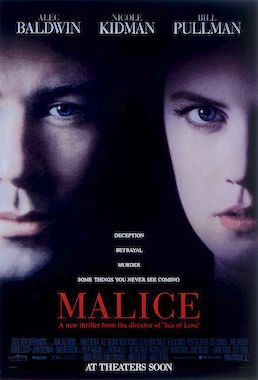
Insomnia File #48: Malice (dir by Harold Becker)


What’s an Insomnia File? You know how some times you just can’t get any sleep and, at about three in the morning, you’ll find yourself watching whatever you can find on cable or Netflix? This feature is all about those insomnia-inspired discoveries!

If you were having trouble getting to sleep last night around 12 midnight, you could have turned over to the Cinemax and watched the 1993 thriller, Malice.  And then you could have spent the next few hours trying to figure out what you just watched.

Seriously, there’s a lot going on in Malice.  The screenplay is credited to Aaron Sorkin and Scott Frank and while it has enough overly arch dialogue and untrustworthy women to plainly identify it as being a product of Sorkin’s imagination, it’s also filled with a mini-series worth of incidents and subplots and random characters.  This is also one of those films where no one can simply answer a question with a “yes” or a “no.”  Instead, it’s one of those movies where everyone gets a monologue, giving the proceedings a rather theatrical feel.  It’s the type of thing that David Mamet could have pulled off.  (Check out The Spanish Prisoner for proof.)  Harold Becker, however, was a far more conventionally-minded director and he often seems to be at a loss with what to do with all of the film’s Sorkinisms (and, to be fair, Frankisms as well).

The film starts out as a thriller, with a serial rapist stalking a college campus and Prof. Andy Safian (Bill Pullman) becoming an unlikely suspect.  Then it turns into a domestic drama as Andy and his wife, Tracy (Nicole Kidman), talk about starting a family.  Then Andy meets a brilliant surgeon named Jed Hill (Alec Baldwin) and the film turns into a roommate from Hell story after Jed moves in with them.  Then it becomes a medical drama after a mistake by Dr. Hill leaves Tracy unable to have children.  Then it returns briefly to the campus rapist story before then turning into a modern-day noir as Andy discovers that Tracy has secrets of her own.  (Whenever one watches a film written by Aaron Sorkin, you can practically hear him whispering, “Women are not to be trusted….” in the background.)  Even as you try to keep up with the plot, you find yourself distracted by all of the cameos.   George C. Scott glowers as Jed’s mentor.  Anne Bancroft acts the Hell out of her role as a drunken con artist.  Peter Gallagher is the lawyer you distrust because he’s Peter Gallagher.  Tobin Bell shows up as a handyman.  Gwynneth Paltrow, in one of her first roles, plays dead convincingly

It’s a big and busy and messy film and it too often mistakes being complicated for being clever.  Bill Pullman is a likable hero but you have to be willing to overlook that the script requires him to do some truly stupid things.  Nicole Kidman is always well-cast as a femme fatale but again, the script often lets her down.

Surprisingly enough, it’s Alec Baldwin who comes out of the film unscathed.  Watching Baldwin in this film, it’s hard to believe that he’s the same actor who has since become something of a bloated self-parody.  Yes, he’s playing an arrogant character (which is pretty much his trademark) but, in Malice, he actually brings a hint of subtlety and wit to his performance.  Baldwin does very little bellowing in the film, despite playing a role that one would think would naturally appeal to all of his bellowing instincts.  Malice is a mess but it’s nice to see the type of actor that Alec Baldwin once was.

Previous Insomnia Files:

  1. Story of Mankind
  2. Stag
  3. Love Is A Gun
  4. Nina Takes A Lover
  5. Black Ice
  6. Frogs For Snakes
  7. Fair Game
  8. From The Hip
  9. Born Killers
  10. Eye For An Eye
  11. Summer Catch
  12. Beyond the Law
  13. Spring Broke
  14. Promise
  15. George Wallace
  16. Kill The Messenger
  17. The Suburbans
  18. Only The Strong
  19. Great Expectations
  20. Casual Sex?
  21. Truth
  22. Insomina
  23. Death Do Us Part
  24. A Star is Born
  25. The Winning Season
  26. Rabbit Run
  27. Remember My Name
  28. The Arrangement
  29. Day of the Animals
  30. Still of The Night
  31. Arsenal
  32. Smooth Talk
  33. The Comedian
  34. The Minus Man
  35. Donnie Brasco
  36. Punchline
  37. Evita
  38. Six: The Mark Unleashed
  39. Disclosure
  40. The Spanish Prisoner
  41. Elektra
  42. Revenge
  43. Legend
  44. Cat Run
  45. The Pyramid
  46. Enter the Ninja
  47. Downhill

The Emmys Suck and Here’s A List of the Major Nominees!


Earlier today, I posted my emmy picks.

Well, here’s what was actually nominated.  As you look over this list, you’ll see that — while Twin Peaks did receive 9 nominations — it was shunned in the major categories.  Kyle MacLachlan was nominated for Best Actor.  Twin Peaks was not nominated for Best Limited Series.

Oh!  But hey — Alec Baldwin got another nomination for doing his part to reelect Donald Trump.

The Emmys suck.

COMEDY

BEST COMEDY SERIES
“Atlanta”
“Barry”
“Black-ish”
“Curb Your Enthusiasm”
“GLOW”
“The Marvelous Mrs. Maisel”
“Silicon Valley”
“The Unbreakable Kimmy Schmidt”

BEST COMEDY ACTOR
Anthony Anderson (“black-ish”
Ted Danson (“The Good Place”
Larry David (“Curb Your Enthusiasm”
Donald Glover (“Atlanta”)
Bill Hader (“Barry”)
William H. Macy (“Shameless”)

BEST COMEDY ACTRESS
Pamela Adlon (“Better Things”)
Rachel Brosnahan (“The Marvelous Mrs. Maisel”)
Allison Janney (“Mom)
Issa Rae (“Insecure”)
Tracee Ellis Ross (“black-ish”)
Lily Tomlin (“Grace & Frankie”)

BEST COMEDY SUPPORTING ACTOR
Louie Anderson (“Baskets”)
Alec Baldwin (“Saturday Night Live”)
Tituss Burgess (“Unbreakable Kimmy Schmidt”)
Tony Shalhoub (“The Marvelous Mrs. Maisel”)
Kenan Thompson (“Saturday Night Live”)
Henry Winkler (“Barry”)

BEST COMEDY SUPPORTING ACTRESS
Zazie Beetz (“Atlanta”)
Alex Borstein (“The Marvelous Mrs. Maisel”)
Aidy Bryant (“Saturday Night Live”)
Betty Gilpin (“GLOW”)
Leslie Jones (“Saturday Night Live”)
Kate McKinnon (“Saturday Night Live”)
Laurie Metcalf (“Roseanne”)
Megan Mullally (“Will & Grace”)

BEST COMEDY GUEST ACTOR
Sterling K. Brown (“Brooklyn Nine-Nine”)
Bryan Cranston (“Curb Your Enthusiasm”)
Donald Glover (“Saturday Night Live”)
Bill Hader (“Saturday Night Live”)
Lin-Manuel Miranda (“Curb Your Enthusiasm”)
Katt Williams (“Atlanta”)

BEST COMEDY GUEST ACTRESS
Tina Fey (“Saturday Night Live”)
Tiffany Haddish (“Saturday Night Live”)
Jane Lynch (“The Marvelous Mrs. Maisel”)
Maya Rudolph (“The Good Place”)
Molly Shannon (“Will & Grace”)
Wanda Sykes (“Black-ish”)

DRAMA

BEST DRAMA SERIES
“The Handmaid’s Tale”
“Game of Thrones”
“This Is Us”
“The Crown”
“The Americans”
“Stranger Things”
“Westworld”

BEST DRAMA ACTOR
Jason Bateman (“Ozark”)
Sterling K. Brown (“This Is Us”)
Ed Harris (“Westworld”)
Matthew Rhys (“The Americans”)
Milo Ventimiglia (“This Is Us”)
Jeffrey Wright (“Westworld”)

BEST DRAMA ACTRESS
Claire Foy (“The Crown”)
Tatiana Maslany (“Orphan Black”)
Elisabeth Moss (“The Handmaid’s Tale”)
Sandra Oh (“Killing Eve”)
Keri Russell (“The Americans”)
Evan Rachel Wood (“Westworld”)

BEST DRAMA SUPPORTING ACTOR
Nikolaj Coster-Waldau (“Game of Thrones”)
Peter Dinklage (“Game of Thrones”)
Joseph Fiennes (“The Handmaid’s Tale”)
David Harbour (“Stranger Things”)
Mandy Patinkin (“Homeland”)
Matt Smith (“The Crown”)

BEST DRAMA SUPPORTING ACTRESS
Alexis Bledel (“The Handmaid’s Tale”)
Millie Bobby Brown (“Stranger Things”)
Ann Dowd (“The Handmaid’s Tale”)
Lena Headey (“Game of Thrones”)
Thandie Newton (“Westworld”)
Yvonne Strahovski (“The Handmaid’s Tale”)

BEST DRAMA GUEST ACTOR
F. Murray Abraham (“Homeland”)
Cameron Britton (“Mindhunter”)
Matthew Goode (“The Crown”)
Ron Cephas Jones (“This Is Us”)
Gerald McRaney (“This Is Us”)
Jimmi Simpson (“Westworld”)

BEST DRAMA GUEST ACTRESS
Viola Davis (“Scandal”)
Kelly Jenrette (The Handmaid’s Tale”)
Cherry Jones (“The Handmaid’s Tale”)
Diana Rigg (“Game of Thrones”)
Cicely Tyson (“How to Get Away With Murder”)
Samira Wiley (“The Handmaid’s Tale”)

MOVIE/MINI

BEST LIMITED SERIES
“The Alienist”
“The Assassination of Gianni Versace: American Crime Story”
“Genius: Picasso”
“Godless”
“Patrick Melrose”

BEST TV MOVIE
“Fahrenheit 451” (HBO)
“Flint” (Lifetime)
“Paterno” (HBO)
“The Tale” (HBO)
“Black Mirror: USS Callister” (Netflix)

BEST MOVIE/MINI ACTOR
Antonio Banderas (“Genius: Picasso”)
Darren Criss (“The Assassination of Gianni Versace: American Crime Story”)
Benedict Cumberbatch (“Patrick Melrose”)
Jeff Daniels (“The Looming Tower”)
John Legend (“Jesus Christ Superstar”)
Jesse Plemons (“USS Callister”)

BEST MOVIE/MINI ACTRESS
Laura Dern (“The Tale”)
Jessica Biel (“The Sinner”)
Michelle Dockery (“Godless”)
Edie Falco (“The Menendez Murders”)
Regina King (“Seven Seconds”)
Sarah Paulson (“American Horror Story: Cult”)

BEST MOVIE/MINI SUPPORTING ACTOR
Jeff Daniels (“Godless”)
Brandon Victor Dixon (“Jesus Christ Superstar”)
John Leguizamo (“Waco”)
Ricky Martin (“The Assassination of Gianni Versace: American Crime Story”)
Edgar Ramirez (“The Assassination of Gianni Versace: American Crime Story”)
Michael Stuhlbarg (“The Looming Tower”)
Finn Wittrock (“The Assassination of Gianni Versace: American Crime Story”)

BEST MOVIE/MINI SUPPORTING ACTRESS
Sara Bareilles (“Jesus Christ Superstar Live In Concert”)
Penelope Cruz (“The Assassination of Gianni Versace: American Crime Story”)
Judith Light (“The Assassination of Gianni Versace: American Crime Story”)
Adina Porter (“American Horror Story: Cult”)
Merritt Wever (“Godless”)
Letitia Wright (“Black Museum” (Black Mirror)

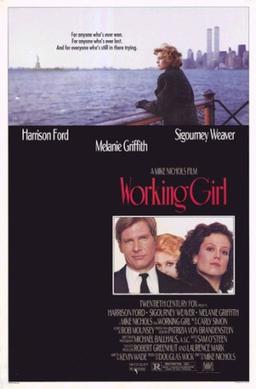
Lisa Reviews An Oscar Nominee: Working Girl (dir by Mike Nichols)


(With the Oscars scheduled to be awarded on March 4th, I have decided to review at least one Oscar-nominated film a day.  These films could be nominees or they could be winners.  They could be from this year’s Oscars or they could be a previous year’s nominee!  We’ll see how things play out.  Today, I take a look at the 1988 best picture nominee, Working Girl!)

Welcome to the 80s!

Yes, Working Girl is definitely a film of its time.  It’s a film that’s obsessed with big things: big dreams, big offices, big money, and big hair.  It’s a movie where the heroes talk about hostile takeovers and where everyone’s dream is to eventually to be an executive on Wall Street.  You know all of those people who claim that The Big Short is the greatest movie ever made?  I can guarantee that the majority of them would totally hate every character in Working Girl.  Working Girl is such a film of the past that it even features Alec Baldwin doing something other than bellowing at people.  In fact, Baldwin’s actually sexy in Working Girl.  It was strange to see him in this film and realize that he was the same actor who currently spends all of his time picking fights on twitter and defending James Toback.

Of course, Alec Baldwin has a relatively small role in Working Girl.  He plays Mick Dugan, the type of blue-collar guy who gives his girlfriend lingerie for her birthday (“I just wish you would get me something that I could wear outside,” she says as she tries it on) and who then proceeds to cheat on her while she’s off at work.  From the minute we first meet Tess McGill (Melanie Griffith), we know that she deserves better than Mick.

Tess is a professional administrative assistant.  She’s just turned 30 but she’s not ready to give up her dreams and settle for a life of fighting off coke-snorting executives and coming home to some guy like Mick.  (Speaking of early performances from infamous actors, one of the coke-snorting executives is played by Kevin Spacey.)  Tess has got a bachelor’s degree in Business.  As she puts it, she has a “mind for business and a bod for sin.”

She’s also got a new boss, an up-and-coming executive named Katharine Parker (Sigourney Weaver).  It turns out that Katherine is 29 years old.  (“I’ve never worked for someone younger than me before,” Tess says as Katherine gives her a condescending smile.)  Katharine encourages Tess to think of her as being a mentor.  If Tess has any ideas for investments, she should feel free to bring them to Katharine.  Of course, when Tess does so, Katharine claims that her bosses shot the idea down.  It’s only after Katharine breaks her leg in a skiing accident and is laid up in Europe that Tess discovers that Katharine has actually been stealing her ideas and not giving her any credit for them.

What is Tess to do?  Well, she does what any of us would do.  She passes herself off as an executive and presents her idea to Jack Trainer (Harrison Ford) herself.  Jack is impressed with the idea but he’s even more impressed with Tess.  Of course, complicating things is that Jack was once in a relationship with Katharine and Katharine still thinks that she’s going to eventually marry Jack.  And, of course, there’s the fact that Tess is lying about actually being an executive…

Working Girl is a frequently amusing film, elevated by performances of Melanie Griffith and, in the role of Tess’s best friend, Joan Cusack.  Add to that, Harrison Ford is remarkable non-grouchy as Jack Trainer and Sigourney Weaver appears to be having the time of her life playing a villain.  Even as I laughed at some of the lines, here was a part of me that wished that the film had a bit more bite.  At times, Working Girl tries too hard to have it both ways, both satirizing and celebrating Wall Street culture.  In the end, the film works best as a piece of wish-fulfillment.  It’s a film that says that not only can you win success and Harrison Ford but you can get your bitchy boss fired too.

Despite being a rather slight (if likable) film, Working Girl was nominated for Best Picture of 1988.  However, it lost to Rain Man.

Playing Catch Up With The Films of 2017: The Boss Baby (dir by Tim McGrath)


I have to admit that The Boss Baby is an animated film that I have mixed feelings about.

Actually, that shouldn’t be surprising.  The Boss Baby is the epitome of the type of film that is disliked by critics but loved by audiences.  It got fairly dismissive reviews but it also made a ton of money and apparently, there’s a sequel in the works.

It’s a product of Dreamworks Animation, which has always basically been Pixar without the edge.  If Pixar films often seem to be about the animators working out their own personal issues through their work, the films from Dreamworks are often distinguished by just how little is actually going on beneath the surface.  If Pixar specializes in crowd pleasers that challenge you to think, Dreamworks specializes in crowd pleasers that invite you to sit back and relax.

(Of course, that’s a generalization.  Dreamworks is responsible for the Shrek films, the majority of which I absolutely love.  At the same time, as much as I love Pixar, I would warn against giving too much thought to anything in the first two Cars films.)

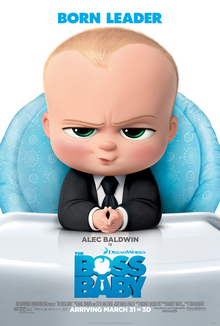
Anyway, The Boss Baby is the story of Ted, a little baby who wears a suit and tie and who sounds just like Alec Baldwin.  Strangely, only his older brother , Tim (Max Bakshi), appears to see anything strange about any of this.  Everyone just dismisses Tim’s concern as a product of Tim being jealous of his baby brother and, to a certain extent, they have a point.  The older children are always jealous of their younger siblings.  (Fortunately, I was the youngest of four so I never had to be jealous of anyone.)  Still, it turns out that Tim is correct about something being strange about Ted, who has actually been sent into the world on a secret mission.  Francis E. Francis (Steve Buscemi) is the CEO of Puppy Corp. and he’s conspiring to make puppies cuter than babies.  The Boss Baby has to stop him and he only has a few days to do so before he forgets how to speak and turns into an ordinary baby.

It’s a surprisingly busy plot and a lot of it feels as if it was ripped off from the Toy Story films.  Instead of talking toys, we’ve got a talking baby.  Just as Toy Story 3 featured a lengthy chase scene and a bitter villain, The Boss Baby features a lengthy chase scene and a bitter villain.  Much as how every Toy Story movie ended with a rumination on what it means to get older and grow up, The Boss Baby ends with a rumination on what it means to get older and grow up.  Many times, The Boss Baby feels like a compilation of scenes and characters lifted from other animated films.

At the same time, the idea of a baby wearing a suit and talking like a New York tough guy is undeniably cute.  I’m not the world’s biggest Alec Baldwin fan but, in this case, it’s perfect casting.  As the film itself makes clear, babies are cute.  This is especially true when they’re animated and you’re not the one who has to change their diapers or clean up after them.

There’s a thin line between keeping an audience happy and pandering and, often, The Boss Baby steps over that line.  It’s a very derivative film, one that never reaches either the comedic or the emotional highs of a good Pixar film.  However, the baby is cute and sometimes, that’s enough.