Review: Volcano (dir. by Mick Jackson)


“Lava? Right here in L.A.?” — Mike Roark

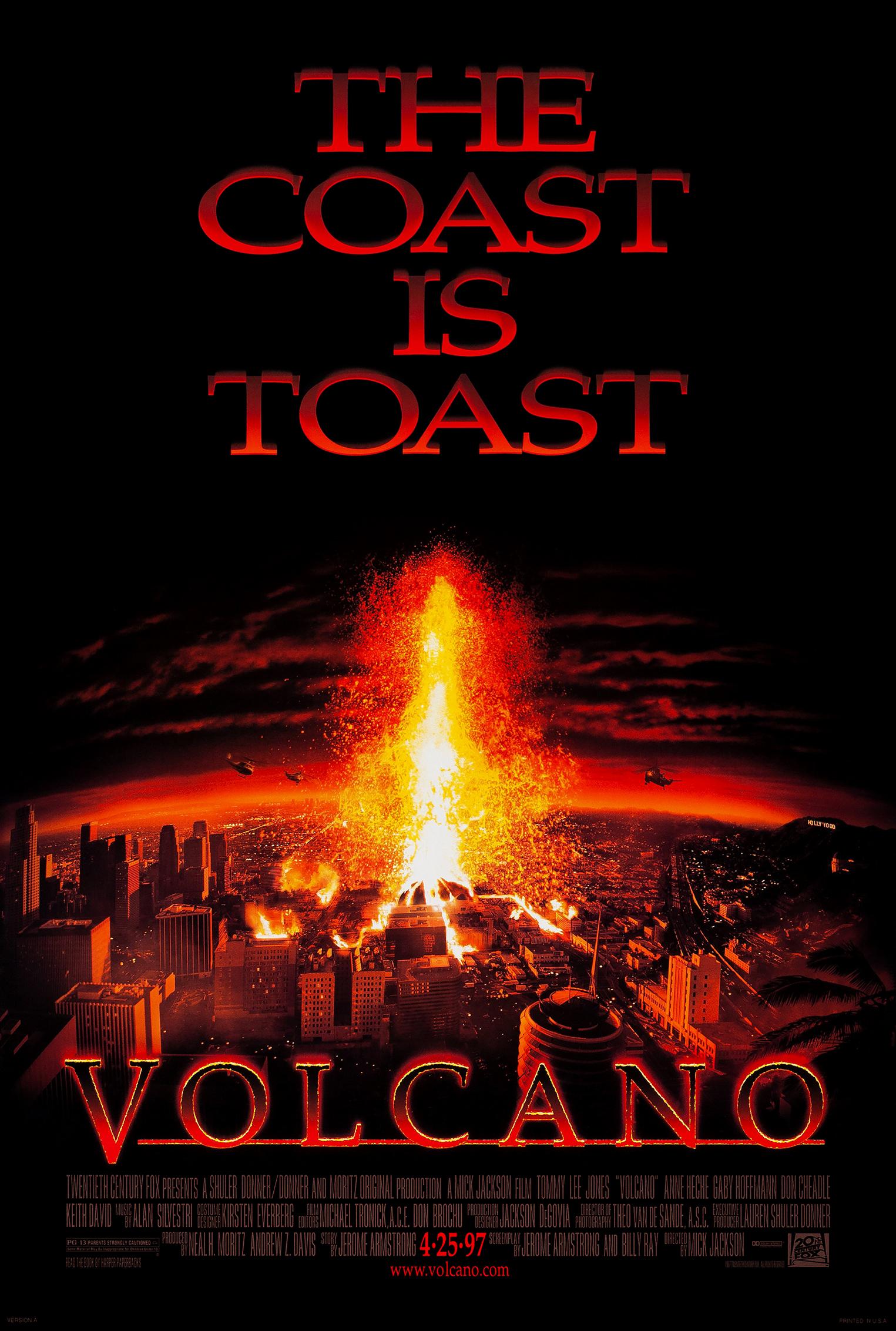
In Volcano, Los Angeles does not just face an earthquake, fire, or some ordinary civic emergency—it finds itself threatened by a river of lava tearing through the heart of the city. Directed by Mick Jackson, the 1997 disaster movie takes a premise that is almost impossible to accept on paper and sells it through speed, scale, and the sheer force of Tommy Lee Jones barking orders at people. A volcano erupting beneath Los Angeles, near the La Brea Tar Pits no less, is not exactly a model of scientific credibility. Still, the film is energetic enough to make its absurdity part of the entertainment.

The setup is wonderfully direct. An earthquake rattles Los Angeles, workers begin dying in underground tunnels, and a strange source of extreme heat is discovered beneath the city. Before long, lava is spilling into the streets, buildings are catching fire, and the city’s Emergency Management director Mike Roark, played by Tommy Lee Jones, has to coordinate an increasingly desperate effort to keep downtown Los Angeles from being wiped out. Anne Heche plays Dr. Amy Barnes, the geologist who realizes that the city is dealing with more than an earthquake or a gas leak. Together, Roark and Barnes become the film’s central problem-solving team: he is the practical, politically frustrated municipal leader, while she is the scientific expert trying to explain the impossible thing happening under everyone’s feet.

What makes Volcano enjoyable is that it does not waste much time pretending to be a subtle character drama. The movie’s main concern is escalation. Every time the heroes think they have contained the problem, the lava finds another way to spread. It comes through the subway. It crashes through pavement. It turns a normal Los Angeles intersection into a landscape from hell. The film understands the simple pleasure of watching ordinary urban infrastructure become a weapon or a liability. A train tunnel, a concrete barrier, construction equipment, storm drains, and even a city block all become parts of an enormous improvised plan to redirect molten rock.

Mick Jackson directs the action with enough urgency that the movie often works even when the science is wobbling badly. The special effects are very much of their era, combining practical fire, miniatures, digital lava, and lots of actors reacting to bright orange light. Some of the CGI has aged about as gracefully as one would expect from 1997, but the physical effects still have impact. The lava itself has a thick, almost muscular quality in the film. It does not just look like glowing liquid; it moves like an unstoppable wall that eats concrete, cars, and people. The images of lava flooding Los Angeles streets remain the reason to watch the movie. They are absurd, but memorably absurd.

The film also benefits from treating the crisis as a citywide emergency rather than simply a personal survival story. Roark is not a scientist, soldier, or superhero. He is basically a city official who has to make decisions under impossible conditions, manage multiple agencies, argue with politicians, and keep people from panicking. Tommy Lee Jones is perfect casting for that role. He has the right mixture of exhaustion, irritation, authority, and reluctant decency. Jones does not play Roark as a polished action hero; he plays him like a man who had plans for a quiet weekend with his daughter and instead ends up trying to stop Los Angeles from being buried under lava. His natural gruffness gives the movie more weight than it might otherwise have.

Anne Heche brings a different energy as Amy Barnes. Her character is often stuck delivering exposition, explaining volcanic activity, underground pressure, and why everyone is probably about to die, but Heche commits to it. She gives Amy enough urgency and intelligence that the scientific dialogue feels less like a lecture and more like another kind of emergency response. The relationship between Roark and Amy is also refreshingly restrained. The movie could have forced a big romantic subplot between them, but it mostly keeps their connection professional. They respect each other because they are both good at their jobs, which is more interesting than a last-minute disaster-movie love story.

The supporting cast is solid as well. Don Cheadle has a memorable role as Emmit Reese, a subway supervisor who becomes one of Roark’s most important allies. Keith David also adds welcome presence as a police lieutenant helping coordinate the response. Gaby Hoffmann plays Roark’s daughter Kelly, and while the daughter-in-peril material is fairly standard, it gives Jones’s character an emotional stake outside the command center. The film occasionally leans hard on familiar disaster-movie formulas, including separated family members, skeptical officials, and civilians making terrible decisions near obviously dangerous lava, but that is part of the package. Volcano is not trying to reinvent the genre. It is trying to make the genre run hot and fast for 104 minutes.

It is hard not to compare Volcano with Dante’s Peak, the other major volcano disaster movie released earlier in 1997. Dante’s Peak at least tries to ground its eruption in recognizable volcanic warning signs, scientific procedure, and the danger of officials ignoring experts until it is too late. Even when it becomes exaggerated, the film wants viewers to feel that its disaster could plausibly grow out of real geological conditions. Volcano, on the other hand, does not have much interest in maintaining that kind of credibility. Its premise is already much wilder: molten lava suddenly emerging beneath one of the largest cities in the United States. Rather than fight that inherent silliness, Mick Jackson’s film leans into it. Where Dante’s Peak aims for science-flavored suspense, Volcano goes for spectacle, turning Los Angeles itself into a giant disaster-movie set piece.

The biggest issue is that the movie never really decides how seriously it wants to take itself. At times, it is a grim urban catastrophe film in which people die in horrifying ways. One scene involving a transit worker trying to rescue another man from the lava is still surprisingly brutal and sad. At other times, Volcano is close to accidental comedy, especially whenever the film attempts to explain its geology with complete confidence. The idea of a full-scale volcanic eruption beneath Los Angeles is already a major stretch, but the movie goes beyond that into a kind of aggressively convenient science. The lava moves where the plot needs it to move, barriers hold until they need to fail, and the city seems able to mobilize massive engineering projects at a speed that would make any real emergency planner laugh.

Still, questioning the realism too closely misses the appeal. Volcano belongs to that specific 1990s era when major studios were throwing big budgets at destruction spectacles with recognizable stars and high-concept premises. The movie is essentially a monster film where the monster is a river of lava rolling through Los Angeles. Instead of a creature smashing buildings, it is molten rock swallowing streets, derailing infrastructure, and forcing ordinary people to run for their lives.

The movie is also unintentionally revealing about late-1990s disaster filmmaking. It has a strong faith in public-service workers, engineers, transit employees, firefighters, police officers, and regular people doing dangerous jobs because somebody has to do them. Roark’s strategy is not to defeat nature through one genius solution. It is to coordinate an enormous group effort, with people hauling concrete barriers, driving equipment, evacuating neighborhoods, and taking risks to buy the city more time. That civic-minded quality gives the film a little more heart than its reputation as a silly lava movie might suggest.

In the end, Volcano is neither a great disaster movie nor a completely disposable one. It is too scientifically goofy to be taken seriously as a realistic thriller, and its dialogue can be very blunt. Yet it has pace, personality, some genuinely effective spectacle, and a reliably entertaining Tommy Lee Jones performance at its center. It is the kind of movie where a man can face a molten river in downtown Los Angeles and somehow make you believe that yelling louder might solve the problem. For viewers in the mood for a big, fiery, unapologetically 1990s popcorn movie, Volcano remains a fun eruption of chaos.
Horror Review: Threads (dir. by Mick Jackson)


“You cannot win a nuclear war! Now just suppose the Russians win this war… What exactly would they be winning? All major centres of population and industry would have been destroyed. The Russians would have conquered a corpse of a country.” — Peace Speaker

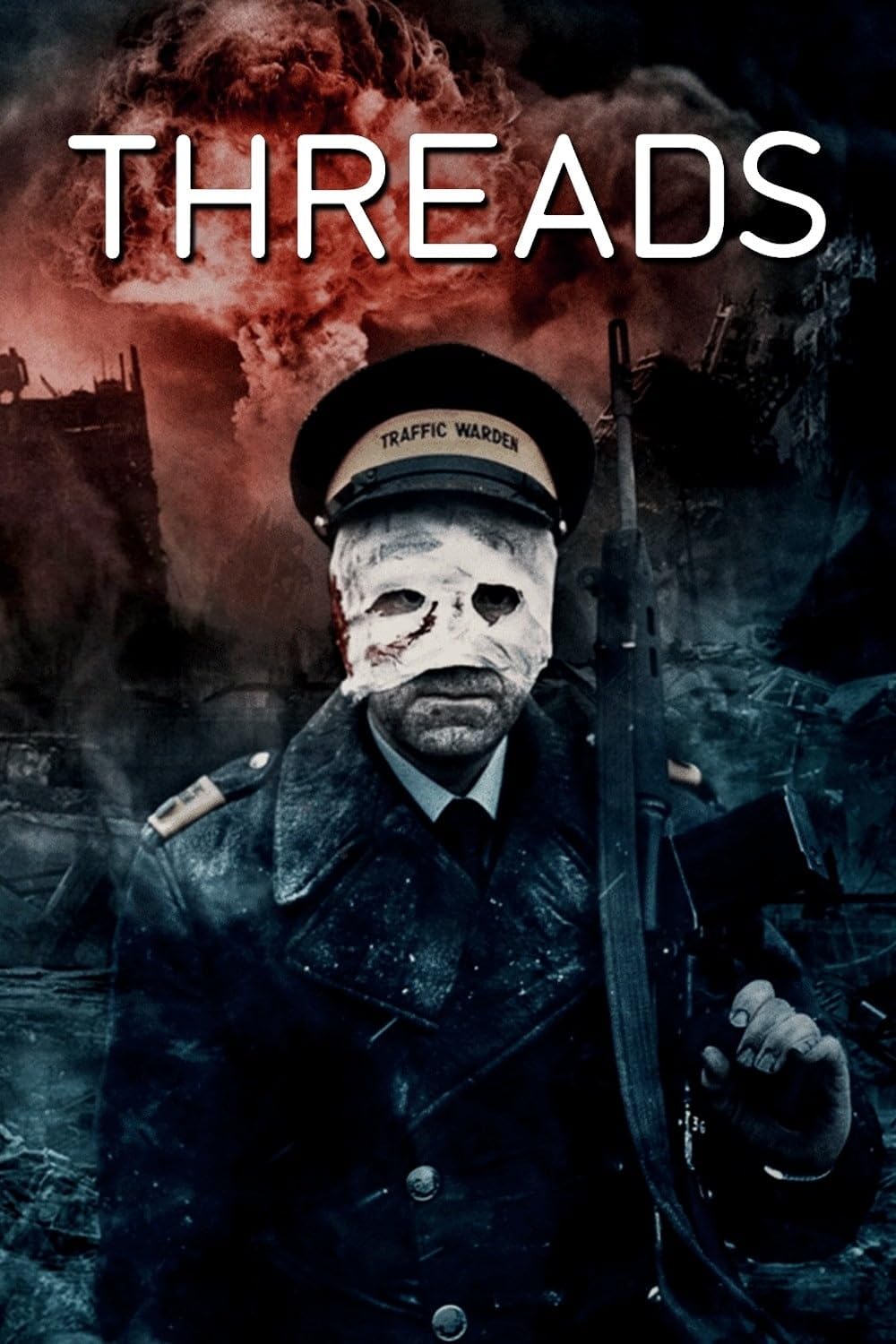
Mick Jackson’s Threads remains one of the most devastating and singular experiences in the history of horror cinema. Made for British television in 1984, it presents the end of the world without spectacle, sentiment, or escape. It is horror pared down to elemental truth—an autopsy of civilization staring directly into the void. What it reveals isn’t an invasion or a curse but something far more intimate and plausible. The apocalypse here is homemade.

The film’s dread begins in familiarity. Sheffield in the early 1980s looks ordinary, even dull. We meet young people planning families, moving furniture, going to work. Everyday life rolls forward in its small, reassuring cycles. But the news keeps playing in the background, and the background starts to change. Political tension builds quietly, buried inside the calm language of diplomacy and deterrence. The repetition of these news bulletins—so mundane at first—becomes unnerving because this is precisely how horror entered real life during the Cold War: through information, not imagination. The end of all things doesn’t announce itself with thunder or sirens. It arrives exactly the way it did in history—through headlines, warnings, updates, and comfortable denial.

What makes Threads so frightening is that it removes the supernatural shield that most horror films rely on. There are no vampires in the night, no zombies clawing at the door, no ancient curses waiting for foolish mortals to uncover. The threat here is invisible, mathematical, already built into the fabric of daily existence. The horror is bureaucratic and omnipresent: wires humming, missiles waiting, politicians rehearsing meaningless statements. Jackson’s approach traps viewers in the reality that haunted the Cold War decades—the understanding that extinction wasn’t a mythic event but a possibility hanging over breakfast tables and factory shifts alike. The monsters were human hands resting on launch buttons.

When the bombs finally fall, the destruction plays out without warning or beauty. The light is so intense it erases faces, streets, even color itself. There’s no music to prepare the viewer, nothing to stylize the moment. It looks less like cinema than an interference signal—white noise flooding the world. And when the noise fades, time stops. The air is grey and silent. This is where every cinematic idea of horror—jump scares, final girls, raging beasts—collapses. What’s left isn’t fiction but aftermath. Humanity’s extinction is not delivered by some otherworldly force. It’s the logical consequence of its own inventions.

In the post-blast silence, Sheffield turns into a landscape of wandering ghosts—ordinary people stripped of memory and meaning. The city becomes an enormous grave where speech and thought slowly decay. Threads spends the rest of its running time documenting how civilization erodes, not in minutes but in years. Crops fail, radiation poisons the newborn, and eventually language itself thins out until the survivors grunt out half-words. Watching it feels like witnessing evolution run backward. And all of it happens without villains or intent. The horror is simply that there’s no one left to blame, only ashes where institutions used to be.

That’s the heart of what makes Threads such a distinct kind of horror film. Its terror isn’t supernatural but logistical. The Cold War, for all its abstract politics, becomes the perfect horror setting because its apocalypse was designed, built, and maintained by bureaucrats and citizens who believed they were preserving peace. The film internalizes that historical anxiety and turns it against the viewer. Watching it now reveals how modern the fear remains—the quiet knowledge that our existence can still be undone by systems we built and barely understand.

This level of realism transforms ordinary images into nightmare language. The gray sky, the still streets, the cracked glass—all look completely real because they are. The production relied on weathered locations, handheld cameras, and non‑actors to erase any cinematic polish. That choice doesn’t just increase believability; it removes emotional distance. The audience isn’t safe behind the screen. It’s the same realism people felt in their bones during the Cold War years when the thought of nuclear annihilation hung above every ordinary activity—from going to school to buying groceries. Threads doesn’t invent horror; it recalls one that was already shared by millions, a psychological climate instead of a plot.

What follows after the detonation is not chaos in the traditional sense, but entropy. The world doesn’t explode; it unravels. Government collapses in slow motion, social order dissolves quietly, and hunger becomes the only law. By the time years have passed and humanity has regressed to primitive barter and suspicion, viewers understand that the true monster in Threads isn’t radiation or politics—it’s the continuity of existence stripped of meaning. The worst possible outcome is survival without civilization. Every journal entry and every voice-over that marks the passage of years feels like the universe keeping record of its own disappearance.

The film’s tone never changes. It stays cold, methodical, and precise, as if narrated by the last bureaucrat left alive. That neutrality becomes unbearable after a while, more suffocating than screaming terror. The dispassionate narration reporting the number of dead or the decline in literacy level is as unnerving as any demonic whisper. It’s the voice of civilization reduced to an algorithm, describing its own end with perfect grammar. That was perhaps the truest evocation of Cold War horror imaginable: the notion that when the world ended, it would sound exactly like a news broadcast.

For all its austerity, there’s also a strange poetry in Jackson’s imagery. The empty fields where ash falls like snow, the distant hum of wind through broken windows, the silhouettes trudging through a gray dusk—they linger like haunted photographs. It feels less like humanity has died than that it has become part of the landscape. The apocalypse in Threads isn’t theatrical fire but the slow bleaching of everything living. In a way, it makes the viewer complicit: this is what our collective imagination produced when fear became policy.

The final scene still carries the force of a psychological detonation. The young woman who has grown up in this ruin gives birth to a stillborn child, the last link of continuity severed. There’s no dialogue, no reaction—just a freeze-frame that seems to suspend time at its bleakest point. For a moment, the world stops existing altogether. Few films end so harshly, with no fade‑out or reflection, because Threads doesn’t need metaphor. It closes the loop on its own warning: the horror never came from outside, it came from within—from the quiet machinery of our collective choices and the weapons we built to enforce them.

Seen today, Threads remains deeply relevant because the foundation of its terror hasn’t disappeared. While new anxieties have replaced the Cold War, the sense of self-made extinction still lingers. Watching it feels like eavesdropping on a civilization rehearsing its own burial. Its power lies in showing that the apocalypse isn’t cinematic fantasy. It’s civic policy, historical precedent, and shared human guilt wrapped into the shape of a mushroom cloud. The film’s real horror is how close it remains.

Threads exposes the simplest and most terrifying truth of horror: that sometimes there is no invader, no contagion, no supernatural imbalance waiting for correction. There is only us. The apocalypse that consumed Sheffield was never distant or mythic. It was the reflection in the mirror, the sound on the news, the thing every citizen of that decade tried not to think about while going about ordinary life. That proximity—horror without distance—makes the film feel eternal. It tells us that the end of the world has always been near, not because of monsters waiting outside the window, but because of everything we’ve built inside it.

INDICTMENT: THE MCMARTIN TRIAL (1995)


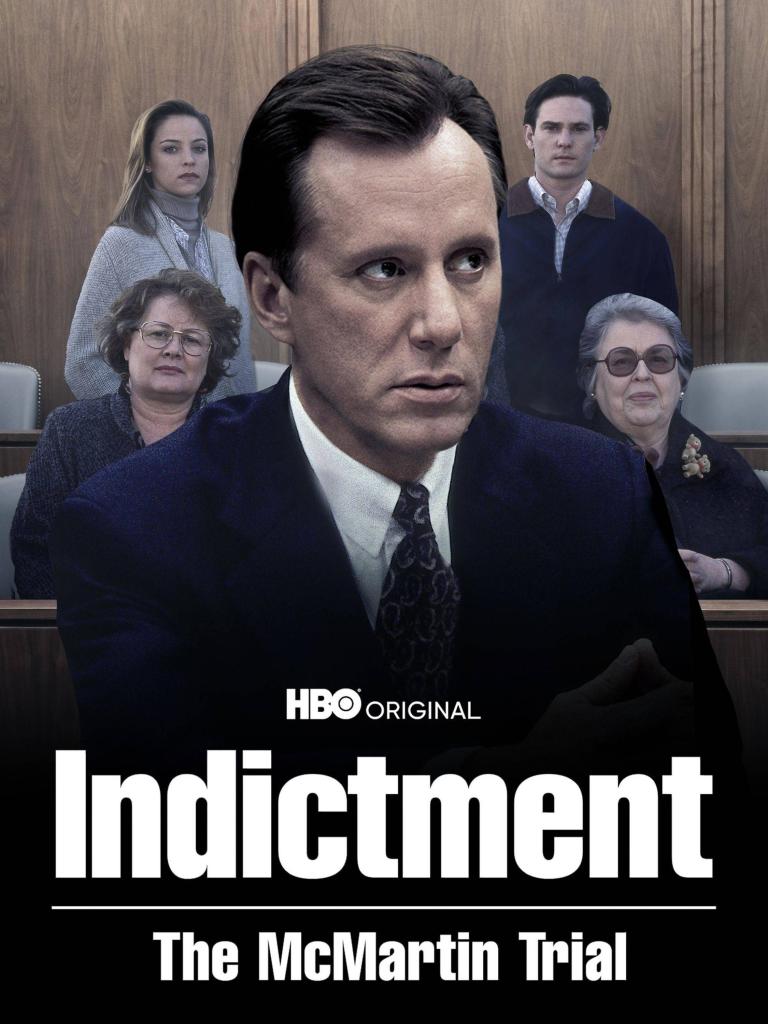
Actor James Woods is great at portraying attorneys. Whether it be as the real life Assistant D.A. Bob Tanenbaum in the excellent T.V. Movie BADGE OF THE ASSASSIN (1985), the crusading hippie Eddie Dodd in TRUE BELIEVER (1989) or the namesake of the excellent TV series SHARK (2006-2008), Woods knows how to play that unique combination of intelligence, shrewdness, and sneakiness to perfection. In 1995, he further applied those skills when he portrayed real life attorney Danny Davis in the HBO movie INDICTMENT: THE MCMARTIN TRIAL. This movie is based on the McMartin day care sexual abuse case that began with horrific allegations in 1983 and ended in 1990 with zero convictions and all charges dropped. During that time, the McMartin Trial became the longest and most expensive series of criminal trials in American history. 

I’ll just go ahead and challenge any person to watch INDICTMENT: THE MCMARTIN TRIAL and not get filled with righteous anger about the complete failure of our judicial system. Add to that failure the complete breakdown of our media to cover events in a fair and impartial fashion with even the smallest shred of objectivity. Does any of this sound familiar? As good as James Woods is in the central role, the star of this film is the true story itself. We watch as various people in positions of authority and power act completely out of self interest, including Davis himself at first, with the pursuit of the truth or justice not even the slightest consideration no matter what the evidence suggests. In actuality, the truth was hidden by the prosecution in pursuit of convictions that never came. The shit that this family was put through with coerced evidence that had no chance of standing up to the slightest bit of scrutiny is disgraceful. It’s one of the most infuriating films I’ve ever seen and it’s just as relevant in 2025 as it was in 1995. The performances are spot on, beginning with Woods’ central performance as Danny Davis and moving on to Shirley Knight in a Golden Globe winning portrayal of Peggy McMartin Buckey, Mercedes Ruehl as prosecutor Lael Rubin, Lolita Davidovich as child therapist Kee MacFarlane, Sada Thompson as matriarch Virginia McMartin, and Henry Thomas as the odd but innocent Ray Buckey. Produced by Oliver Stone and directed by Mick Jackson (THE BODYGUARD, VOLCANO), this button pushing, thought provoking film would win both the Primetime Emmy and Golden Globe awards for best Made for Television Movie in 1995. It’s truly an excellent film and should be seen by any person interested in a fair judicial system or unbiased media.

Film Review: Threads (dir by Mick Jackson)


Yesterday, after I watched the 1984 film, Threads, I sat on my couch for about ten minutes trying to catch my breath and trying to vanquish a sudden wave of anxiety.  I then watched old episodes of The Office and King of the Hill because I desperately needed to laugh.  I needed to get my mind off what I had just seen.

Threads is one of the most depressing films that I’ve ever seen.  It’s also one of the most disturbing.  The film opens a few days before a nuclear attack on the UK and it ends thirteen years later.  We meet two families, the Kemps and the Becketts.  The two families live in Sheffield, the fourth largest city in England.  The Kemps are working class while the Becketts are middle class.  They both seems like nice enough families.  Due to an unplanned pregnant, Ruth Beckett (Karen Meagher) and Jimmy Kemp (Reece Dinsdale) are planning on getting married.

While the two families get to know each other, we hear news stories in the background.  Russia has invaded Iran.  America has said that this act of aggression will not stand.  The world is heading towards war but hardly anyone seems to notice.  People are used to bad news and besides, what can be done about it?  The best assurance that the British government can offer its citizens is a series of out-dated public service announcements.  The Kemps build a makeshift bomb shelter out of a door and a mattress.  The Becketts prepare to head into the basement.  Over the radios and the television, an official voice informs listeners that, in case of a bombing, the safest thing to do is to lie down and be perfectly still.  The Sheffield emergency management board sets up operations in an underground bomb shelter, located underneath the city hall.  The members of the board chain smoke and argue.  No one really seems to know who is in charge.

Though the war starts with America and Russia launching missiles at each other, it’s not long before the UK is hit.  Sheffield is bombed because of its steel and chemical factories and the fact that a nearby airfield would probably be used to house American forces.  When we last see Jimmy, he’s running down a road, trying to get to Ruth.  The city becomes an inferno.  Those who aren’t killed in the fires are left to try to survive the nuclear winter, the radioactive fallout, the looters, and the heavily armed policemen who attempt to maintain order through fear, intimidation, and executions.

Ruth is the first to explore the remains of the city and her exploration becomes a literal walk through Hell.  Charred corpses and dead animals litter the rubble.  A woman sits in a corner, holding a dead baby.  A trip to the infirmary reveals people screaming agony as limbs are amputated with anesthetic.  Angry survivors demands to be given food, just to have tear gas fired at them by scarred policemen.  Every minute of the film, society collapses just a little bit more until soon, Ruth has gone from being a hopeful soon-to-be bride to being just another person desperate for a piece of bread.  Indeed, for me, one of the most disturbing parts of the film was that, after the bomb dropped, Ruth largely stopped speaking.  It makes sense, though.  What’s the point of talking when there’s nothing left to say?

But it doesn’t just end with Sheffield.  We follow Ruth as she leaves the city and then we watch over the next 13 years as the UK is reduced back to medieval levels.  Ruth gives birth to a daughter named Jane (Victoria O’Keefe), who grows up in a world where there is no structure or education.  How bad do things get?  At one point, we see Ruth prostituting herself in exchange for three dead rats, just so she and her daughter can eat.  Jane, for her part, is so poorly educated that she can barely speak in coherent sentences.

And the thing is, it just keeps going.  Every moment when you think that things can’t possible get any worse, Threads keeps going and shows you that things can and do get worse.  It’s a relentlessly grim film, a vision of a future that offers up zero hope.  It’s a thoroughly bleak film, one that’s made all the more powerful by the fact that all of the characters just seem like ordinary people who you could meet on any street corner.  As opposed to something like The Day After, in which the main characters included a doctor and a soldier, the characters in Threads have no idea what’s happening to them or what the future might hold.  (One character talks himself into eating a dead sheep despite the fact that it probably died due to radiation poisoning by pointing out that it’s possible that it died of something else.  The Day After at least had John Lithgow around to explain to everyone how radioactivity works.)  Instead, the Becketts and the Kemps simply have to try to survive day-to-day.  Most of them don’t make it.

Threads left me drained and exhausted.  It’s one of those incredibly powerful and grim films that I’ll probably never be able to bring myself to watch again.