Review: The Last Starfighter (dir. by Nick Castle)


“Alex! Alex! You’re walking away from history! History! Did Chris Columbus say he wanted to stay home? No! What if the Wright Brothers thought that only birds should fly?” — Centauri

The Last Starfighter is one of the most purely enjoyable science-fiction adventures of the 1980s: earnest, inventive, occasionally corny, and driven by the kind of wide-eyed imagination that modern blockbusters too often confuse with sheer scale. Directed by Nick Castle, the 1984 film builds an entire intergalactic adventure around a premise that could have been dismissed as a gimmick: an arcade champion discovers that his favorite game is actually a recruitment test for a real war in space. Instead of treating that premise ironically, the film commits to it wholeheartedly, and that sincerity is ultimately what makes it endure.

Lance Guest stars as Alex Rogan, a teenager living in the Starlite Starbrite trailer park with his mother and younger brother, Louis. Alex is smart, resourceful, and visibly restless. He wants to get out of his small-town surroundings, attend college, and build a better future, but financial strain and family responsibility keep making those ambitions seem less realistic. His one reliable escape comes from an arcade machine outside the local store called The Last Starfighter. Alex plays constantly, eventually achieving a record score that attracts the attention of the game’s mysterious creator, Centauri.

Robert Preston’s Centauri is one of the film’s great pleasures. He is an interstellar recruiter who behaves like a flamboyant carnival salesman, arriving in Alex’s life with a strange vehicle, flashy clothes, a rapid-fire sales pitch, and a proposition that sounds completely insane. Centauri reveals that The Last Starfighter is not merely a video game; it is a test designed to identify young people with the reflexes, tactical instincts, and courage needed to become Gunstar pilots for the Rylan Star League. Alex has not just beaten a difficult arcade game. He has qualified to defend an entire civilization from the Kodan Armada.

That central idea remains the movie’s strongest asset. It transforms a familiar adolescent fantasy into something emotionally resonant. Alex is not gifted with a magical sword, superpowers, or an ancient royal lineage. He is selected because he became exceptionally skilled at something the adults around him would probably regard as a waste of time. His ability to master a video game becomes proof that he has discipline, intelligence, hand-eye coordination, and the ability to make decisions under pressure. For anyone who grew up playing arcade games, it is an irresistible fantasy: the thing you are good at for fun might one day turn out to matter more than anyone realizes.

The film understands, however, that being offered a larger life is not the same as being ready for it. Alex initially reacts to the truth with disbelief and fear rather than instant heroism. He wants to return home. He assumes there has been a mistake. That response helps ground the movie, because Alex is not a prepackaged action hero. He is a teenager who has dreamed of escaping his circumstances but has never seriously considered the sacrifices that escape might require. It is easy to want a more exciting future when it is only an idea. It is harder when that future involves leaving your family, crossing the galaxy, and possibly dying in a war you barely understand.

Lance Guest gives Alex enough insecurity and frustration to make his eventual growth satisfying. Alex can be impatient and occasionally self-centered, but he never comes across as unlikable. He feels trapped, and the film makes that frustration understandable. His conflict is not simply whether he can destroy enemy ships; it is whether he can accept that he deserves a larger destiny than the one he has assumed is available to him. By the time he decides to fight, he has moved beyond wanting adventure as an escape. He has chosen to take responsibility for something greater than himself.

Catherine Mary Stewart is also appealing as Maggie Gordon, Alex’s girlfriend. Maggie is not given an enormous amount to do, but she has more personality than the standard passive romantic interest in many 1980s adventure films. She cares deeply about Alex, yet she also has every reason to be hurt and confused when he suddenly disappears and begins acting strangely. Her scenes with Beta Alex, the android duplicate sent to take Alex’s place on Earth, provide some of the movie’s most amusing moments. Beta Alex looks exactly like him, but his behavior is just strange enough to create an entertaining mixture of comedy and unease.

The Beta Alex subplot is one of the film’s cleverest touches because it allows the story to explore Alex’s absence without simply abandoning the Earthbound characters. Beta Alex is a convincing physical duplicate, but he cannot quite replicate the nuances of being human. His overly literal responses, awkward attempts at social interaction, and bizarre behavior around Maggie make him a memorable comic creation. The device also reinforces the contrast between Alex’s old life and the extraordinary new situation he has been pulled into. While the real Alex is in space facing a galactic conflict, the people at home are left trying to make sense of a version of him that seems familiar but fundamentally wrong.

Robert Preston’s performance gives the entire movie energy whenever Centauri appears. He could easily have become an irritating eccentric, but Preston makes him funny, charismatic, and unexpectedly warm. Centauri sees Alex’s potential before Alex sees it himself. Beneath the fast talking and theatrical mannerisms is a real belief in the people he recruits. He does not merely need another pilot; he genuinely wants Alex to become the person he is capable of being. Preston’s presence adds an old-fashioned show-business charm to a film otherwise built around futuristic hardware and computer-generated spacecraft.

Dan O’Herlihy is equally important as Grig, the reptilian alien navigator assigned to work with Alex. Grig initially seems like the typical stern mentor figure, but he gradually becomes one of the movie’s most likable characters. He has experience, discipline, and a personal history with the war that gives the conflict some added seriousness. His partnership with Alex works because they begin from very different places. Grig is a hardened veteran who has seen the cost of battle, while Alex is an overwhelmed rookie who still wants to go home. As they learn to trust each other, their relationship becomes the heart of the space-adventure material.

The villains are broad but effective. Xur and the Kodan Armada are not psychologically complex antagonists, yet the movie does not need them to be. Their purpose is to represent a threat large enough to force Alex into a defining choice. Xur’s willingness to betray the Star League and sacrifice innocent lives for power makes him an appropriately clear villain for this kind of adventure. The conflict is straightforward: a small group of defenders must stand against an overwhelming enemy force, and Alex must decide whether he will be one of those defenders.

The visual effects are perhaps the most historically fascinating part of The Last Starfighter. The film was an early showcase for computer-generated imagery, using digital effects for its spacecraft, alien environments, and space-combat sequences. At the time, this was revolutionary. Seen today, the visual effects are obviously dated. The ships have a smooth, artificial quality, the textures are basic, and the movement lacks the weight and complexity audiences expect from modern computer animation. Yet there is still something charming about them. They represent a major transitional period in science-fiction filmmaking, when filmmakers were beginning to discover what computers could do for cinematic spectacle.

The early CGI gives the movie a distinctive visual identity rather than simply making it look obsolete. The Gunstar fighter, the Kodan fleet, and the distant alien landscapes have the clean, geometric appearance of an advanced arcade game brought to life. That is fitting for a story about a teenager whose gaming skills translate into real combat ability. The computer-generated imagery may not have the tactile realism of the practical miniature work seen in films such as Star Wars or Blade Runner, but it has an important place in the history of visual effects. The movie was imagining a future that the technology of its day could only partially create, and that ambition remains visible in every digital battle.

The Gunstar itself is a memorable piece of science-fiction design. It looks futuristic while still retaining the simplicity of a classic arcade spaceship, and the cockpit scenes effectively sell the sensation of Alex being thrown into something far beyond his experience. The climactic use of the “Death Blossom” maneuver is especially satisfying because the film treats it as a genuine last resort. It is the cinematic equivalent of unleashing a devastating power-up at the exact moment an arcade game seems impossible to win. The sequence is flashy, uncomplicated, and immensely fun.

What makes The Last Starfighter last is not its special effects alone, nor is it just nostalgia for the arcade era. The movie works because it is fundamentally optimistic. It believes that potential can emerge from unlikely places and that someone who feels ignored, trapped, or underestimated may still possess the ability to do something remarkable. Alex is not chosen because he is already fearless. He becomes heroic because he eventually chooses to act despite being afraid.

The film is not perfect. Its dialogue can be cheesy, some characters are thinly developed, and the dated effects may be difficult for viewers accustomed to modern CGI. Even so, those imperfections are part of its charm. The Last Starfighter is colorful, sincere, and unashamedly enthusiastic about its own premise. It remains a lovable science-fiction adventure because it takes the dreams of a video-game-playing teenager seriously. It asks viewers to imagine that the skill everyone dismisses, the hobby that feels like an escape from ordinary life, might actually be the first sign that they are capable of something far greater.

Live Tweet Alert: Join #FridayNightFlix for Matinee!


As some of our regular readers undoubtedly know, I am involved in a few weekly watch parties.  On Twitter, I host #FridayNightFlix every Friday and I co-host #ScarySocial on Saturday.  On Mastodon, I am one of the five hosts of #MondayActionMovie!  Every week, we get together.  We watch a movie.  We tweet our way through it.

Tonight, at 10 pm et, I will be hosting #FridayNightFlix!  The movie?  1993’s Matinee!

If you want to join us this Friday, just hop onto twitter, find Matinee on Prime, start the movie at 10 pm et, and use the #FridayNightFlix hashtag!  I’ll be there happily tweeting.  It’s a friendly group and welcoming of newcomers so don’t be shy.

See you there!


A Scene That I Love: The Opening of Scarface


Produced by Martin Bregman, directed by Brian De Palma, written by Oliver Stone, and starring Al Pacino, the 1983 remake of Scarface is one of the best-known, most iconic gangster films ever made.  It opened to mixed reviews but it’s gone on to be recognized as a classic.  Everyone can quote the script:  “Say hello to my little friend!” “In this country, you gotta make the money first. Then when you get the money, you get the power. Then when you get the power, then you get the women.”  “Say goodnight to the bad guy!”

Scarface starts with one of my favorite opening scenes of all time.  Powered by Giorgio Moroder’s score, the opening credits of Scarface play out over footage of the real-life Mariel boatlift.  Combined with footage of Fidel Castro ranting that Cuba does not need the Marielitos, this opening gives real-world credibility to everything that follows.  We then segue from the actual boatlift to Al Pacino as Tony Montana, answering questions with that shit-eating grin on his face.

Listen to the interrogation scene carefully and you’ll hear both Charles Durning and Dennis Franz, dubbing the lines of the actors who played the immigration agents.

6 Shots From 6 Films: Special Brian De Palma Edition


4 Or More Shots From 4 Or More Films is just what it says it is, 4 shots from 4 of our favorite films. As opposed to the reviews and recaps that we usually post, 4 Shots From 4 Films lets the visuals do the talking!

Today is the birthday of Brian De Palma and that means that it is time for….

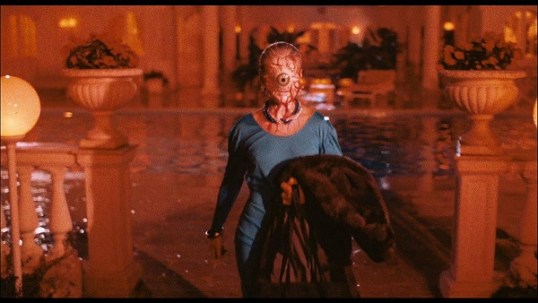
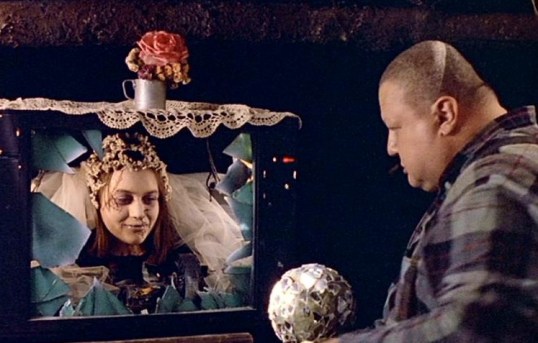
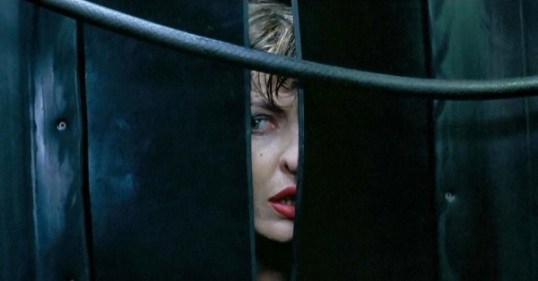
6 Shots From 6 Brian De Palma Films

Phantom of Paradise (1974, dir by Brian De Palma, DP: Larry Pizer)

Carrie (1976, dir by Brian De Palma, DP: Mario Tosi)

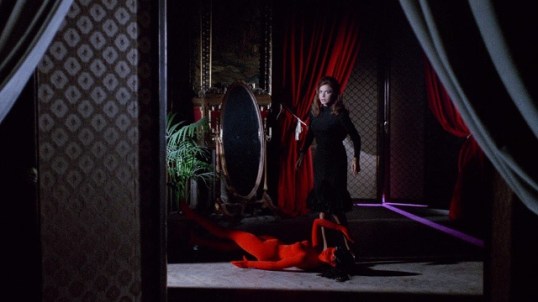
Dressed to Kill (1980, dir by Brian De Palma, DP: Ralf D. Bode)

Blow Out (1981, dir by Brian De Palma, DP: Vilmos Zsigmond)

Scarface (1983, dir by Brian De Palma, DP: John A. Alonzo)

Body Double (1984, dir by Brian De Palma, DP: Stephen Burum)

Late Night Retro Television Review: Hunter 2.1 “Case X”


Welcome to Late Night Retro Television Reviews, a feature where we review some of our favorite and least favorite shows of the past!  On Thursdays, I will be reviewing Hunter, which aired on NBC from 1984 to 1991.  The entire show is currently streaming on Tubi and several other services!

This week, we begin the second season!

Episode 2.1 “Case X”

(Dir by David Soul, originally aired on September 21st, 1985)

Adult-film actresses are turning up dead all over Los Angeles. Hunter and McCall have the case, and it does not take them long to see the pattern. The killer is sleazy photographer Tony Cochran (Leo Rossi), and the women are being supplied to him by former adult star turned talent agent Andrea Burden (Rita Taggart). Knowing who the murderer is and having the evidence to arrest him are two different things. After Tony murders his brother (Sam Anderson) and frames him for the crimes, it looks as if Tony might walk.

So, of course, McCall goes undercover. She joins the fitness club where Andrea works out and looks for girls. She poses in lingerie for Tony. (Just as in the first season, McCall going undercover seems to largely mean McCall wearing less clothes than usual.) And when Tony kidnaps her, it is up to Hunter to rescue her and fill Tony with lead.

In other words, the second season of Hunter opens in a style familiar to anyone who watched the first. Hunter is still a shoot-first rebel. McCall is still his continually in-peril partner. The bad guy still underestimates this violent duo. While Hunter and McCall solve the crimes and kill the villains, Bernie Terwilliger keeps trying to write them up for every infraction imaginable. In this episode, Terwilliger counts seven violations of police policy on the part of Hunter and McCall. I counted a bit more but maybe Terwilliger was trying to be charitable.

The one real change between seasons is a new commanding officer. John Amos has been replaced by Bruce Davison. As Captain Wyler, Davison wears a three-piece suit, never has a hair out of place, and bristles when Hunter refuses to follow orders. That said, Wyler congratulates Hunter at the end of the episode and tells Terwilliger to back off the ethics investigation. For once, Hunter has a boss who is not actively trying to get him kicked off the force.

The episode itself is pretty predictable. As soon as Leo Rossi’s name appeared in the guest credits, it was easy to guess who the murderer would turn out to be. Hunter is not a show about complex mysteries or shocking twists. It is a show about the chemistry between Fred Dryer and Stepfanie Kramer, and about the promise that the bad guys will be punished. This episode delivered on both.

Retro Television Review: Darke of the Night 1.1 “Who’s Been Sitting In My Chair?”


Welcome to Retro Television Reviews, a feature where we review some of our favorite and least favorite shows of the past!  This Thursday, I will be reviewing Darke of the Night, which aired its only episode on the DuMont Network in 1955.  The show can be found on YouTube!

This week’s pilot originally aired as a part of the Studio 57 anthology show.

Episode 1.1 “Who’s Been Sitting In My Chair?”

(Dir by David Butler, originally aired on September 10th, 1955)

Johnny Darke (Jack Carson) is the hippest and coolest DJ in all of New York City .… or, at least, he’s as hip and cool as anyone could have been in 1955. All through the night, he spins records and talks to “the ghosts” who are listening. His station manager (Joseph Kearns) tells him that his sponsor doesn’t like it when Johnny talks about ghosts, but no one tells Johnny Darke what to do.

Johnny knows that a woman has been entering his apartment while he’s at the studio, but he doesn’t know why. (What I don’t know is why Johnny doesn’t just lock his door.) Johnny suspects that the woman is Margaret Canady (Jocelyn Brando), who lived in the apartment before Johnny moved in. Margaret’s boyfriend, Vincent Marsh (H.M. Wynant), is on death row for murder, but as Johnny learns about the case, he sees it as a story about two people who love each other as opposed to a woman who fell in love with a killer.

When Vincent breaks out of prison, he steals a guard’s gun and tells the guard that he’s going to use it to kill Margaret. (That was nice of him.) The police come down to the radio station and ask Johnny if he knows where to find Margaret. Johnny says that Margaret is probably at his apartment. After the police leave (and, strangely, do not immediately head over to Johnny’s apartment), Johnny calls his place and Margaret answers the phone. Apparently, Margaret’s not very good at secretly breaking into places.

When Johnny hears Vincent arrive over the phone, he hops over to his microphone and gives a cryptic message to “the ghost in the big brown chair” that the ghost who has just arrived is not in love with her. Then Johnny goes to his apartment and talks Vincent down.

This was a pilot for a series that would have featured Johnny Darke getting involved in the lives of his listeners. Jack Carson is likable as Johnny, which almost makes up for the fact that the story itself makes absolutely no sense. Why doesn’t Johnny just lock up his apartment before he heads to work? The implication is that Margaret is sneaking into the apartment to wait for Vincent to return, but there’s also a scene where it’s revealed that she’s secretly living with the building’s landlady. That scene is never followed up on. As I already mentioned, the biggest plot hole is that the police don’t immediately head over to Johnny’s apartment when they hear that Margaret is there. If they’re so determined to catch Vincent and they know that Vincent is planning on killing Margaret, why does it take them so long to actually go to the apartment? It seems like that should have been their priority.

Interestingly enough, the pilot ends with Jack Carson stepping out of character and offering up some statistics on the value of records purchased in 1957 ($4,000,000 worth) and the number of radio stations in the country. Carson explains that DJs are everywhere and every DJ has a million stories that could be adapted for Darke of the Night. He then brings on two actual DJs, Peter Potter and Al Jarvis. Both Potter and Jarvis endorse the idea of a weekly television series about a DJ.

It’s odd but, in its way, kind of touching. Jack Carson just seems so earnest and sincere about his desire to star as a radio DJ! Unfortunately, it didn’t happen for him. The pilot aired as part of the Studio 57 anthology series and that was that. Carson may not have gotten to play a DJ on a weekly basis, but two years later he co-starred in Cat on a Hot Tin Roof with Paul Newman and Elizabeth Taylor. Carson passed away in 1963 at the far too young age of 52, but he’ll live forever wherever classic movies are appreciated.

Review: The Blood of Dawnwalker


“Lord, please grant me the strength to resist this damn thirst… Grant me the will to keep the beast at bay.” — Coen

The Blood of Dawnwalker is a strong first showing from Rebel Wolves: a dark-fantasy action RPG that uses its vampire premise as the foundation for combat, exploration, role-playing, and player choice rather than as a simple visual hook. It is moody, bloody, occasionally demanding, and clearly made by a team that understands why players enjoy wandering through a richly imagined fantasy world and stumbling into trouble on their own terms.

Rebel Wolves comes into this project with a pedigree that is hard to ignore. The Polish studio includes several former top creatives from CD Projekt Red, the developer best known for The Witcher series and Cyberpunk 2077. Co-founder and game director Konrad Tomaszkiewicz directed The Witcher 3: Wild Hunt and held senior production and directing roles on Cyberpunk 2077, while other key Rebel Wolves figures—including narrative director Jakub Szamałek, art director Bartłomiej Gaweł, design director Daniel Sadowski, and creative director Mateusz Tomaszkiewicz—also have experience across The Witcher and Cyberpunk projects. That background does not mean The Blood of Dawnwalker is simply another Witcher, but you can absolutely see the shared interest in morally messy quests, local legends, dense world-building, and player-led approaches to problems.

The setting is one of the game’s greatest strengths. The Blood of Dawnwalker takes place in the fictional Vale Sangora, a dark medieval valley positioned in a 14th-century Europe devastated by plague, fear, political collapse, and religious unease. It is the kind of setting where villagers whisper about curses, old forests feel genuinely hostile, abandoned ruins suggest much older civilizations beneath the current order, and every noble house or holy institution seems to be concealing something ugly. Rather than relying only on the usual medieval-fantasy shorthand of castles, taverns, and bandits, Rebel Wolves grounds the setting in a more distinctive historical and cultural blend.

The world-building draws on local myths, folklore, legends, archetypes, and archaeological discoveries associated with Southeastern and Central Europe, especially Romania, Hungary, and Poland. Vale Sangora is not meant to be a direct recreation of any one real place, but the regional influence gives it a different texture from fantasy worlds modeled primarily on England, France, or generic “medieval Europe.” The atmosphere leans into Carpathian landscapes, mountain settlements, burial traditions, old sacred sites, folk monsters, regional superstition, and the tension between Christian authority and older beliefs that never fully disappeared. It gives the game a sense of place. You are not just moving through another interchangeable fantasy map; you are exploring a region where history, religion, folklore, and the supernatural seem permanently tangled together.

At the center of everything is Coen, a young man who exists between two states. By day, he is human. By night, he transforms into a vampire-like being called a Dawnwalker. That central duality is not merely part of the story or a convenient excuse for some special moves. It changes how you play the game, how you navigate locations, what abilities you have access to, and how you approach encounters. The day-and-night structure is easily the best thing about The Blood of Dawnwalker, because it keeps the game from becoming mechanically repetitive.

During the day, Coen plays more like a tough but vulnerable medieval warrior with access to unsettling occult magic. Human combat revolves around swordplay, and Rebel Wolves has put a surprising amount of thought into making that combat flexible for different kinds of players. If you prefer a simpler action-RPG setup, the game includes Omniattack and Omniblock options, allowing you to focus on timing, movement, and general survival without constantly managing directional inputs. If you want something more technical, you can use directional attacks and directional blocks, choosing which side to strike or defend from while reading an enemy’s position and responses.

That more hands-on combat style can make a fight feel like a proper duel instead of a button-mashing brawl. Blocking an incoming strike from the correct direction, parrying at the right moment, and following with a counterattack gives human Coen a satisfying grounded quality. He is capable, but he is not invincible. You need to pay attention to spacing, defense, stamina, and the number of enemies surrounding you. In a genre full of heroes who can flatten entire rooms without slowing down, there is something refreshing about the daytime game making you respect a sword fight.

Coen’s daytime magic adds another useful layer. His human abilities are tied to runes carved into his skin, turning scars into magical tools. Because his vampiric transformation heals those marks at night, this style of magic is specifically associated with his daylight form. That is a clever bit of design because it prevents daytime Coen from feeling like the lesser, restricted version of the protagonist. He has his own advantages and his own way of interacting with the world. Some magic is built for combat, but the more interesting powers support investigation and exploration. Compel Soul, for example, allows Coen to communicate with the dead, opening up possibilities for gathering information, investigating mysteries, and finding answers that living characters may not be willing or able to provide.

The nighttime half of the game delivers the vampire power fantasy, but it does so in a way that changes the rhythm rather than simply making Coen stronger. Once darkness falls, Coen gains vampiric abilities that favor speed, aggression, stealth, and vertical movement. His claws become central to combat, offering a more brutal and immediate alternative to the controlled, weapon-based swordplay of the day. Nighttime fights can feel much more predatory. You are quicker, more mobile, and better equipped to overwhelm isolated enemies, but there is also a constant undertone of hunger and self-control.

Blood is not just a healing item with gothic packaging. Feeding is tied to Coen’s condition, and managing bloodlust is part of the vampire experience. You can draw blood from different sources, and the choice can matter both mechanically and morally. Feeding may help sustain Coen, but it also makes the player consider what kind of person—or creature—he is becoming. If his hunger becomes too severe, he can become weakened or lose control, creating the possibility of consequences beyond a routine game-over screen. It is a more interesting use of vampirism than simply giving the player red eyes and a damage boost.

The other major nighttime advantage is movement. Coen can use Shadowstep, a short-distance teleporting ability that opens up fast escapes, surprise attacks, rooftop routes, stealthier paths, and alternate ways through guarded spaces. This is where the game’s two identities really begin to click. A location that seems straightforward during the day may reveal a completely different set of opportunities after dark. Walls, balconies, broken towers, rooftops, scaffolding, cliffs, and high windows become potential routes instead of mere scenery. At night, the game lets you think less like a knight walking through a gate and more like a supernatural predator looking for the path no one else can use.

The RPG side of The Blood of Dawnwalker is equally important, because the game does not treat dialogue as a brief pause between fights. Conversations can shape how characters view Coen, what information he receives, which opportunities become available, and how a given conflict develops. Your choices determine whether Coen comes across as diplomatic, threatening, manipulative, compassionate, secretive, ruthless, or simply desperate. That gives conversations a genuine role-playing function. You are not only picking the response that earns a reward or advances a marker; you are deciding how Coen handles people in a world that already fears monsters and has plenty of reason not to trust strangers.

Those choices carry beyond individual scenes. A side quest can be solved through violence, investigation, negotiation, stealth, supernatural ability, or a decision to walk away and deal with something else. The same applies to major story missions. A locked fortress, guarded estate, religious site, village dispute, or monster problem might offer more than one entry point and more than one resolution. You may learn useful information in a conversation, use your daylight magic to uncover a clue, wait for nightfall to find a new route, take the direct combat approach, or commit to a choice that changes the fate of a character or local community. The game’s best role-playing ideas come from allowing those systems to overlap rather than separating “dialogue choices,” “combat,” and “exploration” into isolated parts of the experience.

That design philosophy extends to quests and the larger structure of the game. The Blood of Dawnwalker uses a 30-day-and-night timeframe, but it does not appear to be a harsh real-time countdown that forces players to sprint through the main story. Time is treated as a resource. It advances when Coen commits to important actions, missions, or major choices, rather than simply because the player spent too long exploring an abandoned mine or checking every corner of a village. Before spending time, the game indicates the cost, letting players decide whether an opportunity is worth pursuing.

This makes the game’s narrative mechanics more meaningful than the usual good-versus-evil decision wheel. You cannot necessarily see every story thread, solve every problem, help every character, or complete every quest in one run. The order in which you pursue objectives matters, conversations can send situations in different directions, and choices made during side content can influence the broader experience. A main quest may be approached differently depending on what you learned elsewhere, who you allied with, which characters remain available, and whether you arrive as human Coen by day or vampire Coen by night.

The game’s multiple endings are a natural consequence of that structure. Rather than feeling like an arbitrary final selection screen, different endings grow out of the cumulative choices you make throughout the adventure: how you resolve key quests, how you handle relationships, what paths you prioritize, what consequences you accept, and how you use—or resist—Coen’s vampiric nature. That makes replay value feel built into the narrative rather than added afterward. A second playthrough is not just an excuse to choose a different dialogue line at the end; it is a chance to take alternate quest routes, make different alliances, pursue missed story threads, try new solutions, and see how those decisions reshape the road toward a different conclusion.

The biggest compliment I can give The Blood of Dawnwalker is that its mechanics and setting reinforce each other. The 14th-century landscape of Vale Sangora is not just a place to fight monsters; it is a setting built to make monsters feel plausible. In a world shaped by plague, rural isolation, ancient ruins, fragile faith, folklore, and social desperation, stories of vampires, curses, spirits, and hidden things in the dark do not feel like random fantasy decoration. They feel like natural extensions of how people might interpret a brutal and frightening world.

There are still a few potential sticking points. Players looking for a breezy, simple action game may find the more deliberate sword mechanics demanding, especially if they opt into directional offense and defense. The time-management framework may also create anxiety for people who dislike the idea of missing quests or content. The bloodlust system will depend heavily on balance: it needs to create real tension without becoming repetitive busywork. Still, those are the risks of a game trying to do something more ambitious than handing the player another enormous map full of icons.

Overall, The Blood of Dawnwalker succeeds because it has a real point of view. Rebel Wolves has taken a familiar fantasy subject—vampires—and tied it to an unusually specific cultural and historical atmosphere, then built its RPG systems around the tension between humanity and monstrosity. Daytime Coen is a sword-wielding investigator marked by ritual magic; nighttime Coen is a fast, lethal hunter with new routes through the world and dangerous urges to manage. Add in consequential conversations, flexible quest solutions, branching story paths, and multiple endings, and the game becomes much more than a vampire action RPG. It is a role-playing experience designed to make each player’s version of Coen—and each journey through Vale Sangora—feel meaningfully different.