One of the first movies I chose to write about when I started contributing to this site was SILENT RAGE. It was the Chuck Norris movie I watched most as a kid, because they played it all the time on one of our local TV stations. I thought it was pretty scary at the time as Chuck took on the type of indestructible killer who could have walked straight off of a horror film set. I think this opening scene sets the stage pretty well on why I liked the film. It’s violent, Chuck is badass, and Stephen Furst even provides a little bit of sweet and silly humor. Enjoy!
Horror Book Review: First Blood by David Morrell

First published in 1972, David Morrell’s First Blood tells the story of two men who go to war in what was then contemporary Kentucky.
Police Chief Wilfred Teasle runs Madison, Kentucky. He’s a Korean War veteran trusted with keeping his town quiet. When he spots a young, long-haired drifter, he harasses him and tries to run him out. When the drifter keeps coming back, Teasle arrests him. What Teasle doesn’t understand is that the young man is Rambo, a Vietnam veteran and former Green Beret still carrying the PTSD from his time as a POW. Triggered by a claustrophobic cell and the deputies putting hands on him, Rambo escapes into the mountains. One deputy dies in the station. Three more die on the first pursuit. Teasle becomes obsessed with taking him down even as his own injuries mount. Rambo knows he could slip the net and keep walking. The fight feels too good to leave. Many more people die before the novel reaches its tragic conclusion.
First Blood the novel is not a novelization of the film it later inspired. Rambo is not the misunderstood victim of the movie. He’s a mentally unstable man who kills numerous deputies and National Guardsmen. Teasle is not the snarling cartoon sheriff of the movie. He’s a stubborn, decorated chief who develops a strange respect for Rambo and feels a kinship because both of them served overseas. The difference is that Teasle was welcomed home. Society treats Rambo as a pariah, the walking symbol of an unpopular war.
Before we get into why this belongs in the horror column, First Blood is a very well-written novel. The chapters cut back and forth between Rambo and Teasle; both men are vividly drawn. The ending is dark and feels earned. Readers who expect the Stallone movie on paper will be surprised, and hopefully pleased.
As for the horror: you can read First Blood as Vietnam brought home. The same way Last House on the Left dragged overseas atrocity onto American porches, Morrell imagines the war fought in Kentucky hills. Rambo uses what the jungle taught him. Teasle becomes the stand-in for generals who cannot understand the enemy they created. The deputies and Guardsmen Rambo kills become the local version of the bodies left in the trees. Rambo is a monster. Like Frankenstein’s creature, he was shaped by the arrogance and carelessness of the people who made him.
No wonder Teasle feels sorry for him in the end.
October True Crime: Suitcase Killer: The Melanie McGuire Story (dir by Nicole L. Thompson)
 In 2004, the body of New Jersey resident Bill McGuire washed up in Virginia. He had been dismembered and his remains had been placed in three different suitcases, all of which someone apparently tried to dispose of by tossing them into the Chesapeake Bay. The subsequent investigation centered on Bill’s wife, Melanie.
The police theorized that Melanie, a nurse at a fertility clinic, was having an affair with a doctor and murdered Bill so that she could end her marriage without losing custody of her kids. Melanie claimed that Bill, a Navy veteran who was a computer programmer at the time of his death, was chronically unfaithful and abusive. She also claimed that he had huge gambling debts and that he had probably been murdered by the mob.
Melanie McGuire went on trial in 2007. At that time, I wasn’t quite the Court TV fiend that I would later become, but I can still remember hearing about the case. The media dubbed Melanie “the Suitcase Killer” and reported on all of the strange things that Melanie had done in the days leading up to Bill’s death. For her part, Melanie had an excuse for every bit of evidence presented against her. For instance, when she was accused of moving Bill’s car, she claimed that it was just a prank that she enjoyed playing on him. When it was pointed out that she had taken a sudden trip to Delaware after the murder, she said she was taking advantage of Delaware’s lack of a sales tax. (That actually makes sense to me. Taxation is theft!)
Did Melanie murder her husband? When it comes to questions like that, it’s always good to remember the wisdom of Occam’s razor. Which possibility makes more sense? Was Bill shot and dismembered by someone who not only had the motive and the opportunity to kill him, but who had also recently traveled to Pennsylvania to buy a gun? Or was Bill murdered by a mysterious gambling syndicate that he had apparently never mentioned to anyone in the past? Personally, I thought Melanie McGuire was obviously guilty. The jury agreed.
In 2022’s Suitcase Killer: The Melanie McGuire Story, Lifetime tells the story of the ill-fated McGuire marriage. Candice King plays Melanie. Michael Roark plays Bill. Wendie Malick appears as the prosecutor who made the case against Melanie. As is typical of Lifetime true-crime films, it attempts to give equal credence to both sides. As such, Roark plays Bill as a temperamental philanderer, while Candice King plays Melanie as someone who is a bit too quick to smile whenever her story is challenged. Of course, by showing both sides, the film actually reminds us that Melanie’s story never made any sense at all.
If you’re a fan of true crime, the film will hold your interest. That said, it’s also a Lifetime film and, as such, some of the more gruesome details are downplayed. We see a hand in one of the suitcases, but that’s about it. We’re left to imagine what else was stuffed in that Kenneth Cole luggage. Myself, I was left to wonder why you would waste not only one but three suitcases on something like this. That’s another reason why I don’t buy Melanie’s excuse that the Mafia did it. The Mafia would have found a much more efficient way of getting rid of the body.
In the end, the main reason to watch this movie is Wendie Malick’s performance as the prosecutor who is determined not only to get a conviction but to have fun doing it. Seriously, Malick deserved her own spin-off.
As for the real Melanie McGuire, she is currently in prison, but she will not be eligible for parole until she is about 101.
Horror Film Review: Ogroff (dir by Norbert Moutier)

Who is Ogroff, the Mad Mutilator?
Ogroff (Norbert Moutier) is a masked man who lives in a shack in the French countryside. The walls of the shack are covered with pictures of naked women and Charles de Gaulle. In a dresser drawer, he keeps newspaper clippings about his time as a hero of the French Resistance and about how he refuses to talk about the prisoners he tortured and killed during the war. Outside the shack, the ground is littered with body parts. Ogroff especially seems to have a bad habit of leaving hands all over the place. A few limbs get buried in the garden. A few others get eaten for dinner. Ogroff leaves every morning with his trusty hatchet.
Ogroff is established as having gone AWOL from the army. Now he apparently spends all of his time waiting for people to park on the side of the road so that he can attack and kill them. This happens quite frequently throughout 1983’s Ogroff. Despite a newspaper headline about all the people who have vanished in the wilderness, people still keep hanging out there, and Ogroff keeps attacking them. In one of the film’s more over-the-top moments, Ogroff fights a chainsaw-wielding lumberjack. Ogroff only has a tiny hatchet, but he makes it work.
The film takes a turn about 40 minutes in. That is when yet another killer decides to invade Ogroff’s forest and ends up getting decapitated by a potential victim. Ogroff appears to fall in love. Romance will have to wait, however, until after the zombie attack. “Les morts-vivants arrivent! Vite! Vite!” shouts Ogroff’s girlfriend. And then, to top it all off, Euro-horror regular Howard Vernon shows up for an enjoyably demented cameo.
Norbert Moutier not only starred as Ogroff but also directed the film. At the time, Moutier owned a video store and decided to make a film of his own to sell to his customers. The film was shot on Super 8 and quickly developed a cult following. The gore is surprisingly realistic, and the film moves at a kinetic, almost frantic pace. Beyond that, it plays out like a filmed nightmare. The forest is dark and full of ominous (and, even more importantly, natural) shadows. Many of the chase scenes take place while the sun is either setting or rising in the background, bringing to mind the classic final shot of the original The Texas Chain Saw Massacre. There is little dialogue, but the droning musical score (which, at its best, is reminiscent of Goblin) creates an atmosphere of relentless danger and horror. If the first 40 minutes perfectly capture the fear most people feel when they find themselves isolated in an unknown landscape, the second half plays like a deliriously deranged homage to the Italian zombie films that were all the rage in Europe in the early ’80s. Much like Tobe Hooper, George Romero, Jess Franco, and Jean Rollin, Norbert Moutier appears to have had an instinctual understanding of how to get the most from a low budget.
Ogroff may be a pastiche of American horror films, but it plays through the lens of French culture. Ogroff’s shack is decorated with pictures of French cultural icons. The aforementioned photograph of de Gaulle not only establishes Ogroff as a soldier but also identifies him as a man from a different era in French history. While American slasher films feature victims who head into the woods to have sex and smoke weed, Ogroff features victims who sneak into the woods to play chess. Much like Rollin’s The Grapes of Death, Ogroff shows that horror is universal without losing its own cultural identity.
Norbert Moutier passed away in 2020, at the age of 78. Ogroff, however, will live forever.
2 Horror Books For The Weekend (10/3/26)
If you’re looking to get into spirit of Halloween with the help of zombies, allow me to make two reading recommendations.
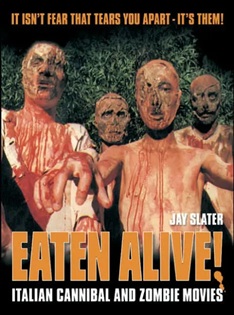
First published in 2006 and edited by Jay Slater, Eaten Alive is a book that has played a huge role in developing my own horror sensibility. Whenever anyone asks me how I managed to learn so much about Italian horror, this book is one of the sources that I always cite. The film features reviews of films that are both well-known (like Fulci’s Zombi 2 and The Beyond trilogy) and obscure (like 1979’s I’m A Zombie, You’re A Zombie, She’s A Zombie). The book features a wonderful list of guest reviewers. Lloyd Kaufman writes about Cannibal Holocaust. Ramsey Campbell demolishes Nightmare City. Giovanni Lombardo Radice both reviews a cannibal movie and is also interviewed throughout the book. Catriona MacColl discussed what it was like to work with the notorious Lucio Fulci. Ian McCullough, star of Zombi 2 and Zombie Holocaust, is also interviewed and he comes across as being just as eccentric and British as one could hope for. This is the book that really introduced me to filmmakers like Lucio Fulci, Jess Franco, Ruggero Deodato, and Michele Soavi. I would not be the horror fan that I am today if I hadn’t stumbled across it at Recycled Books all those years ago.
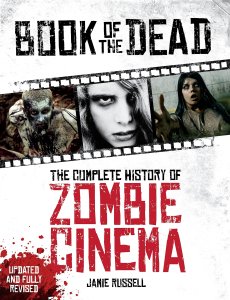
Jamie Russell’s Book of the Dead is another book that definitely helped to shape me as both a reviewer and a horror fan. The book takes an in-depth look at the development of the horror genre, from the cheap B-movies of the 30s to Romero to the Italian zombie boom to the rise of SOV filmmakers and Resident Evil. Along with providing a fascinating history, this book also includes a comprehensive appendix that lists and reviews hundreds of zombie films. If you’re searching for a previously unseen zombie film to watch, this book is essential.
Happy reading!
“They Awakened An Ancient Being in the Sea”, Review by Case Wright
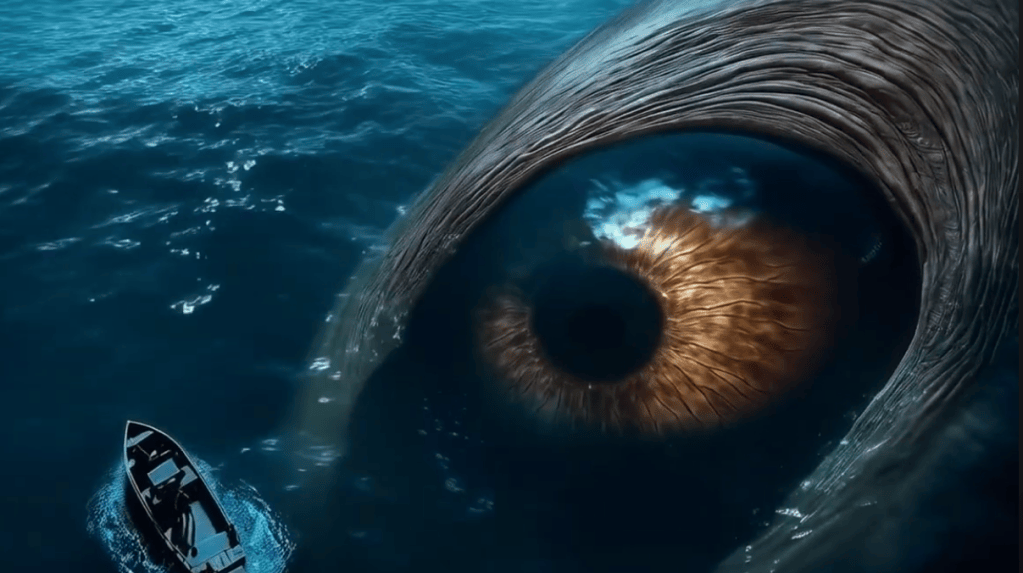
Well, at least, Cthulhu wasn’t woken up by Antarctic explorers. I went to Antarctica, but when you’ve seen one abandoned city of madness, you’ve seen them all!
This short has dumbass explorers too, but they are scuba divers; so, that’s new. I wouldn’t describe this short as good, but it something that was made.
The divers discover elder gods and the residents of a coastal town head into the sea to be its food. If you’re looking for more of a plot, you won’t get it. I just wish that this film didn’t take itself so seriously; it even had some black and white shots. UGHHHH. Check it out or don’t…I’m not a cop.
4 Horror Films For The Weekend (10/3/26)
It’s October! Here’s four films that you can watch this weekend to help you get in the Halloween mood!
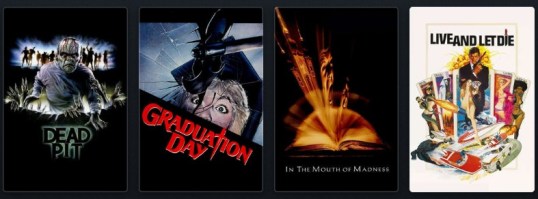
For last night’s #FridayNightFlix, we watched Roger Moore’s first outing as James Bond, Live and Let Die (1973). Now, I know that a lot of people are going to read that and think to themselves, “Live and Let Die isn’t a horror movie!” While it’s true that Live and Let Die is primarily a spy movie, it does borrow quite a bit from the horror genre. I mean, this is a film that opens with a man being killed in voodoo ceremony! Baron Samedi (played by Geoffrey Holder), the man who cannot die, is one of Bond’s best villains and also one of the few that apparently does manage to avoid dying. If Hammer or Amicus had produced the Bond films, they would probably look a lot like Live and Let Die. So, if you’re looking for a horror-adjacent film to help get you in the Halloween mood, Live and Let Die is a great choice. It’s the closest thing we have to a true James Bond grindhouse film. The boat chase is a classic, though how much of a classic depends on you feel about having a redneck Louisiana sheriff dropped right in the middle of a Bond film. The film is currently on Prime, along with all the other Bond films.
Two weeks ago, for #MondayActionMovie, we watched Graduation Day (1981). Featuring a great soundtrack, several over the top kills, a hammy Christopher George, a young Vanna White, and an epic 12-minute performance of the song Gangster Rock by Felony, Graduation Day is one of the best of the early slashers. Like a lot of those pre-Nightmare On Elm Street slasher films, it owes a huge debt to the giallo genre. The killer even wears black gloves! Can you figure out who the murderer is? And will you ever get the film’s insanely catchy theme song, The Winner, out of your head? Everybody wants to be the winner…. Graduation Day is streaming on Prime.
The Dead Pit (1989) is a personal favorite of mine. A woman end up in a mental hospital and spends the majority of the movie running around in her underwear while trying to get people to understand that the dead are coming back to life. I’ve had that dream more times than I care to count. This is an enjoyably over-the-top B-movie. Director Brett Leonard captures some truly creepy images and lead actress Cheryl Lawson gives a good and sympathetic performance as the amnesiac who keeps seeing terrible things. With all of the elevated horror nonsense that’s going on right now, it’s nice to see a film from an age when the horror films were made by people who didn’t feel the need to apologize for the genre. The Dead Pit is streaming on Tubi.
Finally, with In The Mouth of Madness (1995), John Carpenter proved himself to be one of the few directors capable of actually capturing the bleak atmosphere of H.P. Lovecraft’s best stories. The much-missed Sam Neill gives one of his best performances as a reporter who discovers a horrifying truth. The film’s final scene is brilliant.
Happy October!
Horror Film Review: P2 (dir by Franck Khalfoun)
First released in 2007, P2 tells the story of Angela Bridges (Rachel Nichols), a young businesswoman who just wants to get off work and spend Christmas Eve with her family. Instead, she finds herself trapped in an underground parking garage and stalked by an unhinged security guard named Thomas (Wes Bentley).
P2 feels as if it was designed in a lab to exploit every fear I have.
First off, I’m terrified of confined places. This is a film that moves from one confined spot to another. It’s not just that Angela is trapped in a parking garage and the only person who has the key is determined to keep her there. Over the course of the night, she also finds herself trapped in Thomas’s office, an elevator, and the trunk of her car. P2 captures the suffocating feel of claustrophobia, the sense that an already confined space is slowly closing in on you. The more Angela struggles, the less space she seems to have.
I’ve always been scared of loud, barking dogs, especially the kind that jump out of nowhere and start growling at you as if you’re the bait in some game you didn’t even realize you were playing. Thomas has a dog named Rocky. Both Thomas and Rocky are relentless in their pursuit of Angela. Thomas wants to take her back to his office so he can force her to comply with his desires. Rocky, on the other hand, just wants to tear her apart.
I’ve always been scared of drowning, and, believe it or not, this film actually contains a scene in which Angela is forced to face that same fear. How does one drown in a parking garage? Let’s just say that Thomas knows every button to push and every lever to turn. Angela may work in the building and park in the garage, but for the most part she’s only a visitor. The garage is Thomas’s whole world.
I’ve always been scared that if I found myself in a really bad situation, I wouldn’t be able to depend on anyone to help. In P2, Thomas hides his homicidal nature behind his uniform and his title. When two policemen show up to check out the garage, they don’t even notice Angela’s broken phone lying on the ground. Even when Angela does manage to call 911, she’s answered not by an operator but by an automated system that puts her on hold. If Angela is going to survive, she’s going to have to do it on her own.
The film also captures a much more universal fear: the fear of not having control. Angela has never noticed Thomas before, but Thomas has spent two years obsessing over her and waiting for the day he would be able to drag her back to his office. To Thomas, it makes sense that Angela should spend Christmas with him because she has been on his mind nonstop for years. Angela, meanwhile, wakes up in the office wearing handcuffs and a revealing white dress that Thomas apparently put on her while she was unconscious. This is a film that always makes me wonder how many Thomases are out there. Who knows what’s happening behind the smiling faces of the people we see every day but don’t really know?
P2 works because it captures those universal fears. Yes, the story might be a bit predictable, but most of our fears are predictable too. That doesn’t make them any less scary. Rachel Nichols is sympathetic as Angela, while Wes Bentley is appropriately unhinged as Thomas. Bentley has said that he was struggling with a heroin addiction when he made P2, and he plays Thomas with the self-destructive intensity of an addict who can’t think beyond his next fix. It doesn’t matter to him—or perhaps even occur to him—that there’s no way he can get away with abducting Angela. All that matters is having her at that exact moment. He’s impulsive and unpredictable, and all the more frightening because of it.
P2 was the directorial debut of Franck Khalfoun, who went on to make the surprisingly effective remake Maniac. Unfortunately, his later films haven’t really lived up to the promise of his earlier work, but P2 remains an effective slice of holiday horror.
Horror Song of the Day: The Rake’s Song (by The Decemberists)
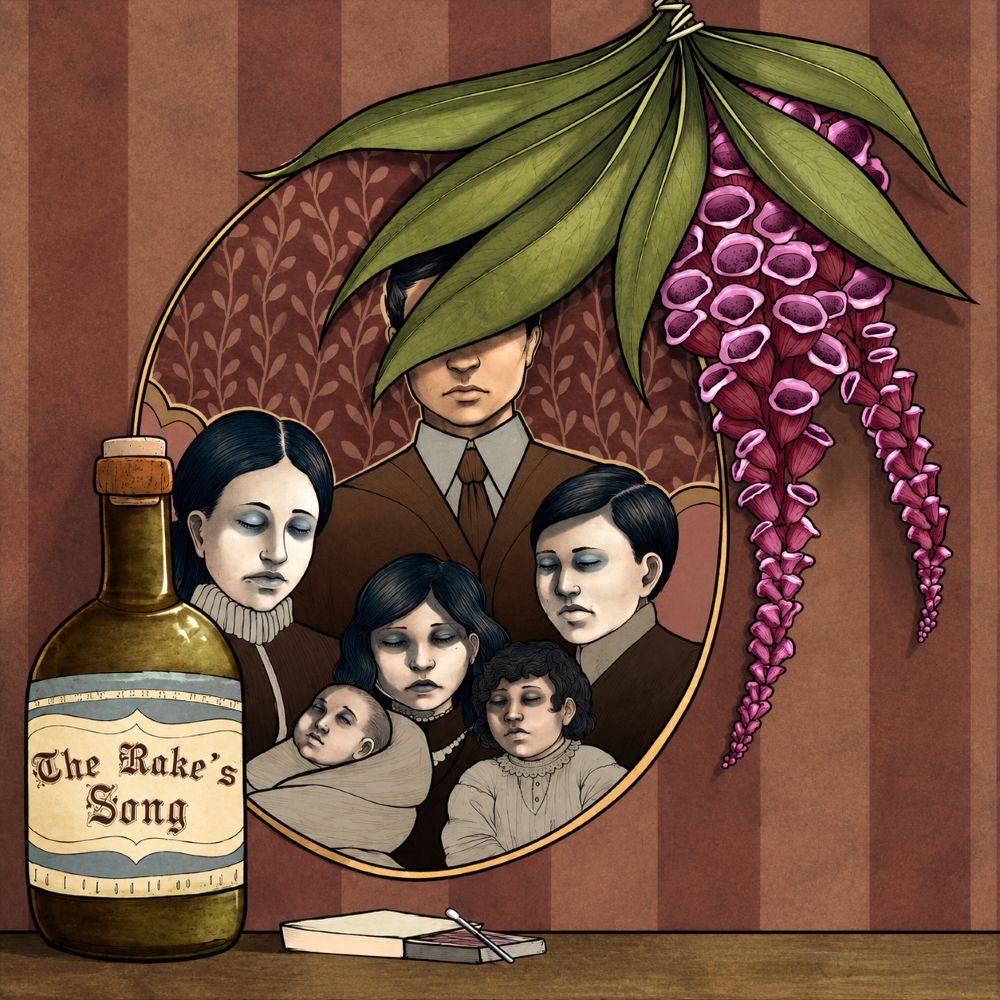
“The Rake’s Song” is one of those Decemberists tracks that lures you in with a tune that sounds almost cheerfully old-fashioned, then casually reveals that you have been listening to a confession from an absolute monster. The arrangement has that familiar Decemberists blend of indie-folk and story-song theatricality: a bouncy, rustic pulse, memorable vocal phrasing, and a melody that feels made for a communal singalong. On the surface, it has the energy of a rowdy little folk number you might hear in a pub or at a campfire.
That folk-horror quality fits especially well because “The Rake’s Song” comes from The Decemberists’ 2009 concept album The Hazards of Love, whose songs collectively tell one continuous, start-to-finish narrative. The album follows the romance between Margaret and William, the supernatural influence of the forest-dwelling Queen, and the violent figures who threaten them along the way. Within that larger story, the Rake is not just a random murderous narrator; he is a dark obstacle in the tale, and his song gives the album one of its most unsettling detours.
But Colin Meloy uses that inviting sound as camouflage. The narrator matter-of-factly explains how he murdered his own children after their mother dies, treating each death less like a tragedy than another inconvenient task to be handled. That emotional disconnect is what makes the song genuinely chilling. There is no dramatic musical shift that announces, “Now this is the horrifying part.” The story just keeps moving, jaunty and almost playful, while the details get progressively more grim.
That contrast makes “The Rake’s Song” feel like a horror folktale that has somehow survived for generations because people kept singing it. It would not feel out of place as a warning whispered around a campfire about the cruel old man who lived beyond the tree line, or as a cautionary tale passed between children in some isolated backwoods cabin: beware the charming song, beware the smiling storyteller, and definitely beware the man who says his family is gone. Its folksiness gives the violence a strange sense of age and inevitability, as if this is not merely one man’s atrocity but an old evil wearing the shape of a traditional ballad.
The Decemberists have always been good at turning literary, historical, and gothic material into catchy songs, and “The Rake’s Song” may be one of their sharpest examples of that trick. It is funny in the bleakest possible way, but the humor never fully softens the horror; if anything, it makes the narrator’s cruelty worse. You can enjoy the hook, tap along to the rhythm, and then suddenly realize you are humming a song about something monstrously cruel—which is exactly why it sticks with you.
The Rake’s Song
I had entered into a marriage
In the summer of my twenty-first year
And the bells rang for our wedding
Only now do I remember it clear
Alright, alright, alright
No more a rake and no more a bachelor
I was wedded and it whetted my thirst
Until her womb start spilling out babies
Only then did I reckon my curse
Alright, alright, alright
Alright, alright, alright
First came Isaiah with his crinkled little fingers
Then came Charlotte and that wretched girl Dawn
Ugly Myfanwy died on delivery
Mercifully taking her mother along
Alright, alright, alright
What can one do when one is widower
Shamefully saddled with three little pests
All that I wanted was the freedom of a new life
So my burden I began to divest
Alright, alright, alright
Alright, alright, alright
Charlotte I buried after feeding her foxglove
Dawn was easy, she was drowned in the bath
Isaiah fought but was easily bested
Burned his body for incurring my wrath
Alright, alright, alright
And that’s how I came your humble narrator
To be living so easy and free
Expect you think that I should be haunted
But it never really bothers me
Alright, alright, alright
Alright, alright, alright
Horror On The Lens: Drive-In Massacre (dir by Stu Segall)

Today, the Shattered Lens has got a grindhouse classic. From 1976, it’s Drive-In Massacre!
Terrible things are happening at the local drive-in! There’s a killer at large. Can the police solve the mystery before yet another drive-in theater is forced to close? This is a surprisingly entertaining little film. I can only imagine how fun it probably was to see a film called Drive-In Massacre at an actual drive-in! Be sure to stick around for the public service announcement at the end!
For the record, I’ve always liked Douglas Gudbye’s performance as Germy. I haven’t been able to find out much about the actor but he definitely brings something to the role. Be sure to keep an eye out for George “Buck” Flower, who not only appears in this film but also co-wrote it!

