“Christmas Caper”, Review by Case Wright (Dir. David Winkler, Writers: April Blair & Brian Gunn)


I watched Christmas Caper with Lisa and, as always, it was a wonderful time. It’s weird to have a friend who is way cooler than you, but I’ll take it! “Christmas Caper” had some great lines and a clear story arc, but was what really stands is its similarity to “Dazed and Confused” in this way: it was a springboard for many careers attached to it. April Blair, the writer, went on to write for… everything and the actors all had bright careers for decades. I’m used to Hallmark, which is A LOT more strict. I was in talks to have script made for Hallmark, but it was funny and had Mrs. Claus as the heroine and they just couldn’t wrap their heads around a female lead like that. Here, we have Cate Dove (Shannen Doherty), a gentlewoman thief, who is the heroine- Hallmark would say – BLASPHEMY!!!! Needless to say, I was primed to enjoy this movie.

The film opens with Cate and Clive (Conrad Coates) who are doing a “Mission Impossible” style heist at a home that has A LOT of security. For a plot device, both Cate and Clive remove their masks for the security cameras. (Note: To the homeowner, maybe you should move? I get that you have this fancy pants gem in your house and the schools are a 10/10 on “SchoolDigger,” but if you have this many problems with crime, have you considered another neighborhood or starting a neighborhood watch? I understand it’s hard to move, but I had to pull the trigger on that and leave my beloved Seattle. It’s ok bro, let’s hug it out and call Remax.) They steal a precious gem, but Clive runs off with the gem, leaving Cate to escape as best she can, but there’s a APB out for her with a picture of her everywhere.

Cate flees to NYC to go to her fence Duffy (Michael Northey) to figure out her next move. The inciting incident is that Cate has a goody too shoes sister Savannah (Sonya Salomaa) who is trapped in the Caribbean with her husband Brian and they need child care. Cate is Savannah’s last choice because she’s a degenerate, but Cate decides to watch her niece and nephew because she needs to lay low. Cate goes to Comfort, USA and watches the kids. She rekindles a relationship with her ex who is Sheriff Harrison (Ty Olsson). The mixture of family time, romance, and Christmas puts her on a good character arc.

However, when she tries to get the gem back from Clive, she involves her niece and nephew. I didn’t really that for stranger danger issues, but it added some good comic relief and key plot point. When Cate thinks she has no money to escape and avoid arrest, she steals everyone’s Christmas presents like the Grinch, BUT her heart grows three sizes that day and she returns them all – sort of.

The movie has a nice ending and I liked the act breaks a lot. The movie had clear plot points and that makes sense because the writer, April Blair, had a HUGE career writing for television. I absolutely recommend watching this film on Tubi. It really is a lot of fun!

Late Night Retro Television Review: Highway to Heaven 4.24 “The Whole Nine Yards”


Welcome to Late Night Retro Television Reviews, a feature where we review some of our favorite and least favorite shows of the past!  On Thursdays, I will be reviewing Highway to Heaven, which aired on NBC from 1984 to 1989.  The entire show is currently streaming on Tubi and several other services!

Today, season 4 comes to a close with an episode about two football teams, one struggling and one not.  Care to guess which team is going to win the big game?

Episode 4.24 “The Whole Nine Yards”

(Dir by Michael Landon, originally aired on April 27th, 1988)

Charlie DuBoise (Dinah Lacey) is a twelve year-old girl who wants to play football.  Vince Diller (Beau Starr) is the chauvinistic coach who refuses to allow Charlie to join his team, despite the fact that she can catch and she’s even faster then his son, quarterback Ricky Diller (Chad Allen).  Instead, Charlie joins another team, the 0-5 Minnows.  Who is the new coach of the Minnows?  Mark Gordon, of course!

Ricky has a hard time accepting that a girl beat him in a race and, when Charlie approaches him in a totally 80s arcade, a fight breaks out.  Luckily, Jonathan is there to break it up.  Ricky apologizes to Charlie while Charlie has a gigantic wad of Kleenex stuck up her nose.  The scene goes on for a while and Charlie never removes the Kleenex.  It was awkward to watch.  Seriously, that’s what nampons are for.

Eventually, Ricky gets sick of Vince and his win-at-all-costs mentality.  Ricky talks back to his father and gets kicked off the team.  Ricky joins the Minnows and he and Charlie defeat Vince’s team in the big game.  Vince comes to realize that the game should be about fun and Ricky and Charlie go to the school dance together.

And so ends season 4 of Highway to Heaven.  Shows about girls who want to play football are always weird to me because I’m a girl and I can’t ever think of circumstances in which I would want to play football.  But I do think that if Charlie wants to get a head start on getting the concussions that will ruin her adult life, she should certainly be allowed to do so.  The main problem with this episode was that Vince was such an ogre and such a terrible father that the show’s happy ending felt false.  His son joined another team and destroyed Vince’s undefeated record.  The episode ends with Vince saying he’s proud of his son but Vince has been such a monster that his words sound hollow.  I’m kind of worried about what’s going to happen when Ricky goes home.  Instead of putting together a football game, Jonathan and Mark should have been calling Child Protective Services.

This is my final episode of Highway to Heaven for 2025.  Retro Television Reviews will be taking a break for the holidays but this feature will return!  On January 8th, 2026, we’ll start our look at the final season of Highway to Heaven.

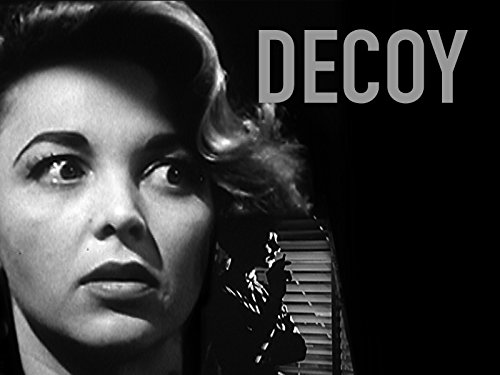
Retro Television Review: Decoy 1.14 “Bullet of Hate”


Welcome to Retro Television Reviews, a feature where we review some of our favorite and least favorite shows of the past!  On Thursdays, I will be reviewing Decoy, which aired in Syndication in 1957 and 1958.  The show can be viewed on Tubi!

This week, Casey solves her easiest case yet!

Episode 1.14 “Bullet of Hate”

(Dir by Teddy Sills, originally aired on January 13th, 1958)

This week, Casey doesn’t go undercover.  Instead, she’s just a uniformed police officer who responds to fight between teenage Stella (Sandra Whiteside) and her adoptive aunt, Mary (Joanna Roos).  Casey takes sympathy on Stella, who isn’t a bad kid but who is rebelling against her heartless Aunt Mary and Uncle Lester (Alfred Ryder).  When Mary ends up getting shot, Stella is the number one suspect and Stella herself even thinks that she’s responsible.  But, of course, it turns out that Stella has been framed by Lester.

The main problem with this episode is that we watch as Lester frames Stella by giving her a gun.  When Stella fires the gun during an argument, Mary isn’t injured but she does faint.  Stella flees.  Lester then uses the gun to actually shoot Mary.  Since we know that Lester committed the crime, there’s not really any suspense when Casey starts to suspect that Stella’s been set up.  We already know she’s been set up and we also know that, since Lester is an idiot, Casey is going to be able to easily solve the case.  And since we know that Casey is good with a gun, we’re not that surprised when Casey ends up taking Lester out (in self-defense, of course!).  This isn’t like Columbo or the first season of Poker Face where the killer is so diabolically clever that we can’t wait to see how the hero manages to trick them into confessing.  Lester’s just a dummy.

Joanna Loos and Alfred Ryder both went overboard as the villainous aunt and uncle but Sandra Whiteside was effective as the desperate Stella.  Apparently, this was one of only two roles that Whiteside played in her career.  She gives a strong performance.

This is my final Decoy review for 2025.  Retro Television Reviews is going on break for the holidays so that I can focus on Awards Season and Christmas movies!  Decoy will return on January 8th, 2026.

Review: Mercy for None


“The deal was clear—his life for mine. You broke it.” — Nam Gi-jun

Mercy for None is a gritty, intense Korean action drama that drops you into the shadowy underbelly of Seoul’s criminal world, where revenge is less a personal choice and more a brutal currency everyone ends up paying. Adapted from the webtoon Plaza Wars: Mercy for None by Oh Se-hyung and Kim Geun-tae, the series runs a lean seven episodes at roughly 40–45 minutes each, making it a compact but powerful binge. It follows Nam Gi-jun, a former gang enforcer who once carved out a bloody reputation for himself before literally cutting himself out of the life—he slices his own Achilles tendon to walk away after a disastrous job. Years later, when his younger brother Gi-seok, now a rising figure in the underworld, is murdered in what looks like a calculated move in a larger power struggle, Gi-jun is dragged back into the orbit he tried so hard to escape. What begins as a simple quest for payback slowly mutates into a full-blown gang war between rival factions, where old debts, broken promises, and rotten institutions all collide.

The show’s webtoon roots are easy to feel in its storytelling style and visual sensibility. Plaza Wars: Mercy for None was known for its grim noir tone, sharp sense of place, and explosive outbursts of violence, and the drama leans into that DNA rather than sanding it down. The adaptation keeps the basic spine of the story—an aging, wounded enforcer returning to a city carved up by criminal empires—and translates the panels’ rough, kinetic energy into tight, live-action set-pieces. So Ji-sub’s casting as Nam Gi-jun is spot-on: he looks and moves like someone who has survived more fights than he cares to remember, and his presence gives the character that blend of weariness and danger that fans of the source material wanted to see. The direction and writing embrace the original’s grimy, unforgiving atmosphere, focusing on high-stakes confrontations and the emotional cost of violence rather than trying to make the material more broadly “feel-good” or conventional.

At the center of everything is Gi-jun’s arc, and that’s where the series finds its emotional weight. He isn’t written as a slick, wisecracking antihero; he’s a man who carries his history in his body and on his face. When he’s living in hiding, you can feel the way his past still sits on his shoulders, and once he learns how his brother died, the shift in him is less about explosive rage and more about grim resolve. The limp from his old injury, the way he braces himself before every fight, and the quiet moments where he weighs what he’s about to do all help make him feel like a person first and a genre archetype second. That keeps the show from collapsing into pure revenge fantasy, even when Gi-jun tears through rooms full of armed men; there’s a sense that every win costs him something.

The supporting cast gives the drama a lot of texture, especially the older gangsters who make up the city’s criminal backbone. These men are written as survivors who’ve spent decades navigating backroom deals, territory disputes, and shifting alliances; they don’t just feel like generic “boss” figures but people with their own codes and grudges. Their scenes have a heavy, lived-in tension, even when nobody is throwing a punch. By contrast, some of the younger characters—the hotheaded heirs and ambitious underlings—can feel more sketched in. They bring energy and chaos, but their motivations and personalities aren’t always explored as deeply as they could be, which sometimes makes their big turning points land a little softer. The show also makes the deliberate choice to center almost entirely on men, with women mostly absent or on the fringes. That tight focus suits the idea of a closed, hyper-masculine underworld, but it does limit the emotional and thematic range.

Where Mercy for None really swings for the fences is in its action. The fights are brutal, messy, and grounded, full of close-quarters grappling, improvised weapons, and bodies hitting concrete hard. There’s a clear sense of geography in most of the set-pieces: you can tell where everyone is in a hallway brawl or a parking garage ambush, and the camera usually holds long enough to showcase the choreography without turning everything into a blur. Gi-jun’s physical limitations are baked into the way he moves; he fights like someone who knows his body can betray him at any second, relying on experience, ruthlessness, and timing more than sheer athleticism. As the series goes on, though, it does start to push him closer to the edge of believability, with him surviving punishment that would realistically stop anyone else. Whether that bothers you will depend on how much you’re willing to accept heightened genre logic in exchange for cathartic, over-the-top showdowns.

Stylistically, the series leans into a very specific mood: lots of night shots, harsh lighting, and cramped locations that make the city feel like a maze of traps and dead ends. Bars, offices, stairwells, garages, and back alleys all start to feel like different battlegrounds in the same endless war. When the show occasionally cuts to quieter, more open environments—like scenes from Gi-jun’s life in seclusion—they almost feel like they belong to a different world. That contrast reinforces just how suffocating his return to Seoul is. The music tends to underscore rather than dominate, and while it may not be the kind of score you walk away humming, it adds an extra layer of tension to confrontations and a sense of heaviness to the aftermath of each fight.

Structurally, Mercy for None benefits from being short and focused. With only seven episodes, there isn’t much room for filler, so the story keeps moving—information is revealed, allegiances shift, and every episode pushes Gi-jun further into conflict. There’s no attempt to pad things out with a romance subplot or quirky comic relief, which makes the series feel more like a long crime film than a traditional drama season. At the same time, the show occasionally leans on familiar rhythms: Gi-jun confronts a new layer of the conspiracy, storms another stronghold, leaves a trail of bodies, and moves on. A bit more variation in the types of obstacles he faces or the perspectives we follow might have made the middle stretch feel less repetitive. Still, the relatively tight run helps prevent that repetition from becoming a serious drag.

On a thematic level, the drama keeps circling back to ideas of debt, loyalty, and the illusion of getting out clean. Gi-jun once believed that sacrificing part of himself physically would allow him to walk away from the life he lived and protect the people he cared about. The story systematically tears that belief apart. The bosses he helped rise are still entangled in their old patterns, the institutions that are supposed to enforce justice are compromised, and his brother’s death becomes proof that the system he once upheld ultimately consumes everyone in its reach. The ending doesn’t offer easy comfort: the people who engineered the power struggle pay a price, but what’s left behind is not some hopeful new order, just ruins. Gi-jun’s revenge lands, but it doesn’t look or feel like a victory.

As a whole package, Mercy for None works very well as a stripped-down, no-frills revenge saga with a strong sense of character and place. Its strengths lie in So Ji-sub’s committed performance, the weighty, bruising action, and the way it translates its webtoon source into something that feels cinematic rather than purely episodic. Its weaknesses—limited female representation, some underdeveloped younger characters, and occasional repetition in structure and escalation—keep it from feeling completely fresh, but they don’t undermine what the show is clearly trying to be. It isn’t out to reinvent the gangster genre; it’s out to inhabit it fully, with a distinctly Korean noir flavor and a protagonist who feels like he’s been carved out of regret and rage.

If you’re looking for a character-driven revenge thriller that leans into dark atmosphere, grounded yet stylized violence, and the slow unraveling of a criminal ecosystem, Mercy for None is absolutely worth the time. If you’re hoping for a broader ensemble piece with varied perspectives, rich female characters, or a more hopeful worldview, this will probably feel too narrow and bleak. As a webtoon adaptation and a compact action drama, though, it stands out as a confident, hard-edged entry that knows exactly what it wants to do and largely pulls it off.

Late Night Retro Television Review: 1st & Ten 2.7 “Yinessa’s Interview”


Welcome to Late Night Retro Television Reviews, a feature where we review some of our favorite and least favorite shows of the past! On Wednesdays, I will be reviewing 1st and Ten, which aired in syndication from 1984 to 1991. The entire series is streaming on Tubi.

The Bulls are in the playoffs!

Episode 2.7 “Yinessa’s Interview”

(Dir by Burt Brinckerhoff, originally aired on December 30th, 1986)

Last week, training camp finally ended.

This week, the Bulls are in the playoffs!

Wow, we skipped the entire regular season.  Well, that’s okay.  It was obvious from the start that the Bulls were going to make it to the playoffs so why hold off on the inevitable?  Tom Yinessa has led the Bulls to a spot in the Wildcard and woo hoo!

The only problem is that Yinessa hasn’t had time to get laid.  When he does try to make time for Christy (Betsy Russell) — who I guess is his new girlfriend because she wasn’t his girlfriend an episode ago — they are interrupted by reporter Donna Starkey (Brianne Leary), who needs to finish up her interview with Yinessa.  Christy leaves angry but then she returns to make up for Yinessa, just to discover him on the verge of fooling around with Donna.

While all of this is going, the other team tries to fool the Bulls by sending them a fake playbook.  Coach Denardo thinks that it’s genuine but T.D. Parker is like, “I’ll kill you if you use that playbook!  I’ve done it before!”  Also a woman tells Jethro that he’s the father of her son.  Jethro is skeptical but he agrees to get a paternity test.

Donna writes an article about how Yinessa is an unimpressive quarterback.  But the Bulls still win their playoff game by relying on defense.  Mad Dog Smears angrily notes that reporters never want to interview anyone defense …. wait a minute, where’s Dr. Death?  Seeing as how the defense wins the game, this seems like a weird episode not to feature Dr. Death.

The Bulls win their game but Yinessa no longer has a girlfriend.  Womp womp.

This episode was weirdly unsubstantial.  It may be because of how the episodes have been edited for syndication to remove all of the nudity and cursing but 1st & Ten never seems to be able to develop any sort of narrative momentum.  Instead of each episode building towards something, it’s usually just 20 minutes of random events that never seem to really be tied together.  One could say the same thing of life in general, I suppose.

This is my final 1st & Ten review of 2025.  Retro Television Reviews is taken a break for the holidays but this feature will return in January.  My next 1st & Ten review will be on January 7th, 2026.

Retro Television Review: The Love Boat 6.29 “Fountain of Youth/Bad Luck Cabin/Uncle Daddy”


Welcome to Retro Television Reviews, a feature where we review some of our favorite and least favorite shows of the past!  On Wednesdays, I will be reviewing the original Love Boat, which aired on ABC from 1977 to 1986!  The series can be streamed on Paramount Plus!

This week, the sixth season of The Love Boat comes to a close.

Episode 6.29 “Fountain of Youth/Bad Luck Cabin/Uncle Daddy”

(Dir by Robert Scheerer, originally aired on May 7th,1983)

The sixth season of The Love Boat ends on a rather silly note.

A newlywed couple (David Naughton and Lynda Goodfriend) board the ship and a coked-up Julia assigns them to a cabin that is known for being cursed.  Couples who stay in the cabin always break up.  Gopher and Julie try to make sure that the couple doesn’t fall victim to the curse.

Henry Harper (Ted McGinley), who appears to be in his 20s, boards the boat and tells elderly Dwight Schofield (David Wayne) that he’s the same Henry Harper that Dwight went to college with.  Henry claims that he’s discovered the Fountain of Youth!  Actually, this Henry Harper is the grandson of the original Henry Harper and this is all an elaborate scheme to get revenge on Dwight for cheating the first Henry Harper out of an oil well.  Dwight, however, falls for it and tries to buy the Fountain of Youth.  Grandson Henry, meanwhile, falls in love with Dwight’s granddaughter (Michele Tobin) who is all like, “I like you but I can’t be with someone from the Twilight Zone.”  Grandson Henry eventually admits the truth and all is …. forgiven?  Really?

Those two stories were pretty dumb.  Fortunately, the third story was an Isaac story and, as he always did whenever he got a chance in the spotlight, Ted Lange really delivered.  Isaac wants to marry Gayle Davis (Tracy Reed) so he can become the stepfather of Bobby Davis (Shavar Ross).  In the end, Isaac realizes that he doesn’t love Gayle and the marriage wouldn’t work.  It was a pretty simple story but Lange always did such a good job of portraying Isaac’s essential decency that it was hard not to get caught up in whether or not he was actually going to leave the Love Boat crew.  Fortunately, Isaac will still be pouring drinks during season 7.

This is not only the final Love Boat episode of Season 6 but it’s also my final Love Boat episode of 2025.  Retro Television Reviews is taking a break for the holidays so that I can focus on both the Awards Season and Christmas movies.  The Love Boat will return on January 7th, 2026.

Late Night Retro Television Review: Pacific Blue 3.8 “Matters of the Heart”


Welcome to Late Night Retro Television Reviews, a feature where we review some of our favorite and least favorite shows of the past! On Tuesdays, I will be reviewing Pacific Blue, a cop show that aired from 1996 to 2000 on the USA Network!  It’s currently streaming everywhere, though I’m watching it on Tubi.

James Franco is in this episode!

Episode 3.8 “Matters of the Heart”

(Dir by Terence H. Winkless, originally aired on October 5th, 1997)

Cory goes undercover to bust a man who is selling babies to couples who can’t have children.  Cory pretends to be pregnant and meets the couple who want to buy her baby.  What Cory discovers is that the couple would be loving parents.  She realizes that she can’t bust them.  Palermo is not amused, pointing out that everyone involved is breaking the law.

Meanwhile, Cory has been caring for a baby who was originally meant to be sold to the same couple.  Chris is upset.  What if the baby cries and wakes her up?  Well, Chris, I guess you’ll get to whine about it like you are about everything else.  At the end of the episode, Cory arranges for the baby to be adopted by the couple who wanted to buy her in the first place.  Palermo, having suddenly changed his tune, says, “This is a wonderful thing you’re doing.”

Meanwhile, TC goes undercover too!  He’s busting a drug dealer who is selling amphetamines to extreme athletes, one of whom is played by James Franco!  Remember, during the early days of this site, when I had that huge crush on him?  I know a lot of people would say that I shouldn’t admit to that, considering the scandal that pretty much ended his career but …. eh, why deny it?  Who hasn’t had a crush on someone who later turned out to be kind of sleazy?  It’s a part of growing up.  Back in 2010, it all came down to two things: I was young and I found him to very, very appealing, in much the same way that I always used to fall for dysfunctional poets and long-haired guitar players in high school and college.  Anyway, what were we talking about?  Oh, right — Pacific Blue.  As far as the show goes, TC is successful despite the fact that he comes across as being a cop the entire time.

This episode …. actually, I’m surprised to say that this episode kind of worked.  Not the stuff involving TC obviously, all of that sucked.  In the role of TC, Jim Davidson was too expressionless and dull to be convincing as someone who could possibly pull of an undercover operation.  But Cory’s storyline worked, largely thanks to Paula Trickey’s performance.  (Trickey was one of the more talented members of the cast but Pacific Blue rarely seemed to understand that.)  I have to admit that I even teared up a little at the end as Cory said goodbye to the baby that she had spent weeks caring for.

Seriously, me tearing up while watching an episode of Pacific Blue!  What a strange world.  Maybe it’s the holiday spirit!

On that hopeful note, I finish up my final 2025 review of Pacific Blue.  Retro Television Reviews will be off for the holidays, so that I can concentrate on Awards Season and Christmas movies.  Pacific Blue will return on January 6th, 2026!

Retro Television Review: Fantasy Island 7.20 “Don Juan’s Last Affair/Final Adieu”


Welcome to Retro Television Reviews, a feature where we review some of our favorite and least favorite shows of the past!  On Tuesdays, I will be reviewing the original Fantasy Island, which ran on ABC from 1977 to 1984.  The show is once again on Tubi!

This week, a tramp and a wimp seek romantic advice.

Episode 7.20 “Don Juan’s Last Affair/Final Adieu”

(Dir by Philip Leacock, originally aired on April 14th, 1984)

Fashion marketer Whitney Clark (Phyllis Davis) is having an affair with her boss, Daniel Garman (David Hedison).  Whitney’s fantasy is to end the affair.  Myself, I have to wonder why she would have to come to Fantasy Island to end the affair.  Why can’t she just save the money and end the affair in New York or wherever it is that they’re from?  Better yet, why can’t she end the affair in New York and then come to Fantasy Island and actually have an enjoyable fantasy?

Daniel is on the Island, putting together a fashion show that he hopes will convince Roarke to commission a line of Fantasy Island fashions.  Whitney wants to end the affair but then she meets Daniel’s wife, Elizabeth (Marion Ross).  Elizabeth is in a wheelchair and, as she explains it, Daniel only stays with her out of guilt and a sense of responsibility.  When she offered Daniel a divorce, he turned it down.  Whitney comes to realize that Daniel loves both her and Elizabeth but that Daniel’s heart will always belong to Elizabeth.  “If you love me, let me go,” she tells Daniel.  She leaves Fantasy Island alone but looking forward to the future.  “I’ve come to admire your courage,” Lawrence tells her.  I’m not sure what courage he’s referring to.  She couldn’t even break up with her married lover without Mr. Roarke’s help.

Meanwhile, nerdy Alan Curtis (Michael Spound) is in love with his best friend, Pat Grayson (Geena Davis, in an early role).  Mr. Roarke arranges for Alan to go into the past to Madrid so that the legendary Don Juan (Fernando Rey) can give him advice but, due to a mix-up in the space-time continuum, Don Juan ends up in the present and on Fantasy Land.  Pat falls for Don Juan!  While Roarke fences with Don Juan, Alan finally tells Pat that he loves her.  At first, Pat is like, “But Don Juan….” but then Don Juan mentions that he’s had 14,000 lovers and Pat decides to give Alan a try.

*sigh*  The seventh season of Fantasy Island has been really depressing to review.  The first few seasons were fun but the seventh season has just been a drag.  This episode featured a lively performance from Geena Davis but that was pretty much it.  Everyone else seemed bored and unlikable.  Whitney and Alan were both wimps.

This was my final trip to the Island for 2025.  Retro Television Reviews will be going on break for the Holidays so that I can focus on both the Awards Season and Christmas movies!  Fantasy Island will return on January 6th, 2026.  There’s only two shows left and then something new will be appearing in this time slot.

Late Night Retro Television Review: CHiPs 5.2 “Vagabonds”


Welcome to Late Night Retro Television Reviews, a feature where we review some of our favorite and least favorite shows of the past!  On Mondays, I will be reviewing CHiPs, which ran on NBC from 1977 to 1983.  The entire show is currently streaming on Prime!

This week’s episode features a future Oscar nominee!

Episode 5.2 “Vagabonds”

(Dir by Bruce Kessler, originally aired on October 11th, 1981)

The saying goes that “everyone had to start somewhere,” and, for actor Ed Harris, somewhere included guest-starring on an episode of CHiPs.

The future Oscar nominee appears as Lonny Wilson, the scion of a family of a hillbilly con artists.  He and his brother, Daws (Jesse Vint), purposefully cause auto accidents and con their victims out of their money in return for not calling the police or the insurance company.  Lonny’s young son, Jamie (James Calvert), is looking forward to joining the family business until he actually is injured while taking part in one of the family’s cons.  Lonny reconsiders his way of life and, by the end of the episode, he’s cooperating with the highway patrol.

Does Ed Harris come across as being a future star in this episode?  Well, he definitely has charisma.  He has screen presence.  That said, this is also CHiPs, a show that was mostly about capturing potentially serious auto accidents in slow motion.  No one came across as being a future star on ChiPs and that was actually a part of the show’s appeal.  The stars on CHiPs were always the motorcycles, the cars flipping over on the freeway, and Ponch’s blinding smile.  That said, Ed Harris gives a good performance.  For that matter, so does Jesse Vint as his brother.  This is a well-acted episode of CHiPs.  Such things do exist.

In all fairness, I should also note that, when this episode aired, Harris had already starred in George Romero’s Knightriders so, while Harris may not have been a household name, it’s probably still debatable whether or not this was really at the start of his career.  Ultimately, the important thing is that, two years after appearing this episode, Ed Harris would play John Glenn in 1983’s The Right Stuff and firmly established himself as one of our best character actors.

As for this episode, it also features the Highway Patrol taking part in a “supercycle” race, which is a race featuring bicycles that you lie down on as you peddle.  I don’t know why anyone would want to do that but whatever.  Jon Baker wins.  Yay, Highway Patrol!

On that note of victory, Retro Television Reviews is going on a holiday break so that I can focus on the Oscar precursor awards and reviewing Christmas movies so this will be last CHiPs review of 2025!  CHiPs will return on January 5th, 2026!

Retro Television Review: Miami Vice 5.8 “Hard Knocks”


Welcome to Retro Television Reviews, a feature where we review some of our favorite and least favorite shows of the past!  On Mondays, I will be reviewing Miami Vice, which ran on NBC from 1984 to 1989.  The entire show can be purchased on Prime!

This week, Switek takes center stage!

Episode 5.8 “Hard Knocks”

(Dir by Vern Gillum, originally aired on January 20th, 1989)

Stan Switek has a gambling problem!

That’s right.  The lovable Stan Switek, played by Michael Talbott, finally gets to be the center of another episode and it’s a pretty dark one.  It’s not as dark as the one where Stan discovered that his partner and best friend had been given a heroin overdose but it’s still pretty depressing.

There are a lot of things that lead to Switek becoming both an alcoholic and a gambling addict.  The death of Larry Zito still haunts him.  The job haunts him.  The fact that he’s continually stuck in “the black box,” and doing surveillance on terrible people haunts him.  At the start of the episode, he learns that he’s been turned down for a promotion and it will be another two years before he can apply again.  Castillo says it’s about money.  The Miami PD doesn’t have the money to pay Switek a sergeant’s salary.  “You’re the best at what you do,” Castillo tells Switek.  That’s of little help.

Switek is best friends with Mac Mulhern (Jordan Clarke), the father of a hotshot college quarterback named Kevin Mulhern (Richard Joseph Paul).  When Switek’s former bookie (Ismael “East” Carlo) is murdered by Goodman (Richard Jenkins, who apparently always looked like he was in his late 50s, even 40 years ago), Goodman orders Switek to tell Kevin to throw his upcoming game.  In order to make sure that it happens, Goodman kidnaps Mac and threatens to kill him.

Switek snaps.  Switek sets out to get his own justice against Goodman and to rescue Mac.  Fortunately, Crockett and Tubbs realize what’s happening and they show up in time to help Switek out.  Once Goodman is dead and Mac is free, Kevin is able to win the game.

Later, Crockett confronts Switek.  He says that Switek’s name is all over Goodman’s books.  What’s Crockett going to do?  Given that Crockett spent months as Miami’s biggest drug lord, I’m not sure that Crockett is in a position to judge anyone.  Fortunately, Crockett seems to understand that as well.  Crockett hands the evidence over to Switek and promises to keep quiet.  Switek — who has spent almost the entire series as comedic relief — breaks down and starts to cry.

That’s one dark episode!  It’s also a very well-done episode.  Michael Talbott gave an excellent performance as Switek, revealing the character’s dark side while still remaining true to who Switek has been since the series began.  Don Johnson and Philip Michael Thomas didn’t do much in this episode but the final scene between Switek and Crockett was wonderfully acted by both Talbott and Johnson.

This was a good episode but I’m worried about Switek now.  I hope everything works out because there’s only a few episodes left!

Speaking of which, Retro Television Review will be going on break for the holidays at the end of this week. Miami Vice will return on January 5th!