The Further Adventures of Smokey and the Bandit


The first Smokey and the Bandit is a classic.  What about the sequels?
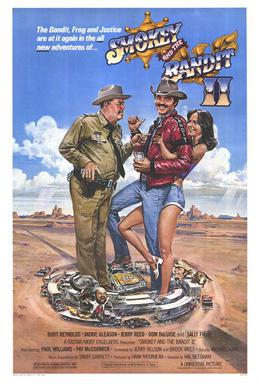
Smokey and the Bandit II (1980, directed by Hal Needham)

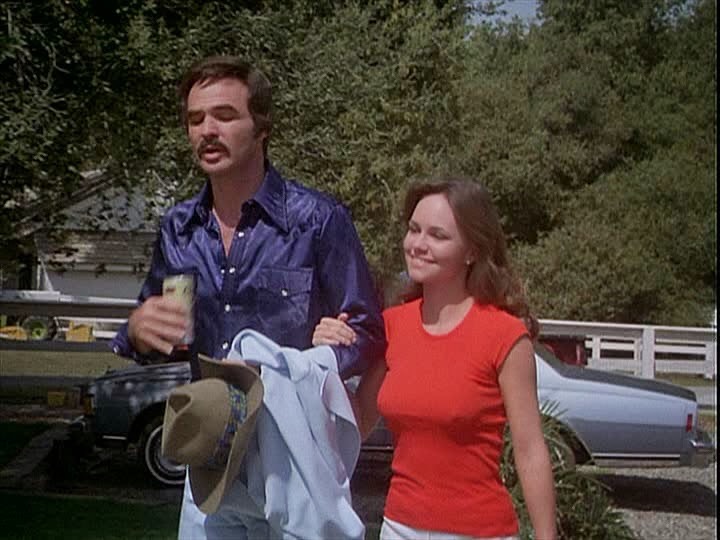
The gang’s all back in this sequel to Smokey and the Bandit!  Burt Reynolds is the Bandit!  Jackie Gleason is Sheriff Buford T. Justice and his two brothers, Reginald and Gaylord!  Jerry Reed is Snowman!  Sally Field is Carrie!  Pat McCormick and Paul Williams are Big and Little Enos!  Mike Henry is Junior!  Dom DeLuise is an Italian doctor!  Terry Bradshaw and Mean Joe Greene play themselves!  There’s an elephant!

You get the idea.  Smokey and the Bandit II promises more of the same.  In some ways, it delivers.  There are some entertaining stunts.  The finale features what was, at the time, the biggest car chase ever filmed.  But Smokey and the Bandit II fails at the most important part.  It fails to recreate the fun of the first film.  Everyone is just going through the motions.  Burt Reynolds later said that he only made the film as a favor to Hal Needham while Sally Field said that she agreed to appear in the film as a favor to Burt Reynolds.  Jackie Gleason did the movie because he needed the money but, because he was also in poor health, he requested that his scenes be filmed first and that they be filmed quickly.  That the three stars didn’t have much enthusiasm for the project is obvious while watching the movie.

This time, Big Enos wants the Bandit to transport an elephant to the Republican National Convention in Dallas.  The Bandit, however, has been an alcoholic wreck ever since Carrie left him to, for some reason, get back with Junior.  Snowman manages to sober up the Bandit and, after they help Carrie run out on her wedding for a second time, it’s time to transport an elephant.

In hot pursuit, Sheriff Justice gets help from his brothers, all of whom are also played by Gleason.  Reginald Justice is a Canadian Mountie who speaks with a posh accent that is in no way Canadian.  Gaylord Justice is a flamboyant state patrolman.  Whenever the brothers talk to each other, doubles are used.  There are a few split screen shots that are so ineptly handled that it ends up looking like a page from a comic book with each Gleason standing in a separate panel.  The end credits list Gaylord as having been played by “Ms. Jackie Gleason,” just in case you’re wondering the level of this film’s humor.

Dom DeLuise gets some laughs as an Italian doctor who is recruited to take care of the elephant but otherwise, this is a depressing movie.  Burt Reynolds and Sally Field were on the verge of breaking up when this film was made and neither one of them acts their scenes with much enthusiasm.  Watching the movie, it’s impossible not to compare their strong chemistry in the first movie to their total lack of it in the second movie.  There’s a subplot about the Bandit trying to prove that, even though he’s getting older, he’s still a legend and, for those who know anything about Burt Reynolds’s career, it hits too close to home.  Combining that with the sight of an obviously unwell Jackie Gleason and you’ve got a surprisingly depressing comedy.

There is one cool thing about Smokey and the Bandit II.  After the critics thoroughly roasted the film, Hal Needham took out a one-page ad in Variety.  The ad was a picture of Needham sitting in a wheel barrow full of money.  That’s one way to answer your critics!

Smokey and the Bandit 3 (1983, directed by Dick Lowry)

Smokey and the Bandit 3 is even more depressing than the second film.  Not surprisingly, Sally Field is nowhere to be found.  She had broken up with Burt after the second film and was busy pursuing a career as the type of actress who didn’t appear in car chase films.  Burt does appear in the film but he only makes a cameo appearance, showing up for a few minutes at the end with a resigned look on his face as if he realized that he was never going to escape being typecast as an aging good ol’ boy.  Also not returning was Hal Needham.  Needham was busy directing Stroker Ace so he was replaced by Dick Lowry.  What type of director was Dick Lowry?  Other than Smokey and the Bandit 3, Lowry’s best known credit is for Project Alf.

Jackie Gleason, Jerry Reed, Pat McCormick, Mike Henry, and Paul Williams all return but none of them look happy to be there.  The plot is that Sheriff Buford T. Justice has retired to Florida but he just can’t turn down a challenge from Big Enos and Little Enos to drive a stuffed shark from Miami to Dallas.  Smokey is the Bandit!  (That was originally the title of this film.)  When it looks like Buford is doing too good of a job of transporting the shark, the Enoses hire Snowman to chase Buford and slow him down.  It doesn’t make any sense and Jerry Reed and Jackie Gleason don’t share any scenes together despite co-starring in the film.  Supposedly, Gleason was originally cast as two characters — Buford and the man hired to slow Buford down — but when preview audiences were confused by the film, the studio demanded reshoots.  Jerry Reed was brought back and all of the scenes featuring Gleason as the new Bandit were reshot with Reed.  Reed even grew a mustache, wore a red shirt, and broke the fourth wall just like Burt did in the first film.

Not surprisingly, Smokey and the Bandit 3 is a disjointed mess that doesn’t even have any spectacular car crashes to justify its existence.  Jerry Reed is as amiable as he was in the first two films but Jackie Gleason’s Buford Justice was never meant to be a lead character.  In small doses, he was funny but Buford was too one-dimensional of a character to build an entire film around.

Smokey and the Bandit 3 was a failure with critics and at the box office so the Bandit’s adventures came to a temporary end.  Years later, Hal Needham produced four made-for-TV prequels the starred Brian Bloom as a young Bandit.  I haven’t seen them.  If I ever do, I’ll review them.

The Oklahoma Film Critics Circle Honors Minari!


The Oklahoma Film Critics Circle met up earlier today and announced their picks for the best of 2020!  Unlike most of the other regional critics groups that have so far voted, the OFCC named Minari — and not Nomadland — as best picture.  However, Nomadland still picked up awards for Best Director and Screenplay and Best Actress and it was named as one of the top ten films of the year.  In fact, Nomadland picked up even more awards than Minari did, even if Minari picked up the big prize.  Still, it’s always nice to see the love get spread around a little.

Personally, I can’t say that I’m terribly surprised that Minari picked up best picture from the Oklahoma critics.  Minari is set in Arkansas but it was filmed in Tulsa, Oklahoma so it was a bit of the favorite son candidate in this race.  I’m just curious to see if the North Texas critics are going to follow Oklahoma’s lead and give their top award to Minari as well.  Seriously, we don’t get many Oscar contenders shot around here so, when it happens, the natural tendency is to do a little bragging.

Speaking of Texas, I’m glad to see the Texas-shot The Vast of Night included in the OFCC’s top ten.  (The Vast of Night also picked up the award for Best First Feature.)  It’s also nice to see Palm Springs listed in the top 10, as it’s a film that is true a dark horse as far as Oscar recognition is concerned.  Every awards season, it’s fun to speculate about which film might surprise everyone by picking up a nomination or two.  This awards seasons, it very well could be Palm Springs.

Among the other results, Riz Ahmed and Paul Raci picked up even more honors for their performances in The Sound of Metal.  And Minari’s Yuh-jung Youn was named Best Supporting Actress.  Trent Renzor and Atticus Ross picked up two awards, for best score and best body of work for their work on Soul and Mank.  (Mank was also named one of the top ten films of the year.   It’s still a definite Oscar contender but it still hadn’t quite emerged as the awards season powerhouse that a lot of us were expecting it to be.)

Okay, that’s enough of an intro from me.  I’ve rambled on a bit, I know.  That’s what awards season does to me.  Here are the OFCC winners!

Best Picture
Minari

Top 10 Films
Da 5 Bloods
Mank
Minari
Nomadland
Palm Springs
Promising Young Woman
Soul
Sound of Metal
The Trial of the Chicago 7
The Vast of Night

Best Director
Chloé Zhao – Nomadland

Best Actor
Riz Ahmed – Sound of Metal

Best Actress
Frances McDormand – Nomadland

Best Supporting Actor
Paul Raci – Sound of Metal

Best Supporting Actress
Yuh-Jung Youn – Minari

Best Original Screenplay
Emerald Fennell – Promising Young Woman

Best Adapted Screenplay
Chloé Zhao – Nomadland

Best Animated Film
Soul

Best Documentary
Boys State

Best Foreign Language Film
Martin Eden

Best First Feature
The Vast of Night (Andrew Patterson)

Best Ensemble
The Trial of the Chicago 7

Best Cinematography
Erik Messerschmidt – Mank

Best Score
Trent Reznor & Atticus Ross – Soul

Best Body of Work
Trent Reznor & Atticus Ross – Mank and Soul

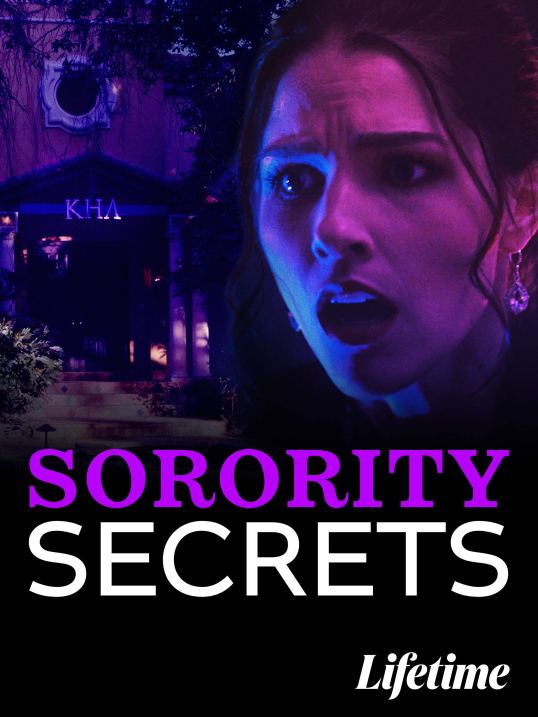
Lifetime Film Review: Sorority Secrets (dir by Damian Romay)


I’ll just be honest here.  Trying to balance receiving reports of the U.S. Capitol being stormed by rioters with watching and reviewing the 2020 Lifetime film, Sorority Secrets, was not easy.  In fact, I’m not really sure that I succeeded.

Most Lifetime films work best if they’re watched in just one sitting.  You sit down on the couch.  You watch the film.  Assuming that you’re watching it on your DVR, whenever a commercial pops up, you hit the fast forward button and you skip over it.  (That’s especially true if you’re watching something you recorded early in 2020 because there’s seriously only so many Michael Bloomberg commercials you can sit through.  Fortunately, Sorority Secrets aired in late August, after Bloomberg had dropped out but before the presidential campaign commercials really fired up.)  By skipping those commercials, you also manage to maintain a sense of narrative momentum.  You get wrapped up in the story and you don’t get distracted by the semi-annual sale and, as a result, you don’t spend too much time thinking about plot holes or anything like that.  The important thing is not to let your momentum get disrupted.  Unfortunately, earlier today, it was a bit more difficult than usual to maintain that momentum.

Still, I enjoyed Sorority Secrets.  Perhaps I would have enjoyed it more if I hadn’t been worried that a revolution was about to break out but still, it was an enjoyably over-the-top melodrama.  Lifetime is well known for airing films about cheating husbands and stalker ex-boyfriends but it’s also aired its share of dangerous sorority films.  In a dangerous sorority film, a smart young college student from a poor family always ends up getting a chance to join the biggest sorority on campus.  The student is always hesitant until she finds out that she’ll get free room and board and she’ll also get a chance to get a summer internship out of it all.  Of course, the sorority always turns out to be full of secrets.  There’s usually a murder or two, along with scenes of the student’s overprotective mother worrying that her daughter has gotten in over her head.  These are fun movies.

In Sorority Secrets, the student is Cassie (Bryntee Ratledge) and she’s shocked when she’s invited to join the snootiest sorority in campus.  She’s not even into the whole sorority thing but, you know …. free room and board and a chance to connect with influential people.  Cassie decides to go for it but she eventually discovers that her sorority is basically just a front for an escort service.  If that’s not bad enough, it appears that someone has murdered Cassie’s sorority sister, Kerrie (Shayna Benardo).  Kerrie, who bore a resemblance to Cassie, was also wearing Cassie’s jacket when she fell in front of an train.  Could she have been pushed?  Well, we know that she was because we saw the hand that gave her a shove.

Anyway, the fun thing about Sorority Secrets is that members of the sorority all basically got their own personal clothing allowance and, as a result, everyone in the film was absurdly overdressed.  Both the clothes and the sorority house were to die for and really, that’s probably the most important thing when it comes to a deadly sorority film.  Though the plot undoubtedly had its holes, the film embraced the melodrama and went happily over the top and it provided a nice distraction for a few hours.  What more can you ask for?

Lifetime Film Review: My Daughter’s Psycho Friend (dir by Michael Feifer)


My Daughter’s Psycho Friend aired in March of 2020 on the Lifetime.  I DVR’d it.  I’m not sure why I didn’t watch it when it aired.  I’d have to go back and look through all my journals to piece together what I was doing on that date in March and, quite frankly, I’m feeling a little bit too rushed to take the time to do that.  I’ve got a lot of movies to watch and review of the next few days and, in the end, it really doesn’t matter.  What does matter is that I DVR’d it and I finally sat down and watched it earlier tonight.

Now, before anything else, I should point out that My Daughter’s Psycho Friend is a brilliant title.  You see a title like that and you automatically have to watch, which makes it all the stranger that it took me so long to get around to it.  It’s not just a good Lifetime title but it’s a good title period.  I think anytime when you include the word “psycho” in the title, you’re going to catch someone’s attention.  Psycho is just such an extreme term.  The full title, “My Daughter’s Psycho Friend,” links it to what I assume would be every parent’s nightmare.  What if your child’s best friend did turn out to be a psycho?  What if they led them astray or, even worse, put them in danger?

Unfortunately, the title isn’t quite accurate.  While Lexi (Avery Kristen Pohl) does invite Sierra (Taylor Blackwell) to hang out with her after Sierra transfers into Lexi’s high school, it’s a bit of a stretch to really call Lexi and Sierra friends.  From the start, Sierra seems to be somewhat weary of Lexi and Lexi seems to know that eventually, she’s going to end up having to frame Sierra for all sorts of misdeeds.  Also, though Sierra does have a mother, she’s really not that important to the plot.  The film pretty much revolves around Sierra.  A more proper title for the film would have been My Psycho Acquaintance.

However, the title does get the psych part right.  Lexi has some definite issues that go far beyond just being a mean girl in high school.  She lives in a nice, big house and she had a glamorous mother (albeit one who makes a big deal about always having to “clean up” after Lexi’s mistakes) and everyone at school wants to be her friend but Lexi still can’t be happy unless she’s playing a cruel joke on someone.  For instance, at one party, Lexi drugs someone’s drink and then has a good laugh as that person stumbles away.  Of course, once he turns up dead in Lexi’s swimming pool, it’s time for a cover up!  And if Sierra is determined to discover the truth about what happened at the party …. well, Lexi’s just going to have to take care of that, as well.

Anyway, this was a typical Lifetime film about teenagers gone wild.  Lexi’s house was nice and Avery Kristen Pohl did a good job playing up the whole psycho part of Lexi’s personality.  If you’re into Lifetime melodrama, you should enjoy this one.

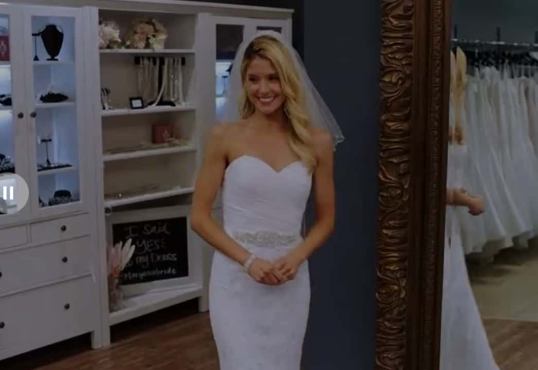
Lifetime Film Review: Fatal Fiancé (dir by Ben Meyerson)


It should be the perfect wedding.

The location is beautiful.  The weather is nice.  The romance is in the air.  The bridesmaids dresses aren’t hideous. The groom, Mark (Greg Perrow), is handsome and charming and no one seems to be too concerned with his mysterious past.  In fact, Mark is such a romantic that he even insisted on not seeing Leah (Brittany Underwood) the night before the wedding.  He is that dedicated to making sure that they have both the perfect wedding and the perfect honeymoon!  Even his future mother-in-law likes him, though that seems to have more to do with his abs than his romantic nature.

Again, it should be the perfect wedding.  There’s only one problem.  No one can find the bride!  Leah has yet to arrive for her own wedding.  Is it possible that she got cold feet and hopped on a plane for tropical island?  (That’s what her father suspects, as Leah apparently has a history of doing impulsive stuff like that.)  Or could it be something more serious?  Leah’s friends are concerned enough to call the police.

And, indeed, Leah has no absconded to the tropics.  Instead, she’s being held prisoner by Faith (Camila Banus), a mentally unstable woman who insists that Leah is making a mistake by marrying “Brian.”  But wait a minute …. Leah is marrying Mark!  Who is this Brian that Faith keeping going on about?  Has Leah mistaken Mark for another ex-boyfriend or is there something more sinister going on?

Well, you can probably guess the answer to all of those questions.  Apparently, this film was originally entitled A Deadly Bridenapping, which is a bit of unwieldy title but which, at the same time, doesn’t reveal as much about the plot as a title like Fatal Fiancé does.  As you can guess from the new title, Mark does have some secrets of his own and there’s a bit more to the kidnapping than just Faith being hung up on an ex-boyfriend.  You’ll figure all of that out long before Leah does but that’s okay.  That’s one of the pleasures of watching a Lifetime film, after all.  We always want to be a step or two ahead of the leading character, the better for us to our shake our heads whenever they make a big and obvious mistake.  Leah makes quite a few of them over the course of Fatal Fiancé.

Fatal Fiancé was a fun movie to watch.  If the best Lifetime films can be described as being about beautiful people finding themselves in ugly situations, Fatal Fiancé delivered.  Leah’s wedding dress was to die for and so were all the houses.  There was plenty of melodrama and plenty of eye candy and really, what else do you need?  Brittany Underwood was a sympathetic main character and Camilia Banus did a good job as the unstable Faith.  Greg Perrow was both charming and menacing as Mark and he got to deliver a rant about pine nut allergies that really had to be seen to be believed.  All in all, this was an entertaining movie about a wedding gone wrong.

The Alliance of Women Film Journalists Honor Nomadland


The Alliance of Women Film Journalists have announced that their pick for the best of 2020 is Nomadland.  Just as the AWFJ did with their nominations, they announced the winners in an exclusive for Variety.  Fear not, though — my picks for the best of 2020 will be released exclusively to this site.  Two can play at this game.

(I joke, of course.  Ever since Clayton Davis took over, Variety’s Oscar coverage has been wonderful and the AWFJ deserves a lot of credit for having categories that are a bit more interesting than the usual stuff.)

Anyway, here’s the winners!

AWFJ BEST OF AWARDS

(These awards are presented to women and/or men without gender consideration)

Best Film

  • “Minari” (A24)
  • “Never Rarely Sometimes Always” (Focus Features)
  • “Nomadland” (Searchlight Pictures) – WINNER
  • “One Night in Miami” (Amazon Studios)
  • “Promising Young Woman” (Focus Features)
  • “The Trial of the Chicago 7” (Netflix)

Best Director 

  • Emerald Fennell, “Promising Young Woman” (Focus Features)
  • Regina King, “One Night in Miami” (Amazon Studios)
  • Kelly Reichardt, “First Cow” (A24)
  • Aaron Sorkin, “The Trial of the Chicago 7” (Netflix)
  • Chloé Zhao, “Nomadland” (Searchlight Pictures) – WINNER

Best Actor

  • Riz Ahmed, “Sound of Metal” (Amazon Studios)
  • Chadwick Boseman, “Ma Rainey’s Black Bottom” (Netflix) – WINNER
  • Delroy Lindo, “Da 5 Bloods” (Netflix)

Best Actress 

  • Viola Davis, “Ma Rainey’s Black Bottom” (Netflix)
  • Vanessa Kirby, “Pieces of a Woman” (Netflix)
  • Frances McDormand, “Nomadland” (Searchlight Pictures) – WINNER
  • Carey Mulligan, “Promising Young Woman” (Focus Features)

Best Actor in a Supporting Role 

  • Sacha Baron Cohen, “The Trial of the Chicago 7” (Netflix)
  • Bill Murray, “On the Rocks” (A24/Apple TV Plus)
  • Leslie Odom Jr, “One Night in Miami” (Amazon Studios) – WINNER

Best Actress in a Supporting Role

  • Maria Bakalova, “Borat Subsequent Moviefilm” (Amazon Studios)
  • Ellen Burstyn, “Pieces of a Woman” (Netflix)
  • Amanda Seyfried, “Mank” (Netflix)
  • Yuh-Jung Youn, “Minari” (A24) – WINNER

Best Screenplay, Original 

  • “Mank” (Netflix) – Jack Fincher
  • “Promising Young Woman” (Focus Features) – Emerald Fennell – WINNER
  • “The Trial of the Chicago 7” (Netflix) – Aaron Sorkin

Best Screenplay, Adapted

  • “First Cow” (A24) – Kelly Reichardt and Jonathan Raymond
  • “Nomadland” (Searchlight Pictures) – Chloé Zhao – WINNER
  • “One Night in Miami” (Amazon Studios) – Kemp Powers

Best Animated Film

  • “Over the Moon” (Netflix)
  • “Soul” (Pixar) – WINNER
  • “Wolfwalkers” (Apple TV Plus/GKIDS)

Best Cinematography 

  • “Mank” (Netflix) – Erik Messerschmidt
  • “Nomadland” (Searchlight Pictures) – Joshua James Richards – WINNER
  • “One Night in Miami” (Amazon Studios) – Tami Reiker

Best Editing 

  • “One Night in Miami” (Amazon Studios) – Tariq Anwar
  • “Nomadland” (Searchlight Pictures) – Chloé Zhao – WINNER
  • “The Trial of the Chicago 7” (Netflix) – Alan Baumgarten

Best Documentary 

  • “All In: The Fight for Democracy” (Amazon Studios) – WINNER (tie)
  • “Athlete A” (Netflix)
  • “Crip Camp” (Netflix)
  • “The Painter and the Thief” (Neon) – WINNER (tie)
  • “Time” (Amazon Studios)

Best Non-English-Language Film

  • “Another Round” – Denmark – WINNER
  • “Beanpole” – Russia
  • “The Mole Agent” – Chile
  • “The Painted Bird” – Czech Republic

Best Ensemble Cast – Casting Director

  • “Da 5 Bloods” (Netflix) – Kim Coleman
  • “One Night in Miami” (Amazon Studios) – Kimberly Hardin – WINNER (tie)
  • “The Trial of the Chicago 7” (Netflix) – Francine Maisler – WINNER (tie)

EDA FEMALE FOCUS AWARDS

(These awards honor WOMEN only, excluding women who’ve won the category in the Best Of Awards.

Best Woman Director 

  • Emerald Fennell, “Promising Young Woman” (Focus Features) – WINNER
  • Eliza Hittman, “Never Rarely Sometimes Always” (Focus Features)
  • Regina King, “One Night in Miami” (Amazon Studios)
  • Channing Godfrey Peoples, “Miss Juneteenth” (Vertical Entertainment)
  • Kelly Reichardt, “First Cow” (A24)
  • Chloé Zhao, “Nomadland” (Searchlight Pictures)

Best Woman Screenwriter 

  • Radha Blank, “The Forty-Year-Old Version” (Netflix) – WINNER
  • Emerald Fennell, “Promising Young Woman” (Focus Features)
  • Eliza Hittman, “Never Rarely Sometimes Always” (Focus Features)
  • Chloé Zhao, “Nomadland” (Searchlight Pictures)

Best Animated Female 

  • “22” in “Soul” (Pixar) – portrayed by Tina Fey – WINNER
  • “Mebh Óg MacTíre” in “Wolfwalkers” (Apple TV Plus/GKIDS) – portrayed by Eva Whittaker
  • “Robyn Goodfellowe” in “Wolfwalkers” (Apple TV Plus/GKIDS) – portrayed by Honor Kneafsey

Best Woman’s Breakthrough Performance 

  • Radha Blank, “The Forty-Year-Old Version” (Netflix)
  • Sidney Flanigan, “Never Rarely Sometimes Always” (Focus Features) – WINNER
  • Helena Zengel, “News of the World” (Universal Pictures)

Outstanding Achievement by a Woman in the Film Industry 

  • All female heads of film festivals who successfully transitioned from live to online events to sustain festival culture through the pandemic.
  • All indie female writers and directors who normalized abortion as a vital element in the cultural conversation in films such as “Saint Frances,” “Never Rarely Sometimes Always,” “Sister of the Groom,” “Once Upon a River,” The Glorias” and others. – WINNER
  • Emerald Fennell for creating a film that forces empathy to put an end to the toxic sexist rape culture pervasive through modern history.
  • Sophia Loren for a brilliant comeback at age 86 in “The Life Ahead,” the latest in her record-setting career. Loren won a Best Actress Oscar in 1962 for “Two Women” and was the first actor to win for a foreign language movie. She was also nominated in 1965 for “Marriage Italian Style.” If she’s nominated in 2021, it will be a 56-year span between her two most recent nominations – the current record is held by Henry Fonda, who had a 41-year gap between nominations.

EDA SPECIAL MENTION AWARDS

Grand Dame Award for defying ageism.

  • Ellen Burstyn, “Pieces of a Woman” (Netflix)
  • Tsai Chin, “Lucky Grandma” (Good Deed Entertainment)
  • Sophia Loren, “The Life Ahead” (Netflix) – WINNER
  • Frances McDormand, “Nomadland” (Searchlight Pictures)

Most Egregious Lovers’ Age Difference Award 

  • “The Burnt Orange Heresy” (Sony Pictures Classics) – Elizabeth Debicki and Claes Bang (23 years)
  • “Devil All the Time” (Netflix) – Riley Keough and Jason Clarke (20 years)
  • “Mank” – Amanda Seyfried and Charles Dance (39 years), Gary Oldman (27 years)
  • “Tenet” – Elizabeth Debicki and Kenneth Branagh (30 years) – WINNER

She Deserves A New Agent Award 

  • Rose Byrne, “Like a Boss” (Paramount Pictures)
  • Tiffany Haddish, “Like a Boss” (Paramount Pictures)
  • Katie Holmes, “Dare to Dream” (Gravitas Ventures)
  • Uma Thurman, “The War with Grandpa” (101 Studios) – WINNER

Most Daring Performance Award 

  • Maria Bakalova, “Borat Subsequent Moviefilm’ (Amazon Studios) – WINNER
  • Haley Bennett, “Swallow” (IFC Films)
  • Vanessa Kirby, “Pieces of a Woman” (Netflix)
  • Elisabeth Moss, “The Invisible Man” (Universal Pictures)
  • Carey Mulligan, “Promising Young Woman” (Focus Features)

Time Waster Remake or Sequel Award 

  • “The Croods: A New Age” (DreamWorks Animation)
  • “Doolittle” (Universal Pictures) – WINNER
  • “Rebecca” (Netflix)

The North Carolina Film Critics Honor Minari!


The North Carolina Film Critics Association has announced their picks for the best of 2020 and, in something of a shock for anyone who has following the awards season up to this point, they did not give the best picture award to Nomadland.

Instead, they honored Minari!

And, to be honest, I couldn’t be more thrilled.  Don’t get me wrong.  It’s not that I have anything against Nomadland or that I think Minari is the best picture of the year.  I haven’t seen either film (though I hope to correct that soon) so I really don’t have an opinion on what deserves what.  Instead, I’m just happy that the precursor love is getting spread around a little.  Nomadland winning every single precursor contest was getting boring.

It’s a bit like the 2010 awards season, when The Social Network just kept winning over and over again.  When one of the precursor groups gave their price to The Kids Are All Right instead, I was like, “Finally!  Something different!”  It didn’t matter what I personally didn’t care much for The Kids Are All Right.  What was important was that we had at least gotten some variety.

You can see North Carolina’s nominees by clicking here.  And you can find the winners below!

Best Narrative Film — Minari

Best Documentary Film — Dick Johnson is Dead

Best Animated Film — Soul

Best Foreign Language Film — Another Round

Best Director — Chloe Zhao for Nomadland

Best Cinematography — Joshua James Richards for Nomadland

Best Actor — Delroy Lindo in Da 5 Bloods

Best Actress — Frances McDormand in Nomadland

Best Supporting Actor — Sacha Baron Cohen in The Trial of the Chicago 7

Best Supporting Actress — Youn Yuh-jung in Minari

Best Original Screenplay — Lee Isaac Chung for Minari

Best Adapted Screenplay — Chloe Zhao for Nomadland

Best Special Effects — Tenet

Best Music — Soul

Ken Hanke Memorial Tar Heel Award — Will Patton (actor, Minari)

Best Restoration — The Lord of the Rings Trilogy (Warner Bros.)

Hooper (1978, directed by Hal Needham)


Reuniting the Smokey and the Bandit team of director Hal Needham and stars Burt Reynolds and Sally Field, Hooper is a film that pays tribute to stuntmen.

Hooper (Burt Reynolds) is a respected but aging stunt coordinator who is currently working on an overblown action film called The Spy Who Laughed At Danger.  (The spy is played by Adam West, who appears as himself.)  Hooper knows that he’s getting too old to keep putting his life at risk but he’s addicted to thrill of doing what he calls “gags.”  Every morning, Hooper wakes up, pops pills, has a beer, and then falls off a building or crashes a car.  When he’s not doing movies, he’s getting into bar brawls.  As demonstrated during a visit to Dodge City, Hooper and his friends are modern day cowboys  but time is catching up to them.  Hooper’s girlfriend, Gwen (Sally Field), wants Hooper to settle down and retire from the business before he ends up a physical wreck like her father (Brian Keith).  Hooper feels that he has to do one last, record-setting stunt before he passes the torch over to younger stuntmen like Ski Shidski (Jan-Michael Vincent).

Hooper is a classic Burt Reynolds film, with everything that you expect from late 70s Burt.  As always, Burt is deceptively laid back.  Sally Field is cute as a button.  Old hands like Brian Keith and James Best provide strong support while Robert Klein plays the type of pompous Hollywood director who is just begging to get slugged at the end of the movie.  (He does.)  The plot of Hooper is even simpler than the plot of Smokey and the Bandit but Hooper is a more heartfelt film.  Hal Needham was a stuntman before he became a director and this film was his tribute to the underappreciated people who risked their physical well-being to make movie magic.  Needham knew men like Hooper and his friends.  They were his people.  Needham’s love for the stunt players comes through in every scene.

As for the stunts, they’re real and they’re spectacular.


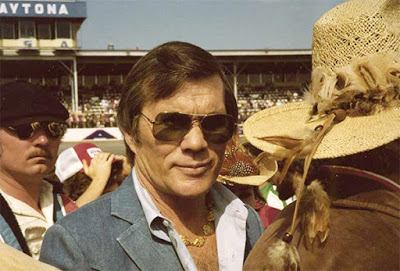
Hal Needham, of course, will always be associated with Burt Reynolds.  Before moving into directing, Needham frequently served as Reynolds’s stunt double and the two were such close friends that Needham spent 12 years living in Reynolds’s guest house.  Quentin Tarantino’s Once Upon A Time In Hollywood was partially inspired by the friendship of Burt Reynolds and Hal Needham, with Leonardo Di Caprio and Brad Pitt playing characters who were based on the two men.  (Reynolds was even originally cast in Once Upon A Time In Hollywood as George Spahn but he died before he could shoot his scenes. The role was taken over by Bruce Dern.)  Needham was responsible for directing some of Burt’s best films (Cannonball Run, Smokey and the Bandit and this one) and some of his worst (Stroker Ace and Cannonball Run II).  Needham also directed Megaforce, which didn’t feature Burt but which is still, in its own way, unforgettable.

Hal Needham (1931 — 2013)

The critics may not have loved the movies that Hal and Burt made together but audiences did.  Needham’s best films are just as entertaining today as they were when they were originally released.  They don’t demand much but they deliver everything you could possibly want.  Whenever the real world is getting to be overwhelming, I’m thankful that I can turn on a Hal Needham film and return to a world where the only thing that matters is driving fast, loving hard, and having a good laugh while you’re doing it.  Today, more than ever, the legacy of Hal Needham is just what we need.

Here Are The Nominees of the 2020 Columbus Film Critics Association!


The Columbus Film Critics Association has announced their nominees for the best of the year and it’s pretty much all of the usual suspects.  The winners will be announced on January 7th, 2021.  I do like the fact that the CFCA gives out an award for the Overlooked Film of the Year.  Some of my top films of the year — Possessor, The Vast of Night, The Assistant — are nominated in that category.

Here are the nominees!

Best Film
First Cow
Ma Rainey’s Black Bottom
Mank
Minari
Never Rarely Sometimes Always
Nomadland
Promising Young Woman
Soul
Sound of Metal
The Trial of the Chicago 7

Best Director
Lee Isaac Chung – Minari
Emerald Fennell – Promising Young Woman
David Fincher – Mank
Darius Marder – Sound of Metal
Chloé Zhao – Nomadland

Best Actor
Riz Ahmed – Sound of Metal
Chadwick Boseman – Ma Rainey’s Black Bottom
Delroy Lindo – Da 5 Bloods
Gary Oldman – Mank
Steven Yeun – Minari

Best Actress
Viola Davis – Ma Rainey’s Black Bottom
Sidney Flanigan – Never Rarely Sometimes Always
Julia Garner – The Assistant
Frances McDormand – Nomadland
Elisabeth Moss – Shirley
Carey Mulligan – Promising Young Woman

Best Supporting Actor
Sacha Baron Cohen – The Trial of the Chicago 7
Chadwick Boseman – Da 5 Bloods
Bill Murray – On the Rocks
Paul Raci – Sound of Metal
Mark Rylance – The Trial of the Chicago 7

Best Supporting Actress
Maria Bakalova – Borat Subsequent Movie Film
Olivia Colman – The Father
Olivia Cooke – Sound of Metal
Amanda Seyfried – Mank
Youn Yuh-jung – Minari

Best Ensemble
Da 5 Bloods
Ma Rainey’s Black Bottom
Minari
Promising Young Woman
The Trial of the Chicago 7

Actor of the Year (for an exemplary body of work)
Sacha Baron Cohen (Borat Subsequent Movie Film & The Trial of the Chicago 7)
Chadwick Boseman (Da 5 Bloods & Ma Rainey’s Black Bottom)
Elisabeth Moss (The Invisible Man & Shirley)

Breakthrough Film Artist
Radha Blank – The Forty-Year-Old Version (for producing, directing, screenwriting, and acting)
Emerald Fennell – Promising Young Woman (for producing, directing, and screenwriting)
Sidney Flanigan – Never Rarely Sometimes Always (for acting)
Kitty Green – The Assistant (for producing, directing, screenwriting, and film editing)
Eliza Hittman – Never Rarely Sometimes Always (for directing and screenwriting)
Alan S. Kim – Minari (for acting)
Darius Marder – Sound of Metal (for directing and screenwriting)

Best Cinematography
Christopher Blauvelt – First Cow
Erik Messerschmidt – Mank
Lachlan Milne – Minari
Joshua James Richards – Nomadland
Hoyte Van Hoytema – Tenet

Best Film Editing
Alan Baumgarten – The Trial of the Chicago 7
Kirk Baxter – Mank
Robert Frazen – I’m Thinking of Ending Things
Mikkel E.G. Nielsen – Sound of Metal
Kelly Reichardt – First Cow

Best Adapted Screenplay
Sarah Gubbins – Shirley
Charlie Kaufman – I’m Thinking of Ending Things
Kemp Powers – One Night in Miami
Jonathan Raymond & Kelly Reichardt – First Cow
Ruben Santiago-Hudson – Ma Rainey’s Black Bottom
Chloé Zhao – Nomadland

Best Original Screenplay
Lee Isaac Chung – Minari
Emerald Fennell – Promising Young Woman
Darius Marder & Abraham Marder – Sound of Metal
Andy Siara – Palm Springs
Aaron Sorkin – The Trial of the Chicago 7

Best Score
Alexandre Desplat – The Midnight Sky
Ludovico Einaudi – Nomadland
Emile Mosseri – Minari
Trent Reznor and Atticus Ross – Mank
Trent Reznor and Atticus Ross – Soul

Best Documentary
Boys State
Collective
Crip Camp
Dick Johnson is Dead
The Painter and the Thief
Time

Best Foreign Language Film
Bacurau
Beanpole
Martin Eden
Minari
The Whistlers

Best Animated Film
The Croods: A New Age
Onward
Over the Moon
Soul
Wolfwalkers

Best Overlooked Film
The Assistant
Bloody Nose, Empty Pockets
Palm Springs
Possessor
The Vast of Night

4 Shots From 4 Films In Honor Of Sergio Leone’s Birthday


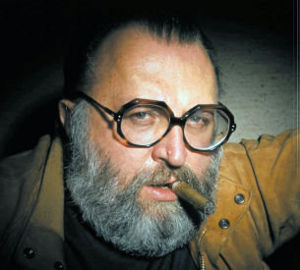
Sergio Leone (1929 — 1989)

4 Shots From 4 Films is just what it says it is, 4 shots from 4 of our favorite films. As opposed to the reviews and recaps that we usually post, 4 Shots From 4 Films lets the visuals do the talking.

91 years ago today, Sergio Leone was born in Rome.  He went to school with future composer and collaborator, Ennio Morricone.  He saw, first hand, the horrors of living under an authoritarian regime and, though it wasn’t always appreciated at the time, all of his film had an anti-fascist political subtext that was informed by growing up under Mussolini.  He went to college to be a lawyer but quickly dropped out and instead, at the age of 18, started a long apprenticeship in the Italian film industry.  He started his career by working as an assistant to Vittorio De Sica on Bicycle Thieves, which is a pretty good way to start things.  Eventually, he went on to become one of the most influential directors of all time.

Taking into mind just how influential his work would be, it’s can be easy to forget that Leone is only credited with having directed 7 films and the majority of those films were not immediately embraced.  (Though it’s generally agreed that Leone was, for all intents and purposes, the co-director of My Name Is Nobody, he was only officially credited with coming up with the film’s story.)  In the 60s, highbrow critics turned their noses up at his spaghetti westerns, even while audiences ate them up and made Clint Eastwood into a film star.  (Eastwood would later dedicate his Oscar-winning Unforgiven to Sergio Leone and Don Siegel.)  The Good, The Bad, and the Ugly and Once Upon A Time In The West are now recognized as two of the greatest westerns ever made but, at the time they were released, they were criticized for being too long and (oddly enough) thematically shallow.  Leone even had to suffer that indignity of having his final (and, in my opinion, best) film, Once Upon A Time In America, edited down by a studio that cared little about the intricate structure that Leone had crafted for his tale of greed, crime, and redemption in America.

Leone died when he was only 60, felled by a heart attack.  However, his legacy remains alive, as his films continue to inspire directors and writers and other film lovers to this day.  His two greatest films — Once Upon A Time In The West and Once Upon A Time In America — have been rediscovered and rescued from the studio hacs who previously served him so badly.  Just last year, Quentin Tarantino paid tribute to Leone with the title of his best film-to-date, Once Upon A Time In Hollywood.

On this day, we honor the legacy of a cinematic great.

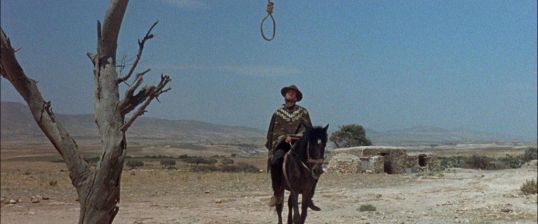
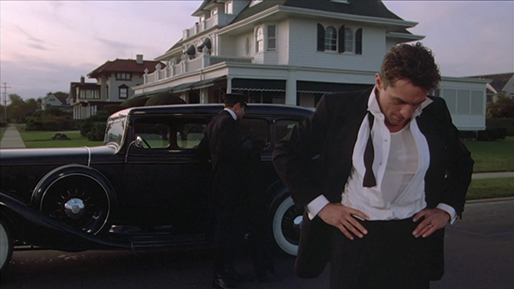
4 Shots From 4 Sergio Leone Films

A Fistful of Dollar (1964, dir by Sergio Leone, DP: Massimo Dallamano)

The Good, The Bad, and the Ugly (1966, dir by Sergio Leone, DP; Tonino Delli Colli)

Once Upon A Time In The West (1968, dir by Sergio Leone, DP: Tonino Delli Colli)

Once Upon A Time In America (1984, dir by Serigo Leone, DP: Tonino Delli Colli)