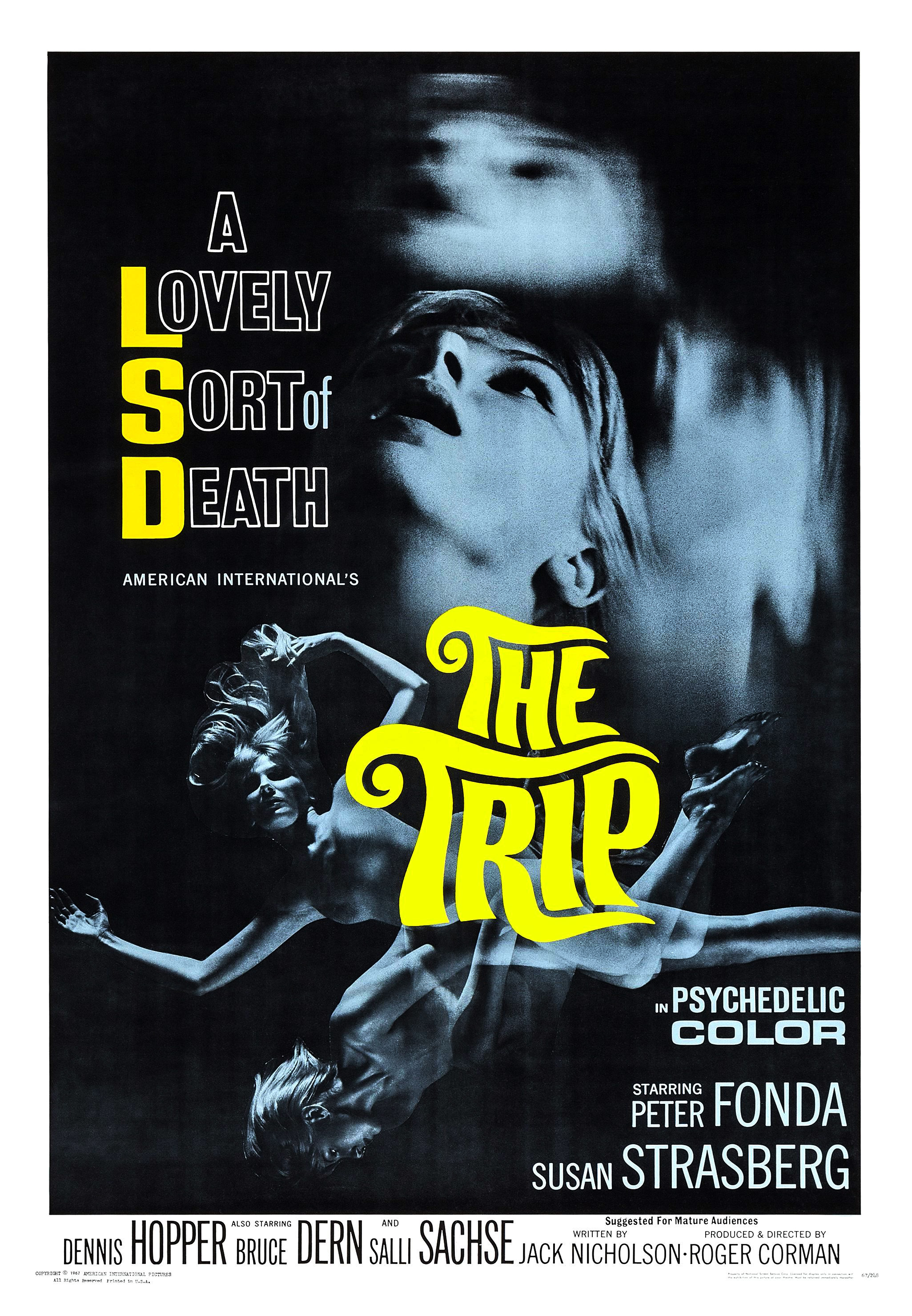
“You are about to be involved in a most unusual motion picture experience. It deals fictionally with the hallucinogenic drug LSD. Today, the extensive use in black market production of this and other so-called ‘mind bending’ chemicals are of great concern to medical and civil authorities…. This picture represents a shocking commentary on a prevalent trend of our time and one that must be of great concern to us all.” – Disclaimer at the beginning of 1967’s THE TRIP
“Tune in, turn on, drop out”, exhorted 60’s acid guru Timothy Leary. The hippie generation’s fascination with having a psychedelic experience was a craze ripe for exploitation picking, and leave it to Roger Corman to create the first drug movie, THE TRIP. Released during the peak of the Summer of Love, THE TRIP was a box office success. Most critics of the era had no clue what to make of it, but the youth…
What’s an Insomnia File? You know how some times you just can’t get any sleep and, at about three in the morning, you’ll find yourself watching whatever you can find on cable? This feature is all about those insomnia-inspired discoveries!
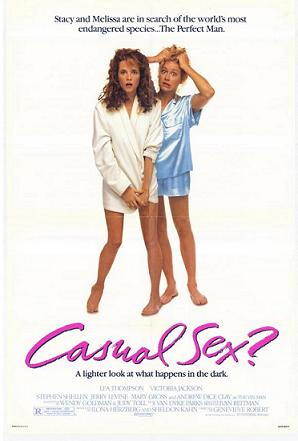
If you had insomnia at one in the morning, you could have turned over to Starz Comedy and watched the 1988 comedy, Casual Sex? That’s what I just did!
I have to admit that I’m a little bit surprised that this is the first insomnia file that I’ve written since last July. It’s not like I haven’t had insomnia between then and now. However, I guess I’ve been busy either going on vacation, writing about horror movies, writing about the Oscars, or, of course, writing about reality TV over at the Big Brother Blog and Reality TV Chat Blog. That said, I’ve always enjoyed writing these insomnia files and I’m happy to finally have the chance to do a new one.
I’m also happy to have the chance to write about a film called Casual Sex?, if just because I know that it will lead to the site getting a lot of hits from people doing google searches. They probably won’t actually be looking for a movie review but a hit is a hit!
Anyway, Casual Sex? is an 80s film. In fact, it’s such an 80s film that it probably spent the 90s recovering from an expensive coke habit. It’s a film about two best friends who have decided that they’re tired of being single. Stacy (Lea Thompson) is the promiscuous one, the one who has had many partners, has gotten involved in way too many needy relationships, and who is now freaking out over the spread of AIDS. Melissa (Victoria Jackson) is the sweet but ditzy one. Melissa has had boyfriends but she’s never had an orgasm. When Stacy tells her about an article she read about AIDS, Melissa replies that at least now she’s “not the only one who is afraid of sex.” Hoping to each find a permanent mate, Stacy and Melissa go to a health spa. Stacy immediately falls madly in love with Nick (Stephen Shellen), an aspiring musician. Melissa, meanwhile, meets the sensitive and sweet-natured Jamie (Jerry Levine), who works at the spa and gives a killer massage. Meanwhile, an annoying guy named Vinny (Andrew Dice Clay) pursues both of them and everyone else as well.
(Vinny leers at every woman that he sees and prefers to be known as the Vin Man. I know, I know. It’s hard to believe that he’s still single.)
Casual Sex? actually get off to a really good start. It opened with both Stacy and Melissa standing on an empty stage and discussing their sexual histories. Usually, I cringe whenever a movie opens with a character standing on a blank stage and talking directly to the audience. It usually feels like a lazy storytelling technique to me. (Can’t figure out a natural way to let the audience know a character’s backstory? Have them talk to directly to the audience! It’s easy and lazy!) But in Casual Sex?, this technique actually works. Lea Thompson and Victoria Jackson both give very natural and believable performances and the flashbacks to their previous experiences are all well-done and sometimes painfully relatable. Despite the fact that the film was made 30 years ago, their experiences and emotions felt timeless.
After that strong opening, the rest of the film was much more uneven. I have to admit that I had trouble telling how much of the film was meant to be satirical and how much of it was just a reflection of the time in which it was made. For instance, I wasn’t sure if I was supposed to be rolling my eyes at Nick, with his feathered hair and his overdramatic style of singing, or if that was just what was considered to be hot in the 80s. It was very confusing but, regardless of whether it was intentional or not, it was hard to take Nick seriously as anything more than a plot device. As a result, it was difficult to care about his relationship with Stacy. Melissa’s relationship with Jamie was far more interesting, largely because Jerry Levine was so likable in the role.
(Just in case anyone was wondering, Casual Sex? does feature a lot of sex but very little of it feels casual. Perhaps that’s why the title ends with a question mark. “Casual sex?” the film asks before answering, “No.”)
The film was ultimately too uneven to really be considered to be a success but I actually enjoyed it more than I thought I would. That was largely because of the performances of Lea Thompson, Victoria Jackson, and Jerry Levine. There’s a few scenes where Vinny drops his bluster and reveals a sensitive side and Andrew Dice Clay does well with these scenes but, ultimately, it’s hard to like anyone known as The Vin Man. I mean, he even has “Vin Man” written on the back of his jacket. Strangely, Clay’s performance here felt like an early version of his performance in Blue Jasmine, almost as if the Vin Man eventually changed his name to Augie and ended up marrying the sister-in-law of a Ponzi scheme manager.
Casual Sex? may not be great but it’s good enough for when you’re awake at one in the morning.
Truman Gates (Patrick Swayze) may have been raised in Appalachia but, now that he lives in Chicago, he’s left the old ways behind. He has a job working as a cop and his wife (Helen Hunt) is pregnant with their first child. When Truman’s younger brother, Gerald (Bill Paxton), shows up in town and asks for Truman’s help, Truman gets him a job as a truck driver. But, on his first night on the job, Gerald’s truck is hijacked by a Sicilian mobster named Joey Rosellini (Adam Baldwin) and Gerald is killed. Truman’s older brother, Briar (Liam Neeson), soon comes to Chicago and declares a blood feud on the mob.
Of the many action films that Patrick Swayze made between Dirty Dancing and Ghost, Roadhouse may be the best known but Next of Kin is the best. Next of Kin spends as much examining the family dynamics of Rosellini’s family as it does with Truman’s, suggesting that there is not much of a difference between the two groups. There’s even a scene where Joey’s uncle (played by Andreas Katsulas) tells Joey that the Sicily was the Appalachia of Italty. Next of Kin also has a better supporting cast than most of the films that Swayze made during this period. Along with Paxton and Neeson, the hillbillies are represented by actors like Ted Levine and Michael J. Pollard while Ben Stiller has an early role as Joey’s cousin. Patrick Swayze gives one of his better performances as Truman but the entire movie is stolen by Liam Neeson, who is a surprisingly believable hillbilly.
Rebel opens the same way as First Blood, with Sylvester Stallone hitchhiking on a country road. Other than that, the two films have nothing in common. For one thing, in Rebel, Sly is wearing a big floppy hat and stops to feed some horses with a big, goofy grin on his face. He also doesn’t get hassled by the man. Instead, he gets picked up by a bunch of hippies in VW microbus.
Stallone is playing Jerry Savage, an anti-war activist, former college student, and probably one of the hippies that spit on John Rambo when he returned from Nam. Disillusioned by protest marches that don’t seem to accomplish anything, Jerry is going to New York City so he can hook up with the Weather Underground. He and his friends are planning to blow up a kitchen goods company that has accepted a contract to build bamboo cages for the government. What Jerry doesn’t know is that the FBI is onto his scheme. Nothing works out but the movie is mostly about Jerry sitting around and talking to people about how messed up the world is. It all ends, as all low-budget movies from the 1960s must, with Jerry running through a green field.
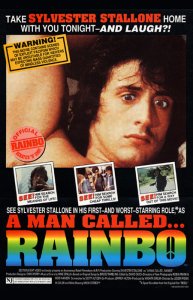
This was Stallone’s second film, after A Party At Kitty and Stud’s. He was twenty-four years old. The film was originally released under the title No Place To Hide and it vanished until Rocky made Stallone an unlikely star. It was re-released in 1980, now called Rebel and re-edited to remove almost every scene not involving Jerry, making it even more of a Stallone vehicle. This is the version that is currently available on YouTube. In 1983, new scenes were shot and this film was released once again, this time as a comedy called A Man Called … Rainbo.
(Rambo. Rainbo. Get it?)
Regardless of which version you find, there’s no reason to watch Rebel beyond the strangeness of seeing Sylvester Stallone play a hippie revolutionary but, especially if you’re a fan of Sly’s 80s law-and-order phase, that’s reason enough. Even before he was best known as Rocky, Rambo, and Cobra, Sly seems miscast as a peace-loving radical. He delivers his lines softly, trying to hide his trademark New York accent. Stallone is the best actor in the movie but, if you saw this movie in 1970, you would never expect its lead to one day be one of the biggest stars in the world.
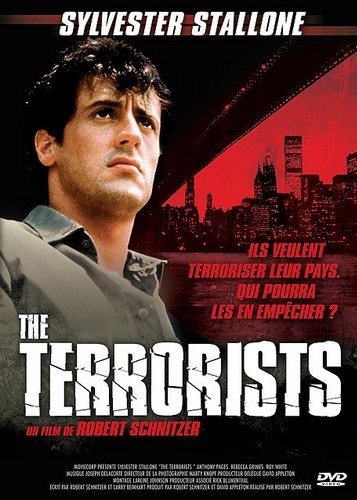
The international version was called The Terrorists.
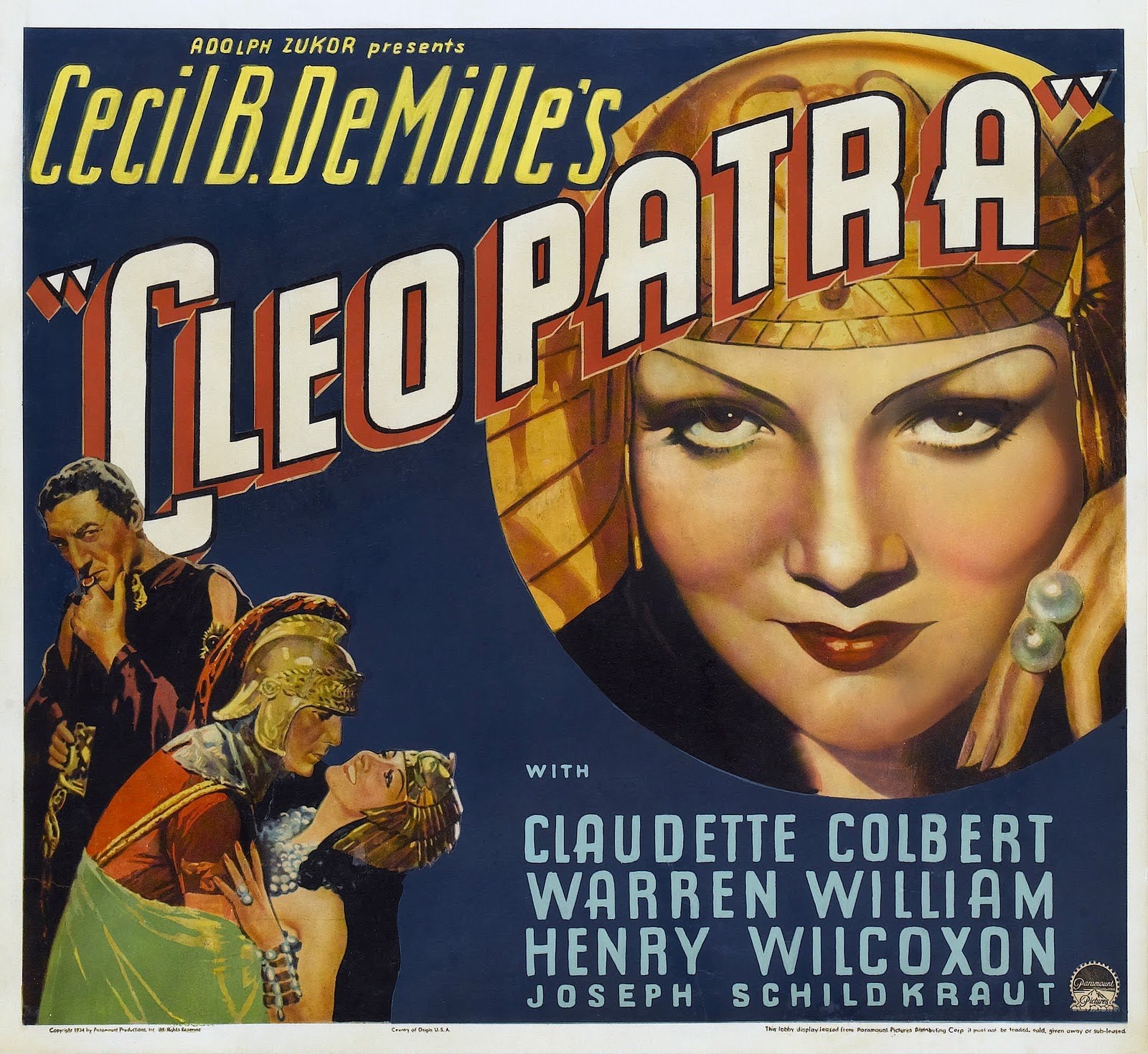
When I hear the words ‘Hollywood Epic’, the name Cecil B. DeMille immediately springs to mind. From his first film, 1914’s THE SQUAW MAN to his last, 1956’s THE TEN COMMANDMENTS, DeMille was synonymous with big, sprawling productions. The producer/director, who’s credited with almost singlehandedly inventing the language of film, made a smooth transition from silents to talkies, and his 1934 CLEOPATRA is a lavish Pre-Code spectacular featuring sex, violence, and a commanding performance by Claudette Colbert as the Queen of the Nile.
While the film’s opulent sets (by Roland Anderson and Hans Dreier) and gorgeous B&W cinematography (by Victor Milner) are stunning, all eyes will be on the beautiful, half-naked Colbert. She gives a bravura performance as Cleopatra, the ambitious, scheming Egyptian queen. She’s sensuous and seductive, wrapping both Caesar and Marc Antony around her little finger, and devious in her political machinations. If I were compare her to Elizabeth Taylor in the 1963 Joseph…
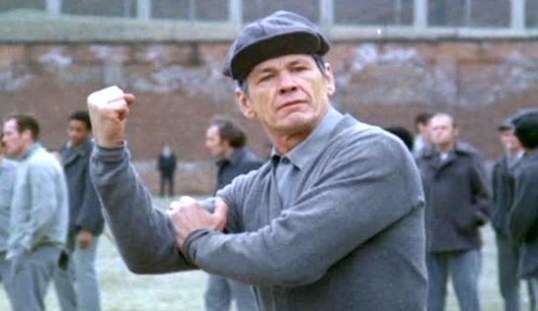
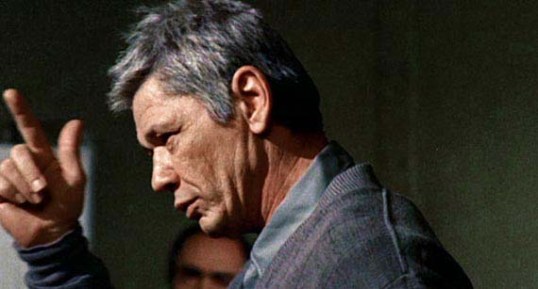
That is Charles Bronson, playing real-life mob informant Joe Valachi and making a gesture that expresses the way many people feel about the world right now. Valachi, in both the film and real life, was a bit player in the Cosa Nostra, a driver and an occasional hitman who was lucky enough to marry the daughter (played by Bronson’s real-life wife, Jill Ireland) of one of the bosses. In prison for smuggling heroin, Valachi runs into one of those bosses, Vito Genovese (Lino Ventura). Genovese, convinced that Valachi has broken the code of omerta, gives Valachi the kiss of death. Valachi kisses him right back and then becomes a rat.
Valachi’s 1963 testimony to the U.S. Senate was the public’s first glimpse into life in the Mafia. Many of the cliches that have since appeared in every mob movie or television show were the result of Valachi’s testimony and Peter Maas’s subsequent book, The Valachi Papers. (In the “Test Dream” episode of The Sopranos, Tony can be seen holding a copy of The Valachi Papers.)
Over the years, doubts have been raised about both the validity of Valachi’s testimony and his claim that he only turned rat because Genovese put a contract on his life. The film version of The Valachi Papers takes Valachi’s claims at face value, telling Valachi’s story in a series of flashbacks.
The Valachi Papers is often compared to another mob movie that came out in 1972, The Godfather, though there’s really not much of a comparison to be made. Whereas The Godfather was a family saga, The Valachi Papers is much more concerned with the day-to-day operations of the Mafia. It never comes close to matching The Godfather‘s epic feel and the cheap production values don’t help. (Keep an eye out for the twin towers of the World Trade Center, anachronistically towering over depression-era New York City.)
Storywise, The Valachi Papers actually has more in common with Goodfellas than with The Godfather. Like Henry Hill, Joe Valachi is not a major player. He’s just a working man whose employer happens to be the Mafia. Stylistically, of course, The Valachi Papers has nothing in common with Goodfellas. If not for the violence and some the language, it would be easy to mistake The Valachi Papers for an old made-for-TV movie.
The best thing about The Valachi Papers is Charles Bronson as Joe Valachi. When The Valachi Papers was made, Bronson was a huge draw in Europe but was still largely unknown in the United States. It was not until Death Wish came out, two years later, that Bronson became a star. He does a good job as Joe Valachi. In a way, it’s the perfect role for Bronson, who was a genuine tough guy who, like Valachi, spent decades working in the trenches before eventually becoming a household name.
I don’t think Charles Bronson ever would have turned informant, though.
I watched several documentaries in 2016. Here are reviews of 4 of them.
The Confessions of Thomas Quick (dir by Brian Hill)
Like the majority of Americans, I had no idea who Thomas Quick was until I watched this fascinating and rather disturbing documentary. Thomas Quick was a Swedish serial killer. Or, at least, he claimed he was.
In the 1990s, a troubled loner and career criminal who went by the name Thomas Quick confessed to committing over 20 murders. Amazingly, even though his stories were often outlandish and didn’t always make sense, it appears that the authorities took Quick at his word. Even when Quick told an implausible story about being forced to eat a baby, no one doubted his confessions.
Over the next 20 years, Quick became something of a morbid celebrity. Whereas we’ve become sadly desensitized to stories of serial killers here in the States, this was still a rare occurrence in Sweden. Of course, as The Confessions of Thomas Quick makes clear, Quick was never actually a serial killer. His confessions were all false. How and why did Thomas Quick fool everyone? The film suggests that the authorities where more interesting in closing cases than actually investigating Quick’s claims. Meanwhile, among psychiatric authorities, there was almost a cult-like insistence that Quick was telling the truth.
The Confessions of Thomas Quick is a fascinating and creepy documentary about an incredibly creepy person.
Holy Hell (directed by Will Allen)
Speaking of creepy and fascinating, just check out Holy Hell. Holy Hell is about a former actor who became a highly successful cult leader. In many ways, Michel is a silly figure. With his permanently pursed lips and a face that shows the results of one too many face lifts, Michel looks like almost a parody of a false messiah. And then when we hear him speak in his reedy voice, we wonder how anyone could have ever followed him.
But, as Holy Hell makes clear, a lot of people did follow Michel and they still do, though Michel has changed his name and has long since abandoned his former Austin compound for Hawaii. Holy Hell was directed by Will Allen, a former member of Michel’s cult and one of the many young men who were sexually abused by Michel. (Michel demanded celibacy from his followers but, in private, he felt no need to hold himself to his own standards.) Will Allen was a film student and, as such, he spent twenty years filming the cult and directing some genuinely odd music videos, all starring Michel. When Allen finally left the cult, he lost most of his footage. But what he did mange to escape with is more than enough.
Want to see how a large group of otherwise intelligent people can be brainwashed? Watch Holy Hell. Michel may be a ridiculous figure but, by the end of this documentary, he was will have scared the Hell out of you.
Rigged 2016
Do you want to know how America ended up in this current political mess? Watch Rigged 2016. Rigged 2016 was originally produced to promote the presidential candidacy of Libertarian Gary Johnson. And while the film did not accomplish its goal of winning Johnson a spot on the presidential debate stage, it did offer up a portrait of a political system that has been rigged by money, media, and special interests.
Rigged 2016 devotes most of its time to discussing the threat of Donald Trump. However, it doesn’t let the other side off the hook. Supporters of Bernie Sanders discuss how his campaign was ultimately sabotaged by the DNC.
Rigged 2016 will make you angry and hopefully, it’ll inspire you to wonder why — year after year — we continue to settle for a rigged system.
The Witness (dir by James D. Solomon)
The Witness is one of the most fascinating and thought-provoking documentaries that I have ever seen. It’s currently on Netflix and I could not recommend it more.
In 1964, a 29 year-old waitress named Kitty Genovese was brutally stabbed to death on the streets of New York City. Reportedly, 37 people heard the sound of Kitty screaming for help and none of them called the police. None of them left their apartment. For decades after, Kitty Genovese’s case was held up as an example of public apathy. And yet — even after her murderer was caught and sent to prison — Kitty remained a mystery, a symbol who never quite allowed to be an individual.
Kitty came from a large family. Her younger brother, Bill, was shaken by the reports of people refusing to help to Kitty as she was being murdered. And so, he decided that he would always help people. He enlisted in the army, specifically because he wanted to help his country and help the world. He was sent to Vietnam, where he lost both of his legs.
The Witness, which opens forty years after Kitty’s murder, is the story of Bill’s attempt to understand who Kitty was and, hopefully, come to terms with his feelings about her death. As Bill freely admits, he never really knew much about his older sister but the shadow of her death hangs over every day of his life. Though the film may be about Kitty, it’s just as much Bill’s story. It’s a story that makes us ask how much anyone can truly know about anyone else.
Bill starts by investigating whether or not Kitty’s screams were actually heard and ignored by 37 people. The majority of the 37 are now dead but Bill finds a few who are still alive. He discovers that the legend of the 37 apathetic and/or cowardly witnesses isn’t necessarily true. He goes on to talk to some of Kitty’s friends. He tries to talk to his family but most of them seem to be weary of both Kitty and Bill’s obsession. Bill even gets a chance to talk to Kitty’s girlfriend. There are suggestions that Kitty and Bill’s father rejected Kitty because Kitty was a lesbian. We discover that, living in New York and away from her family, Kitty could finally be herself. It’s interesting to note that, at no point, does The Witness idealize Kitty. I’m sure the temptation was there. At one point, Kitty’s girlfriend admits that even she’s not sure she knew who the real Kitty was.
Bill also tries to reach out to the man who murdered Kitty. The murderer refuses to talk to him. However, in perhaps the film’s most poignant moment, the murderer’s son agrees to meet with Bill. It’s a tense meeting. The son weakly defends his father. At one point, he says that he’s heard rumors that Bill has Mafia connections. The son assures Bill that people know where he is, as if he’s concerned that Bill is planning on killing him.
I have to admit that, having spent 90 minutes watching the very engaging and honest Bill deal with his emotions, there was a part of me that really wanted to hate the son. But, by the end of the scene, it becomes obvious that both Bill and the murderer’s son are suffering because of one man’s senseless act. They’re both victims of the same evil.
Bill hires an actress to walk down the same streets that Kitty once walked down. Standing in the same spot that Kitty was standing when she was attacked, the actress lets out a terrifying scream. Bill flinches. So do we.
The Witness is a powerful meditation on life, guilt, love, and family. It’s on Netflix. Watch it.
See, this is a film that you have to be careful about discussing. From the moment that it premiered at Cannes last year, The Neon Demon was the love-it-or-hate-it film of 2016.
Those of us that loved The Neon Demon really, really loved it.
And those that hated it — well, let’s just say that they really, really hated it. They complained that The Neon Demon was exploitive. They found the subject matter to be sordid. They accused the movie of being both pretentious and ultimately pointless. The plot made no sense, they complained. The film was overlong and featured about a handful of false endings. It almost seemed as if Nicholas Winding Refn was taunting anyone who expected him to make a typical melodrama about life in Hollywood.
All of that is true but, honestly, what were these people expecting? As a result of the success of Drive, many people have made the mistake of thinking that Nicholas Winding Refn is a mainstream director. He’s not. Refn is a provocateur. He is a director who often dares his audience to walk away. In The Neon Demon, each false ending challenges the audience’s assumption about how a story — any story — should end. Some people, I’m sure, would complain that Refn is all style and no substance. However, The Neon Demon is about a world where one’s worth is determined by their style. Style is substance. The world of The Neon Demon may be empty but the film is not.
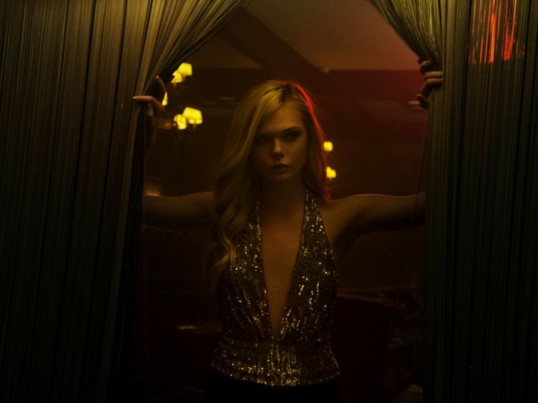
For all the debate about the film’s deeper themes (or lack of them), The Neon Demon‘s story is a fairly simple and deliberately familiar one. A teenage runaway comes to Hollywood, finds some success as a model, and discovers that the world of show business is not as romantic as she may have initially believed. When we first see Jesse (Elle Fanning), she’s posing for her boyfriend and she’s pretending to be dead. Death, beauty, and sex go hand-in-hand in The Neon Demon.
Jesse’s an interesting character, one who constantly challenges our assumptions. At first, Jesse seems like a typical innocent. She’s a virgin who is so introverted that she can barely carry on a conversation. She lives in a cheap apartment, under the menacing gaze of her sleazy landlord (Keanu Reeves, having fun playing his skeezy character). She has a boyfriend and on their dates, she tells him about how she’s always dreamed of being a star. It’s only as the film progresses that you start to realize how little you actually know about Jesse. That she’s a runway is implied early on. We never learn what led to her running away. In fact, we learn next to nothing about who she was before she appeared in Los Angeles.
In Los Angeles, Jesse is everything that the fashion industry values. She’s beautiful and, even more importantly, she’s young. We watch as Jesse goes to a casting call and we’re struck by the blank-look on her face. We wonder if there’s anything going on underneath the surface. Jesse has hallucinations, seeing a shining triangle and kissing her own reflection. Someone asks her what it’s like to be desired. She replies, “It’s everything.”
Jesse befriends Ruby (Jena Malone), a makeup artist who lives in a gigantic mansion, overlooking an empty swimming pool. When Ruby isn’t working in the fashion industry, she works at a morgue, applying makeup to corpses and occasionally engaging in necrophilia. She makes the dead beautiful so that they can be buried looking their best. Again, beauty and death are intertwined throughout The Neon Demon.
Ruby has two other friends, Gigi (Bella Heathcote) and Sarah (Abbey Lee). They’re both models, struggling to maintain their careers even as younger models, like Jesse, continue to flood into Los Angeles. Gigi has had so much cosmetic surgery that none of her original features remain. Gigi is neurotic and fearful. Sarah, on the other hand, is confident and sarcastic. When asked what she did the last time another model screwed her out of a job, Sarah calmly replies, “I ate her.”
Sarah isn’t necessarily joking either. Without giving too much away, The Neon Demon features, among other things, a character eating an eyeball that another character has just thrown up. Not surprisingly for a Refn film, there’s a lot of blood in The Neon Demon. It’s a film that opens with fake blood and ends with very real blood.
Combining the visual sense of Dario Argento with the thematic concerns of Jean Rollin, The Neon Demon is a triumph of pure style. The visuals are so strong that it’s impossible to look away, even when the film’s themes are deliberately obscure. The Neon Demon is a surreal journey into the dark side of Hollywood, a mixture of ennui, alienation, decadence, and sacrifice. It may not always make sense but it’s always fascinating to watch.
Personally, I think The Neon Demon would make a great double feature with La La Land. Two triumphs of style, two very different views of Los Angeles.
I finally got a chance to watch Zootopia last night and oh my God, what a sweet and wonderful little film it turned out to be!
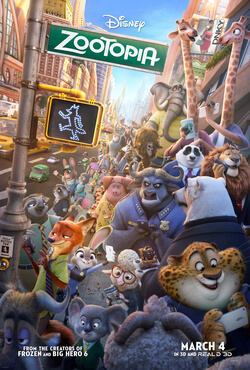
Zootopia is an animated film from Disney and it started out with a premise that sounds very Disney-like. Zootopia takes place in a world where there are no humans. Instead, animals walk and talk and scheme and plan and joke and dance and … well, basically, do everything that humans do. Except they’re a lot cuter when they do it because they’re talking animals.
Judy Hopps (voiced by Gennifer Goodwin) is a rabbit who happens to be an incurable optimist. (We should all try to be more like Judy.) Even when she was growing up on the farm, Judy knew that she would someday move to the sprawling metropolis of Zootopia and become the first rabbit on the city’s police force. When she finally does graduate from the police academy, Judy gets a lot of attention as a trailblazer. But she quickly discovers that she’s only been hired to be a token, a political tool to help the city’s mayor, a blowhard of a lion named Lionheart (J.K. Simmons, voice the role that he was born to voice), win reelection.
See, Zootopia may look like a wonderful place to live but, as quickly becomes apparent, it’s a city in which the peace is very tenous. Animals that are traditionally prey — like Judy and her fellow rabbits — may live with the predators but they certainly don’t trust them. And the predators may not eat the prey but they certainly don’t respect them. Underneath the cute face of every talking animal, there lies prejudice and resentment. Lionheart is a predator who needs the votes of prey to remain in office. What better way to win their trust then to make Judy Hopps a police officer?
Judy may be a member of the police force but that doesn’t mean that she’s going to be allowed to actually do anything. While every other member of the force gets an exciting assignment, Judy is assigned to traffic duty.
However, an otter has recently vanished. He’s just the latest of 14 predators to vanish in the city. With the help of seemingly sympathetic deputy mayor, Judy gets herself assigned to the case. But there’s a catch. She has 48 hours to find the otter. If she doesn’t find that otter, she’ll resign from the force and go back to the farm.
Luckily, Judy is not working alone. She knows that the last animal known to have seen the otter is a fox named Nick Wilde (Jason Bateman). Nick’s a bit of a con artist and, as a predator, he wants nothing to do with Judy and she doesn’t quite trust him. But, events — which I’m not going to spoil here — force them to work together and uncover the darkest secrets of life in Zootopia…
If Zootopia sounds cute, that’s because it is. It’s perhaps one of the most adorable films that I’ve ever seen, full of wonderful animation and memorable characters. But, at the same time, there’s a very serious theme running through Zootopia. Zootopia is about more than just talking animals. It’s a film about prejudice, racism, sexism, and intolerance. It’s a film that invites us to not only laugh but also to reconsider the world around us.
Zootopia is currently on Netflix and, if you haven’t seen it yet, I highly recommend it. It’s great for children and adults.
Sausage Party opens with a scene that could have come straight for a heart-warming Pixar film. It’s morning and, in a gigantic grocery store called Shopwell’s, all of the grocery items are excited about the start of a new day. The hot dogs are singing. The buns are harmonizing. The produce is bragging about how fresh they are. Everyone is hoping that this will be the day that they are selected to leave the aisles of Shopwell’s and that they’ll be taken to the Great Beyond. At Shopwell’s, shoppers are viewed as being Gods and being selected by a God means…
…well, no one is quite sure what it means but everyone’s sure that it has to be something good. Surely, the Great Beyond couldn’t be something terrible, right? At least, that’s what everyone assumes until a previously purchased jar of Honey Mustard returns to the store and tells a hot dog named Frank (voiced by Seth Rogen, who also co-wrote the film) that the Great Beyond is a lie. The Great Beyond is not a paradise. Instead, it’s something terrible. Before Honey Mustard can be persuaded to give more details, it leaps off the shelf, choosing suicide over being restocked.
What could it all mean? Well, there’s not too much time to worry about that because, even as Honey Mustard is committing suicide, a customer is selecting both Frank and Frank’s girlfriend, a bun named Brenda (Kristin Wiig). They’re going to the Great Beyond together! Yay! Except…
…calamity! A shopping cart collision leads to both Frank and Brenda being thrown to the floor. While their friends are taken to the Great Beyond, Frank and Brenda are left to wander the store. It turns out that Shopwell’s really comes alive after the lights go down and the doors are locked. All of the grocery items leave their shelves and have one big party. Frank seeks answers about the Great Beyond from a bottle of liquor named Firewater (Bill Hader). Firewater has all the answers but you need to be stoned to truly understand. This is a Seth Rogen movie, after all. Meanwhile…
…Frank’s friends, the ones who survived the earlier cart collision, are discovering that the Great Beyond is not what they thought it was…
I apologize for all the ellipses but Sausage Party is the kind of movie that warrants them. This is a rambling, occasionally uneven, and often hilariously funny little movie. (I know that there were allegations that the film’s animators were treated horribly. That’s sad to hear, not least because they did a truly wonderful job.) Sausage Party was perhaps the ultimate stoner film of 2016, a comedy with a deeply philosophical bent that plays out with a logic that feels both random and calculated at the same time.
(If you’ve ever had the three-in-the-morning conversation about “What if our entire universe is just a speck of dust in a bigger universe?”, you’ll immediately understand what Sausage Party is trying to say.)
It’s also an amazingly profane little movie but again, that’s a huge reason why it works. Yes, a lot of the humor is juvenile and hit-and-miss. (I cringed whenever the film’s nominal villain, a douche voiced by Nick Kroll, showed up.) But for every joke that misses, there’s a joke that works perfectly. Interestingly, for all the silliness that’s inherent in the idea of making a film about talking grocery items, there’s a strain a very real melancholy running through Sausage Party. Sausage Party may be a dumb comedy but that doesn’t mean that it doesn’t have a lot on its mind.
Since it’s a Seth Rogen film, the cast is full of familiar voices. Yes, James Franco can be heard. So can Paul Rudd, Danny McBride, Salma Hayek, Edward Norton, Jonah Hill, and Craig Robinson. They all sound great, bringing vibrant life to the film’s collection of consumables and condiments.
Sausage Party. After watching it, it’s possible you’ll never eat another hot dog.

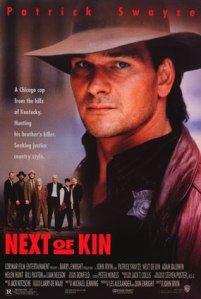 Truman Gates (Patrick Swayze) may have been raised in Appalachia but, now that he lives in Chicago, he’s left the old ways behind. He has a job working as a cop and his wife (Helen Hunt) is pregnant with their first child. When Truman’s younger brother, Gerald (Bill Paxton), shows up in town and asks for Truman’s help, Truman gets him a job as a truck driver. But, on his first night on the job, Gerald’s truck is hijacked by a Sicilian mobster named Joey Rosellini (Adam Baldwin) and Gerald is killed. Truman’s older brother, Briar (Liam Neeson), soon comes to Chicago and declares a blood feud on the mob.
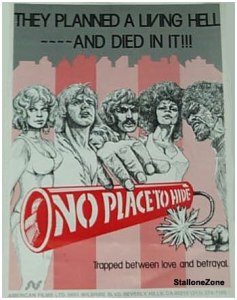 Rebel opens the same way as First Blood, with Sylvester Stallone hitchhiking on a country road. Other than that, the two films have nothing in common. For one thing, in Rebel, Sly is wearing a big floppy hat and stops to feed some horses with a big, goofy grin on his face. He also doesn’t get hassled by the man. Instead, he gets picked up by a bunch of hippies in VW microbus.
 This was Stallone’s second film, after A Party At Kitty and Stud’s. He was twenty-four years old. The film was originally released under the title No Place To Hide and it vanished until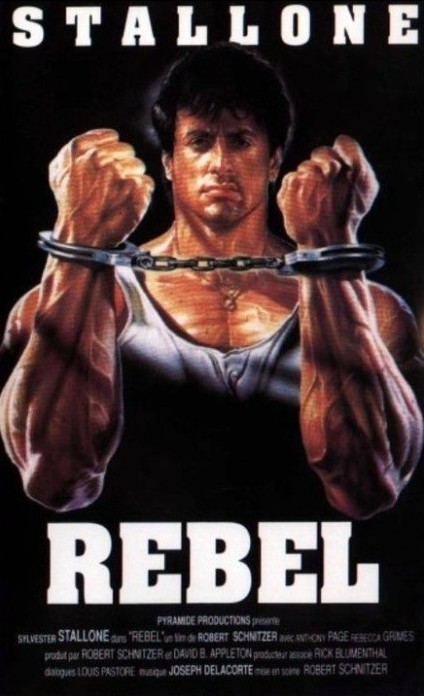

 Through the Shattered Lens