The Party’s Over: Dean Martin in MR. RICCO (MGM 1975)


gary loggins's avatarcracked rear viewer

ric1

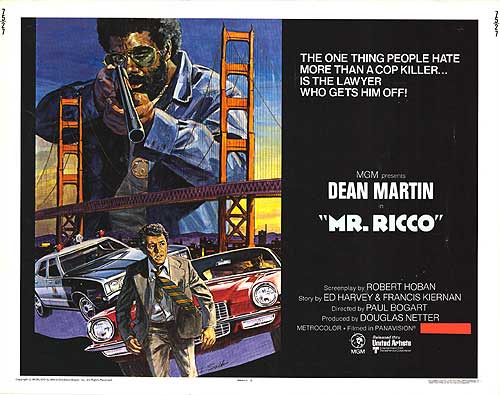
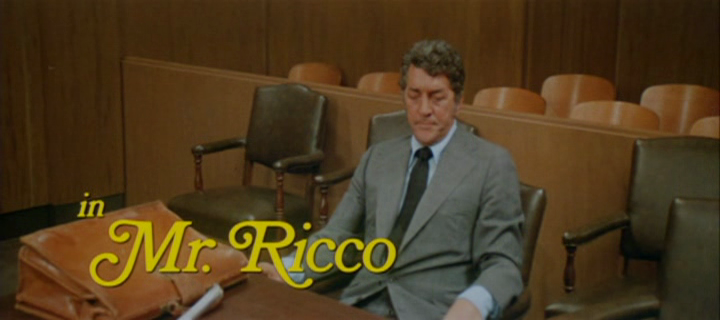
It’s an older, more world-weary Dean Martin we see in MR. RICCO, a fairly gritty but ultimately unfulfilling 70’s flick that would’ve made a decent pilot for a TV series (maybe in the NBC MYSTERY MOVIE rotation with Columbo and McCloud), but as a feature was best suited for the bottom half of a double bill. This was Dino’s last starring role, though he did appear in two more movies (THE CANNONBALL RUN and it’s sequel), and this attempt to change his image from footloose swinger to a more *gasp!* sober Martin doesn’t really cut it.

ric4

Dean’s a defense lawyer, a “lily white liberal” who gets black militant Frankie Steele (Thalmus Rasulala ) off a murder rap. When two cops are blown away in an ambush, the witness provides a description of Steele, causing friction between Ricco and the police, especially his friend Detective Captain Cronyn (Eugene Roche, an underrated character actor who’s really good here). The…

View original post 432 more words

A Movie A Day #32: Number One (1969, directed by Tom Gries)


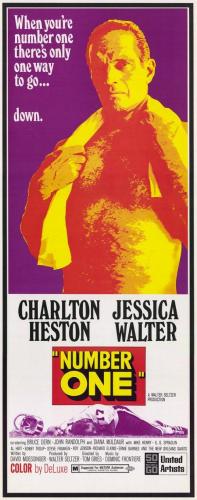
number-oneQuarterback Cat Catlan (Charlton Heston) used to be one of the greats.  For fifteen years, he has been a professional football player.  He probably should have retired after he led the New Orleans Saints to their first championship but, instead, the stubborn Cat kept playing.  Now, he is 40 years old and struggling to keep up with the younger players.  His coach (John Randolph) says that Cat has another two or three years left in him but the team doctor (G.D. Spradlin who, ten years later, played a coach in North Dallas Forty) says that one more strong hit could not only end Cat’s career but possibly his life as well.  Two of former Cat’s former teammates (Bruce Dern and Bobby Troup) offer to help Cat find a job off the field but Cat tells them the same thing that he tells his long-suffering wife (Jessica Walter).  He just has to win one more championship.

Number One is unique for being one of the first movies to ever take a look at the dark side of professional football.  At 40, Cat is facing an uncertain future.  His years of being a star have left him unprepared to deal with life in the real world.  He has no real friends and a wife who no longer needs him.  This would seem like a perfect role for Heston, who always excelled at playing misanthropes.  Heston is convincing when he’s arguing with his wife or refusing to sign an autograph but, surprisingly, he is thoroughly unconvincing whenever he’s on the field.  For all of his grunting and all the lines delivered through gritted teeth, Heston is simply not believable as a professional athlete, even one who is past his prime.  (When he played the 40 year-old Cat, Heston was 46 and looked like he was 56.)  Whenever Cat throws a football, he’s played by Heston in close-ups and very obviously replaced by real-life Saints quarterback Billy Kilmer for the long shots.  A football film is only as good and convincing as the football action and, on that front, Number One leaves much to be desired.

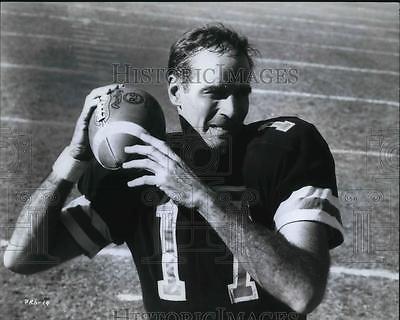
The 1969 press photo displays Heston's throwing technique.

This 1969 press photo displays Heston’s throwing technique.

Two final notes: For the scene in which Cat is tackled by three Dallas Cowboys (all played by actual players), Heston requested that the players actually tackle him.  Heston ended up with three broken ribs.

Finally, Number One was made the cooperation of the New Orleans Saints and features several players in the cast.  When Number One was filmed, the Saints were still a relatively new expansion team.  Cat is described as having already led the Saints to a championship but it would actually be another 40 years before the Saints would finally make their first trip to the Super Bowl.

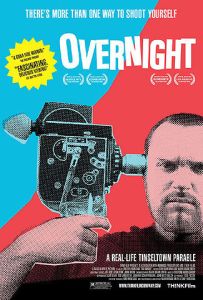
A Movie A Day #31: Overnight (2003, directed by Tony Montana and Mark Brian Smith)


overnightThe year is 1997 and Troy Duffy is on top of the world.  The Boston-bred Troy is a bartender and bouncer who has just sold his first script to Harvey Weinstein and Miramax.  Weinstein is not only going to give him fifteen million dollars to make The Boondock Saints but he is also going to help Troy buy his own bar.  Troy’s band, The Brood, is on the verge of signing a contract with Maverick Records.  Stars like Mark Wahlberg and Ewan McGregor are eager to meet with him, though Duffy offends McGregor with his outspoken support of the death penalty.  Miramax suggests that Duffy should cast Sylvester Stallone, Keanu Reeves and Ethan Hawke in his movie.  Duffy calls Keanu a “fucking punk.”

The year is 1998 and Troy Duffy is no longer on the top of the world.  He’s in his apartment, chain-smoking, drinking, and cursing Harvey Weinstein.  Duffy has managed to offend everyone at Miramax and The Boondock Saints has been put into turn around.  When Duffy finally does find someone willing to produce his film, he has to settle for a budget this is half of what Weinstein was originally willing to provide.  Jeff “Skunk” Baxter, the legendary Doobie Brother himself, is producing The Brood’s first album but he thinks that Troy’s brother, Taylor, is the band’s breakout star.  The other members of the Brood are growing tired of Troy’s ego.

The year is 2000.  The Boondock Saints goes unsold at Cannes.  When it finally does get a release, it only plays in five theaters and is pulled after a week.  Though the film finds success on video, the contract that Troy signed prevents him from making any money off of it.  The Brood’s debut CD sells less than 700 copies.  Consumed by paranoia, Troy drives away all of his family and friends.  When he’s invited to speak at a film class at Boston University, he ends up verbally assaulting even those who compliment him.  Convinced that he’s being targeted, Troy goes into semi-hiding.

It’s a familiar story, one that has happened to many aspiring filmmakers.  What made Troy Duffy unique was that he invited two of his friends, Tony Montana and Mark Brian Smith, to film him while it happened.  Duffy was hoping the end result would be a portrait of a genius at the start of his career but, instead, the documentary became a portrait of a talented man destroyed by a combination of ego and paranoia.

Overnight is usually described as being a cautionary tale but, as opposed to the filmmakers at the center of documentaries like American Movie and Hearts of Darkness, Troy Duffy comes across like he was probably an asshole even before he was discovered by Harvey Weinstein.  As a result, Troy Duffy is never a sympathetic figure but it’s still interesting to see how crazy things got.  If you’re a fan of either Boondock Saints or its sequel, Overnight is required viewing.


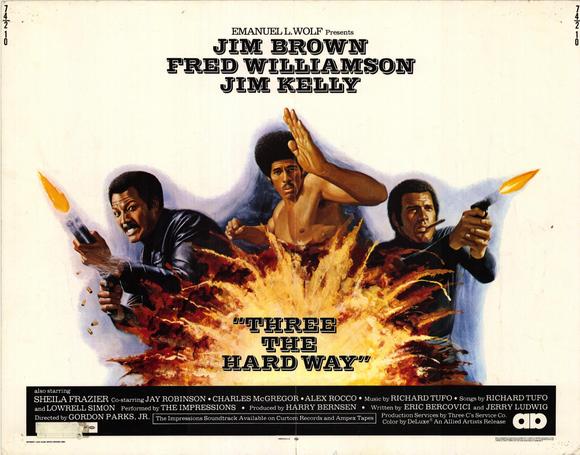
That’s Blaxploitation! 9: THREE THE HARD WAY (Allied Artists 1974)


gary loggins's avatarcracked rear viewer

tthw1

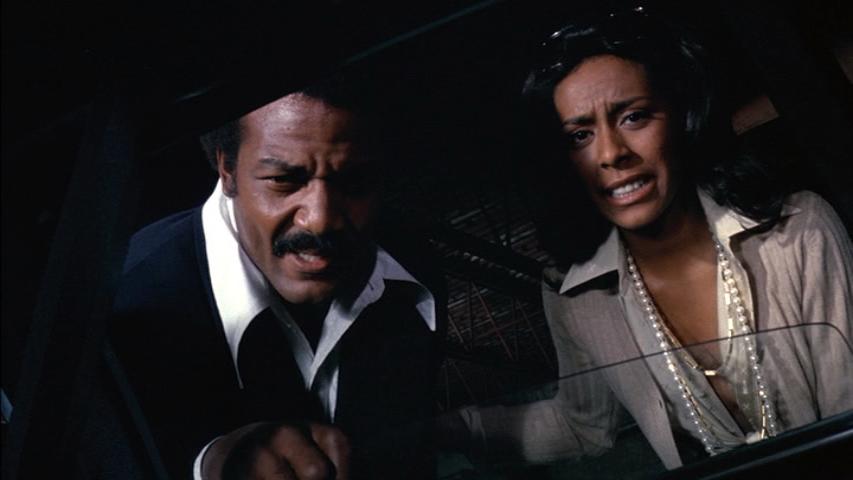
An All-Star Blaxploitation cast barrels their way through THREE THE HARD WAY, director Gordon Parks Jr.’s ultra-violent classic that dives into action from jump street and rarely lets up on the gas pedal straight through til the end. It’s the quintessential 70’s action flick whose thin plot only serves to weave a tapestry of wild action set pieces and well-staged stunt work courtesy of stunt coordinator Hal Needham and his stellar stunt gang.

tthw2

We’re lured into the action right from the get-go in a pre-credits scene of a desperate young black man escaping from a concentration-camp-like compound. He makes it to L.A. and contacts his friend, the BMW-driving, hot-shot record producer Jimmy Lait, played by NFL great Jim Brown . The kid is then assassinated in his hospital bed and Jimmy’s girl Wendy (Sheila Fraser) is kidnapped. A scene change lets us in on the plot, as white supremacist Monroe Feather and evil scientist…

View original post 387 more words

A Movie A Day #30: Prince of the City (1981, directed by Sidney Lumet)


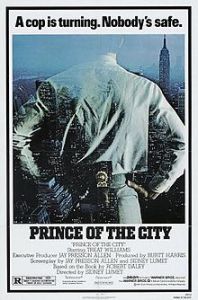
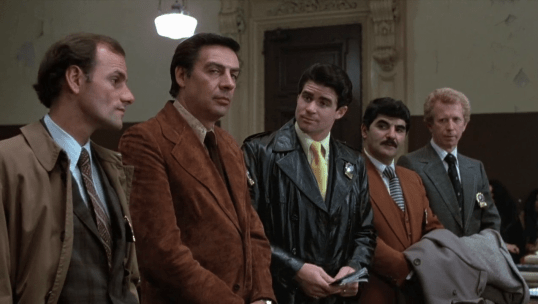
220px-prince_of_the_city_foldedIn 1970s New York City, Danny Ciello (Treat Williams) is a self-described “prince of the city.”  A narcotics detective, Ciello is the youngest member of the Special Investigations Unit.  Because of their constant success, the SIU is given wide latitude by their superiors at the police department.  The SIU puts mobsters and drug dealers behind bars.  They get results.  If they sometimes cut corners or skim a little money for themselves, who cares?

It turns out that a lot of people care.  When a federal prosecutor, Rick Cappalino (Norman Parker), first approaches Ciello and asks him if he knows anything about police corruption, Ciello refuses to speak to him.  As Ciello puts it, “I sleep with my wife but I live with my partners.”  But Ciello already has doubts.  His drug addict brother calls him out on his hypocrisy. Ciello spends one harrowing night with one of his informants, a pathetic addict who Ciello keeps supplied with heroin in return for information.  Ciello finally agrees to help the investigation but with one condition: he will not testify against anyone in the SIU.  Before accepting Ciello’s help, Cappalino asks him one question.  Has Ciello ever done anything illegal while a cop?  Ciello says that he has only broken the law three times and each time, it was a minor infraction.

For the next two years, Ciello wears a wire nearly every day and helps to build cases against other cops, some of which are more corrupt than others.  It turns out that being an informant is not as easy as it looks.  Along with getting burned by malfunctioning wires and having to deal with incompetent backup, Ciello struggles with his own guilt.  When Cappalino is assigned to another case, Ciello finds himself working with two prosecutors (Bob Balaban and James Tolkan) who are less sympathetic to him and his desire to protect the SIU.  When evidence comes to light that Ciello may have lied about the extent of his own corruption, Ciello may become the investigation’s newest target.
prince-of-the-city

Prince of the City is one of the best of Sidney Lumet’s many films but it is not as well-known as 12 Angry Men, Dog Day Afternoon, Network, Serpico, The Verdict, or even The Wiz.  Why is it such an underrated film?  As good as it is, Prince of the City is not always an easy movie to watch.  It’s nearly three hours long and almost every minute is spent with Danny Ciello, who is not always likable and often seems to be on the verge of having a nervous breakdown.  Treat Williams gives an intense and powerful performance but he is such a raw nerve that sometimes it is a relief when Lumet cuts away to Jerry Orbach (as one of Ciello’s partners) telling off a district attorney or to a meeting where a group of prosecutors debate where a group of prosecutors debate whether or not to charge Ciello with perjury.

Prince of the City may be about the police but there’s very little of the typical cop movie clichés.  The most exciting scenes in the movie are the ones, like that scene with all the prosecutors arguing, where the characters debate what “corruption” actually means.  Throughout Prince of the City, Lumet contrasts the moral ambiguity of otherwise effective cops with the self-righteous certitude of the federal prosecutors.  Unlike Lumet’s other films about police corruption (Serpico, Q&A), Prince of the City doesn’t come down firmly on either side.

(Though the names have been changed, Prince of the City was based on a true story.  Ciello’s biggest ally among the investigators, Rick Cappalino, was based on a young federal prosecutor named Rudy Giuliani.)

Prince of the City is dominated by Treat Williams but the entire cast is full of great New York character actors.  It would not surprise me if Jerry Orbach’s performance here was in the back of someone’s mind when he was cast as Law & Order‘s Lenny Briscoe.  Keep an eye out for familiar actors like Lance Henriksen, Lane Smith, Lee Richardson, Carmine Caridi, and Cynthia Nixon, all appearing in small roles.

Prince of the City is a very long movie but it needs to be.  Much as David Simon would later do with The Wire, Lumet uses this police story as a way to present a sprawling portrait of New York City.  In fact, if Prince of the City were made today, it probably would be a David Simon-penned miniseries for HBO.
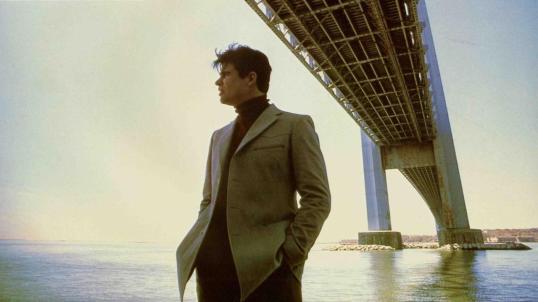
image-w1280

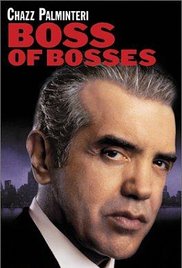
A Movie A Day #29: Boss of Bosses (2001, directed by Dwight H. Little)


bossWho was the boss of bosses?  According to this movie, he was Paul Castellano.  A cousin-by-marriage to the notorious crime boss Carlo Gambino, Castellano grew up in New York City and first became a made man in the 1930s.  After four decades of loyal service, Castellano succeeded Carlo as the boss of the Gambino Crime Family.  As portrayed in this movie, Castellano attempted to keep the Gambinos out of the drug trade and tried to steer both his biological and his crime family into legitimate businesses.  However, not everyone appreciated Castellano’s vision of the future and, in 1985, he was assassinated on the orders of his eventual successor, John Gotti.

Considering that this biopic was made for TNT and was directed by Dwight H. Little (who was best known for directing films like Halloween 4 and Free Willy 2), it’s probably not surprising that not a single mob cliché goes unturned in Boss of Bosses.  At first, I had a hard time accepting Chazz Palminteri as Castellano because Palminteri sounded exactly like Joe Mantegna voicing Fat Tony on The Simpsons.  Once I got over the vocal similarities, I saw that Palminteri was actually giving a very good, noncartoonish performance as Castellano but the film itself never convinces us that Castellano was anything more than a forgettable placeholder between the reigns of the legendary Gambino and the flamboyant Gotti.

Boss of Bosses, which is also known as Godfather of New York, is currently available on YouTube.

A Movie A Day #28: Scandal (1989, directed by Michael Caton-Jones)


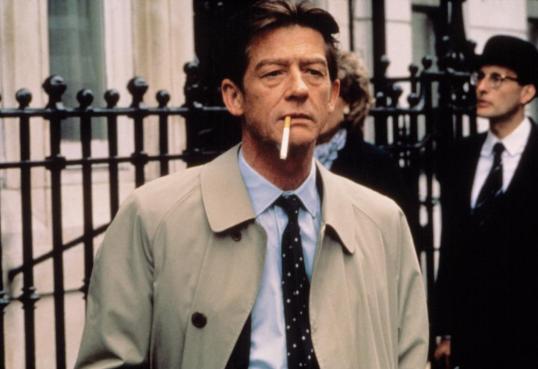
scandal-posterLondon.  1961.  Doctor Stephen Ward (played by John Hurt) is an artist and an osteopath.  He counts among his patients some of the most distinguished men and women in British society, including the Minister of War, John Profumo (Ian McKellen).  After meeting two young dancers, Christine Keeler (Joanne Whalley) and Mandy Rice-Davies (Bridget Fonda), Stephen becomes their mentor, the Henry Higgins to their Eliza Doolittle.
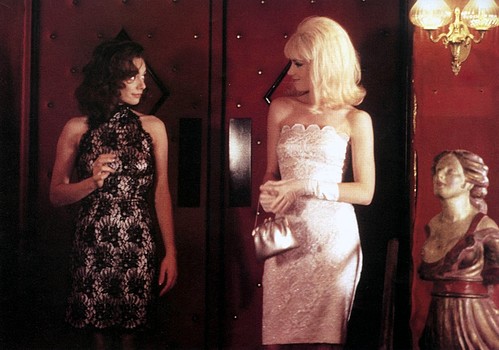
Under Stephen’s watchful eye, both Christine and Mandy are soon having affairs with some  of the most powerful members of Harold Macmillan’s Conservative government.  Christine becomes the mistress of both Profumo and KGB agent, Yevgeny Ivanov (Jeroen Krabbe), along with maintaining off-and-on relationships with drug dealer Johnny Edgecombe (played by singer Roland Gift) and musician Lucky Gordon (Leon Herbert).

When a disagreement leads to Johnny slashing Lucky’s face and then getting arrested for firing a gun at Stephen’s flat, the public learns the details of Christine’s affair with Profumo.  With the scandal rocking the British government, Stephen is a convenient scapegoat and soon finds himself on trial, charged with making a living off of “immoral earnings.”

Based on the real life scandal that led to the eventual fall of Harold Macmillan’s government, Scandal is remarkably faithful to the facts of the Profumo Affair, even if it did leave out some of the more interesting allegations.  (For instance, no mention is made of an alleged encounter between Mandy Rice-Davies and President Kennedy.)  Though it may seem tame by today’s standards, when Scandal was first released in 1989, it was considered to be something of a scandal itself and it initially got an X rating when it was released in the United States.  (The scandal over Scandal is one of the things that led to the MPAA adopting the NC-17 rating to distinguish between films for adults and “adult” films.  Of course, it didn’t work as a potential NC-17 still carries the same stigma as the X rating did.)

scandal

Scandal holds up well as both a recreation of London on the verge of the sexual revolution and a look at contrast between private and public mores.  Both Joanne Whalley and Bridget Fonda are excellent in the roles of Christine and Mandy.  Fonda gets to deliver the most famous line of the whole Profumo Affair when Mandy is told that Lord Astor has denied having had an affair with her.  “He would, wouldn’t he?” she says.  After I watched Scandal last night, I did some checking and I discovered that Bridget Fonda has not made a film since 2002.  She is missed.

Not surprisingly, Scandal‘s best performance comes from John Hurt, who plays Stephen Ward as a naive and well-meaning social butterfly who ultimately gets in over his head and pays a steep price for trusting that his friends would remain his friends.  Scandal is just one of many movies that proves what a great talent was lost when the world lost John Hurt.

RIP.

SCANDAL, John Hurt, 1989

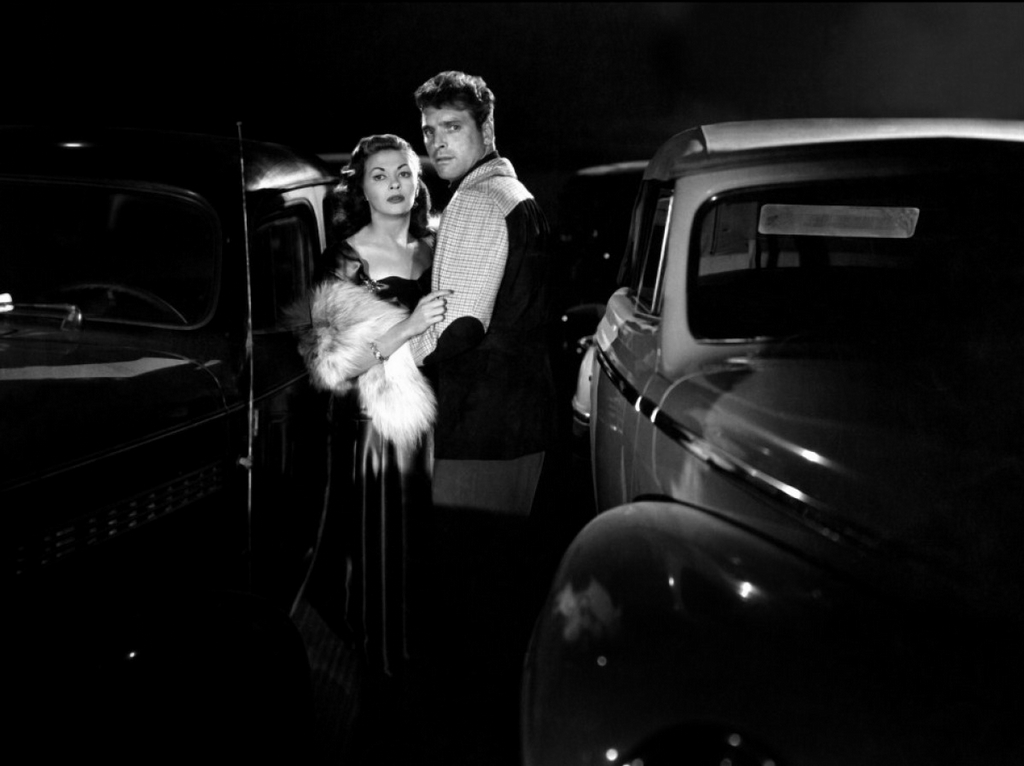
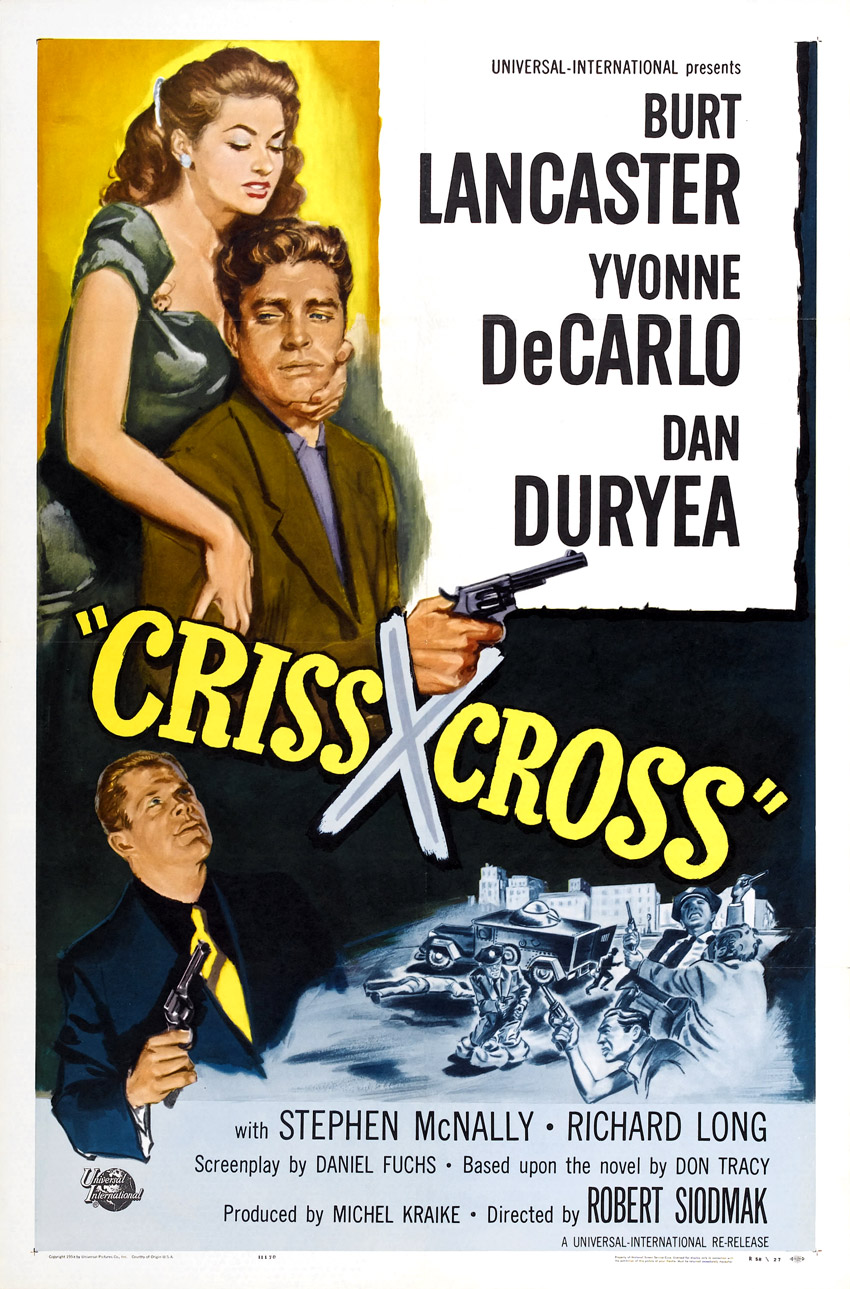
A Bout De Souffle: Robert Siodmak’s CRISS CROSS (Universal-International 1949)


gary loggins's avatarcracked rear viewer

cc1

CRISS CROSS hits you like a sucker punch to the gut, delivered hard and swift, followed by a non-stop pummeling that doesn’t let up until the final, fatal shot. Things kick right in as we find clandestine lovers Steve Thompson and Anna Dundee going at it hot’n’heavy in a nightclub parking lot. They go inside, and Steve gets into it with Anna’s husband, the gangster Slim Dundee, who pulls a knife, but the fight’s interrupted by Lt. Pete Rameriz, Steve’s boyhood pal. What Pete doesn’t know is the fight was staged for his benefit: Steve is the inside man on a planned armored car heist Dundee’s gang is pulling off.

cc3

Flashbacks tell us how Steve got here: he was once married to Anna, and after the volatile couple divorced left L.A., drifting across country picking up odd jobs along the way. Returning to the City of Angels, he finds himself…

View original post 555 more words

A Movie A Day #27: Tribes (1970, directed by Joseph Sargent)


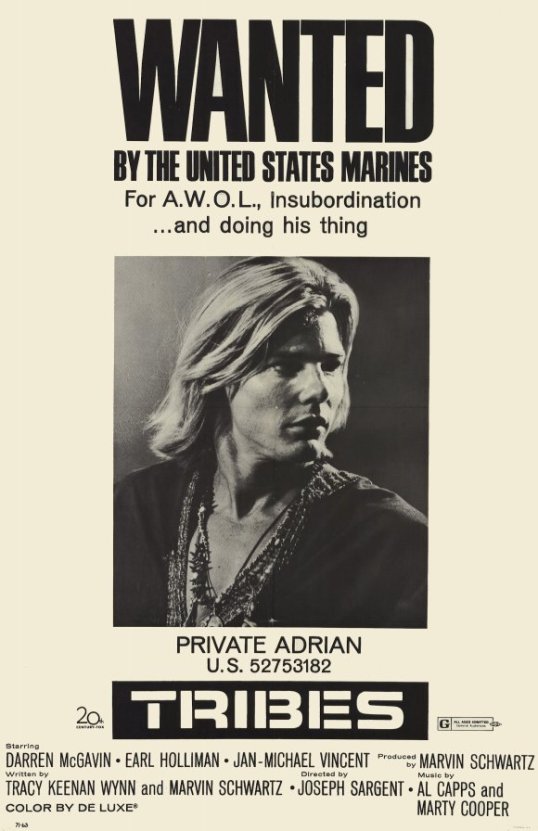
Adrian (Jan-Michael Vincent) is a free-spirited hippie who has just been drafted into the Marine Corps.  As soon as he arrives at the boot camp, his long hair get shaved off and he immediately starts to get under the skin of Sgt. DePayster (Earl Holliman).  While Adrian scored higher than anyone else in the platoon on his aptitude tests, he is also a pacifist who refuses to shoot a gun and teaches all of the other draftees how to meditate.  DePayster wants to put Adrian in the Motivational Platoon, a disciplinary unit where Adrian probably would not survive.  Trying to protect Adrian while also trying to turn him into a killing machine is his drill instructor, Sgt. Drake (Darren McGavin).

Tribes has never been released on DVD/Blu-ray but it can be watched on YouTube.  Not surprisingly, for a movie that was made for television in 1970, there are some parts of the film that have not aged well.  I doubt a real drill instructor, even one who secretly draws pictures and admires Adrian’s rebellious spirit, would have put up with Private Adrian for as long as Drake does in this movie.  Again because of its television origins, the language has been cleaned up.  You won’t mistake this one for Full Metal Jacket.  On the plus side, Earl Holliman gives a good performances as the hardass sergeant and Jan-Michael Vincent shows why he was expected to be such a big star before he ended up becoming one of Hollywood’s greatest cautionary tales.  Best of all is Darren McGavin, who is even better as the tough but fair Sgt. Drake than he was in his two best known roles, the father in A Christmas Story and reporter Carl Kolchak.

Tribes was a huge rating success when it aired, leading to it getting a limited theatrical release.  In Europe, it was retitled The Soldier Who Declared Peace.

Wanted! For doing his own thing!

Wanted! For doing his thing!


A Movie A Day #26: The Taking of Beverly Hills (1991, directed by Sidney J. Furie)


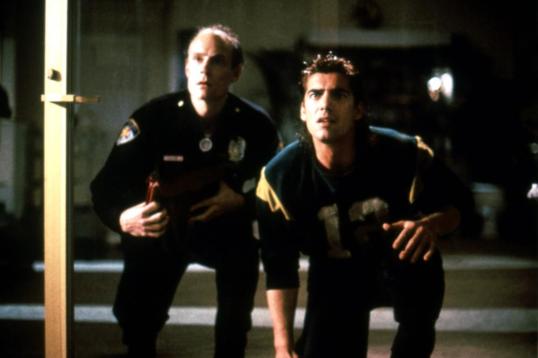
After a toxic chemical spill, Beverly Hills is evacuated.  While its citizens wait in a hotel, their mansions and valuables are guarded by the police and agents of the EPA.  Or so they think.  It turns out that the chemical spill was faked and that both the police and the government agents are in on it.  While the town’s deserted, they’re going to rob everyone blind.  The scheme’s mastermind is Bat Masterson (Robert Davi), the owner of L.A. Rams.  What Masterson doesn’t realize is that one citizen of Beverly Hills stayed behind, his own quarterback, Boomer Hayes (Ken Wahl).  Teaming up with Ed Kelvin (Matt Frewer), the last honest cop in town, Boomer sets out to protect Beverly Hills.

It’s just a dumb as it sounds.  In fact, of the many Die Hard ripoffs that came out in the late 80s and the early 90s, The Taking of Beverly Hills is probably the dumbest, which also makes it one of the most entertaining.  Boomer, who has an impressive mullet, can only speak in football analogies, constantly assuring Ed that it’s only the first down and that they can turn things around after halftime.  When Boomer gets serious, he says, “It’s time to play offense.”  One of the stranger things about The Taking of Beverly Hills is that, unlike working class hero John McClane, Boomer is not an outsider.  He’s in Beverly Hills because he’s rich.  The Taking of Beverly Hills is basically about one rich guy trying to keep another rich guy from robbing a bunch of other rich people.  It’s Die Hard if Hart Bochner had been the hero instead of Bruce Willis.

Keep an eye out for Lee Ving, lead singer of Fear, playing one of the corrupt cops and an uncredited Pamela Anderson cast as a cheerleader.  And keep your ears open for songs like Epic by Faith No More because their presence on the soundtrack (and the associated rights issue) is the reason was this stupidly entertaining movie will probably never get a DVD/Blu-ray release in the United States.

It has been released in Germany, where it was retitled Boomer after the lead character.

It has been released in Germany, where it was retitled Boomer after the lead character.