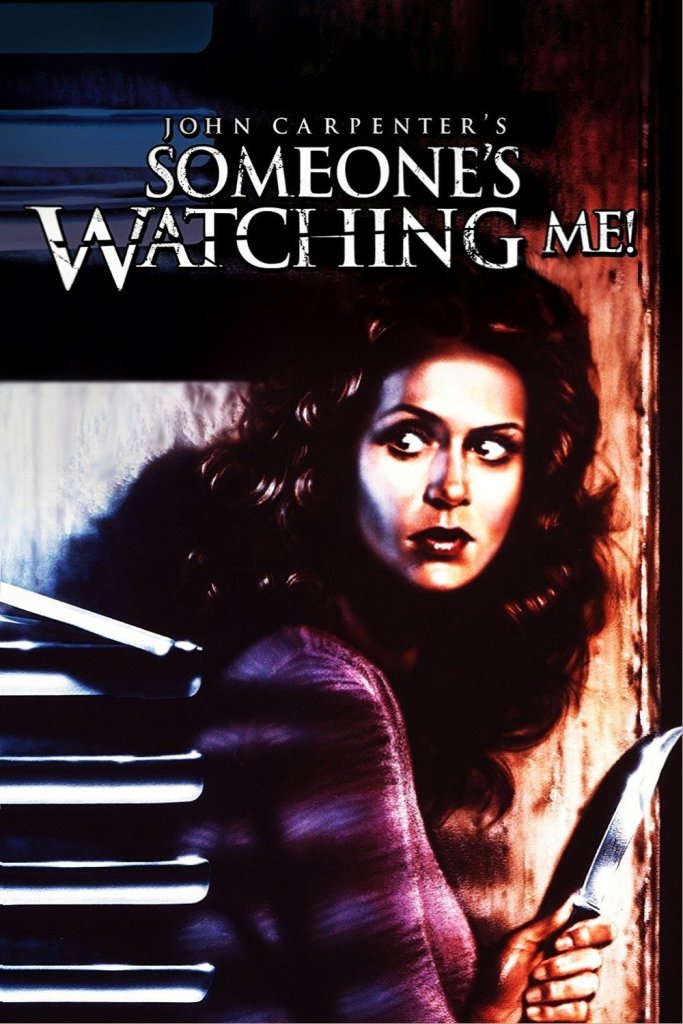
In my latest quest for a scary movie that looks interesting and that I haven’t seen, I came across the title SOMEONE’S WATCHING ME! from 1978. I did what I always do and did a quick search on IMDb to find out a little more about the film. I was definitely surprised when I saw that it was directed by John Carpenter, and that it premiered on television in November of 1978 a couple of weeks after his classic HALLOWEEN hit theaters. The film had been referred to as the “lost Carpenter film,” because for several decades it was not available on home video. For many years in the 80s and early 90s, I’d scour the shelves at my local video stores looking for that special find that I’d call a diamond in the rough. As I got older and married, whenever we’d go to Dallas, I’d head to the Movie Trading Company and scour their shelves searching for the same. Being a big fan of Carpenter, especially ASSAULT ON PRECINCT 13, ESCAPE FROM NEW YORK, and VAMPIRES, it was like I had found that lost jewel, and I couldn’t wait to fire it up.
Lauren Hutton stars as Leigh Michaels, a television director who moves into a high-rise apartment building in Los Angeles. She’s starting a new job and a new life, but things take on a creepy and scary turn when she begins receiving mysterious phone calls and unwanted gifts and letters. Before long, Leigh realizes that someone is watching her every move. Even worse, the police don’t seem very interested in helping her, leaving her to figure out who’s stalking her and what she can do to stop him.
First off, I really enjoyed Lauren Hutton as the lead in the film, which was a bit of a revelation for me. I remember her as the Countess in the 80s vampire comedy ONCE BITTEN, but I mainly remember that one because it was an early leading role for Jim Carrey. I’ve seen her in a lot of movies, but her characters had not stood out much to me. Here, as the focus of the movie, she’s likable, sexy and has this cute running dialogue with herself as she goes about her days. When bad things start happening, she’s not some helpless victim waiting for somebody else to rescue her, either. She’s smart, independent, and even tough enough to take matters into her own hands when she has to.
I also appreciate what John Carpenter is doing here as the writer and the director. A couple of years earlier, he had effectively played off of Howard Hawks with ASSAULT ON PRECINCT 13. This time he’s riffing on Alfred Hitchcock, especially movies like REAR WINDOW and VERTIGO. He accomplishes this through his settings, some of his shots, character traits, and especially, the building of tension. His premise is simple, but the idea that someone could be invading our privacy with bad intentions is a scary thought to all of us, and this movie takes it to the extreme. The screenplay builds on this natural fear with enough info that we realize our likable star is in true danger, and that was enough to draw me in. It also helps that I’m a sucker for these types of stories and characters. The made-for-TV limitations on the project are here, but Carpenter’s talent is also very evident. From the first moment I saw a shadowy character dash behind our heroine while she’s on the phone in her apartment, I knew he was going to have some fun with me. He would make me jump and my heart skip a beat several times over the course of the film’s 97 minutes.
It was also fun seeing some of the important actors and actresses that Carpenter has worked with over the years pop up in the movie. Adrienne Barbeau is especially likable and beautiful as Leigh’s friend and coworker, Sophie. She has this big smile and way about her that I found very appealing. She’s also a lesbian, which was probably a fairly unusual TV movie character trait at the time. Barbeau and Carpenter met on the set of this film and would get married less than a year later, on January 1st, 1979. Charles Cyphers, who’s so good as Sheriff Leigh Brackett in the HALLOWEEN series, shows up in the last half hour as the somewhat sympathetic Detective Gary Hunt. Cyphers also had a small, but pivotal role with Charles Bronson in DEATH WISH II, so I always enjoy seeing him on screen.
I’m not going to sit here and say that SOMEONE’S WATCHING ME! is as good as Carpenter’s classic theatrical features, but for me it was a fun discovery, and I really had a good time with it. The Hitchcock flourishes and Hutton’s excellent performance as our heroine, combined with Carpenter’s obvious talents as a writer and director, provided me with the kind of rare cinematic jewel that I had not found in a long time.
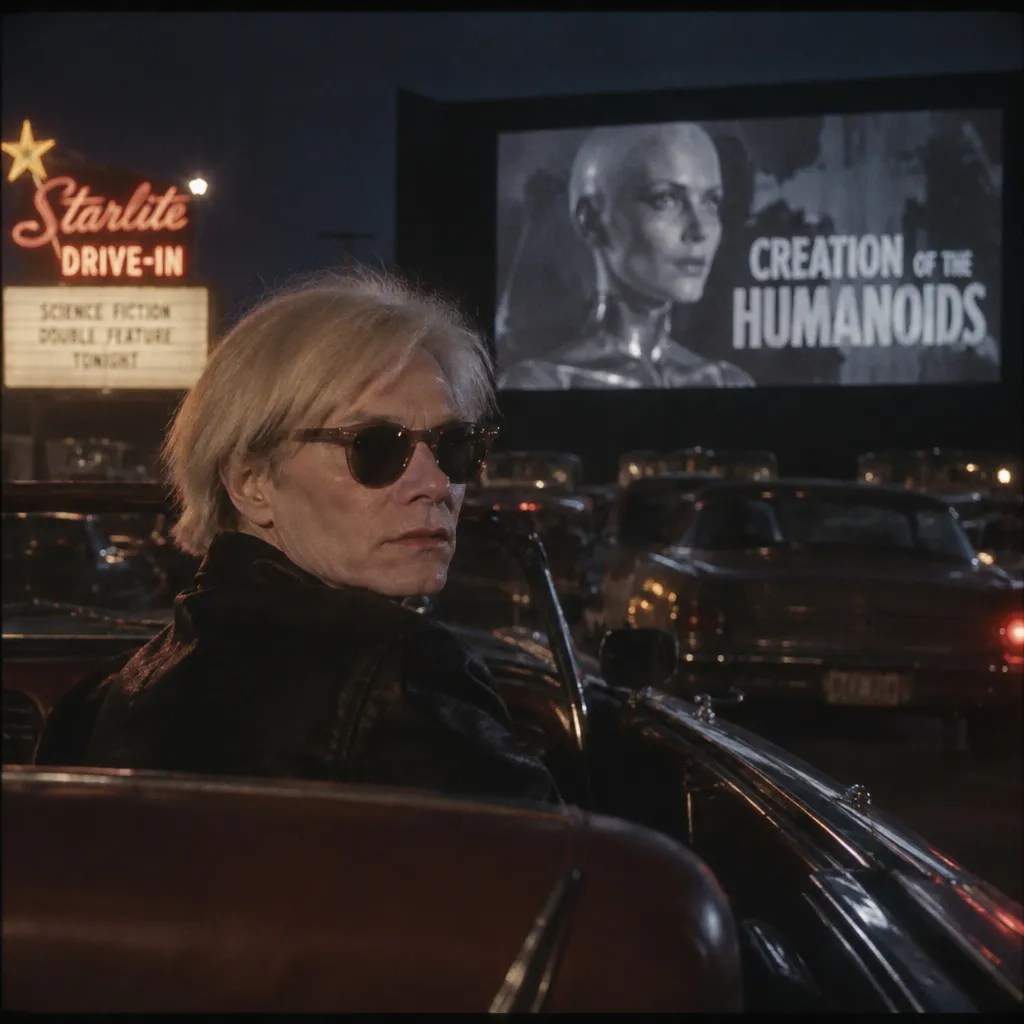
What makes us human? What does it mean to have free will? What is love? What is freedom? The questions and more are asked in the low-budget (and rather odd) science fiction epic The Creation of the Humanoids, which you can view below!
Now, I should warn that Creation of the Humanoids is an extremely talky film. And the plot is occasionally difficult to follow. There’s a lot of ennui to be found in this particular film, both from the humans and those who have been built to serve them However, I find it impossible not to love this one because it’s just such a strange movie. I love it for the colorful set design, the contrast between the resentful robots and the paranoid humans, and the fact that the film — despite being made for next to nothing — actually has more ambition than anything ever made by several of the more successful directors working today. And, while it may not really be a horror film in the way that some of our other October films are, it still feels appropriate for the Halloween season. It just has the perfect holiday atmosphere.
First released in 1962, Creation of the Humanoids was reportedly one of Andy Warhol’s favorite films. Keep an eye out for Plan 9 From Outer Space‘s Dudley Manlove.
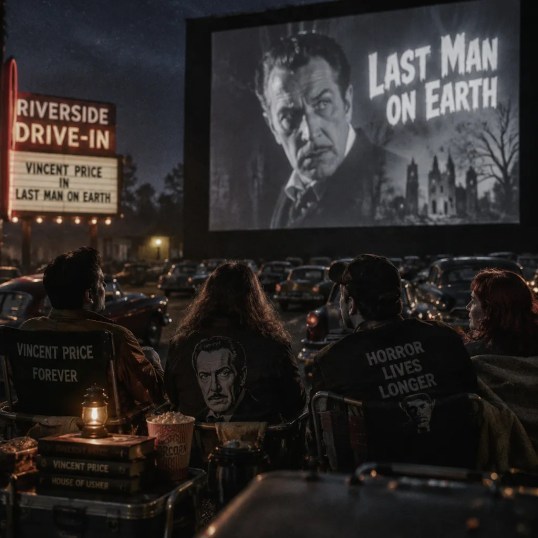
Today, I present to you one of the most important films in horror history. Though it wasn’t appreciated when it was first released back in 1964, The Last Man On Earth was not only the 1st Italian horror film but George Romero has also acknowledged it as an influence on his own Night of the Living Dead.
It’s easy to be a little bit dismissive of The Last Man On Earth. After all, the low-budget is obvious in every scene, the dubbing is off even by the standards of Italian horror, and just the name “Vincent Price” in the credits leads one to suspect that this will be another campy, B-movie. Perhaps that’s why I’m always surprised to rediscover that, taking all things into consideration, this is actually a pretty effective film. Price does have a few over-the-top moments but, for the most part, he gives one of his better performances here and the black-and-white images have an isolated, desolate starkness to them that go a long way towards making this film’s apocalypse a convincing one. The mass cremation scene always leaves me feeling rather uneasy.
The film is based on Richard Matheson’s I Am Legend and no, it’s nowhere as good as the book. However, it’s still a worthy adaptation and one that stays true to the tone of the text, including the fact that Price’s main tormenter was also once his neighbor and best friend. This is one of those films that just hits differently in the wake of 2020’s COVID hysteria.
And now, it’s time for The Last Man On The Earth….
“Never trick the treat. You never break a deal in Halloween because it’s the one night the devil can come for you.” — Sam Daniels
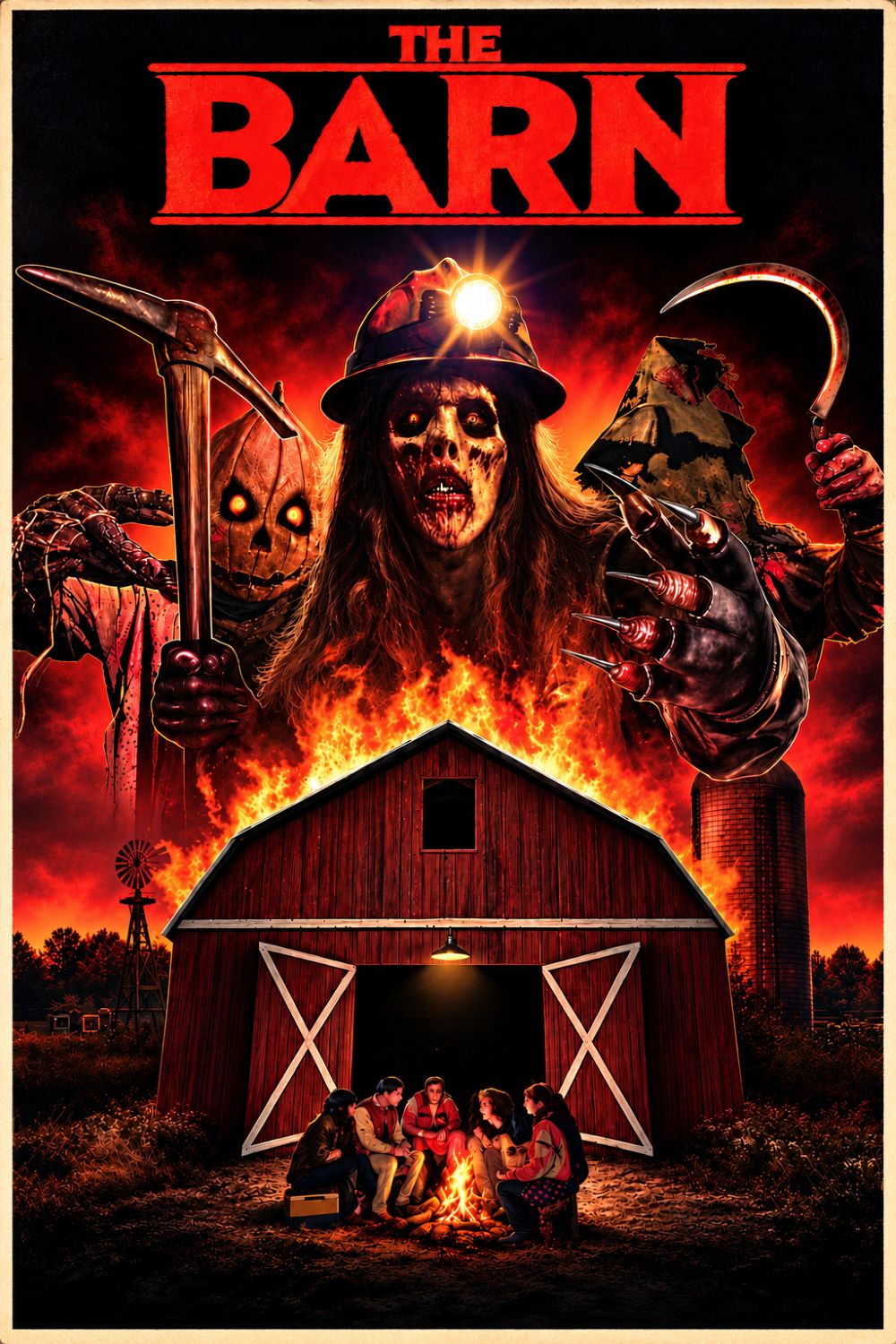
Horror fans who grew up renting VHS tapes from the local video store will find a lot to love in The Barn, a 2016 indie horror film that wears its ’80s influences on its sleeve with pride. Directed by Justin M. Seaman, this scrappy, affectionate throwback to the VHS-era Halloween slasher is built from rural legends, practical monsters, teenage misadventures, and a small-town setting soaked in October. It is not flawless, but it is sincere, energetic, and far more fun than its rough production values might initially suggest.
The story begins long before the main events of the film, in the small town of Wheary Falls, where a local tragedy involving children and a church sets the stage for an evil that has been waiting in an old barn. Decades later, it is Halloween 1989, and high school seniors Sam and Josh are determined to make the most of their final Devil’s Night before graduation. Their plan involves a road trip to a rock concert, but as often happens in horror movies, the night takes a turn. They and their friends encounter the forbidden barn, ignore the obvious danger, and awaken three supernatural killers: a scarecrow, a pumpkin-headed creature, and a miner boogeyman. What follows is a night of stalking, chasing, and bloodletting as the group realizes that the local legend is very real.
The premise is intentionally simple, and that simplicity is both a strength and a limitation. On one hand, it gives the movie a clear, classic horror structure: teenagers venture somewhere they should not, ancient evil awakens, and survival becomes the only goal. On the other hand, the plot does not offer many surprises. You can probably guess who will die, when the monsters will strike, and how the final confrontation will unfold. But The Barn does not seem especially interested in subverting expectations. It wants to deliver a familiar kind of Halloween fun, and in that respect, it succeeds more often than not.
The film’s greatest asset is its atmosphere. Seaman clearly understands that Halloween horror is about more than just a masked killer or a bloody kill scene. It is about the feeling of the season: dead leaves, cold nights, cornfields, porch decorations, costumes, campfires, and the sense that the world becomes a little stranger after dark. The Barn captures that feeling with impressive commitment. The rural Pennsylvania setting gives the movie a natural autumnal texture, while the period details help establish its late-’80s identity. The film does not have a huge budget, but it uses its resources well, creating a world that feels handmade and lived-in rather than sterile or overly polished.
The monsters are another major highlight. The three creatures at the center of the film are not especially complex, but they are memorable. The scarecrow has the classic rural-horror menace of a figure that should be harmless but is anything but. The pumpkin man is goofy in the best possible way, with a design that feels like it came straight from an old horror poster or a particularly ambitious haunted attraction. The miner is perhaps the most unsettling of the three, bringing a grimy, folkloric quality to the group. Together, they form a fun monster squad that gives the movie its personality. They are not trying to be terrifying in a modern, realistic sense; they are trying to be the kind of creatures you would rent a VHS tape to see, and they absolutely achieve that.
The practical effects and makeup work add a lot to their appeal. The blood and gore are not especially sophisticated, but they are tangible, messy, and playful. There is a physicality to the kills that modern horror often loses when it relies too heavily on digital effects. You can tell that people built these costumes, applied this makeup, and staged these effects with limited money but plenty of enthusiasm. That handmade quality gives The Barn a charm that bigger productions often lack. Even when a gag does not fully work, it feels like it was made by people who care about what they are doing.
The soundtrack also deserves praise. Rocky Gray’s score blends synth-driven horror music with a rock and metal edge that fits both the film’s setting and its tone. The music gives the movie momentum, especially during the early stretches when the group is heading toward the barn and the sense of danger is still building. It also reinforces the retro feel, echoing the kind of pulsing, atmospheric scores that defined so much of 1980s horror. The soundtrack helps The Barn feel less like a modern movie set in the past and more like an actual artifact from the era it is imitating.
The cast also gives the film some genuine ’80s horror credibility, most notably through the appearance of Linnea Quigley. As one of the definitive scream queens of the era, thanks to roles in films like The Return of the Living Dead and Night of the Demons, Quigley brings an instant connection to the kind of horror The Barn is trying to honor. Her presence may be brief, but it gives the movie real genre bona fides and makes the retro homage feel more authentic. Ari Lehman, the original Jason from Friday the 13th, adds another layer of fan-friendly horror history to the proceedings. These appearances do not transform the film, but they reinforce the sense that Seaman knows exactly whose legacy he is celebrating.
The acting is where the film’s limitations become most apparent. Mitchell Musolino and Will Stout, as Sam and Josh, have a likable enough friendship, but the performances around them vary in quality. Some lines are delivered awkwardly, some characters feel more like archetypes than people, and the dialogue occasionally lands with a thud. However, this is not necessarily a dealbreaker for a movie like this. The Barn is not aiming for naturalistic drama. It is aiming for the heightened, slightly wooden energy of low-budget ’80s horror, where teenagers often speak in a way that feels more like a movie version of teenagers than real people. If you accept that style, the acting becomes part of the movie’s charm rather than a distraction.
The screenplay is similarly uneven. Seaman gives the characters more personality and backstory than many microbudget horror films bother with, which is admirable. Sam and Josh are not just anonymous victims; they have goals, frustrations, and a sense of history with each other. The supporting characters also get enough definition to make their fates matter, at least a little. However, the movie sometimes tries to do too much. The road trip to a metal concert and the subplot involving a church food drive add texture and opportunities for cameos, but they also slow the pacing and make the story feel a little loose. The film is strongest when it focuses on the group, the barn, and the monsters. When it spreads its attention across too many threads, it loses some of its momentum.
The first two acts are where The Barn really comes alive. The buildup is fun, the atmosphere is strong, and the movie has a playful sense of discovery as the teens stumble deeper into danger. There is genuine excitement when the creatures begin appearing, and the film does a good job of making the barn and surrounding countryside feel like a place where bad things have always happened. The kills are inventive enough to keep things lively, and the movie’s sense of humor prevents it from becoming too grim. It is not trying to frighten you on a deep psychological level. It is trying to entertain you with spooky monsters, Halloween chaos, and a healthy dose of nostalgia, and for most of its runtime, it does exactly that.
The final act is where the movie loses some of its steam. The last half hour feels longer than it should, partly because the film keeps teasing an ending before gearing up for another confrontation. The methods the characters use to fight back are not as creative or satisfying as the buildup promised. Instead of escalating into a truly wild climax, the movie becomes more straightforward, and some of the fun drains out of it. The pacing issues are noticeable, especially after such an energetic first hour. It is not a disastrous ending, but it is the weakest part of the film, and it keeps The Barn from reaching the level of the best Halloween-themed horror movies.
Still, it is hard to stay mad at a movie this sincere. The Barn was made on a very small budget, and you can see the limitations in the production values, sound, and acting. But you can also see the passion in every frame. Seaman is not cynically imitating the ’80s to cash in on nostalgia; he is building the kind of movie he clearly wishes had existed on his shelf growing up. That enthusiasm matters. It gives the film a warmth that many more technically competent horror movies lack. The flaws feel like the flaws of a friend’s homemade haunted house: crooked signs, questionable acting, cheap props, but undeniable fun.
Comparisons to Trick ’r Treat are inevitable because both films treat Halloween as a night governed by rules, legends, and supernatural consequences. But The Barn is smaller, rougher, and more rooted in the slasher tradition. It is less polished than Michael Dougherty’s film, but it has its own scrappy personality. It is also more focused on monsters and practical effects than on anthology-style storytelling. If Trick ’r Treat is the polished Halloween party, The Barn is the slightly chaotic neighborhood haunt run by someone who really loves scaring people.
By the time the credits roll, The Barn has proven that a horror movie does not need a huge budget or a flawless script to leave a lasting impression; it just needs heart, atmosphere, and a clear sense of what it loves about the genre. Seaman’s film delivers all three, wrapping its flaws in enough retro charm, practical effects, and Linnea Quigley-powered ’80s credibility to make them feel like part of the package rather than detractions. It is a movie that knows what it wants to be and delivers it with a grin, even when the acting or pacing stumbles. The Barn may not replace the classics in your annual rotation, but it earns a place alongside them as a fun, scrappy Halloween treat.
In 2017’s Run, Levi (Josiah David Warren) marries Natalie Winters (Taylor Murphy). Natalie is a journalist who has made it a point to report on the growing problem of human trafficking. Her journalism makes her a target for low-life criminals like Jeff Connors (Stephen Baldwin). On their wedding night, Natalie is abducted by two men who are planning on selling her into sex slavery.
The police are useless. So is the FBI. It looks like Levi is going to have to rescue his wife on his own. While Natalie prays in the back of the van in which she’s being held prisoner, Levi hits streets, putting up missing posters and talking to motel maids.
Now, I’m going to post a spoiler here. You can stop reading now, if you want. Otherwise, you have been warned.
Levi does find his wife. He finds her because he just happens to be in the parking lot of a Florida motel when a maid walks by wearing his wife’s scarf. She tells him that she found it in a room. (No judgment from me! For one summer, I lived in a motel with my mom and my sisters and my mom paid for our board by working as a maid. Apparently, people leave stuff behind all the time.) The maid then goes on to say that she saw the van pulling out of the parking lot. She gives a perfect description of the make and the model. She recites the license plate number without hesitation. She then tells Levi exactly which street the van went down and which direction they were heading. Levi then manages to easily track the van down and get the police involved.
WHAT LUCK!
I mean, seriously, for all the time that this movie devoted to Levi trying to find his wife, it all comes down to one maid finding a scarf. I’m sure that some would argue that this is meant to be proof that God arranged for the maid to be in that parking lot at the exact same time as Levi. That’s fine. In the movie, it comes across as being a huge dues ex machina …. which is exactly the same thing, now that I think about it.
Anyway…..
Josiah David Warren has directed a handful of faith-based films and I have to admit that, as a reviewer, I haven’t always been kind to them. Warren’s biggest mistake is that he always casts himself in the lead. He’s not a particularly good actor and, with his perpetually tired expression and unshaven appearance, he tends to come across as being more a stoner than a preacher.
While that continues to be true here, Run is still better than the average Josiah David Warren film. The plot is full of contrivances and the editing is haphazard but Taylor Murphy gives a sympathetic and likable performance as Natalie. For that matter, the often-mocked Stephen Baldwin is convincing as the cocky and dangerous Connors. Baldwin doesn’t get much screentime but he sets a wanted poster on fire with skill and style.
Finally, I appreciated that the film ended on a note of forgiveness and redemption, indicating that there’s hope for everyone. That’s a good message and not one that seems to be particularly popular right now. The film deserves credit for that.
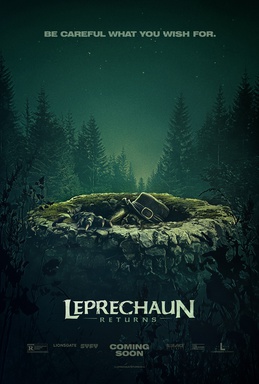
In North Dakota, college student Lila Jenkins (Taylor Spreitler) and her friends are trying to greenify a house that was recently purchased by their sorority. It’s the same house where, 25 years ago, Lila’s late mother fought off a Leprechaun. Lila is the daughter of Jennifer Aniston’s character from the first film, and the fact that her mother is dead probably tells us how much interest Aniston has in returning to the franchise that made her a star. That’s some friend for you.
Mark Holton does return from the first film, recreating the character of Ozzie Jones. Ozzie gets sprayed by water from the well while dropping Lila off at the house. Later, the Leprechaun (now played by Linden Porco) bursts out of his abdomen. Ozzie may be dead, but his ghost still appears, which is good because Lila and her friends are going to need all the help they can get.
To date, this is the last Leprechaun film, and ironically, it’s also the only Leprechaun film to actually show any interest in maintaining continuity with the first one. It’s actually not terrible. The Leprechaun is talking and rhyming again, and some of the kills are memorably bloody. This is the only film I know of that features death by solar panel. It’s still missing Warwick Davis, though, and Davis really was what made the first few Leprechaun films memorable. Linden Porco’s not bad, but he doesn’t have the same joyous energy that Davis brought to the role. As for the human actors, none of them can really match up to Jennifer Aniston, Shevonne Durkin, or Ice-T.
Supposedly, Warwick Davis has said that he would now be willing to come back and play the Leprechaun in another film, assuming the money and the script were right. I hope he does. As bad as most of the Leprechaun films were, the character still deserves a proper sendoff.
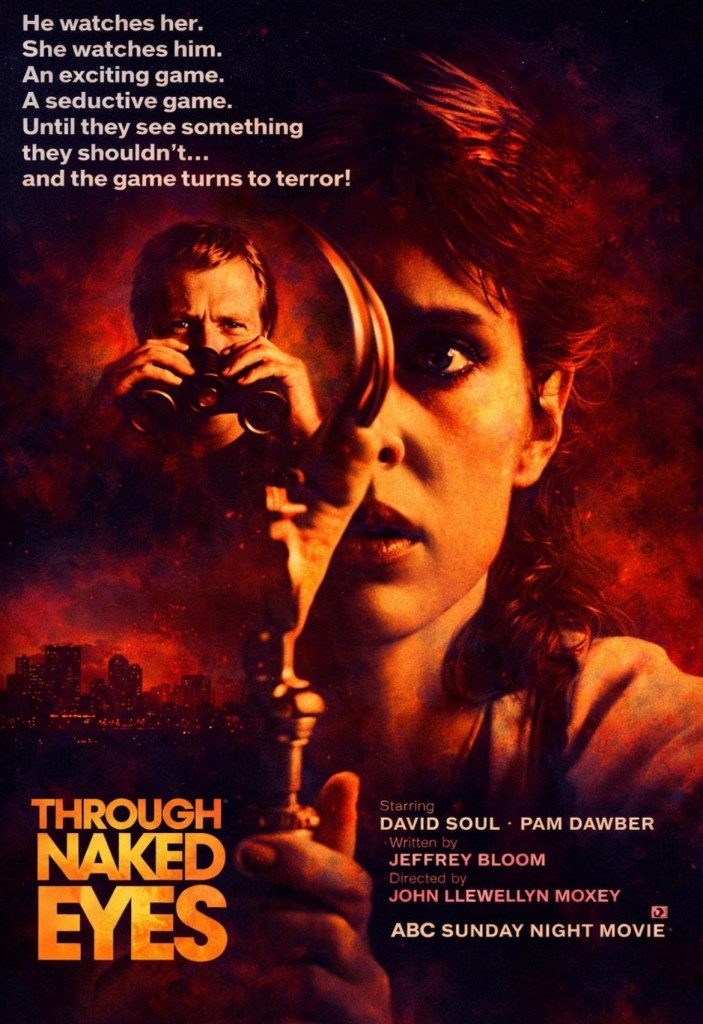
One of the coolest things about being a contributor for The Shattered Lens is the month of October and our Horror-thon. I’m constantly on the lookout for less well-known thrillers that I can watch and write about. I recently came across the 1983 made-for-TV thriller THROUGH NAKED EYES. The premise gives off some definite REAR WINDOW vibes, a favorite of mine, and I’ve always enjoyed the actor David Soul. Having never seen the film, or even heard about it before, I thought I’d give it a shot.
Soul plays William Parrish, a talented flutist who spends most of his time practicing his craft, while still carving out a few moments to pull out his binoculars and check out some of the people who live in the apartment building across the street. One night, he discovers that an attractive woman, Anne Walsh (Pam Dawber), is also watching him through her very nice telescope. Through a variety of circumstances, the two voyeurs meet and begin a relationship. By the way, did I mention that there have been a series of knife murders in the neighborhood, even in William’s own apartment building? And that the detective in charge of the investigation has our musician in his sights as the number one suspect? Of course the fun is watching the suspects and clues pile up as the story plays out!
THROUGH NAKED EYES is one of those movies that snuck up on me. It took a little bit of time for me to get into it as I watched our main character play his flute, practice his flute and sweat profusely. Set in Chicago, they are really trying to make the point that it’s HOT. Everyone is so sweaty. They’ll be having symphony practice and William’s shirt will be so wet that it looks like he just ran a marathon. It was over 100 degrees in Arkansas for 22 days this past summer, and I’ve never been that sweaty inside a building. I guess the AC was spotty in the Windy City back in the early 80s. We also spend time in Anne’s life as we follow her job as guide at the planetarium, as well as her dealings with her sleazy literary agent who’s helping her get some articles published in National Geographic. Seriously dude, that mustache is just creepy. Once we get past all this setup and the two meet, have dinner, and make love, the thriller elements start getting a lot more interesting as the stakes get a lot higher! I won’t say anymore, but I got wrapped up into the story and really enjoyed the last hour.
David Soul gives a strong performance in the film, one that I appreciated more and more as I got to know his character. To be honest, at first he seems pretty darn creepy, but he turns out to have a lot more depth than you might initially think. Pam Dawber, best known to me for MORK & MINDY, is cute, kind, and even sexier than I remembered in her role as the voyeur who had her own little obsession going on. I will admit that it sounded a lot more innocent, and less creepy, when her character explained herself. It convinced me for sure!
The supporting cast in this film is tremendous, and certainly adds to my enjoyment of the film. Fionnula Flanagan has an excellent scene where her shrink character provides a more balanced perspective on our number one suspect. Gerald Castillo is good as the obsessed cop with blinders on for everything except getting his man, who he believes is William. I recognized Castillo from his performances as cops in several Bronson films of the 80s. My favorite scene in the entire film completely surprised me and it involved a scene between William and his estranged dad, played by William Schallert. I love a good, emotional father / son scene. You can even play a game of “spot the future stars” as John Mahoney, Dennis Farina, and Ted Levine play various Chicago police officers throughout the film. It was fun every time one of them would pop up.
If it’s not obvious, I had a good time with THROUGH NAKED EYES. The film does a good job of taking its time and letting us get to know these characters in a way that helps us see them differently as the story plays out. In other words, the film’s drama is effective. It also stretches out the suspense appropriately so that we stay invested in the thriller elements as well. As a viewer, I actually cared about what would happen at the end. Nothing says you enjoy a movie like caring about the outcome, and this one was a very nice discovery for me.
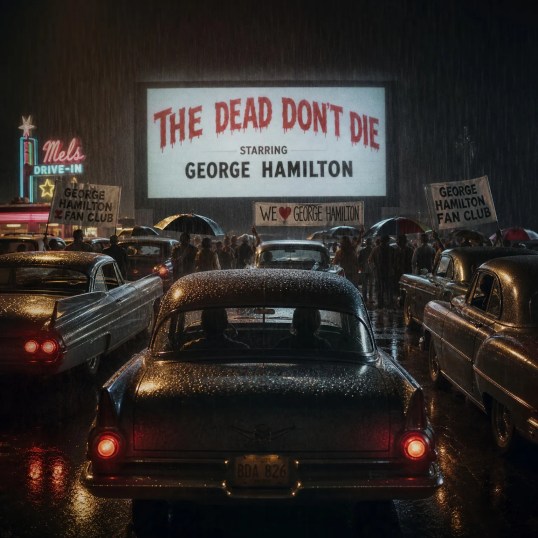
Today, we offer up a bonus horror on the lens, a 1975 made-for-television movie called The Dead Don’t Die!
The Dead Don’t Die takes place in Chicago during the 1930s. George Hamilton is a sailor who comes home just in time to witness his brother being executed for a crime that he swears he didn’t commit. Hamilton is convinced that his brother was innocent so he decides to launch an investigation of his own. This eventually leads to Hamilton not only being attacked by dead people but also discovering a plot involving a mysterious voodoo priest!
Featuring atmospheric direction for Curtis Harrington and a witty script by Robert Bloch, The Dead Don’t Die is an enjoyable horror mystery. Along with George Hamilton, the cast includes such luminaries of “old” Hollywood as Ray Milland, Ralph Meeker, Reggie Nalder, and Joan Blondell. (Admittedly, George Hamilton is not the most convincing sailor to ever appear in a movie but even his miscasting seems to work in a strange way.)
“Today it is science fiction, tomorrow it will be science fact….”
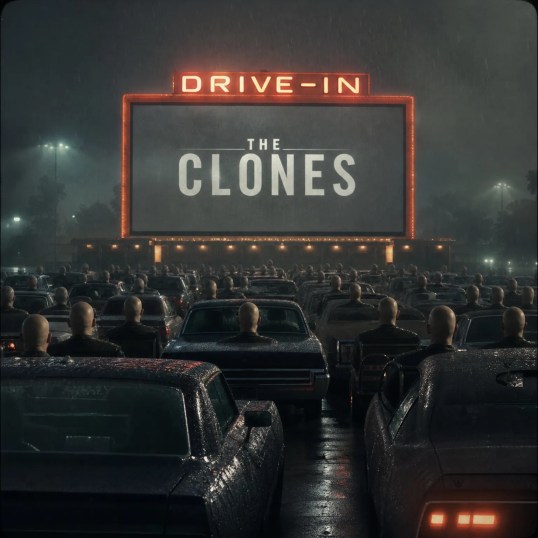
So declared the trailer from 1973’s The Clones.
One of the first films to be made about cloning, this movie tells the story of Dr. Gerald Appleby (Michael Greene), who discovers that there’s another version of him living his life. Dr. Appleby and his clone both find themselves being pursued by two government agents (Gregory Sierra and Otis Brown) and a mad scientist (Stanley Adams).
TheClones requires some patience. It moves at its own deliberate pace and there’s quite a few scenes of Dr. Appleby running through the desert. That said, the film builds up to wonderfully twisted conclusion and the final roller coaster shoot-out makes everything more than worth it.
Ever since I first saw this ennui-drenched film in 2012, I’ve been recommending it to people. I’m happy to share it with you today!
2014’s Only One Way tells the story of Paul (Josiah David Warren), who is 20 years old and who lives with his parents in Texas. Paul was home-schooled and now he’s a college student. He goes to church every Sunday and he and his parents have regular Bible study.
Paul is a bit easily led. We discover this when he starts dating Melanie (Erika Alaspa), who is still in high school and who insists that Paul tell her that she’s beautiful whenever he picks her up from her dance class. Melanie’s father has a devilish beard and a condescending attitude and, when he hears that Paul still lives at home, he says that’s fine except that Paul won’t be a real man until he moves out. Later Paul gets a text from Melanie telling him that her parents loved meeting him but that they all agree that he needs to become “A REAL MAN” and find a new place to live.
Paul gets his own apartment and soon, he’s struggling in both school and life. Melanie and her wild friends are always coming over to party. They introduce Paul to smoking weed. Paul goes from hacking up a lung to making an apple pipe in record time. Uh-oh! His parents stop by the apartment to drop off some groceries and they catch Paul with an apple.
No longer welcome at his parents’s house, Paul tries to make it in the world on his own. He gets a job delivering fried chicken but he’s not good at it. You may wonder how any twenty year-old could manage to screw up something as simple a delivering fried chicken. Well, Paul drops a bucket of KFC on somebody’s lawn and his response it just to brush the grass off the chicken. Then he drops the bucket for a second time when trying to hand it off to the people who ordered it.
“That’ll be fifteen,” Paul says.
No, Paul, that’ll be free!
To be honest, what Paul is going through is not that unusual. I think everyone struggles a bit making the transition from being a teenager to being an adult. The job of a parent is to help the kid prepare for that transition but still, it’s not easy going from living a life with no consequences to living a life where everything has a consequence. Everyone probably parties too much when they first leave home. It’s just human nature.
The thing that sets Paul apart is that he really does just seem to be a complete idiot. Even before he starts dating Melanie, he’s talking about how he’s struggling in college. The film puts most of the blame on Melanie but Melanie isn’t the one who told Paul to put the chicken back in that bucket. Melanie may smoke weed but Paul is the one who decides to smoke with her. Believe me, most people will not be offended if you don’t smoke their weed. That just means more for them.
Anyway, this film was shot on video with a largely amateur class and it shows. This is one of those films where you really have to strain to make out the dialogue because the sound recording is so bad. On the plus side, Paul does own a really cute dog and, by the end of the film he’s found a girlfriend who isn’t trying to destroy his soul. Good for him!