Sundance Film Review: Moon (dir by Duncan Jones)


With this year’s Sundance Film Festival getting underway in Colorado, I’m going to be spending the next few days looking at some films that caused a stir at previous Sundance Film Festivals.  Today, I’m taking a look at the 2009’s Moon.

It’s time for all good people to praise Sam Rockwell.

As far as I’m concerned, Sam Rockwell is one of the patron saints of character acting.  Is there anything that he can’t do?  He can do comedy.  He can do drama.  He can play the cool, older guy, like he did in The Way, Way Back.  He can play the nerdy, weirdo as he’s done in too many movies for me to list.  He can play a mentor and he can play a student.  He can make you laugh and he can make you cry.  He’s one of those actors who can seamlessly transition from small indie films to huge blockbusters without missing a beat.  Rockwell won an Oscar for his performance in Three Billboards Outside Ebbing, Missouri and he might just win another one for playing President George W. Bush in Vice.  He can even dance, as anyone who has seen him in Iron Man 2 can tell you.  Rockwell’s been acting since he was a teenager and he’s definitely earned the right to be known as one of our greatest actors.

For that reason, it can sometimes be a little bit difficult to decide just which performance is Rockwell’s best.  He’s appeared in so many different movies and he’s played so many different characters.  Even when the movie’s bad, Rockwell is usually great.  However, if I had to sit down and pick one Rockwell performance as being the epitome of everything that makes him a great actor, I’d probably go with his performance in Duncan Jones’s contemplative sci-fi film, Moon.
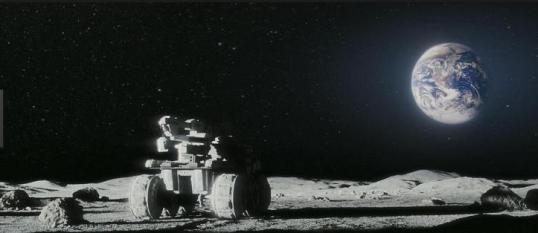
In Moon, Rockwell plays a man named Sam.  Sam has spent three years living on the dark side of the moon.  He works for shadowy Lunar Industries.  His job is to mine the moon for helium-3, an alternative energy source that is now all the rage on Earth.  It’s a lonely job for Sam.  He gets up every day.  He rides his lunar rover across the stage.  He returns to the sterile facility, where he lives.  Sometimes, if he’s lucky, he gets recorded messages from his wife and daughter.  His only companion is a robot named GERTY.  Though Sam trusts GERTY, we know better, if just because GERTY speaks with the voice of Kevin Spacey.

From the minute we meet Sam, we can see how living on the Moon has affected him.  He’s quiet and a bit meek.  After three years of isolation, Sam accepts whatever he has to accept to survive.  He doesn’t complain about rarely getting to talk to his family.  He doesn’t question why he has to work alone.  Whatever fight Sam once had in him is gone.  Now, Sam just wants to finish out his time and go home.

And then, one day, Sam is driving the lunar rover when he has a sudden hallucination and then passes out.  He ends up crashing into a crater….

Suddenly, Sam wakes up at the facility.  However, it doesn’t take long to notice that this Sam seems different from the Sam who we met at the start of the movie.  The Sam who wakes up in the facility is younger and angrier than the Sam who we first met.  This new Sam is less willing to accept everything that GERTY tells him.  Even more strangely, this new Sam is convinced that he’s just arrived on the moon….

And then the new Sam meets the old Sam….

In Moon, Sam Rockwell gives two empathetic and memorable performances as the same person.  Old Sam is beaten down by life.  New Sam is angry and just a little bit arrogant.  And yet, what makes the performance so brilliant is that you can easily see how the New Sam could eventually transform into the Old Sam.  Thanks to both Rockwell’s performance and the film’s stark imagery, it’s easy to see how the isolation could eventually rob Sam of his passion, his will to fight, and his intellectual curiosity.  When the Old Sam meets the New Sam, he’s reminded that there used to be more to his life than just the drudgery of his daily routine.  And when the New Sam meets the Old Sam, he’s confronted with what a future of isolation means to him.

Of course, the new Sam and the Old Sam weren’t meant to meet.  And now that they have met, Lunar Industries is on their way to clean up the mess….

Released in the same year as James Cameron’s bombastic Avatar, Moon is a low-key and thoughtful science fiction film, a meditation on isolation and identity.  Duncan Jones directs the film in a stark and low-key style, allowing the film’s story to play out at its own pace.  As visualized by Jones, the lunar landscape is impressive the first time you see it and increasingly bleak with each subsequent look.  Far more than Ridley Scott did in The Martian, Jones captures what it actually is to be totally alone.  (That no critics compared The Martian and Moon, despite their obvious similarities, is astounding to me.)

Featuring Sam Rockwell at his absolute best, Moon is a sci-fi film that remains haunting and powerful, even after films with bigger budgets and flashier special effects have faded into obscurity.

Sundance Film Review: Searching (dir by Aneesh Chaganty)


With this year’s Sundance Film Festival getting underway in Colorado, I’m going to be spending the next two weeks looking at some films that caused a stir at previous Sundance Film Festivals.  Today, I’m taking a look at the 2018’s Searching.

Searching tells the story of David Kim (John Cho) and his daughter, Margot (Michelle La).

David thinks that he has a close relationship with his daughter but, in reality, they’ve been drifting apart ever since David’s wife died two years earlier.  Now, Margot is away at college and David is alone at home.  They still communicate, of course.  They message each other on Facebook.  They Skype.  David sill sends Margot money for her piano lessons.

And yet, even if he can’t bring himself to fully admit it, David knows that they’re not as close as they once were.  Their conversations are often awkward and he doesn’t really know much about the friends that Margot has made at college.  Too often, he finds himself starting to ask her about what’s really going on in her life, just to then erase the message before sending.  One night, when Margot tells David that she’s going to a friend’s house for a study group, he has no reason not to believe her.  It’s not until Margot fails to return from studying that David is forced to confront how little he actually knows about his daughter’s life.

As a film, Searching is set almost entirely on smartphones and computer screens.  Considering that the movie could have just as easily been called Unfriended 3: Searching, this is a surprisingly good and emotionally resonant film.  We watch as David helplessly sends out messages to his daughters, messages that are destined to be unanswered.  We watch as David looks at old pictures and videos of the family he once had, searching for some sort of answer hidden in the past.  And, as we watch all of this, we come to realize that David is not just searching for his daughter’s whereabouts.  Instead, in a world dominated by social media, he’s also searching for a human connection, for something more than just a tweet or a cryptic status update.

Of course, the film does occasionally threaten to take its format just a bit too far.  Sometimes, you really do find yourself wishing that David would just get offline and go outside and look for his daughter.  (Actually, he does do that but, because of the film’s narrative structure, we don’t really get to witness it.)  By the time David is having nightly FaceTime sessions with the detective (Debra Messing) assigned to his daughter’s case, you can be excused for fearing that the film’s style is going to end up collapsing in on itself.

Fortunately, Searching is held together by the lead performance of John Cho.  Whenever Searching threatens to veer into self-parody, Cho is there to bring it back on track.  Before this film came out, I guess Cho was probably best known for appearing in the Star Trek movies.  Searching made him the first Asian-American to headline a mainstream thriller in Hollywood and Cho gives such a sympathetic and compelling performance that you’re willing to excuse whatever flaws might be present in the film’s narrative.  Because he’s played by John Cho, you want David to find his daughter.  You want him to find that for which he’s searching.

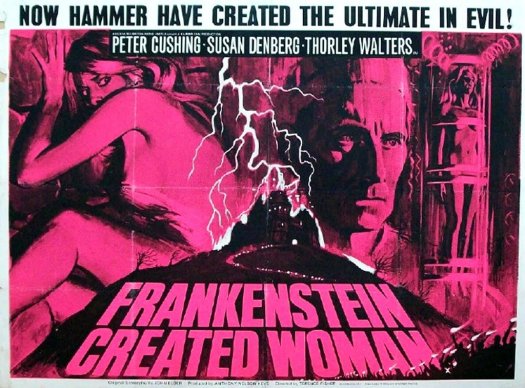
Creature Double Feature 6: FRANKENSTEIN CREATED WOMAN (Hammer/20th Century-Fox 1967)/FRANKENSTEIN MUST BE DESTROYED (Hammer/Warner Bros 1969)


gary loggins's avatarcracked rear viewer


Hammer Horrors were a staple of Boston’s late, lamented “Creature Double Feature” (WLVI-TV 56), so today let’s take a look at a demonic duo of Frankenstein fright films starring the immortal Peter Cushing in his signature role as the villainous Baron Frankenstein.

FRANKENSTEIN CREATED WOMAN was the fourth in Hammer’s Frankenstein series, made three years after EVIL OF FRANKENSTEIN. The Baron is back (after having apparently been blown to smithereens last time around), this time tampering with immortal souls rather than mere brain transplants. The movie features some ahead-of-its-time gender-bending as well, with the soul of an unjustly executed man transmogrified into the body of his freshly dead (via suicide) girlfriend, now out for vengeance!

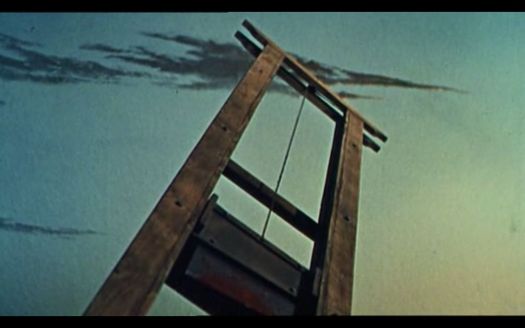
Young Hans (Robert Morris), who watched his father guillotined as a child, grows up to work for muddle-headed alcoholic Dr. Hertz (Thorley Walters , in an amusing performance), who revives the cryogenically frozen Baron…

View original post 687 more words

Sundance Film Review: Three Identical Strangers (dir by Tim Wardle)


With this year’s Sundance Film Festival getting underway in Colorado, I’m going to be spending the next two weeks looking at some films that caused a stir at previous Sundance Film Festivals.  Today, I’m taking a look at the 2018 documentary, Three Identical Strangers.

It’s generally agreed that last year was a great year for documentaries.  Between RBG, Would You Like To Be My Neighbor?, and Free Solo cleaning up at the box office, 2018 was the year that proved the audiences were willing to pay money to see reality captured on film.  For me, there was no better documentary released last year than Three Identical Strangers.

Three Identical Strangers starts out like a Hallmark movie and then slowly turns into a horror movie.  In New York, in the early 1980s, three young men who have previously never met discover that they’re triplets.  At first, they’re a media sensation.  Young, handsome, and charismatic, Edward Galland, David Kellman, and Robert Shafran become instantly celebrities.  We watch archival footage of them appearing on a talk show and talking about how they discovered each other and everything that they have in common.  They all smoke the same brand of cigarette.  They all tend to have the same fashion sense and interests.  All three of them smile while announcing that they’re single and they like women, which causes the audience to break into applause.

It was the 80s and we’re told that meant sex, drugs, and rock and roll.  There are the three brothers at a club.  There they are walking down the streets of New York, with three huge grins on their faces.  There they are making a cameo appearance in a film with Madonna.  Soon, they’re opening up a restaurant together, they’re getting married, and they’re starting families of their own….

And yet, as we watch all of this happy footage, we’re also watching present-day interviews with David Kellman and Robert Shafran.  It’s impossible not to notice that, in the present, both of them speak in voices tinged with weariness.  In the present day interviews, neither one of the brothers smile.  Both of them have their guard up.  To put it simply, neither one of them appears to be particularly happy.

It’s also impossible not to notice that Edward Galland, who is frequently described as having been the most charismatic of the triplets, is nowhere to be seen.

While the three triplets are becoming celebrities, the families that adopted them are wondering why they never knew about the other brothers.  All three of the brothers were adopted through the same adoption agency and, interestingly, all three of them were put into families that had just recently adopted a daughter as well.  One brother was given to an upper class family while another was adopted by a middle class family and finally, the third brother was given to a lower class family.  It quickly becomes clear that this was not a coincidence.

Instead, the three brothers were a part of a social experiment, one designed to see how growing up at different economic levels would effect them.  And, as quickly becomes clear, Edward, David, and Robert weren’t the only part of that experiment.  Under the direction of psychologists Viola W. Bernard and Peter B. Neubauer, several sets of twins and triplets were separated for the exact same reason….

To say anything else about this haunting documentary would run the risk of spoiling it.  It’s a thought-provoking film, as well as a rather disturbing one.  Watching the film, it’s impossible not to mourn for the childhoods that the brothers lost.  At the same time, you do find yourself wondering if all of the triplets’s subsequent problems can be blamed on the experiment or if they would have happened even if they all had been raised in the same family?  The documentary leaves the answer to that question ambiguous.  Much like the triplets, the audience is left wondering what could have been.

Oddly, Three Identical Strangers was not nominated for the Best Documentary Feature Oscar.  Well, that’s the Academy’s loss because this film was the best documentary of a very good year.


Music Video Review: Affection by JaydenART Music (2017, dir by Jayden Yoon ZK)


Who doesn’t occasionally love a good cry?

The 4 and a half minute video below is guaranteed to bring tears to your eyes.  It certainly did to mine.  It’s the story of a dancer and it’s also the story of a father’s love for his daughter and the way that we can all live on through music, art, and memory.  It starts with a dancer — according to the video’s YouTube description, her name is Fiona — dancing and then takes us into the past, showing us how her pianist father supported her dreams until he eventually fell victim to his own mortality.  The film ends with her achieving her dream, along with her younger self, and the sound of her father’s composition playing in the background.

And it’s really nicely done.  The scenes of Fiona dancing are flawlessly combined with the flashbacks to her father, creating a true sense of a dancer living in the moment while still surrounded by her memories and how she came to be the person who is now on stage.  It’s a tribute to not just her father but also to everyone who has ever supported us in our dreams, whether those dreams were artistic or something else.  It’s a heart-felt and sentimental tribute and you can check it out below:

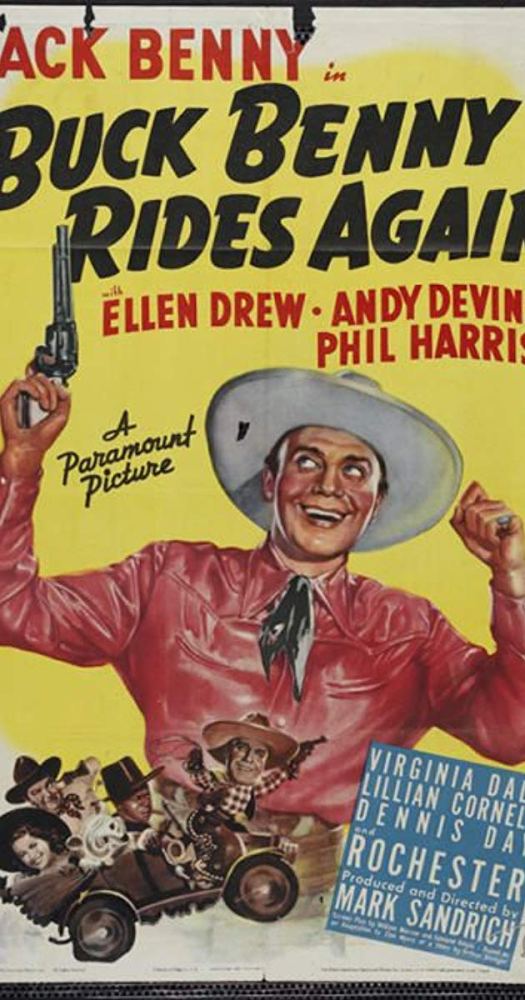
Jack in the Saddle: BUCK BENNY RIDES AGAIN (Paramount 1940)


gary loggins's avatarcracked rear viewer

The gang’s all here in BUCK BENNY RIDES AGAIN – Jack Benny’s radio gang, that is! Eddie “Rochester” Anderson, announcer Don Wilson, band leader Phil Harris, comic actor Andy Devine, and crooner Dennis Day all show up for this fun-filled musical comedy romp directed by Mark Sandrich. Even Jack’s radio nemesis Fred Allen is heard (though not seen) cracking jokes at his rival’s expense!

The movie plays like an extended sketch from one of Jack’s radio or TV programs, as the vain Jack falls for pretty Joan Cameron (Ellen Drew), one of a trio of singing sisters (the other two are Virginia Dale and Lillian Cornell) trying to break into show biz. They “meet cute” when Jack accidentally smashes into Joan’s taxi. Jack keeps flubbing his chances with Joan, who only goes for manly, rugged Western types (“I wouldn’t go out with him if he drove up in a sleigh…

View original post 381 more words

Sundance Film Review: The Tale (dir by Jennifer Fox)


With this year’s Sundance Film Festival getting underway in Colorado, I’m going to be spending the next two weeks looking at some films that caused a stir at previous Sundances.  Today, I’m taking a look at 2018’s The Tale.

The Tale is all about memory.

Jennifer Fox (Laura Dern) is, as her mother (Ellen Burstyn) often reminds her, nearly fifty years old and childless.  She’s been engaged to the sensitive Martin (Common) for three years but she’s in no hurry to get married.  As for children — well, she decided a long time ago that she didn’t want to have children.  Jennifer is a documentarian and a teacher.  She not only records real life but she also teaches others how to do the same thing.  She makes films that, in the decades to come, will be used by future students of history who want to know what it was like to live in the late 20th and early 21st Century.  And yet, it’s her own history that Jennifer has never come to terms with.

When her mother comes across a school essay that a 13 year-old Jennifer once wrote about her relationship with her riding instructor, Mrs. G (Elizabeth Debicki), and her running coach, Bill (Jason Ritter), Jennifer dismisses her concerns.  As Jennifer explains it to Martin, her mother is just upset because Jennifer once had a boyfriend who was “older.”  Of course, that older boyfriend was in his 40s.  What’s obvious to everyone but Jennifer is that her coach took advantage of and raped her.  Jennifer, however, refuses to accept that.  She refers to the coach as being her “lover” and, more than a few times, she attempts to dismiss the whole topic by shrugging and saying, “It was the 70s.”

It’s not that Jennifer doesn’t realize the truth about what actually happened.  Laura Dern gives a fiercely intelligent performance as Jennifer, one that slowly and deliberately peels away at the layers of defensive protection that Jennifer has spent the past 35 years developing.  Jennifer knows what happened but she’s allowed her memory to cloud the reality of it, largely because that’s the only way that she could deal with the aftereffects of Bill’s sexual abuse.  When Jennifer thinks back to the summer that she spent with Mrs. G and Bill, she first sees herself as she was when she was 15 years old, curious and headstrong.  It’s only when Jennifer looks at a photograph that was taken that summer that she sees starts to see herself as she really was, an introverted and vulnerable 13 year-old (played by Isabelle Nelisse) who was groomed and abused by two predators.

As Jennifer investigates her past and finally begins to understand what really happened over the course of that summer, her memories begin to change.  Hazily-remembered conversations take on new meaning and she begins to understand that terrible truth between the looks that were often exchanged between Bill and Mrs. G.  At times, the older Jennifer finds herself interrogating her memories of Bill, Mrs. G, and even her younger self.  She demands to know how they could have done what they did and their answers leave you wondering whether you’re hearing what they would really say or if your just hearing what Jennifer would hope they would say.  When Jennifer talks to others who were around that summer, she’s shocked to learn that she wasn’t the only one who Bill abused and her insistence that she was Bill’s lover (as opposed to his victim) sounds more and more hollow.  When Jennifer finally does track down some of her abusers, you wonder if their somewhat confused reactions are due to guilt or if it’s possible that there were so many victims that they don’t even remember what they did to Jenny Fox.  And if they do remember, they seem to be either horrifically ignorant or curelly unconcerned about the consequences of their actions.

It’s a brave and powerful film, one that is made all the more disturbing by the fact that director and screenwriter Jennifer Fox is telling her own story.   At least year’s Sundance Film Festival, it premiered to acclaim and controversy.  There was also some surprise when, instead of securing a theatrical release, the film was instead sold to HBO.  At the time, there was a lot of concern that the film’s power would somehow be diluted as a result of playing on television as opposed to a big screen.  However, in hindsight, the small screen — with its unavoidable vulnerability — was the perfect place for this uncompromising and emotionally raw film.

The Tale is not an easy film to watch but it is an important one.  It’s a film for anyone who has ever struggled to come to terms with the past.  It’s both a reminder that you’re not alone and a warning to not ignore or laugh off your suspicions.  It’s also a good example of the type of film that probably would never have been discovered if not for Sundance.  There’s a lot of legitimate criticism that one can direct towards the Sundance Film Festival but occasionally, it does do what it’s supposed to do.

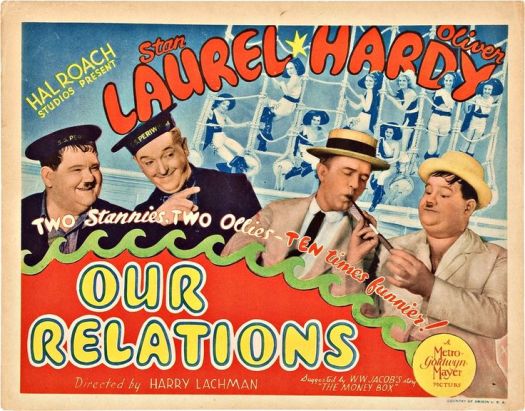
Stan & Ollie: OUR RELATIONS (Hal Roach/MGM 1936) & WAY OUT WEST (Hal Roach/MGM 1937)


gary loggins's avatarcracked rear viewer

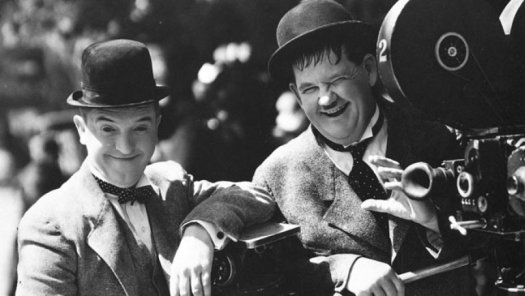
Like many of you Dear Readers, I’m eagerly awaiting the new STAN & OLLIE biopic starring Steve Coogan and John C. Reilly, which hasn’t hit my area yet (and visit yesterday’s post for my thoughts on that film’s Oscar snub). I’m a huge Laurel & Hardy buff, and I spent last week warming up by watching “The Boys” in a pair of their classic comedies:

OUR RELATIONS wasn’t the first time Laurel & Hardy played dual roles (their 1930 short BRATS casts them as their own children, while 1933’s TWICE TWO finds them as each other’s spouses!), but it’s loads of fun! Stan and Ollie are two happily married suburbanites, while their long-lost twin brothers Alf and Bert are the seafaring “black sheep” of the family. Mother has informed Ollie the rascals wound up being hung from the yardarms, but it turns out Alf and Bert are alive and well…

View original post 838 more words

The Meg, Review By Case Wright


The Meg1.jpg

Yes, I know The Meg came out a while ago, but I just got it on Netflix and had a pretty good date night watching it; so, you’re going to learn about too.  The press was not kind to this film.  They used words like dumbed down, boring, and bland.  I wouldn’t put The Meg in any of those categories.  This was a high budget SyFy movie like Sharknado, but less self-aware.  As for the film, there were some legit scare moments.  My general beef is that it acted as a Chinese propaganda film.  Jason…Buddy…you don’t have to pander like that.  You’ve got abs and monster shark eating people.  Really.  Even if you want to pander, showing the Chinese flag waving gloriously not once, but twice was just over the top ass-kissing.  Just stop.

The Meg, directed by Jon Turtletaub (Jericho, Rush Hour) and written by Joe Hoeber (Battleship), is a straightforward monster movie.  A Jerk Billionaire (Rainn Wilson) funds and exploration of a deepsea cave.  The dive team investigates and voila there be dino-sharks swimmin in thar and they get trapped in the land of the lost in the briny deep. *Pirate Voice*  Hmmm, maybe this entire article should be read in a pirate voice.  Think of it as your innarrrrrrrrr monologue.  A couple of megalodons get out and only Jason Statham and his abs can stop them.  Side Note on abs: I’ve lost 65Lbs and nearly have Statham Abs.  This doesn’t really add to the review, but come on abs really didn’t add anything to stopping the megalodon, but if Statham hadn’t shown his abs you’re telling me no one would’ve been disappointed?! Really?!  REALLY?! You’re sticking with that?! Fine!

Jason (Just calling him Jason, again, come on…is anyone remembering the character’s name?!!!  You went to see it because Jason was in it…..ughhhh… Fine) ….

Jonas (Jason Statham) is down and out because he had a run in with a Kaiju earlier in his career and now he drinks beer all the time that give him abs….THAT is the only part of the movie I don’t buy and irritated me.  He should’ve been doing crossfit! I’m sorry if you have even one lousy Heineken, you are not going to look like this:

megabs.png

IT’S NOT POSSIBLE! I bust my hump 6-7 days a week in the gym to get the above results and boozing is not possible if you want Statham abs!  He should be doing burpees and drinking green juice!

Anywho, Jonas decides to rescue the yellow submarine and then kill the not one, but two Megs.  There a quite a few Jaws-like death scenes.  There is even a beach scene where The Meg chows down on Chinese beach goers AND when The Meg comes in for seconds, you can see wee swimsuits in his jaws (nice touch Turtletaub, nice touch). Jonas has to pursue the Meg into the beach and kill it.  This is not a spoiler! What else would he do?!  Jonas uses some weird looking submarine and kills it with some sort of submarine knife; I honestly couldn’t tell.  It was kind of a darkly lit scene.

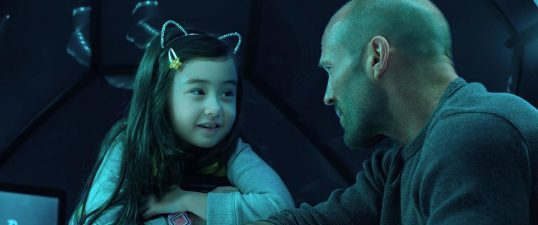
Addendum: There is also a minor subplot with Jonas and Suyin, but it’s too dull to discuss.  I would’ve edited her and her overly cute kid out the movie entirely.

Is The Meg worth Netflixing? Yes! It’s a monster movie. The mainstream press is just too snobby to enjoy a Sharknado or unironically watch a Lifetime MOW.  But not me! I can enjoy a creature feature!

meg5.jpgmeg2

IO, Review By Case Wright


io 1

New beginnings and adventure versus intimacy and connection is the theme of Netflix’s latest straight to stream scifi think piece- IO.  It makes sense that human connection is the main theme because this movie was written by a team.  Rule of thumb: if you see Writer 1 and Writer 2 that was rewritten because writer 1 kinda sucked, BUT, if you see Writer 1 & Writer 2, this was written as a creative team.  In this case, there were three writers working together: Clay Jeter, Charles Spano, & Will Basanta.  I can’t imagine how challenging that would be for a film script mostly because I’m very solitary as a writer.  I’m an extrovert in every other way, but my ideal writing space is a well-lit isolation cave.  What is impressive to me  is that Netflix took a chance on these writers because it was their first real feature.  Normally, I would make a parenthesis next to the writers’ names, but here they haven’t really done anything prior.    The director, Jonathan Helpert, has done short films, never a feature. Despite this being everyone’s first feature, they executed well and attracted some real talent to their piece: Margaret Qualley (The Leftovers) and Anthony Mackie (Captain America: Winter Soldier).

The film takes place in just two locations, has two principles, and essentially just a cameo by a third actor.  The special effects were so minimalist that it made Another Earth (Lisa’s Review) look like Star Wars.  90% of the film takes place on a campsite, 5% in an empty neighborhood, and 5% in a museum. This film really ratchets up the intimacy and nothing can make two people closer than not having any other human beings around to distract them.

At first, I thought I was in for some Al Gore environmentalist porn because the film begins with a mass exodus of humanity from earth to an outpost to IO because runaway pollution changed our air to ammonia.  Obviously, there’s not enough fabreeze in the world to get rid of that smell.  Our heroine, Sam (Margaret Qualley) is up on a mountain campsite where the air is still breathable.  She is working alone to further her father’s research to adapt bees and plants to the new atmosphere in order to make the world habitable for humans again.  She makes trips down to the city below to scavenge for parts and to finally get decent tickets to see Hamilton.  This sounds like it would be dull, but it’s totally engaging because Margaret Qualley is such a talent that she plays the claustophic loneliness so you can feel it yourself.

Sam has a REALLY long distance relationship with Elon her engineer boyfriend who is determined to find humanity a new home.  His life is in the unknown and the stars; whereas, Sam’s is one earthbound and lonely.  Her loneliness is ended with the arrival of Micah (Anthony Mackie) a much older man than she, but there are obvious sparks.  They share an interest in the humanities and mourn our lost paradise.  Micah followed Sam’s father’s advice and attempted to stay on earth and survive and adapt, but doing so cost him his wife’s life and anyone else’s who listened to him.  He spent years floating around earth on a hot air balloon, seeing humanity’s fall from above.  When Micah met Sam, their age difference, the poisoned earth, or the uncertain future didn’t matter because they made a connection and developed concern for one another.

A lot has been discussed about the quasi-ambiguous ending because I suppose people are really good at missing the point.  It never was about whether humanity retook the earth or colonized a new home beyond the stars; it was about humans rediscovering their humanity.  In fact, the last lines of the film discussed exploration, coming to where you began, and re-discovering your starting point as if it were new because it is: you have changed, you have grown, the meaning has evolved.  By the end of the film, Sam and Micah had learned that they were still human.  These connections are why we fight a Trojan War to bring our loved ones home because we are connected to them, they matter, and because we are human.  The end was not about whether she survived and lived on earth on not; it was heartbreaking because alive or dead, we knew that the roads Micah and Sam would walk would not be together.