Film Review: American Boy: A Profile of Steven Prince (dir by Martin Scorsese)


In Martin Scorsese’s 1976 film, Taxi Driver, there’s a scene where homicidal Travis Bickle (Robert De Niro) has a meeting with an extremely helpful gun dealer.  The dealer’s name is Easy Andy and if you want to buy it, Andy’s got it.  Andy’s the type who not only has every gun imaginable in his attaché case but he’ll also toss in a specially made holster for free.  “Ain’t that a little honey?” Andy asks as Travis aims a gun out a window and imagines what it would be like to shoot a random passerby.

It’s only a 4-minute scene but it’s one of the most memorable moments in a film that’s full of them.  Easy Andy was played by a man named Steven Prince and, for those 4 minutes, Prince easily stole the picture from De Niro.  As soon as Easy Andy shows up on screen and starts taking, you can’t look away from him.  He’s a bit like the chemist that Patrick McDermott played in The French Connection.  He’s sleazy but he’s got an undeniable charm.

Just based on his performance in Taxi Driver, you would think that Steven Prince was one of those 70s character actors who split their time between Scorsese, Altman, and the occasional big studio film.  However, Steven Prince was actually not an actor.  Instead, he was a member of Martin Scorsese’s entourage, a friend who was something of a personal assistant to the director in the 70s.

In 1978, two years after Prince stole 4 minutes of Taxi Driver away from Robert De Niro, Martin Scorsese directed a documentary about his friend, American Boy: A Profile of Steven Prince.  Essentially a 55-minute conversation between Prince, Scorsese, and actor George Memmoli, American Boy was Scorsese’s homage to Shirley Clarke’s 1967 documentary, Portrait of Jason.  Both documentaries feature a night spent with a New York-based raconteur and both feature plenty of stories about drugs, death, and celebrity.  The main difference is that you watch Portrait of Jason frightened that Jason is on the verge of having a mental breakdown whereas you spend most of American Boy expecting Steven Prince to drop dead at any second.

From the minute that Steven Prince arrives at George Memmoli’s house, he looks like he’s on the verge of collapsing.  He’s painfully thin and his face is skeletal.  His eyes are sunk deep into his head and surrounded by dark circles and his teeth are noticeably brown and rotten.   Prince was only 29 or 30 when American Boy was filmed but one look at his face and you know that he’s lived a lifetime in those three decades.  When he speaks, his voice is a nasal croak.

When Prince first shows up, he and Memmoli get into a wrestling match that seems to go on forever.  Watching the heavy-set Memmoli collapse onto the cadaverous Prince, you find yourself worrying about what’s going to be left of Prince once they’re finished.  (At first, the wrestling seems terrible self-indulgent but actually, it’s classic Scorsese.  His feature films have often dealt with men who, because of their hang-ups, still act like children.  Why should a documentary be any different?)  When the wrestling finally ends and Prince starts to talk about his life, his charisma is evident but you’re still weary.  Prince is the type of story teller who knows how to bring you into his world but, whenever you start to get too close to what’s actually going on inside of him, he pushes you away with a sudden punchline or a sarcastic quip.  It’s appropriate that Prince starts things off by telling a story about getting stoned because he has an addict’s charisma.  He has the charm of a man who has to be charming because, otherwise, he’d probably be dead.

And yet Prince is such a skilled story teller that, despite your better instincts, you do start to let your guard down.  He talks about growing up and how much he loves his family and Scorsese shows us home movies so we can compare the happy child that Steven Prince was to the recovering addict who is now talking to us.  He tells a story about tricking a man into drinking vodka, little realizing that the man was an alcoholic who was trying to stay away from booze.  He tells us about a female friend who OD’d and how he had to use a medical book, a magic marker, and a shot of adrenaline to bring her back to life.  (That story was later recreated in Tarantino’s Pulp Fiction.)  He talks about the time he spent working for Neil Young and he talks about his own struggle with heroin.

He also talk about the time that he killed a man.  Prince was working at a gas station when he caught a man stealing tires.  Prince ended up shooting the man in self-defense and, for a few brief moments, we see one of the reasons why Scorsese and Memmoli find Prince to be so intriguing.  What they’ve only done in the movies, Steven Prince has done in real life.

Much as with Portrait of Jason, you find yourself wondering how much of American Boy was spontaneous and how much of it was planned out beforehand.   Were Prince and Memmoli really wrestling or were they just following stage directions?  Is Prince really telling us the story of his life because he wants to or because Scorsese keeps asking him questions?  Throughout the film, Scorsese continually reminds us that everyone in the film — including himself — is essentially performing for the cameras.  (Early on, we see and hear Scorsese asking if the camera’s rolling.  At another point, he says that he’ll just edit an awkward moment out of the film.)  And so, we’re left to wonder: are we seeing a true profile of Steven Prince or are we seeing what Scorsese wants us to see of Steven Prince?  Is Steven Prince a real person or is he just another one of Scorsese’s troubled outsiders?

It’s not always an easy film to watch.  Charismatic or not, a little bit of Steven Prince can go a long way.  And yet, it’s still a film that, once you start watching it, you really can’t look away from it.  It’s a bit like Prince himself; imperfect but always intriguing.  And, as unwell as Prince often appears to be in American Boy, he’s still with us.  (In 2009, he even did a follow-up to American Boy, American Prince.)  Steven Prince survives.

Film Review: The Fountainhead (dir by King Vidor)


I don’t know if I’ve ever seen Gary Cooper look as miserable in any film as he did in the 1949 film, The Fountainhead.

In The Fountainhead, Gary Cooper plays Howard Roark.  Roark is an architect who we are repeatedly told is brilliant.  However, he’s always has to go his own way, even if it means damaging his career.  At the start of the film, we watch a montage of Howard Roark losing one opportunity after another.  He gets kicked out of school.  He gets kicked out of the top design firms.  Howard Roark has his own vision and he’s not going to compromise.  Roark’s a modernist, who creates sleek, powerful buildings that exist in defiance of the drab, collectivist architecture that surrounds them.

Howard Roark’s refusal to even consider compromising his vision threatens the rich and the powerful.  A socialist architecture critic with the unfortunate name of Ellsworth Toohey (Robert Douglas) leads a crusade against Roark.  And yet, even with the world against him, Roark’s obvious talent cannot be denied.  Dominique Francon (Patricia Neal) finds herself enthralled by the sight of him working in a quarry.  Fellow architect Peter Keating (Kent Smith) begs Howard to help him design a building.  Newspaper publisher Gail Wynard (Raymond Massey) goes from criticizing Howard to worshipping him.

Have I mentioned that Howard Roark doesn’t believe in compromise?  If you have any doubts about this, they’ll be erased about halfway through the movie.  That’s when Roark responds to a company altering one of his designs by blowing up a housing project.  Roark is arrested and his subsequent trial soon turns into a debate between two opposite philosophies: individualism vs. collectivism.

So, let’s just start with the obvious.  Gary Cooper is all wrong for the role of Howard Roark.  As envisioned by Ayn Rand (who wrote both the screenplay and the novel upon which it was based), Roark was meant to be the ideal man, a creative individualist who has no doubt about his vision and his abilities.  Cooper, with his down-to-Earth and rather modest screen persona, often seems to be confused as to how to play such a dynamic (some might say arrogant) character.  When Roark is meant to come across as being uncompromising, Cooper comes across as being mildly annoyed.  When Roark explains why his designs must be followed exactly, Cooper seems to be as confused as the people with whom Roark is speaking.  It doesn’t help that the 47 year-old Cooper seemed a bit too old to be playing an “up-and-coming” architect.  In the book, Roark was in his 20s and certainly no older than his early 30s.  Cooper looks like he should be relaxing in a Florida condo.

Who, among those available in 1949, could have been convincing in the role of Howard Roark?  King Vidor wanted Humphrey Bogart for the role but if Cooper seemed to old for the part, one can only imagine what it would have been like with Bogart instead.  Henry Fonda probably could have played the role.  For that matter, William Holden would have been an interesting pick.  Montgomery Clift and John Garfield would have been intriguing, though Garfield’s politics probably wouldn’t have made Ayn Rand happy.  If Warner Bros. had been willing to wait for just a few years, they could have cast a young Marlon Brando or perhaps they could have let Douglas Sirk make the movie with Rock Hudson and Lana Turner.  (Or, if you really wanted to achieve peak camp, they could have let Delmer Daves do it with Troy Donahue and Sandra Dee.)

If you can overlook the miscasting of Gary Cooper, The Fountainhead‘s an entertaining film.  King Vidor directs the film as if it’s a fever dream.  The film’s dialogue may be philosophical but the visuals are all about lust, with Pat Neal hungrily watching as a shirtless Gary Cooper breaks up rocks in the quarry and Vidor filling the film with almost fetishistic shots of phallic Howard Roark designs reaching high into the sky.  If Cooper seems confused, Neal seems to be instinctively understand that there is no place for underplaying in the world of The Fountainhead.  The same also holds true of Robert Douglas, who is a wonderfully hissable villain as the smug Ellsworth Toohey.  Interestingly, the film ends with a suicide whereas the novel ended with a divorce because, under the production code, suicide was apparently preferable to divorce.  I guess that’s 1949, for you.

Because America is currently having a socialist moment, there’s a tendency among critics to be dismissive of Ayn Rand and her worship of the individual above all else.  Rand’s novels are often dismissed as just being psychobabble, despite the fact that, in some ways, they often seem to be borderline prophetic.  (Barack Obama’s infamous “You didn’t build that!” speech from 2012 could have just as easily been uttered by Ellsworth Toohey or one of the many bureaucrats who pop up in Atlas Shrugged.)  Here’s the thing, though — as critical as one can be of Rand’s philosophy, there’s still something undeniably appealing about someone who will not compromise their vision to the whims of the establishment.  It’s goes beyond politics and it gets to heart of human nature.  We like the people who know they’re talented and aren’t afraid to proclaim it.  (Modesty, whether false or sincere, is a huge turn off.)  We like the people who take control of situations.  We like the people who are willing to say, “If you don’t do it my way, I’m leaving.”  In a way, we’re all like Dominique Francon, running our hands over architectural models while trying to resist the temptation to compromise and accept something less than what we desire.  We may not want to admit it but we like the Howard Roarks of the world.

Even when they’re played by Gary Cooper.

Lisa Reviews An Oscar Nominee: A Soldier’s Story (dir by Norman Jewison)


Set during World War II, 1984’s A Soldier’s Story opens with a murder.

On a rural road outside of a segregated army base in Louisiana, someone has gunned down Sergeant Vernon Walters (Adolph Caesar).  At the time, Walters was staggering back to the base after a night of heavy drinking.  Both the local authorities and Watlers’s fellow soldiers assume that the murder was the work of the Ku Klux Klan.  Captain Richard Davenport (Howard Rollins) isn’t so sure.

Captain Davenport is the officer who has been assigned to investigate the murder.  From the minute that he arrives at the base, the soldiers stare at him.  As Cpl. Ellis (Robert Townsend) explains it, the enlisted men are shocked because they’ve never seen a black officer before.  Some of the soldiers admire Davenport while other view him with suspicion, wondering what Davenport must have done or who he must have sold out to earn his commission.

Meanwhile, the other officers (who are all white) view Davenport with a combination of condescension and hostility.  Col. Nivens (Trey Wilson) only allows Davenport three days to wrap up his investigation and assigns the polite but skeptical Capt. Taylor (Dennis Lipscomb) to work with him.  Taylor suspects that Walters may have been murdered by the openly racist Lt. Byrd (Wings Hauser!).  Davenport, however, isn’t so sure.  Even though the official story is that Walters was a tough but fair sergeant who was respected by his company, Davenport suspects that one of them may have killed him.

Davenport and Taylor start to interview the soldiers who actually had to deal with Walters on a daily basis.  Through the use of flashbacks, Walters is revealed to be a far more complex man than anyone knew.  We see that Walters was a man who was bitterly aware of the fact that, even after a lifetime of military service, he was destined to always be treated as a second-class citizen by the nation that he served.  Unable to strike out at the men who the army and society had placed over him, Walters instead struck at the men serving underneath him.  While the man in Walters’s company wait for word on whether or not they’ll be allowed to serve overseas, Davenport tries to determine if one or more of them is a murderer.

A Soldier’s Story was adapted from a play but director Norman Jewison is careful to prevent the material from becoming stagey.  Effortlessly transitioning from the film’s present to flashbacks of the events that led to Walters’s murder, Jewison crafts both an incendiary look at race relations and a compelling murder mystery.  He’s helped by a strong cast of predominately African-American actors.  In one of his earliest roles, Denzel Washington plays Pfc. Peterson with a smoldering intensity.  David Alan Grier and Robert Townsend, two actors known for their comedic skills, impress in dramatic roles.  Seen primarily in flashbacks, Adolph Caesar turns Walters into a complex monster.

And yet, with all the talent on display, it is Howard Rollins who ultimately steals the movie.  As  a character, Captain Davenport has the potential to be a rather thankless role.  He spends most of the movie listening to other people talk and, because of his status as both an officer and a black man in the rural south, he’s rarely allowed to show much anger or, for that matter, any other emotion.  However, Rollins gives a performance of such quiet intelligence that Davenport becomes the most interesting character in the movie.  He’s the ultimate outsider.  Because of his higher rank and his role as an investigator, he can’t fraternize with the enlisted men but, as an African-American, he’s still expected to remain separate from and differential to his fellow officers.  As the only black officer on a segregated base, Davenport is assigned to stay in an empty barrack.  One of the best scenes in the film is Davenport standing alone and surveying the stark layout of his temporary quarters.  The expression on his face tells you everything you need to know.

(Towards the end of the film, when Davenport finally gets a chance to drop his rigid facade and, if just for one line, be himself, you want to cheer for him.)

A Soldier’s Story was nominated for best picture but it lost to another theatrical adaptation, Milos Forman’s Amadeus.


Necktie Party: Alfred Hitchcock’s FRENZY (Universal 1972)


gary loggins's avatarcracked rear viewer


Alfred Hitchcock’s  previous two films, TORN CURTAIN (1966) and TOPAZ (1969) weren’t well received by critics, who claimed The Master of Suspense was too old-fashioned and had lost his touch. One wag even suggested that, after fifty years in films, it was time to put Hitch out to pasture! But Hitchcock wasn’t quite ready for a life of tea and crumpets in the garden, and came back with 1972’s FRENZY, complete with all the blatant sex, nudity, gore, and profanity of other early 70’s auteurs, proving he could not only keep up with the times, but surpass them by giving us the blackest of horror comedies.

Hitchcock had returned to his native England before to make a few films, but always with actors who had box office appeal in America (Ingrid Bergman and Joseph Cotten in UNDER CAPRICORN, Marlene Dietrich and Jane Wyman in STAGE FRIGHT). This time around, he…

View original post 608 more words

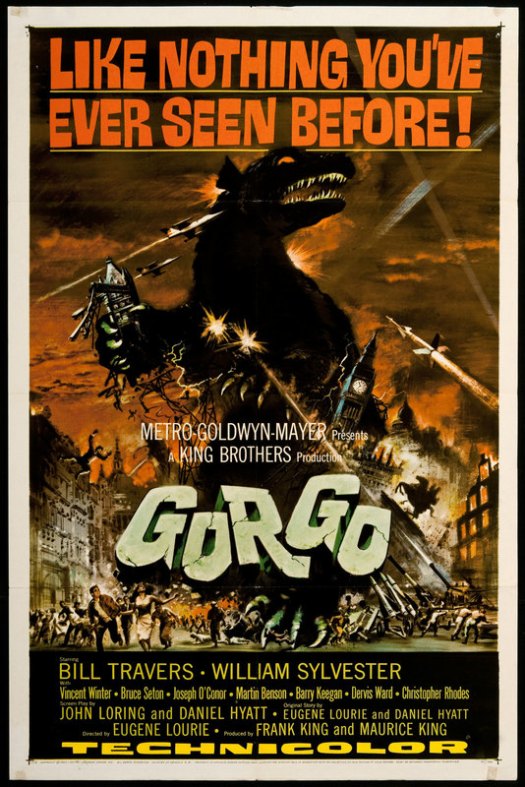
Big, Bad Mama Monster!: GORGO (MGM 1961)


gary loggins's avatarcracked rear viewer


When Melanie at The Film Detective offered me the chance to watch and review GORGO for them, I immediately said yes! GORGO was one of my favorites growing up as a little Monster Kid, a Saturday afternoon staple on Boston’s Channel 56, and the opportunity to see it without all that UHF “snow” was too much to resist (and if you don’t know about The Film Detective, I’ll clue you in a bit later).

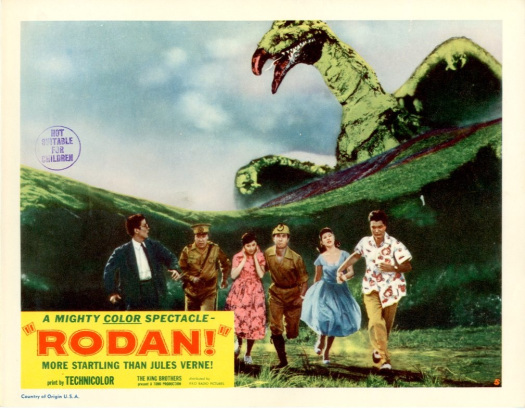
Producers Frank and Maurice King were a pair of slot machine magnates turned low-budget movie moguls who had success with 40’s films noir like WHEN STRANGES MARRY (with Robert Mitchum), DILLINGER (making a star out of Lawrence Tierney), and the Joseph H. Lewis classic GUN CRAZY . When the stateside release of Japan’s Giant Monster Movie GODZILLA, KING OF THE MONSTERS proved a hit, the Kings decided to secure the American rights to another kaiju eiga 

View original post 449 more words

Man of the People: John Ford’s THE LAST HURRAH (Columbia 1958)


gary loggins's avatarcracked rear viewer

This post has been preempted as many times as tonight’s State of the Union Address! 


John Ford’s penchant for nostalgic looks back at “the good old days” resulted in some of his finest works. The sentimental Irishman created some beautiful tone poems in his 1930’s films with Will Rogers, and movies like HOW GREEN WAS MY VALLEY and THE QUIET MAN convey Ford’s sense of loss and wistful longing for simpler times. The director’s THE LAST HURRAH continues this theme in a character study about an Irish-American politician’s final run for mayor, running headfirst into a new era of politics dominated by television coverage and media hype instead of old-fashioned boots-on-the-ground handshaking and baby-kissing. It’s not only a good film, but a movie buff’s Nirvana, featuring some great older stars and character actors out for their own Last Hurrah with the Old Master.

Based on Edwin O’Connor’s 1956 novel, the…

View original post 818 more words

Film Review: Peppermint (dir by Pierre Morel)


2018’s Peppermint is a film about a former banker named Riley North who kills a lot of people but it’s okay because she’s played by Jennifer Garner and has really pretty hair.

It’s also kinda justified because, five years earlier, Riley’s family was murdered and Riley didn’t get justice.  In fact, the perpetrators were acquitted in a trial that was so obviously fixed that I was surprised that no one started shouting “shenanigans.”  Along with hunting down the gang members who murdered her husband and daughter, Riley also murders the prosecutor, the defense attorney, and the judge.  I imagine she did this because Riley knows that if she didn’t kill at least one old white guy, the entire movie would just be the cringey spectacle of a white woman hunting down a group of Hispanic men.  Riley may not know how to get justice through conventional means but she’s still savvy enough to know that you’ve got to throw a few white dudes into your killing spree.  (Otherwise, people might notice that, with the exception of one character, every Latino in the film is portrayed as being a drug-dealing killer.)

We’d probably have more sympathy for Riley if we were not forced to sit through flashbacks designed to show how happy her family was.  Seriously, the Norths were so obnoxiously perfect that you kinda feel like they were tempting fate by just existing in a movie.  No one ever gets away with being that wonderful.  If you want to survive a movie like this, it helps to be dysfunctional.

Anyway, as you watch the film, you might find yourself wondering how Riley learned how to be such an efficient killing machine.  I know that I did  It turns out that, after losing faith in the system, Riley spent five years wandering the world, volunteering with Catholic Relief Services, and trying to find grace through suffering.  No, just kidding!  Actually, she robbed the bank where she worked and then she fled to Singapore where she became an MMA fighter.  (Don’t look at me like that, I’m not the one who wrote this damn movie.)  Now, she’s returned to the United States and she’s blowing shit up.

Fortunately, it turns out that the people who killed Riley’s family are no longer as clever as they were in the past.  How else can you explain their inability to not get blown up or shot in the head?  Peppermint is the type of film that asks you to believe that a group of criminals are so powerful that they can bride a state judge but they’re also so incompetent that a someone in their 40s can pick them off, one-by-one.  This is one of those films where people are only smart when the film’s plot requires them to be.  Otherwise, everyone in Peppermint is dumb as a sack of rocks.

Peppermint attempts to be a female version of Death Wish but it’s not as much fun.  The Death Wish remake may have gotten slaughtered by the critics but it’s still kind of enjoyable to watch because Eli Roth doesn’t hold back from emphasizing how ludicrous the film is.  Peppermint‘s director, Pierre Morel, takes the material a bit too seriously.  That approach may have worked when Morel directed Taken but, in the years since Liam Neeson murdered half of Paris to rescue his daughter, we’ve seen so many Taken rip-offs that the only way to approach the material is in the spirit of self-parody.  If you’re going to have a banker go to Singapore and become a cage fighter so that she can then return to America and blow up a retired criminal court judge, you have to have a sense of humor about it.

I do have to say, though, that I disagree with those critics who claimed Peppermint was one of the worst films of 2018.  It’s not terrible as much as its just kind of forgettable.

Rage in the Cage: CAGED (Warner Brothers 1950)


gary loggins's avatarcracked rear viewer

“In this cage, you get tough or you get killed” – Kitty Stark (played by Betty Garde) in CAGED


The Grandmother of all “Women in Prison” films, CAGED still packs a wallop, nearly seventy years after it’s release. This stark, brutal look at life inside a women’s penitentiary was pretty bold for its time, with its savage sadism and heavy lesbian overtones, and matches up well with BRUTE FORCE as an example of film noir prison flicks. Everything about this film clicks, from its taut direction by John Cromwell to the use of sound to create mood by Stanley Jones, plus a powerhouse mostly female cast led by Eleanor Parker .

The 28-year-old Parker convincingly plays 19-year-old Marie Allen, given a one-to-fifteen year sentence for accessory to an armed robbery during which her husband was killed. The mousey Marie is indoctrinated, given a number (Prisoner #93850), and poked and…

View original post 649 more words

Film Review: The Ride (dir by Michael O. Sajbel)


“Do you own a horse?”

Because I was born and live in Texas, a friend of mine used to ask me that constantly.  His assumption was that everyone in Texas wore a cowboy hat and rode a horse to work.  That, of course, is not true.  I imagine that you’re more likely to see people on horseback in Central Park than you are in downtown Dallas.  As well, for the most part, if you see anyone wandering around Dallas wearing a cowboy hat and cowboy boots, chances are that they’re from up north.  Northerners love to come down to Dallas and see where Kennedy was shot and ask if everything really is bigger in Texas.  It gets annoying after a while.  Of course, I’d by lying if I said that there weren’t any cowboys in Texas.  And yes, there are people down here who own horses.  We’ve got our ranchers and our oilmen and our farmers.  We just don’t have as many as people up in Minnesota seem to assume that we do.

And, to be honest, I’ve known a few cowboys.  If you dig around my family tree, you’ll find a few people who have worked the rodeo circuit.  For the most part, the cowboys I’ve known have been a proud group of people.  They’re not really emotional and they might not spend much time on twitter but you can depend on them to get the job done without a lot of crying and that’s always kind of a nice thing.

As an actor, Michael Biehn has always seemed uniquely right for cowboy roles.  He’s a low-key actor who doesn’t feel the need to always be the center of attention and who does his job with a minimum amount of fuss.  What he does, he does well.  Much like the best cowboys, an actor like Michael Biehn often gets taken for granted.  Viewers just always assume that he’ll always be there, delivering laconic one-liners and viewing the world through weary but never defeated eyes.

Michael Biehn plays a cowboy in the 1997 film, The Ride.  His name is Smokey Banks and he’s the type of character who, if you’ve ever spent any time at a rodeo, you’ll recognize immediately.  He used to be one of the world’s greatest bull riders but now, he’s getting older.  He still walks like a cowboy but he’s definitely moving a bit slower than he used to.  He drinks too much.  He spends too much time with the buckle bunnies.  He’s like a downbeat country song come to life.

But fear not …. redemption is coming for Smokey.  And, like all good redemption arcs, it all starts with being sentenced to community service.  Smokey can either go to jail or he can go to a ranch and teach a bunch of boys how to be a cowboy.  Along the way, he befriends a terminally ill, religious young man (Brock Pierce) who wants to learn how to ride a bull and he also ends up spending some time at a tent revival.  Yes, it’s a religious film but, fortunately, it was made before the whole God’s Not Dead phenomenon so it never gets as preachy or apocalyptic as some other faith-based films.  One gets the feeling that Smokey would find Kirk Cameron to be as annoying as the rest of us do.

It’s a sweet film.  I mean, it’s not a movie that’s going to surprise you.  It’s unapologetic about being sentimental but, at the same time, it’s such a good-natured film that it’s hard to really dislike it.  Michael Biehn grounds the film with his typically low-key charm.  Biehn turns Smokey into a real person and, as much as you might try to resist, it’s hard not to get swept up in his emotional journey.  Considering that the film’s audience was probably limited to kids and church groups, Biehn easily could have gotten away with just phoning in his performance.  That’s the sign of a good actor, though.  Like the best cowboys, they’re good even when they don’t have to be.

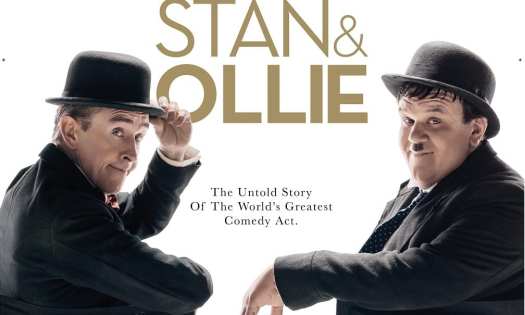
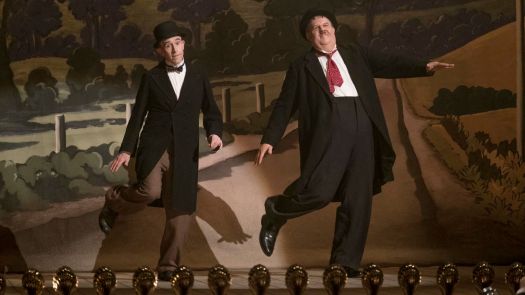
A Love Letter to STAN & OLLIE (Sony Pictures Classics 2018)


gary loggins's avatarcracked rear viewer


I told you Dear Readers I was going to see STAN & OLLIE when it came to my area, and last Saturday night I did just that. Taking the 22 mile trip down the highway to Swansea, MA to catch the 9:40 showing, I have good news and bad news. The good: STAN & OLLIE is one of the best Hollywood biopic I’ve ever seen, a loving tribute to the classic comedy duo. The bad: well, I’ll get to that a bit later.

The film follows Laurel and Hardy as they embark on a 1953 tour of the UK. The duo is older, in need of money, and Stan is working on obtaining funding for their screen comeback – an adaptation of the Robin Hood legend. Ollie is in poor physical condition due to his massive weight gain, but Stan has persuaded him to do the tour. They’re booked into…

View original post 878 more words