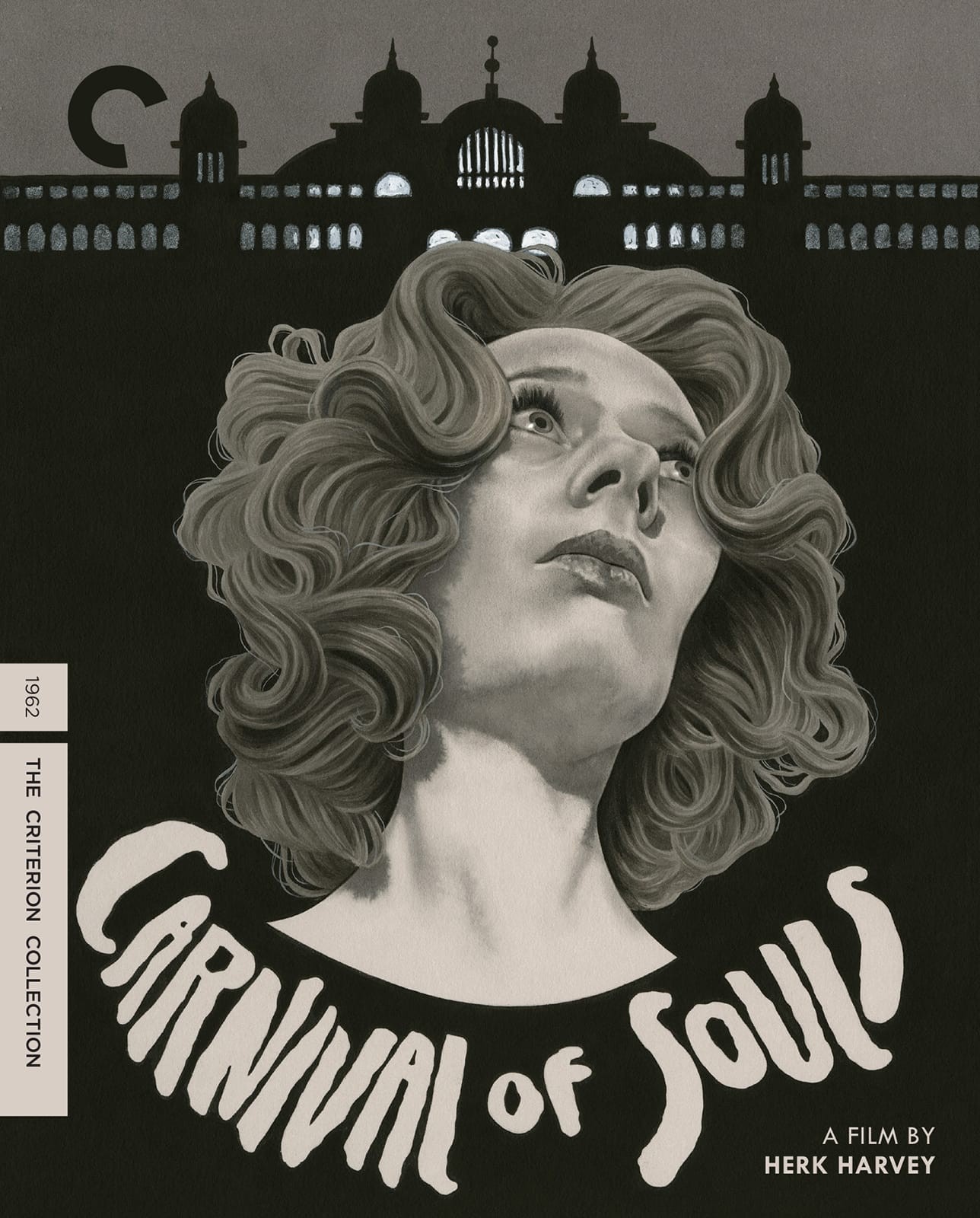
Horror Film Review: Carnival of Souls (dir. by Herk Harvey)


“I don’t belong in the world—that’s what it is. Something separates me from other people.” — Mary Henry

There is something deeply unsettling about a horror movie where being ignored feels just as frightening as being followed. That tension runs through Carnival of Souls, Herk Harvey’s 1962 psychological horror film about a woman who survives a car accident but cannot quite return to ordinary life. A pale stranger keeps appearing, an abandoned pavilion draws her attention, and everyday encounters become increasingly uncomfortable. Yet the movie’s strongest fear is not simply that something wants her. It is that the rest of the world might stop noticing her altogether. For all its rough edges, this is a film that knows how to turn loneliness into a nightmare.

The opening gets things moving with a reckless car race that sends a vehicle carrying three women off a bridge and into a river. Mary Henry, played by Candace Hilligoss, eventually emerges from the water, apparently the only survivor. Rather than stay and work through the experience, she leaves for Utah to take a position as a church organist. Her determination to move on is understandable, but the film makes that transition feel strangely incomplete. Mary has escaped the immediate disaster without finding any real sense of safety. A new job and a different town cannot restore the connection to everyday life that seems to have slipped away.

Mary is a compelling lead partly because the movie does not insist on making her easy company. She is guarded, impatient with intrusive questions, and uninterested in giving people the warmth they expect. Her work at the church is a professional arrangement, not an expression of religious devotion. That reserve complicates the story in a useful way. Mary wants independence, but independence becomes frightening when it starts to resemble exclusion. There is a difference between choosing to keep people at a distance and discovering that you cannot reach them at all. Much of the film’s emotional force comes from watching that distinction gradually collapse.

Hilligoss handles this tension best through her expressions and physical presence. Her dialogue delivery can be stiff, particularly when the script asks Mary to describe feelings that are already obvious from her behavior. But her watchfulness is effective. She looks like someone constantly checking the room for a sign that everything is still functioning normally. Her fear often emerges through hesitation, irritation, or a sudden break in composure rather than a sustained display of panic. That gives Mary’s distress an appealingly uncomfortable texture. She is not merely waiting for another scare; she is trying to get through the day while her confidence in reality keeps eroding.

The boarding-house scenes bring that discomfort into an unpleasantly ordinary setting. John Linden, the man renting a room nearby, sees Mary as someone to pursue rather than someone to understand. His pushiness makes companionship feel less like an answer to her isolation than another problem she has to manage. These exchanges are not always smoothly written or performed, but they serve an important purpose. Mary cannot count on human attention being reassuring. Sometimes the person who notices you is the last person you want around. The film traps her between unwanted interest and terrifying indifference, leaving very little room for genuine comfort.

Harvey gives that predicament a visual counterpart by making familiar spaces feel subtly unwelcoming. Streets, shops, rented rooms, and the church remain recognizable, but the black-and-white photography drains them of easy warmth. A window can become a point of intrusion rather than protection. A public place can feel more isolating than an empty room. The film does not need to invent an entirely separate supernatural world because the ordinary one is already becoming unstable. Some of its most effective moments come from that simple reversal: places where Mary should be able to orient herself instead leave her feeling exposed and uncertain.

The abandoned lakeside pavilion takes this idea further. It is a building associated with crowds and entertainment, now stripped of the people who gave it purpose. Its emptiness has a peculiar pull, and Mary’s attraction to it feels both understandable and deeply wrong. Harvey gets a tremendous amount from the contrast between what the place was built for and what it has become. A setting intended to bring people together now seems to promise a much darker kind of gathering. It is not frightening merely because it is deserted. It is frightening because its silence never feels permanent, and whatever might fill it again seems unlikely to offer welcome.

The pale man who haunts Mary provides the other side of the film’s central tension. Played by Harvey himself, he notices her with a persistence she cannot escape. His appearance is theatrical rather than realistic, but the simplicity works in the movie’s favor. He has the unsettling clarity of a face remembered from a bad dream. The horror comes from where he appears and how little explanation accompanies him. While ordinary people become increasingly difficult for Mary to reach, this stranger seems to have no trouble finding her. His attention feels inevitable, making the world’s indifference even more disturbing.

Sound helps hold these ideas together. The organ music fits Mary’s profession while giving the film a mournful, almost funereal atmosphere. At times it presses the mood a little too hard, but it remains a major part of the movie’s identity. More striking are the sequences in which Mary loses contact with the activity around her and people fail to acknowledge her presence. The absence of a response becomes the scare. These passages do not need much explanation because the basic experience is so immediate: she is there, she is trying to communicate, and nobody seems able to confirm either fact.

The film’s weaknesses are real. Some dialogue states what the atmosphere has already made clear, the supporting performances can be broad, and a few scenes repeat Mary’s distress without developing it. Not every awkward pause deserves to be praised as dream logic. Still, the strongest passages make those limitations feel secondary. As the mystery moves toward its conclusion, Carnival of Souls leaves its deepest impression through Mary’s increasingly fragile place in the world. Harvey turns the need to be recognized into something frightening, then makes recognition itself feel dangerous. The result is a haunting little movie in which neither company nor solitude offers much protection.

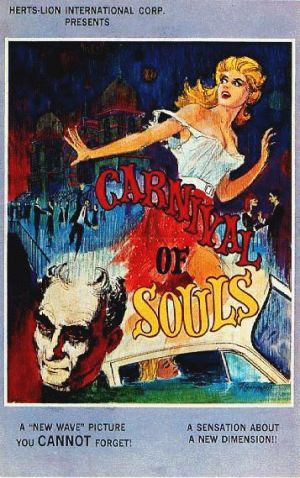
Horror On The Lens: Carnival of Souls (dir by Herk Harvey)


1962’s Carnival of Souls was the only feature film to be directed by Herk Harvey.  It was made on a budget of $33,000 and was filmed in Kansas and Utah, often without permits.  The film was also the feature acting debut of model Candace Hilligoss, cast here as a emotionally withdrawn church organist who is involved in a serious car accident and then finds herself haunted by pasty-faced ghosts and surreal visions.

When it was initially released, Carnival of Souls was dismissed by American critics.  Indeed, it would a little over twenty years before the film started to be appreciated as both a classic independent film and also a truly eerie horror movie.  Today, it’s recognized as a classic of the genre, an expressionistic ghost story that also works as a character study of a woman who is haunted by not just physical death but also emotional malaise.

Carnival of Souls is a Halloween tradition here at the TSL offices.  This year, the tradition continues.


A Blast From The Past: Cindy Goes To A Party (dir by Herk Harvey)


In the 1955 short film, Cindy Goes To A Party, Cindy is upset because she hasn’t received an invitation to a party.  Even her dumbass friend Dennis has been invited!  Cindy’s mom assures Cindy that her invitation has probably just gotten lost in the mail.  Consumed by ennui, Cindy goes to bed at 2 in the afternoon.

Cindy is visited by her fairy godmother who, with the help of her magic wand, transports Cindy to the party and then gives Cindy and Dennis a long list of rules to obey.  For those of you who don’t have 9 minutes to watch this film and discover the rules for yourself, here they are:

  1. Be Clean and Neat
  2. Arrive on Time
  3. Leave on Time
  4. Join In The Games (even if the games are totally lame)
  5. Don’t Be Noisy and Rough
  6. Don’t Break Things
  7. Don’t Tease or Make Fun of Others (even if Dennis kind of deserves it)
  8. Obey the Rules of the Game
  9. Be a Good Loser (this rule is specifically given to Dennis because it’s obvious Dennis will never have to worry about being a winner)
  10. Be Considerate
  11. Be A Good Winner (something that Dennis will never have to worry about)
  12. Be Polite
  13. Be Considerate of other (wait a minute, we just did that one)
  14. Remember Your Table Manners
  15. Leave On Time (again, we already did that one)
  16. Thank Your Hostess

That’s a lot of rules!  I think Cindy would have more fun just staying home.

This short film was one of the many educational films directed by Herk Harvey.  Today, of course, Harvey is best known for directing the horror classic, Carnival of Souls.

Horror On The Lens: Carnival of Souls (dir by Herk Harvey)


Well, there’s less than a week to go until Halloween and, traditionally, this is when all of us in the Shattered Lens Bunker gather in front of the television in Arleigh’s penthouse suite, eat popcorn, drink diet coke, and gossip about whoever has the day off.

Of course, after we do that, I duck back into my office and I watch the classic 1962 film, Carnival of Souls!

Reportedly, David Lynch is a huge fan of Carnival of Souls and, when you watch the film, it’s easy to see why.  The film follows a somewhat odd woman (played, in her one and only starring role, by Candace Hilligoss) who, after a car accident, is haunted by visions of ghostly figures.  This dream-like film was independently produced and distributed.  At the time, it didn’t get much attention but it has since been recognized as a classic and very influential horror film.

This was director Herk Harvey’s only feature film.  Before and after making this film, he specialized in making educational and industrial shorts (some of which we’ve watched on this very site), the type of films that encouraged students not to cheat on tests and employees not to take their jobs for granted.  Harvey also appears in this film, playing “The Man” who haunts Hilligoss as she travels across the country.

Enjoy Carnival of Souls!

And remember, don’t stop for any hitchhikers!

Horror On The Lens: Carnival of Souls (dir by Herk Harvey)


Well, we’re more than halfway done with October and, traditionally, this is when all of us in the Shattered Lens Bunker gather in front of the television in Arleigh’s penthouse suite, eat popcorn, drink diet coke, and gossip about whoever has the day off.

Of course, after we do that, I duck back into my office and I watch the classic 1962 film, Carnival of Souls!

Reportedly, David Lynch is a huge fan of Carnival of Souls and, when you watch the film, it’s easy to see why.  The film follows a somewhat odd woman (played, in her one and only starring role, by Candace Hilligoss) who, after a car accident, is haunted by visions of ghostly figures.  This dream-like film was independently produced and distributed.  At the time, it didn’t get much attention but it has since been recognized as a classic and very influential horror film.

This was director Herk Harvey’s only feature film.  Before and after making this film, he specialized in making educational and industrial shorts (some of which we’ve watched on this very site), the type of films that encouraged students not to cheat on tests and employees not to take their jobs for granted.  Harvey also appears in this film, playing “The Man” who haunts Hilligoss as she travels across the country.

Enjoy Carnival of Souls!

And remember, don’t stop for any hitchhikers!

Horror On The Lens: Carnival of Souls (dir by Herk Harvey)


Well, we’re nearly done with October and, traditionally, this is when all of us in the Shattered Lens Bunker gather in front of the television in Arleigh’s penthouse suite, eat popcorn, drink diet coke, and gossip about whoever has the day off.

Of course, after we do that, I duck back into my office and I watch the classic 1962 film, Carnival of Souls!

Reportedly, David Lynch is a huge fan of Carnival of Souls and, when you watch the film, it’s easy to see why.  The film follows a somewhat odd woman (played, in her one and only starring role, by Candace Hilligoss) who, after a car accident, is haunted by visions of ghostly figures.  This dream-like film was independently produced and distributed.  At the time, it didn’t get much attention but it has since been recognized as a classic and very influential horror film.

This was director Herk Harvey’s only feature film.  Before and after making this film, he specialized in making educational and industrial shorts (some of which we’ve watched on this very site), the type of films that encouraged students not to cheat on tests and employees not to take their jobs for granted.  Harvey also appears in this film, playing “The Man” who haunts Hilligoss as she travels across the country.

Enjoy Carnival of Souls!

And remember, don’t stop for any hitchhikers!

A Blast From The Past: Why Study Speech? (dir by Herk Harvey)


Director Herk Harvey

98 years ago today, director Herk Harvey was born in Lawrence, Kansas.  Today, Harvey is best-remembered for his only feature film, 1962’s Carnival of Souls.  Carnival of Souls is a Halloween favorite here at the Shattered Lens and it’s a film that has been cited as being an influence on everyone from Sam Raimi to Martin Scorsese to David Lynch.

However, before and after he directed that ground-breaking film, Herk Harvey made his lesson directing educational short films.  Today, in honor of what would have been his birthday, the Shattered Lens presents Why Study Speech?  This 1954 short film explains why all high school seniors should study speech when they get to college.  It opens with a somewhat quirky montage that, if nothing else, serves to remind us that we’re watching a short film from the man who, just 8 years later, would direct Carnival of Souls.

And now …. WHY STUDY SPEECH?

Horror On The Lens: Carnival of Souls (dir by Herk Harvey)


Well, we’re nearly done with October and, traditionally, this is when all of us in the Shattered Lens Bunker gather in front of the television in Arleigh’s penthouse suite, eat popcorn, drink diet coke, and gossip about whoever has the day off.

Of course, after we do that, I duck back into my office and I watch the classic 1962 film, Carnival of Souls!

Reportedly, David Lynch is a huge fan of Carnival of Souls and, when you watch the film, it’s easy to see why.  The film follows a somewhat odd woman (played, in her one and only starring role, by Candace Hilligoss) who, after a car accident, is haunted by visions of ghostly figures.  This dream-like film was independently produced and distributed.  At the time, it didn’t get much attention but it has since been recognized as a classic and very influential horror film.

This was director Herk Harvey’s only feature film.  Before and after making this film, he specialized in making educational and industrial shorts (some of which we’ve watched on this very site), the type of films that encouraged students not to cheat on tests and employees not to take their jobs for granted.  Harvey also appears in this film, playing “The Man” who haunts Hilligoss as she travels across the country.

Enjoy Carnival of Souls!

And remember, don’t stop for any hitchhikers!

A Blast From The Past: Halloween Safety (dir by Herk Harvey)


Director Herk Harvey

Tomorrow, we will be sharing the classic film Carnival of Souls. That means that today, it’s for us to show our last Herk Harvey short film of the 2021 Horrorthon. And appropriately enough, it’s all about Halloween!

This short film was made in 1977, long after the release of Carnival of Souls. In it, safety tips are offered up to make sure that all the kids have a safe Halloween. Make sure you can see clearly, even if you’re wearing a mask. Don’t wear dark clothing. Grab a flashlight. Don’t trick or treat alone! Hey, it’s all good advice. And Herk Harvey seems like someone who knew a little something about having a good Halloween!

From 1977, here’s some lessons on Halloween Safety!

A Blast From The Past: Shake Hands With Danger (dir by Herk Harvey)


Director Herk Harvey

Since I’m going to be sharing Herk Harvey’s Carnival of Souls on Saturday, I’ve been preparing by showing some of the short films that Harvey directed before and after making his only feature. 1980’s Shake Hands With Danger was actually one of Harvey’s final films and, needless to say, it came out long after Carnival of Souls.

This short film is all about being safe while working with heavy machinery. If Candace Hilligoss had shown more caution, she wouldn’t have had to shake hands with danger in Carnival of Souls. See, it’s all connected! Welcome to the Herkiverse.

Here’s the film. Watch and learn: