Film Review: The Man In The Glass Booth (dir by Arthur Hiller)


Who is Arthur Goldman?

That’s the question at the heart of the 1975 film, The Man In The Glass Booth.

When we first meet Arthur Goldman (Maximilian Schell), he is a wealthy businessman who lives in a Manhattan high-rise and who appears to rarely leave the safety of his penthouse.  He is waited on by two assistants, Jack (Henry Brown) and Charlie (Lawrence Pressman), both of whom he talks to and treats as if they are members of his own family.  His most frequent visitor is his psychiatrist, Dr. Weissburger (Robert H. Harris), who frequently stops by and asks Arthur if he’s been taking his medication.

Arthur Goldman is a man who loves to talk.  Indeed, the first hour of the film feels almost like a nonstop monologue on the part of Goldman, with just occasional interjections from the other characters.  Goldman was born in Germany.  He talks about how, when he was young, he and his family were sent to a concentration camp and it was there that he witnessed the murder of his father by the camp’s sadistic commandant, Dorff.  Dorff is one of the many Nazis who disappeared to South America at the end of the war.

When Goldman spots a car that always seems to be parked across the street from his building, he becomes paranoid.  He says that he’s being watched and even suggests that Dorff has come to capture him.  Instead, it turns out that Mossad come for him.  As the agents explain it to Charlie, dental records prove that Arthur Goldman is actually Commandant Dorff.  Goldman/Dorff is taken back to Israel to stand trial for his crimes.

Are Arthur Goldman and Dorff the same man?  Once in Israel, Goldman tells anyone who will listen that he is Dorff and that he feels no guilt for his actions.  He insists on being allowed to wear his SS uniform during the trial.  Because of threats to his safety, a booth made of bullet-proof glass has been placed in the courtroom.  As the trial commences, The Man in the Glass Booth continues to rant and rave and declare his guilt.  However, the prosecutor (Lois Nettleton) comes to doubt that the man is who he says he is.

The Man In The Glass Booth is based on a novel and play by Robert Shaw.  (The same year that The Man In The Glass Booth was released, Shaw played Quint in Jaws.)  The film was produced as a part of an experiment called American Film Theatre, in which well-known plays would be adapted to film and then would be shown at 500 participating movie theaters in America.  Each production would only be shown four times at each theater and subscriptions were sold for an entire “season” of films.  It sounds like an interesting experiment and the type of thing that I would have enjoyed if I had been around back then.  Today, of course, these productions would have just premiered on a streaming service.

The Man In The Glass Booth is a film that very much feels like a filmed play.  There are only three locations — Goldman’s penthouse, his cell, and the courtroom where he is put on trial.  The three act structure is very easy to spot.  Maximilian Schell’s performance is also very theatrical.  In fact, it’s so theatrical that, for the first hour or so, I found myself wishing that he would just stop talking for a few second or two.  He was so dramatic and so flamboyant and so intentionally over-the-top that he became somewhat exhausting.  But, during the second hour, I came to see that all of that “overacting” was actually setting up the film’s final act.  Schell talks so much that, when he finally does find himself unable to explain himself, it’s a shocking moment and one that perfectly captures not just the evil of the Nazis and the Holocaust but also how the legacy of that evil lives on after the fall of the Third Reich and the deaths of the majority of the Holocaust’s perpetrators.  At that moment, I realized that The Man In The Glass Booth never stopped speaking because silence would force him to confront the horrors of the past and the trauma, guilt, and uncertainty lurking in his subconscious.  Maximilian Schell was nominated for an Oscar for his performance here and, by the end of the film, I totally understood why.

The Man In The Glass Booth requires some patience.  Actually, it requires a lot of patience.  However, those who stick with it will discover an intelligent and thought-provoking film about not only the horror of the past but also how those in the present deal with and rationalize those horrors.  Though the film is a bit too stagey for its own good, it’s also one that sticks with you even after the curtain falls and the end credits roll.

Four Fast Guns (1960, directed by William J. Hole, Jr.)


Outlaw Tom Sabin (James Craig) rides into Purgatory, a frontier town that is so dangerous that even the welcome sign warns that those entering should say goodbye to God.

The townspeople take one look Tom and hire him to clean up the town.  The town is controlled by a ruthless saloon owner named Hoag (Paul Richards).  Hoag is a self-styled intellectual and a dangerous man but he is considered to be untouchable because he is crippled and no one wants to be known as the person who shot a man in a wheelchair.  Instead, they would rather hire a stranger to do it for them but Tom has more honor than they originally realized.

Hoag summons three gunmen to kill Tom.  Two of the gunmen prove to be no match for Tom but then he meets the third and is shocked to discover that it’s his own brother, Johnny Naco (Brett Halsey).

Four Fast Guns is a better-than-average B-western.  What sets it apart from other films about strangers being hired to clean up a town is that the characters are portrayed with more depth than usual.  The towns people are not innocent victims but instead want to pay Tom to take the risks and do the dirty work that they’re not willing to do.  Tom is not a cut-and-dried hero and the gunmen who are hired to kill him are not portrayed as being one-dimensional villains.  Johnny Naco may be a killer but he also has a code of honor.  He may be willing to kill his own brother but he’s not willing to see him humiliated.  The wheelchair-bound Hoag is himself a more interesting bad guy than usually shows up in movies like this.  He’s the type of bad guy who quotes Dickens and Whitman while waiting for his hired guns to do their job.  Hoag feels that his cultured background sets him above the rest of the town’s rabble but he ultimately proves himself to be just as petty as those that he looks down on.

Four Fast Guns feels like a forerunner to the morally ambiguous Spaghetti westerns and films like Clint Eastwood’s Unforgiven.  It is essential viewing for fans of the genre.

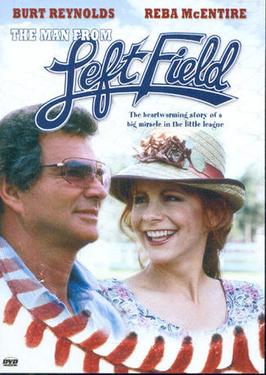
I Watched “The Man From From Left Field” (1993, dir. by Burt Reynolds)


A group of boys from the wrong side of the tracks want to start a little league baseball team but they have to find a coach.  Luckily, right before the deadline, they find a homeless drifter (Burt Reynolds) sleeping in the dugout.  The drifter doesn’t know his name or anything about his past but he does know a lot about baseball.  The team names him Jack Robinson (after Jackie Robinson) and he teaches them how to play baseball and they find a barn for him to sleep in.  Jack dates one the player’s mom (Reba McIntire) and helps the kids with their homelives before a near-tragedy causes him to remember who he used to be.

I like most baseball movies but this one sent a pretty bad message.  If you’re looking for a coach for your baseball team, don’t just give the job to the first drifter who shows up.  The kids were lucky that the drifter turned out to be someone with baseball experience instead of a cannibal.  Jack was a good coach and I appreciated his emphasis on the fundamentals but I also thought it was strange that none of the parents were worried about a total stranger wanting to spend all of his time with their children.  Except for Reba McIntire, the acting was pretty forgettable but all of the kids looked like they knew what they were doing in the baseball scenes so that was a plus.  This movie never scored but it did get a few base hits.

Film Review: Against Their Will (dir by Denis Malleval)


The 2012 French film, Against Their Will, tells the story of two Alsatian teenagers during the Nazi occupation of France.

Lisette (Louise Herrero) is blonde and praised, by the Nazis, for her Aryan appearance.  She appears to always have a positive attitude no matter what is going on.  Lisette’s father is a collaborationist with the Nazis and Lisette publicly defends the German occupiers while privately disdaining them and the war.  Her fiancé, Henri, has been conscripted into the army and has been sent to the Russian front.  He writes her letters but, because he is now required to write only in German and not in the French that he and Lisette grew up with, Lisette cannot read them.

Alice (Flore Bonaventura) is dark-haired and therefore considered to be inferior to Lisette.  This is despite the fact that Alice is fiercely intelligent and has been trained as a nurse.  Alice’s father is a doctor who has been sent to a prison camp as punishment for treating a wounded British soldier.  Alice is rebellious and, unlike Lisette, she has no compunctions about telling the Nazis exactly how she feels about them.  When she is ordered to salute the Nazi flag, she lifts on arm in a stiff salute while using her other hand to extend her middle finger.

Lisette and Alice are amongst the many teenagers who are taken from their families and sent to a German indoctrination camp, where the strict and cruel Trudl (Julia Thrunau) tries to brainwash them.  Lisette and Alice become unlikely friends as they are sent from the camp to work in a munitions factory and finally to serve in the Lebensborn, which was Germany’s eugenics program.  While Alice works in the maternity ward, Lisette’s Aryan appearance attracts the attention of a cruel SS officer.

Against Their Will starts out strong, showing how even the most intelligent and independent of people can be forced to do things that go against their beliefs, whether as a result of brainwashing or just plain fear.  The scenes in the indoctrination camp and later in the munitions factory show how the Nazi government treated both people in both Germany and the occupied territories as cannon fodder in their war with the Allies.  Even during an air raid, Alice is ordered to continue working and, even though one mistake could lead to an explosion that would kill both them and several of their co-workers, Alice and Lisette are continually told to speed up when it comes to making the shells that will later be dropped on the Allies.

The film loses its way during the final third, largely because French girls — even ones from the German-influenced Alsace region of France — would never have been sent to the Lebensborn, which was meant to be exclusively for the breeding of “pure” Germans.  By suggesting otherwise, the film unintentionally downplays the nationalism and the racism at the heart of the Nazi ideology.  The film’s framing device — in which one of the women tells her story to her granddaughter — also feels a bit awkward and the film also makes a bit too much use of the stereotype of the good German, the one Nazi who is not quite as cruel as the others.

The first half of the film is a strong portrayal of life under an occupation, with both of the lead actresses giving good performances as two women who deal with their circumstances in very different ways.  It’s just a shame that the film’s conclusion doesn’t live up to what came before it.

Idaho Kid (1936, directed by Robert F. Hill)


When the wife of rancher Clint Hollister (Earl Dwire) died in childbirth, Clint was so distraught that he rejected his son, Todd.  Todd was raised by a rival rancher, John Endicott (Lafe McKee).  Hollister resented Endicott for taking his son and a feud developed between the two families.  Hoping the end the feud, 15 year-old Todd ran away from home and made a new life for himself as a frontier scout named Idaho.

15 years later, Idaho (Rex Bell) returns home with his sidekick, a reformed outlaw known as The Kid (David Sharpe).  Neither Hollister nor Endicott recognize Idaho and, without revealing his identity, Idaho tries to stop their feud.  Hollister’s men want to keep the feud going and they manipulate Hollister into challenging his own son to a duel.

Idaho Kid is one of the better B-westerns that Rex Bell made between 1928 and 1936.  Though the film has its share of action scenes, Idaho Kid‘s intelligent script puts more emphasis on character development than most B-westerns, with Hollister especially being portrayed as a complex character as opposed to just a stock western villain.  Rex Bell always seemed authentic whenever he was riding a horse or shooting a gun.  Idaho Kid shows that he could also play more than just a standard western hero.

Though he was being pushed for stardom by Fox Film, Rex Bell voluntarily retired from the film industry in 1936 and instead pursued a career in politics.  He was the Lieutenant Governor of Nevada when he died of a heart attack in 1962.


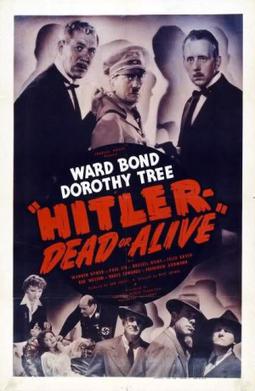
Film Review: Hitler — Dead or Alive (dir by Nick Grinde)


The 1942 film, Hitler — Dead or Alive, opens with two reporters visiting a prominent industrialist named Samuel Thornton (Russell Hicks).  They are curious about a statue of three men that stands outside of Thornton’s mansion.  Thornton proceeds to tell them the story of the three men.

In 1939, shortly after the Nazis invaded Poland and with the United States still pursuing a policy of neutrality, Thornton independently offered a million dollars to anyone who could bring Adolf Hitler to justice, dead or alive.  Accepting the offer were three ex-cons who had just been released from Alcatraz, Steve Maschick (Ward Bond), Hans “The Dutch” Havermann (Warren Hymer), and Joe “The Book” Conway (Paul Fix).  (As you may have guessed “The Book” is the intellectual of the group and yes, he wears glasses.)  After Thornton makes clear to them that they’re going to have to make sure that they either capture or kill the real Hitler and not one of his many doubles, the three men join the Royal Canadian Air Force and, along with ace pilot Johnny Stevens (Bruce Edwards), they head for Germany.

Made for an obviously low-budget, this B-movie is a bit of a curiosity.  It starts out as a comedy, with the three cooks cracking jokes about going straight and a lengthy sequence in which they try to work up the courage to parachute into Germany.  Even after they get caught by the Gestapo and sent to a prison camp, much of the film is played for laughs.  It’s not until they escape from the prison and Johnny sacrifices his life while shooting it out with the Nazis that the film starts to take a more serious turn.  Steve, who starts out the film only caring about the money, comes to realize that there are more important things than just finding a quick payday.

Steve, Hans, and Joe end up at the mansion of Else von Brandt (Dorothy Tree), a secret member of the German resistance who is so trusted by the Nazis that Hitler himself (played by Bobby Watson) will be stopping by for a visit.  By this point, Steve explains that he no longer cares about the money.  As far as he’s concerned, he’s now working for free.  After learning about all of the people who have been killed by Hitler, Steve is determined to stop him, even if it means sacrificing his own life.

There are still moments of humor to the found in the latter half of the film.  When Steve, Hans, and Joe confront Hitler, one of the first things that they do is shave off his mustache.  But the film’s conclusion is ultimately a very serious one and features one particular act of violence that I imagine stunned audiences in 1942.  Having told the story of the three men and their mission to get Hitler, Samuel Thornton ends the film by saying that it doesn’t matter whether Germany is being led by Hitler or Hitler’s double.  What matters is eradicating all of the Nazis from the Earth.  In the end, the message of the film is a simple one.  It’s okay to laugh.  It’s okay to joke.  But, in the end, everyone must do their part.

Hitler — Dead or Alive was made for an obviously low-budget and there are a few scenes, especially in the beginning, where the pace feels a bit off.  Just as with Beast of Berlin, the film’s version of a German prison camp feels like it could have been lifted from a dozen American crime films.  But Ward Bond is a strong hero and he delivers his lines with conviction, especially when he discusses why nothing is more important than stopping Hitler.  He gets good support from both Paul Fix and Warren Hymer.  The film may start out as a comedy but it’s anti-Hitler message comes through loud and clear.  Seriously, how can you not appreciate a film about defeating the Nazis?

Top Gun (1955, directed by Ray Nazarro)


Rick Martin (Sterling Hayden) rides his horse into his hometown of Casper, Wyoming.  He has an important message to deliver to the town marshal but first, he visits his mother’s grave and discovers that there is a maker with his name on it and an open grave waiting for him.  Many of the other makers are for people who are specifically identified as have been “Murdered by Rick Martin.”

Rick is notorious for being a gunslinger and most of the town considers him to be nothing but a murderer, despite Rick’s claim that he’s never shot anyone who didn’t try to shoot him first.  Despite the town’s feelings towards him, Rick warns his old friend, Marshal Bat Davis (James Millican), that the notorious outlaw Tom Quentin (John Dehner) is coming to Casper and is planning on tearing the place up.  Rick offers to stick around and help fight Quentin and his men but the city council orders him to leave.

City councilman Canby Judd (William Bishop) especially wants to get rid of Rick.  Judd murdered Rick’s mother for her land and he is also engaged to Rick’s former girlfriend, Laura (Karin Booth).  When Rick asks Laura to come to California with him, Judd and his gunslinger (played by Rod Taylor, in one of his first film roles) conspire to put Rick in jail.  At first, the town is happy to have Rick behind bars but then Tom Quentin and his gang show up.

Though it will never be the most popular film to use the title, 1955’s Top Gun is an intelligent B-western that puts as much emphasis on the hypocrisy of the town as it does on gunfights and duels.  The population sign specifically says that Casper is home to “1,002 law-abiding citizens” and it is obvious that Rick is not considered to be good enough to be one of those citizens.  Rick may have a violent past but he’s honest about who he is, unlike the holier-than-thou townspeople who put Rick in jail and then expect him to help them out when the real outlaws arrive.  Though the townspeople pretend that there’s no place for someone like Rick Martin in their society, Rick understands the harsh reality of life in the old west.  Director Ray Nazarro does a good job choreographing the fight scenes and Sterling Hayden give a tough and angry performance as Rick Martin and he’s supported by an able cast of western regulars.  Western fans will find much to enjoy while watching Top Gun.

Film Review: Hitler — Beast of Berlin (dir by Sam Newfield)


1939’s Hitler — Beast of Berlin opens with a shot of Nazi stormtroopers marching down a Berlin street.  As they pass, every civilian stands and gives them the stiff-armed Nazi salute.  A couple sitting in a park does it.  A woman pushing a baby carriage does it.  A group of children do it.

Despite outward appearances, not everyone in Berlin is a supporter of Hitler or the Nazis.  Hans Memling (Roland Drew) is an intellectual and a veteran of World War I.  He knows that Germany’s economic policies are, in fact, making the country weaker.  He knows that Hitler is determined to provoke a war that Germany cannot win.  Prophetically, Hans speaks of the risk of German citizens being forced to fight in a war that is only being fought on behalf of Hitler’s ego.  He warns that Berlin and Germany will be destroyed if Hitler is not stopped.

Along with a group of other dissidents, Hans prints an underground newspaper, one that presents the truth about what is happening in Germany.  Working with him, among others, is his brother-in-law, Karl (Alan Ladd, in an early role) and a priest named Father Pommer (Frederick Giermann).  Their contact in the Gestapo is Alfred Stahlhelm (played by Hans Heinrich von Twardowski, a German actor who escaped Germany when Hitler came to power).  Stahlhelm is an alcoholic who fears that he will accidentally slip up when he’s drunk.  As he explains it, a member of the Gestapo is expected to drink and visit brothels when he is off-duty.  If he doesn’t, he will be immediately suspected of insubordination.

When the Gestapo does come for Hans’s operation, Hans finds himself separated from his wife (Steffi Duna) and imprisoned.  The only thing that keeps Hans alive is that the camp commandant is an old friend from World War I.  Hans can only watch as his allies are either executed or forced, after torture, to declare their loyalty to Hitler.  When Hans is finally given an opportunity to escape, he must decide whether to flee to Switzerland or to remain in Germany and continue to fight the Nazi regime.

The most interesting thing about this film is that it was made in 1939 and released into theaters a month after Germany invaded Poland.  The film was released at a time when America was still officially neutral and when isolationism was still a popular policy.  It was released at a time when many Americans were still dealing with the trauma of World War I and, as such, felt that Europe should be left alone to deal with its conflicts on its own.  As such, the film struggled with both the enforcers of the Motion Picture Production Code but also with local censors who felt that the film might offend the German communities within their towns.  James G. Stahlman, editor of the Nashville Banner, was moved to write an editorial calling for the film to be banned because it might inspire audiences to want to go to war with Germany.  Despite all that, Hitler — Beast of Berlin did well at the box office, though many theater owners chose to advertise it as being titled either Beast of Berlin or The Goose Steppers.

Seen today, parts of the film seem naive.  Despite the film being fervently and unapologetically anti-Nazi, it is still obviously a film made at a time when the full depravity of the Nazi regime had not yet been revealed.  The scenes in the concentration camp feel as if they could have been lifted from any 1930s prison film and they certainly come nowhere close to depicting what we now know was actually happening.  Indeed, the film barely acknowledges the anti-Semitism that lay at the heart of Nazi ideology.  But the film does do a good job of portraying life in a society where no one can be trusted and where simply saying the wrong word can lead to prison, torture, and even worse.  The film captures the fear and paranoia of living under a dictatorship and certainly, it deserves credit for calling out the Nazis and their leaders by name.  At a time when many people were living in denial about what was happening in Europe, this film took a clear and firm stand.  In 1939, the film may have been called “propaganda” but today, it feels like prophecy.  Everything that Hans predicts in this film would come to pass in reality.  The film was a warning that was heeded too late.

Bonanza Town (1951, directed by Fred F. Sears)


The frontier community of Bonanza Town has been taken over by the corrupt businessman, Krag Boseman (Myron Healey).  No one can stand up to Krag because the local judge (Luther Crockett) is under Boseman’s control.  The judge’s son (Ted Jordan) writes to the Durango Kid and asks him to come to Bonanza Town and lead a group of vigilantes to overthrow Boseman.

The Durango Kid, whose real name is Steve Ramsay (Charles Starrett) somehow receives the letter and heads into town.  As Steve, he gets a job working for Boseman and looks for evidence that Boseman is actually being bankrolled by a notorious outlaw named Henry Hardison (played by the film’s director, Fred Sears).  As the masked Durango Kid, he defuses the vigilante’s violent plan and, with the help of Smiley Burnette, he investigates what Boseman has on the judge.

Charles Starrett played the Durango Kid in 131 films.  In fact, he appeared in so many movies that the majority of Bonanza Town is made up of flashbacks from 1947’s West of Dodge City.  Despite all of the flashbacks, Bonanza Town is one of Starrett’s better films, featuring an interesting story and good performances from both Fred Sears and Luther Crockett.  Sears shows some imagination with his staging of the many gunfights and, as always, Starrett is convincing riding a horse and carrying a gun.

Bonanza Town is a fairly serious film and Smiley Burnette’s trademark comedic relief feels out of place but the kids in 1951 probably enjoyed it.  While everyone else is shooting guns and committing murder, Smiley is running his barber shop and turning a potato into a musical instrument.  While the Durango Kid dispenses frontier justice, Smiley sings a song and leaves his customers bald.  They were a good team.

Film Review: Conspiracy (dir by Frank Pierson)


The 2001 film, Conspiracy, takes place at a villa on the outskirts of Berlin.  It’s a lovely villa and, as we can see during the film’s opening moments, it’s about to play host to a meeting of very important people.

The date is January 20th and the year is 1942.  Having conquered much of Europe, Nazi Germany is now at war with the Allies.  Reinhard Heydrich (Kenneth Branagh), the young chief of the Reich Security Main Office and the man who many feel will eventually succeed Adolf Hitler as the leader of the Third Reich, has been directed to call a conference so that he and his deputy, Adolf Eichmann (Stanley Tucci), can “discuss” ways to solve “the Jewish question.”  One-by-one, representatives of the Reich’s bureaucracy show up at the villa.

At the start of the meeting, the men discuss various ways to force the Jews out of Germany and all of the occupied territories.  The men chose their words carefully, speaking in euphemisms and doing their best to sound like concerned government officials.  The men know what they’re talking about but they still seem to feel the need to avoid coming right and saying it.  As they talk, it becomes clear that everyone is trying to stay in Heydrich’s good graces while, at the same time, avoiding the fact that they understand the truth about what Germany is doing.  It’s not until halfway through the meeting that Heydrich and Eichmann reveal that Germany’s policy has already been determined and that concentration camps with gas chambers have already been designed and built.  The meeting is less about discussing the policy and more about getting each man at the meeting to sign off on it.  The unspoken subtext is that each man is being tested to determine who will support (and, if need be, help to cover up) the Final Solution and who will have to be otherwise dealt with.

Based on the actual minutes of the meeting, Conspiracy is film that is perhaps even more important now than when it was first released.  It’s a film that explores not only the banality of evil but also seeks to answer the question of why no one in Hitler’s government forcefully objected to the Final Solution.  (Many, of course, claimed not to know what was going on.  This film reveals just how little credibility that claim had.)  Some of the men go along because they understand not going along would mean the end of their careers and maybe their lives.  Some of the men agree because, as members of the military, they believe in supporting their country’s leadership, regardless of what that leadership represents.  Some of the men agree because they want to stay in Heydrich’s good graces.  These men represent a society where anti-Semitism is so normalized that it is accepted as a given and, while some of the men are not as outspoken in their prejudice as the others, it’s clear that all of them view the Jewish people as being a unique problem.  Those who do raise concerns do so only out of worry of what will happen to them if the rest of the world discovers what Germany is planning.  Heydrich insists that there is no need to worry because Germany will win the war.  Some of the men at the Conference are clearly not convinced of Germany’s pre-destined victory but not a single one has either the morality or the courage to refuse to endorse the Final Solution.  The film ends with a series of title cards, letting us know what became of the men who attended the Wannsee Conference.  Heydrich was assassinated during the war.  Eichmann fled to South America and hid there until he was captured by Israel in 1960.  Many of the men were executed for war crimes but a surprising number of them were either acquitted or never put on trial and went to live peacefully after the war.

Well-directed by Frank Pierson, Conspiracy has a distinguished cast who brings the historical characters to terrible life.  It’s one thing to read about what was said and planned at the Conference.  It’s another thing to actually hear those words spoken aloud and it’s a reminder that the evil of the Holocaust was not an accident nor was it something that took its perpetrators by surprise.  It was something that meticulously planned by human beings who were fully aware of what they were doing.  Kenneth Branagh makes for an arrogant and intimidating Heydrich while Stanley Tucci plays Eichmann as being the type of bureaucratic robot who is incapable of seeing human beings as anything more than just dwindling numbers on a report.  Colin Firth and David Threlfall make strong impressions as two of the more weary members of the Conference, as does Ian McNeice in the role of the type of crude, career-driven government functionary who has survived by pretending to be dumb.

At a time when anti-Semitism is on the upswing and Holocaust denialism is being mainstreamed, Conspiracy is an important film.  When others say that the Holocaust didn’t happen or that it doesn’t matter, Conspiracy defiantly says, “Yes, it did and yes, it does.”