The TSL Grindhouse: Casablanca Express (dir by Sergio Martino)


First released in 1989, Casablanca Express takes place during World War II.

The three leaders of the Allied nations — Franklin D. Roosevelt, Joseph Stalin, and Winston Churchill — are scheduled to meet in Casablanca to plan the Allied strategy for the next phase of the war.  Churchill insists that he will take a train from Algiers to Casablanca, despite the danger that might put him in.  Even though everyone advises him against it, Churchill is determined.  He makes it clear that he will be traveling by train.

When Major Valmore (Jean Sorel), Colonel Bats (Donald Pleasence), and Maj. Gen. Williams (Glenn Ford) learn that the Germans are aware that Churchill will be on the train and that they will be sending their own intelligence agents to try to kidnap or even assassinate him, they assign three intelligence agents to travel with Churchill.  The agents are Alan Cooper (Jason Connery), Captain Franchetti (Francesco Quinn), and Lt. Lorna Fisher (Jinny Steffan) and they are under orders to do whatever is necessary to protect Churchill’s life.  Unfortunately, Cooper gets so busy chasing after a French double agent that he misses the train’s departure time.  When Otto van Tiblis (Manfred Lehmann) makes his move to take over the train, it falls to Franchetti and Lorna to stop him.  Despite their best efforts, they fail.  Now, it appears that Churchill’s only hope is that Cooper will not only be able to reach the train but also defeat the army of Germans who have taken it over.

Directed by Sergio Martino, Casablanca Express is an Italian film that owes quite a bit to the legacy of writers like Ian Fleming and Jack Higgins.  The plot to capture Churchill owes more than a bit to The Eagles Has Landed, right down to one of the film’s final twists and Donald Pleasence making a cameo appearance as an authority figure.  Alan Cooper is a combination of James Bond and Indiana Jones.  He’s just as comfortable in a suit and tie as he is riding a camel across the desert.  Sergio Martino was one of the best directors of Italian genre films.  He dabbled in everything, from giallo films to Hercules films to crime films to cannibal films to action films like this one.  As a filmmaker, he was efficient and quick to get to the point.  The action in Casablanca Express moves quickly.  In fact, it moves so quickly that the audience often doesn’t have time to consider all of the plot holes.  Martino knows better than to worry about authenticity.  That’s not the type of film that Casablanca Express is.

The film stars Jason Connery and Francesco Quinn, the sons of Sean Connery and Anthony Quinn.  They are both adequate in their roles, even though neither one of them has quite the screen presence of their famous fathers.  Jason Connery is handsome and he looks good in a suit and Francesco Quinn looks good throwing a punch.  That’s all that’s really required of them.  Personally, my favorite character was Lorna Fisher, who fought the Nazis by distracting them with her legs.  That would be my strategy as well so I’m glad to see that it worked here.

Casablanca Express was made at a time when the Italian film industry was going through a down period.  Hence, the budget is low and the film can sometimes seem a bit rushed.  But, all in all, it’s an entertaining B-action movie.
Icarus File No. 17: Che! (dir by Richard Fleischer)


Che Guevara!

By most accounts, Che Guevara epitomized the excesses and the hypocrisies of the extreme Left.  He spoke of the class struggle while remaining an elitist himself.  He oversaw thousands of executions and advocated for authoritarian rule.  In his writings, he frequently revealed himself to be a racist and a misogynist.  By arguing that the Russians should be allowed to bring nuclear missiles to Cuba, he brought the world to the brink of destruction.  However, he also died relatively young and he looked good on a t-shirt.  Decades after he was executed by the Bolivian Army in 1967 (or was it the CIA?), he remains an icon for college students and champagne socialists everywhere.

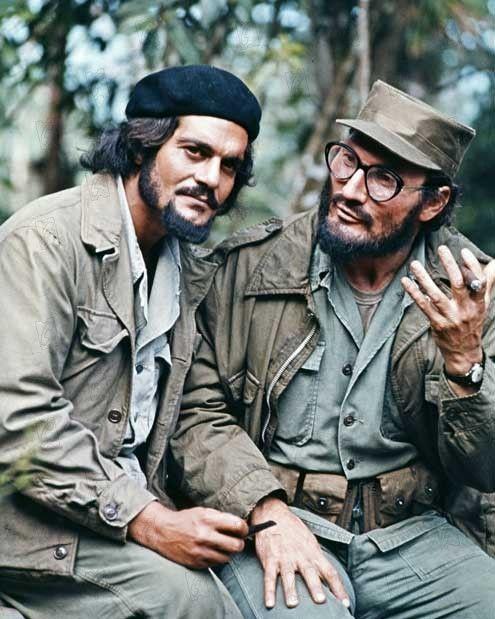
The film about Che! was released in 1969, two years after his death.  Starring the Egyptian actor Omar Sharif as Che Guevara, Che! opens with Guevara already a martyr and then quickly gives way to flashbacks.  Various actors pretending to be Cuban appear and speak directly to the audience, debating Che Guevara’s legacy.  Some describe him as being a violent thug who killed anyone who displeased him.  Others describe him as a visionary doctor who sacrificed his comfortable existence for the people.  It’s a rather conventional opening and one that hints that Che! is going to try to have it both ways as far as Che’s legacy is concerned.  But it’s still effective enough.  A montage of soldiers and rebels creates the proper feeling of a society on the verge of collapse.

And then Jack Palance shows up.

Palance first appears creeping his way through the Cuban jungle with a group of soldiers behind him.  Palance is chomping on a cigar and he wears the intense look of a man on a mission.  My initial reaction was that Palance was playing one of the CIA agents who sent to Cuba to try to assassinate Fidel Castro or to set up the Bay of Pigs invasion.  I kept waiting for him to look at the camera and launch into a monologue about why, for the safety of America, he had been dispatched the topple Cuba’s communist government.  Imagine my shock when Omar Sharif called Palance, “Fidel.”

Yes, that’s right.  Jack Palance plays Fidel Castro!  As miscast as the suave Omar Sharif is as Che Guevara, nothing can prepare one for seeing Jack Palance playing Fidel Castro.  Needless to say, there is nothing remotely Cuban or even Spanish about Jack Palance.  He delivers his lines in his trademark terse Jack Palance voice, without even bothering to try any sort of accent.  (And, needless to say, both he and Sharif speak English through the entire film.)  Anyone who has ever seen a picture of a young Fidel Castro knows that, while he shared a family resemblance with Justin Trudeau, he looked nothing like Jack Palance.  Eventually, Palance puts on a fake beard that makes him look even less like Castro.  When one of our narrators mentions that Castro was a great speaker, the film cuts to a scene of Palance spitting out communist slogans with a noted lack of enthusiasm.  When Castro takes control of Cuba, Palance looks slightly amused with himself.  When Che accused Castro of selling out the revolution, Palance looks bored.  It’s a remarkably bad piece of casting.  Seeing Palance as Castro feels like seeing John Wayne as Genghis Khan.  Thank goodness Hollywood never tried anything that silly, right?  Anyway….

As for the rest of the film, it hits all the expected notes.  The film was made in the very political year of 1969, a time when the New Left was ascendant and many considered Che Guevara to be a hero.  However, since this was a studio production, Che! tries to appeal to both college radicals and their parents by taking a “both sides” approach to Che Guevara.  Here’s Che teaching an illiterate farmer how to read.  Here’s Che overseeing a bunch of dissidents being executed.  Here’s Che getting angry at Castro for not being properly enthusiastic about housing Russian nuclear missiles.  Here’s Che talking about a moral revolution.  Here’s Che trying to start an unwanted war in Bolivia.  Here’s Che talking to Sid Haig — hey, Sid Haig’s in this film!

Like so many mainstream political films of the 60s and today, Che! tries to be political without actually taking any firm positions.  One is tempted to say that is the film’s downfall.  Of course, the film’s real downfall is casting Jack Palance as Fidel Castro.

There’s no way to recover from that.

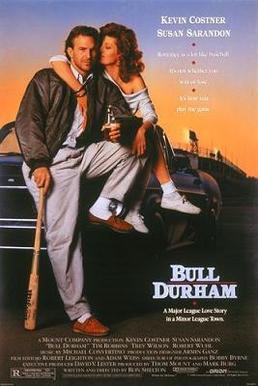
I Watched Bull Durham (1988, dir. by Ron Shelton)


In Bull Durham, Kevin Costner plays Crash Davis, a veteran catcher in the minor leagues who is brought onto the Durham Bulls so that he can teach a rookie pitcher, Ebby LaLoosh (Tim Robbins), how to play the game and also get him ready for his inevitable move to the major leagues.  Also helping to get the dim-witted but sincere Ebby ready is Annie Savoy (Susan Sarandon), who worships at the Church of Baseball and who has an affair with a different player every season.  The film follows the Bulls through their season, as both Crash and Annie mentor Ebby while also falling in love with each other.  Ebby even gets a nickname, Nuke.

Considering how much I love baseball, it might surprise you to learn that, up until recently, I had never seen Bull Durham.  I had read that it was one of the best baseball movies ever made but I never actually watched it.  I’m glad that I finally did watch it because it is a really good baseball movie.  It’s a movie that loves the game and I wasn’t surprised that the director was a former minor league player because Bull Durham is full of the type of details that you would only get from someone who had actually been there.  I especially liked the scene where it was revealed what the players and the coaches are actually talking about when they all gather on the pitcher’s mound.  It turns out that they’re not always talking about how to strike out the pitcher.

The love triangle part of the film didn’t work as well as for me.  I could relate to Annie’s love for baseball but her character still didn’t quite ring true for me and her narration was overdone.  Both Annie and Nuke seemed cartoonish whenever they got together.  Kevin Costner, though, was great as Crash Davis.  He was believable as an athlete and a mentor.  My favorite Costner moment was when a batboy told him to “Get a hit, Crash,” and he replied, “Shut up.”  It rang true.

I don’t agree with those who say Bull Durham is the best baseball movie.  I think Eight Men Out is better.  But I still enjoyed Bull Durham.  It’s a movie that loves the game almost as much as I do.

Film Review: Quick Change (dir by Bill Murray and Howard Franklin)


“Leave the Bronx …. it is time to leave the Bronx….”

Escape from New York….

“Someday, a real rain will come and watch all this scum off of the streets….”

“Kill, Berkowitz!” the Dog with John Turturro’s voice commands, “Kill!  KILL!”

And then there’s 1990’s Quick Change:

Of the many films that have been made about people desperately trying to get the Hell out of New York City, Quick Change is one of the funniest.  The appropriately-named Grimm (Bill Murray) works in the city planning office and has had all that he can take of New York’s crime and rudeness.  His solution is to dress up like a clown and rob a bank.  His girlfriend Phyllis (Geena Davis) and best friend Loomis (Randy Quaid) are already inside the bank, disguised as customers.  When Grimm, who claims to be a “crying on the inside” type of clown, takes everyone in the bank hostage and forces them into the vault, Phyllis and Loomis grab as much of the money as they can.  Talking on the phone to police chief Rotzinger (Jason Robards), Grimm makes a series of pointless demands.  Each demand that is met leads to Grimm releasing a group of hostages.  By removing his clown makeup, Grimm is able to join Phyllis and Loomis when they are “released.”  Rotzinger, who has even managed to procure a monster truck, thinks that the robber is still in the bank while Grimm, Phyllis, and Logan head for the airport.

Of course, things don’t go as planned.  What starts out as a energetic and good-natured Dog Day Afternoon parody quickly becomes an increasingly surreal journey through New York.  The streets are in terrible condition.  The signs that would have provided directions to the airport have been taken down by a road construction crew.  (They explain that they’re only taking down the signs today and it will be a few days before they get around to putting them back up.)  One of the few polite people they meet turns out to be a thief who steals four dollars from Grimm’s wallet but fails to notice that he’s got a million dollars taped around his waist.  Stanley Tucci shows up as a mobster.  Tony Shalhoub plays a well-meaning taxi driver who speaks his own indecipherable language.  Grimm keeps running into rude cops who, despite being on the hunt for the bank robbers, are frequently too busy being rude to notice what’s happening in front of them.

Best of all, Grimm, Phyllis, and the increasingly addled Loomis board a bus being driven by the film’s greatest character.  Played by Philip Bosco, the bus driver is a wonderful comedic creation.  “That’s not exact change,” the driver says when Loomis attempts to pay him with a hundred dollar bill.  “Behind the white line,” he says before starting the bus.  When Loomis, who has a habit of running into things and appears to be suffering from a concussion, tries to sit down, the bus driver informs him that he’s not allowed to sit until he receives exact change.  The driver has a schedule to keep and, to his credit, he largely manages to do so.  Bosco plays him with such deadpan determination that it’s hard not to admire his dedication to following every single regulation to his job.  As opposed to Grimm, the driver has learned to deal with living in New York by obsessively making every scheduled stop.

Quick Change struggles sometimes to balance its moments of humor and drama.  Scenes of Loomis running like a cartoon character are mixed with scenes of Phyllis worrying that Grimm might actually be a hardened criminal and struggling with whether or not to tell him that she’s pregnant.  This was Bill Murray’s first and only film as a director and sometimes, he does struggle to maintain a consistent tone.  But, in the end, what’s important is that it’s a funny film.  Bill Murray is one of those actors who can make you laugh just by existing and, as a director, he’s smart enough to give Jason Robards enough room to make Rotzinger into something more than just a standard comedic foil.

Quick Change is a comedic nightmare, one that made me laugh even as it also made me glad that I don’t have to drive in New York.  I get lost just driving around the suburbs of Dallas.  There’s no way I’d ever be able to find my way out of New York.

Lisa Reviews An Oscar Nominee: A Streetcar Named Desire (dir by Elia Kazan)


Poor, tragic Blanche DuBois.

In 1951’s A Streetcar Named Desire, the emotionally fragile Blanche (played by Vivien Leigh) has come to New Orleans to live with her younger sister, Stella (Kim Hunter).  From an old and formerly wealthy Southern family, Blanche has recently lost both her job as a teacher and the plantation where she and Stella grew up.  Even before that, she lost her husband to suicide.  And now Blanche has been reduced to living with Stella in the run-down apartment that she shares with her brutish husband, Stanley Kowalksi (Marlon Brando).

Stanley is tough and blue-collar, an earthy gambler whose bad manners stand in sharp contrast to Blanche’s attempts to present herself as being an elegant Southern belle.  Stanley, who is convinced that Blanche has money that she’s hiding from her sister, goes out of his way torment Blanche.  Stella, who is pregnant, tries to keep the peace between her sister and the man who claims to love her, his family, and the Napoleonic code.  (“Stella!” Stanley yells at one point, the cry of a wounded animal who desperately needs his mate.)  Blanche ends up going on a tentative date with Mitch (Karl Malden), one of Stanley’s co-workers,  Stanley, who sees Blanche as a threat to the life that he’s created for himself, goes out of his way to destroy even that relationship.  Blanche has secrets of her own and Stanley is determined to dig them up and use them to his own advantage.  When Blanche refuses to allow Stanley to destroy the fantasy world that she’s created for herself, Stanley commits an act of unspeakable violence.

Based on the play by Tennessee Williams, A Streetcar Named Desire is a recreation of the film’s legendary Broadway production.  Elia Kazan, who directed the theatrical production, does the same for the film.  Marlon Brando, Kim Hunter, and Karl Malden recreate their stage roles and many of the minor characters are also played by the same actors who played them on stage.  The only major change to the cast is Vivien Leigh, who replaces Jessica Tandy in the role of Blanche.  Tandy had won a Tony for playing the role of Blanche but the film’s producer insisted on an actress who had more box office appeal.  After both Bette Davis and Olivia de Havilland (both of whom would have had too strong of a personality to be believably pushed around by Stanley) declined the role, Vivien Leigh was cast.  Leigh has played Blanche on the London stage and, perhaps even more importantly, her own fragile mental health mirrored much of what Blanche had gone through before moving to New Orleans.

A few changes were made to the play.  In the play, it’s made clear that Blanche’s husband committed suicide after he was caught having an affair with another man.  In the film, Blanche simply says that her husband was too sensitive.  The film also includes a few scenes that are set outside of the apartment in an attempt to open up the play.  (That said, the film still comes across as being rather stagey.)  In the play, it’s made clear what Stanley does to Blanche while Stella is at the hospital.  The film leaves it ambiguous, though still providing enough hints for the audience to figure it out on their own.  Finally, the film ends with a suggestion that Stanley will ultimately suffer for his bad behavior.  It’s hardly a happy ending but it’s still not as dark as what happens in the play.

The film definitely retains its theatrical origins.  It’s very much a filmed play and again, it can feel rather stagey.  But the performance are so strong that it really doesn’t matter.  A Streetcar Named Desire was the first film to win three of the acting awards, with Oscars going to Hunter, Malden, and Leigh.  Marlon Brando was nominated for Best Actor but did not win, largely because he was competing against Humphrey Bogart who, himself, had never won an Oscar.  (The Brando snub would be rectified when he later won for On The Waterfront.)  Brando’s performance as Stanley still holds up today.  He’s so ferociously charismatic that it’s actually a bit scary to watch him.  One can see what drew Stella to him, even though Stanley is very much not a good man.  It’s a performance that will definitely take by surprise anyone who knows Brando only from his later years, when he was known for his weight and his oft-stated boredom with acting.  A Streetcar Named Desire shows just how brilliant an actor Marlon Brando was at the start of his career.  The intensity of Brando’s method acting matches up perfectly with Vivien Leigh’s more traditional style of acting and the film becomes not just the story of a domineering brute and a fragile houseguest but also a metaphor for the death of the antebellum South.  If Blanche represents a genteel past that may have never existed, Stanley represents the brutality of the 20th Century.

Along with the similarly dark A Place In The Sun, A Streetcar named Desire was considered to be a front runner for the 1951 Best Picture Oscar.  In the end, though, the voters went for the much less depressing An American In Paris.

A Streetcar Named Desire (1951, dir by Elia Kazan, DP: Harry Stradling)

No Holds Barred (1989, directed by Thomas J. Wright)


In No Holds Barred, Hulk Hogan plays a professional wrestler who is best-known for his mustache, his thinning blonde hair, and for ripping his shirt in half when he climbs in the ring.  Hulk Hogan is playing himself except that everyone in the movie calls him Rip Thomas.  Why is Hogan renamed Rip Thomas?  It seems strange because No Holds Barred features “Mean Gene” Okerlund and Jesse “The Body” Ventura as themselves and there’s nothing about Rip that’s any different from Hulk Hogan’s own wrestling persona.

Rip is the World Wrestling Federation Champion and is loved by fans across the globe.  Rip may be fierce in the ring but outside of the ring,  he loves children and is devoted to looking after his younger brother, Randy (Mark Pellegrino).  Tom Brell (Kurt Fuller), the evil owner of World Television Network, wants to harness the star power of Rip but, when Rip refuses to sign with WTN, Brell goes his own way and hires ex-convict Zeus (Tiny Lister) to star in The Battle Of The Tough Guys.

Rip still wants nothing to do with Brell, not even when Brell sends Samantha Moore (Joan Severance) to seduce him.  In fact, Rip is such a beacon of goodness that he brings Samantha over to his side.  But when Zeus puts Randy in the hospital, Rip has no choice but to seek revenge in the ring.

No Holds Barred is a movie with an identity crisis.  It’s a pro wrestling movie that was made to capitalize on Hulkamania and a lot of the humor was meant to appeal to the kids who were a huge part of Hogan’s fanbase but it’s also a movie in which people die, Samantha is nearly raped, and Randy is crippled by Zeus.  The movie lacks the sense of fun that has made professional wrestling a worldwide phenomena.  The most surprising thing about No Holds Barred is that Hulk Hogan has very little screen presence.  I don’t think anyone would expect him to be a great actor but he also shows little of the charisma that made him a phenomena back in the day.  Especially when compared to the ferocious Tiny Lister, Hogan is just boring.  Maybe that’s the difference between Rip Thomas and Hulk Hogan.

David Paymer has a small role in No Holds Barred, playing a nervous television executive.  Out of the cast, Paymer was the only one who later went on to be nominated for an Oscar and Jesse Ventura was the only one to later be elected governor of a state, at least so far.  Hulk Hogan’s only 71.  He’s still got time.

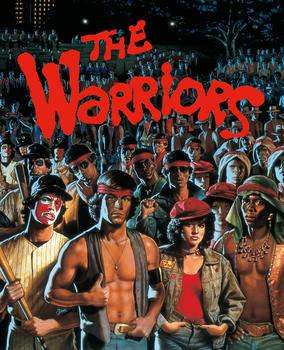
Scenes That I Love: “Can You Dig It?” From The Warriors


Cyrus?

He’s the one and only.

From 1979’s The Warriors (which was directed by Walter Hill, who celebrates his birthday today), here’s a scene that I love.  Playing the role of Cyrus, the man who could bring all of the gangs of New York together, is Roger Hill.  Playing the role of his assassin is the great David Patrick Kelly.

Cyrus knew what he was talking about but the world wasn’t ready for him.

Can you dig it?

Catching Up With The Films of 2024: Saturday Night (dir by Jason Reitman)


Saturday Night, which presents what I assume to be a highly fictionalized account of the 90 minutes before the 1975 premiere of Saturday Night Live, did the impossible.  It made me feel sorry for Chevy Chase.

Don’t get me wrong.  As played by Cory Michael Smith, Chevy Chase is not presented as being a sympathetic character in Saturday Night.  The film acknowledges his talent as a comedian and that he was the first star to come out of Saturday Night Live.  But he’s still presented as being arrogant, self-centered, rude, and often deliberately self-destructive.  The film portrays Chevy Chase in much the same way that most people describe him in real life.  Chevy Chase has apparently always been a difficult person to work with and, I suppose to his credit, it doesn’t appear that Chevy himself has ever claimed anything different.  But Saturday Night so piles on Chevy that even I felt it went a bit overboard.  It’s one thing to present Chevy as being the arrogant jerk that he’s admitted to being.  It’s another thing to fill the movie with moments in which people stop what they’re doing to tell Chevy that his career is going to start strong and then fade due to his bad behavior.  At one point, the NBC executive played by Willem DaFoe comments that Chevy could host his own late night talk show.  We’re all meant to laugh because eventually, Chevy Chase did host a late night talk show and it was such a disaster that it’s still, decades after its cancellation, held up as a prime example of a bad career move.  But, in the context of the film, it feels a bit like overkill.  It’s one thing to be honest about someone being a pain in the ass.  It’s another thing to repeatedly kick someone while they’re down.  Chevy, much like the NBC censor who is chanted down in the film’s cringiest moment, simply feels like too easy of a target.

Of course, Saturday Night is full of moments that are meant to comment more on the future than on whatever was going on in 1975.  The whole point of the film is that Saturday Night Live, a show that the network has little faith in and which is being produced by a hyperactive visionary (Gabriel LaBelle as Lorne Michaels) who seems to be making it up as he goes along, is eventually going to become a cultural phenomenon.  Every time someone tries to convince Lorne Michaels to cancel the premiere or to miss with the format, we’re meant to think to ourselves, “Little do they know that this show is going to be huge for several decades before eventually just becoming another predictable part of the media landscape.” The scenes of Garrett Morris (Lamorne Morris) wandering around the set and asking, “What is my purpose?  Why am I here?” may not feel like something that would have happened in 1975 but they’re there because it’s something that people were asking about in 2024.  Watching the film, it helps if you know something about the history of Saturday Night Live.  It helps to know that Dan Aykryod (Dylan O’Brien), John Belushi (Matt Wood), and Gilda Radner (Ella Hunt) are going to carry the show after Chevy Chase leaves.  It helps to know that Billy Crystal (Nicholas Podany) is going to become a Hollywood mainstay even after he gets dumped from the premiere for refusing to cut any material out of his act.  It helps to know that the mellow, pot-smoking band leader is actually Paul Shaffer (Paul Rust).  It helps to know that Lorne Michael and Dick Ebersol (Cooper Hoffman, giving one of the best performances in the film) are going to become powerful names in American television.  The film may be set in 1975 but it’s actually about all the years to come.

It’s still an entertaining and well-made film, one that I enjoyed watching.  Saturday Night manages to create the illusion of playing out in real time and director Jason Reitman captures the excitement of being backstage before opening night.  It’s an excitement that everyone can relate to, whether their opening night was on television, Broadway, or just a community theater in their small college town.  The backstage chaos of Saturday Night is wonderfully choreographed and, most importantly, it captures the feeling of being young, idealistic, and convinced that you can change the world.  Reitman also gets good performances from his cast, with Cooper Hoffman, Dylan O’Brien, and Rachel Sennott (playing writer Rosie Shuster) as stand-outs.  That said, the film is pretty much stolen by J.K. Simmons, who has a memorably lecherous cameo as Milton Berle and who provides Chevy Chase with a look at what waits for him in the future.  If the film is never quite as poignant as it wants to be, that’s because Saturday Night Live is no longer the cultural powerhouse that it once was.  If Saturday Night had been released just 18 years ago, before SNL became best-known as the place where Alec Baldwin hides out from bad publicity, it would probably be an Oscar front runner right now.  Released today, it’s just makes one feel a little bit sad.  The show that was built on never selling out eventually sold out.

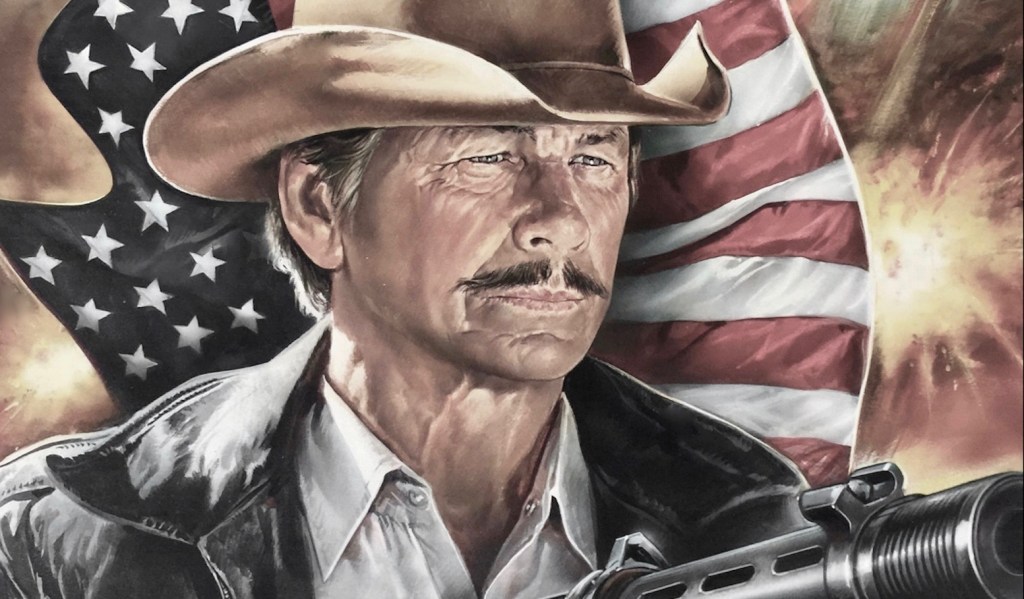
BORDERLINE (1980) – Charles Bronson battles human smuggler Ed Harris (in his first major film role)!


After a couple of decades of toiling away in TV and supporting roles, Charles Bronson became a huge international film star in 1968 when he starred in the films FAREWELL, FRIEND (with Alain Delon), and Sergio Leone’s ONCE UPON A TIME IN THE WEST (with Henry Fonda). For the next 5 years, Bronson would star in successful international co-productions, before hitting it big in the United States with the influential 1974 blockbuster, DEATH WISH. From 1974 to 1977, Bronson had his pick of any role that he wanted. This was probably the most interesting time in his career as he truly tried to expand his range with films like the depression-era HARD TIMES (1975), the romantic comedy FROM NOON TILL THREE (1976), the Raymond Chandler-esque ST. IVES (1976), and the surreal western THE WHITE BUFFALO (1977). But after 1977’s TELEFON and a series of underwhelming box office returns in the states, Bronson’s star was on the wane. He wouldn’t have his next #1 box office hit until he joined forces with the infamous Cannon studios in 1982 for the sequel to his biggest hit and DEATH WISH II. Cannon Studios would provide Bronson with a guaranteed paycheck and a non-stop presence on cable TV and at the video store for the remainder of the decade. I call the films that Bronson made between 1977 and 1982 the in-betweens. They don’t really fit into his European phase (1968-1973), his post-DEATH WISH phase (1974-1977) or his Cannon phase (1982-1989). To be completely honest, it seemed his career was somewhat in limbo at this point, and the movies he made during these years are some of his least well-known.

One of the movies that Charles Bronson made during the in-between years was 1980’s BORDERLINE. In this film, he plays Jeb Maynard, a border patrolman and expert tracker who will stop at nothing to find the human smuggler responsible for killing his friend and fellow patrolman Scooter, played by Wilford Brimley. I like this lower-key Bronson film. Director Jerrold Freedman has made a more realistic film than a lot of the movies in Bronson’s filmography. Outside of the murder that gets the story going, and the final showdown with the lead smuggler (a young Ed Harris), most of the film is made up of good old-fashioned field work and investigation. Bronson even based much of his performance on the technical advice of legendary border patrolman Albert Taylor. Now that doesn’t mean there aren’t some solid, action-packed scenes during the movie. My favorites include a scene where an undercover Maynard goes into Mexico with the mother of a young Mexican boy who was accidentally killed at the same time as Maynard’s friend Scooter. Maynard poses as a family member of the woman in hopes of being smuggled across the border so he can see how the illegal immigrants are being brought in. When thieves intercept the group, all hell breaks loose, and Maynard and the woman must fight their way out. Another badass moment occurs when Bronson beats needed information out of one of the smugglers in a nasty bathroom. This last scene is especially enjoyable for us Bronson fans.

There are so many good actors in this film. Outside of Bronson, Brimley, and Ed Harris, the cast is filled out by other veterans like Bruno Kirby, Bert Remsen, Michael Lerner, John Ashton, and Charles Cyphers. On a side note, Ed Harris gets the “introducing” credit here, even though he had appeared in several TV shows, as well as the movie COMA with Michael Douglas. This was his first major role in a feature film though. I also want to throw out special mention to Karmin Murcelo. She’s not a household name, but she’s excellent as the mother of the young boy who gets killed with Wilford Brimley’s character, who then helps Bronson in his quest to find the killer. Her career extended over 3 decades, and it’s easy to see why based on this performance.

BORDERLINE may not be an explosive action film like some of Bronson’s other work, but it’s an effective drama with a good performance from the star. I think he embodies the character perfectly. It’s also just as relevant in 2025 as it was in 1980, and I give the film a solid recommendation.

Lisa Marie Reviews An Oscar Nominee: Fargo (dir by the Coen Brothers)


Photograph by Erin Nicole

I am currently sitting in my bedroom, wrapped in several blankets and watching the snow fall on the other side of my window.  I love snow, mostly because I live in Texas and therefore, I don’t get to see it that often.  The most snow we’ve gotten down here, at least in my lifetime, was in 2021.  That was when we got hit by that blizzard and had to deal with rolling blackouts for a week straight.  That’s not a good memory but still, I love to watch the snow fall.  Even during that blizzard, I still loved the fact that I could use the snow as a nightlight as I read a Mickey Spillane book and waited for the power to come back on.

Down here in North Texas, snow is exotic.  In other parts of the country, it’s just a part of everyday life.

Like in the Dakotas for instance….

First released in 1996 and directed by the Coen Brothers, Fargo is a film that is full of arresting images.  As soon as you hear (or read) the title, those images and the sounds associated with them immediately pop into your head.  You immediately visualize the desperate car salesman Jerry Lundegaard (William H. Macy) trying to trick a customer into paying extra for the trucoat and insisting that “I’m not getting snippy here!”  You see the film’s two kidnappers, Carl Showalter (Steve Buscemi) and Gaear Grimsud (Peter Stomare), getting on each other’s nerves as they drive from one frozen location to another.  You remember heavily pregnant Marge Gunderson (Frances McDormand) investigating a snowy crime scene and gently correcting another officer’s “police work.”  You flash back to the moment when Mike Yanagita (Steve Park) suddenly breaks down in tears and tells Marge that she’s a super lady.  “And it’s a beautiful day,” Marge says at one point, wondering how so many terrible things could have happened on such a lovely day.  And she’s right.  It was a beautiful day.  It was far too beautiful a day to discover one man stuffing another into a woodchipper.

Myself, I always think of the scene where Carl attempts to find a place to hide a briefcase full of money.  It’s night.  Carl’s been shot in the face but he has the money that he’s gone through so much trouble to collect.  He runs into a field, looking for a place to hide it.  The field is covered in snow.  Every inch of the ground glows a bright white.  Everything looks the same.  But Carl still runs around desperately before picking a place to bury the suitcase.  It doesn’t seem to occur to Carl that there’s no visible landmarks or anything that would ever help him to find the money again.  He’s blinded, by the snow, by the pain of the bullet, and, like most of the characters in this movie, by his own greed.

Of course, Fargo is not a film about people behaving in intelligent ways.  Greed, loneliness, and desperation all lead to people doing some pretty stupid things.  Jerry thinks that the best way to pay off his debts and raise the money for a real estate deal is to arrange for his wife to be kidnapped so his wealthy father-in-law (Harve Presnell) will pay the ransom.  His father-in-law, who obviously despises Jerry and would be happy for him to just go away, is convinced that he’ll be able to both get back his daughter and recover his money.  (If Jerry had just spent a moment really thinking about his plan before going through with it, he would have realized his father-in-law would never just part with his money.)  Carl thinks that it’s a good idea to partner up with the obviously sociopathic Grimsud.  When a cop pulls over Carl and Grimsud’s car, Grimsud ignores the fact that Carl was talking his way out of the ticket and instead kills the policeman and then kills several eyewitnesses.  (“I told you not to stop.”)  Marge figures out what is going on but even she puts her life in danger by investigating a cabin without proper backup.  The characters in Fargo frequently behave in ludicrous ways and almost all of them speak with an exaggerated regional dialect (All together now: “Oh yeah,”) but they also feel incredibly real.  The sad truth of the matter is that there are people as greedy, dumb, and hapless in the world as Jerry.  There are people like Carl and Grimsud.  Even Jerry’s fearsome father-in-law is a very familiar type of character.  People do thing without thinking and inevitably, they make things worse the more overwhelmed they become.  Common sense (not to mention decency) is frequently the last thing that anyone considers.  Fortunately, Marge is believable too.  Marge at times almost seems so gentle and polite (“No, why don’t you sit over there?” she sweetly tells Mike when he attempts to get too close to her.) that the viewer worries about what’s going to happen to her when she gets closer and closer to figuring out what’s going on.  Fortunately, Marge turns out to be much stronger than anyone, even the viewer, expected.  The world of Fargo can be a terrible place but there’s moments of kindness and hope as well.

Fargo is both a comedy and a drama.  The opening title card says that the film is based on a true story, which is a typical Coen Brothers joke.  (The film was loosely inspired by several similar crimes but the story itself is fictional.)  Carter Burwell’s dramatic score is both appropriately grand and also gently satiric.  Jerry does some terrible things but William H. Macy plays him as being so naive and desperate and ultimately overwhelmed that it’s hard not to have a little sympathy for him.  Jerry truly thought it would be so simple to pull off a complicated crime.  (The poor guy can’t even get the ice off of his windshield.)  As played by Steve Buscemi, Carl Showalter talks nonstop and he makes you laugh despite yourself.  His shock at how poorly everything goes is one of the film’s highlights.  It’s a funny film but it’s also a sad one.  I always worry about what’s going to happen to Jerry’s son.  Ultimately, of course, the film belongs to Frances McDormand, who gives a wonderful performance as Marge.  She’s the heart of the film, the one who reminds the viewer that there are good people in the world.

Considering the film’s cultural impact, it’s always somewhat shocking to remember that Fargo did not win the Oscar for Best Picture.  It lost to The English Patient, a film about a homewrecker who helps the Nazis.  Personally, I prefer Fargo.

Fargo (1996, dir by the Coen Brothers, DP: Roger Deakins)