Brad reviews UNHINGED (2020), starring Russell Crowe!


I must admit that I’m not always the most patient guy in the world, and that extends to my driving. I get so frustrated when someone pulls slowly out right in front of me, or when another person camps out in the left lane of the interstate. Most of the time, these are just quick little moments that I quickly move on from, but what might happen if one day I decided to honk my horn and the person in the other car is a crazy psycho? UNHINGED takes that scary thought to the ultimate extreme.

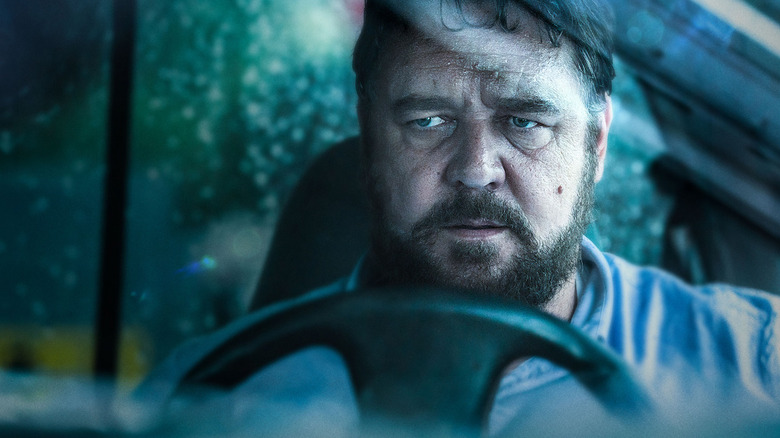
The premise of the movie is about as simple as it gets. Rachel’s (Caren Pistorius) having a rough morning, and she’s running late while taking her son to school. When the truck in front of her doesn’t move at the green light, she decides to lay on her horn. The driver (Russell Crowe) pulls up beside her at the next light and requests an apology. When she refuses, he decides he’s going to teach her what a bad day really is. 

UNHINGED works because it’s a mean little thriller that exploits a fear that we can actually imagine. Most of us have a story that involves some level of road rage, and director Derrick Borte’s movie doesn’t waste a second once it gets going. It’s one of those movies where everything keeps getting worse for the terrorized Rachel while the tension continually ratchets up from the beginning to end. The violence is sudden and brutal so you never quite know what’s going to happen next, which definitely works in the film’s favor.

And then there’s the incredible Russell Crowe. Probably heavier than he’s ever been on screen, his psychopathic road rager is truly terrifying. Having witnessed his sick mental state early in the film, we know he’s capable of committing the most heinous acts imaginable. Crowe commits himself completely to this character, erasing any thoughts we have of his noble performances in movies like GLADIATOR or CINDERELLA MAN. Caren Pistorius is also effective as the woman who’s in for the fight of her life. I think she looks a lot like actress Shailene Woodley.  

UNHINGED isn’t a perfect film, as it does ask its audience to suspend quite a bit of disbelief. But with that said, it does offer 90 minutes of suspense anchored by Crowe’s incredibly intimidating performance. In my opinion, it’s a very effective film… and I doubt I honk at anybody on my way to work tomorrow morning!
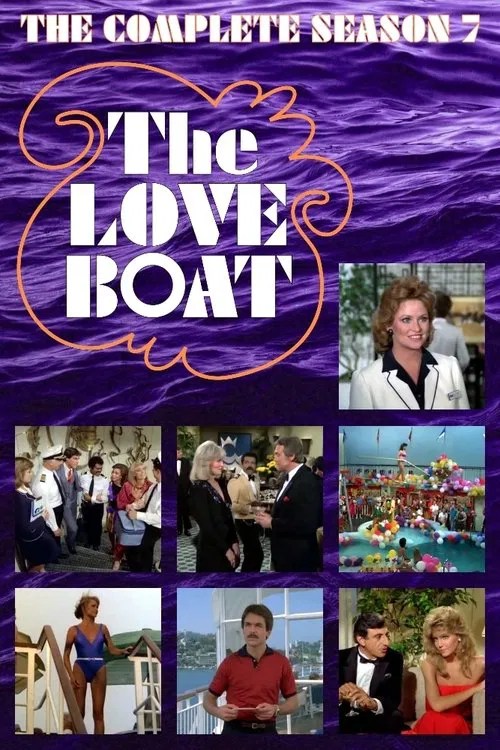
Retro Television Review: The Love Boat 7.27 “Best Ex-Friends/All the Congressman’s Women/Three Faces of Love”


Welcome to Retro Television Reviews, a feature where we review some of our favorite and least favorite shows of the past!  On Wednesdays, I will be reviewing the original Love Boat, which aired on ABC from 1977 to 1986!  The series can be streamed on Paramount Plus!

This week, season 7 comes to an end,

Episode 7.27 “Best Ex-Friends/All the Congressman’s Women/Three Faces of Love”

(Dir by Ted Lange, originally aired on May 12th, 1984)

This week, on The Love Boat, Gopher fires Isaac!

You read that right.  Gopher told Isaac, “You’re fired,” and it was one of the most shocking things I’ve ever seen on The Love Boat.  Some of that was because Gopher and Isaac were best friends.  Most of it was because I had no idea that Gopher could fire people.

Why does Gopher fire Isaac?  Because Isaac refuses to fire Tina Burnell (Eugenia Wright), the new barmaid that Isaac is currently dating.  In Gopher’s defense, Tina is terrible at her job.  Also, in Gopher’s defense, it really doesn’t seem ethical for Isaac to hire someone just because he wants to sleep with her.  In fact, that seems kind of icky by today’s standards.  Then again, this episode aired in 1984.  Times were apparently different back then.

The next morning, Gopher rehires Isaac and the two of them forgive each other.  But then Gopher puts in for a transfer to another ship because he feels that he’s too close to everyone on the boat to do a good job.  (Gopher is probably correct about this.)  Isaac finally admits that Tina is not a good enough barmaid and he gently fires her.  He assures her that, with her looks and personality, she’ll be able to find a new boss who wants to sleep with her and she’ll get a new job in no time.  Isaac chooses friendship over meaningless sex.  Awwwww!

I’m being snarky but this story actually worked far better than it had any right to.  Ted Lange and Fred Grandy always made for a good team.  Their friendship always feels real and, all other issues aside, it’s hard not be happy that they’re still friends at the end of this episode.

As for the other stories, Sal Viscuso plays a movie makeup artist who fears that his girlfriend (Heidi Bohay) is going to cheat on him.  He disguises himself as both Burt Reynolds and Doc Bricker in order to test her loyalty.  Amazingly, she’s touched by his devotion.

And finally, 11 year-old Tori Spelling plays a sociopathic little brat who doesn’t want her Congressman father (Sam Goom) to run for governor or marry his campaign manager (Phyllis Davis).  So, Tori starts cutting up newspapers and magazines and using the headlines to create threatening letters.  Somehow, no one has figured out that Tori is the culprit and the Congressman is traveling with a bodyguard.  (Hopefully, the Congressman is paying for the bodyguard himself and not charging the taxpayers.)  Eventually, Tori comes clean but only after she’s caught with a scissors, glue, and cut up magazine.  Personally, I think Tori should have been tossed overboard but instead, she accepts her father’s ambition and her new stepmother’s love.

This was the final episode of Season 7 and it wasn’t a bad one to go out on.  Tori Spelling was a terrible actress even at the age of eleven but the Gopher/Isaac storyline was touching.  Sadly, this was Lauren Tewes’s final episode and she did not get a grand send-off.  Instead, she was fired after this season because, as Tewes has admitted in several interviews, she was struggling with a serious cocaine addiction.  Tewes didn’t get to do much during Season 7 and, when you consider how important Julie was during the early seasons of The Love Boat, that’s a shame.

Out of respect for Lauren’s final episode, we’re retiring the HOW COKED UP WAS JULIE scale.  What’s important is that Lauren herself got clean and went on to appear in Twin Peaks: The Return.  Good for her!

Song of the Day: Andy Warhol from David Bowie


Today’s song of the day comes from David Bowie and it’s about Bowie’s fascination with Andy Warhol.  Warhol himself apparently didn’t care for this song but Bowie meant it as a tribute.

This song came out in 1971.  25 years later, Bowie would play Andy Warhol in Basquiat.

4 Shots From 4 Films: Special Kevin Bacon Edition


4 Shots From 4 Films is just what it says it is, 4 shots from 4 of our favorite films. As opposed to the reviews and recaps that we usually post, 4 Shots From 4 Films lets the visuals do the talking!

Today is the birthday of everyone’s favorite, hard-working character actor, Kevin Bacon!  And that means that it’s time for….

4 Shots From 4 Films

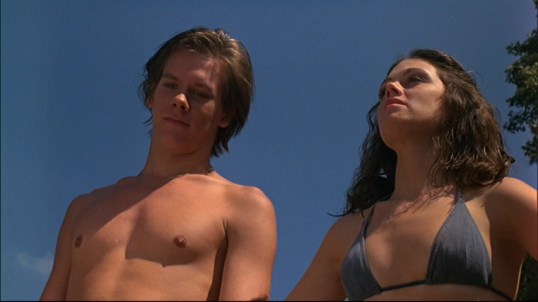
Friday the 13th (1980, dir by Sean S. Cunningham)

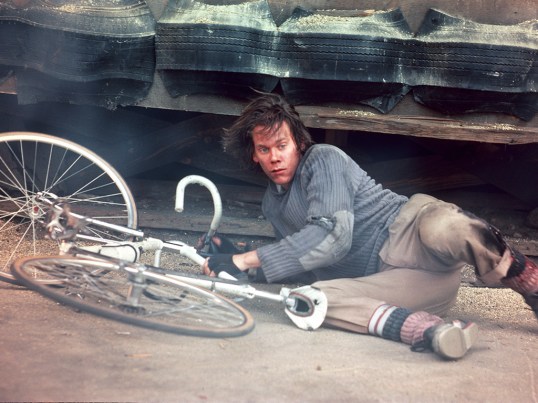
Quicksilver (1986, dir by Thomas Michael Donnelly)

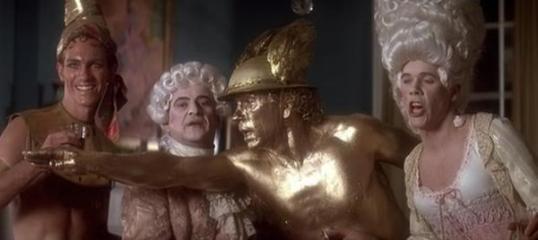
JFK (1991, dir by Oliver Stone)

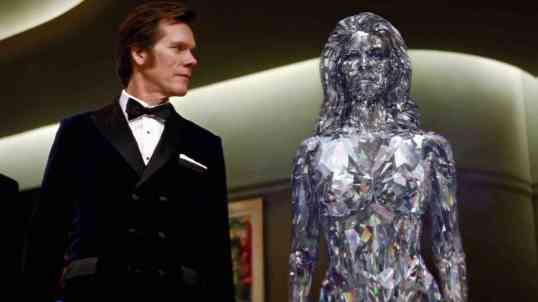
X-Men: First Class (2011, dir by Matthew Vaughn)


Music Video of the Day: Sacred Emotion by Donny Osmond (1989, directed by Michael Bay)


This song was a part of an attempt to rebrand Donny Osmond as a contemporary rocker.  The song was a hit and the video was popular on MTV but once an Osmond, always an Osmond.

The video is pure Michael Bay.  Donny, several hot women, and a group of construction workers drive out to the middle of the desert.  While Donny looks over blue prints and gives orders, the models and the day laborers start carrying boards and hammering nails.  Are they building a house or a temple?  No, it turns out that they’re building a stage so that Donny can perform in front of an audience that spontaneously shows up.  Donny does such a good job performing that it starts to rain and the video goes from being in black and white to being in color.  Bay directs with the same style that he would later bring to his feature films.  This video presents Donny Osmond as an epic hero and it nearly works.

It would be easy to mistake this video for being the most wholesome beer commercial ever made.

Enjoy!

Villain of the Day: Kefka Palazzo (Final Fantasy VI)


“Nothing can beat the music of hundreds of voices screaming in unison!” — Kefka Palazzo

(spoilers)

When you think of great villains (especially rpg ones), you usually picture brooding pretty boys with giant swords or ancient, unknowable evils lurking in the shadows. Kefka Palazzo from Final Fantasy VI completely breaks that mold the second he steps onto the screen. He’s a walking, talking clown with a shrill, maniacal laugh, brightly colored clothes, and makeup that makes him look like a demented circus performer. Honestly, that’s exactly what makes him so instantly memorable and charismatic. He doesn’t sit in a dark castle brooding over a tragic past; he’s out in the dirt actively causing chaos just for the sheer fun of it. Right from his first appearance poisoning a kingdom’s water supply, you realize this guy is operating on a completely different wavelength than your standard bad guy, and it’s impossible not to be hooked by his sheer audacity.

Kefka’s charisma also heavily relies on his incredibly distinct presence and dialogue. He doesn’t speak in deep, philosophical riddles or stern, intimidating commands; he speaks in cackling, immature outbursts, frequently dropping his iconic “Uwee hee hee!” laugh. He’s intensely petty, throwing literal tantrums when things don’t go his way, yet he’s terrifyingly lethal when he gets mad. He constantly mocks the heroes and even his own boss, Emperor Gestahl, right to his face. This blend of childish absurdity and genuine menace creates a bizarre tension. You never know if he’s going to tell a bad joke or commit a horrific war crime, and that whiplash keeps you completely engaged every time he’s on screen.

What really makes Kefka so mesmerizing, though, is his total lack of a traditional villainous motive. In Final Fantasy VI, the Emperor wants world domination, which is pretty standard stuff. Kefka, on the other hand, realizes halfway through that ruling the world is actually kind of boring. His philosophy boils down to pure, unadulterated nihilism—he looks at life, sees no inherent meaning, and decides that if everything is pointless, he might as well burn it all to the ground. It’s a surprisingly dark and mature concept for a 90s video game, especially coming from a guy dressed like a jester. He doesn’t want to be a king; he wants to be a god of ruin, and his complete rejection of the usual “I want to rule the world” trope makes him stand out even decades later.

Another huge part of his undeniable charisma comes from the fact that he actually wins. Long before the Joker was reimagined in Nolan’s The Dark Knight, Kefka was the nihilistic jester who wanted to watch the world burn, and burn it he did. Usually, you stop the villain right before they can enact their master plan, but in Final Fantasy VI, Kefka actually succeeds in reshaping the entire planet into the apocalyptic World of Ruin. He knocks the heroes down, scatters them to the wind, and sits on top of his literal tower of garbage as a deity of destruction. Seeing a villain not only achieve their goal but hold onto it for the entire second half of the game makes him feel incredibly dangerous. You aren’t fighting to stop his evil plan; you’re just trying to survive in the miserable aftermath of the world he already broke.

The sheer scale of his ascent to power is another detail that makes him so fascinating to watch unfold. Most villains spend the whole game sitting on a throne waiting for the heroes to come to them, but Kefka is highly active and proactive. When he reaches the Floating Continent and finally gets his hands on the power of the Warring Triad, the shift in his character is palpable. He doesn’t just defeat the Emperor in a grand duel; he casually betrays him and kicks him off the edge of the world. Absorbing the statues’ magic physically mutates Kefka into an angelic, six-winged monstrosity of divine power. It’s a crazy visual progression from a goofy, mocked court mage to a literal, untouchable god who reshapes the planet’s geography with a thought.

You could argue that Kefka has a tragic backstory since it’s revealed that the Empire’s magical Magitek experiments essentially broke his mind and stripped away his humanity. But what’s brilliant about his writing is that the game never uses this as an excuse to make you feel sorry for him. It just explains the mechanics of why he’s so completely detached from reality. He’s a walking cautionary tale of what happens when absolute power is given to someone with absolutely zero moral compass. Because the story never tries to justify his actions with a sob story, he avoids becoming a tired, sympathetic anti-hero. He’s just irreparably broken and completely embraces the madness, which makes him wildly unpredictable and fun to watch.

At the end of the day, Kefka’s legacy boils down to how incredibly entertaining he is from start to finish. His final battle, set to the legendary, chaotic track “Dancing Mad,” is the perfect capstone to his character—a trippy, terrifying, and almost absurd confrontation with a monster who has literally given up on reality itself. Even his final words, questioning why people keep rebuilding when life is just going to end anyway, leave a weirdly haunting impression. Kefka Palazzo remains one of the greatest villains in gaming history not because he’s the strongest or the most deeply complex, but because he is a perfectly distilled, unapologetic force of pure chaos that you simply can’t look away from.

Villain of the Day

Late Night Retro Television Review: Pacific Blue 4.9 “Cutting Edge”


Welcome to Late Night Retro Television Reviews, a feature where we review some of our favorite and least favorite shows of the past! On Tuesdays, I will be reviewing Pacific Blue, a cop show that aired from 1996 to 2000 on the USA Network!  It’s currently streaming everywhere, though I’m watching it on Tubi.

This week, TC goes surfing!

Episode 4.9 “Cutting Edge”

(Dir by Terence H. Winkless, originally aired on October 18th, 1998)

When an up-and-coming surfer named Kenny Slaughter (Reed Ferichs) is pressured by a corrupt surf board salesman named Rip Cutter (Matt Battaglia), TC befriends Kenny.  He and Kenny go surfing.  They discuss the philosophy of catching a great wave.  “Are you sure you’re a cop?” Kenny asks.

Uhmm, Kenny …. are you kidding?  TC is the most uptight guy on the beach.  Everything about him screams “cop.”

This episode is an example of something that happened quite frequently with Pacific Blue.  One of the bike cops would befriend someone and the viewer would be left to wonder how that could have possibly happened.  Friendship usually requires a modicum of likability and that’s something that no one on this show seems to have.  Whether it’s Chris saying, “Just doing my job,” after nearly running someone down with her bicycle or Cory rolling her eyes every time that she has to deal with anyone younger than her, there are literally no likable bike cops.  Even this episode features Cory complaining about the attitude that Kenny gave her when she arrested him while he and Rip were having a fight on the beach.  It’s hard not to notice that almost every episode features Cory complaining about someone’s attitude.  It’s a bit of a cliche but it’s true.  If everyone you meet is a jerk, that means that you’re the jerk.

TC assigns Monica to work undercover in Rip’s surf shop.  This means that Monica has to frequently come over to TC’s apartment to give him updates.  Because TC can’t tell anyone that Monica is working undercover, Chris gets suspicious about why Monica is always coming over.  Chris and Cory being paranoid about Monica has been going on for nine episodes now and I think that, narratively, it might be a good idea to just move on from it.  It wasn’t that interesting to begin with and, at this point, Chris and Cory are just coming across as being overage mean girls.

Anyway, this episode actually felt like an abandoned Baywatch storyline.  TC’s no surfer.

Retro Television Review: Saved By The Bell: The New Class 2.8 “Rachel’s Choice”


Welcome to Retro Television Reviews, a feature where we review some of our favorite and least favorite shows of the past!  On Tuesdays, I will be reviewing Saved By The Bell: The New Class, which ran on NBC from 1993 to 2o00.  The show is currently on Prime.

This week, Rachel’s boyfriend returns.

Episode 2.8 “Rachel’s Choice”

(Dir by Don Barnhart, originally aired on October 1st, 1994)

Oh, Hell, we’re back at the country club.

Rachel and Brian are now dating but Rachel still hasn’t told her long-distance boyfriend, football star David Conrad (Kevin Bell).  In this episode, it’s mentioned that Rachel has been dating David for two years (so why was she going on out on a date with Scott during season one?) and that David is the “local boy made good.”  Mr. Belding acts as if David is the only good football player that Bayside ever had, which is definitely A.C. Slater erasure.

(It’s weird how Bayside went from being the most exclusive school in Los Angeles during the first series to apparently just some throw-away slum school in the New Class.)

David told Rachel that he would be spending the summer in Europe but — surprise! — he comes home early for Rachel’s birthday.  (David immediately recognizes Screech as someone he went to school with so David is at least 20.  Rachel appeared in the first 4 seasons of The New Class and, when she left, it was because she transferred to another school.  So, Rachel is around 14 or 15 here and has been dating David for two years, which means that David should probably be in jail.)  Rachel has to make a choice between David and Brian.  Now, that could make for some serious drama if both Brian and David were portrayed as being two nice guys who both liked Rachel.  Instead, David is portrayed as being such a soulless snob that there’s absolutely no doubt who Rachel will eventually pick.  Indeed, the whole episode makes Rachel seem shallow and stupid for going out with David in the first place.

Meanwhile, Mr. Belding is concerned that some of the members are joining a different country clubs.  Why does Belding care?  This is just a summer job for him.  Belding assigns Screech to make a video about the club.  Shouldn’t Belding have run that past the actual owner of the club?

These country club episodes are stupid.  By running them concurrently with the high school episodes, NBC created a situation where one episode would feature Brian and Rachel as a couple and the next episode would feature Brian still trying to work up the courage to ask her out.  It’s as if no one at NBC cared.  That’s a shame because the late Christian Oliver was a likable actor and Brian and Rachel were a cute couple.  (In real life, when this episode aired, 22 year-old Christian Oliver was about 8 years older than Sarah Lancaster but let’s try not to think about that.)

Anyway, the country club sucks.  I hope everyone gets a better job next summer.