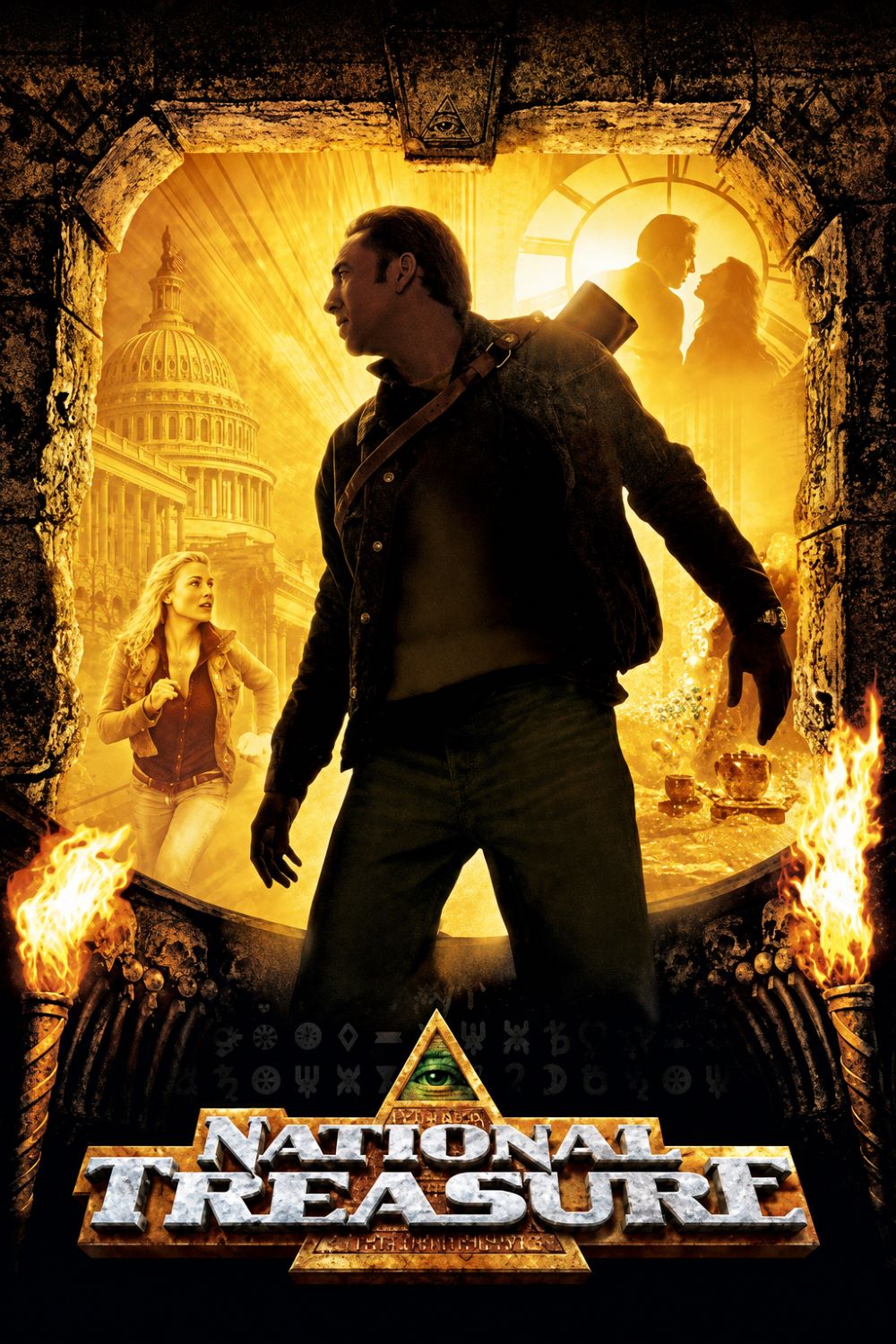
Review: National Treasure (dir. by John Turteltaub)


“If there’s something wrong, those who have the ability to take action have the responsibility to take action.” — Benjamin Gates

National Treasure directed by John Turteltaub is one of those movies that feels like a love letter to adventure, history, and a bit of old-fashioned treasure hunting. It’s the kind of film that doesn’t take itself too seriously but still manages to pull you in with its charm, puzzles, and non-stop action. At its heart, it’s a story about obsession, legacy, and the idea that history isn’t just something you read about in books—it’s something you can touch, chase, and maybe even uncover if you’re clever enough.

The movie kicks off with Benjamin Franklin Gates, played by Nicolas Cage in one of his most Nicolas Cage roles, as a historian and amateur treasure hunter convinced that a massive treasure hidden by the Freemasons and the Founding Fathers is real. The idea is wild: a secret stash of gold, artifacts, and historical riches hidden away to keep them out of the wrong hands. Most people, including his own father, think he’s nuts. But Ben’s got a lead, and when a rival treasure hunter, Ian Howe (played by Sean Bean), starts closing in on the same clues, the race is on. The stakes get higher when Ben realizes that if Howe finds the treasure first, it could mean disaster—not just for Ben’s reputation, but for history itself.

What makes National Treasure so much fun is how it blends history with a modern-day adventure. The film takes real historical figures and events—like the Declaration of Independence, the Liberty Bell, and the National Archives—and weaves them into a fictional but plausible treasure hunt. It’s the kind of movie that makes you want to dust off your old history textbooks or visit a museum the next day. The puzzles and clues are clever, even if they’re a little far-fetched. From invisible ink on the back of the Declaration to a series of riddles leading to the next location, the film keeps you guessing and engaged. And let’s be honest, who hasn’t daydreamed about finding a hidden message in a famous document or stumbling upon a secret that changes everything?

You really cannot talk about National Treasure without talking about Nicolas Cage. By 2004, Cage had already firmly established his reputation as an actor who brings a very specific, slightly unhinged energy to every role, and Benjamin Franklin Gates might be the perfect vessel for that energy. Ben is a nerd, but he is a nerd who somehow knows how to do parkour and execute complex heists. Cage plays him with this weird, endearing earnestness that anchors the movie. He delivers ridiculous lines about the Illuminati and secret tunnels with the gravity of a Shakespearean monologue, and it is hilarious, but it also makes you genuinely root for him. He never winks at the audience; he truly believes in the treasure, and that conviction pulls the whole thing together.

Of course, Cage cannot carry the entire movie on his own, and the supporting cast is surprisingly well-calibrated for this kind of ridiculous adventure. Justin Bartha plays Riley Poole, Ben’s tech-savvy sidekick who provides a running commentary of sarcastic quips. Bartha is essentially the audience surrogate, constantly pointing out how insane everything is, but he never gets annoying, which is a tough balancing act for a comic relief character in an action movie. Then there is Diane Kruger as Abigail Chase, an archivist at the National Archives who gets dragged into the chaos. Kruger does a great job of playing the exasperated straight woman to Cage’s eccentric history buff, and their chemistry is surprisingly charming, even if her character arc basically boils down to realizing that stealing national monuments is actually kind of fun.

On the villain side of things, we have Sean Bean as Ian Howe, and honestly, casting Sean Bean as a treasure-hunting bad guy is just a cheat code for making your movie better. Howe is a classic blockbuster villain—polished, ruthless, and driven entirely by greed—but Bean gives him just enough suave charm that he feels like a genuine threat rather than a cartoonish punching bag. Rounding out the main cast is Jon Voight as Ben’s estranged father, Patrick, and Christopher Plummer as his grandfather, John. Their inclusion adds a nice generational family drama to the story. The Gates family has been mocked for centuries for chasing this mythical treasure, and seeing Ben finally prove his father wrong adds a surprising amount of emotional weight to a movie that is otherwise about stealing the Declaration of Independence with a bunch of plastic ciphers.

John Turteltaub’s direction keeps the movie moving at a brisk pace. There’s never a dull moment, and the film balances its action sequences with quieter moments of discovery and problem-solving. The chase scenes, whether it’s through the streets of Washington D.C. or the tunnels beneath Philadelphia, are exciting without being over-the-top. The film also does a great job of making the historical elements feel tangible. When Ben and his team are examining a clue or piecing together a puzzle, you feel like you’re right there with them, trying to figure it out alongside them. It’s a testament to Turteltaub’s ability to make the implausible feel plausible, at least for the two hours you’re watching the movie.

Of course, National Treasure isn’t without its flaws. The plot does require a fair amount of suspension of disbelief. The idea that a treasure of this magnitude could stay hidden for centuries, or that Ben could outsmart everyone from the FBI to a team of professional thieves, is a stretch. And some of the historical liberties the film takes might make purists cringe. But that’s part of the fun. This isn’t a documentary—it’s a popcorn movie, and it embraces that wholeheartedly. The film also leans heavily on its twists and turns, some of which you might see coming a mile away. But even when you can predict what’s going to happen next, it’s still entertaining to watch it unfold.

What really stands out about National Treasure is its sense of wonder. It’s a movie that reminds you of the joy of discovery, whether it’s uncovering a hidden clue or simply learning something new about the world. The film’s climax, set in a secret underground chamber, is a perfect example of this. Without giving too much away, it’s a moment that feels both epic and intimate, a payoff for all the hard work and dedication Ben has put into his quest. And while the treasure itself might not be what you expect, the journey to find it is what makes the movie so satisfying.

In the end, National Treasure is a film that’s easy to enjoy. It’s got action, humor, history, and heart, all wrapped up in a package that’s as entertaining as it is lighthearted. It’s the kind of movie you can watch on a lazy Sunday afternoon and come away from feeling like you’ve been on an adventure yourself. Sure, it might not be high art, but it doesn’t need to be. Sometimes, a great story, a little bit of mystery, and a lot of fun are all you need. And National Treasure delivers on all three. If you’re a fan of adventure films, history buffs, or just love a good treasure hunt, this one’s for you. Just don’t be surprised if you find yourself Googling Freemason symbols or the history of the Declaration of Independence afterward.
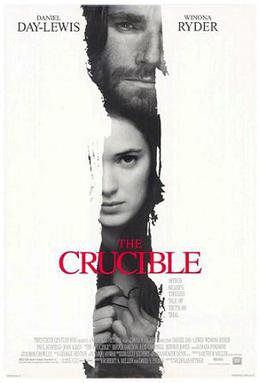
Film Review: The Crucible (dir by Nicholas Hytner)


In 1692 and 1693, over 200 people were accused witchcraft in colonial Massachusetts.  Thirty people were found guilty.  19 were executed, fourteen women and five men.  One man died while being tortured in an effort to get a confession out of him.  At least five more people died in their jail cells, awaiting their trial.

There’s a lot of debate about how the witch trials actually began but it’s generally agreed that the initial accusations were made by four girls in the village of Salem.  The oldest was 17 while the youngest was just nine.  (One of the girls, 12 year-old Abigail Williams, was related to the village’s pastor, Samuel Parris.  Traditionally, she has been portrayed as being the ringleader of the accusers.)  The girls claimed that the women of the village had caused them physical pain through witchcraft.  Soon, other girls in nearby villages were making similar accusations.  Some of the accused confessed to being witches to avoid execution.  Others claimed to be innocent but also said they knew who the real witches were.  And, of course, many refused to confess and were executed as a result.

Today, it’s easy to see that the Salem Witch Trials were an early “moral panic.”  What is often forgotten is that, even at the time the trials were taking place, there were many prominent thinkers who condemned them as being a case of mass hysteria.  In the years immediately following the trials, the majority of its victims were posthumously exonerated.  The Reverend Samuel Parris wrote an official apology letter for his role in the trials.  One of the legacies of the Salem Witch Trials was that the First Amendment of the United States Constitution made clear that “Congress shall make no law respecting an establishment of religion.”

Arthur Miller’s 1953 play, The Crucible, was set during the Salem Witch Trials and, for many people, it’s the defining work about the trials, despite the fact that Miller acknowledged to taking dramatic liberties with some of the characters and events.  Miller, who had recently been questioned by the House Unamerican Activities Committee, meant for the play to be both a commentary on McCarthyism and a rebuke towards people like his former friend, Elia Kazan, who “named names” to protect themselves.   Of course, one could argue that the main difference between the Salem Witch Trials and the Red Scare is that communists were real while the Salem witches were not.  But, no matter.  It’s one of Miller’s better plays.  If Elia Kazan could justify his testimony by imagining himself as a punch-drunk boxer standing up to a corrupt union, I suppose Arthur Miller could pretend to be a man accused of witchcraft.  The play was initially not as acclaimed as some of Miller’s other works but, over the years, it has come to be widely acknowledged as one of the classic works of American theater.

In the 90s, Miller wrote the screenplay for a film adaptation of the The Crucible.  First released in 1996, this adaptation starred Daniel-Day Lewis as the wrongly accused John Proctor, Joan Allen as Proctor’s wife, Elizabeth, and Winona Ryder as Abigail Williams.  For the purposes of Miller’s dramatization, Abigail was reimagined as being a teenage girl who had a brief affair with John Proctor and who was still obsessed with him.  When the Reverend Parris (Bruce Davison) catches Abigail and some of her friends trying to cast a “love spell” on John, the girls try to avoid punishment by accusing Parris’s slave, Tituba (Charlayne Woodard), of being a witch.  Tituba gives a false confession to avoid being hanged.  The girls are soon accusing numerous other women, including Elizabeth Proctor, of witchcraft.

As a film, The Crucible is a fine adaptation of Miller’s play and it’s always a little bit surprising to me that the movie itself isn’t better-known.  Daniel Day-Lewis, Winona Ryder, Joan Allen, and Bruce Davison all give excellent performances, as does Rob Campbell as a reverend who comes to doubt the accusations of witchcraft.  The great Paul Scofield also does a good job as Danforth, the stern judge who attempts to be fair but ultimately is not willing to admit that the law itself is in error.  The film recreates Salem is such detail that you feel as if you’re walking its streets.  The film also recreates the horrible conditions that a colonial prisoner would have to deal with while imprisoned.  Watching Daniel Day-Lewis go from being handsome and rugged to being an emaciated man with rotten teeth really drives home the story’s portrayal of casual, state-sanctioned cruelty.  By the end of the movie, Day-Lewis is a testament to what authoritarians will do to someone who insists on thinking for himself.

The film is at its strongest when showing how a moral panic begins.  The unstable Abigail is looking for revenge against John Proctor.  The other girls, immature and trying to be avoid being punished, make their accusations without giving much thought to the consequences.  Soon, the adults of Salem — all of whom have no excuse for not knowing better — are making accusations because it’s better to be an accuser than to be one of accused.  The film presents a disturbing portrait of how quickly a community can turn on itself.

The film ends on a note of devastating sadness.  Though the witch trials were eventually seen for being the farce that they were, it was too late for the twenty-five people who died as a result of the hysteria.  (Today, with a clear mind, it’s easy to see that the Salem Witch Trials had more in common with Stalin’s show trials and China’s Cultural Revolution than anything else.)  The Crucible is a powerful film adaptation that deserves to be better-known.

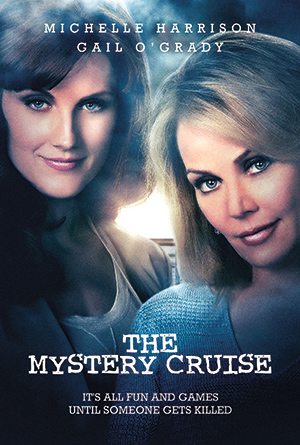
So, We Watched The Mystery Cruise (2013, Dir. by Douglas Barr)


The other day, Lisa Marie and I watched The Mystery Cruise.

Regan Reilly (Michelle Harrison) is the daughter of mystery novelist Nora Reilly (Colleen Winton) and a respected private detective in her own right.  Her friend, Alvirah (Gail O’Grady), has just won the lottery and wants to open up a detective agency with Regan.  Regan doesn’t think that the flighty Alvirah would be a good partner.  Along with their husbands, they set sail on a mystery cruise that is being used to promote Nora’s new book.  Every passenger on the cruise is trying to solve a fake murder but Alvirah thinks that one of the passengers is plotting a real murder!

This Hallmark movie was dumb and silly and kind of fun as long as you didn’t demand too much from it.  I actually liked Regan and Alvirah’s husbands (played by Peter Benson and Larry Miller) more than I liked either of them.  The mystery was easy to solve and it was clear that the movie wasn’t mean to be taken seriously.  My sister and I agreed that a mystery cruise was the sort of thing that we would enjoy doing but we couldn’t agree on which one of us would be Regan and which one would be Alvirah.

This movie was based on a book written by Mary Higgins Clark and her daughter, Carol Higgins Clark.  Sadly both of them have since passed away but, as we watched, Lisa Marie and I remembered how our aunt used to have an entire closet full of Mary Higgins Clark novels.  It was a good memory.

American Images, Part Three


Though it was celebrated long before that, the 4th of July has been an official holiday since 1941.  In honor of Independence Day’s long history, here are some vintage photographs from 4th of July’s of the past.  As you can see, you don’t always need fireworks to celebrate America’s birthday (but it helps!).

1920s

1923

1925

1939

1942

1956

1960s

1969

1970s

1976

1987

1996


American Images, Part Two


by Erin Nicole

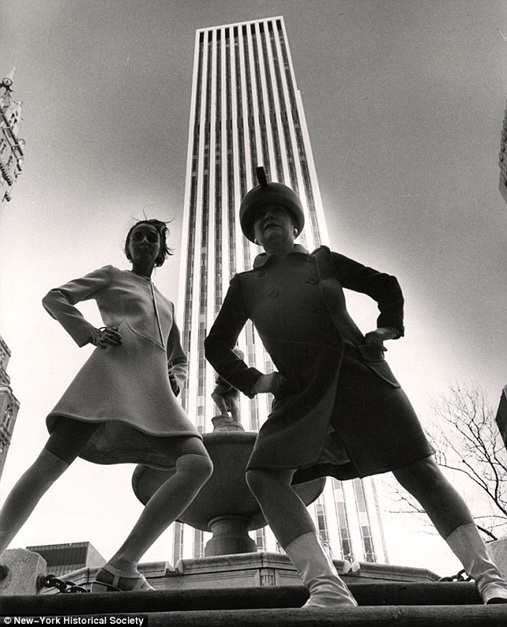
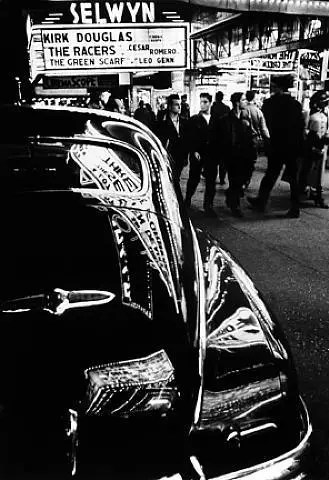
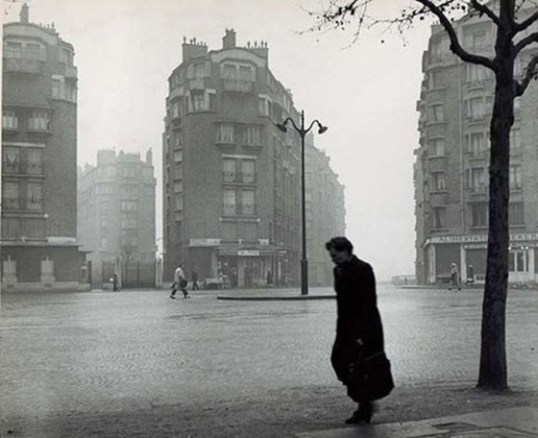
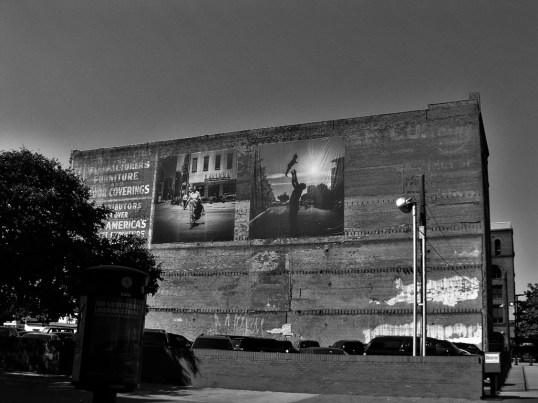
Today, on the day before the greatest country in the world celebrates its 250th birthday, let’s celebrate America with these pictures taken of its cities.

by William Klein

by Bill Cunningham

by Bill Cunningham

by Frank Larson

by William Klein

by Jules Aarons

by Jules Aarons

by Erin Nicole

by Erin Nicole

by Erin Nicole

by Helen Levitt

by Helen Levitt

by Carol Highsmith

by Carol Highsmith

Live Tweet Alert: Join #FridayNightFlix for Raw Deal!


As some of our regular readers undoubtedly know, I am involved in a few weekly watch parties.  On Twitter, I host #FridayNightFlix every Friday and I co-host #ScarySocial on Saturday.  On Mastodon, I am one of the five hosts of #MondayActionMovie!  Every week, we get together.  We watch a movie.  We tweet our way through it.

Tonight, at 10 pm et, I will be hosting #FridayNightFlix!  The movie?  Raw Deal!

If you want to join us this Friday, just hop onto twitter, find Raw Deal on Prime, start the movie at 10 pm et, and use the #FridayNightFlix hashtag!  I’ll be there happily tweeting.  It’s a friendly group and welcoming of newcomers so don’t be shy.

See you there!


Scenes I Love: Tom Cruise and Val Kilmer Play Beach Volleyball in Top Gun


Tom Cruise is 64 years old today!  He still doesn’t look a day over 36.  Insert your own Dorian Gray joke here.

No matter what else you may want to say about Tom Cruise, you can’t deny that he’s one of the last of the genuine movie stars.  He’s been a star in since the 80s, doing things onscreen that you could never imagine some of our younger actors even attempting.  Juat four years agp, Top Gun: Maverick was unstoppable with audiences and critics.  There were many reasons for Maverick‘s popularity but one cannot deny that a lot of it is the fact that Cruise just has that old-fashioned movie star charisma.

Today’s scene that I love comes from the first Top Gun.  In this scene, Tom Cruise, Anthony Edwards, Val Kilmer, and Rick Rossovich play beach volleyball.  The scene kind of comes out of nowhere and there are times when the whole thing comes close to self-parody.  (Actually, if we’re going to be honest, it crosses the line into self-parody more than a few times.)  But, Cruise and the much-missed Kilmer manage to save it, like the movie stars they are!

4 Shots From 4 Films: Special Michele Soavi Edition


4 Or More Shots From 4 Or More Films is just what it says it is, 4 shots from 4 of our favorite films. As opposed to the reviews and recaps that we usually post, 4 Shots From 4 Films lets the visuals do the talking!

Today, the Shattered Lens wishes a happy 69th birthday to one of our favorite directors, Michele Soavi!  In other words, it’s time for….

4 Shots from 4 Michele Soavi Films

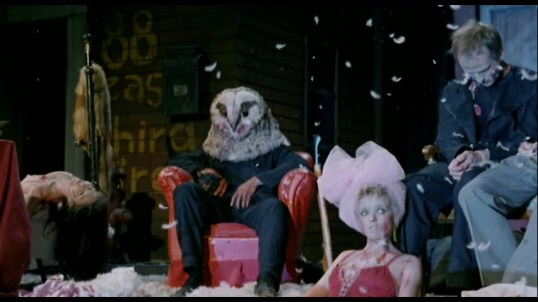
Stage Fright (1987, dir by Michele Soavi, DP: Renato Tafuri)

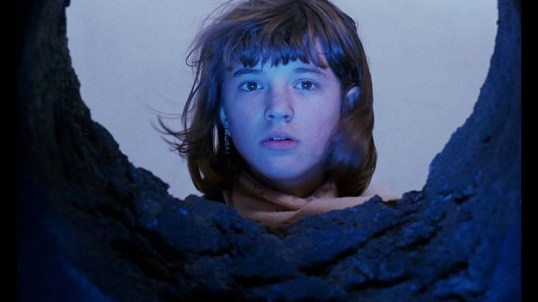
The Church (1989, dir by Michele Soavi, DP: Renato Tafuri)

The Sect (1991, dir by Michele Soavi, DP: Raffaele Mertes)

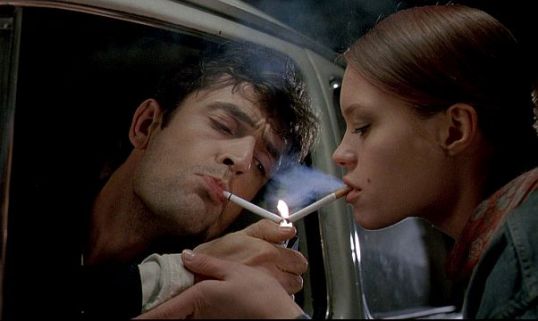
Dellamorte Dellamore (1994, dir by Michele Soavi, DP: Mauro Marchetti)