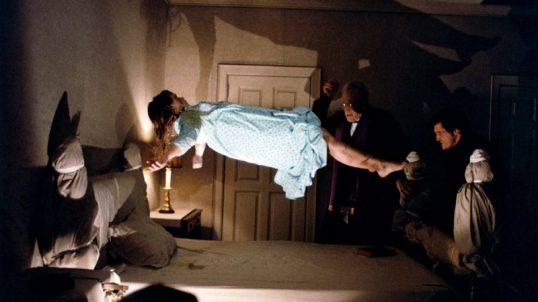
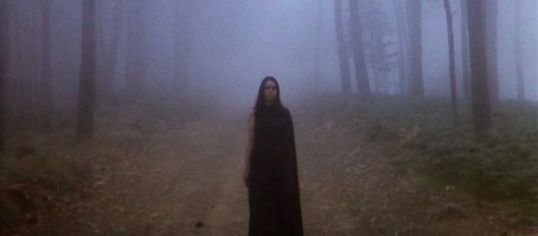
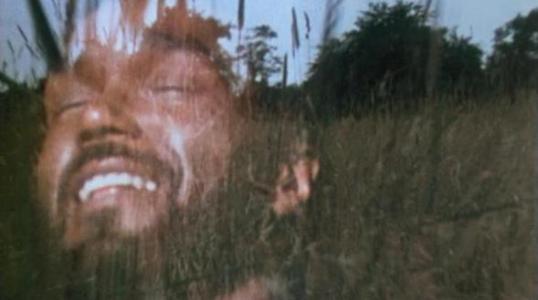
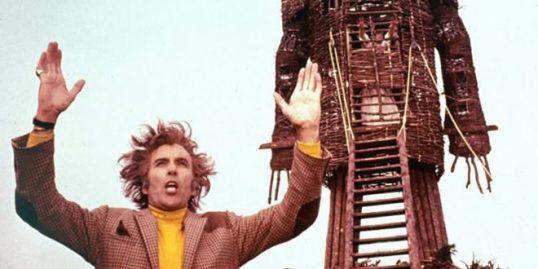
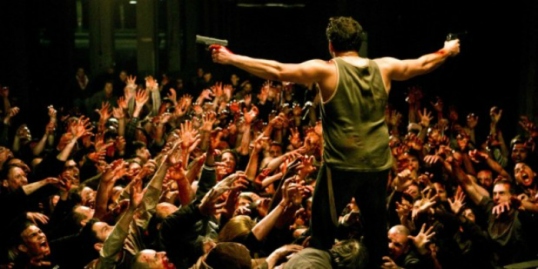
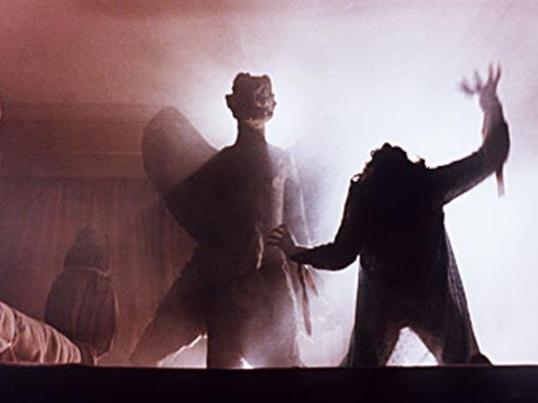
4 Shots From 4 Films is just what it says it is, 4 shots from 4 of our favorite films. As opposed to the reviews and recaps that we usually post, 4 Shots From 4 Films lets the visuals do the talking!
This October, we’re using 4 Shots From 4 Films to look at some of the best years that horror has to offer!
4 Shots From 4 Films is just what it says it is, 4 shots from 4 of our favorite films. As opposed to the reviews and recaps that we usually post, 4 Shots From 4 Films lets the visuals do the talking.
Since I just reviewed 1973’s Don’t Look Now, here are 4 shots from 4 other horror films that were released the same year.
As a part of my continuing effort to get caught up with reviewing all of the movies that I’ve seen this year, here’s two courtroom dramas that I recently caught on This TV.
Suspect
Released in 1987
Directed by Peter Yates
Starring Cher, Dennis Quaid, Liam Neeson, John Mahoney, Joe Mantegna, Philip Bosco, Fred Melamed, Bernie McInerney, Bill Cobbs, Richard Gant, Jim Walton, Michael Beach, Ralph Cosham, Djanet Sears
Suspect is a hilariously dumb movie. How dumb is it? Let me count the ways.
First off, Cher plays a highly successful if rather stressed public defender. And don’t get me wrong. It’s not that Cher is a bad actress or anything. She’s actually pretty good when she’s playing Cher. But, in this movie, she’s playing someone who managed to graduate from law school and pass the DC bar.
Secondly, Cher is assigned to defend a homeless man when he’s accused of murdering a clerk who works for the Justice Department. The homeless man is deaf and mute, which isn’t funny. What is funny is when he gets a shave and a shower and he’s magically revealed to be a rather handsome and fresh-faced Liam Neeson. Liam doesn’t give a bad performance in the role. In fact, he probably gives the best performance in the film. But still, it’s hard to escape the fact that he’s Liam Neeson and he basically looks like he just arrived for a weekend at Cannes.
Third, during the trial, one of the jurors (Dennis Quaid) decides to investigate the case on his own. Cher even helps him do it, which is the type of thing that would get a real-life attorney disbarred. However, I guess Cher thinks that it’s worth the risk. I guess that’s the power of Dennis Quaid’s smile.
Fourth, the prosecuting attorney is played by Joe Mantegna and he gives such a good performance that you find yourself hoping that he wins the case.
Fifth, while it’s true that real-life attorneys are rarely as slick or well-dressed as they are portrayed in the movies, one would think that Cher would at least take off her leather jacket before cross-examining a witness.
Sixth, it’s not a spoiler to tell you that the homeless man is innocent. We know he’s innocent from the minute that we see he’s Liam Neeson. Liam only kills who people deserve it. The real murderer is revealed at the end of the film and it turns out to be the last person you would suspect, mostly because we haven’t been given any reason to suspect him. The ending is less of a twist and more an extended middle finger to any viewer actually trying to solve the damn mystery.
I usually enjoy a good courtroom drama but bad courtroom dramas put me to sleep. Guess which one Suspect was.
12 Angry Men
Released 1997
Directed by William Friedkin
Starring Courtney B. Vance, Ossie Davis, George C. Scott, Armin Mueller-Stahl, Dorian Harewood, James Gandolfini, Tony Danza, Jack Lemmon, Hume Cronyn, Mykelti Williamson, Edward James Olmos, William Petersen, Mary McDonnell, Tyrees Allen, Douglas Spain
The 12 Angry Men are back!
Well, no, not actually. This is a remake of the classic 1957 film and it was produced for Showtime. It’s updated in that not all of the jurors are white and bigoted Juror #10 (Mykelti Williamson) is now a member of the Nation of Islam. Otherwise, it’s the same script, with Juror #8 (Jack Lemmon) trying to convince the other jurors not to send a young man to Death Row while Juror #3 (George C. Scott) deals with his family issues.
I really wanted to like this production, as it had a strong cast and a strong director and it was a remake of one of my favorite films. Unfortunately, the remake just didn’t work for me. As good an actor as Jack Lemmon was, he just didn’t project the same moral authority as Henry Fonda did the original. If Fonda seemed to be the voice of truth and integrity, Lemmon just came across like an old man who had too much time on his hands. Without Fonda’s moral certitude, 12 Angry Men simply becomes a story about how 12 men acquitted a boy of murder because they assumed that a woman would be too vain to wear her glasses to court. The brilliance of the original is that it keeps you from dwelling on the fact that the accused was probably guilty. The remake, however, feels like almost an argument for abandoning the jury system.
Blue Chips is a movie that will always make me think of England.
When I was a kid, I would spend every summer over in the UK. When I flew over for the summer of ’94, the in-flight movie was Blue Chips. I can still remember sitting in the back of the plane, trying to watch the movie on that tiny screen. At the time, I did not pay much attention to Blue Chips. It was about basketball, which was not something that I was interested in. It also starred Nick Nolte, who, over the years, starred in a lot of the movies that I saw while flying over the Atlantic Ocean. Try as I might, I could not understand a word that Nolte was saying. It was impossible to separate his gravely voice from the drone of the plane’s engines. I didn’t care much about Blue Chips.
Two months later, I was sitting in the back of my return flight when the flight attendant announced, “Our in-flight movie will be Blue Chips, starring Nick Nolte.” Still not caring about basketball and still unable to understand a word that Nick Nolte was saying, I sat through Blue Chips for a second time. What else was I going to do? Step outside and go for a walk?
Looking back, I can understand why Blue Chips would be shown on a plane. There’s nothing unconventional or controversial about Blue Chips. It’s not going to start any fights or leave anyone offended. Nick Nolte plays Pete Bell, a college basketball coach who, coming off of his first losing season, resorts to unethical measures to recruit three star players. Ricky Roe (Matt Nover) is a farmboy from Indiana and his racist father wants the college to buy him a new tractor. Penny Hardaway plays Butch McRae, whose mother (Alfre Woodard) wants a new house. Neon Bordeaux (Shaq!) doesn’t want anything but still gets a new Lexus. The corrupt head of the school’s booster club is named Happy and is played by J.T. Walsh. Other than Happy Gilmore, has there ever been anyone in a movie named Happy who hasn’t turned out to be bad news?
Blue Chips was directed by William Friedkin, though you’d never guess that this by the numbers movie was from the same director who did The French Connection, The Exorcist, or To Live And Die In L.A. In his autobiography, The Friedkin Connection, he devoted just a few words to Blue Chips, saying, “It’s hard to capture, in a sports film, the excitement of a real game, with its own unpredictable dramatic structure and suspense. I couldn’t overcome that.”
Friedkin’s right but I’m always happy whenever I come across Blue Chips on cable because it reminds me of that long-ago summer in England.
For tomorrow’s movie a day, it’s another sports-related film that always makes me think about Britain: Alan Clarke’s The Firm.
We already looked at a video directed by someone who would then go on to make feature films. Here we have one made by a director who was already well established. That being William Friedkin. He helmed this kinky music video for Laura Branigan’s song Self Control. To my knowledge, it isn’t out there who played the man behind the mask. The video was controversial at the time. Wikipedia says it even had to be have a minor alteration made to it in order to air on MTV, which Branigan was not happy about.
This is also one of those rare videos where we know more than just the director. According to Internet Music Video Database, this was choreographed by Russell Clark who has done a few films you might recognize. The one that jumps out at me is Rockula (1990). The reason is that I reviewed it last October. It’s that other rock based horror film that has Toni Basil in it. He also did some of the choreography for Teen Witch (1989). Sadly, it seems that according to IMDb, it was not the famous Top That scene.
Also according to IMDb, famous Producer and Production Manager Fred C. Caruso produced this music video. He did movies like The Godfather (1972), Blow Out (1981), and Blue Velvet (1986) to name a few.
I can’t speak for everyone, but I was introduced to this song via the Grand Theft Auto: Vice City soundtrack.
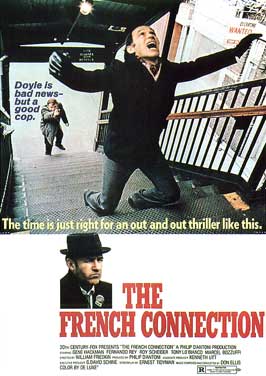
First of all, I’d like to thank Kellee Pratt of Outspoken and Freckled for inviting me to participate in the 31Days of Oscar Blogathon. It’s cool to be part of the film blogging community, and even cooler because I get to write about THE FRENCH CONNECTION, a groundbreaking movie in many ways. It was the first R-Rated film to win the Academy Award for Best Picture, and scored four other golden statuettes as well. It also helped (along with the Clint Eastwood/Don Siegel DIRTY HARRY) usher in the 70’s “tough cop” genre, which in turn spawned the proliferation of all those 70’s cop shows that dominated (KOJAK, STARSKY & HUTCH, BARETTA, etc, etc).
The story follows New York City cops Jimmy “Popeye” Doyle and his partner Sonny “Cloudy” Russo as they investigate a large shipment of heroin being brought in from France. The detectives focus on Sal Boca, a small time hood…
A new feature that I thought was a nice way to introduce not just our readers, but also fellow site writers to some films we love, admire and think worthy of checking out.
It won’t be any sort of review or recap of what the film is about, but just a simple, single shot from the film itself that the individual writer considers an worthy and interesting glimpse of the film.
To start off “4 Shots From 4 Films” here’s the first 4 shots. Moving forward it will be just 4 screenshots and the title of the film they belong to.
Earlier today, thanks to Netflix, I watched the 1971 best picture winner, The French Connection.
Based on a true incident, The French Connection is the story of two NYPD detectives, the reasonable and serious Buddy Russo (Roy Scheider) and his far more hyperactive partner, Popeye Doyle (Gene Hackman). When we first see them, Doyle is dressed as Santa Claus and they’re both chasing a drug dealer through the streets of New York. When they eventually catch up with the dealer, Russo plays good cop while Doyle plays batshit insane cop. That’s a pattern that plays out repeatedly over the course of the film. Russo suggests caution. Doyle blindly fires his gun into the shadows. Russo is sober. Doyle is frequently drunk. Russo is careful with his words. Doyle is a casual racist who never seems to stop talking. The one thing that Russo and Doyle seem to have in common is that they’re both obsessed with catching criminals.
The French Connection is also the story of Alain Charnier (Fernando Rey), a suave and always impeccably dressed French businessman. Charnier has a plan to smuggle several millions of dollars of heroin into the United States by hiding it in a car that will be driven by an unsuspecting (and rather vacuous) French actor named Henri Devereaux (Frederic de Pasquale). Working with Charnier is a low-level mafia associate named Sal Boca (Tony Lo Bianco) and a lawyer named Joel Weinstock (Harold Gray).
(Incidentally, Weinstock’s chemist is played by an actor named Patrick McDermott, who also played Susan Sarandon’s abusive hippie boyfriend in Joe. The French Connection was McDermott’s third film and also his last. I point this out because McDermott totally steals his one scene in The French Connection. When one considers both his performance here and his work in Joe, it’s strange and unfortunate that McDermott’s cinematic career ended after just three films. According to a comment left on the imdb, he later ran a health food store in Nebraska.)
When Doyle and Russo just happen to spy Sal hanging out with a group of mobsters at a local club, they decide (mostly on a whim) to investigate what Sal’s up to. They notice that Sal drives a car that he shouldn’t be able to afford. Will they discover how Sal is making his money and will they be able to stop Charnier from smuggling his heroin into the United States?
Well…let’s just say that The French Connection was made in 1971. That’s right, this is one of those films where everything is ambiguous. Neither Russo nor Doyle are traditional heroes. Neither one of them is foolish enough to believe that their actions will make a difference. Instead, they seem to view it all as a game, with Doyle and Russo as the win-at-any-cost good guys and the French as the bad guys. And, indeed, it’s interesting to note that, when the police do make their move against Charnier, it’s the people who work for him who suffer the worst punishments.
I have to admit that, as a civil libertarian, Doyle is the type of cop who should make my skin crawl. He’s an obsessive bigot, the type who runs into the shadows with his gun drawn and blindly firing. When I watched The French Connection, a part of me wanted to get offended and say, “It’s none of your business why Sal has an expensive car!” But I didn’t. In fact, I was rooting for Doyle the whole time. The French Connection is probably one of the best cast films of all time. Hackman gives such a good performance that, while you can’t overlook Doyle’s flaws, you can accept them. Meanwhile, Rey is so sleazy and smug in the role of Charnier that you really don’t care about his rights. You just want to see him taken down.
(That said, if I ever got hold of a time machine and went back to New York in 1971, I’d rather be arrested by Russo than Doyle. Doyle seems like he’d be the type to grope while frisking.)
Seen today, it’s a bit odd to think of The French Connection as being a best picture winner. It has nothing to do with the film’s quality. The film’s performances remain strong. William Friedkin’s documentary-style direction is still compelling and he makes the decay of 1970s New York oddly beautiful. Instead, it’s the fact that The French Connection essentially tells a very simple story that, when seen today, feels very familiar. It’s a cop film and it includes every single cliché that we’ve come to associate with cop films. (Russo and Doyle even have a supervisor who yells at them for not doing things by the book.) But, what you have to realize is that the majority of those clichés were invented by The French Connection. If imitation is the sincerest form of flattery, then The French Connection is probably one of the most flattered film ever made.
And what better way to end this review than by sharing The French Connection‘s most influential scene? In the scene below, Doyle chases a commuter train that happens to be carrying one of Charnier’s associates.
The previous “Song of the Day” was Polymorphia and comes courtesy of one Krzystof Penderecki. Why stop a good thing and go with someone else for the latest one when Penderecki continues to bring in the horror.
“Kanon For Orchestra and Tape” was also used in William Friedkin’s The Exorcist and one could tell just from listening to it that it fit perfectly. Like Polymorphia, this particular piece uses the string section to help create that encroaching dread and horror while adding some nontraditional sounds to keep the listener off-balance.
Just listening to this piece one could be made to believe that there is a Hell and the Devil’s just waiting to get out and play.
A couple weeks ago site music writer necromoonyeti wrote up quite an article about what just makes a piece of music a “horror music”.
Using some of what necromoonyeti wrote about I decided to look at some horror and non-horror films with music that evokes that sense of terror and horror that sometimes come from music that we wouldn’t associate with such emotions. It’s a much more difficult task than one would think. Yet, while I didn’t find one of those non-traditional pieces of horror music I did come across one that I should’ve used in this segment a long time ago.
The latest “Song of the Day” is a piece of disturbing music titled “Polymorphia” by Polish composer Krzysztof Penderecki.
This musical composition has been used in two classic horror films (some would say some of the best in their genre) to help build the sense of horror and dread for the audience. The two films in question would be William Friedkin’s The Exorcist and Stanley Kubrick’s The Shining. I know that in the former it more than added to that film’s creeping dread from the moment the song came on. It made one feel like Hell itself was about to break through the screen. It’s that sense that one’s skin was sensing something evil was afoot.
I found a particular youtube video that used this song and the chosen imagery to great effect. I dare anyone to watch the video, listen to the music in a dark room and in the middle of the night while alone.