Here Are The 2012 Critics’ Choice Movie Award Nominees


Earlier today, the Broadcast Film Critics Association announced their nominations for the 17th Annual Critics’ Choice Awards.  The BFCA is the largest of the so-called “major” critics’ groups (and, interestingly enough, it’s also the newest and the least prestigious) and it has a fairly good track record of predicting the actual Oscar nominations.  The awards themselves will be handed out on January 12th, 2012 in a self-important, kinda seedy ceremony that will be broadcast on VH-1.   

BEST PICTURE
The Artist
The Descendants
Drive
Extremely Loud & Incredibly Close
The Help
Hugo
Midnight in Paris
Moneyball
The Tree of Life
War Horse

BEST ACTOR
George Clooney – The Descendants
Leonardo DiCaprio – J. Edgar
Jean Dujardin – The Artist
Michael Fassbender – Shame
Ryan Gosling – Drive
Brad Pitt – Moneyball

BEST ACTRESS
Viola Davis – The Help
Elizabeth Olsen – Martha Marcy May Marlene
Meryl Streep – The Iron Lady
Tilda Swinton – We Need to Talk About Kevin
Charlize Theron – Young Adult
Michelle Williams – My Week With Marilyn

BEST SUPPORTING ACTOR
Kenneth Branagh – My Week With Marilyn
Albert Brooks – Drive
Nick Nolte – Warrior
Patton Oswalt – Young Adult
Christopher Plummer – Beginners
Sir Andrew Serkis – Rise of the Planet of the Apes

BEST SUPPORTING ACTRESS
Berenice Bejo – The Artist
Jessica Chastain – The Help
Melissa McCarthy – Bridesmaids
Carey Mulligan – Shame
Octavia Spencer – The Help
Shailene Woodley – The Descendants

BEST YOUNG ACTOR/ACTRESS
Asa Butterfield – Hugo
Elle Fanning – Super 8
Thomas Horn – Extremely Loud & Incredibly Close
Ezra Miller – We Need to Talk About Kevin
Saoirse Ronan – Hanna
Shailene Woodley – The Descendants

BEST ACTING ENSEMBLE
The Artist
Bridesmaids
The Descendants
The Help
The Ides of March

BEST DIRECTOR
Stephen Daldry – Extreme Loud & Incredibly Close
Michel Hazanavicius – The Artist
Alexander Payne – The Descendants
Nicolas Winding Refn – Drive
Martin Scorsese – Hugo
Steven Spielberg – War Horse

BEST ORIGINAL SCREENPLAY
The Artist – Michel Hazanavicius
50/50 – Will Reiser
Midnight in Paris – Woody Allen
Win Win – Screenplay by Tom McCarthy, Story by Tom McCarthy & Joe Tiboni
Young Adult – Diablo Cody

BEST ADAPTED SCREENPLAY
The Descendants – Alexander Payne and Nat Faxon & Jim Rash
Extremely Loud & Incredibly Close – Eric Roth
The Help – Tate Taylor
Hugo – John Logan
Moneyball – Steven Zaillian and Aaron Sorkin, Story by Stan Chervin

BEST CINEMATOGRAPHY
The Artist – Guillaume Schiffman
Drive – Newton Thomas Sigel
Hugo – Robert Richardson
Tree of Life – Emmanuel Lubezki
War Horse – Janusz Kaminski

BEST ART DIRECTION
The Artist – Production Designer: Laurence Bennett, Art Director: Gregory S. Hooper
Harry Potter and the Deathly Hallows Part 2 – Production Designer: Stuart Craig, Set Decorator: Stephenie McMillan
Hugo – Production Designer: Dante Ferretti, Set Decorator: Francesca Lo Schiavo
The Tree of Life – Production Designer: Jack Fisk, Art Director: David Crank
War Horse – Production Designer: Rick Carter, Set Decorator: Lee Sandales

BEST EDITING
The Artist – Michel Hazanavicius and Anne-Sophie Bion
Drive – Matthew Newman
The Girl With the Dragon Tattoo – Kirk Baxter and Angus Wall
Hugo – Thelma Schoonmaker
War Horse – Michael Kahn

BEST COSTUME DESIGN
The Artist – Mark Bridges
The Help – Sharen Davis
Hugo – Sandy Powell
Jane Eyre – Michael O’Connor
My Week With Marilyn – Jill Taylor

BEST MAKEUP
Albert Nobbs
Harry Potter and the Deathly Hallows Part 2
The Iron Lady
J. Edgar
My Week With Marilyn

BEST VISUAL EFFECTS
Harry Potter and the Deathly Hallows Part 2
Hugo
Rise of the Planet of the Apes
Super 8
The Tree of Life

BEST SOUND
Harry Potter and the Deathly Hallows Part 2
Hugo
Super 8
The Tree of Life
War Horse

BEST ANIMATED FEATURE
The Adventures of Tintin
Arthur Christmas
Kung Fu Panda 2
Puss in Boots
Rango

BEST ACTION MOVIE
Drive
Fast Five
Hanna
Rise of the Planet of the Apes
Super 8

BEST COMEDY
Bridesmaids
Crazy, Stupid, Love
Horrible Bosses
Midnight in Paris
The Muppets

BEST FOREIGN LANGUAGE FILM
In Darkness
Le Havre
A Separation
The Skin I Live In
Where Do We Go Now

BEST DOCUMENTARY FEATURE
Buck
Cave of Forgotten Dreams
George Harrison: Living in the Material World
Page One: Inside the New York Times
Project Nim
Undefeated

BEST SONG
“Hello Hello” – performed by Elton John and Lady Gaga/written by Elton John and Bernie Taupin – Gnomeo & Juliet
“Life’s a Happy Song” – performed by Jason Segel, Amy Adams and Walter/written by Bret McKenzie – The Muppets
“The Living Proof” – performed by Mary J. Blige/written by Mary J. Blige, Thomas Newman and Harvey Mason, Jr. – The Help
“Man or Muppet” – performed by Jason Segel and Walter/written by Bret McKenzie – The Muppets
“Pictures in My Head” – performed by Kermit and the Muppets/written by Jeannie Lurie, Aris Archontis and Chen Neeman – The Muppets

BEST SCORE
The Artist – Ludovic Bource
Drive – Cliff Martinez
The Girl With the Dragon Tattoo – Trent Reznor & Atticus Ross
Hugo – Howard Shore
War Horse – John Williams

The BFCA has obviously made a lot of nominations and some of them are interesting but I have to be honest: the BFCA as an organization annoys me with how they’re always bragging about how big they are and how they’re so good at celebrating the conventional establishment wisdom.  So, I’ll just say that its nice to see Hanna getting at least some sort of recognition (even if that recognition is kinda minor.)

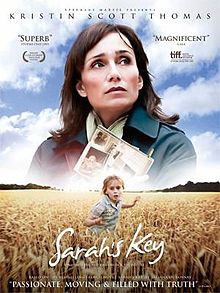
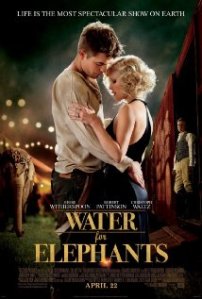
6 Quickies With Lisa Marie: Atlas Shrugged, Beautiful Boy, Crazy Stupid Love, The Devil’s Double, Sarah’s Key, and Water For Elephants


For my first post-birthday review post, I want to take a look at 6 films that I saw earlier this year but, for whatever reason, I haven’t gotten a chance to review yet.  My goal has been to review every single 2011 release that I’ve seen this year.  So far, I’ve only seen 106 2011 films and I still need to review 21 of them.  So, without further ado, let’s “gang bang this baby out” as a former employer of mine used to say. (*Shudder*  Seriously, what a creepy thing to say…)

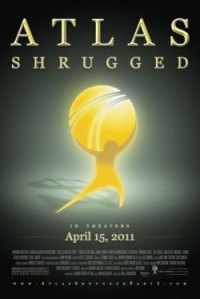
1) Atlas Shrugged, Part One (dir. by Paul Johansson)

What to say about Atlas Shrugged, Part One?  When I recently rewatched it OnDemand with a friend of mine who had just gotten back from Occupying somewhere, he threw a fit as soon as he heard wealthy 1 percenter Graham Beckel declaring, “I am on strike!”  When I first saw it earlier in the year, in a theater full of strangers, they broke out into applause when they heard the same line.  Atlas Shrugged is a wonderfully divisive film.   If you’re a political person, your enjoyment of this film will probably come down to which news network  you watch. If you enjoy those MSNBC spots where Rachel Maddow won’t shut up about the freakin’ Hoover Dam, you’ll probably hate Atlas Shrugged.  If you truly believe that Fox News is “fair and balanced,” chances are you’ll enjoy it.  But what if you’re like me and the only politics you follow are the politics of film and you only bow at the altar of cinema?  Well, I enjoyed Atlas Shrugged because the film really is a grindhouse film at heart.  It’s an uneven, low-budget film that has a few good performances (Beckel and Taylor Schilling), several bad performances, and ultimately, it goes totally against what establishment films have conditioned us to expect when we go to the movies.  Ultimately, the film is a big middle finger extended at both the film and the political establishments and who can’t get behind that?  Add to that, Roger Ebert hated it and when was the last time he was right about anything?

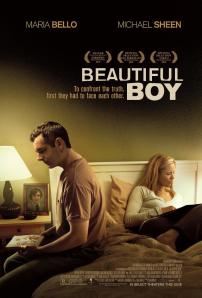
2) Beautiful Boy (dir. by Shawn Ku)

I’ve read a lot of rapturous reviews of this film online and my aunt Kate loved it when she saw it at the Dallas Angelika earlier this year.  So, admittedly, when I watched this film via OnDemand, I had pretty high hopes and expectations but, unfortunately, none of those expectations came anywhere close to being met.  In the film, two of my favorite performers — Michael Sheen and Maria Bello — play the middle-class parents who have to deal with the consequences (both emotional and physical) of a terrible crime perpetrated by their son.  The film is based on the Virginia Tech massacre and both Sheen and Bello give excellent performances but overall, the film feels like a thoroughly shallow exploration of some various serious issues.  Ultimately, the film’s refusal to provide an explanation for the crime feels less like a brave, artistic choice and more like a cop-out.  The film is less abstract than Gus Van Sant’s Elephant and Denis Villeneuve’s Polytechnique but it’s also a lot less effective.

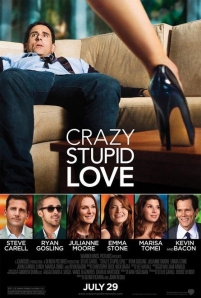
3)Crazy, Stupid Love (dir. by John Requa and Glenn Ficarra)

I don’t know if I’ll ever forgive Steve Carell for abandoning The Office and forcing upon me the current, almost painful season of the show.  Still, I can’t totally blame him because the guy is totally a film star and he proves it in Crazy, Stupid Love by holding his own with other certifiable film stars like Ryan Gosling, Kevin Bacon, Marisa Tomei, Julianne Moore, and Emma Stone.  In the film, Julianne Moore plays Carell’s wife who leaves him for a coworker (played by Kevin Bacon, doing his charming jerk routine).  The depressed Carell is taken under the wing of womanizer Gosling who teaches Carell how to be more confident and appealing.  Things seem to be working out well until Gosling starts going out with Carell’s daughter (played by Emma Stone).  The movie, itself, isn’t anything special and it’s really kind of a mess but it’s saved by a massively appealing cast.  And, by the way, Ryan Gosling —très beau!  Seriously.

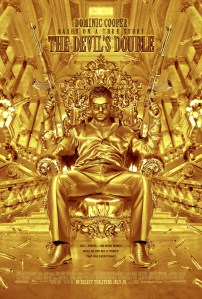
4) The Devil’s Double (dir. by Lee Tamahori)

Taking place in pre-Desert Storm Iraq, The Devil’s Double claims to tell the true story of Latif Yahia, an Iraqi who was forced to serve as the double for the sociopathic young dictator-in-training Uday Hussien.  I’ve read that there’s some debate as to how faithful The Devil’s Double is to the facts of the story and it is true that Latif is portrayed as being almost too good to be true but no matter.  The Devil’s Double is a compelling and oddly fascinating little gangster film, one that manages to show the dangerous appeal of the excessive lifestyle of a man like Uday Hussien without ever actually being seduced by it.   The film is dominated by Dominic Cooper, who gives a great performance playing both the tortured Latif and the cheerfully insane Uday. 

5) Sarah’s Key (dir by Gilles Paquet-Brenner)

Sarah’s Key tells two stories at once and, the result, is a film that feels very schizophrenic in quality.  The better part of the film deals with Sarah, a 10 year-old Jewish girl living in Nazi-occupied France.  When Sarah and her parents are sent to a concentration camp, her younger brother is left behind in Paris.  Sarah eventually manages to escape and desperately tries to get back to Paris to rescue her brother.  Meanwhile, in the modern-day, a journalist (Kristen Scott Thomas) researches Sarah’s story and discovers that her French husband’s family has a connection of their own with Sarah’s story.  The film is compelling and heart-breaking as long as it concentrates on Sarah but, unfortunately, the modern-day scenes feel forced and predictable and the end result is a film that’s never quite as good as it obviously could have been.

6) Water For Elephants (dir. by Francis Lawrence)

Look, I make no apologies — I freaking loved this movie.  Yes, plotwise, this film feels almost like a parody and yes, so much of this film was over-the-top and kinda silly but I don’t care.  I loved this film for the old-fashioned, melodramatic, and rather campy spectacle that it is.  Robert Pattinson plays a Depression-era Ivy League college student-turned-hobo who ends up joining the circus and falling in love with Reese Whitherspoon, the wife of insane circus owner, Christoph Waltz.  Pattinson isn’t much of an actor but he’s easy on the eyes and he and Whitherspoon have just enough chemistry to remain watchable.  The film, however, is totally dominated by Waltz who is both charming and scary.  The next time your man makes you sit through anything starring Jason Statham, you make him watch Water for Elephants.

A Quickie With Lisa Marie: The Ides of March (dir. by George Clooney)


George Clooney’s new political film The Ides of March opened last Friday and so far it appears to have mostly gotten positive reviews that are more respectful than enthusiastic.  Well, I saw The Ides of March on Tuesday evening and all I can say is “Don’t believe everything you hear.”  That should be a given but it’s always worth repeating.  The Ides of March is a slow, ponderous, and at times completely annoying movie, a minor work dealing with major themes.

The film is based on the play Farragut North and it’s about Stephen (Ryan Gosling), a political consultant who is working on the presidential campaign of Gov. Mike Morris (George Clooney).  Morris is a typical Hollywood Democratic politician in that he gives a lot of speeches attacking America’s dependence on foreign oil and he’s not ashamed to admit that he’s an atheist.  Anyway, despite the fact that Morris comes across as being smug and something of a sexist, he’s the front runner for the Democratic Presidential nomination but only if he can win the Ohio primary.  For all of his attempts to be as cynical as his mentor (Philip Seymour Hoffman, giving a typical Philip Seymour Hoffman performance), Stephen truly believes in Mike Morris.  However, Stephen comes across some information that could potentially destroy Morris’ campaign and he soon finds himself a pawn in a game between Morris, the press (represented by Marisa Tomei, who looks terrible in this film), and the opposing campaign (managed by Paul Giamatti).

Yes, The Ides of March has a lot to say but it’s absolutely nothing you haven’t heard before and, quite frankly, it’s kind of annoying how the film seems to think that this is the first time that anyone’s ever suggested that maybe politics is a dirty business.  The film’s not a total waste because there’s way too many talented people involved here for the film not to have the occasional good moment.  Gosling and Clooney both give strong performances and play off each other well.  They have a scene where they confront each other in a deserted kitchen and for a few brief seconds, the film actually gets interesting.  Playing an emotionally unstable intern, Evan Rachel Wood shows once again that she’s one of the best actresses working today and it’s just a shame that the film treats her more like a plot device than an actual human being.  At the same time, I have to say that this is the first time I’ve ever seen Paul Giamatti actually give a performance that can only be called bad.  Seriously, how could the same actor who was so brilliant in Win Win be so terrible in this movie?

Ultimately though, the film fails because — once you get past all the glamour on-screen — what you have is a very predictable political film that, especially in these days of Tea Parties and Occupy Movements, feels rather quaint and forced.  This is yet another one of those films where, apparently, the only way that the main character can learn a lesson is for a supporting character to commit suicide.  There’s a lot of would-be cynical dialogue and Clooney manages to include references to Rush Limbaugh and the Drudge Report but ultimately, the whole film feels as false as the romantic short stories I used to write in the 8th grade.

The film’s name is obviously meant to carry hints of Shakespeare but perhaps a more honest title would have been Much Ado About Nothing.

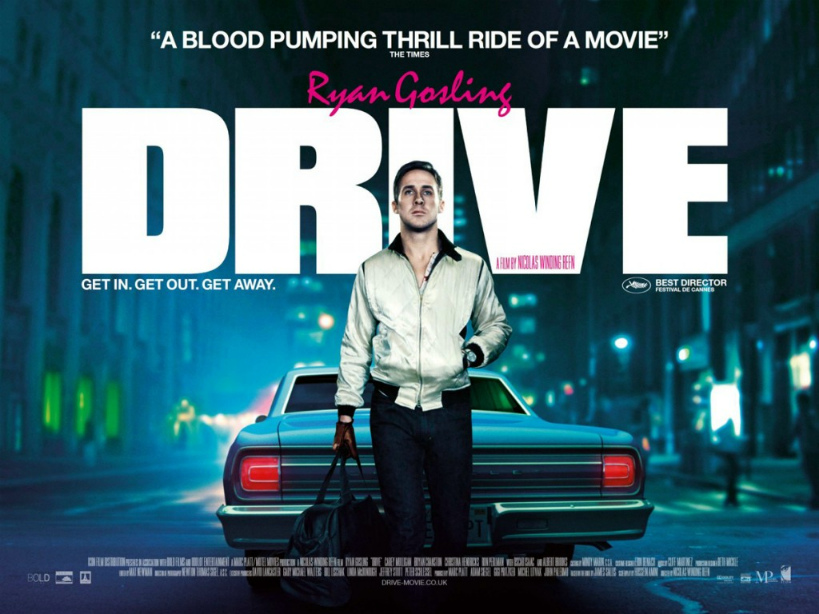
Review: Drive (dir. by Nicolas Winding Refn)


Danish filmmaker Nicolas Winding Refn has made just a handful of films with most staying under the radar of most of the general film-going public. He first caught the attention of indie film fans with his Pusher Trilogy over in Denmark, but he really caught the attention of these fans with his explosive collaboration with Tom Hardy on the Bronson biopic. He would follow that film with the violent existentialist Viking film Valhalla Rising. It would take another major collaboration with another rising star in Ryan Gosling for Winding Refn to finally have his major breakout film which has caught the attention of not just the indie film fans and cineaste crowd, but the general public at-large.

Drive was first screened over at this year’s 2011 Cannes Film Festival where it premiered “in competition” for the Palme d’Or. While the film didn’t win the top prize for best film at Cannes it didn’t garner Nicolas Winding Refn “Best Director” award and his work on this film more than merits such an accolade. The film would begin to screen at other major film festivals before landing at the Toronto International Film Festival before making it’s major public release in North America. Everywhere the film went the consensus reaction to the film has ranged from positive to calls for the film as one of 2011’s best.

So, it would seem most everyone has been quite positive with their reaction to Refn’s Drive. Is this film just another indie arthouse title which the elitist film fans have begun to hype up to levels that would border on cosmic? Or is this film actually as good as it has been talked up to be by such film fans and those of the general public who have seen it? I think the answer lies somewhere in-between.

Drive has been called an action-drama to crime-thriller to film noir and even an existentialist meditation of the film variety. Some have even called it a modern urban fairy tale from the many traditional tropes and themes inherent in fairy tales. The film actually seems to defy genre labels as it’s all those and even more. Nicolas Winding Refn has made a film with so much variety in its cinematic DNA from other classic films and storytelling styles that watching the film once is not enough to find them all.

The film makes a strong statement with it’s introduction of the character who remains nameless but could be called “The Driver” or “The Kid”. Ryan Gosling’s performance in this opening sequence will set the foundation for his character from beginning to end. His driver role is not much for chit-chat and unnecessary talking with those who have hired him to be their expert getaway driver. He’s meticulous with his equipment and intractable when it comes to the rules he has set down for his clients. He would be theirs for the five minutes they need him to drive them away from their criminal acts. Whatever they do before or after those five minutes doesn’t matter to him and he sticks to this rule explicitly. Another rule which he lays down is that he will not be carrying a firearm. These rules have had some audiences bring to mind Jason Statham’s Transporter character and they would not be totally wrong to say so. What Gosling’s driver has over Statham’s is the air of realism to the role. It’s a realism that borders on hyper-reality as the film moves on to it’s climactic conclusion, but real nonetheless. Gosling’s “driver” will not do extensive and elaborate fighting skills the way Statham’s would.

The film would move from it’s powerful introduction and into a much more calm and somewhat serene section as the nameless driver gradually gets to know his next door neighbor in the form of Irene as played by Carey Mulligan. Their relationship will form the core of the film’s narrative and it’s the driver’s growing affection not just for Irene but her young son that would dictate some of the decisions he would make right up to the end of the film. It’s a relationship built not on extensive dialogue banter but mostly on meaningful glances and silent understanding between two characters who seem to have found a kindred kinship between them. It’s this growing relationship between the two and Irene’s son which almost look like a familial unit forming until the return of Irene’s incarcerated and newly-released husband Standard. This is a character played by Oscar Isaac as a man desperate to take full advantage of his last chance at normalcy and redemption, but ultimately doomed to fail.

Standard doesn’t just become the only wrench in the happy life Gosling’s character seems to want to have with Irene and her son. Into the picture also happens to come in is his mentor and business partner Shannon (Bryan Cranston doing a great job as the good-natured, but opportunistic fool character many Shakespearean tragedies always seem to have) and Shannon’s even seedier acquaintances in Hollywood mogul-turned-mob boss Bernie Rose (Albert Brooks in a chilling performance) and his more boisterous, but not as smart partner in Nino (Ron Perlman).

The film seems to settle on the low gears for the first hour of the film, but it’s during a botched robbery attempt where the driver becomes embroiled in that Drive finally moves into the high gears and stays there until the very end. Refn’s decision to use the first hour to round out and build the characters in this film definitely pays off in the end. The audience becomes quite clear as to who the players are and what motivates them to do what they do the rest of the film. Even the most secondary and tertiary roles in this film has a part to play. Even Christina Hendricks in the role of a low-level moll to a gang of criminals gets to have her time to shine if just briefly.

Once the narrative shifts from character study to an almost Cronenbergian exercise in violence and brutality does the film finally able to hook in the last few audiences who may have still been iffy about Drive. Not to say that the final 45-minutes of the film was a non-stop action film, but it does move at a consistently higher gear pace than the first hour. We see the driver having to show to the audience that he’s not just an expert wheelman for Hollywood (stunt driver by day) and the criminal underground (getaway driver by night). It serves the film well that Gosling’s character has the barest minimum of lines of dialogue. We see all we need to know about this character through his behavior that brings to mind roles played by such past luminaries as Steve McQueen and Clint Eastwood.

Most likely it would be in the second half of the film that should satisfy the action junkies. While the action scenes are not of the Michael Bay-type they do show that Refn has a fine grasp of what makes an action scene thrilling. Whether the scene calls for some of the most well-done car chase on film since Frankenheimer showed everyone how to properly do it in Ronin or scenes of sudden brutal violence which calls to mind similar scenes from Cronenberg’s last two films (A History of Violence and Eastern Promises). Both types of action were done efficiently with little to no glamour to gloss over things. The burst of violence actually adds to the mystique of Gosling’s “Man With No Name” role. One particular scene in the apartment elevator where Gosling, Mulligan and a goon sent by the mob makes for one of the best scenes in the film and of 2011.

As much as these scenes of action and violence will be the ones to get the most attention from the general film-going public in the end it’s the excellent screenplay by Hossein Amini of the James Sallis’ novel of the same name which really holds everything together in conjunction with some top-notch performances from everyone involved. The film makes or breaks itself on Gosling’s performance as the driver and he delivers on all cylinders. His performance was quite reminiscent of past performances such as James Caan as Frank in Michael Mann’s Thief, Steve McQueen also as Frank in Bullitt, but in my opinion Gosling’s work in this film brings to mind young Clint Eastwood as “The Man With No Name” in Sergio Leone’s spaghetti western trilogy. Both characters were the type to let their actions speak for them and were both full of quiet confidence not to mention restrained violence which would erupt when needed.

Much has been said about Albert Brooks’ turn as the mob boss Bernie Rose. how the role was quite the 180-degrees from people’s perception of the actor who usually did comedic roles. I say that Albert Brooks always had a dark side to his comedic talent. I mean he was and is megamaniacal villain Hank Scorpio from The Simpsons. In all seriousness, Brooks’ as the mob boss was the other pillar which held all the other performances focused. In fact, Gosling’s character and Brook’s Bernie Rose could almost be considered mirror-images of each other. They were characters who had found their place in the world and the role they would play and didn’t struggle against it. Everyone else in the film struggled against their lot in life. It was also these characters who had the bulk of the film’s dialogue.

Drive has been hyped (for some overhyped) since it first premiered at this year’s Cannes Film Festival, but it’s one of those rare films which has more than earned and surpassed the hype which has preceded it’s general release to the general public. It’s a film which bucks traditional genre labels by combining the themes, ideas and foundations from many different film and storytelling genres. For fans of action there’s enough thrilling action to sate them. For those who are fans of film noir this film definitely carries within it the DNA set down by the film noir of the 40’s, 50’s and 60’s. For some who wish to watch a film which explore existential themes then Refn’s film has that too. In the end, Drive manages to be a film which caters to so many different audiences without ever pandering to them or dumbing the story down. It’s a film made by a filmmaker who continues to impress and who has made his best film to date.

Drive is a film that is not for everyone, but it’s also a film that everyone should see and experience at least once. It is also one of the year’s best films and, so far, my top film of 2011.

Quick Review: Drive (dir. by Nicolas Winding Refn)


Here at the Shattered Lens, we’ve been eagerly awaiting Nicolas Winding Refn’s Drive, which has picked up some major buzz over the last few months. So note that this will not be the only review you’ll see for the film. As the other reviews come in, I’ll update this paragraph to link to them.

Addendum: 

Leonth3duke has added his Drive Review, which examines the film from a lens closer to the director’s point of view and remains spoiler free. Definitely worth reading!

Arleigh has also added his Drive Review – which compares the film to both Michael Mann and David Cronenberg’s styles.

*  *   *   *  *

I was so excited by Drive that I treated my extended family to it (just in case the film went sour, it would be easy to apologize). This is going to be a quick review, because I’m going to ramble.

To quickly sum it up, Drive is a beautiful, artistic film that hits all the right buttons when it comes to the crimes it showcases. It occasionally explodes between quiet reflection and ultra violent action. Even the music was sweet. It’s just a shame though that all that coolness is wrapped up in dialogue and scenes where the pacing……moves……as……………slow…………..as………………this. Honestly, the book this was adapted from felt like it must have been about 50 pages, at best.

Drive is the tale of Driver (Ryan Gosling), a stuntman for the movies by day, and a Wheelman by night. His partner, Shannon (a nice performance by Breaking Bad’s Bryan Cranston) gets involved with a mobster (Albert Brooks) on a business venture. After getting caught up in a heist that goes awry, Driver has to try to protect himself along with the woman and child he’s recently befriended.

Drive has a fantastic sequence before we actually see the opening credits. Everything about that opening is downright sharp and creative. I haven’t seen that cool an opening to a film in quite a while. What a way to hook the audience in.

Overall, the film feels great and unique, but it suffers from one problem that I’ve only seen a few people actually mention. It feels like there’s this pause between every statement between Driver and Irene (Carey Mulligan). Imagine having one character say “Hello”, and then having someone pause the movie for a few minutes before picking it up from there. Drive ended up doing this quite a bit.  I can understand if Driver is a soft spoken, man of action,  but there were moments where I wanted to shake both Gosling and Mulligan to communicate more. I’m not saying they had to move in a particular direction, but they had a lot of patience waiting for replies from each other.  There were other scenes where I felt Refn should have considered adding just a few cuts to the film to increase the speed of the film. The slow pace keeps it from becoming The Transporter, but most of this movie felt like that 3rd act in Heat after the robbery (or the multiple endings in Return of the King) to me. The film felt more like it was in love with itself than anything.

I understand that Drive is an independent film, and with independent filmmaking, there’s a bit more freedom to do things artistically instead of having movie marketers breathe down your throat. While I may lack the film appreciation skills to effectively grasp the artistic impact of Drive on screen, I can say that as a dialog or story driven piece, the movie suffers that one hiccup. Others may see the movie differently than I did.

Pacing aside, Drive is easily worth seeing, and is in some ways similar to some of Michael Mann’s films like Thief and the aforementioned Heat. Ryan Gosling was cool, but knowing that you’re not going to get the kind of emotion from his character compared to maybe Blue Valentine helps to brace you. Working from Mann’s concept of movies, you could relate Driver to a Neil McCauley. In Heat, DeNiro’s McCauley took action when he needed to. If someone forced his hand, the response was harsh. Driver felt like he had something of the same approach, which I really did like.

Visually speaking, I loved it, but it just has areas where Refn appears to be in love with a shot so much that he lingers longer than he needs to. If you never told me who directed this, I might assume it was David Lynch.  The driving scenes themselves are done very well, and the action is also explosive, breaking the silence in the film a number of times. The silence is so strong that something as simple as a gunshot caused most of the audience to jump, which I found interesting.

The other performances in Drive are interesting, especially Albert Brooks and Oscar Issac, particularly. I didn’t even recognize him in this film, compared to his bad guy role in Sucker Punch. Christina Hendricks, though nice to see, didn’t really do too much here.

So with Drive, you can go see it. I may see it again myself. I’m not saying you shouldn’t, but if you yawn somewhere down the line, don’t say I didn’t warn you.

One other thing I had to add here. The Marketing for this film a few months ago (including the original trailer) is closer to the impact of the actual film than some of the marketing that’s being done now. Most of the recent posters and tv ads push Drive as something of an action piece. I would consider it more of a Drama with action occasionally spliced in.

Song of the Day: A Real Hero (by College feat. Electric Youth)


For the latest “Song of the Day” I only had one choice in mind. No other song has wormed it’s way into my waking consciousness than the song I chose. It’s the 80’s-like synth-pop song “A Real Hero” by the band College feat. Electric Youth.

To say that Nicolas Winding Refn’s first Hollywood film (though still quite modestly budgeted) was something that stuck to me would be an understatement. One of the factors which just made the film one of the best films of 2011 has to be the 80’s retro synthpop soundtrack by Cliff Martinez and some perfectly chosen licensed songs. The one song which definitely has become a favorite and also one which has stuck itself in my mind since I saw the film is “A Real Hero” which we fully hear in the end of the film and into the end credits (the song get a brief appearance in the middle of the film).

This song perfectly encapsulates the restrained love story between the characters played by Ryan Gosling and Carey Mulligan. It explores the dynamic between The Kid (Gosling’s role) and Irene the young mother (Mulligan’s role) as heard through the song’s sparse lyrics which intersperse itself between the electronic synth keyboard play. It’s inclusion in two spots in the film adds different meanings to the song. The first time we hear it the song adds a soft layer of old-school romanticism to Gosling and Mulligan’s characters, but when we finally hear it in full in the end that romanticism takes on an ambiguous tone with just a tinge of bittersweet to the romance.

There’s another song from the Drive soundtrack which also made quite an impact not just in the film’s overall quality but in me as a listener and an audience. That would be explored in a day or so.

SDCC 2011: Drive (dir. Nicolas Winding Refn) Red Band Trailer


One of the films I’ve really been following since last year and can’t wait to see this September is the latest film from Danish filmmaker Nicolas Winding Refn. I’ve loved his work since I first got introduced to his Pusher Trilogy and saw his two most recent work with Bronson and Valhalla Rising. He is following up the latter with what I could only describe as his own take on the neo-noir genre film, Drive.

At San Diego Comic-Con 2011, the latest trailer for Drive was introduced during the FilmDistrict panel which also had Guillermo Del Toro and his upcoming produced horror film, Don’t Be Afraid of the Dark. This latest trailer for Refn’s Drive is of the red band variety but from what I could tell from the trailer it shouldn’t be NSFW.

The trailer really doesn’t delve too much into all the plot points of the film. It does give a sense that the film has been influenced by past genre crime films and some of the classic grindhouse chase films of the 70’s. One thing I’m sure of is that this film’s cast looks to be one of the best for any film being released in 2011: Ryan Gosling, Carey Mulligan, Ron Perlman, Oscar Isaac, Albert Brooks, Bryan Cranston and Christina Hendricks just to name a few.

Drive is set for a September 16, 2011 release here in the United States.

Source: IGN

Lisa Marie Discovers All Good Things (dir. by Andrew Jarecki)


I’ll admit right now that I’m a true crime junkie.  Maybe it’s because I work for a lawyer or maybe I’m just morbid-minded but, for whatever reason, I am fascinated by this stuff.  And while we all love to watch a good mystery and see if we can solve it before everyone else, it’s the mysteries without a solution that hold a special grip on my imagination.  That’s why I was really looking forward to seeing the film All Good Things.  Directed by Andrew Jarecki and starring Ryan Gosling, All Good Things is based on not one true crime case but three!  (And two of those crimes remain unsolved to this day.)

All Good Things is based on the life of Andrew Durst, who was born into a wealthy New York family just to eventually find himself accused — at one time or another — of two murders and actually put on trial for a third.  Oh, and did I mention that in-between being accused of killing people, Durst also found the time to drop out of high New York society and, despite being a very wealthy man, wandering around the country like a homeless transient?  And, would you also believe that when Durst eventually ended up moving down to Galveston, Texas, he apparently also became a transvestite?  And once Durst was in Galveston, he ended up living in a run-down boarding house with another transient who Durst eventually ended up decapitating?  Of course, all of this happened long after the mysterious disappearance of his first wife and the execution-style shooting his best friend (who also happened to be the daughter of a Las Vegas mob boss).  Durst, it should be noted, has only been put on trial once and, in that case, was acquitted.  (For a better account of the various unproven allegations against Robert Durst, click here.)

Yes, Robert Durst is a man who has found himself at the middle of several very intriguing mysteries and All Good Things pretty much sticks to the facts of the case, recreating all the scenes that we Durst watchers are familiar with while leaving the ultimate question of Durst’s guilt or innocence ambiguous.  For legal reasons, the names are changed but that’s about it.  The film even begins with a title card telling us that the film is based on the Durst case even if Ryan Gosling is technically playing a character named David Marks.  We watch as David meets and romances sweet but lower class Katie (Kirsten Dunst) despite the disapproval of his wealthy father.  (David’s father is a real estate mogul who owes his fortunes to the peep shows and grindhouses on 42nd Street.)  Once David and Katie have married, we watch the marriage turn into a nightmare as David grows increasingly abusive and Katie starts to abuse drugs.  We meet all the familiar characters that we know about from reading about the case, especially David’s devoted friend Deborah (Lilly Rabe).  We see the way that Deborah fanatically defends David after Katie mysteriously vanishes and eventually, we see David in Galveston, a blank-faced recluse who has lost the ability (if he ever had it) to exist in reality.   Yes, it’s an interesting story but does the film do it justice? 

Frustratingly, the answer is yes and no.

There’s a great movie to be found in the life of Robert Durst and unfortunately, director Andew Jarecki doesn’t find that great movie with All Good Things.  Despite telling a fictionalized version of a true story, Jarecki still approaches the material as if he’s making another documentary.  By simply concentrating on the public record of the Durst case (and, for the most part, declining to engage in any poetic license while telling the story), he keeps his distance from the characters and their world and, as a result, you watch fascinated because the story is so bizarre but not because you have any emotional investment in anything happening onscreen.   Like a good documentarian, Jarecki concentrates on providing the evidence and leaving the ultimate verdict to the audience.  If this film was a documentary about Robert Durst, this would be commendable.  However, All Good Things is a movie about a vaguely sinister guy named David Marks who remains a cipher throughout the entire film.

However, this is not the fault of the cast who manage to redeem this movie with several carefully conceived character turns.  In a frustrating and vague role, Ryan Gosling gives a far better performance than anyone would really have the right to expect.  He plays the role with a vague sense of blank desperation, creating a portrait of a man who wants to fit in with reality but just doesn’t know how to do it.  When we first meet see David wandering around 42nd street and struggling to maintain a facade of normalcy, it’s hard not to feel sorry for him.  He looks like a lot child and your natural reaction is to want to protect him and help him find his place in the world.  Add that vulnerability to the fact that he looks like Ryan Gosling and you can believe that Kirsten Dunst’s character would find him attractive and would eventually marry him, despite his quirks.  Its only once David is married (and, in theory, no longer has to worry about losing Dunst) that he starts to show his true face.  Any woman who has ever been in an abusive relationship will know the type of person that David Marks is.  As played by Gosling, he becomes every boyfriend or husband who has ever transformed into a different person once we’ve made the mistake of falling in love with him.  He’s every man we’ve ever been happy to have out of our life even as we wondered if we were to blame for whatever went wrong.  Gosling’s strongest moments come when David simply stares at his own reflection, the look on his face indicating that he’s just as confused by himself as we are.  Kirsten Dunst is sympathetic as his wife and there’s excellent character turns from Frank Langella, Philip Baker Hall, Diane Venora, and Lilly Rabe.

So, what I recommend All Good Things?  I would.  It makes for a good introduction to the Durst case and, if nothing else, it’s worth seeing for Gosling’s performance.  The definitive version of Durst’s case hasn’t been told yet but All Good Things is, at the very least, a start.

10 Things To Be Thankful For In 2010


It’s the Thanksgiving season, that time when bloggers everywhere come up with lists of things that they are thankful for.  Here’s just 10 of the many things that I’ve been thankful for in 2010.

1) The fifth season of Dexter

I have to be honest.  I’ve been a fan of Dexter since the show’s 1st season but I wasn’t sure if the show would be able to survive after the fourth season ended with Rita (Julie Benz) dead in a bloody bathtub.  However, season 5 has been a triumph.  Yes, a little too much time has been devoted to the domestic troubles of LaGuerta and Batista (Lauren Velez and the always intriguing David Zayas) but Michael C. Hall (as Dexter) and Jennifer Carpenter (as Deb) have done some of their best work this season.  Even better, this season has featured two brilliant performances from guest stars Peter Weller and, especially, Julia Stiles (who really deserves her own spin-off).  Still, you have to wonder if any murder has ever actually been solved in Miami…

2) Noomi Rapace as Lisbeth Salander. 

In three films — The Girl With The Dragon Tattoo, The Girl Who Played With Fire, and The Girl Who Kicked The Hornet’s Nest, Rapace created one of the first truly iconic film characters of the 21st century and that’s an accomplishment that will stand regardless of any attempts by the Hollywood mainstream to steal her accomplishment through any unnecessary remakes. 

3) Lost

As more time has passed, the more I’ve come to admit just how dissatisfied I was with how the creators of Lost decided to end their show.  Still, that doesn’t change the fact that, for several years, I scheduled my life around when the next episode of Lost was going to air.  I may not be thankful for a series finale that left way too many questions unanswered (why couldn’t children be born on the island?  What was the sickness?) but even the final season featured some of the show’s best moments.

4) The Walking Dead

I’m not a huge fan of Frank Darabont (sorry, but The Shawshank Redemption sucks) but I’m happy to say that he didn’t fuck up The Walking Dead.

5) Kathryn Bigelow broke the glass ceiling.

I’m still not a huge fan of The Hurt Locker but I am definitely a fan of Kathryn Bigelow.  As bad as this year’s Oscar ceremony was, it was worth watching just to see Bigelow become the first woman to ever win an Oscar for best director.  In many ways, it almost felt like a fantasy come to life — not only did Bigelow win a historic victory but she did it by beating her ex, James Cameron (who, to judge from his films, has never met a woman to whom he wouldn’t condescend).  The fact that she then gave one of the only genuine acceptance speeches of the entire ceremony was a wonderful bonus.

6) Blue Valentine was rated NC-17.

The upcoming film Blue Valentine (which I have yet to see) was reportedly given an NC-17 rating on account of scenes featuring Ryan Gosling and Michelle Williams having sex.  That the film would feature characters played Gosling and Williams having sex makes sense when you consider that the movie is specifically about their marriage.  However, despite this, Blue Valentine was rated NC-17 while films like The Expendables, A Nightmare on Elm Street, the Saw films — in which thousands of people are graphically killed and tortured on-screen — are given an R rating as a matter of routine.  If Blue Valentine had been about Ryan Gosling murdering Michelle Williams (as opposed to fucking her), the film probably would have an R rating and would be considered appropriate viewing in malls across America.  I’m thankful for this rating because it serves as a reminder that it’s okay to show a woman being humiliated, tortured, or killed just as long as you don’t show her actually enjoying an orgasm.

7) Exit Through The Gift Shop

The rest of you mainstreamers can talk about how much you love the Social Network for the rest of eternity, if you want.  Exit Through The Gift Shop is still the best movie of 2010.

8 ) Lisa Marie finally figured out how to work her DVR.

Yes, yes, I know.  DVR has been around like forever and it’s all old news and I’m sure there’s something even better than DVR that everyone but me is raving about and using right now but — look, shut up, okay?  Yes, I’ve had DVR forever but I just figured out how to actually make it work a few months ago.  And I love it!  Now, if I want to sit down in the living room at 3 in the morning and watch old episodes of Project Runway, there’s no way anyone can stop me.

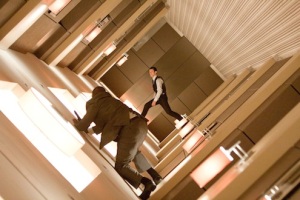
9) Joseph Gordon-Levitt floating through a dream hallway in Inception

Inception was a film full of excellent set pieces and memorable images but whenever I think about the movie, I will always see Joseph Gordon-Levitt floating through that hallway in a suit and looking rather adorable as he does it.

10) Cthulhu on South Park

Well, of course.

That’s just ten things I’m thankful for and I didn’t even start to talk about Scott Caan on Hawaii 5-0, James Franco in 127 Hours, or movies like Fish Tank, Winter’s Bone, and Never Let Me Go.  What are you thankful for?  Leave a comment, let the world know.  The best comment wins a renewed sense of peace and a happy new year.  (Please note that this is not a legally binding document.)