Film Review: The Chase (dir by Arthur Penn)


The Chase, a small-town Texas melodrama from 1966, opens with Robert Redford escaping from prison.

Redford is playing Bubber Reeves. Bubber, we’re told, has spent the last few years in a tough Texas prison, convicted of a murder that he didn’t commit. Now, he’s on the run and he’s probably returning to his hometown. His wife, Anna (Jane Fonda), still lives there, though Anna is now having an affair with Jake Rogers (James Fox). Jake is the son of the most powerful man in town, Val Rogers (E.G. Marshall). Jake also used to be Bubber’s best friend but now, he’s wracked with guilt about his affair with Anna.

Meanwhile, the townspeople are all worried that Bubber is going to seek revenge on the people who were responsible for him going to prison. Some of them know that he was actually innocent and some of them think that he’s actually the killer that he’s been made out to be but what they all have in common is that they’re worried about what Bubber’s gong to do when he shows up. Maybe they should have thought about the possibility of him getting mad and vengeful before they gave him a nickname like Bubber.

Anyway, Sheriff Calder (Marlon Brando) is convinced that Bubber is innocent but the townspeople still want him to allow them to gun Bubber down as soon as they see him. Sheriff Calder, however, is determined to keep the peace and make sure that the law prevails. He’s a man of unimpeachable integrity, working in a town full of people who are too cowardly to concern themselves with doing the right thing.

As everyone waits for Bubber to arrive. tempers come to the surface, a good deal of alcohol is consumed, and secrets are revealed. It all ends in tragedy, of course. One of the final scenes clumsily recreates the assassination of Lee Harvey Oswald. The Chase wouldn’t be an achingly self-serious film from 1966 if it didn’t.

There’s a few obvious problems with The Chase, the main one being that Robert Redford, who was 30 years-old when The Chase was released, looks surprisingly good for someone who has spent the last few years locked away in a tough Texas prison. Redford manage to escape from prison and run through a swamp without getting one single hair out of place. There’s nothing particularly dangerous about Redford in this film, which is surprising when you consider that The Chase was made just three years before Redford’s convincing turn as a laconic (if charming) killer in Butch Cassidy and the Sundance Kid. For The Chase to work, Bubber Reeves would have to be a force of nature but, whenever Redford’s on screen, you just find yourself wondering how someone who looks that good got stuck with a nickname like Bubber. The townspeople talk about Bubber like he’s a wild outlaw but Redford is just too laid back to pull it off. He comes across less like a wanted criminal and more like a California surfer who has somehow found himself in rural Texas.

As for the rest of the cast — well, there’s a lot of them. It’s a big ensemble film and good luck to anyone trying to keep track of who is related to who. Surprisingly enough, Marlon Brando is very convincing as a Texas sheriff, never allowing Sheriff Calder to turn into a stereotype. Less surprising is the fact that Robert Duvall, playing an frustrated husband, is also convincing in his role. Brando and Duvall, of course, would both go on to co-star in The Godfather. (Supposedly, when shooting of The Godfather began, Duvall was the only member of the cast with no fear of joking around with Brando, largely because they had bonded while working on The Chase.) Unfortunately, as good as Brando and Duvall are, they’re both let down in the hair department. Brando gets stuck with a hairpiece while Duvall is forced to go with a comb-over.

Some of the other performers are good and some of them are bad but none of them are particularly convincing as the residents of a small Texas town. James Fox, for instance, is very British. Jane Fonda and Angie Dickinson (cast as Calder’s wife) seem to be bored. E.G. Marshall is believably rich but never believably Southern. The other performers all tend to overact, especially once the people in town start drinking, shooting, hitting, and, in some cases, dancing. Somehow, Shelley Winters is not in the film, even though it seems like she should be.

The Chase was directed by Arthur Penn and written by Lillian Hellman. (The screenplay was based on a play and novel by Horton Foote.) Penn would follow up The Chase with Bonnie and Clyde and Alice’s Restaurant, two films that also dealt, for more successfully, with The Chase‘s themes of violence, community hypocrisy, and outlaw romanticism. Jane Fonda would go on to play Lillian Hellman in the 1977 film, Julia. For Julia, Fonda was nominated for an Oscar. For The Chase, she was not.

The Chase is one of those films that wants to say something important but doesn’t seem to be quite sure what. It’s a long and dramatic movie that doesn’t really add up to much. In the end, I think the main lesson to be learned here is not to allow your children to get a nickname like Bubber. There’s just no escape from a bad nickname.

Film Review: Short Eyes (dir by Robert M. Young)


Last night, fully intent on just viewing one movie before going to bed, I decided to watch the 1977 film, Short Eyes.

Why I thought that was a good idea, I’m not sure. Even though I didn’t know much about the film, I did know that it was a gritty prison drama that was written by an ex-con, filmed in an actual New York prison, and that a few prisoners appeared in small roles in the film. So, I really can’t claim that I didn’t realize that I was about to watch something that probably wasn’t going to be deal with particularly pleasant subject matter. I think my main reason for watching it, to be honest, was just that it had been sitting there on my Prime watchlist for nearly a year. My main motivation can be summed up as “If not now, when?” Of course, if I had know that “Short Eyes’ was apparently prison slang for someone who is a pedophile, I might have thought twice about watching.

The Short Eyes of the title is Clark Davis (Bruce Davison), a young man from a vaguely wealthy background who is being held on charges of raping a young girl. Clark is one of only three white men being housed in his cell block. As Clark soon discovers, everything in prison is determined by your race and what you’re accused of doing. As a white man, he’s already in the minority and, because he’s a “short eyes,” he soon discovers that not even the other whites are willing to watch his back. The only person who is vaguely sympathetic to Clark is Juan (Jose Perez), a longtime prisoner who is determined to not allow prison to turn him into an animal. Juan tells Clark that he needs to get a transfer to protective custody but it soon becomes apparent that’s not going to happen. The prison guards feel no obligation to protect Clark and Clark himself almost seems to have a death wish.

As Clark explains to Juan, he’s not sure whether he’s guilty or not. He says that he blacks out and sometimes, he’s not sure what he did. Clark thinks he’s innocent but, at the same time, he also confessed to Juan that he has molested other girls. Juan knows that Clark’s a dead man if he doesn’t get out of prison but he also know that, even if Clark is innocent this time, he won’t be in the future. When the other prisoners decide to kill Clark, Juan has to decide whether to let it happen or to risk his safety by trying to stop it.

Short Eyes is one of the most thoroughly unpleasant films that I’ve ever watched but that obviously was the point. This is a film about the reality of prison, that it’s a dirty, brutal, and inhumane place where the weak are targeted and anyone who goes against the system — whether it’s the system enforced by the guards or the even more important system created by the prisoners — will be punished. It’s not at all fun to watch but, if anyone wants to know why incarceration tends to just create hardened criminals as opposed to rehabilitating them, they should find some answers in the film’s portrait of prison life.

The film is based on a play and, in many scenes, it’s a bit too theatrical for its own good. Clark delivers a lengthy monologue about his previous actions and, while it’s well-delivered by Davison, it also goes on and on and you never quite understand why he’s opening up to Juan in the first place. (Juan, himself, angrily responds that he never asked to be Clark’s father confessor.) The scenes of the prisoners just hanging out and talking are also well-acted but again, they tend to drag on for a bit too long. Musicians Curtis Mayfield and Freddy Fender both appear as anonymous prisoners and both sing songs, which brings the film’s already uneven narrative momentum to a complete halt. Just as the inmates will never be able to escape prison, the film never escapes its theatrical origins. While the decision to film Short Eyes in an actual operating prison brings a good deal of authenticity to the production, the production’s staginess ultimately works against it.

At its best, this is a well-acted portrait of people trapped in a man-made Hell. Jose Perez gives an excellent performance and Bruce Davison will make your skin crawl as Clark, a character about whom most viewers will have very mixed feelings. Nathan George and Joseph Carberry are both properly intimidating as the heads of, respectively, the black prisoners and the whites.

This is definitely not a film to watch late at night, unless you’re actively trying to generate nightmares. (Of course, if that’s your goal, have it!) As for me, I stayed up an extra two and a half hours just so I could watch another movie after Short Eyes. As a result, I spent all of Saturday tired but I still think I made the right decision.

Music Video of the Day: Undisclosed Desires by Muse (2009, dir by Jonas & François)


When I watch this video, I get the feeling that Muse has been abducted by aliens and they’re being forced to perform in a sort of space casino. That’s the feeling I get from the production design and just the general look of the band. And really, when you think about it, it makes sense. If I was an alien looking for entertainment, I would definitely beam up Muse.

Enjoy!

Music Video of the Day: Funhouse by Mothica ft. Kailee Morgue (2021, dir by Bradley Wong)


I’m not going to say much about this video, beyond that fact that it reminds me — in a good way — of Jakalope. If Degrassi were still on the air (RIP), Mothica would definitely be playing during all of the big scenes.

Enjoy!

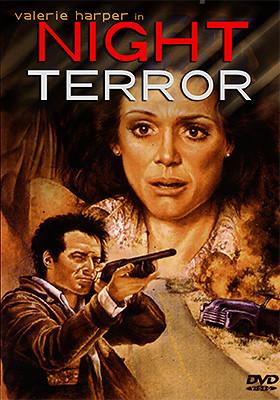
Film Review: Night Terror (dir by E.W. Swackhamer)


“There’s a killer on the road.

His brain is squirming like a toad.”

So sang Jim Morrison in the song Riders on the Storm. Now, whatever you may think of Jim Morrison and the Doors (personally, I think the music was good, Jim was pretentious as Hell, and I look cute in my Doors t-shirt), this is a perfect description of the character who is at the center of the 1977 film, Night Terror. He’s played by Richard Romanus and, in the credits, he’s simply called The Killer. The Killer spends his times driving up and down the highway, killing people seemingly at random. We never learn why exactly the Killer does what he does, though the film does offer up a few hints. For one thing, he has no voice. He carries an electrolarynx with him and holds it up to his throat whenever he wants to speak. Of course, he only does this two times in the film and, both times, it’s to basically howl with rage. In another scene, he can clearly be seen to be wearing military-style dog tags. Given when this film was made and the unfortunate popularity of the “deranged Vietnam vet” trope in the 70s and 80s, it’s easy to pick up on what exactly the film is implying.

Night Terror follows one night in the life of both The Killer and Carol Turner (Valerie Harper). Carol is just trying to get to Denver, where her son is in the hospital. When she sees a police officer pulling over a sports car for speeding, Carol decides to ask the cop for directions. Unfortunately, the sports car belong to The Killer and, as soon as the cop turns his back on him, out comes the shotgun. Carol slams down on the accelerator and speeds off, with the Killer pursuing her in own his vehicle. Unfortunately, Carol’s station wagon (which comes with wood paneling because, again, this is a movie from 1977) is nearly out of gas. What follows is a fairly tense game of cat-and-mouse, as Carol tries to hide from the Killer while the Killer stalks the highway, relentlessly searching for her. Along the way, a few familiar character actors pop up. John Quade is a homeless man living in a gas station. The great Nicholas Pryor is another motorist, one who proves to be not much help. Making things all the more dangerous for Carol is that the Killer knows what she looks like but she has no idea what the Killer looks like.

Night Terror owes an obvious debt to Steven Spielberg’s Duel and a host of other 70s car chase films. While Night Terror really can’t compare to the Duel, it does do a good job of creating and maintaining suspense. Fortunately, the film never makes the mistake of tying to turn Carol into some sort of badass action girl. She’s just an average person who has found herself in a terrifying situation and, as played by Valerie Harper, she’s never less than relatable. Richard Romanus, meanwhile, makes for a terrifying killer. The fact that he occasionally flashes a rather child-like smile only serves to make his single-minded pursuit of Carol all the more frightening. We never learn much about what’s led The Killer to becoming what he is but Romanus gives such an intense performance that we don’t need to understand him in order to be scared of him. He’s a nightmare come to life.

Night Terror ends on a somewhat awkward note, as if the filmmakers suddenly remembered that they were making a made-for-TV movie as opposed to a feature film. But, that said, Night Terror is an effectively scary and suspenseful road film. It can currently be viewed on YouTube.

Lisa’s Week In Television: 4/25/21 — 5/1/21


And what a week it was! This week was dominated by both the Oscars and the subsequently fallout. For myself, I’ll just say that I’ve never been so bored mentally and emotionally exhausted in my life. As I so often do while trying to process a fiasco, I distracted myself a bit with television. Here’s some thoughts on what I watched this week:

9-1-1 (Monday Night, FOX)

Why exactly I watch 9-1-1, I’m not sure. It’s a bit of a generic show. That said, I also get the feeling that it might secretly be a parody of the genre. Add to that, Jennifer Love Hewitt is in it and she will always be the ghost whisperer to me. Anyway, the show’s back. This week’s episode featured someone impaled to a house. Fortunately, they survived.

9-1-1: Lone Star (Monday Night, FOX)

Unlike it’s companion show, there’s no secret about whether or not 9-1-1: Lone Star is meant to be a parody. It definitely is. It was also apparently made by people who have never spent more than a few hours in Texas. That said, I’ll watch the show just in case another volcano erupts in Austin. This week, some dumbass blew up his apartment.

Allo Allo (Sunday Night, PBS)

The search for the painting continued as everyone tried to get it out of the general’s chateau before he accidentally ate it. No, it didn’t make much sense but, as I’ve said before, that’s kind of the charm of this show.

Baywatch (Weeknights, H&I)

On Sunday, I watched two episodes as I prepared for the Oscars. It was a two-parter, which was certainly convenient. That said, with my mind obsessed with the upcoming Academy Awards, I didn’t really pay that much attention to them. I think half of the lifeguards were at Sea World and Pamela Anderson was trying to communicate with a dolphin. Meanwhile, back on the beach, Mitch was trying to teach an old friend about responsibility. Meanwhile, Summer and Matt investigated a haunting or something like that. A lot was going on but I’d be lying if I said any of it made much of an impression.

On Monday, the first episode featured special guest star Carrie-Anne Moss as a woman with dissociative identity disorder who ended up drugging Mitch and holding him hostage. Not initially realizing that the woman he was dealing with had two personalities, Mitch originally assumed that she just had a twin sister. Mitch wasn’t that smart this episode. While Mitch was dealing with all of that, Matt was dealing with shark-related nightmares. Summer thought that the nightmares was indicative of larger concerns but personally, I think it makes sense that a lifeguard would be scared of sharks. The second episode featured Mitch falling for a woman who turned out to be a poisoner. Again, it was hard not to feel that Mitch might not be very smart.

On Tuesday, the first episode was a weird meta episode where a sleazy TV producer tried to make a show based on the lives of the Baywatch lifeguards. Of course, the show was turned down because the network execs didn’t think anyone would ever want to watch a show about lifeguards. They used the same joke in the No Hope With Dope episode of Saved By The Bell. The second episode featured a lot of country music so I didn’t really pay much attention to it.

On Wednesday, the first episode featured the lifeguards standing up to a bunch of bureaucrats who wanted to cut Baywatch’s budget! Needless to say, it was time for everyone to have a meeting on the beach and offer up testimonials about all the lives they had saved. This led to that most dreaded of all episodes …. a clip show! After several flashbacks to previous episodes, the bureaucrats decided not to cute funding so no one lost their job. In the second episode, Stephanie had to put a cocky members of the Coast Guard in his place.

On Thursday, this first episode of the night featured yet another Baywatch hostage situation, though this time it was Matt who was stupid enough to fall for a con artist while Mitch was the one who got to save the day and pretend like the exact same thing hadn’t happened to him just four episodes ago. The 2nd episode was apparently the start of a new season for Baywatch because Alexandra Paul chopped her hair, Nicole Eggert and Kelly Slater were suddenly no longer on the show, and Yasmine Bleeth and Jaason Simmons were the newest members of the Baywatch team. This episode featured Mitch nearly getting back together with his ex-wife. This is something that seemed to happen every few episodes or so. Needless to say, things did not work out.

Friday brought us two episodes that didn’t add up too much, even by Baywatch standards. First off, one of the old Baywatch lifeguards came back and …. well, that’s pretty much it. He hung out and he talked to Mitch and he apparently let CJ know that it was okay to date Matt. It was a weird episode. The second episode of the night featured Mitch and Stephanie talking about their relationship. It featured flashbacks to the previous episode where they discussed their relationship.

Finally, on Saturday, it was time for yet another rookie class to graduate. Conceited Logan was assigned to work at Baywatch, despite the fact that he broke Caroline’s heart. Caroline was so upset that she nearly let a little girl drown. Fortunately, since Caroline is Stephanie’s younger sister, there were no consequences. I guess the message here is that it’s always good to be related to the boss.

Flight of the Conchords (HBOMax)

Both seasons of Flight of the Conchords are available on HBOMax! (I’ve also got both of them on DVD, thanks to a friend who sent them to me as a gift a few years ago.) On Wednesday, I watched three episodes, two before the Biden talk-a-thon and then one after. From Season 1, I watched the touring episode, the new fans episode, and — my personal favorite — the actor episode. Though it’s been a good 12 years since Flight of the Conchords aired its final episode, the show’s humor holds up brilliantly. How can you not love Bret, Jermaine, and Murray? Mel, girl, I know exactly what you were going through.

The Floor is Lava (Netflix)

I watched a few more episodes. The floor never actually became lava.

Gangs of London (Sunday Nights, AMC)

I watched episodes 3 and 4 of Gangs of London on Wednesday night. I still have no idea what’s exactly going on, beyond the fact that the series follows a bunch of gangs in London who always seem to be shooting at each other. That said, this show is so stylish that you really don’t have to understand everything that’s happening for it to hold your attention. I know one character is an undercover cop. I know that the gangs are in turmoil because someone murdered the longtime head of the British mob and his sociopathic son has taken over his operations. And I know that everyone is basically trying to kill everyone else. It’s brutal and disturbing but, at the same time, compulsively watchable.

Hill Street Blues (Weekday Morning, H&I)

I missed ten episodes while I was up at the lake. I rejoined the series this week and I discovered that it didn’t really matter. There’s a few new detectives. There’s a new roll call sergeant. But otherwise, life on Hill Street never changes. Gangs, crimes, and dark humor abound.

The first of Tuesday’s episodes featured an uptick in a gang activity. Somewhat hilariously, the Hill is home to a gang of Irish hooligans who call themselves The Shamrocks and, even though gangs was obviously a serious problem in the 80s and it’s still a serious one today, it’s just hard not to laugh when you hear sentences like, “The Shamrocks aren’t going to stand for that.” There was also a subplot about one of the new detectives trying to help a young prostitute and veteran Detective Belker taking his anger over his relationship troubles out on an informant. The second episode featured a rapist who pretended that he couldn’t speak English. At the end of the episode, Detective Patsy Mayo went undercover, got him to speak in English, and the shot him in the dick when he tried to run away. That was cool and well-deserved.

Wednesday’s first episode featured an interesting story about a police officer who rescued several people from a burning apartment building. Only after he had been lionized by the press and the police chief was it discovered that he was actually the one responsible for setting the fire! This episode also featured the show’s public defender accepting a job with the D.A.’s office. During Wednesday’s second episode we met her replacement …. FRANCES MCDORMAND! That’s right, future three-time Oscar winner Frances McDormand had an early role on this show. The episode in which she first appeared aired on January 24th of 1985, which was about a week after Blood Simple opened in theaters. (Because of the whims of the independent film world, Blood Simple was filmed in 1982 but it didn’t actually get a theatrical release until two and a half years later.)

McDormand wasn’t the only future Oscar nominee to appear this week in reruns of Hill Street Blues. The first of Thursday’s two episodes featured a brief appearance from Jennifer Tilly as a mob widow-turned-singer named Gina. The majority of the first episode dealt with former public defender Joyce Davenport struggling to adjust to working in the DA’s office and discovering that her job is now to ruthlessly prosecute the poor as opposed to defending them. It was a theme that was handled well overall, even if Joyce’s shock at being expected to do her job did seem bizarrely naïve. The second of Thursday’s episodes dealt with the sleazy chief of police sexually harassing Detective Patsy Mayo. Mayo is a new character, one who I assume was introduced while I was on vacation. I can’t help but notice that nearly every storyline that’s involved her this week has dealt with her being sexually harassed and ended with her graciously accepting what seems like a rather weak apology from her harasser. Of course, these episodes originally aired in 1985.

The first of Friday’s episode found public defender Frances McDormand manipulating the system in order to allow an abusive boyfriend back out on the streets. Meanwhile, Jennifer Tilly helped the detectives take out a mobster and she started a romantic relationship with Lt. Henry Goldblume, much to the irritation of Detective Harry Garibaldi. The second episode discovered Henry totally in love while Harry continued to throw a fit and bitch to anyone who would listen about how Jennifer Tilly should have been calling him up for afternoon hotel sex. The second episode featured an interesting subplot in which the sleazy chief of police and his precinct captains attended a group therapy session to work on their working relationship. Needless to say, things did not go well. Meanwhile, Lt. Howard Hunter dealt with a hostage situation and patrolmen Andy Renko and Bobby Hill attempted to go about their duties despite accidentally getting stoned beforehand. The second episode was directed by Mark Frost, who later went on to collaborate with David Lynch on Twin Peaks.

Finally, on Saturday morning, we had two episodes, both of which were jam-packed with guest stars. Along with Frances McDormand and Jennifer Tilly, the first of Saturday’s episodes featured Brent Spiner as a porno director and the great character actor Nicholas Pryor as an anti-abortion activist. Both of Saturday’s episodes centered around the character played by Frances McDormand being lousy at her job. McDormand did a great job in the role, offering up little clues that her character’s issues had more to do with cocaine than just incompetence.

And that’s life on the Hill!

House Hunters (Tuesday Night, HGTV)

She really, really wanted to live in the city. He really, really wanted to live in the suburbs. In the end they went with …. the house that cost the least. For all the drama of “I want a big back yard” and “I want to be able to walk downtown,” everyone ultimately goes for the house that costs the least.

House Hunters International (Tuesday Night, HGTV)

It was the exact same situation as in House Hunters except, this time, they were looking for a house in Mexico. They found a nice one, which was good.

The Office (All The Time, Comedy Central)

On Tuesday night, Comedy Central was showing post-Steve Carell episodes of The Office. The episode I watched was a weird one where Pam framed Meredith for having head lice and where Darryl went from being his usual confident self to being someone who couldn’t even handle being in the same room with Val, the new warehouse manager. Like most of the episodes from the post-Carell era, It was odd and weird and felt not at all right.

The Old Guys (Sunday Night, PBS)

This week, Sally went to the hospital to get knee surgery and the old guys competed to see who could be the best visitor. Of course, neither was a very good visitor though they did end up befriending an old man named Norris. Norris asked them to take him to a friend’s funeral. Of course, they ended up at the wrong funeral, which is something they discovered after propping up the corpse in the casket so that the wheelchair-bound Norris could get one last look at his “friend.” (“That’s not Mack!”) It was funny but kind of sad. Watching this episode, I realized that I’ll probably have to get surgery on my ankle in another 40 years or so.

Open All Hours (Sunday Night, PBS)

On this week’s episode, Granville continued to try to suppress his crippling depression while Arkwright continued to cheat his customers. I honestly thought this might be the episode in which Granville snapped and went on a killing spree but, fortunately, he managed to hold it together.

The Oscars (Sunday Night, ABC)

I reviewed The Oscar ceremony here.

The Presidential Address (Wednesday Night, Fox)

I watched it but there’s no way in Hell that I’m going to review it.

Storage Wars (Tuesday Night, A&E)

Being on vacation last week, I totally missed the 13th season premiere of Storage Wars. So, you can imagine my shock when I watched the first of this week’s new episodes and I discovered that Brandi and Jarrod had split up! Well, actually, I don’t know if I would say I was really shocked. To be honest, it always seemed like there was a lot of passive aggressive anger in that relationship. So, Brandi has a new friends to shop for storage lockers with and I guess Jarrod will return in a few episodes as a special guest villain. Who knows? I also noticed that Dave Hester is apparently no longer with the show. I’ll miss the sound of “Yuuuuuuup!”

I wrote the paragraph above while watching the 1st episode of the night. In the second episode of the night, Jarrod showed up but Brandi did not. Of the two of them, Brandi works better as a solo act than Jarrod does.

Upstart Crow (Sunday Night, PBS)

This week, Will wrote and published his final sonnets, just to discover that his wife did not appreciate him writing poetry about the dark lady and that the local authorities considered his words about the fair youth to be illegal and blasphemous. Fortunately, Kit Marlowe was able to get Shakespeare off the hook (or, at the very least, off the rack) by pointing out that it was probable that no one would ever voluntarily read any of Will’s poetry.

The Voice (Monday Night, NBC)

As I watched the show this week, I found myself thinking about how funny it would be if one of the singers got possessed by the demon from The Exorcist. “How do you like my voice now!?”

Yes, Minister (Sunday Night, PBS)

A typical episode of Yes, Minister ends with Sir Humphrey getting the better of Jim so it’s always fun to see an episode in which the opposite happens and Jim actually gets the better of Sir Humphrey. Last night’s episode started with Humphrey browbeating Jim over condemning a constituency that, though well-run, had failed to fill out all of the required paperwork at the right time and it ended with Sir Humphrey sheepishly admitting that, as a junior civil servant, he was responsible for a mistake the subsequently cost the government 30 million pounds. As usual, it was all wonderfully performed by Nigel Hawthorne, Paul Eddington, and Derek Fowlds. Though the show is older than me, it’s still the perfect antidote for today’s big government era.

Music Video of the Day: Church by Tina Arena (2021, dir by Matt Sharp)


Today’s music video of the day is the latest from the amazing Tina Arena.

This very atmospheric video finds Tina surrounded by desolation, singing about the sins of the past or perhaps the mistake of the present or even the hope of the future. Judging from this video, it’s time to confess and seek absolution. Or perhaps it’s not. Like all good songs and videos, it’s all open to interpretation. This video feels like it could have come from the mind of Peter Weir or Nicolas Roeg. It has an unmistakable Walkabout and Picnic at Hanging Rock vibe.

We need to start some sort of petition to demand that Tina be hired to do the next Bond theme song, I think.

Enjoy!

Film Review: Godzilla vs. Kong (dir by Adam Wingard)


From the minute Godzilla vs. Kong was announced, I’ve been rooting for Godzilla.

I’m probably not alone in this. I mean, let’s just be honest. King Kong seems like he means well and certainly, he’s had to deal with enough dumbass humans that it’s impossible not to feel some sympathy for him. But, in the end, King Kong is just a big monkey whereas Godzilla is an atomic, fire-breathing lizard who only protects Earth because he can’t stand the thought of anyone else destroying it before he gets the chance. King Kong is cool but Godzilla is a freaking badass. (It’s not a coincidence that literally everyone hates the fact that the original, Japanese-produced King Kong vs. Godzilla ended with King Kong winning.) One of my main hopes when it came to Godzilla vs Kong was that Godzilla would be declared the rightful winner of this battle of the Titans.

Obviously, I can’t tell you whether or not my hope came true, not without spoiling the film. (That said, it’s probably debatable just how much you can really spoil a film like Godzilla vs. Kong.) I can tell you that the title of the film is accurate. Kong and Godzilla meet and they fight, a total of three times. Buildings are climbed and destroyed. Radioactive fire is spewed across the Earth. The monkey and the lizard do not team up to conquer climate change. The climatic battle takes place in a city and many people are undoubtedly killed as a result but no one ever mentions anything about any of them so you’re free not to worry about them. Though the film doesn’t quite have the same charm as the sight of two men in rubber monster suits tossing miniature trees at each other, the CGI and the fight scenes are all undeniably well-done. As far as the film’s actual story goes, it’s all pretty dumb and it has none of the subversive bite of director Adam Wingard’s pervious films but Godzilla vs Kong is still undeniably entertaining. Those who have commented that there’s not much subtext to Godzilla vs Kong have a point but that’s actually a huge part of the film’s appeal. After a year of pop culture that was marinated in doom and gloom, there’s something undeniably appealing about a film that says, “Sit back, enjoy, and don’t worry about a thing.”

(I saw one negative review of Godzilla vs Kong that complained that the film didn’t have a strong environmental message, as if the filmmakers should have stopped the action so that Greta Thunberg could show up and shout “How dare you!?” at the two monsters.)

Of the two stars, Kong gets the most screentime, despite the fact that Godzilla is the more interesting of the two monsters. There are also humans in the film, played by recognizable performers like Alexandar Skarsgard, Rebecca Hall, Kyle Chandler, Millie Bobby Brown, Demian Bichir, Julian Dennison, and Brian Tyree Henry. All of the humans have their own reasons for being concerned about Kong’s fight with Godzilla but, to be honest, you really won’t care. Regardless of the talent of the individuals playing them, the human characters really aren’t important and the film is at its weakest when it tries to convince us that they are. This is a film you watch because of the monsters and it works best when it focuses on them.

As I sit here writing this, Godzilla vs Kong is on the verge of leaving HBOMax. However, it’s still playing in theaters, which is the idea way to watch an effects-driven film like this one. It’s the first true blockbuster of the post-pandemic era. Hopefully, it’ll be the first of many.