This 1970 film, which was heavily influenced by Clint Eastwood’s Spaghetti westerns, featured a soundtrack from Ennio Morricone. It only seems appropriate that his excellent work should also provide us with our song of the day.
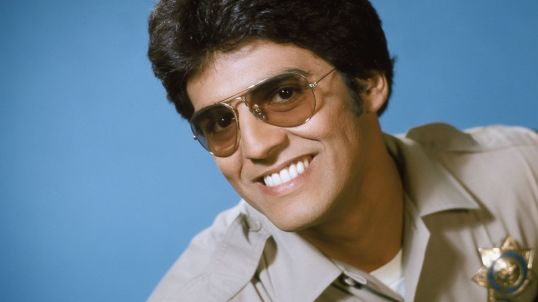
Welcome to Late Night Retro Television Reviews, a feature where we review some of our favorite and least favorite shows of the past! On Mondays, I will be reviewing CHiPs, which ran on NBC from 1977 to 1983. The entire show is currently streaming on Prime!
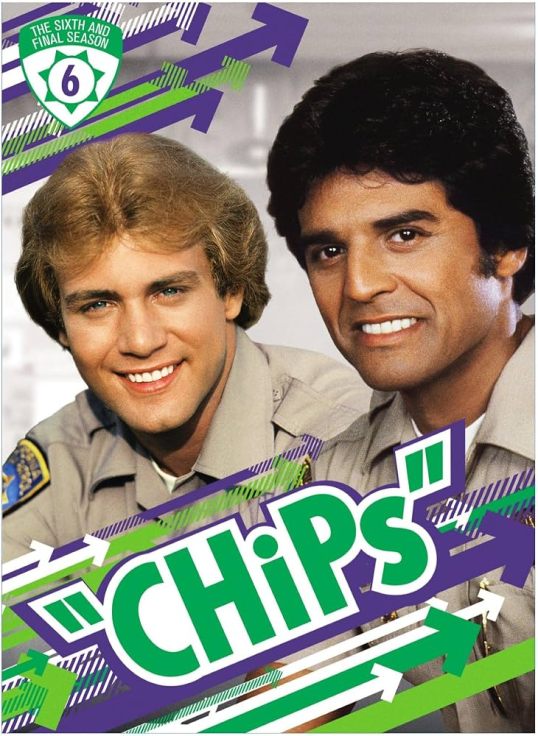
This week, it’s all about sibling rivalry and crashing cars.
Episode 5.18 “In The Best of Families”
(Dir by John Florea, originally aired on February 21st, 1982)
Getrear is not in a good mood.
He’s got a big inspection coming up but the members of the Highway Patrol keep screwing up. Bonnie’s patrol car is stolen while she’s on a coffee break. Baricza’s car is stripped of its lights and its CHP insignia. Ponch and Baker chase the thieves but somehow never manage to catch them. Finally, someone breaks into Getraer’s dry cleaner’s place and steals two of Getraer’s uniforms.
The Highway Patrol is squabbling, as all families do. They worry that Getraer is angling for a promotion and that they’ll have to “break in a new sergeant.” Fortunately, Getraer isn’t planning on going anywhere. Ponch, Baker, Bonnie, Turner, Grossie, Harlan, and Bear all get to keep their surrogate father figure.
Meanwhile, a real family is fighting. Anne Francis has planned the perfect armored car robbery. Now, she just needs her teenaged sons (Michael Morgan and Timothy Patrick Murphy) to steal a patrol car and some uniforms….
This episode had a pretty silly story but that doesn’t matter because it also featured some truly spectacular stunt work. The first crash occurs on a freeway and involves so many cars that it almost becomes a symphony of destruction. A reporter assures us that no one was killed or even seriously injured in the accident but having watched it (in slow motion), I’m not really sure how that could be true. Later, Turner’s car goes flying over a hillside and again, it’s such a spectacular crash that I’m shocked Turner was able to step out of the wreckage.
This was definitely an episode for those of us who enjoy watching spectacular car destruction. This was a pure demolition derby and entertaining in the mindless way that those often are. Even the best families enjoy automotive mayhem.
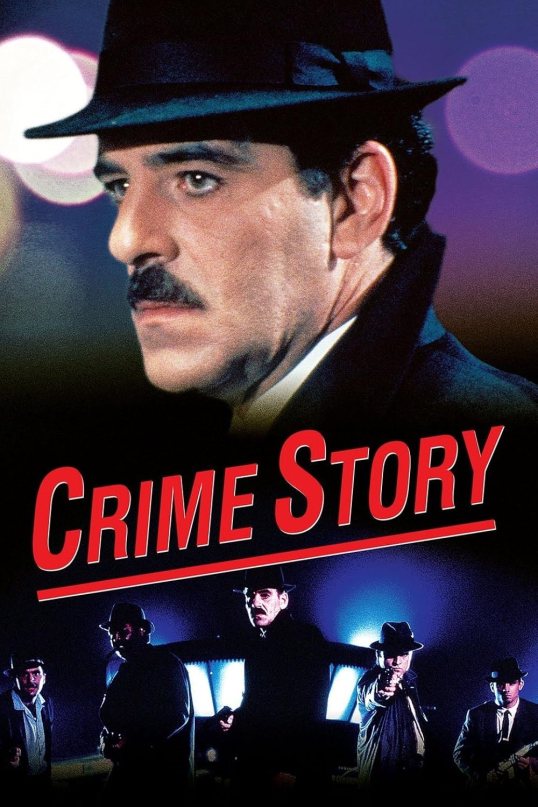
Welcome to Retro Television Reviews, a feature where we review some of our favorite and least favorite shows of the past! On Mondays, I will be reviewing Crime Story, which ran on NBC from 1986 to 1988. The entire show can be found on Tubi!
This week, Torello and company search Chicago for a serial killer.
Episode 1.2 “Final Transmission”
(Dir by Leon Ichaso, originally aired on September 19th, 1986)
Mike Torello and the members of the MCU would really like to go after Luca and his crew but, unfortunately, there’s a serial killer on the loose in Chicago. Realizing that the MCU is going to be tied up trying to track down Ray Pernell (John Snyder) before he kills again, Luca orders his crew to commit even more robberies. Luca explains to a crestfallen Paulie that Luca will no longer be taking part in the robberies. Luca is the boss and the boss doesn’t get his hands dirty. Instead, Luca spends most of this episode meeting with Murray Weisbord’s man in Chicago, Max Goldman (Andrew Dice Clay).
This was an odd episode. On the one hand, the show went out of its way to recreate Chicago in the early 60s. The soundtrack was early rock and roll. The cars all had tailfins. The suits, the cigarettes, Luca’s haircut, all of the details screamed 1960s. But then the episode revolved around a serial killer who thought his mother was addressing him through the television and who looked and dressed like a late 70s punk rocker. I assume that Ray Pernell was based on Richard Speck, the notorious Chicago serial killer who, in 1966, murdered 8 student nurses. Like Speck, Pernell had an identifying tattoo and both men were traced through the National Maritime Union. That said, Pernell just seemed so out-of-place, with his sleeveless shirt and his punkish haircut that he just didn’t seem to belong in the world of Crime Story.
That said, I will give this episode some credit. In the pilot, Luca often seemed like a clueless punk. In this episode, he quickly realized that the MCU would be too busy hunting for Pernell to devote much time to him and he took advantage of that fact. Luca’s not quite as dumb as he sometimes seems. This episode also showed that he was capable of thinking ahead. When he suspects that someone is listening in on his conversation with Goldman, he resists the temptation to burst into the room next door with his gun drawn. (If he had, he would have run straight into Torello and Danny.) This episode shows that Luca is learning and growing. He not the buffoonish hothead that Torello originally assumed him to be. In fact, he’s even more dangerous.
This episode ends with Pernell somehow (it’s not really clear how) taking an entire television news broadcast hostage. Torello takes him down as the cameras roll and the entire city of Chicago watches. It’s not a bad ending but it just doesn’t feel right for the show. It’s a Miami Vice ending. This is Crime Story!

Just like November is Charles Bronson month in my house, May is Chow Yun-Fat month. My favorite living actor, Chow made so many good movies during his Hong Kong heyday, he made a few good movies here in America, and he’s still working to this day! This year I plan on revisiting some of his lesser known films and sharing my thoughts on them with you. I don’t know how many reviews I’ll have time to write, but I’m certainly looking forward to the movies! To kick off the month, I decided to revisit PEACE HOTEL, which was the last Hong Kong film that Chow starred in prior to making his English language debut with THE REPLACEMENT KILLERS in 1998.
PEACE HOTEL is a Chinese “western,” which is certainly different for Chow Yun-Fat who made his name by playing heroic gangsters and badass cops. Even though it’s not a movie I revisit often, its uniqueness in his filmography is something I enjoy when the right mood hits. The story setup, which is credited to Chow, is classic. Chow plays the notorious “killer,” a reformed man who has set up a remote “hotel” where violence is never allowed, no matter who you are or who’s after you. When a desperate woman shows up at the hotel, with a horde of outlaws right behind her, the rules are tested. The outlaws set up shop just outside the gates of the hotel and give the residents a few days to get out, or they’re all going to die. Considering they’ll have to go through the killer, things are certainly going to get interesting.
Fans of westerns and samurai films will recognize many of the story elements, but I’d have to say that this movie is less about originality and more about establishing a mythic mood. Director Wai Ka-Fai plays up the legend of the killer, so there’s a lot of setup to get through. This does require some patience for those used to the star’s wall to wall action-fests with director John Woo. Let’s just say the action is used sparingly, but when it comes, it’s good stuff.
Chow Yun-Fat carries the film effortlessly. His charisma, toughness and charm is fully on display whether he’s horsing around with a small child, romancing the beautiful Cecilia Yip, or dispatching throngs of bad guys with his blade. The role certainly isn’t flashy, but he’s just so cool. Nobody can portray a noble killer as well as Chow Yun-Fat.
PEACE HOTEL is currently playing on Tubi. When I first saw the film back in the 90’s, I remember a sequence where Chow Yun-Fat slides down a ladder while mowing down bad guys with a machine gun. That sequence is not included in the cut playing on Tubi, which is a little disappointing for me. Still, the film has so much going in its favor, that I still give it an easy recommendation. It may not be balls-to-the-wall action like THE KILLER, FULL CONTACT or HARD BOILED, but I’ll definitely be reaching for PEACE HOTEL again someday when I’m in the mood for something different than your typical action film.
If you want to celebrate the 4th of May but you really don’t feel like sitting through any of the Star Wars films (especially now that you know that Leia, Luke, and Han’s struggle was pretty much for naught), here are ten other sci-films that will keep you entertained without ruinng your childhood memories!
Happy May 4th!
Enjoy!
Welcome to Late Night Retro Television Reviews, a feature where we review some of our favorite and least favorite shows of the past! On Sunday, I will be reviewing the Canadian series, Degrassi: The Next Generation, which aired from 2001 to 2015! The series can be streamed on YouTube and Tubi.
This week, JT is still alive.
Episode 2.15 “Hot For Teacher”
(Dir by Philip Earnshaw, originally aired on July 25th, 2003)
Class clown J.T. is given a week of after school detention with Ms. Hatzilakos. J.T. discovers that Hatzilakos is more than just a hot teacher and Ms. Hatzilakos tells J.T. that he’s capable of being more than just an obnoxious kid. They bond while taking care of a pregnant gerbil. But then, during class, JT stuffs some balloons up his shirt and pretends to be Ms. Hatzilakos. It gets a laugh from Jimmy but, when Ms. Hatzilakos catches him, she is not amused.
These early JT stories are always rather childish, largely because JT himself was a rather immature character. Eventually, by the time season 5 rolled around, JT would have a pregnant girlfriend and a side hustle selling drugs and he would become a much more interesting character. And, of course, he would eventually end up getting stabbed to death outside of Emma’s house. But that’s all far in the future….
Seriously, though, it’s impossible to watch a JT episode without thinking, “Hey, that kid is going to die in a scene that was probably too graphic for a high school show.”
As for the B-plot of this adequate but not particularly memorable episode, Spinner and Jimmy decide to always be brutally honest with each other. It doesn’t last for long. They should have tried to get Marco in on the pledge. Now, that would have been some drama!
Welcome to Retro Television Reviews, a feature where we review some of our favorite and least favorite shows of the past! On Sundays, I will be reviewing Homicide: Life On The Street, which aired from 1993 to 1999, on NBC! It can be viewed on Peacock.
This week, a special guest star ends up in the Box.
Episode 5.8 “The True Test”
(Dir by Alan Taylor, originally aired on November 22nd, 1996)
At the end of this week’s episode, Pembleton finds out that he has finally passed his firearms exam and he’s been cleared to return to active duty. Excusing the suspension of disbelief necessary to buy that Pembleton has recovered that quickly from his stroke, it’s a good thing that Pembleton and Bayliss will be working together again. Because, seriously, Bayliss spent this episode acting like an unprofessional ass.
There’s been a murder at the exclusive Larchmont Academy. Fifteen year-old Marshall Buchanan, the only black student at the entire school, has been found on the athletic field, stabbed to death. It’s Lewis’s case but his temporary partner, Bayliss, takes charge. Bayliss is convinced that Marshall was killed by a student and that the killing was racially motivated. Bayliss is rude to the headmaster. He’s rude to Marshall’s 12 year-old roommates. He gets angry in the cafeteria and starts banging his hand on a table while everyone is trying to eat. Lewis finally asks Bayliss what his problem is. Bayliss explains that he grew up near Larchmont. His cousin desperately wanted to go to Larchmont but was rejected because he wasn’t from an old money family. Bayliss has never forgotten the way his cousin cried after getting his rejection letter.
Hey, Bayliss, you know what?
Big freaking deal. None of that matters!
Your cousin wasn’t accepted?
Oh, boo hoo. That has nothing to do with the case!
Usually, I like Bayliss and, even more importantly, I like Kyle Secor’s performance as Bayliss. But, in this episode, Bayliss was just kind of whiny. Pembleton would have told him to knock it off. Lewis just ignores him.
Bayliss is right about one thing. The murderer is a student, a 17 year-old sociopath named McPhee Broadman. (Seriously, Homicide, you couldn’t have come up with a less on-the-nose name?) McPhee is a sociopath who is looked up to by a bunch of the younger students. His mother (Sagan Lewis) is a judge and therefore, he thinks he’s untouchable. McPhee is played by a young Elijah Wood and Wood, it must be said, gives a chilling performance as the young murderer. Towards the end of the episode, a smirking McPhee confesses to the crime. Even after hearing him confess and say that he wants to kill her, McPhee’s mother still immediately starts making plans to defend him and to suppress his confession.
And she’ll probably succeed. Bayliss has an obvious personal issue with McPhee. And, as far as I could tell, neither Bayliss nor Lewis bothered to Mirandize him before interrogating him. Way to let a murderer back out on the streets, guys!
Seriously, thank God Pembleton is back.
As for Kellerman, he is still on restricted duty but he did buy Dr. Cox a drink at the Waterfront and it’s kind of easy to see where things are heading with those two. But if Pembleton can recover from a stroke in eight episodes, Kellerman can beat those bribery charges. I have faith.

My wife loves Hallmark movies and a handful of other movies that she tends to want to watch over and over again. That list of movies includes DIE HARD, VOLCANO, STRIKING DISTANCE and THE NEGOTIATOR. Every time we go to the family cabin for a weekend getaway, she insists that I pack our DVD of THE NEGOTIATOR to watch at some point over the weekend. It’s fair to say I’ve watched the film at least 10 times over the last 10 years or so, and I really do enjoy it. Did you know that filmmakers in Hong Kong remade THE NEGOTIATOR back in 2024 under the title of CRISIS NEGOTIATORS? It’s produced by superstar Andy Lau, who does a cameo. It’s directed by Herman Yau, who’s directed such successful and diverse films as THE UNTOLD STORY and the SHOCK WAVE franchise. It stars two of the best Hong Kong actors of the last 3 decades in Lau Ching-Wan & Francis Ng. Of course I had to see it!
If you’ve seen the original film, there aren’t a lot of surprises in CRISIS NEGOTIATORS. Lau Ching-Wan plays Man Wai, an expert police negotiator. After celebrating his latest birthday, he gets a message to meet a friend and co-worker whose investigation into thefts from the “Police Welfare Fund” seems to implicate fellow members of the police force. When he shows up at the meeting, his friend has been murdered and the cops are soon on the scene. Arrested and determined to prove his innocence, Man Wai escapes custody and makes his way to the Internal Investigations Unit. He takes his own set of hostages, one of which may be involved in taking money from the Police Welfare Funds. He has an interesting request… I’ll only talk to Tse Ka Chun (Francis Ng). Chun, a former police negotiator who left the force to become a social worker, is soon on the scene. As Man interrogates the hostages and talks to Chun, it becomes apparent that he’s been set up. But will he live long enough to expose the real killers?!
As a huge fan of Hong Kong cinema, and after having seen THE NEGOTIATOR so many times, I thought it would be fun to compare the two films and look for things that stand out in the Hong Kong version. CRISIS NEGOTIATORS opens with a particularly interesting sequence where an unstable couple armed with knives takes the workers of a family services center hostage. It seems that their young son has been forcibly removed from their home and they want him back. Man Wai (Lau Ching-Wan) and Chun (Francis Ng) work together to try to resolve the situation. What makes this opening unique is that the actor playing the unstable man is Andy Lau, a true superstar of Hong Cinema and entertainment in general (he’s one of the 4 “Heavenly Kings of Cantopop). Lau is one of the producers of the film, so it makes sense he threw a little of his star power in front of the camera, even if the cameo is the exact opposite of many of his roles. In English language terms, it would be like Brad Pitt or Leonardo DiCaprio being in the opening scene of THE NEGOTIATOR.

Another difference in the two films that I really appreciate is the character of Tse Ka Chun, played so well by veteran Hong Kong star Francis Ng. As good as Kevin Spacey is in THE NEGOTIATOR, I really appreciate the tweaks made for the Hong Kong version to Chun. In this version, Chun reluctantly comes back to help the police in this specific situation. He has dedicated his life to helping the poor and unfortunate souls who have found themselves on the lowest rungs of Hong Kong society. In other words, he’s just a really good guy. There are a couple of sequences where he interacts with this poor beggar of an old granny that makes my heart swell as he treats her with kindness and dignity while others do not. It also provides a hilarious payoff at the film’s conclusion.
Lau Ching-Wan is great in the central role of Cheuk Man Wai. A 4-time winner (and 18 time nominee) of the Hong Kong Film Award for Best Actor, Lau is simply one of the best actors working in Chinese language cinema. While I don’t give him an edge over Samuel Jackson’s intense performance in the original film, Lau brings his talent to bear in the role and doesn’t miss a beat. Other performances that stand out to me are provided by veterans like Michael Miu as a corrupt superior officer and Kent Cheng as the older cop in charge of everything. Cheng’s character and performance isn’t anything special, but I just enjoy seeing him on screen. One character who can’t be replaced in the original movie is the smarmy Internal Affairs officer played by the late, great J.T. Walsh. Walsh was truly a one-of-a-kind talent, and I don’t think anyone else can do what he did so well. Veteran Hong Kong actor Michael Chow gives a solid turn as the corrupt II agent here, but it’s just too much of an uphill climb. Man Wai’s hostages are pretty good as well, but can’t really compete with the memorable work by Siobhan Fallon Hogan and Paul Giamatti in the original.
CRISIS NEGOTIATORS would have no chance to work if it didn’t capture some of the intensity of the original film, and I think it was largely successful in that endeavor. Director Herman Yau does a fine job, and I did find myself really getting into the film as the pressure ratcheted up on the main characters. With that being said, outside of a couple of changes, the film sticks pretty close to the original so fans will definitely be in very familiar territory.
The primary purpose for making CRISIS NEGOTIATORS was to take the excellent story of THE NEGOTIATOR into the lucrative Chinese language market. It had a respectable box office return in the summer of 2024, bringing in around $22 million in mainland China and around $11 million HK dollars in Hong Kong. With good, but not great numbers, the film mostly fulfills its purpose. At the end of the day, CRISIS NEGOTIATORS won’t replace THE NEGOTIATOR on my watch list, but I still enjoyed it very much. I appreciate the cinema and stars of other parts of the world, and this remake was time well spent!
CRISIS NEGOTIATORS is currently streaming on Tubi.