October Positivity: Revelation Road 2: The Sea of Glass and Fire (dir by Gabriel Sabloff)


Eric Roberts is in this!

That, in itself, isn’t a surprise.  Eric Roberts was also in the first Revelation Road.  He plays the same role in the 2013 sequel.  Roberts is Sheriff Jenson, the not particularly religious sheriff who has to deal with a town that’s gone mad in the wake of the Rapture.  Over the course of one night, dozens of people (including Jenson’s mother) vanished as their souls flew into the air.  Jenson isn’t sure what happened but he knows that there is panic in the streets and that there is also a crazed motorcycle gang to deal with.  In the first film, Roberts was onscreen for maybe two minutes.  He gets closer to five minutes in Revelation Road 2 and you know what?  it’s always nice to see Eric Roberts!

As for the rest of the film, it picks up where the previous one ended.  Josh McManus (David A.R. White) is trying to get home to his family while also resisting the urge to become a killer.  It’s not easy.  Flashbacks reveal that Josh was actually brainwashed by the CIA to be a remorseless killer.  He’s haunted by a mission in the Middle East and the amount of people he killed over there.  He’s joined in his drive home by Beth (Noelle Coet), a teenage girl who has been sent by Jesus himself (Bruce Marchiano) to help guide Josh in the right direction.  Pursuing Josh is the fearsome Hawg (Brian Bosworth), a motorcycle gang leader who is haunted by his own personal tragedy.  Hawg’s daughter, Cat (Andrea Logan White), struggles to understand her father’s anger and hatred.

Revelation Road 2 is a definite improvement over the first film.  If the first film seemed to take forever to go nowhere, Revelation Road 2 is all about Josh’s determination to get back home.  Once he starts that car up, nothing is going to stop him.  If the first film seemed to be a bit too eager to show off Josh’s talent for killing people, Revelation Road 2 features Josh trying to hold back on his murderous instincts.  Flashbacks to Hawg’s past life bring some much-needed nuance and context to his actions and they keep him from being just a one-dimensional villain.  I would dare say that Bosworth actually gives a legitimately good performance in this film.

Though the film wears its influences on its sleeve (Hi, Mad Max!), Revelation Road 2 is still a surprisingly well-done action film.

Previous Eric Roberts Films That We Have Reviewed:

  1. Paul’s Case (1980)
  2. Star 80 (1983)
  3. Runaway Train (1985)
  4. To Heal A Nation (1988)
  5. Best of the Best (1989)
  6. Blood Red (1989)
  7. The Ambulance (1990)
  8. The Lost Capone (1990)
  9. Best of the Best II (1993)
  10. Love, Cheat, & Steal (1993)
  11. Voyage (1993)
  12. Love Is A Gun (1994)
  13. Sensation (1994)
  14. Dark Angel (1996)
  15. Doctor Who (1996)
  16. Most Wanted (1997)
  17. Mercy Streets (2000)
  18. Raptor (2001)
  19. Rough Air: Danger on Flight 534 (2001)
  20. Strange Frequency (2001)
  21. Wolves of Wall Street (2002)
  22. Border Blues (2004)
  23. Mr. Brightside (2004)
  24. Six: The Mark Unleased (2004)
  25. We Belong Together (2005)
  26. Hey You (2006)
  27. Depth Charge (2008)
  28. Amazing Racer (2009)
  29. The Chaos Experiment (2009)
  30. In The Blink of an Eye (2009)
  31. Bed & Breakfast (2010)
  32. Enemies Among Us (2010)
  33. The Expendables (2010) 
  34. Sharktopus (2010)
  35. Beyond The Trophy (2012)
  36. The Dead Want Women (2012)
  37. Deadline (2012)
  38. The Mark (2012)
  39. Miss Atomic Bomb (2012)
  40. Assault on Wall Street (2013)
  41. Bonnie And Clyde: Justified (2013)
  42. Lovelace (2013)
  43. The Mark: Redemption (2013)
  44. The Perfect Summer (2013)
  45. Revelation Road: The Beginning of the End (2013)
  46. Self-Storage (2013)
  47. Sink Hole (2013)
  48. A Talking Cat!?! (2013)
  49. This Is Our Time (2013)
  50. Bigfoot vs DB Cooper (2014)
  51. Doc Holliday’s Revenge (2014)
  52. Inherent Vice (2014)
  53. Road to the Open (2014)
  54. Rumors of War (2014)
  55. Amityville Death House (2015)
  56. Deadly Sanctuary (2015)
  57. A Fatal Obsession (2015)
  58. Las Vegas Story (2015)
  59. Sorority Slaughterhouse (2015)
  60. Stalked By My Doctor (2015)
  61. Enemy Within (2016)
  62. Hunting Season (2016)
  63. Joker’s Poltergeist (2016)
  64. Prayer Never Fails (2016)
  65. Stalked By My Doctor: The Return (2016)
  66. The Wrong Roommate (2016)
  67. Dark Image (2017)
  68. The Demonic Dead (2017)
  69. Black Wake (2018)
  70. Frank and Ava (2018)
  71. Stalked By My Doctor: Patient’s Revenge (2018)
  72. Clinton Island (2019)
  73. Monster Island (2019)
  74. The Reliant (2019)
  75. The Savant (2019)
  76. Seven Deadly Sins (2019)
  77. Stalked By My Doctor: A Sleepwalker’s Nightmare (2019)
  78. The Wrong Mommy (2019)
  79. Exodus of a Prodigal Son (2020)
  80. Free Lunch Express (2020)
  81. Her Deadly Groom (2020)
  82. Top Gunner (2020)
  83. Deadly Nightshade (2021)
  84. The Elevator (2021)
  85. Just What The Doctor Ordered (2021)
  86. Killer Advice (2021)
  87. Megaboa (2021)
  88. Night Night (2021)
  89. The Poltergeist Diaries (2021)
  90. The Rebels of PT-218 (2021)
  91. Red Prophecies (2021)
  92. A Town Called Parable (2021)
  93. Bleach (2022)
  94. Dawn (2022)
  95. My Dinner With Eric (2022)
  96. 69 Parts (2022)
  97. The Rideshare Killer (2022)
  98. The Company We Keep (2023)
  99. D.C. Down (2023)
  100. Aftermath (2024)
  101. Bad Substitute (2024)
  102. Devil’s Knight (2024)
  103. Insane Like Me? (2024)
  104. Space Sharks (2024)
  105. The Wrong Life Coach (2024)
  106. Broken Church (2025)
  107. When It Rains In L.A. (2025)

October Positivity: Revelation Road: The Beginning of the End (dir by Gabriel Sabloff)


Eric Roberts is in the 2013 film, Revelation Road: The Beginning of the End.

Of course, he’s only in it for a few minutes.  In fact, if you blink, you will miss him.  He plays Sheriff Jenson, who is in charge of enforcing the law in a small desert community.  He appears long enough to tell salesman John McManus (David A.R. White) not to leave town.  McManus has just killed three armed men who were attempting to rob a general store.  The store’s owner (Ray Wise) invites him to dinner but the cops are curious as to how a salesman could be so proficient at killing people.

Revelation Road plays out over the course of one long night.  A group of bikers, led by the fearsome Hawg (Brian Bosworth), are seeking revenge for the death of their compatriots.  Meanwhile, Iran is pushing the world towards war.  In a motel, a woman asks John for money.  Lighting flashes.  Lights flicker on and off.  The Earth shakes.  It’s a fearful time, largely because the world itself is coming to an end.  A little over an hour into this 88 minute film, there’s a sudden blinding light and suddenly, a fourth of the cast vanishes.  One person who does not vanish runs into a kindly stranger, played by Bruce Marchiano.  Marchiano will be well-known to viewers of faith-based cinema for the number of times that he’s played Jesus.  So, you can probably guess what’s happened.

Revelation Road ends with the promise of a sequel, which means that the film also ends with a lot of unanswered questions.  It makes Revelation Road difficult to really review because it’s obviously meant to be a prologue to the actual story.  I will note that Revelation Road is a surprisingly violent movie, at least by the standards of most faith-based films.  Then again, most of the violence was in self-defense and the Bible itself is full of stories of violent men who found redemption.  In fact, you could probably argue that it’s impossible to do an apocalypse movie that isn’t violent.  We’ll just have to wait to see where this story is heading.

I’ll review the sequel tomorrow.

Previous Eric Roberts Films That We Have Reviewed:

  1. Paul’s Case (1980)
  2. Star 80 (1983)
  3. Runaway Train (1985)
  4. To Heal A Nation (1988)
  5. Best of the Best (1989)
  6. Blood Red (1989)
  7. The Ambulance (1990)
  8. The Lost Capone (1990)
  9. Best of the Best II (1993)
  10. Love, Cheat, & Steal (1993)
  11. Voyage (1993)
  12. Love Is A Gun (1994)
  13. Sensation (1994)
  14. Dark Angel (1996)
  15. Doctor Who (1996)
  16. Most Wanted (1997)
  17. Mercy Streets (2000)
  18. Raptor (2001)
  19. Rough Air: Danger on Flight 534 (2001)
  20. Strange Frequency (2001)
  21. Wolves of Wall Street (2002)
  22. Border Blues (2004)
  23. Mr. Brightside (2004)
  24. Six: The Mark Unleased (2004)
  25. We Belong Together (2005)
  26. Hey You (2006)
  27. Depth Charge (2008)
  28. Amazing Racer (2009)
  29. The Chaos Experiment (2009)
  30. In The Blink of an Eye (2009)
  31. Bed & Breakfast (2010)
  32. Enemies Among Us (2010)
  33. The Expendables (2010) 
  34. Sharktopus (2010)
  35. Beyond The Trophy (2012)
  36. The Dead Want Women (2012)
  37. Deadline (2012)
  38. The Mark (2012)
  39. Miss Atomic Bomb (2012)
  40. Assault on Wall Street (2013)
  41. Bonnie And Clyde: Justified (2013)
  42. Lovelace (2013)
  43. The Mark: Redemption (2013)
  44. The Perfect Summer (2013)
  45. Self-Storage (2013)
  46. Sink Hole (2013)
  47. A Talking Cat!?! (2013)
  48. This Is Our Time (2013)
  49. Bigfoot vs DB Cooper (2014)
  50. Doc Holliday’s Revenge (2014)
  51. Inherent Vice (2014)
  52. Road to the Open (2014)
  53. Rumors of War (2014)
  54. Amityville Death House (2015)
  55. Deadly Sanctuary (2015)
  56. A Fatal Obsession (2015)
  57. Las Vegas Story (2015)
  58. Sorority Slaughterhouse (2015)
  59. Stalked By My Doctor (2015)
  60. Enemy Within (2016)
  61. Hunting Season (2016)
  62. Joker’s Poltergeist (2016)
  63. Prayer Never Fails (2016)
  64. Stalked By My Doctor: The Return (2016)
  65. The Wrong Roommate (2016)
  66. Dark Image (2017)
  67. The Demonic Dead (2017)
  68. Black Wake (2018)
  69. Frank and Ava (2018)
  70. Stalked By My Doctor: Patient’s Revenge (2018)
  71. Clinton Island (2019)
  72. Monster Island (2019)
  73. The Reliant (2019)
  74. The Savant (2019)
  75. Seven Deadly Sins (2019)
  76. Stalked By My Doctor: A Sleepwalker’s Nightmare (2019)
  77. The Wrong Mommy (2019)
  78. Exodus of a Prodigal Son (2020)
  79. Free Lunch Express (2020)
  80. Her Deadly Groom (2020)
  81. Top Gunner (2020)
  82. Deadly Nightshade (2021)
  83. The Elevator (2021)
  84. Just What The Doctor Ordered (2021)
  85. Killer Advice (2021)
  86. Megaboa (2021)
  87. Night Night (2021)
  88. The Poltergeist Diaries (2021)
  89. The Rebels of PT-218 (2021)
  90. Red Prophecies (2021)
  91. A Town Called Parable (2021)
  92. Bleach (2022)
  93. Dawn (2022)
  94. My Dinner With Eric (2022)
  95. 69 Parts (2022)
  96. The Rideshare Killer (2022)
  97. The Company We Keep (2023)
  98. D.C. Down (2023)
  99. Aftermath (2024)
  100. Bad Substitute (2024)
  101. Devil’s Knight (2024)
  102. Insane Like Me? (2024)
  103. Space Sharks (2024)
  104. The Wrong Life Coach (2024)
  105. Broken Church (2025)
  106. When It Rains In L.A. (2025)

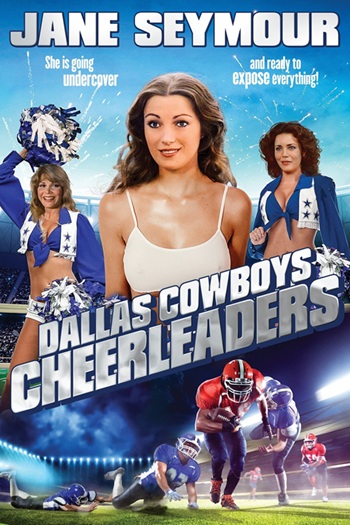
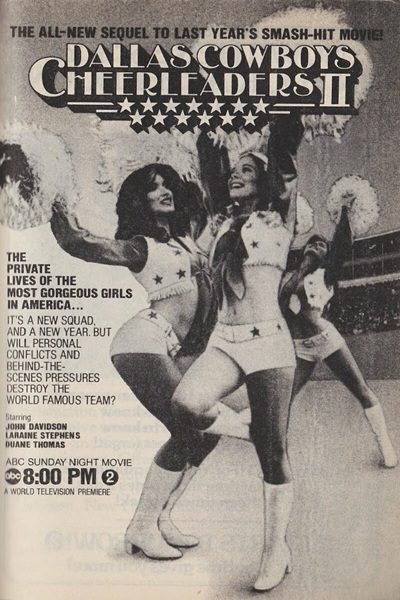
Insomnia Files #71 and #72: Dallas Cowboys Cheerleaders (dir by Bruce Bilson) and Dallas Cowboys Cheerleaders II (dir by Michael O’Herlihy)


What’s an Insomnia File? You know how some times you just can’t get any sleep and, at about three in the morning, you’ll find yourself watching whatever you can find on cable or streaming? This feature is all about those insomnia-inspired discoveries!

If you were having trouble getting to sleep last night, you could have gone over to YouTube and watched 1979’s Dallas Cowboys Cheerleaders!  And then, if you were still having trouble getting to sleep, you could have followed it up with 1980’s Dallas Cowboys Cheerleaders II!  And then if you were somehow still not able to get any rest …. well, sorry.  There’s only two of them.  I guess you could watch that Making the Team show.  I don’t know.

Anyway, back to the movies!

The first Dallas Cowboys Cheerleaders stars Jane Seymour as a serious journalist who at first scoffs at the idea of going undercover as a Dallas Cowboys Cheerleader.  But her ex-boyfriend and editor (Bert Convy) insists that she take the assignment.  Jane goes undercover and even makes the squad!  (It’s never mentioned whether she has any sort of dance or cheerleading experience so I find it a bit odd that she actually made it onto a professional cheerleading squad but whatever….)  Seymour gets to know the other members of the Squad, including the Love Boat’s Lauren Tewes.  She comes to realize that she doesn’t want to write up a tabloid story about the cheerleaders.  These are “good, down home girls,” she tells Convy.  Convy doesn’t care.  He wants scandal!

He’s not going to get it, though.  The main message of this film is that the Dallas Cowboys Cheerleaders are basically saints with pom poms.  Sure, one of them has a loser ex-boyfriend.  And another one of them struggles a bit with the routines.  It’s not an easy job but, in the end, everyone does their bit to support the team!

It’s all pretty silly but I’m from Dallas and I’m surrounded by Cowboy fans who have been complaining nonstop about the team for as long as I can remember so I enjoyed watching a movie that portrayed the Cowboys organization as being the greatest group of people on the planet.  (No drug or gun problems here!)  It’s very much a film of the 70s, made for television and straddling the line between being exploitive and being wholesome.  Yes, the costumes are skimpy but no one smokes, drinks, or curses.  The film features soapy drama, actual Dallas locations, 70s fashion, a great disco soundtrack, and dorky Bert Convy as a womanizer.  Plus, like me, Jane Seymour has mismatched eyes.  How can you not love this film!?

As for the sequel, it ditches almost everyone from the first film.  Only Laraine Stephens, as the squad’s no-nonsense coach, returns.  She’s got a whole new squad to deal with and only a limited amount of time to perfect the cheer that will win the Cowboys the Super….sorry, I mean to say the playoff game.  Whenever anyone in the film says, “playoff game,” their lips read “Super Bowl,” so I guess there was some last-minute tinkering after shooting was completed.  The squad also has to get ready to tour with the USO and to perform at a children’s hospital.  (Ray Wise appears as a doctor at the children’s hospital.)  The Cheerleaders are not only going to bring peace to the world but they’re also going to give those children the inspiration they need to get better.  Yay!

This one isn’t as much fun, largely because Laraine Stephens’s character isn’t that much fun.  The first film featured the very British Jane Seymour in Texas, somehow becoming a member of an all-American football team’s cheerleading squad and it was impossible not to enjoy the implausibility of it all.  The second film is just Laraine Stephens getting mad at people for not having the routine down to perfection.  No thanks, movie, I’m done with dealing with demanding choreographers.  There’s a reason why I turned down all of those offers to join the cheer squad in high school.  (For the record, my sister was the greatest cheerleader our high school ever had or ever will have!  Erin watched the first movie with me a few weeks ago.  She said it was okay but she didn’t think Jane Seymour was a convincing cheerleader.)

According to what I’ve read online, the first Dallas Cowboy Cheerleaders film was a huge rating success.  The second film was less so, which I guess is why there was never a third.

Previous Insomnia Files:

  1. Story of Mankind
  2. Stag
  3. Love Is A Gun
  4. Nina Takes A Lover
  5. Black Ice
  6. Frogs For Snakes
  7. Fair Game
  8. From The Hip
  9. Born Killers
  10. Eye For An Eye
  11. Summer Catch
  12. Beyond the Law
  13. Spring Broke
  14. Promise
  15. George Wallace
  16. Kill The Messenger
  17. The Suburbans
  18. Only The Strong
  19. Great Expectations
  20. Casual Sex?
  21. Truth
  22. Insomina
  23. Death Do Us Part
  24. A Star is Born
  25. The Winning Season
  26. Rabbit Run
  27. Remember My Name
  28. The Arrangement
  29. Day of the Animals
  30. Still of The Night
  31. Arsenal
  32. Smooth Talk
  33. The Comedian
  34. The Minus Man
  35. Donnie Brasco
  36. Punchline
  37. Evita
  38. Six: The Mark Unleashed
  39. Disclosure
  40. The Spanish Prisoner
  41. Elektra
  42. Revenge
  43. Legend
  44. Cat Run
  45. The Pyramid
  46. Enter the Ninja
  47. Downhill
  48. Malice
  49. Mystery Date
  50. Zola
  51. Ira & Abby
  52. The Next Karate Kid
  53. A Nightmare on Drug Street
  54. Jud
  55. FTA
  56. Exterminators of the Year 3000
  57. Boris Karloff: The Man Behind The Monster
  58. The Haunting of Helen Walker
  59. True Spirit
  60. Project Kill
  61. Replica
  62. Rollergator
  63. Hillbillys In A Haunted House
  64. Once Upon A Midnight Scary
  65. Girl Lost
  66. Ghosts Can’t Do It
  67. Heist
  68. Mind, Body & Soul
  69. Candy
  70. Shortcut to Happiness

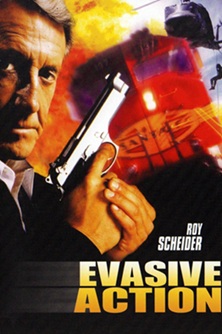
Evasive Action (1998, directed by Jerry P. Jacobs)


Some of the toughest criminals in America are being transported, via train, to a high security prison.  For some reason, instead of using an entire train to transport the prisoners and guards, it’s decided to just put the criminals in one car attached to a normal passenger train.  Did the passengers in the other cars get a warning that would be traveling with a bunch of desperate criminals?  Did they at least get a discount on their tickets?  Of course, Mafia kingpin Enzo Martini (Roy Scheider, slumming) engineers a takeover with the rest of the prisoners.  It’s up to Sheriff Wes Blaidek (Ray Wise) and bartender Zoe Clark (Delane Matthews) to stop the prisoners.

This is a fast-moving, dumb-as-Hell action movie that’s memorable mostly for having a cast that was very much overqualified for the film.  Keith Coogan, Dorian Harewood, Don Swayze, Ed O’Ross, and Sam J. Jones are all in this thing.  Clint Howard plays the homicidal serial killer who lets a child live because the kid has seen Taxi Driver.  Dick Van Patten plays the head of the parole board.  I can understand why Roy Scheider might be selected to play a mob boss and how Clint Howard and Don Swazye ended up playing killers.  But how do you look at this film’s story and think, “This need Dick Van Patten?”  It’s Die Hard on a train but without the wit or the budget.  The movie moves quickly, there’s plenty of train and helicopter action and it’s still good to see so many familiar and eccentric talents gathered together to bring too life one very stupid movie.  It’s too bad they couldn’t find room for Joey Travolta or Joe Estevez but I guess you can’t have everything.

The Film’s of 2024: God’s Not Dead: In God We Trust (dir by Vance Null)


It can be easy to forget just what a big splash God’s Not Dead made when it was released back in 2014.  Today, it’s taken for granted that every year, at least one faith-based movie will be released to terrible reviews and then “shock” everyone by opening up strong at the box office.  However, in 2014, God’s Not Dead was the film that started the whole trend, along with sparking the ongoing debate about whether or not Hollywood has the slightest idea what most Americans want to see.

That’s not to say, of course, that God’s Not Dead was a good film.  It’s not.  It’s a ludicrously simplistic and smug film that, over the course of its overly long run time, promotes the idea that the only reason atheists exist is because they’re either bitter, evil, or both.  (For the record, if a professor truly threatened to fail a paying student solely because of his religious beliefs, the end result would probably be a lawsuit.)  The idea that someone could sincerely disagree with the film’s heroes or even believe differently than them without having an ulterior motive is not one that is entertained in the God’s Not Dead universe.  Indeed, perhaps the most interesting thing about the God’s Not Dead films is that they are just as heavy-handed and often just as condescending as the secular films being churned out by the major studios.

God’s Not Dead has, to date, spawned four sequels.  The second was enjoyably campy and featured an earnest performance from Melissa Joan Hart.  The third, which is the the closest that the franchise has gotten to actually making a good film, was surprisingly even-handed, or at least as even-handed as a film in this franchise can be.  The fourth was way too talky but, because it came out during the COVID lockdowns, its condemnation of government overreach reflected the way that a lot of people were feeling at the time.  Somewhat inevitably, the fifth film finds Reverend David Hill (David A.R. White) running for Congress again the villain from the second film, dastardly atheist Peter Kane (Ray Wise).

The film opens with the death of an incumbent congressman.  His opponent, Peter Kane, tells the press that the congressman was a good man and then proceeds to gloat about his death in private.  Kane is an ultra-liberal atheist.  Usually, the villains in the God’s Not Dead universe have a dead relative to help explain why they’ve lost their faith but Kane is just evil.  (In God’s Not Dead 2, Kane specifically put Melissa Joan Hart on trial for expressing her Christian beliefs and then chortles, “We are going to prove God is dead!”)  With Kane on the verge of being elected to Congress by default, Rep. Daryl Smith (Isaiah Washington) suggests that David Hill, who went viral for denouncing Congress in the fourth film, should be the party’s new nominee.

After some hesitation, Hill agrees.  However, he drives his campaign manager, Lottie Joy (Samaire Armstrong), crazy by basing his campaign on his religious beliefs.  Of course, if you didn’t want a candidate to talk about his religious beliefs in a campaign, why would you nominate a pastor whose fame is totally based on those beliefs?  Add to that, Hill is running for a Congressional seat in Arkansas.  I have family in Arkansas.  Growing up, I occasionally lived in Arkansas.  Sure, there are liberals in Arkansas and there are atheists in Arkansas.  But none of them are going to get elected to Congress anytime soon.  Arkansas is probably one of the few states where Hill’s faith-based campaign wouldn’t be considered controversial.

(That Mike Huckabee has a cameo as himself should be all the reminder that viewers need that Arkansas is not at all hesitant about electing pastors to higher office.)

It’s heavy-handed and cartoonish, which is probably to be expected.  Unfortunately, it’s also rather boring, with not even Ray Wise’s villainy providing much entertainment value.  Outside of arguing that atheists are evil and that separation of church and state is just a catch phrase, the film argues that money is a divisive force in politics and that politicians shouldn’t be bought.  Wow, really!?  It’s a film about politics that has little fresh insight to offer.  David Hill goes from being a media-savvy pastor to being an innocent naïf who is shocked to discover that politics is a dirty business.  God’s Not Dead: In God We Trust makes Billy Jack Goes To Washington seem like a hard-hitting portrayal of American politics.

I will give this franchise some credit for maintaining a surprising sense of continuity.  As I mentioned earlier, Ray Wise returns as the character that he played in the second film.  Paul Kwo is back as Hill’s associate pastor.  Dean Cain returns as the amoral businessman from the first film.  You have to imagine that Kevin Sorbo is kicking himself for allowing his smug professor character to die in the first film.  What’s funny is that the college student who kicked off the franchise by refusing to sign a piece of paper declaring God to be dead has pretty much vanished from the films.  Whatever happened to that kid?

In the end, we all know where this is going.  The next film will undoubtedly feature David Hill running for president.  2028 is right around the corner.

Film Review: Atlas Shrugged, Part II (dir by John Putch)


2012’s Atlas Shrugged: Part II picks up where Part I left off.

The time is still the near future.  (Part I specifically set the story as taking place five years into the future.  Part II declines to use a specific date but it does feature some news personalities playing themselves so it’s still clearly only meant to be a few years from 2012.)  The economy has gotten even worse.  The poor are only getting poorer while the rich are getting richer.  Under the direction of Head of State Thompson (Ray Wise) and his main economic advisor, Wesley Mouch (Paul McCrane), the government has nationalized nearly every business.  Halfway through the film, Thompson declares a national emergency and uses the Fair Share Law to invoke Directive 10-289.  All inventors, businessmen, and other creative people are required to sign their patents over to the government and to stop trying to develop now techniques.  Wages are frozen.  No one can be fired and no one can be hired.  Creative thinking is discouraged.  Asking questions or expressing doubt is forbidden.  People are encouraged to snitch on anyone not following the Directive.  Thompson and Mouch insist that it’s for the “good of the people,” and anyone who disagrees runs the risk of being dragged into court and sent to prison for ten years.  Meanwhile, gas now costs $42.00 a gallon.  One of the funnier moments of the film features someone paying $865.72 to fill up a truck.

Dagny Taggart (Samantha Mathis), the Vice President of Taggart Transcontinental Railways, is still trying to discover who invented an experimental motor that she found hidden away in a mine.  The motor could potentially change the way that goods are transported but it appears to be missing one component.  Unfortunately, all of the great scientists and inventors have been vanishing, with many of them leaving behind notes that ask, “Who is John Galt?”  Meanwhile, Dagny’s lover, Hank Rearden (Jason Beghe), fights to protect Rearden Metal from being taken over by the government and Dagny’s brother, James (Patrick Fabian), sells out to Wesley Mouch with the end result being that there’s no one left at Taggart Transcontinental with the intelligence or the experience necessary to keep two trains from colliding in a tunnel.

Given that Ayn Rand herself was an atheist who wrote very critically of religion, it’s interesting how much of Atlas Shrugged: Part II feels like one of those evangelical films where the Rapture comes and the entire world falls apart because all of the believers have suddenly vanished.  In the case of Atlas Shrugged, the world falls apart because all of the creatives and all of the leaders of industry and all of the innovative thinkers have abandoned it so that they can create a new community with John Galt.  (They’ve “stopped the motor of the world.”)  In many ways, this is the ultimate in wish fulfillment, a way of declaring, “They’ll miss me when I’m gone!”  Indeed, the majority of people who keep a copy of Rand’s novel displayed on their bookcase do so because they believe that they would be one of the lucky ones who was approached by Galt.  No one expects that they’ll be the person left behind to try to run the railroad.  It’s a bit like how like the most strident Marxist activists always assume they’ll be the ones organizing the workers as opposed to being a worker themselves.

Not surprisingly, the same critics who attacked Part I didn’t care much for Atlas Shrugged Part II.  When I first saw it, I thought the film was a bit too long and I was annoyed that, with the exception of a few minutes at the end, the film didn’t really seem to move the story forward.  At the same time, just as with the first film, I appreciated the fact that the second film was proudly contrarian in its portrayal of the government as being inherently incompetent.  After all, this was 2012, back in the “good government” era, when a lot of people still reflexively assumed that the government was staffed only by hyper-competent policy wonks who knew what they were doing and who were only concerned with making sure that “the trains ran on time,” to borrow an old expression.

Rewatching the film this weekend, I have to say that I actually appreciated Atlas Shrugged Part II a bit more than the first time I watched it.  Yes, Part II was still a bit too long and the domestic drama between Hank and his wife fell flat but Part II is still a marked improvement on the first film.  Some of that is because Part II had a higher budget than Part I and, as a result, it didn’t look as cheap as the first film.  The corporate offices looked like actual corporate offices and the factories looked like real factories.  Secondly, the second film had an entirely different cast from the first film.  Samantha Mathis, Jason Beghe, and especially Patrick Fabian were clear improvements on the actors who previously played their roles.  That’s especially important when it comes to Mathis and Beghe because, as opposed to the first film, Part II convinces the viewer that  Dagny and Hank actually are as important as they think they are.  When the trains collide in the tunnel, the viewer never doubts that Mathis’s Dagny could have prevented the disaster if not for the government’s attempts to force her out of her own company.  As well, the viewer never doubts that Beghe’s Hank would fight to the end to protect his business, even if it means prison.  One wouldn’t have necessarily believed that while watching the first film.

Finally, having lived through the COVID era, the film’s portrait of government overreach and incompetence feels a lot more plausible when watched today.  One doesn’t have to be a fan of Rand’s philosophy or agree with her solutions to see the parallels between Directive 10-289 and the policies that led to children being kept out of schools and numerous small business having to shut their doors.  In an era when most people’s faith in governmental institutions has been broken to such an extent that it might never be fixed in our lifetime, Atlas Shrugged Part II resonates.  Whereas the film once felt subversive, now it feels downright prophetic.

Film Review: Robocop (dir by Paul Verhoeven)


Last week, I watched the original Robocop (along with Robocop 2 and Robocop 3) and I have to say that the first film holds up far better than I was expecting. Made and released way back in 1987, Robocop may be one of the most prophetic films ever made.

Consider the plot:

America is torn apart by crime and a growing gap between the rich and the poor. That was probably true in 1987 and it’s certainly true in 2021.

Throughout the film, we see news reports about what’s happening in the world. The news is always grim but the reporters are always cheerful and the main message is that, no matter what’s happening, the government is not to blame and anyone who questions the wisdom of the establishment is a fool. If that’s not a perfect description of cable news and our current state-run media, I don’t know what is.

The populace is often too busy watching stupid game shows to really pay attention to what’s happening all around them. I’m writing these words on a Wednesday, which means that Game of Talents will be on Fox tonight, immediately after The Masked Singer.

Detroit, a once proud center of industry, has now turned into a dystopian Hellhole where no one feels that they’re safe. Now, I don’t live in Detroit so I don’t know how true that is but I do know that most of the recent news that I’ve heard about the city has not exactly been positive. Also, this seems like a good time to point out that, even though the film is set in Detroit, it was shot in Dallas. Though the Dallas skyline has undoubtedly changed a bit since 1987, I still recognized several buildings while watching Robocop. Seeing Reunion Tower in the background of a movie that’s supposed to be set in Detroit was interesting, though perhaps not as interesting as seeing our City Hall transformed into the headquarters of Detroit’s beleaguered police force.

OCP, a multi-national conglomerate that’s run by the amoral but occasionally charming Old Man (played by the brilliant Dan O’Herlihy), has a contract with city of Detroit to run their police department. This certainly doesn’t seem far-fetched in 2021. Considering that we now have prisons that are run by private companies and that the government has shown a willingness to work with private mercenaries overseas, it’s not a stretch to imagine a city — especially one on the verge of bankruptcy — handing over the police department to a private company.

Two OCP executives — Dick Jones (Ronny Cox) and Bob Morton (Miguel Ferrer) — are competing to see who can be the first to create and develop a peace-keeping robot, a machine that will replace the need to employ (and pay) human police officers. Dick Jones goes with an actual robot, which malfunctions during a boardroom demonstration and guns down another executive. (The scene where the poor exec is targeted is both terrifying and darkly humorous at the same time. Particularly disturbing is how everyone in the boardroom keeps shoving him back towards the robot in order to ensure that they won’t accidentally be in the line of fire.) Bob Morton, however, takes a mortally wounded cop named Murphy (Peter Weller) and turns him into Robocop!

Robocop turns out to be a huge success and is very popular with the media. (Anyone who doubts this would really happen has obviously never watched news coverage of a drone attack.) As you can guess, Dick is not particularly happy about getting shown up by Morton and his robocop. Dick also happens to be secretly in league with Clarence Boddicker (Kurtwood Smith), the crimelord who blew Murphy apart in the first place.

(A gangster and a businessman working together!? I doubt that was shocking even in 1987.)

Robocop claims that he’s just a machine, without a past or emotions, but he’s still haunted by random flashes of his life as Murphy. Working with Lewis (Nancy Allen), Murphy’s former partner, Robocop tracks down Boddicker and his gang. A lot of people die in outrageously violent ways. (The scene where Boddicker and his gang use a shotgun to torture Murphy is still shocking, even after all these years.) The violence is so over-the-top that it soon becomes obvious that director Paul Verhoeven is deliberately trying to get those of us watching to ask ourselves why we find films like this to be so entertaining. On the one hand, Robocop is an exciting action film with a sense of humor. On the other hand, it’s the type of subversive satire of pop and trash culture to which Verhoeven would return with Basic Instinct, Starship Troopers, and Showgirls. This is the type of film that asks the audience, “What are you doing here?”

34 years after it was first made, Robocop remains a triumph. Peter Weller’s performance holds up well, as he does a great job of capturing Robocop’s anguish while, at the same time, never forgetting that the character is ultimately a machine, one that’s trapped in a sort of permanent limbo. I also really liked the performance of Miguel Ferrer, who takes a character who should be unlikable and instead makes him into a surprisingly sympathetic figure.

Of course, a film like this lives and dies on the strength of its villains and both Ronny Cox and Kurtwood Smith are ideally cast as Dick Jones and Clarence Boddicker. Kurtwood Smith especially took me by surprise by how believably evil and frightening he was. As a I watched the film, I realized that it was his glasses that made him so intimidating. Wearing his glasses, he looked like some sort of rogue poet, a sociopathic intellectual who had chosen to use his talents to specifically make the world into a terrible place. Boddicker’s crew was full of familiar actors like Paul McCrane, Ray Wise, and, as the always laughing Joe Cox, Jesse Goins. Interestingly enough, all of the bad guys seemed to genuinely be friends. Even though they were all willing to betray each other (“Can you fly Bobby?”), they also seemed to really enjoy each other’s company. That somehow made them even more disturbing than a group of bad guys who were only in it for the money. The villains in Robocop really do seem to savor the chance to show off just how evil they can be.

(Incidentally, for all of the Twin Peaks fans out there, this film features three members of the show’s ensemble: Miguel Ferrer, Ray Wise, and Dan O’Herlihy.)

Robocop holds up well as entertainment, prophecy, and satire. Though not much was expected from it when it was first released, it became a surprise hit at the box office. Needless to say, this led to a sequel. I’ll deal with that film in about an hour.

A Movie A Day #350: The Chase (1994, directed by Adam Rifkin)


Why so serious?

Jack Hammond (Charlie Sheen) was just an innocent clown who worked birthday parties.  Then he was mistaken for an outlaw clown and was accused of a crime that he did not commit.  When police incompetence led to the only piece of evidence that could exonerate him being tossed out of court, Jack had no choice but to go on the run.  Now, he’s in a stolen car, being pursued by not just the cops but also the tabloid media, and he’s got a hostage.  Natalie Voss (Kristy Swanson) turns out to be a willing hostage, though.  She is the daughter of Dalton Voss (Ray Wise, playing a character who is literally described as being “the Donald Trump of California) and what better way to act out against her father than to fall in love with her kidnapper and help him as he tries to reach the Mexican border?

What’s this?

A good Charlie Sheen movie that was not directed by Oliver Stone or John Milius?

It’s a Christmas miracle!

Actually, it may be misleading to say that The Chase is good..  By most of the standards used to judge whether or not a film qualifies as being good, The Chase fails.  There’s no real character development.  The plot is as simplistic as a plot can be.  A good deal of the movie could be correctly described as stupid.  But The Chase has got to be one of the most entertainingly stupid movies ever made.  It is about as basic an action comedy as has ever been made.  Almost the entire movie takes place on highway, with jokes mixed in with spectacular car crashes and only-in-the-90s cameos from Flea, Anthony Kiedis, and Ron Jeremy.  The pace never lets up, Kristy Swanson again shows that she deserved a better film career than she got, and Henry Rollins plays a cop.  As for Charlie Sheen, he basically plays the same character that he always plays but at least, when The Chase was made, he was still putting a little effort into it.  Maybe because they had already previously worked together in Hot Shots!, Sheen and Swanson have an easy rapport and make even the worse jokes sound passably funny.

The Chase may not be great and it really would have been improved by cameos from Burt Reynolds and Judd Nelson but it’s still damn entertaining.

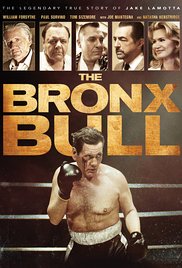
A Movie A Day #336: The Bronx Bull (2017, directed by Martin Guigui)


New York in the 1930s.  Jake LaMotta (Morean Aria) is a tough street kid who is pushed into fighting by his abusive father (Paul Sorvino) and who is taught how to box by a sympathetic priest (Ray Wise).  When Jake finally escapes from his Hellish home life, it is so he can pursue a career as a professional boxer.  Ironically, the same violent nature that nearly destroyed him as a youth will now be the key to his future success.



In the late 60s, a middle-aged Jake LaMotta (William Forsythe) testifies before a government panel that is investigating that influence of the Mafia in professional boxing.  LaMotta testifies that, during his professional career, he did take a dive in one of his most famous matches.  LaMotta goes on to pursue an entertainment career which, despite starring in Cauliflower Ears with Jane Russell, never amounts too much.  He drinks too much, fights too much, and gets into arguments with a ghost (Robert Davi).  He also gets married several times, to women played by everyone from Penelope Ann Miller to Alicia Witt.  The movie ends with Jake happily walking down a snowy street and a title card announcing that Jake is now 95 years old and married to his seventh wife.  (The real Jake LaMotta died on September, 9 months after the release of The Bronx Bull.)

The Bronx Bull is a largely pointless movie about the later life of the antisocial boxer who was previously immortalized in Martin Scorsese’s Raging Bull.  In fact, The Bronx Bull was originally announced and went into production as Raging Bull II.  Then the producers of the original Raging Bull found out, filed a lawsuit, and the film became The Bronx Bull.  Because of the lawsuit, The Bronx Bull could cover every aspect of Jake’s life, except for what was already covered in Raging Bull.  In fact, Scorsese’s film (which undoubtedly had a huge impact on LaMotta’s later life) is not even mentioned in The Bronx Bull.

William Forsythe does what he can with the role but, for the most part, Jake just seems to be a lout with anger issues.  With a cast that includes everyone from Tom Sizemore to Cloris Leachman to Bruce Davison, the movie is full of familiar faces but none of them get too much of a chance to make an impression.  Joe Mantegna comes the closest, playing Jake’s best friend.  The Bronx Bull was not only shot on the cheap but it looks even cheaper, with studio backlots unconvincingly filling in for 1930s Bronx.  The film’s director, Martin Guigui, occasionally tries to throw in a Scorsesesque camera movement and there are a few black-and-white flashbacks but, for the most part, this is the mockbuster version of Raging Bull.

TV Review: Twin Peaks: The Return Part 18 (dir by David Lynch)


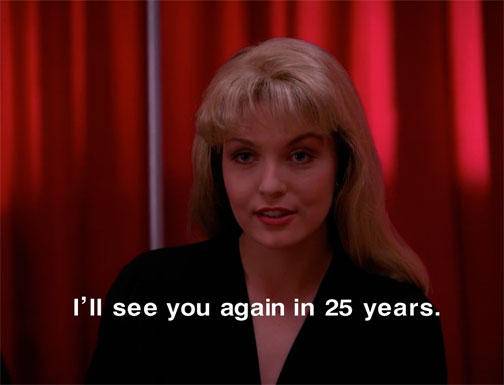
The Twin Peaks finale, which began with Part 17, concludes with an episode that we’ll probably still be debating 25 years from now.

The Doppelganger sits in the waiting room of the Black Lodge and bursts into flame.  MIKE (Al Strobel) uses the Doppelganger’s soul to create another Cooper (Kyle MacLachlan).  One scene later, that Cooper is arriving at his home in Las Vegas, where he is embraced by Janey-E (Naomi Watts) and Sonny Jim (Pierce Gagnon).

In the woods outside Twin Peaks, the real Cooper leads Laura (Sheryl Lee) by the hand.  Again, Laura vanishes and we hear the sound of her screaming.

Suddenly, we are again in the waiting room of the Black Lodge.  Cooper sits in his chair.  MIKE asks him, “Is it the future or the past?”  Events from Parts One and Two repeat.  Cooper again meets the Arm but this time the Arm asks him not if he remembers the Doppelganger but if he knows the story of the little girl who lived down the street.  Again, Laura whispers in Cooper’s ear before being pulled away by an unseen force.  Again, Leland (Ray Wise) tells Cooper to find Laura.

And, once again, Cooper starts to walk through the Black Lodge but this time, he finds a room that is full of dead trees.  And in that room, Diane (Laura Dern) is waiting for him.  “Is it you?” she asks him, “is it really you?”  Cooper is shocked but happy to see Diane.

(Is it possible that, even after saving Laura Palmer and therefore eliminating the event that led to him going to Twin Peaks in the first place, Cooper still found himself trapped in the Black Lodge for 25 years?  But now, instead of being sent to destroy his Doppelganger, could it be that Cooper has been allowed to leave specifically to track down Laura?)

In the next scene, Cooper and Diane are driving down a desert road.  It looks like the same road in South Dakota where the Doppelganger crashed his car when Cooper previously escaped from the Black Lodge.  It does not look like it’s anywhere near Odessa, Texas, which will become important shortly.

They pull over to the side of the road.  “Exactly 430 miles,” Cooper says.  Cooper gets out of the car.  He looks at the power lines above.  Remember — in the world of Twin Peaks, electricity is magic.  Cooper gets back in the car and asks Diane to kiss him.  “Once we cross,” he says, “it could all be different.”

They drive forward.  Electricity crackles.  Suddenly, they’re driving down a highway in the middle of the night.  They pull into a motel and get a room.  They make love, with Cooper telling Diane to keep the lights turned out and Diane placing her hands over Cooper’s face.

(It was around this time that I started to realize that a lot of unanswered questions — like what’s going on with Audrey and why Sarah Palmer can remove her face — were probably destined to remain unanswered.)

The next morning, Cooper wakes up in a room that appears to be different from the one that he fell asleep in.  Diane is gone but there’s a letter on the nightstand.  It is addressed to Richard and it is from Linda.  Linda’s letter says that she’s leaving because, “I don’t recognize you anymore.”

(Remember during Part One, when the Giant told Cooper to remember Richard and Linda?  I’m going to assume that, just as how Cooper was previously Dougie Jones, the “crossing over” that he and Diane did transformed them into Richard and Linda.)

Cooper leaves his motel and it’s a totally different motel from the one that we previously saw him checking into.

A city limits sign indicates that Cooper is in Odessa, Texas.  (Lynch does not make my home state look very good in this episode but I’ll forgive him because he’s otherwise awesome.)  As Cooper drives down the street, he sees a sign for Judy’s coffee shop–

JUDY!

Cooper pulls into the parking lot and enters Judy’s.  He asks the waitress (Francesa Eastwood) if there’s another waitress who works there.  She tells him that there is but it’s her day off.  When a few rednecks in cowboy hats (really, David?) start to harass the waitress, Cooper beats them up and drops their guns in the deep fryer.  Explaining that he’s with the FBI, Cooper asks for the other waitress’s address.

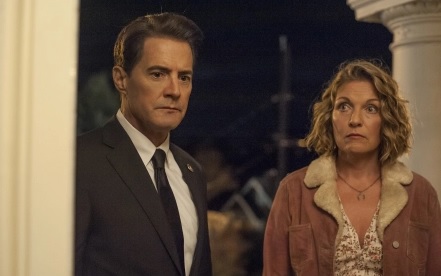
Cooper’s drives up to the waitress’s house.  He sees that she has an electric poll (marked No. 6) outside of her house.  When Cooper knocks on the door, it’s answered by Laura Palmer (Sheryl Lee)!

Except that she says that her name isn’t Laura Palmer.  She insists that her name is Carrie Page and, when she hears that Cooper is FBI, she immediately asks, “Did you find him!?”  Cooper tells her, “Your father’s name is Leland.  Your mother’s name is Sarah.”  When Carrie hears Sarah’s name, she appears to be momentarily shaken and asks.  “What’s going on?”  Cooper tells her that she is Laura Palmer and that she needs to come with him to Twin Peaks, Washington.

“D.C?” Carrie asks.

“State,” Cooper replies.

Carrie agrees to go up to Twin Peaks with him.  Her willingness may have something to do with the dead man who is propped up on her couch.

Cooper and Carrie drive all the way from Texas to Washington State.  That’s quite a long journey and, as I watched them slightly driving down yet another dark highway, I again resigned myself to the knowledge that the show would never reveal just why exactly Audrey was screaming in that white room.

Hey, Coop, I know you’re busy but remember Audrey?

(My theory is that, after raping her, the Doppelganger sent Audrey to the Black Lodge, and, just as he did to Diane, manufactured a replacement.  But if Cooper saved Laura and the Doppelganger never entered our world, is Audrey in the Black Lodge?  In fact, if Laura never died then Ben never had to sale the Ghostwood Estates to get an alibi, which means that he never pushed Audrey to become an environmental crusader and, hence, Audrey was probably not at the bank when the bomb went off.)

Finally, Cooper and Carrie reach Twin Peaks.  They drive past the Double R.  Carrie says she doesn’t recognize anything, not even the Palmer House.

Cooper and Carrie walk up to the house.  (Rather sweetly, Cooper and Carrie hold hands as they approach.)  What follows is Lynch at his creepiest, his best, and his most frustrating.

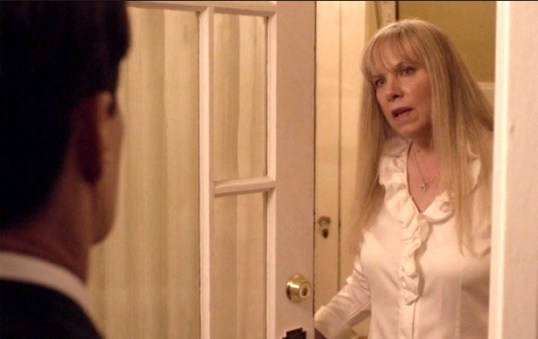
Alice Tremond was played the actual owner of the house that’s used for the exterior shots of the Palmer House.

When Cooper knocks on the door, it’s answered by the house’s owner, Alice Tremond.  (Longtime fans of the show will recognize the Alice Tremond name as belonging to one of the inhabitants of the Black Lodge.  However, Cooper never met Mrs. Tremond.  Only Donna met her and her odd grandson.)  Mrs. Tremond says that, as far as she knows, no one named Palmer has ever lived un the house.  When asked, she says that she bought the house from Mrs. Chalfont, another Black Lodge inhabitant that Cooper never met.

Stunned, Cooper and Carrie walk away from the house.

“What year is this?” Cooper asks.

Carrie shrugs.

Suddenly, from inside the house, we hear Sarah Palmer’s voice.  “Laura!”

Carrie screams.  We hear a burst of static electricity and it appears that lights in the house go off.  The screen fades to black.

The screaming fades.  Again, we see Cooper’s passive face as Laura whispers in his ear.

End credits.  Sheryl Lee is credited twice.  Once for playing Laura Palmer.  Once for playing Carrie Page.

And so it ends.

We’re going to spend years debating what all this means and I don’t want to say too much until I get chance to watch the entire series a second time.  (I plan on watching all 18 hours next weekend.)  It does appear that, no matter how much Cooper and Laura try to avoid it, all paths lead back to not only Twin Peaks but also to the unspeakable horror that occurred in the Palmer House.  Much like Dana Andrews’s obsessive P.I. in the classic film noir, Laura, Cooper is obsessed with saving a dead woman.

I’ll write more on this later, after I’ve had time to rest.  For now, I just want to thank everyone who has followed our Twin Peaks coverage here on the Shattered Lens.  And thank you to Jeff, Leonard, and Ryan for contributing!

It’s a strange world, isn’t it?

Twin Peaks on TSL:

  1. Twin Peaks: In the Beginning by Jedadiah Leland
  2. TV Review: Twin Peaks 1.1 — The Pilot (dir by David Lynch) by Lisa Marie Bowman
  3. TV Review: Twin Peaks 1.2 — Traces To Nowhere (directed by Duwayne Dunham) by Jedadiah Leland
  4. TV Review: Twin Peaks 1.3 — Zen, or the Skill To Catch A Killer (dir by David Lynch) by Lisa Marie Bowman
  5. TV Review: Twin Peaks 1.4 “Rest in Pain” (dir by Tina Rathbone) by Leonard Wilson
  6. TV Review: Twin Peaks 1.5 “The One-Armed Man” (directed by Tim Hunter) by Jedadiah Leland
  7. TV Review: Twin Peaks 1.6 “Cooper’s Dreams” (directed by Lesli Linka Glatter) by Lisa Marie Bowman
  8. TV Review: Twin Peaks 1.7 “Realization Time” (directed by Caleb Deschanel) by Lisa Marie Bowman
  9. TV Review: Twin Peaks 1.8 “The Last Evening” (directed by Mark Frost) by Leonard Wilson
  10. TV Review: Twin Peaks 2.1 “May the Giant Be With You” (dir by David Lynch) by Leonard Wilson
  11. TV Review: Twin Peaks 2.2 “Coma” (directed by David Lynch) by Jedadiah Leland
  12. TV Review: Twin Peaks 2.3 “The Man Behind The Glass” (directed by Lesli Linka Glatter) by Jedadiah Leland
  13. TV Review: Twin Peaks 2.4 “Laura’s Secret Diary” (dir by Todd Holland) by Lisa Marie Bowman
  14. TV Review: Twin Peaks 2.5 “The Orchid’s Curse” (dir by Graeme Clifford) by Lisa Marie Bowman
  15. TV Review: Twin Peaks 2.6 “Demons” (dir by Lesli Linka Glatter) by Leonard Wilson
  16. TV Review: Twin Peaks 2.7 “Lonely Souls” (directed by David Lynch) by Jedadiah Leland
  17. TV Review: Twin Peaks 2.8 “Drive With A Dead Girl” (dir by Caleb Deschanel) by Lisa Marie Bowman
  18. TV Review: Twin Peaks 2.9 “Arbitrary Law” (dir by Tim Hunter) by Lisa Marie Bowman
  19. TV Review: Twin Peaks 2.10 “Dispute Between Brothers” (directed by Tina Rathbone) by Jedadiah Leland
  20. TV Review: Twin Peaks 2.11 “Masked Ball” (directed by Duwayne Dunham) by Leonard Wilson
  21. TV Review: Twin Peaks 2.12 “The Black Widow” (directed by Caleb Deschanel) by Leonard Wilson
  22. TV Review: Twin Peaks 2.13 “Checkmate” (directed by Todd Holland) by Jedadiah Leland
  23. TV Review: Twin Peaks 2.14 “Double Play” (directed by Uli Edel) by Jedadiah Leland
  24. TV Review: Twin Peaks 2.15 “Slaves and Masters” (directed by Diane Keaton) by Lisa Marie Bowman
  25. TV Review: Twin Peaks 2.16 “The Condemned Woman” (directed by Lesli Linka Glatter) by Leonard Wilson
  26. TV Review: Twin Peaks 2.17 “Wounds and Scars” (directed by James Foley) by Lisa Marie Bowman
  27. TV Review: Twin Peaks 2.18 “On The Wings of Love” (directed by Duwayne Dunham) by Jedadiah Leland
  28. TV Review: Twin Peaks 2.19 “Variations on Relations” (directed by Jonathan Sanger) by Lisa Marie Bowman
  29. TV Review: Twin Peaks 2.20 “The Path to the Black Lodge” (directed by Stephen Gyllenhaal) by Lisa Marie Bowman
  30. TV Review: Twin Peaks 2.21 “Miss Twin Peaks” (directed by Tim Hunter) by Leonard Wilson
  31. TV Review: Twin Peaks 22.2 “Beyond Life and Death” (directed by David Lynch) by Lisa Marie Bowman
  32. Film Review: Twin Peaks: Fire Walk With Me (dir by David Lynch) by Lisa Marie Bowman
  33. Here’s The Latest Teaser for Showtime’s Twin Peaks by Lisa Marie Bowman
  34. Here’s The Newest Teaser for Showtime’s Twin Peaks by Lisa Marie Bowman
  35. 12 Initial Thoughts About Twin Peaks: The Return Parts One and Two by Lisa Marie Bowman
  36. This Week’s Peaks: Parts One and Two by Ryan C. (trashfilm guru)
  37. TV Review: Twin Peaks: The Return Parts One and Two (dir by David Lynch) by Lisa Marie Bowman
  38. 4 Shots From 4 Films: Special Twin Peaks Edition by Lisa Marie Bowman
  39. This Week’s Peaks: Parts Three and Four by Ryan C. (trashfilm guru)
  40. 14 Initial Thoughts About Twin Peaks: The Return Part Three by Lisa Marie Bowman (dir by David Lynch)
  41. 10 Initial Thoughts About Twin Peaks: The Return Part Four by Lisa Marie Bowman (dir by David Lynch)
  42. TV Review: Twin Peaks: The Return Parts Three and Four (dir by David Lynch) by Lisa Marie Bowman 
  43. 18 Initial Thoughts About Twin Peaks: The Return Part 5 (dir by David Lynch) by Lisa Marie Bowman
  44. This Week’s Peaks: Part Five by Ryan C. (trashfilm guru)
  45. TV Review: Twin Peaks: The Return: Part 5 (dir by David Lynch) by Lisa Marie Bowman
  46. 14 Initial Thoughts On Twin Peaks Part 6 (dir by David Lynch) by Lisa Marie Bowman
  47. This Week’s Peaks: Part Six by Ryan C. (trashfilm guru)
  48. TV Review: Twin Peaks: The Return Part 6 (dir by David Lynch) by Lisa Marie Bowman
  49. 12 Initial Thoughts on Twin Peaks: The Return Part 7 (dir by David Lynch) by Lisa Marie Bowman
  50. This Week’s Peaks: Part Seven by Ryan C. (trashfilm guru)
  51. TV Review: Twin Peaks: The Return Part 7 (dir by David Lynch) by Lisa Marie Bowman
  52. Ten Initial Thoughts on Twin Peaks: The Return Part 8 (dir by David Lynch) by Lisa Marie Bowman
  53. This Week’s Peaks: Part Eight by Ryan C (trashfilm guru)
  54. TV Review: Twin Peaks: The Return Part 8 (dir by David Lynch) by Lisa Marie Bowman
  55. 16 Initial Thoughts on Twin Peaks: The Return Part 9 (dir by David Lynch) by Lisa Marie Bowman
  56. This Week’s Peaks: Part Nine by Ryan C (trashfilm guru)
  57. TV Review: Twin Peaks: The Return Part 9 (dir by David Lynch) by Lisa Marie Bowman
  58. 20 Initial Thoughts On Twin Peaks: The Return Part 10 (dir by David Lynch) by Lisa Marie Bowman
  59. This Week’s Peaks: Part 10 by Ryan C (trashfilm guru)
  60. TV Review: Twin Peaks: The Return Part 10 (dir by David Lynch) by Lisa Marie Bowman
  61. 16 Initial Thoughts About Twin Peaks: The Return Part 11 (dir by David Lynch) by Lisa Marie Bowman
  62. This Week’s Peaks: Part 11 by Ryan C (trashfilm guru)
  63. TV Review: Twin Peaks: The Return Part 11 (dir by David Lynch) by Lisa Marie Bowman
  64. 20 Initial Thoughts on Twin Peaks: The Return Part 12 (dir by David Lynch) by Lisa Marie Bowman
  65. This Weeks Peaks: Part 12 by Ryan C (trashfilm guru)
  66. TV Review: Twin Peaks: The Return Part 12 (dir by David Lynch) by Lisa Marie Bowman
  67. 22 Initial Thoughts on Twin Peaks: The Return Part 13 (dir by David Lynch) by Lisa Marie Bowman
  68. This Week’s Peaks: Part 13 by Ryan C (trashfilm guru)
  69. TV Review: Twin Peaks: The Return Part 13 (dir by David Lynch) by Lisa Marie Bowman
  70. 22 Initial Thoughts on Twin Peaks: The Return Part 14 (dir by David Lynch) by Lisa Marie Bowman
  71. This Week’s Peaks: Part 14 by Ryan C (trashfilm guru)
  72. TV Review: Twin Peaks: The Return Part 14 (dir by David Lynch) by Lisa Marie Bowman
  73. This Week’s Peaks: Part 15 by Ryan C (trashfilm guru)
  74. 24 Initial Thoughts About Twin Peaks; The Return Part 15 (dir by David Lynch) by Lisa Marie Bowman
  75. TV Review: Twin Peaks: The Return Part 15 (dir by David Lynch) by Lisa Marie Bowman
  76. 32 Initial Thoughts about Twin Peaks; The Return Part 16 (dir by David Lynch) by Lisa Marie Bowman
  77. This Week’s Peaks: Part 16 by Ryan C (trashfilm guru)
  78. TV Review: Twin Peaks: The Return Part 16 (dir by David Lynch) by Lisa Marie Bowman
  79. 18 Initial Thoughts on Twin Peaks: The Return Part 17 (dir by David Lynch) by Lisa Marie Bowman
  80. 16 Initial Thoughts on Twin Peaks: The Return part 18 (dir by David Lynch) by Lisa Marie Bowman
  81. This Week’s Peaks: Parts 17 and 18 by Ryan C (trashfilm guru)
  82. TV Review: Twin Peaks: The Return Part 17 (dir by David Lynch) by Lisa Marie Bowman