For Your Consideration #10: Guardians of the Galaxy (dir by James Gunn)


GuardiansoftheGalaxy

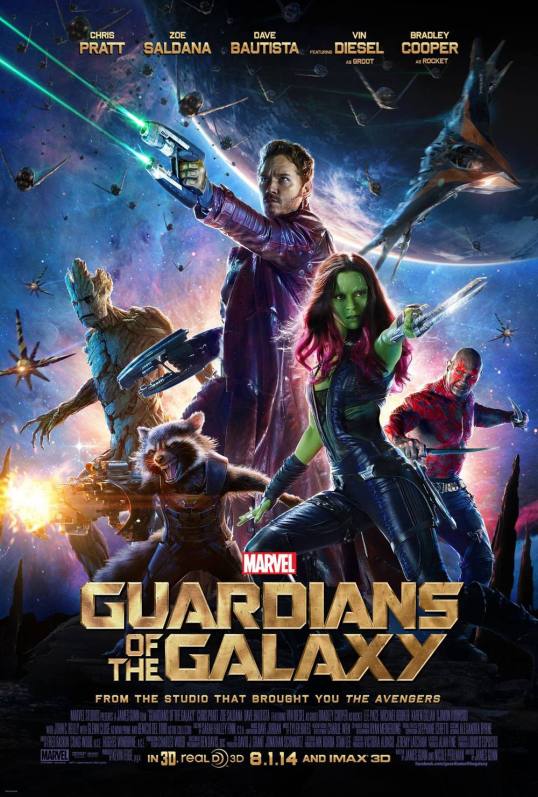
As of right now, as far as I’m concerned, Guardians of the Galaxy is the best film of 2014.

Now please understand, I live in fly-over country and that means that there’s still quite a few films that I need to see.  Next week and through the new year, I plan to see Foxcatcher, Inherent Vice, Into the Woods, Wild, and quite a few other films.  And any one of those films could, potentially, become my new favorite of 2014.

But, as of right now, Guardians of the Galaxy is my favorite.

Of course, Guardians of the Galaxy is not the type of film that will ever get a major Oscar nomination.  It’s unfairly dismissed as being pure entertainment or just a summer blockbuster.  A few critics group have been nice enough to mention it but, for the most part, Guardians of the Galaxy is not the type of film that’s going to be given serious consideration for the big awards.

Except, of course, by me.

Below are ten reasons why I think Guardians of the Galaxy deserves serious consideration:
we_are_groot_by_aktheneroth-d7tsk7n

1) Never underestimate the importance of escapism.

Usually, when a film is described as being “escapist entertainment,” it’s a back-handed compliment.  The implication is that the film may be entertaining but it has nothing to do with real world issues and therefore, it’s not as important as other films.  We’re allowed to enjoy it but we’re supposed to feel guilty about it.

But you know what?

Sometimes, we need to be able to escape.  That was certainly true this year.  2014 will not be remembered as a great year for humanity.  From January to December, it’s been an endless parade of cruelty and intolerance.  And no, we should never pretend that we live in a perfect world.  We need to be aware of what’s happening outside of our own little corner of the world.

But that doesn’t mean that we haven’t earned the right to escape for 122 minutes.  In fact, I would argue that 122 minutes of pure entertainment is something that we need to make time for if we are going to remain strong enough to face and perhaps change the realities of the world.

In short, when I walked out of the theater after watching Guardians of the Galaxy, I felt better than when I had first taken my seat.  I felt happy.  I felt enthusiastic.  I felt ready to face this fucked up world of ours.

There is a place for pure, unadulterated escapism in cinema.

Not every film has to be a somber, self-important mess like Man of Steel.

Thank God.

2) The unappreciated subtext of Ronan

However, Guardians of the Galaxy is not pure escapism.  Much as in this case of The Purge Anarchy and Capt. America: The Winter Soldier, there is a deeper subtext to the film.  You just have to be willing to look for it.

One of the more frequent complaints about Guardians of the Galaxy is that the villain, Ronan (Lee Pace), isn’t particularly interesting and it is true that, when compared to Tom Hiddleston’s Loki or Iron Man’s villains, Ronan does seem to be a bit bland.  His goals and his motivation are pretty simple.  He destroys stuff and he kills people.  Why?  Because he’s the bad guy.

But, let’s take a closer look at Ronan.  Ronan is a fanatic who believes that only his way is the correct way and only his beliefs are pure.  Anyone who has different beliefs must be unpure and therefore, if they don’t agree to convert to his way of believing, Ronan is justified in destroying them.

Does that sound familiar to anyone?

For all the complaints that Ronan was a one-dimensional villain, the same can be said of Joseph Kony, Kim Jong-un, and Jihadi John, and Fred Phelps.  The same can be said about a lot of evil people but that does not make them any less evil or dangerous.  Ronan may be a simple villain but he’s also the type of villain that we can find all over the world.

The one thing that all Ronan-style fanatics have in common is a complete lack of imagination and humor.  When Peter Quill stood up to Ronan by dancing, it was more than just a crowd-pleasing scene in a big action movie.  It was a call-to-arms to not allow ourselves to be held hostage by the Ronans of the world.  It was a plea to not let the fanatics among us steal our imagination and our right to find joy in our own individual way.

In short, it was a lesson that the entire world needs to learn.

Guardians_of_the_Galaxy_43350

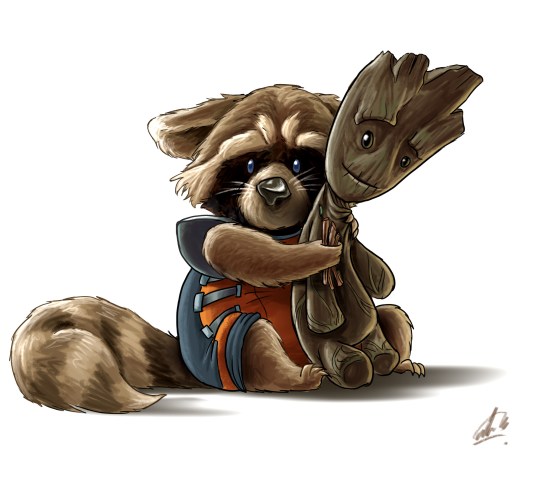
3) I Am Groot

Yes, yes, I know.  At this point, we’ve all had to listen to hundreds of friends, relatives, and strangers who have gotten it into their heads that they can perfectly imitate Vin Diesel saying, “I am Groot.”  But, seriously — there’s a reason why everyone fell in love with that catch phrase and that’s because both Diesel and the film do more with those three words that most actors can do with a four-page monologue.

And if you didn’t tear up when you heard, “We are Groot,” then I’m sorry.  You may be too cynical for your own good.

4) Introducing … James Gunn!

If you’ve read my review of Super or Arleigh’s review of Slither, then you know that James Gunn has long been a favorite of ours.  One of the joys of the success of Guardians of the Galaxy has been watching him become a favorite of everyone else as well.  And he deserves every bit of that success.  Working within the confines of the summer blockbuster genre, Gunn has created a film that works as both a superior action movie and as a quirky comedy.  With Guardians, James Gunn proved that it is possible to make a mainstream film without selling out your own individual style.

5) Introducing … Chris Pratt!

Even before he played Peter Quill, Chris Pratt was one of those actors who I have always been happy to see on screen.  He just has such a naturally likable presence.  But nothing he had done previously had prepared me for the pure joi de vivre that he brought to the role of Peter Quill.  Whether he was trying to convince people to call him Star-Lord or hilariously attempting to “rally the troops” or daring Ronan to a dance-off, Chris Pratt was a joy to watch.  If nothing else, Guardians of the Galaxy is the film that proves that Chris Pratt is a star (perhaps even a Star-Lord).

6) And let’s not forget Michael Rooker and Benicio Del Toro

Michael Rooker and Benicio Del Toro are both such quirky and unpredictable actors that I’m always happy to see either one of them on screen.  Having both of them in one movie is even better.  Rooker is perhaps the only actor alive who could not only be believable as a blue-skinned alien with an Alabama accent but who could also make that character into one of the most compelling in the film.  As for Del Toro, I know that his defiantly eccentric performance was controversial but personally, I loved the strange energy he brought to all of his scenes.

GuardiandoftheGalaxy

7) And …. everyone else!

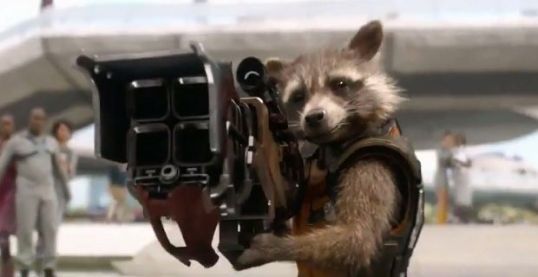
One thing that I really loved about Guardians of the Galaxy is that there were no wasted roles.  Every character — from Peter to Zoe Saldana’s Gamora to John C. Reilly’s upright military guy to the people who only had a line or two — felt real.  For a lot of viewers (including me), Rocket Raccoon (voiced by Bradley Cooper) was an easy favorite.
Guardians-of-the-Galaxy-rocket-with-gun

However, if I had to pick a best performance, I’d go with Dave Bautista as Drax.  Bautista did so much with so little.  As written, Drax is a physical dynamo with a need for revenge and absolutely no sense of humor.  That’s a pretty standard character for a film like this.  However, Bautista did so much with that character that poor, literal-minded Drax ultimately became one of the most intriguing characters in the film.  My favorite Drax moment came when, in response to hearing that everything goes over his head, he explained that nothing could go over his head because he would reach up and grab it.

8) That soundtrack

I have to admit that I didn’t care as much for Interstellar as some people did.  One of my big problems with the film came down to Hans Zimmer’s score.  It was so loud and overbearing that I actually found myself covering my ears.  But what really bothered me was how unnecessary it was.  Whenever Matthew McConaughey or Anne Hathaway made a profound statement or the spaceship started to shake, the music would suddenly blast in my ear.  It was like having Hans Zimmer in my head, repeatedly shouting, “IMPORTANT!  IMPORTANT!  EXCITING!  EXCITING!”

BLEH!

And it made me appreciate how much I loved the soundtrack of Guardians of the Galaxy.  By using songs that you would never expect to see in a science fiction epic, that soundtrack both mocked the genre’s natural tendency towards self-importance and also forced us to take another look at familiar scenes.  From the minute Peter started dancing to Come and Get Your Love, I knew that I was watching a special movie.

9) The Prison Break

From planning to execution, this was without a doubt one of the best action sequences of the year.  From Rocket laying out his overly complicated plan while Groot tries a much simpler method in the background to Peter asking for the guy’s leg to the use of The Pina Colada Song, this was a perfect scene.

10) And finally … Dancing Groot!

Dance

And those are just a few reasons why I think Guardians of the Galaxy is the best film I’ve seen this year so far.

Guardians-of-the-Galaxy-gang

(For a differing opinion, check out Ryan’s review here.)


For Your Consideration #9: Under the Skin (dir by Jonathan Glazer)


Under the Skin is one of the most brilliantly divisive films of the year.  To some, it’s a pretentious mess, a collection of seemingly random scenes and obscure themes.  To me, however, it is one of the most haunting films that I’ve ever seen.  It’s a film that’s full of mysteries and questions, one that often demands that we supply our own answers.  It’s one of the best films of the year and anyone who disagrees needs to rewatch it.

From the opening scene, Under the Skin is a dream of dark and disturbing things.

In Scotland, a silent motorcyclist (Jeremy McWilliams) finds a young woman’s dead body lying on the side of the road.  He picks up the body and puts it in the back of a van.  Inside the van, a naked woman (played by Scarlett Johansson) takes the dead woman’s clothes.  As soon becomes apparent, both the motorcyclist and the woman are not human.  They’re aliens and they’ve come to Earth on a mission that is deliberately left obscure.  Though they never speak to each other, the motorcyclist always seems to be nearby.

The woman drives the van across Scotland.  She stops men in the street and, after asking for directions, then attempts to coerce them into her van.  (What makes these scenes especially effective is that the majority of them actually feature Johansson talking to nonactors who just happened to be nearby when she drove up.)  The woman smiles and flirts and has little trouble convincing the majority of the men she meets to get into the van with her.

She drives them to an isolated building where the men follow her inside.  As they step into a pitch black room, both the woman and her latest man start to undress.  The naked man starts to walk towards the woman and is so hypnotized by the sight of her that he doesn’t even realize that the floor has become liquified and he’s sinking.  As Johansson watches coldly, each man eventually vanishes, leaving behind only his empty skin.

(Warning: The two scenes below are definitely NSFW.  Watch with caution.)

Detached from her surroundings, the woman can only watch as real human beings go about their lives.  When she sees a man unsuccessfully try to save a drowning couple on the beach, she reacts by striking the man on the head with a rock.  She drags the man away, leaving the couple’s terrified toddler on the beach.  When the motorcyclist later visits the beach, he too ignores the child.  (Perhaps no scene left me more disturbed and inspired more nightmares than this one.)

It’s only when the woman picks up a man with a severe facial disfigurement (a poignant performance from a nonactor named Adam Pearson) that she finally starts to show some emotion.  The man is as much of an outsider as she is, with the main difference being that he can’t hide who he really is under a disguise.  The woman feels sorry for him and this sudden shock of empathy causes her to reconsider her mission.

However, even as the woman attempts to flee to the Scottish highlands, the motorcyclist is never far behind.  And, unfortunately, neither are real humans…

Under the Skin is pure cinema, a collection of scenes that alternate between being naturalistic and surreal, disturbingly serious and darkly humorous.  Perhaps appropriately for a film about appearances, Under the Skin is a movie that is full of haunting images, the type that, 8 months after first being seen, remain vivid in your mind.  It’s up to the viewers to decide what those images mean.

(For all of the discussion that I’ve seen online about what Under the Skin is truly about, it seems pretty obvious to me that the main message of the film is that guys are so led by their penis that they’ll even allow themselves to sink into a liquid void if there’s a chance they might get laid beforehand.)

Under the Skin has been a player (albeit a minor one) in the precursors leading up the Oscars.  A few of the braver critical groups have nominated it for best picture and have also honored Scarlett Johansson for her wonderful work as an outsider who is both slowly discovering what it means to be human while also dealing with the reality that, try as she might, she will never truly belong in this world.  However, with all that in mind, Under the Skin is probably too divisive and unique a film to ever truly appeal to the Academy.

But that’s okay.

Under the Skin is also a film that we’ll still be discussing years from now.

Film Review Under the Skin


Here Are The 7 Semi-Finalists for The Best Hair, Makeup, And Fake Nose Oscar!


Foxcatcher

Foxcatcher

Here’s a little bit of late Oscar news.  Two days ago, the Academy announced the 7 semi-finalists for the Academy Award for Best Hair and Makeup.

And the semi-finalists are:

The Amazing Spider-Man 2 (Did that come out this year?  Wow.)

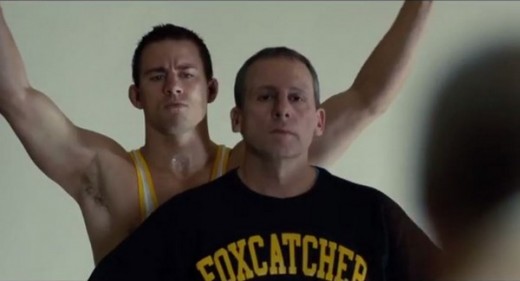
Foxcatcher (Don’t get me started on noses.)

The Grand Budapest Hotel

Guardians of the Galaxy (yay!)

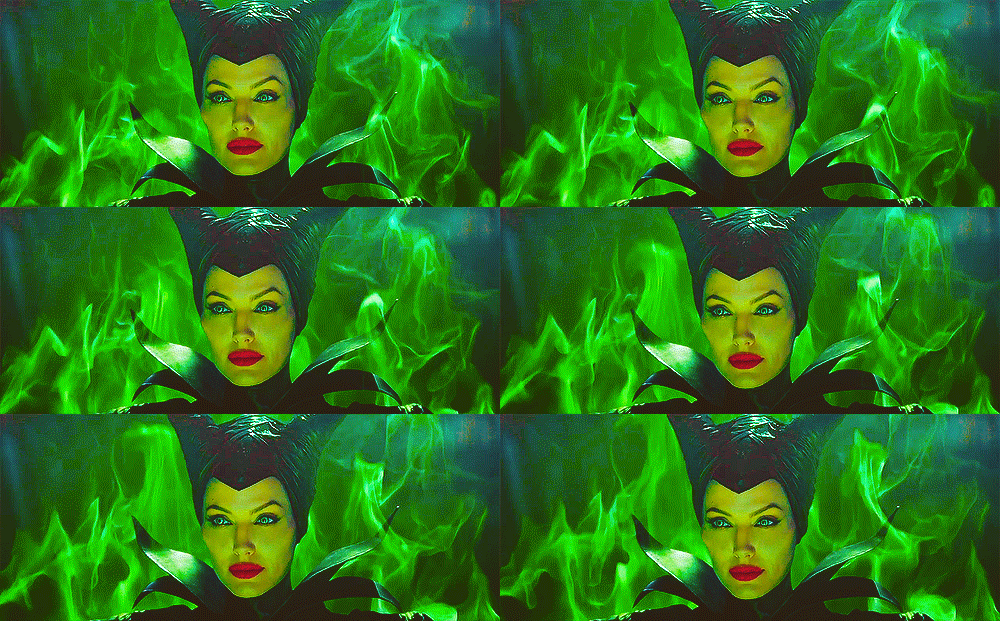
Maleficent (yay!)

Noah (uhmmm … yay?)

The Theory of Everything

Update your Oscar picks accordingly…

Mal

Here Are The Results From Chicago!


Here’s what the Chicago Film Critics picked for being the best of 2014.  A full list of their nominees can be found here.

Picture: “Boyhood”

Director: Richard Linklater, “Boyhood”

Actor: Michael Keaton, “Birdman”

Actress: Julianne Moore, “Still Alice”

Supporting Actor: J.K. Simmons, “Whiplash”

Supporting Actress: Patricia Arquette, “Boyhood”

Original Screenplay: Wes Anderson, “The Grand Budapest Hotel”

Adapted Screenplay: Gillian Flynn, “Gone Girl”

Animated Feature: “The Lego Movie”

Documentary: “Life Itself”

Foreign: “Force Majeure”

Editing: Tom Cross, “Whiplash”

Cinematography: Emmanuel Lubezki, “Birdman,” and Robert D. Yeoman, “The Grand Budapest Hotel”

Here’s What Won In Toronto! Love you, Canada!


Love you, Canada!

Love you, Canada!

Here are the Toronto Film Critics Awards.

BEST PICTURE
“Boyhood” (Mongrel Media)
Runners-up
“The Grand Budapest Hotel” (Fox Searchlight)
“Inherent Vice” (Warner Bros.)

BEST ACTOR
Tom Hardy, “Locke”
Runners-up
Ralph Fiennes, “The Grand Budapest Hotel”
Jake Gyllenhaal, “Nightcrawler”

BEST ACTRESS
Marion Cotillard, “The Immigrant”
Runners-up
Julianne Moore, “Still Alice”
Reese Witherspoon, “Wild”

BEST SUPPORTING ACTOR
J.K. Simmons, “Whiplash”
Runners-up
Josh Brolin, “Inherent Vice”
Edward Norton, “Birdman Or (The Unexpected Virtue of Ignorance)”

BEST SUPPORTING ACTRESS
Patricia Arquette, “Boyhood”
Runners-up
Tilda Swinton, “Snowpiercer”
Katherine Waterston, “Inherent Vice”

BEST DIRECTOR
Richard Linklater, “Boyhood”
Runners-up
Paul Thomas Anderson, “Inherent Vice”
Wes Anderson, “The Grand Budapest Hotel”

BEST SCREENPLAY, ADAPTED OR ORIGINAL
“The Grand Budapest Hotel”, screenplay by Wes Anderson
from a story by Wes Anderson & Hugo Guinness
Runners-up
“Boyhood”, written by Richard Linklater
“Inherent Vice”, screenplay by Paul Thomas Anderson
based on the novel by Thomas Pynchon

BEST FIRST FEATURE
“The Lunchbox”, directed by Ritesh Batra
Runners-up
“John Wick”, directed by Chad Stahelski
“Nightcrawler”, directed by Dan Gilroy

BEST ANIMATED FEATURE
“The Tale of the Princess Kaguya” (GKids)
Runners-up
“Big Hero 6″ (Walt Disney Studios)
“How to Train Your Dragon 2″ (20th Century Fox)
“The Lego Movie” (Warner Bros.)

BEST FOREIGN-LANGUAGE FILM
“Force Majeure” (filmswelike)
Runners-up
“Ida” (filmswelike)
“Leviathan” (Mongrel Media)

BEST DOCUMENTARY
“The Overnighters” (filmswelike)
Runners-up
“Citizenfour” (Entertainment One)
“Manakamana” (filmswelike)

JAY SCOTT PRIZE FOR AN EMERGING ARTIST
Albert Shin, director of “In Her Place”

Like A Mythical Beast Rising From The Ashes, Here’s What Won In Phoenix!


Birdman

Here are the winners of The Phoenix Critics Circle awards!  You can see a full list of their nominees here.

Best Picture — Birdman

Best Comedy Film — The Grand Budapest Hotel

Best Horror or Sci-Fi Film — Snowpiercer

Best Mystery or Thriller Film: Nightcrawler and Gone Girl

Best Actor — Micheal Keaton in Birdman

Best Actress — Reese Witherspoon in Wild

Best Supporting Actor — J.K. Simmons in Whiplash

Best Supporting Actress — Emma Stone in Birdman

Best Director — Alejandro G. Inarritu for Bidrman

Best Screenplay — Birdman

Best Animated Film — The LEGO Movie

Best International Film — Force Majeure and Ida

Here Are The Florida Film Critics Circle Nominations!


richard-linklaters-boyhood-movie-film-still-ellar-coltrane

And awards season continues!  The Florida Film Critics are somewhat unique in that they apparently only have three nominees per category.  What fun is that?  Add to that, three is an odd number and you know how I feel about odd numbers…

ANYWAY — here are the nominees:

(h/t to Awards Daily)

BEST PICTURE
Birdman
Boyhood
The Grand Budapest Hotel

BEST ACTOR
Jake Gyllenhaal – Nightcrawler
Michael Keaton – Birdman
Eddie Redmayne – The Theory of Everything

BEST ACTRESS
Julianne Moore – Still Alice
Rosamund Pike – Gone Girl
Reese Witherspoon – Wild

BEST SUPPORTING ACTOR
Edward Norton – Birdman
Mark Ruffalo – Foxcatcher
J.K. Simmons – Whiplash

BEST SUPPORTING ACTRESS
Patricia Arquette – Boyhood
Jessica Chastain – A Most Violent Year
Emma Stone – Birdman

BEST ENSEMBLE
Birdman
Boyhood
The Grand Budapest Hotel

BEST DIRECTOR
Wes Anderson – The Grand Budapest Hotel
Alejandro Gonzalez Iñárritu – Birdman
Richard Linklater – Boyhood

BEST ORIGINAL SCREENPLAY
Birdman
Boyhood
The Grand Budapest Hotel

BEST ADAPTED SCREENPLAY
Gone Girl
Inherent Vice
The Theory of Everything

BEST CINEMATOGRAPHY
Birdman
The Grand Budapest Hotel
Interstellar

BEST VISUAL EFFECTS
Dawn of the Planet of the Apes
Guardians of the Galaxy
Interstellar

BEST ART DIRECTION/PRODUCTION DESIGN
The Grand Budapest Hotel
Interstellar
Into the Woods

BEST SCORE
Gone Girl
Interstellar
Under the Skin

BEST DOCUMENTARY
Citizenfour
Life Itself
Jodorowsky’s Dune

BEST FOREIGN-LANGUAGE FILM
Ida (Poland)
Force Majeure (Sweden)
The Raid 2 (Indonesia)

BEST ANIMATED FEATURE
Big Hero 6
How to Train Your Dragon 2
The Lego Movie

PAULINE KAEL BREAKOUT AWARD
Jennifer Kent – The Babadook
Damien Chazelle – Whiplash
Gugu Mbatha-Raw – Belle/Beyond the Lights

The Austin Film Critics Did Something Wonderful!


Gary Poulter in Joe

Gary Poulter in Joe

Earlier today, the Austin Film Critics Association announced their picks for the best of 2014.  It’s not surprising that they picked Boyhood for best film.  It’s an Austin film, after all.  However, what brings tears to my mismatched, heterochromatic eyes is that they give a special award to the late Gary Poulter for his outstanding performance in Joe!

Way to go, Austin!

(h/t to awards daily)

Best Film: Boyhood (Richard Linklater)
Best Director: Richard Linklater, Boyhood
Best Actor: Jake Gyllenhaal, Nightcrawler
Best Actress: Rosamund Pike, Gone Girl
Best Supporting Actor: J.K. Simmons, Whiplash
Best Supporting Actress: Patricia Arquette, Boyhood
Best Original Screenplay: Dan Gilroy, Nightcrawler
Best Adapted Screenplay: Gillian Flynn, Gone Girl
Best Cinematography: Emmanuel Lubezki, Birdman
Best Score: Antonio Sanchez, Birdman
Best Foreign Language Film: Force Majeure (Ruben Östlund)
Best Documentary: Citizenfour (Laura Poitras)
Best Animated Film: The LEGO Movie (Phil Lord, Christopher Miller)
Best First Film: Nightcrawler (Dan Gilroy)
Breakthrough Artist: Jennifer Kent, The Babadook
Best Austin Film: Boyhood (Richard Linklater)
Special Honorary Award: Gary Poulter, for his outstanding performance in Joe

AFCA 2014 Top Ten Films
1. Boyhood
2. Whiplash
3. The Grand Budapest Hotel
4. Birdman
5. Snowpiercer
6. Nightcrawler
7. Selma
8. The Imitation Game
9. TIE: Inherent Vice and Gone Girl

For Your Consideration #8: Captain America: The Winter Solider (dir by Joe and Anthony Russo)


captain-america-winter-soldier-retro-poster-400x600

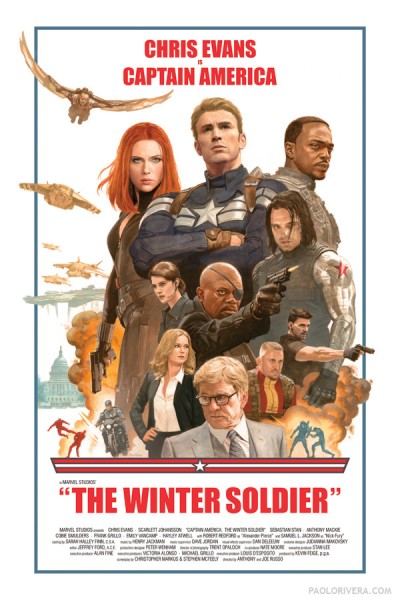
I would estimate that, when it comes to the movies, Ryan the Trash Film Guru and I agree with each other perhaps 95% of the time.  What’s interesting is that the 5% of the time that we have disagreed, it’s always been the result of an entry in the Marvel Cinematic Universe.  As Ryan has documented many times on this site, he’s not a fan of the MCU.  (The title of his review of the second Thor film is probably one of the best that’s ever appeared on this site.)  As for me, I’m the exact opposite.  In fact, I am such a fan of the MCU that I am about to suggest that Captain America: The Winter Soldier — along with being one of the best action films of the year — deserves serious Oscar consideration.

(Ryan’s opposite take on the film can be read here.)

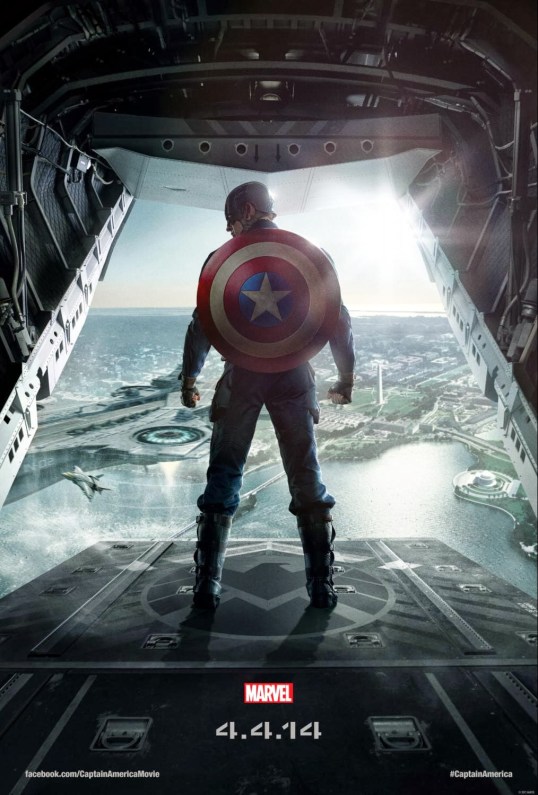
Now, unlike some of the films that I’ve suggested deserve your consideration, Captain America: The Winter Soldier, along with receiving critical acclaim, was also a major commercial success.  What made The Winter Soldier unique was that it deserved both the acclaim and the money.  There was a lot that I liked about The Winter Soldier.  In the role of Captain America, Chris Evans was both likable and, most importantly, believable as a hero out of time.  And while I would have never guessed that her character was supposed to be Russian, Scarlett Johansson continued her streak of kicking serious ass in the role of the Black Widow.  Samuel L. Jackson brought his customary style to the role of Nick Fury and Sebastian Stan was properly intimidating as the Winter Soldier.  The action scenes were exciting, the dialogue was sharp and witty, and the film worked both as a stand alone film and as a part of the overall Marvel universe.

But, for me, what truly elevated Captain America: The Winter Soldier was the film’s subtext.  (In that way, I would compare it to another surprisingly intelligent genre film, The Purge: Anarchy.)  For those who may have forgotten, the villains of the Winter Soldier are all members and pawns of Hydra, a secret organization that has so infiltrated the American establishment that it has literally become something of a shadow government.  Hydra has also infiltrated SHIELD and plans to use their intelligence capabilities to not only preemptively identify possible threats but to eliminate them as well.  In fact, by taking control of the SHIELD helicarriers, Hydra can anonymously deliver death and destruction from above.

Does that sound familiar to anyone?

What truly makes this subtext come alive is that fact that the main villain — Hydra’s double agent in SHIELD — is played by none other than Robert Redford.  Any student of American film knows what Robert Redford represents.  Early in his career, Redford was the idealistic, ambitious, and frequently laconic protagonist, the perfect symbol of American exceptionalism.  In the 1970s, Redford was the audience surrogate in classic paranoia films like Three Days of the Condor and All The President’s Men.  Lately, as the man behind the Sundance Film Festival and a frequent director, Robert Redford has been the epitome of bourgeois, establishment liberalism.

Hence, when we hear Redford say, “Hail Hydra,” it’s more than just a catch phrase.  It’s also the film’s way of saying that we’re all fucked.  If even Robert Redford can be a villain, the film seems to be saying, then how foolish do we have to be to fully trust anyone or anything?  If Robert Redford can order people killed and then justify it by claiming that he was acting for a greater good then why are we so shocked when governments do the exact same thing?

We live in paranoid times.  In the future, historians will recognize that few films captured that paranoia as perfectly as Captain America: The Winter Soldier.

captainamerica

For Your Consideration #7: Snowpiercer (dir by Bong Joon-ho)


It is perhaps a sign of the times that 2014 saw the release of several dystopian films.  Whether it was the Purge: Anarchy, Mockingjay, The Maze Runner, Edge of Tomorrow, Dawn of the Planet of the Apes, or even Interstellar, all of these films shared a similarly bleak view of the future.  Filmmakers everywhere seemed to agree that humanity is basically doomed.

Unfortunately, with so many different and competing views of our sucky future, I fear that a lot of people may have missed one of the best of them.  When taken along with all of the usual Academy biases, I fear that means that Snowpiercer is pretty much out of the running for a best picture nomination.  It’s true that Snowpiercer did win best picture from the Boston Online Critics and there’s always an outside chance that Tilda Swinton could pick up a best supporting actress nomination.  But, for the most part, Snowpiercer has been overlooked.

And that’s a shame because Snowpiercer is one of the best of the year.

The premise of Snowpiercer is, in its way, brilliant.  After environmental scientists go a bit too far in their effort to battle global warming, the world suffers a second ice age.  (I have to admit that I enjoyed this development, just because heroic environmentalists are such a cliché.)  With the entire world frozen, what is left of humanity ends up on a massive train known as the Snowpiercer.  For the next twenty years, the Snowpiercer rushes up and down a track that spans the entire planet.

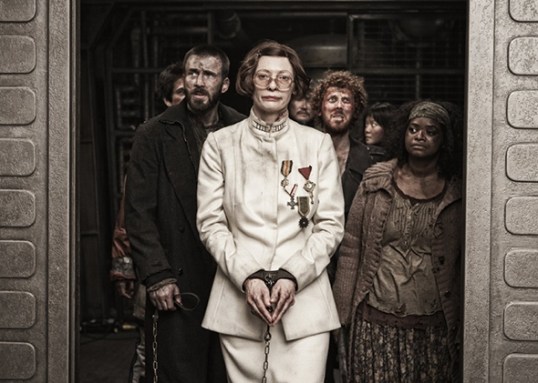
A new society forms on the Snowpiercer and, not surprisingly, it’s a lot like the old society.  The rich live up at the front of the train.  The poor live in the tail section.  All laws are set by the rarely seen Wilford (Ed Harris).  Wilford’s will is enforced by faceless soldiers and his blandly monstrous second-in-command, Mason (Tilda Swinton).

Twenty years later, the people in the tail section attempt their latest revolt.  This time, they’re being led by the charismatic Curtis (Chris Evans, proving that he’s capable of playing a lot more than just Capt. America).  Taking Mason hostage, Curtis leads his people through each car, slowly making their way to the front.  Along the way, they meet a lot a violent resistance and Curtis discovers that his rebellion was not quite as virtuous as he originally assumed…

Snowpiercer was one of the most imaginative science fiction films that I saw in 2014, a triumph of acting, direction, and design.  Each car has its own unique personality and look.  Perhaps the film’s best scene is when Curtis finds himself in the car that serves as the train’s school.  He and his grimy rebels listen as a perky and friendly teacher (Alison Pill) indoctrinates her students about the benevolence of Wilford.  It’s a surrealistic and tense scene, one that ends with burst of sudden and unexpected violence.

Perhaps what I most appreciated about Snowpiercer was that, despite all appearance to the contrary, it was ultimately a humanistic and optimistic film.  This is the rare action film where violence is not designed to look fun.  Though many character may not survive, the film never celebrates or cheapens their death.  Even the film’s most unsympathetic characters are still allowed moments of humanity.  This is a film that not only ends on a hint of hope but which earns that hope as well.

Snowpiercer is one of the best films of the year and it’s one that definitely deserves more consideration than it’s been given.

140624_MOV_Snow.jpg.CROP.promo-mediumlarge