Retro Television Review: Baywatch 2.1 and 2.2 “Nightmare Cove”


Welcome to Retro Television Reviews, a feature where we review some of our favorite and least favorite shows of the past!  On Saturdays, I will be reviewing Baywatch, which ran on NBC and then in syndication from 1989 to 2001.  The entire show can be viewed on Tubi.
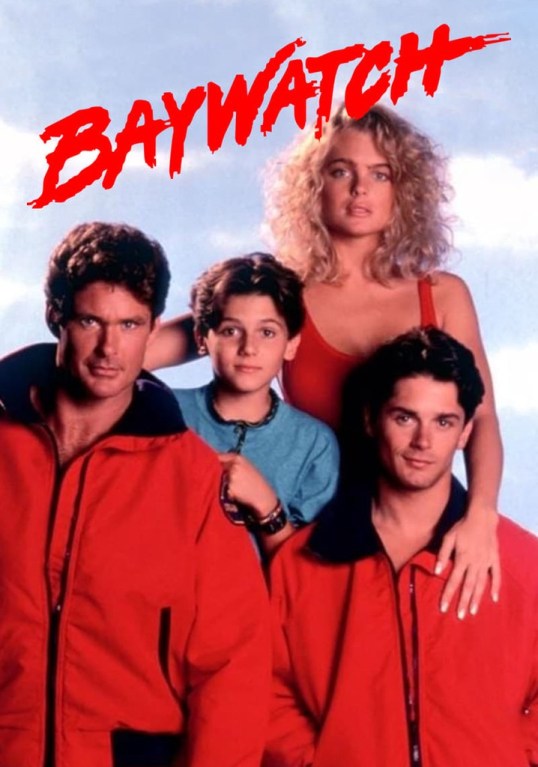
This week, we start season 2 of Baywatch.  Canceled by NBC, Baywatch found a new home in syndication.  The show was re-launched with a special two-hour premiere.  (For subsequent re-airings, the premiere was split into two episodes.)

Episode 2.1 and 2.2 “Nightmare Cove”

(Dir by Gregory J. Bonnan, originally aired on September 23rd, 1991)

A year and half after the final episode of Bayside’s network run, the show returns to the beach.

On the one hand, the basic idea is the same.  David Hasselhoff plays Mitch Buchanan, a divorced father who loves nothing more than being a lifeguard.  Eddie (Billy Warlock) and Shauni (Erika Eleniak) are two young lifeguards who are in love (though their engagement from the previous season is not mentioned).  Don Thorpe (Monte Markham) is Mitch’s no-nonsense boss. The sunsets are still beautiful.  The beaches are still inviting.

And yet, there are a few differences:

  1. Craig, Cort, Gina, Garner, and Trevor are nowhere to be seen.  (Craig, Cort, and Garner will all eventually return.  Gina and Trevor will never be mentioned again.)
  2. Hobie, Mitch’s son, is now played by Jeremy Jackson.
  3. Richard Jaeckel, who played doomed life guard Al Edwards in the pilot film, is now playing Ben Edwards, who apparently is meant to be the same character as Al.  (Mitch specifically mentions that Ben broke his leg when the pier collapsed, retconning Al’s heroic death into a mere injury.)
  4. Cort may be gone but there’s a new money-hungry lifeguard named Harvey (Tim McTigue).
  5. The second season premiere features even more musical montages than appeared in the first season.
  6. The second season premiere features a lot of random shots of women in skimpy bikinis.
  7. The red Baywatch one-piece swimsuits are back but now, they’re considerably tighter and more high-cut.
  8. The new Baywatch was airing in syndication.

I get the feeling that the Baywatch cameraman probably got together and all chanted, “Syndication, baby!” before running out onto the beach.  Even though the second season premiere is still far from what Baywatch would eventually become, one can already see the development of the aesthetic that led to it becoming the number one show for 90s frat boys and dads suffering from a midlife crisis.

As for this episode, there are rumors of an underwater monster and everyone wants in on the action.  Mitch saves an underwater photographer and falls in love for an episode.  Hasslehoff’s then-wife, Pamela Bach, plays a reporter whose editor wants sensationalized stories about the “beast of the bay.”  Of course, the beast of the bay is actually just the creation of an offshore oil company who wants to drill and ruin the environment because why not?  Luckily, one of the lifeguard, Devon (Andrea Thompson), is also an environmental activist.  Of course, Andrea Thompson is not listed in the opening credits so I imagine we’ll never see Devon again.

While Mitch is investigating the monster, Shauni rescues a little girl from drowning and then gets involved in the family’s life.  The family is black and the little girl’s brother is being recruited by a street gang so the very white Shauni arranges from him to join the junior lifeguards instead.  Shauni’s critical father (Albert Stratton) is impressed but I have to admit that I found the storyline to be a bit condescending.  Like a lot of 90s shows, Baywatch was at its weakest when it tried to deal with real-life issues.  It’s hard not to notice that whenever a guest actor who wasn’t white showed up on episode of Baywatch, they were always either being tempted or pressured to join a gang or they were trying to get out of the gang lifestyle.

In this episode, there’s an odd moment when Hobie decides to go into a storm drain and pretend to be the monster, which leads to a panic on the beach and monster hunters showing up with guns.  Mitch shows up and ends the situation before it gets too out-of-hand but you really do have to wonder if maybe Hobie would be better off with his mother.  I mean, seriously, Mitch — what are you doing here?  Your son is apparently an idiot who never learned anything from the dozen or so times his life was put in danger during the first season.

Finally, Thorpe gets promoted and he wants Mitch to take his place as chief.  Mitch argues that the new chief should be Ben Edwards.  Since apparently Ben has the power to come back from the dead, I can see Mitch’s logic.  In the end, Thorpe agrees.

And that’s it for this episode.  It’s definitely Baywatch but it’s still not quite as fun as the show would eventually become once it fully embraced just how ludicrous things could get in syndication.  This episode — and I imagine the rest of this season — feels like a show that is still making the transition from network television to anything-goes syndication.  Eventually, the show will get David Charvet, Pamela Anderson, and David “The Bulge” Chokachi.  During season 2, it was still just Billy Warlock and Erika Eleniak.
Live Tweet Alert: Join #ScarySocial for The Amityville Horror!


As some of our regular readers undoubtedly know, I am involved in a few weekly live tweets on twitter.  I host #FridayNightFlix every Friday, I co-host #ScarySocial on Saturday, and I am one of the five hosts of #MondayActionMovie!  Every week, we get together.  We watch a movie.  We tweet our way through it.

Tonight, at 9 pm et, Deanna Dawn will be hosting #ScarySocial!  The movie?  The Amityville Horror!  

If you want to join us this Saturday, just hop onto twitter, start the movie at 9 pm et, and use the #ScarySocial hashtag!  It’s a friendly group and welcoming of newcomers so don’t be shy.

The film is available on Prime!

Scenes That I Love: Mark Gregory in 1990: The Bronx Warriors


Today would have been the 62nd birthday of actor Mark Gregory, who will always be remembered for playing Trash in 1990: The Bronx Warriors and Escape From The Bronx.

In this scene from 1990: The Bronx Warriors, we’re reminded that everyone loves Trash.

4 Shots From 4 Films: Special Lone Scherfig Edition


4 Or More Shots From 4 Or More Films is just what it says it is, 4 shots from 4 of our favorite films. As opposed to the reviews and recaps that we usually post, 4 Shots From 4 Films lets the visuals do the talking!

Today, TSL wishes a happy birthday to Danish director Lone Scherfig!  It’s time for….

4 Shots From 4 Lone Scherfig Films

An Education (2009, dir by Lone Scherfig, DP: John de Borman)

One Day (2011, dir by Lone Scherfig, DP: Benoît Delhomme)

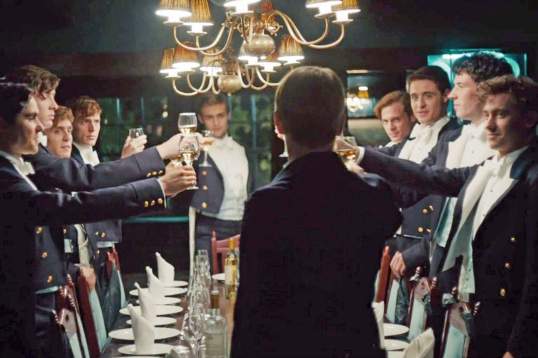
The Riot Club (2014, dir by Lone Scherfig, DP: Sebastian Blenkov)

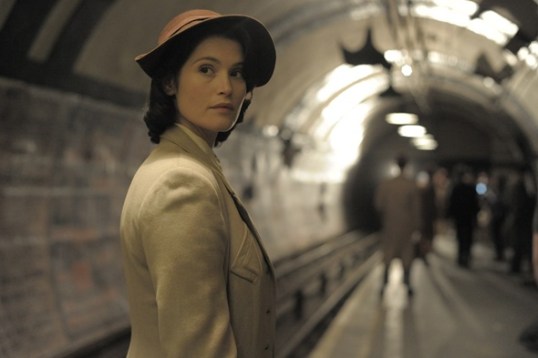
Their Finest (2016, dir by Lone Scherfig, DP: Sebastian Blenkov)

Late Night Retro Television Review: Freddy’s Nightmares 2.11 “Dreams that Kill”


Welcome to Late Night Retro Television Reviews, a feature where we review some of our favorite and least favorite shows of the past! On Fridays, I will be reviewing Freddy’s Nightmares, a horror anthology show which ran in syndication from 1988 to 1990. The entire series can be found on Tubi!

This week, Springwood Confidential struggles to keep a host.

Episode 2.11 “Dreams That Kill”

(Dir by Tom DeSimone, originally aired on December 17th, 1989)

In this follow-up to Dream Come True, Dick Gautier plays Charlies Nickels, the new host of Springwood Confidential.  When he announced that his next show will be a discussion about whether or not a nightmare can kill you, he soon finds that his dreams are being haunted by Freddy Krueger (Robert Englund, hamming it up and apparently enjoying the opportunity to do more than just host for once).  Freddy is worried that the show will cause people to stop sleeping.  I’m not really sure that I follow Freddy’s logic — sleep is unavoidable, no matter how much you want to stay up for days at a time — but whatever.  Eventually, Freddy torments Charlie to the point that Charlie ends up in a coma, where Freddy can torture him 24/7.

At the hospital, a doctor (Nicholas Cascone) removes some of Charlie’s brain fluid and injects it into a comatose teenager named Mark Lindstrom (Christian Borcher).  Mark comes out of his coma but now he has Charlie’s personality and he desperately wants to be the next host of Springwood Confidential.  Mark gets the job but soon, he’s having nightmares involving Freddy.

“This is supposed to be Charlie Nickels’s dream!” Freddy says, spying Mark.  “Two for the price of one!”

As you probably already guessed, this episode ends with a vengeful Mark injecting his brain fluid into the doctor.  So now, it’s three for the price of one….

I kind of liked the idea of Freddy being passed from one victim to another.  And Robert Englund was entertaining as Freddy.  That said, this episode basically felt like the same story told twice.  Freddy haunted Charlie.  Freddy haunts Mark in the exact same way.  It was better than anything the first season had to offer but this episode still ultimately felt a bit redundant.

Retro Television Review: St. Elsewhere 3.18 “Any Portrait In A Storm”


Welcome to Retro Television Reviews, a feature where we review some of our favorite and least favorite shows of the past! On Fridays, I will be reviewing St. Elsewhere, a medical show which ran on NBC from 1982 to 1988.  The show can be found on Daily Motion.

This week, it’s a stormy episode!

Episode 3.18 “Any Portrait In A Storm”

(Dir by Leo Penn, originally aired on January 30th, 1985)

As a rain storm rages outside, the drama inside St. Eligius continues.

Dr. Auschlander cancels the grand unveiling of his portrait, saying that he doesn’t feel worthy of the attention and also admitting to Westphall that the whole thing not only makes him feel old but also reminds him that he’s dying.  Westphall’s response is to nod glumly because Westphall is the most depressed man on the planet.  Auschlander is dying of liver cancer and he still manages to usually be more cheerful than Westphall.  Even this episode ends with Auschlander in a good mood.  He finally looks at his portrait and discovers that he likes it.  Plus, Luther tells Auschlander how important he is to him and the other workers at the hospital.

While Auschlander feels his age and Westphall sadly stares at the ceiling, Dr. Ehrlich makes an effort to be more polite and fails completely.  Ms. Hufnagle argues about her hospital bill.  In an amusing moment, Warren spots Dean (Tim Van Patten) getting on an elevator and shouts, “Salami!”  Before St. Elsewhere, Byron Stewart (who played Warren) and Van Patten starred together on a show called The White Shadow.  Stewart played Warren, the same character that he plays on St. Elsewhere.  Van Patten played someone named Salami.  What makes the scene especially humorous is that Dean hesitates before saying, “You got the wrong guy,” as if he somehow remembers being a different character on another show.

Dean is at the hospital to tell his pregnant girlfriend that, despite the fact that she’s currently in labor, he’s leaving Boston for Florida so he can set up a drug deal.  Both Dean’s girlfriend, Maddy (Lycia Naff), and Peter White’s widow, Myra (Karen Landry), give birth in this episode.  Tragically, Maddy’s daughter dies.  Myra has a son, who survives and who she names Peter.  Afterwards, she receives an anonymous present — a little ski mask, identical in every way but size to the one that her late husband used to wear while he was terrorizing the hospital.

This was not a bad episode.  The rain served as a good (if perhaps too obvious) metaphor for the drama happening inside the hospital.  A good deal of this episode centered around Dr. Woodley trying to get Maddy to accept some help and get Dean out of her life.  The problem is that this is only Dr. Woodley’s third or fourth episode and, as a result, I still don’t feel like I know much about the character.  Having her suddenly take center stage for this episode felt a bit premature.  Still, Norman Lloyd’s performance as Dr. Auschlander and the scene were Dr. Craig realizes that he left his lights on when he got out of his car kept things watchable, occasionally humorous, and, in the end, rather poignant.  Sometimes, Dr. Asuchlander could be almost too good to be true but Norman Lloyd’s performance always sold every moment.  That was certainly the case here.

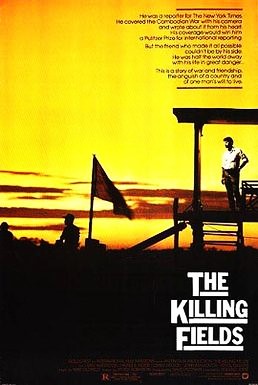
Lisa Marie Reviews An Oscar Nominee: The Killing Fields (dir by Roland Joffe)


1984’s The Killing Fields opens in 1973.  While America is distracted by the growing Watergate scandal and the final battles of the Vietnam War, the nation of Cambodia descends into chaos.  Civil War has broken out between the Cambodian National Army and the Khmer Rouge, a savage communist group led by Pol Pot.  In its desire to return Cambodia to “year zero,” the Khmer Rouge targets anyone who is considered to be too educated or too urban.

Sent to cover the war, journalist Sydney Schanberg (Sam Waterston) meets up with his translator, Dith Pran (played, in an Oscar-winning performance, by Haing S. Ngor).   For two years, Schanberg covers the war in Cambodia, taking pictures of bombed out cities, dead Cambodians, and the bullying teenagers who seem to make up the majority of the Khmer Rouge’s membership.  The Khmer Rouge’s leadership may claim to be creating an equal society but it’s hard not to notice that they act like gangsters, posing with their cigarettes and making a great show over deciding who will live and who will die.  In 1975, when it becomes apparent that the Khmer Rouge have won the war, the press and the diplomats all prepare to evacuate.  Sydney and his colleagues are able to return to their home countries.  Dith Prain’s family escape but Dith Pran himself is left behind in Cambodia where, disguising himself as a disabled beggar, he witnesses the horrors of the Khmer Rouge’s Year Zero.

The Killing Fields is an accidental anti-communist film.  Director Roland Joffe, produced David Puttnam, and screenwriter Bruce Robinson were all men in the left and, in the film, Sydney Schanberg puts the blame for the rise of the Khmer Rouge directly on the American bombing campaign of the early 70s.  The film somehow has the audacity to end with John Lennon’s Imagine, a song that epitomized the worst excesses of the Khmer Rouge’s philosophy, playing over the end credits.

I’ll be the first to admit that the film probably does have a point about the bombing of Cambodia.  The chaos that followed the bombing undoubtedly helped the Khmer Rouge to both organize and to bring in new recruits.  In this film, the Khmer Rouge commanders love to show off their power because, as Cambodians, they had previously been made to feel that they had no control over their destinies.  However, in the scenes with Dith Pran faces the horrors of the reeducation camps and discovers the fields full of skulls and other human remains, the viewer is reminded that it takes more than confusion to lead to this type of concentrated brutality. It takes a group of people brainwashed by a destructive ideology.

(How destructive was the Khmer Rouge’s Maoist philosophy?  The Khmer Rouge’s plan was to return Cambodia to being an agricultural society, one where the State stood in for both family and religion.  To do so, cities were razed.  People who were considered to be intellectuals and free thinkers were tortured and executed.  Doctors were murdered.  Having bad eyesight was considered to be a sign of intelligence and, as such, people who wore glasses were specifically targeted.  As Dith Pran says in the film, the Cambodians who survived were told that they no longer had families, friends, or beliefs.  Now they were to only worry only about serving the organization, the Angkar.)

It’s the scenes of Dith Pran in Cambodia that drive home the powerful anti-communist message that the filmmakers were perhaps not aware that they were delivering.  Haing S. Ngor was not a professional actor when he played Dith Pran.  Instead, he was a gynecologist and an obstetrician who, after the Khmer Rouge came to power, pretended to be dumb to survive.  Like Dith Pran, he was sent to a reeducation camp and he eventually escaped by making his way through the area that Dith Pran called “the Killing Fields.”  Unlike Dith Pran, Ngor’s family did not survive.  (After being sent to work on a rice farm, his wife died in childbirth.)  In the film, when we see Dith Pran discovering the Killing Fields for the first time, we are witnessing Haing Ngor recreating the moment that he discovered them.  The pain and the horror in his eyes is not only Dith Pran’s but also Haing Ngor’s and every other Cambodian who was forced to flee their country to escape the Khmer Rouge.  The film may blame America for the rise of the Khmer Rouge but Ngor’s performance makes it clear that only the Khmer Rouge can be blamed for what happened after they came to power.

It’s a powerful film, though I do think I would be remiss not to mention that Al Rockoff, the photographer played by John Malkovich in the film, has been very critical of the way that the film depicts both Sydney Schanberg and a scene where the journalists attempt to make a phony passport for Dith Pran.  Indeed, the scenes with Schanberg back in New York are considerably less compelling than the scenes of Dith Pran fighting to survive in Cambodia.  When the film’s version of Rockoff accuses Schanberg of using Dith Pran’s tragedy to advance his own career, it’s hard not to agree with him.

The film was nominated for Best Picture of 1984 but lost to Amadeus.  Dr. Ngor did win the Oscar for Best Supporting Actor, becoming the second non-professional (after Harold Russell for The Best Years of Our Lives) to do so.  Ngor went on the appear in a handful of films before being murdered in 1996.  Three members of a street gang were convicted of the murdering Ngor while attempted to rob him.  (Ngor was shot when, after giving them his Rolex, he refused to surrender a locket that contained a picture of his late wife.)  In 2009, Kang Kek lew, a Khmer Rouge official on trial for war crimes, claimed that Ngor’s murder was actually ordered by Pol Pot, the leader of the Khmer Rouge.

The Killing Field was obviously meant to be primarily critical of American foreign policy but, intentionally or not, it has since proven itself to be one of the strongest anti-communist films ever made.


The Academy Has Changed The Rules


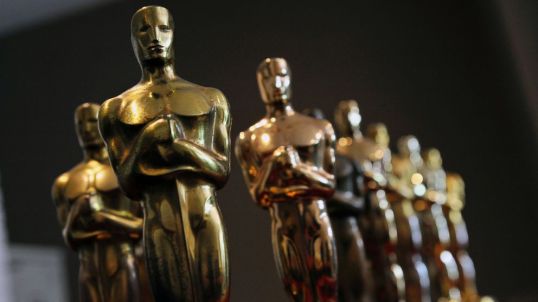
The Academy has announced their new rules for the 99th Oscars.  There are a few important changes.

To me, the biggest one is that actors can now be nominated twice in the same category.  In the past, a performer could only be nominated for one film per category.  (Occasionally, you might have someone nominated for both the lead category and the supporting category and this led to more than few instances of category fraud, where a leading performance would suddenly be listed as a supporting performance so that someone could get two nominations.)  On a practical level, this means that if Eric Roberts gives two great lead performances this year, he could end up competing against himself for Best Actor.  Or, more realistically, he might take all five slots in the Best Supporting Actor category.

AI actors are not eligible to be nominated.  So, Val Kilmer will not be eligible for As Deep As The Grave.

AI-written screenplays are always not eligible to be nominated and I’m sure this rule will not lead to any shadowy whisper campaigns once awards season begins.  (Hopefully, the sarcasm was noted.)

Best International Feature will no longer be awarded to the winner’s country of origin.  Instead, it will be awarded to the film’s director.  As well, films that win awards at a select group of international film festivals will be eligible for consideration as well.  I imagine this decision was made to get around the politics of the various submission committees.  No longer will a Palme d’Or winner be ineligible just because it was made by someone on the outs with their country’s current government.

Here are all the rule changes:

AWARDS RULES AND CAMPAIGN PROMOTIONAL REGULATIONS
APPROVED FOR 99TH OSCARS®

Additional Submission Key Dates Announced

LOS ANGELES, CA – The Academy’s Board of Governors has approved awards rules, inclusion standards and campaign promotional regulations for the 99th Academy Awards®.

For Academy Awards consideration, a feature film must have a qualifying theatrical release between January 1, 2026, and December 31, 2026.

Substantive awards rules changes include:

In the Acting category, actors may be nominated for multiple performances in the same category if those performances place in the top five votes, which aligns with achievements in other award categories.
Additionally, in the Acting category, only roles credited in the film’s legal billing and demonstrably performed by humans with their consent will be considered eligible.

In the Casting category, the number of statuettes awarded will increase from a maximum of two to a maximum of three statuettes.

In the Cinematography category, the preliminary voting round will produce a shortlist of 20 films rather than 10-20.

In the International Feature Film category, there are now two ways to submit a film for consideration. In addition to a film being submitted as an official selection by a country or region via the Academy-approved Selection Committees, a non-English language film can now be submitted for consideration by winning a qualifying award at an international film festival as specified in the International Feature Film Award Qualifying Festival List. Qualifying festivals for the 99th Oscars® are the Berlin International Film Festival (Golden Bear for Best Film), Busan International Film Festival (Busan Award – Best Film Award), Cannes Film Festival (Palme d’Or), Sundance Film Festival (World Cinema Grand Jury Prize), Toronto International Film Festival (Platform Award) and Venice International Film Festival (Golden Lion).

Additionally, in the International Feature Film category, the film will be credited as the nominee rather than the country or region, and the award will be accepted by the director on behalf of the film’s creative team. The director’s name will be listed on the statuette plaque after the film title and, if applicable, the country or region.

In the Makeup and Hairstyling category, Makeup Artists and Hairstylists Branch members must attend at least one of the two final branch meetings (roundtables) to be eligible to vote in the preliminary round.
In the Original Song category, the rules clarify a song’s eligibility when based on its placement in the end credits. For songs submitted as the first new music cue once the end credits begin, the video clip must include the last 15 seconds of the film before the credits begin.

In the Visual Effects category, all Academy members must view the three-minute Before and After reels from the Visual Effects Bake-Off to be eligible to vote in the final round.
In the Writing categories, the rules codify that screenplays must be human-authored to be eligible.

For Governors Awards recipients, a minimum of three disciplines must be represented in a given Awards year.

Under Eligibility (Rule Two) regarding Generative Artificial Intelligence, the Academy reserves the right to request more information about the nature of the use and human authorship.
Awards submission deadlines and additional key dates are as follows:

Thursday, August 13, 2026: First submission deadline for Animated Short Film, Documentary Feature Film, Documentary Short Film and Live Action Short Film categories

Thursday, September 17, 2026: First submission deadline for General Entry categories, Animated Feature Film, Best Picture and Representation and Inclusion Standards Entry (RAISE) form

Wednesday, September 30, 2026: Submission deadline for International Feature Film

Thursday, October 8, 2026: Final submission deadline for Animated Short Film, Documentary Short Film and Live Action Short Film categories

Wednesday, October 14, 2026: Submission deadline for Music (Original Song)

Thursday, October 15, 2026: Final submission deadline for Documentary Feature Film

Wednesday, November 4, 2026: Submission deadline for Music (Original Score)

Thursday, November 12, 2026: Final submission deadline for General Entry categories, Animated Feature Film, Best Picture and Representation and Inclusion Standards Entry (RAISE) form

January 8 – 10, 2027: Casting, Makeup and Hairstyling, Sound and Visual Effects voting events (bake-offs)

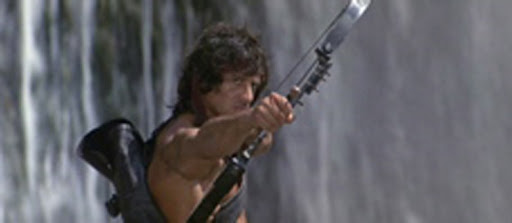
Film Review: Rambo: First Blood Part II (dir by George Pan Cosmatos)


Three years after blowing up the town of Hope, John Rambo (Sylvester Stallone) is …. workin’ on the chain gang…. (I hope you sang it.)  However, Colonel Sam Trautman (Richard Crenna) has a suggestion for Rambo.  He can get a full pardon if he infiltrates Vietnam and investigates what might be a POW camp….

So begins 1985’s Rambo: First Blood Part II!

When viewers first met John Rambo in 1982’s First Blood, he was a drifter who was obviously uncomfortable with dealing with other people.  Haunted by both his experiences in Vietnam and the way he was treated when he returned to his own country, Rambo was someone who largely wanted to be left alone.  He was the ultimate outsider.  When he asked Brian Dennehy’s Sherriff Teasle where he could get a cop of coffee, Teasle told him to go over the border and have his coffee in Canada.  (Is there anything more insulting than to tell a Vietnam veteran to go to Canada like a draft dodger?)  Rambo was someone who could take care of himself.  He was someone who knew how to survive in the wilderness.  But, in the first movie, he was not superhuman.  Rambo was considerably banged up by the end of First Blood.  The other thing that is sometimes overlooked is that, as far as his time in Hope was concerned, Rambo never deliberately killed anyone.  The only person who died in First Blood was a sadistic police officer who was so determined to get a shot at Rambo that he accidentally tumbled out of a helicopter.  When Rambo fought, it was in self-defense.  Rambo had plenty of opportunities (and, by today’s cultural standards, reasons) to kill Sheriff Teasle and his deputies but he didn’t.  Things are a bit different in the sequel.  Rambo: First Blood Part II transforms Rambo from a relatively realistic character into the comic book action hero that everyone knows today.  Rambo’s gone from being a hulking drifter to being a muscle-bound warrior.

The film doesn’t waste any time getting Rambo out of prison and over to Thailand.  The obviously duplicitous Murdock (Charles Napier) tells Rambo that his mission is solely to take pictures and not to engage with the enemy.  (You may be wondering why anyone would recruit Rambo for a mission that doesn’t involve engaging with the enemy and it’s a fair question.)  Soon, Rambo is in the jungles of Vietnam, meeting up with a rebel named Co (Julia Nickson), and heading up river with a bunch of pirates.  Needless to say, Rambo is soon engaging with the enemy.

Rambo: First Blood Part II is an undeniably crude film.  Clocking in at 96 minutes, the film makes it clear that it doesn’t have any time to waste with characterization or debate.  Sylvester Stallone rewrote James Cameron’s original script and he gives a performance that has little of the nuance that was present in the first film.  And yet, the film has an undeniable hypnotic power to it.  It’s pure action.  Rambo exists to blow up his enemies, whether it’s with a gun or an explosive arrow or the missiles fired from a stolen helicopter.  Because the bad guys are all arrogant sadists who exist to remind American viewers of the humiliation of its first military defeat, there’s an undeniable pleasure in watching them get defeated by one motivated warrior who refuses to be held back by the paper pushers in charge.  Murdock tells Rambo not to rescue any POWs.  Rambo responds by machine gunning Murdock’s office.  It’s pure wish fulfillment and it is cathartic to watch.  It’s perhaps even more cathartic to watch today, after the twin traumas of the COVID lockdowns and the chaotic withdrawal from Afghanistan.  Murdock becomes a stand-in for every incompetent bureaucrat who ever let America down.  The Murdock who tells Rambo not to rescue any Americans is little different from the men who told business that they had to close and who tried to dictate whether or not people could leave their homes.  The Murdock who was prepared to leave American behind is the same person who did leave Americans behind in Kabul.  Rambo’s anger is the anger of everyone who values freedom above obedience.

Rambo kills a lot of people in the sequel but none of them are American.  He’s a patriot, albeit an angry one who will never forgive his country for not caring about its veterans as much as they cared about it.  “Do we get to win this time?” Rambo ask Trautman and it’s a moment that, like much of the movie, is both crudely simplistic but is powerful in its refusal to be complicated.  Rambo: First Blood Part II is a fantasy but it’s also a plea to be allowed to succeed.  Forget the rules.  Forget the regulations.  Just allow the people to win.

Rambo: First Blood Part II (1985, dir by George Pan Cosmatos, DP: Jack Cardiff)

A Quickie With Lisa Marie: A Futile and Stupid Gesture (dir by David Wain)


I was recently trying to remember if I had ever seen a truly great (as opposed to just good) film about a comedian.  The closest I could come up with was the original Fame but, while that film does feature Barry Miller as an aspiring comedian, he’s only a part of the ensemble.  He’s not the sole focus of the film and his most memorable moment is when he get taunted by Richard Belzer and then bombs on stage.

Why do movies about comedians often seem to fail?  Some of that is because they star people who aren’t necessarily believable as comedians (The Comedian) and they try to cover up that fact by including way too many shots of people laughing uproariously in response (Man of the Year, the HBO television series I’m Dying Up Here).  Another major problem is that comedians themselves tend to be a bit difficult to take when they’re not on stage.  Having to spend 90 to 120 minutes hanging out with a group of emotionally closed-off people who won’t stop trying to be funny can be exhausting.  It’s really not as surprise that many movies  (Lenny, Funny People, Joker) about comedians tend to portray them as being seriously damaged people.  Punchline is an interesting example of a film that managed to feature not only a miscast and not particularly funny star (Sally Field, in this case) but also a group of comedians (led by Tom Hanks) who come across as being a real chore to hang out with.

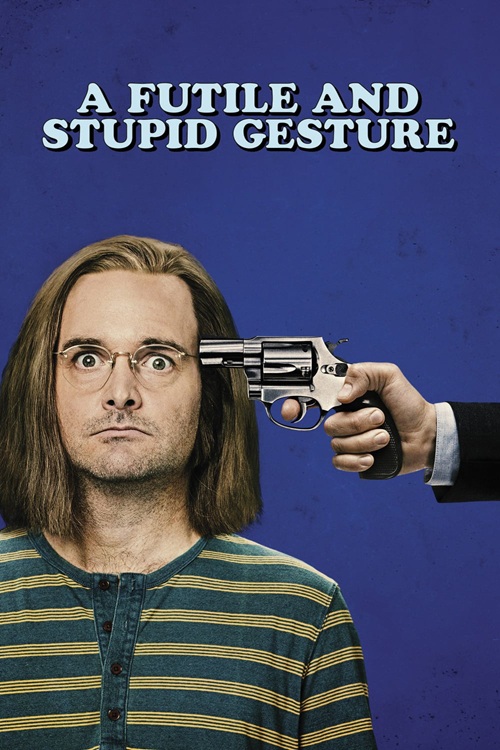
All of that brings us to 2018’s A Futile And Stupid Gesture, an exhausting biopic about National Lampoon-founder Doug Kenney.  The film establishes itself from the start by featuring a gray-haired Martin Mull as who Doug Kenney would have grown up to be if he hadn’t died mysteriously at the age of 33.  While Mull narrates, Will Forte (who was so brilliant in Nebraska) plays the youngish Kenney.  Meanwhile, a host of 21st century comedy all-stars play the comedy all-stars of the 1970s, with only Joel McHale’s Chevy Chase and Nelson Franklin’s PJ O’Rourke making much of an impressions.  Our narrator mentions that most of the actors don’t look like the characters that they’re playing because this is the type of movie where the fourth wall is repeatedly broken.  A lot of people credit Adam McKay with making it trendy to break the fourth wall.  In reality, it was Michael Winterbottom with 24-Hour Party People.  Either way, it’s one of those things that’s been done so many times that it no longer feels the least bit subversive.  A Futile and Stupid Gesture is so extremely stylized (here comes another fantasy sequence!) that it actually feels more desperate than clever.

A Futile and Stupid Gesture is a tiring film, largely because everyone in the movie is such a quip machine that you get sick of listening to them after the first few minutes.  The film makes the argument that Kenney’s refusal to stop making jokes was because of the trauma of losing his brother when he was younger but that still doesn’t make the film’s version of Kenney any less exhausting as a character.  To be honest, though, just about every character in the film is exhausting.  So many famous lines are uttered that I was ready to throw a shoe at the television by the time Michael O’Donoghue (Thomas Lennon) said, “I don’t write for felt.”  Between this film and Saturday Night, I’ll be very happy to never see another movie featuring someone playing Michael O’Donoghue.

It’s a shame it’s not a better film because one does get the feeling that the film was coming from a place of love.  Director David Wain has directed some funny movies and he was one of the people behind Children’s Hospital, one of my favorite shows.  I wanted to like this film and I feel a little bit guilty that I didn’t.  But, in the end, it’s hard not to feel that maybe a better tribute to Doug Kenney would have been to have filmed Bored of the Rings.