The Adventures Of A History Nerd: Candidates ’76


President Milton Shapp.

That sounds strange, doesn’t it?  There’s never been a President named Milton Shapp.  The name itself doesn’t exactly sound all the Presidential.  A president named Milton?  At one time, Milton brought to mind Paradise Lost.  Today, for many people, Milton might bring to mind Stephen Root protectively holding his red stapler in Office Space.  It’s not a name that we associate with presidents.

And yet, in 1976, Milton Shapp was one of the many people who ran an at least semi-serious campaign for presidency.  He was the governor of Pennsylvania, having first been elected in 1970 and narrowly re-elected in 1974.  He was the owner of an electronics company, a self-made millionaire.  He played the violin.  He wrote poetry.  He was the author of several musicals that had never actually been produced.  He ran for the Democratic Presidential nomination and, as you can probably guess, he didn’t get far.  If he had been elected, he would have been the country’s first Jewish President.

Of course, he wasn’t elected President.  If he had been elected, it’s doubtful that he would have been any better than Jimmy Carter.  But he would be remembered.  Milton Shapp would be the one with the books written about his life and Jimmy Carter would be the one reduced to being an obscure footnote in someone else’s story.

Unfortunately for Milton Shapp and the majority of the other people who ran for President in 1976, people don’t remember the also-rans.  They remember the candidates who won their party’s nominations.  To me, that’s a shame.  Sometimes, the also-rans are far more intriguing than the people who won.  In 1976, the first election after America’s only presidential resignation, over 20 candidates either ran or considered running for the White House.  Arizona’s Mo Udall was a one-eyed Mormon who was also a former basketball player.  North Carolina’s Terry Sanford was the President of Duke University.  Oklahoma’s Fred Harris traveled across the country in a RV and stayed in the homes of his supporters.  Indiana’s Birch Bayh and Idaho’s Frank Church were respected technocrats.  Maryland’s Sargent Shriver was a Kennedy brother-in-law.  Texas’s Lloyd Bentsen was a protegee of Lyndon B. Johnson and once called for nuking North Korea.  Washington’s Henry “Scoop”  Jackson was the original front runner who was still referred to be his childhood nickname despite being in his 50s.  Alabama’s George Wallace campaigned from his wheelchair.  At one point, every candidate had a shot at breaking through but only a few made it to the Convention.  How different would America be if Mo Udall or Lloyd Bentsen or Milton Shapp had won in 1976?

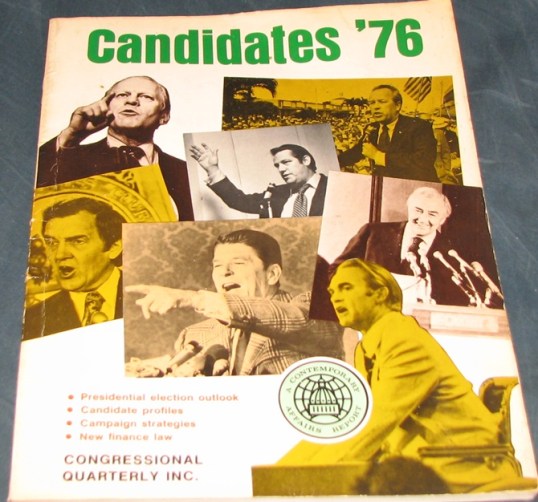
If you’re wondering how I know about all of these folks, it’s because I recently ordered a copy of Candidates ’76, a collection of candidate profiles that was put together by Congressional Quarterly.  Along with taking a look at their positions on the issues of the day, it also details their individual backgrounds and assesses their prospects.  Because Candidates ’76 was written in 1976, there’s no benefit of hindsight here.  Instead, it’s an honest historical document, one that was written at a time when no one was sure what the post-Watergate political scene would eventually look like.  For a history nerd like me, it’s the type of thing that is fascinating to read.

For the record, the following candidates and potential candidates are profiled in Candidates ’76.  Candidates with an asterisk by their name actually ended up on the primary ballot in 1976.

Republicans:

  1. Gerald Ford*
  2. Ronald Reagan*
  3. Nelson Rockefeller
  4. John B. Connally
  5. Howard Baker
  6. Charles Percy
  7. Charles Mathias
  8. Elliot Richardson
  9. Donald Rumsfeld
  10. George H.W. Bush

Democrats:

  1. Birch Bayh*
  2. Lloyd Bentsen*
  3. James “Jimmy” Carter*
  4. Frank Church*
  5. Fred Harris*
  6. Hubert Humphrey
  7. Henry Jackson*
  8. Edward M. Kennedy
  9. Edmund Muskie
  10. Terry Sanford*
  11. Milton Shapp*
  12. R. Sargent Shriver*
  13. Morris L. “Mo” Udall*
  14. George C. Wallace*
  15. George McGovern
  16. Jerry Brown*
  17. Hugh Carey

Independent;

  1. Eugene McCarthy*

(As far as I can tell, the only candidate that CQ missed was Robert Byrd, who ran as a favorite son in West Virginia.  Future Vice President Walter Mondale also ran briefly for President but ended his campaign before Candidates ’76 was put together.)

One of the great things about being a history nerd is that I can find a lot of happiness in reading something like Candidates ’76 and playing the “What If?” game.  At a time when misinformation is everywhere and when historical revisionism has been normalized, it’s nice to be able to go back and look at an original document.  It’s the next best thing to having a time machine.
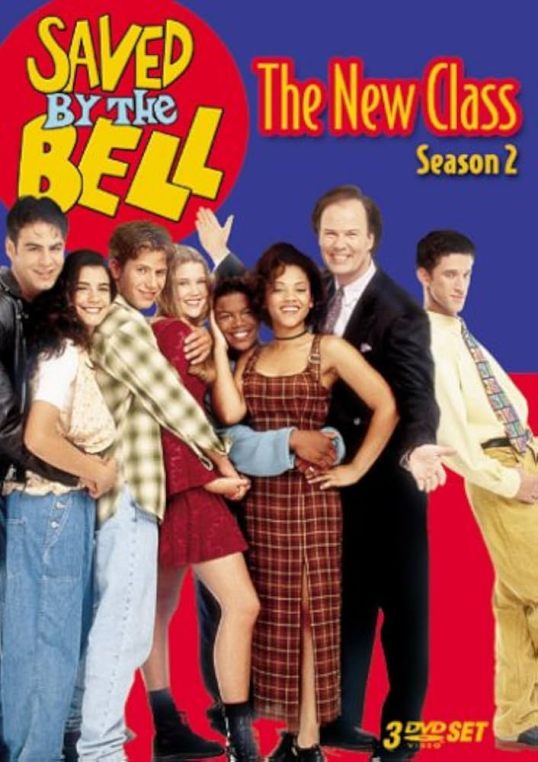
Retro Television Review: Saved By The Bell: The New Class 2.7 “The People’s Choice”


Welcome to Retro Television Reviews, a feature where we review some of our favorite and least favorite shows of the past!  On Tuesdays, I will be reviewing Saved By The Bell: The New Class, which ran on NBC from 1993 to 2o00.  The show is currently on Prime.

This week, Screech becomes a crusading editor.

Episode 2.7 “The People’s Choice”

(Dir by Don Barnhart, originally aired on October 1st, 1994)

Feeling underappreciated at the high school, Screech asks to be made faculty advisor of the school paper.  With a staff made up of the Gang, Screech rejuvenates the paper.  Soon, he is directing an investigation into why there’s no money in the school’s athletic budget for the girl’s swim team to go to state.  Could it be because the misogynistic football coach (Brian Reddy) is a embezzling the money so the football team can go on a trip?

Unfortunately, everyone gets so involved in pursuing the story that they neglect their studies and they skip Mr. Belding’s college entrance exam review session!  Honestly, college entrance exams are incredibly easy and anyone who needs a review session to do well on them wasn’t going to get into a decent college anyways.  Seriously,  just blow all that off and go to a party school like I did.  GO MEAN GREEN!

Anyway, Screech realizes the error of his ways and puts the newspaper staff through a grueling review session.  Everyone does well on their exam.  And Screech disguises himself as an old man and tricks the coach into confessing his embezzlement!  The coach presumably works with Screech every day so how did he fall for a wig and a fake mustache?  Seriously, what is the deal with this show and disguises?

Despite the rather stupid plot, this episode wasn’t that bad.  Dustin Diamond actually gave a fairly believable performance as Screech and the ensemble had a good chemistry.  I’ll admit that I laughed at Tommy D’s attempts to be a food critic.  I bet we never hear about the newspaper again.


The Films of 2026: Citizen Vigilante (dir by Uwe Boll)


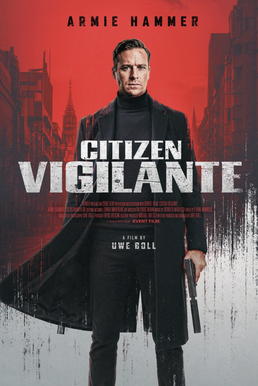
In Citizen Vigilante, Armie Hammer returns to the screen as Sanders, a former American military operative who is now living in an unnamed European country.  The people in the country are terrified because the country has been flooded with violent refugees and the liberal judges and the ineffective police and the corrupt government can’t or won’t keep anyone safe.  Sanders makes it his mission to mete out justice.

When he sees a group of arrogant young people refusing to pay to ride the bus, he pays for their ticket and then shows their leader that he has a gun.  He explains how one person refusing to pay leads to everyone else having to pay more.

When he visits with a prostitute, he is disgusted to see that the building she works in has mold.  Sanders is especially upset because his company owns the building.  Sanders say that people have to start doing the right thing.  Then he pays a woman for sex.

When a judge allows a group of rapists to go free because they’re struggling to “integrate into society,” Sanders drugs the judge and slits his wrists.

Sanders goes to the office of his father’s company and orders the any of his tenants who aren’t paying their rent should be immediately evicted.  It’s explained that the government won’t allow Sanders to immediately evict anyone.  In fact, the government wants Sanders to hand over his open units so that they can be used to house migrants.  Sanders says that he’ll talk to the tenants himself.  Uh-oh.

When the cops come looking for Sanders, he blows them up.

Sanders kills an innocent motorist in order to make a point about how people are scared to break the law.  Wait, what?  This is our hero?

Sanders kills a lot of people.  He’s the Citizen Vigilante.  He sends out distorted videos of himself in which he rambles about Nietzsche and justice.  The fact that he sends out visually distorted videos would seem to suggest that he’s trying to hide his identity but he also spends almost the entire film wearing the exact same outfit and making no attempt to disguise his appearance while out in public.  Interpol is determined to catch him but the average citizen, the people being victimized by “woke liberalism” (to quote Sanders), love him.

Lord help us.  It’s 2026 and otherwise reasonable people are currently debating the merits of a Uwe Boll film.  For all the talk about how this film is politically incorrect and right-wing, it’s really not that much different from Boll’s Assault on Wall Street.  Both Assault on Wall Street and Citizen Vigilante are crude, heavy-handed films that capture the fantasies of people who currently feel powerless.  Assault on Wall Street was designed to appeal to the Resistance morons, the same people who would later insist that Luigi Mangione’s vapid manifesto was a call for revolution.  Citizen Vigilante is designed to appeal to the most simple-minded of the populists.  Running through both Citizen Vigilante and Assault on Wall Street is a contempt for anything that reeks of “the system.”  Both films are fueled less by politics and more by paranoia.  Germany made the mistake of banning Citizen Vigilante, which just added more fuel to a fire that would have otherwise burned itself out.

Citizen Vigilante opens with a scene of shocking violence.  It’s one of the more effective moments in the film, largely because it captures the randomness of modern crime.  It’s also one of the few scenes not to feature Armie Hammer.  One can make the argument that Armie Hammer was treated unfairly when he was canceled.  (I mean, there are people out there who still think that Hammer is a cannibal!)  Before his career collapsed, Hammer was a busy actor.  His piercing eyes and his deep voice made him ideal for both heroes and villains.  Citizen Vigilante has been touted as Hammer’s comeback, or at least it was until it was actually released.  Hammer wanders through the film in almost zombie-like trance, refusing to show a hint of emotion.  Every time he speaks, the deepness of his voice only reminds of how shallow the character (and the film) really is.  The film works best when its lead character and actor are nowhere to be seen.

Citizen Vigilante is crude.  Is it effective?  Occasionally.  Like most revenge films, it gets at the type of primal thoughts that a lot of people pretend not to have.  That said, Uwe Boll is not a good director.  Uwe Boll is an interesting media presence.  I respect the fact that, when he challenged his critics to a boxing match, he actually followed through and knocked most of them out.  I imagine there are many directors who are envious of that.  But, as a filmmaker, Boll has never shown much skill or concern when its come to concepts like pacing, continuity, or getting the best out of his actors.  Citizen Vigilante is a slow film that’s built around a character who registers as a big blank.  It’s neither as dangerous nor as revolutionary as you may have heard.  In the end, it’s just another film about people getting shot, blown up, and stabbed.  I imagine that some scenes will achieve a second life on YouTube.  That’s just the way of the world nowadays.  But the film itself will be forgotten in a few months.

Wow.  I just watched and reviewed a Uwe Boll film.  I should get hazard pay.


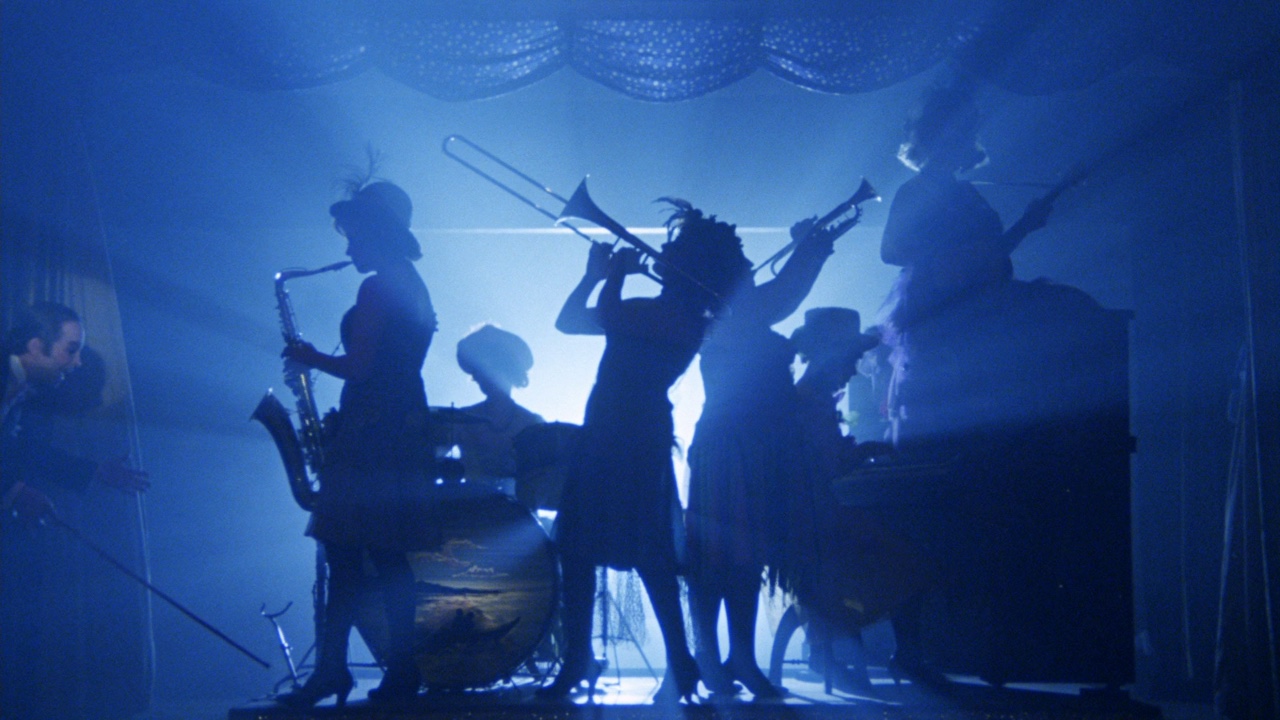
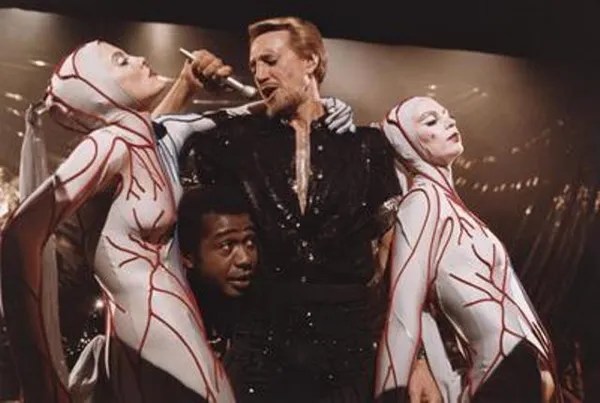
Scene That I Love: The Opening of All That Jazz


“Showtime!”

Since today is Bob Fosse’s birthday, it’s only appropriate that today’s scene that I love comes from his 1979’s masterpiece, All That Jazz!

This sequence captures everything we need to know about Joe Gideon (Roy Scheider).  We see his talent.  We see his self-destructive habits.  And, though we don’t realize it until the end of the film, we also see that death is patiently waiting for him.


4 Shots From 4 Films: Special Bob Fosse Edition


4 Or More Shots From 4 Or More Films is just what it says it is, 4 shots from 4 of our favorite films. As opposed to the reviews and recaps that we usually post, 4 Shots From 4 Films lets the visuals do the talking!

Today, we celebrate the birth and legacy of Bob Fosse.  It’s time for….

4 Shots From 4 Bob Fosse Films

Cabaret (1972, dir by Bob Fosse, DP: Geoffrey Unsworth)

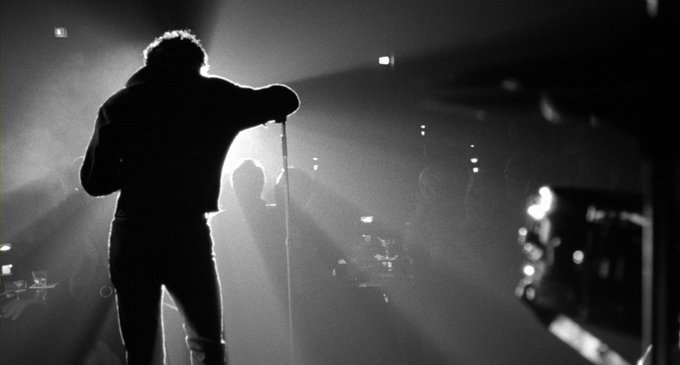
Lenny (1974, dir by Bob Fosse, DP: Bruce Surtees)

All That Jazz (1979, dir by Bob Fosse, DP: Giuseppe Rotunno)

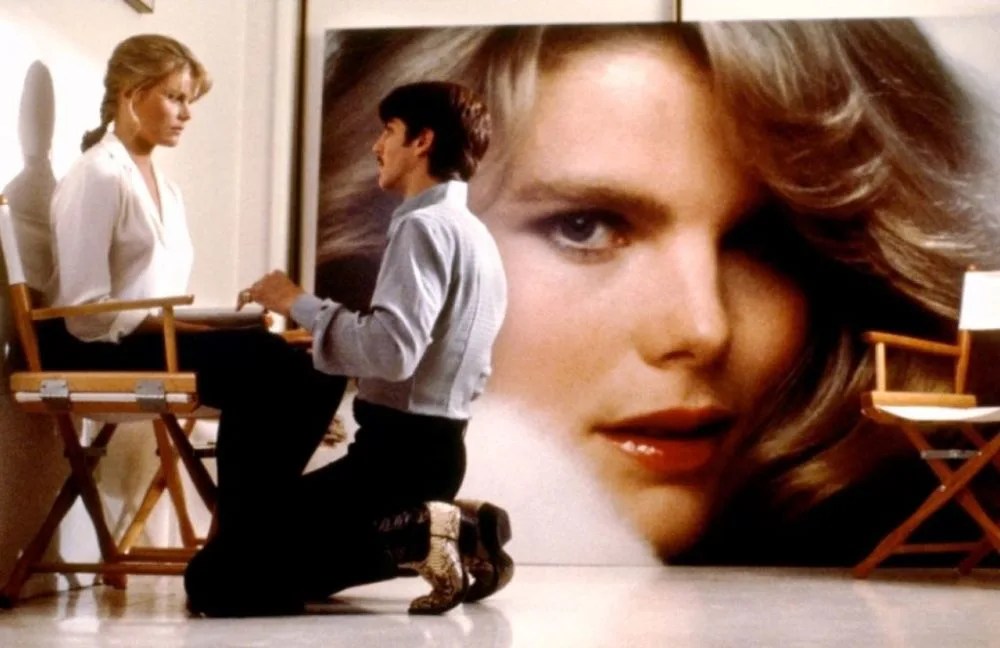
Star 80 (1983, dir by Bob Fosse, DP: Sven Nyvkist)

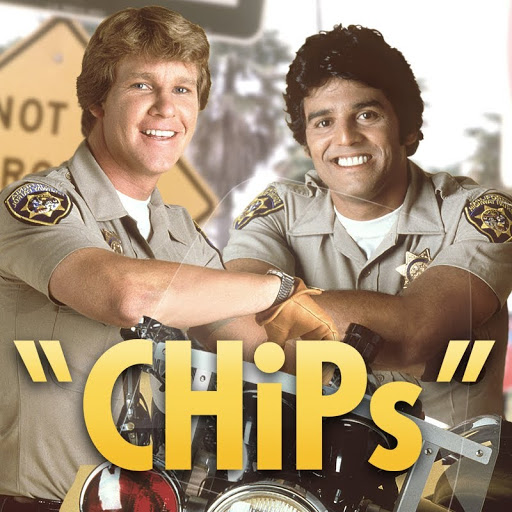
Late Night Retro Television Review: CHiPs 5.24 “Ice Cream Man”


Welcome to Late Night Retro Television Reviews, a feature where we review some of our favorite and least favorite shows of the past!  On Mondays, I will be reviewing CHiPs, which ran on NBC from 1977 to 1983.  The entire show is currently streaming on Prime!

This week, a cop-turned-criminal tries to prove that he’s gone straight.  Will he able to convince Ponch?

Episode 5.24 “Ice Cream Man”

(Dir by Leslie H. Martinson, originally aired on April 18th, 1982)

Tom Corey (Robert Walker, Jr.) used to be a top member of the Highway Patrol until he was caught breaking the law himself.  Tom Corey was a car thief, not because he needed the money but just because he needed the thrill.  Tom was sent to prison.  His wife (Karen Jennings) divorced him.  His son (Noah Hathaway) was told that Tom had died shortly after he was born.  Now, nearly six years later, Tom is out of prison and he’s working as an ice cream man.  He insists that he’s gone straight and all he cares about now is keeping a distant eye on the son who doesn’t know who he is.

Baker is willing to give Tom the benefit of the doubt but not Ponch.  When a rash of vehicle thefts break out, Ponch suspects that Tom is involved.  To an extent, Ponch is right.  The ringleader of the thieves is a businessman named Reno Hale (James Wainwright).  Hale wants Tom to work for him.  Tom sees an opportunity to redeem himself by taking Reno down.

This was an interesting episode, in that the focus was not on Ponch or Baker but instead on Tom and his efforts to prove that he had gone straight.  In fact, this episode almost felt like a backdoor pilot for a series that would have focused on Tom’s life outside of prison.  It’s easy to imagine Tom spending each week foiling criminals while trying not to violate the terms of his parole.  Robert Walker, Jr. gave a strong performance as Tom and the scenes between him and the cops were filled with an energy that reminded me of the first two seasons of CHiPs, before the whole thing became the Ponch Show.

This was a good episode.  Tom was an interesting character and there was one spectacular accident that actually made me jump a little.  (It looked like Randi Oakes barely avoid getting seriously injured.)  This was a nice throwback to what the show used to be.

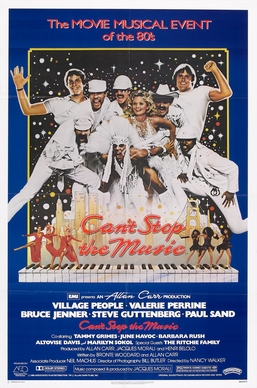
Film Review: Can’t Stop The Music (dir by Nancy Walker)


1980’s Can’t Stop The Music opens with Jack Morrell (young Steve Guttenberg) working in a record store.  However, he’s got bigger plans that just standing behind a cash register.  He quits his job and then roller skates around New York with a big goofy grin on his face.  Everyone he passes is charmed.  And why not?  New Yorkers are famous for their good-humor and polite manners.

Jack is a songwriter but he doesn’t have the voice necessary to sell his songs.  His platonic roommate, former supermodel Sam Simpson (Valerie Perrine), decides that what Jack needs is a band to sing his lyrics.  Luckily, Sam knows a singer named Felipe Rose.  He spends all of his time dressed like an Indian brave.  There’s no specific reason given for his costume choice, it’s just something that he does.  Sam and Jack are also able to recruit a construction worker (David Hodo), a “leatherman” (Glenn Hughes), a cowboy (Randy Jones), a G.I. (Alex Briley), and a singing cop (Ray Simpson).  The name of the band?  The Village People!

Yes, Can’t Stop The Music is fictionalized story of how The Village People came together.  It was directed by TV actress Nancy Walker.  It was a major studio production, one that was expected to build on the popularity of disco and bring in a lot of money.  Unfortunately, it was released at the same moment that disco stopped being trendy.  Can’t Stop The Music has a reputation for being bad and campy.  Both of those things are true but I should point out that it’s also a remarkably boring film.  The movie is full of characters who are constantly coming and going.  Sam has a large collection of friends and former co-workers, all of whom just tend to randomly pop up.  Most of them don’t really add much to the overall plot and, indeed, it’s hard not to resent being expected to keep track of all of them when there’s really no reason for many of them to be in the film.  A pre-transition Caitlyn Jenner plays Ron White, a lawyer who is mugged while delivering a cake and who ends up as Sam’s boyfriend.  As much as I made fun of Jenner as a performer while reviewing CHiPs, Jenner is even worse in You Can’t Stop The Music.  In fact, Jenner’s performance is one of the worst that I have ever seen.  If Ron angry?  Is Ron sad?  Is Ron in love?  Is Ron an alien from outer space?  You never really can tell, largely because Caitlyn Jenner’s performance is so inept.  It’s not so much that Jenner can’t show emotion and one gets the feeling that Jenner isn’t even sure what emotion is.

As for the Village People themselves …. well, this film leaves little doubt that none of them were professional actors.  Felipe Rose probably comes the closest to giving a credible performance but, as individuals, the members of the Village People aren’t that interesting and it takes forever for them to actually become a group.  Even after they become a group, they still can’t generate enough on-screen charisma to really hold our attention.  Who knew the Village People were so boring?

The majority of the film plays coy as far as the subtext of the Village People’s song are concerned.  Steve Guttenberg’s character is definitely gay-coded without the film actually coming out and saying so..  The construction worker gets a fantasy in which he imagines being lusted after by several female groupies.  The first few performances of the Village People are rather bland and it’s almost as if the film is trying to avoid the fact that the Village People’s songs and the personas of the performers all paid tribute to gay culture in the 1970s.  But then the film hits the YMCA production number and suddenly, the Village People are frolicking with half-naked, muscular men while joyfully singing about everything that’s available at the YMCA.  For that brief moment, the film embraces the campiness of the Village People and this major studio production actually becomes a bit subversive.  It’s also one of the few moments in the film in which anyone seems to be genuinely happy.  The Village People seem to be having fun.  Unfortunately, the YMCA sequence is the exception instead of the rule.

Can’t Stop The Music‘s sin isn’t that it’s boring as much as it’s just bland.  It’s an incredibly blah film.  No film about New York in the 70s has any right to be so forgettable.

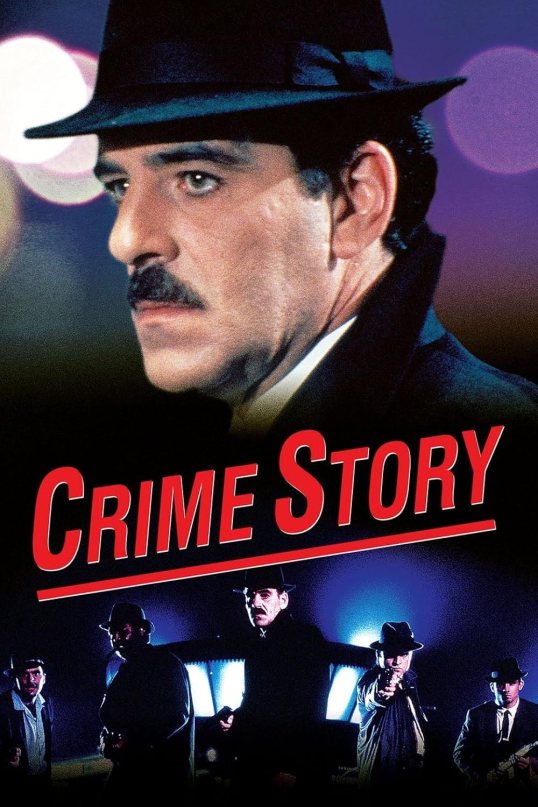
Retro Television Review: Crime Story 1.8 “Old Friends, Dead Ends”


Welcome to Retro Television Reviews, a feature where we review some of our favorite and least favorite shows of the past!  On Mondays, I will be reviewing Crime Story, which ran on NBC from 1986 to 1988.  The entire show can be found on Tubi!

This week, Torello discovers some disturbing facts about an old friend.

Episode 1.8 “Old Friends, Dead Ends”

(Dir by Bobby Roth, originally aired on November 4h, 1986)

Luca has bought a controlling interest in a bottling company so that he can borrow from the pension fund and use that money to purchase casinos in Las Vegas.  He’s brought a reluctant Bartoli in as his partner.  The owner of the company is Ted Kehoe (Mark Hutter), who just happens to be an old friend of Mike Torello’s.  When Kehoe’s business partner, Marilyn Stewart (Dana Wheeler-Nicholson), becomes suspicious of Kehoe’s arrangement with Luca, Bartoli starts to wonder if it’s really worth it to keep Marilyn and Ted around.

This is especially the case after Bartoli’s attorney, Dee (a youngish Eric Bogosian), informs Bartoli that U.S. Attorney Harry Brietel (Ray Sharkey) is planning on indicting both him and Luca for money laundering.  Looking to end Brietel’s case before it can even get started, Luca murders Marilyn Stewart.  Marilyn’s body is later found by two teenagers and–

HEY, IT’S CHRISTIAN SLATER!

This episode does indeed feature an early performance from Christian Slater.  He pays a teenager who is trying to convince his girlfriend to “do it” when they happen to spot Marilyn’s body floating in the river.  Slater’s girlfriend is played by Kim Walker, who was later co-star with Slater in Heathers.

Torello is not happy.  Well, that’s not a surprise.  Torello is never happy.  But this episode gives him even more reasons than usual to be in a foul mood.  Because of his childhood friendship with Ted Kehoe, Brietel suspects that Torello might be corrupt.  After Marilyn is murdered, Brietel seems more interested in trying to pin the murder on Torello than going after Luca.

As for Ted Kehoe, he tells Luca that he’s done working for him.  Kehoe is going to tell the cops everything!  And what is Luca going to do about it?  This episode ends with Kehoe getting thrown out the window of his penthouse and falling several stories down to his death….

Piece of advice: If you’re going to turn on the mob, don’t tell them ahead of time.

This was a good episode!  Torello’s friendship with Kehoe brought some real stakes the story and, once again, we got to see just how ruthless an adversary Ray Luca truly is.  Luca, Bartoli, and the other mobsters can occasionally seem a bit buffoonish.  This episode reminded us that, in Luca’s case, it’s always a mistake to underestimate him.

As for now, Kehoe is dead and Torello is under suspicion.  I look forward to seeing what happens next week!

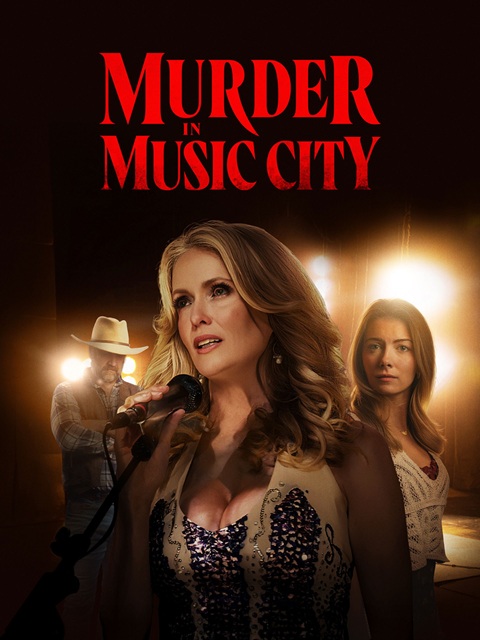
Lifetime Film Review: Murder In Music City (dir by Dave Thomas)


The music industry!  It’s murder!

And if you have any doubt about whether or not that statement is true, just consider the recent Lifetime film, Murder In Music City.

Jimmy Stone (Ty Trumbo) is a handsome young singer/songwriter who is trying to make it big in Nashville.  When we first see him, he’s taking a shower because this is a movie that knows what its audience wants.  Jimmy then sits down and works on a song that he’s been writing about a woman named Stephanie.  It sounds …. well, actually it sounds terrible.  But it’s terrible in that way that gets stuck in your head, kind of like that “Take Me To Church” song by Hozier.  Hey, Jimmy might have a hit on his hands!  Unfortunately, Jimmy is then beaten death with a guitar.

Because Jimmy was a guest of country superstar Aiblene Tucker (Deena Dill), she is arrested for his murder.  Abilene’s estranged daughter, Caroline (Madison Crawford), comes to Nashville to try to prove that her mother is innocent.  Caroline’s investigation leads her to everyone from one of Abilene’s ex-husbands to the president of Abilene’s fan club.  It turns out that Abilene always had a lot of people around her and they all had a motive for killing Jimmy.  Working with Abilene is Jimmy’s brother, Kyle (Brigdon York).  Abilene starts to fall for Kyle but it turns out that Kyle has some secrets of his own.

This film features an unusual twist on the typical Lifetime plot by having someone get arrested for the murder about halfway through the film.  With the real murderer apparently in jail, Abilene is free to resume her life and prepare for her comeback special.  However, Caroline comes to suspect that perhaps the wrong person was arrested and that the real murderer is still out there.  It all leads to secrets being revealed and songs being sung.  There’s a lot of songs sung in this film.  Perhaps too many, to be absolutely honest.

Despite not being a country music fan, I have to say that I absolutely loved Murder In Music City.  It was a film that cheerfully embraced the melodrama and celebrated all the excess that went along with it.  It was the type of fun, “I don’t believe that just happened” film that used to dominate the Lifetime airwaves.  This is one of those films where you don’t really worry too much about narrative logic or whether or not all of the clues really add up.  Instead, you just enjoy the ride.  And it is a very enjoyable ride.  There’s nothing more fun that watching someone have to both solve a murder mystery and deal with an egocentric parent.

In the role of the self-absorbed Abilene, Deena Dill gives a wonderful performance.  She’s not going to let a little thing like being accused of murder get in the way of her lavish lifestyle and her upcoming show.  Deena Dill plays Abilene as a force of nature and she brings a lot of humor to the role.  Also giving a good performance is Madison Crawford, who is very likable and relatable as Caroline.  You can see how having a mother like Abilene has shaped her but you also see the inner strength that has allowed Caroline to build a life of her own.

A terrifically entertaining film, Murder In Music City is what Lifetime should be all about!