Embracing the Melodrama Part II #115: Revolutionary Road (dir by Sam Mendes)


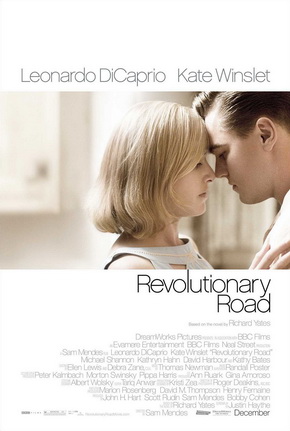
Revolutionary_roadI have such mixed feelings about the 2008 film Revolutionary Road.

As you may remember, Revolutionary Road got a lot of attention because it reunited the Titanic lovers, Kate Winslet and Leonardo DiCaprio.  In Revolutionary Road, they would be playing the type of married couple that we all know Jack and Rose would have become if the boat hadn’t hit that iceberg.

Revolutionary Road also got a lot of attention because it was directed by Sam Mendes and it was a return to the “suburbs-as-Hell” genre of filmmaking that won Mendes an undeserved Oscar for his work on American Beauty.

And finally, Revolutionary Road was based on a 1961 novel by Richard Yates that had originally been declared to be unfilmmable.  After decades of being optioned and then abandoned, Revolutionary Road was finally coming to the screen.

With all that in mind, a lot of critics expected that Revolutionary Road would be one of the best films of the year.  When the film itself was finally released, there were a few ecstatic reviews.  There were predictions of Oscar glory.  But, for the most part, both audiences and critics had a somewhat muted reaction.  The film itself simply did not live up to all of the build up.

That said, Kate Winslet gave a great performance.  In the role of aspiring actress-turned-housewife-turned-prisoner April, Winslet gives a fierce and tragic performance.  The film revolves around April’s struggle to live her own life and pursue her own ambitions in a world that continually tells her that she should simply be happy and content to have a husband, two children, and a house in the suburbs.  When April describes her life as being full of “hopeless emptiness,” we all know exactly what she’s talking about.

Leonardo DiCaprio was a bit less convincing as her husband, Frank.  Then again, that’s not really a surprise.  DiCaprio is always at his worse whenever he has to play a “normal” character.  His screen presence is too off-center for him to be believable as a suburban conformist.  It was obviously good publicity to reunite DiCaprio and Winslet but that doesn’t change the fact that Leo is totally miscast.  Whenever Frank and April fight, Kate Winslet seems to be screaming from her very soul while DiCaprio is just shrill.  Admittedly, Frank is meant to be a shallow character but that doesn’t justify a shallow performance.

Throughout the film, Frank and April are constantly nagged by their real estate agent, Helen Givings (Kathy Bates).  Whenever Helen drops by the house, she goes “Yoo hoo!” in the shrillest way possible and the audiences is reminded that Sam Mendes is not a particularly subtle director.  That willingness to go over-the-top made him the perfect director for Skyfall but, in both American Beauty and this film, it just leads to some talented actors giving very bad performances.

Helen’s son, John (Michael Shannon), has one of those cinematic mental illnesses, the type that gives him the power to explicitly state each scene’s subtext.  John is also one of those overly theatrical characters who works a lot better as a literary conceit than as an actual character.

And really, I guess that sums up why I have never liked Revolutionary Road as much as I wanted to.  The film works whenever it focuses on Kate Winslet, precisely because she gives such a heartfelt and naturalistic performance.  However, at the same time, Winslet is so good that she exposes how artificial and theatrical the rest of the film is.  If only the rest of the production had followed Winslet’s lead, Revolutionary Road could have been something great.

For all the pre-release Oscar hype, Revolutionary Road was largely ignored when it came to the Academy Awards.  Michael Shannon received a surprise nomination for best supporting actor but otherwise, the film was snubbed.  Kate Winslet, however, did finally win an Oscar that year when she picked up the Best Actress award for her performance in The Reader.
Scenes I Love – “You see..I’m Gatsby.”


When Baz Luhrmann’s The Great Gatsby came out in 2013, I skipped seeing the movie in the theatre to read F. Scott Fitzgerald’s novel first. I realize now I missed out, but as the film is on cable, I’m able to watch it at my leisure. One of my favorite scenes in the movie has actually become a meme for celebrations and snarky quips.

A little background. Our narrator, Nick Carraway (Tobey Maguire) receives an invitation to Jay Gatsby’s party, and in true Luhrmann style, it’s extremely grand. Fireworks, jazz bands and tons of liquor all around, but Gatsby (who no one seems to have met) is nowhere to be seen. As Nick makes his way through the celebrations, he finds himself talking to an individual whom the audience only knows by the onyx ring he wears. The camera purposely dances around revealing who he is for a few seconds. It’s here that Gatsby, played by Leonardo DiCaprio, then shows everyone that if you have to introduce yourself to a person, there’s no finer way to do so than to offer them a glass of champagne with Rhapsody in Blue and fireworks exploding in the background.

Nick describes the moment as follows:

“His smile was one of those rare smiles that you may come across four or five times in life. It seemed to understand you and believe in you just as you would like to be understood and believed in.”

Luhrmann and DiCaprio just totally sell that moment. This guy could sell a boat to someone living in the desert. Since no one knows who he is, there’s an air of mystery to him, much like Edmond Dantes when he returns as The Count of Monte Cristo.

Enjoy.

Lisa’s Way Too Early Oscar Predictions For April


Best Picture

Black Mass

Bridge of Spies

Brooklyn

The End of the Tour

Grandma

The Hateful Eight

In The Heart of the Sea

The Revenant

The Walk

Woman in Gold

Best Actor

Bryan Cranston in Trumbo

Leonardo DiCaprio in The Revenant

Michael Fassebender in Steve Jobs

Tom Hanks in Bridge of Spies

Jason Segel in The End of the Tour

Best Actress

Blythe Danner in I’ll See You In My Dreams

Jennifer Lawrence in Joy

Helen Mirren in Woman in Gold

Saoirse Ronan in Brooklyn

Lily Tomlin in Grandma

Best Supporting Actor

Jim Broadbent in Brooklyn

Albert Brooks in Concussion

Paul Dano in Love and Mercy

Tom Hardy in The Revenant

Kurt Russell in The Hateful Eight

Best Supporting Actress

Julia Garner in Grandma

Jennifer Jason Leigh in The Hateful Eight

Kristin Scott Thomas in Suite Francaise

Kristen Stewart in Clouds of Sils Maria

Meryl Steeep in Suffragette

Best Director

John Crowley for Brooklyn

Ron Howard for In The Heart of the Sea

James Ponsoldt for The End of the Tour

Steven Spielberg for Bridge of Spies

Robert Zemeckis for The Walk

Lisa’s Way Too Early Oscar Predictions for March


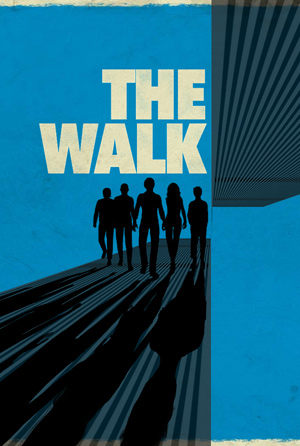
The-Walk-movie-poster

Best Picture

Black Mass

Bridge of Spies

Brooklyn

The End of the Tour

Grandma

The Hateful Eight

In The Heart of the Sea

The Revenant

The Walk

Woman in Gold

Best Actor

Bryan Cranston in Trumbo

Leonardo DiCaprio in The Revenant

Michael Fassebender in Steve Jobs

Tom Hanks in Bridge of Spies

Jason Segel in The End of the Tour

Best Actress

Blythe Danner in I’ll See You In My Dreams

Jennifer Lawrence in Joy

Helen Mirren in Woman in Gold

Saoirse Ronan in Brooklyn

Lily Tomlin in Grandma

Best Supporting Actor

Jim Broadbent in Brooklyn

Albert Brooks in Concussion

Paul Dano in Love and Mercy

Tom Hardy in The Revenant

Kurt Russell in The Hateful Eight

Best Supporting Actress

Julia Garner in Grandma

Jennifer Jason Leigh in The Hateful Eight

Kristin Scott Thomas in Suite Francaise

Kristen Stewart in Clouds of Sils Maria

Meryl Steeep in Suffragette

Best Director

John Crowley for Brooklyn

Ron Howard for In The Heart of the Sea

James Ponsoldt for The End of the Tour

Steven Spielberg for Bridge of Spies

Robert Zemeckis for The Walk

Lisa’s Way Too Early Oscar Predictions For February


Brooklyn

Well, tonight’s the night!  Soon, we will know which 2014 films have won Oscars.

And, as soon as the ceremony ends, it will be time to start speculating about which 2015 films will be nominated next year!  I am sharing and updating my predictions on a monthly basis and below you’ll find my latest predictions.  You can read my predictions for January by clicking here.

Some of these films and performers — like End of the Tour and Grandma — were acclaimed at Sundance.  (The recently concluded Berlin Film Festival, on the other hand, mostly just served to confirm that Knight of Cups and Queen of the Desert will probably not be contenders.)  Kristen Stewart recently won a Cesar Award for Clouds of Sils Maria.  Otherwise, the majority of predictions below are the results of my own wild guesses.

A year from now, we’ll probably look back at these predictions and laugh.

Best Picture

Black Mass

Brooklyn

The End of the Tour

Grandma

The Hateful Eight

In The Heart of the Sea

The Revenant

St. James Place

The Walk

Woman in Gold

Best Actor

Bryan Cranston in Trumbo

Matt Damon in The Martian

Leonardo DiCaprio in The Revenant

Michael Fassebender in Steve Jobs

Jason Segel in The End of the Tour

Best Actress

Blythe Danner in I’ll See You In My Dreams

Jennifer Lawrence in Joy

Helen Mirren in Woman in Gold

Saoirse Ronan in Brooklyn

Lily Tomlin in Grandma

Best Supporting Actor

Jim Broadbent in Brooklyn

Albert Brooks in Concussion

Paul Dano in Love and Mercy

Tom Hardy in The Revenant

Kurt Russell in The Hateful Eight

Best Supporting Actress

Julia Garner in Grandma

Jennifer Jason Leigh in The Hateful Eight

Kristin Scott Thomas in Suite Francaise

Kristen Stewart in Clouds of Sils Maria

Meryl Steeep in Suffragette

Best Director

John Crowley for Brooklyn

Ron Howard for In The Heart of the Sea

James Ponsoldt for The End of the Tour

Steven Spielberg for St. James Place

Robert Zemeckis for The Walk

Clouds of Sils Maria

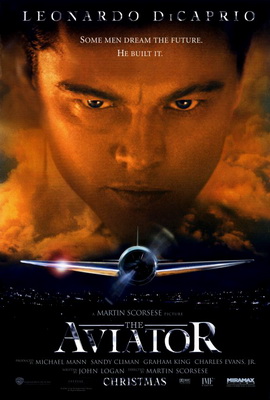
Shattered Politics #74: The Aviator (dir by Martin Scorsese)


The_Aviator_Poster

“The way of the future.” — Howard Hughes (Leonardo DiCaprio) in The Aviator (2004)

As I recently rewatched the 2004 best picture nominee, The Aviator, I realized that, in the film’s scheme of things, Ava Gardner was far more important than Katharine Hepburn.  (Or, perhaps it would be more appropriate to say that Kate Beckinsale’s Ava Gardner was far more important than Cate Blanchett’s Katharine Hepburn.)

Over the course of the film, both Hepburn and Gardner are involved with billionaire-turned aviator-turned film director Howard Hughes (Leonardo DiCaprio).  Throughout the film, Katherine is portrayed as being flighty, pretentious, and overdramatic.  There’s a lot of dark humor to the scene where Katherine breaks up with Howard, largely because Katharine is incapable of not acting as if she’s making a film.  Her every word is so carefully rehearsed that you have to agree when Howard says that she’s incapable of not giving a performance.  Ava, on the other hand, is always direct.  She has a sense of humor.  She has no trouble telling Howard off.  Whereas Katharine put on airs of being an incurable romantic, Ava tells Howard flat out that she doesn’t love him and is only using him to forward her career.

But, while Katharine Hepburn gets more screen time, it’s Ava Gardner who actually saves Howard’s business.  Towards the end of the film, after Howard has had a nervous breakdown and has locked himself in a hotel room, it’s Ava who suddenly shows up, cleans him, and dresses him.  She’s the one who gives Howard the strength to leave his room and to face down the corrupt senator (Alan Alda) who is investigating his business.

Of course, Howard Hughes is best known for once being the world’s richest recluse.  In the 1960s, Howard locked himself away in a hotel room in Las Vegas and spent the next decade laying naked in bed and watching television.  The Aviator doesn’t deal with this period of Howard’s life but it’s full of scenes where we catch glimpses of Howard’s future.  Throughout the film, we watch as Howard obsessively washes his hands.  We watch as he gives precise instructions on how even the simplest of tasks are to be accomplished.  We watch as he grows increasingly paranoid about the germ-filled outside world.  The film suggests that Howard’s obsessive compulsive disorder both served to make him a great engineer and a great filmmaker while, at the same time, ultimately destroying him.

The Aviator was the second film that DiCaprio made with Scorsese.  And, as bad as DiCaprio may have been in Gangs of New York, he’s absolutely brilliant in The Aviator.  As a character, Howard Hughes has so many quirks and tics that it would have been easy for DiCaprio to go overboard.  Instead, he gives a surprisingly subtle performance.  And, even more importantly as far as I’m concerned, he actually sounds authentically Texan when he speaks.

In many ways, much of The Aviator reminds me of Gangs of New York.  Both films are gorgeously produced period epics that try to cover a lot of material.  Both films are absolute cat nip for history nerds like me.  But, whereas Gangs of New York leaves one feeling vaguely dissatisfied, The Aviator actually improves with subsequent viewings.  Whereas the action in Gangs had no center, The Aviator revolves around Howard and the actor playing him.

While the Aviator starts off with Howard making movies and romancing Katharine Hepburn, it’s at its best when Howard appears before a committee chaired by Sen. Owen Brewster (Alan Alda) and passionately defends both himself as an engineer and a businessman and the right of innovators everywhere to freely pursue their passion.  The film suggests that Brewster was bribed by Howard’s main business rival, Juan Trippe (Alec Baldwin, in unapologetic villain mode), and it’s hard not to applaud when Howard stands up for himself.

Speaking of which, it’s odd, so soon after reviewing Alan Alda in The Seduction of Joe Tynan, to see Alda playing a far less ethical politician in The Aviator.  That said, Alda’s corrupt performance in The Aviator is a hundred times better than his cutesy work in Joe Tynan.  If anything, Alda gives a performance here that will remind everyone of why they don’t care much for their congressman.

The Aviator was nominated for best picture but it lost to the far more low-key Million Dollar Baby.  Scorsese would have to wait until the release of The Departed for one of his films to finally win best picture.

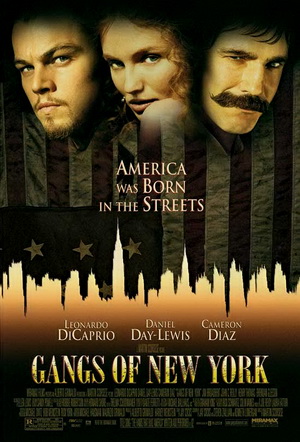
Shattered Politics #71: Gangs of New York (dir by Martin Scorsese)


Gangs_of_New_York_Poster

Despite the fact that it was nominated for best picture and marked the start of his fantastically successful collaboration with actor Leonardo DiCaprio, Martin Scorsese’s 2002 film Gangs of New York does not have the best reputation.  It always seems to be regarded as one of Scorsese’s lesser films and, often times, both The Aviator and The Departed are described as representing a comeback of sorts from Gangs.

To a certain extent, I have to agree.  Gangs of New York is a lesser Scorsese movie but then again, a lesser Scorsese film is still a hundred times better than the greatest films from Brett Ratner or Michael Bay.

The flaws of Gangs of New York are many.  The film, which tells the epic story of how an Irish gang led by Leonard DiCaprio battled a nativist gang led by Daniel Day-Lewis in Civil War-era New York City, runs for nearly 3 hours and yet it somehow still feels rushed and incomplete.  Cameron Diaz is far too contemporary of an actress to be truly believable as a 19th century pickpocket.  For that matter, Leonardo DiCaprio gives one of the worst performances of his career, coming across as being one-note and shrill.  If you only knew DiCaprio from his work in Gangs of New York, you would have a hard time believing that he was capable of doing the type of work that he did in Inception or The Wolf of Wall Street.

And yet, Gangs of New York is one of those flawed films that I can’t help but enjoy.

First off, on a purely personal level, how can I not love a film about how terribly the Irish were treated in the 19th Century?  Seriously, the Irish were regarded as if they were somehow subhuman.  They were attacked for being Catholic.  They were viewed as being criminals.  An entire freaking political party — the American party — was formed specifically to keep the Irish out.  But you know what?  We Irish kept coming, we kept fighting for our rights, and now everyone wishes they could be one of us!

Secondly, and this should not a shock when you consider that the film was directed by Martin Scorsese, the film looks absolutely gorgeous!  Despite the fact that it’s takes place in a 19th century slum and most of the characters are poor, Gangs of New York is a visual feast.  I loved the ornate sets and all the colorful clothes.  I loved the attention to detail that was put into everything.

(My favorite visual from the film: Daniel Day-Lewis and his entourage walking down a street while fireworks explode directly over Day-Lewis’s shoulder.)

Third, there’s Daniel Day-Lewis’s performance as Bill “The Butcher” Cutting.  One reason why DiCaprio’s performance is so noticeably bad is because he’s acting opposite Day-Lewis.  Sporting a handle-bar mustache and speaking in an almost satirically exaggerated New York accent, Day-Lewis turns Bill into one cinema’s greatest villains.

Add to that, the great Italian actor Giovanni Lombardo Radice show up for a few minutes, playing Simon Legree in a theatrical production of Uncle Tom’s Cabin!  Scorsese should make more films with Radice.

But, perhaps the main reason why I enjoy Gangs of New York is because, as I’ve mentioned so many times in the past, I really am a big history nerd.  And Gangs of New York deals with a period in American history that really doesn’t get as much attention as it deserves.  While we all know that the Civil War started when the South seceded from the union, what is often forgotten is that the North was not united in their support of Abraham Lincoln and the Union.  In fact, the Mayor of New York, Fernando Wood, was such a strong supporter of the Confederacy that he, at one point, suggested that New York City should secede from the union as well.  And when Lincoln instituted the draft, NYC — and several other cities in the north — exploded into riots.

Of course, Gangs of New York is not a 100% historically accurate.  For one thing, it compresses the time frame of the draft riots and — as films often do — it downplays the culture of Northern racism and instead portrays racists like Bill Cutting as being the exception to the rule.  But, even with that in mind, Gangs of New York still serves as a good starting point for those who want to learn more about American history than what they’ve been told in school.

My favorite parts of Gangs of New York dealt not with how the gangs fought each other but instead how the gangs were used as political foot soldiers.  One of the major supporting characters in Gangs of New York is William “Boss” Tweed (Jim Broadbent), a real-life politician who was at the center of one of America’s first major political scandals.  When we first meet Tweed, he is using Bill Cutting’s gang to fix elections.  However, as the film progresses, Tweed comes to realize that the political future of New York rests with the Irish.  So, Tweed starts using the Irish gang to fix elections.  For those of us who are into political history, the Boss Tweed scenes are a lot of fun.

Gangs of New York has its flaws.  It’s the type of project that, if it were made today, it would probably be a series on HBO and it would win all sorts of awards.  (Actually, it did kinda.  It was called Boardwalk Empire.)  It’s not perfect, but I like it.

Lisa’s Way, Way, Way Too Early Oscar Predictions For January!


James Franco OMG

Obviously, it’s way too early to start speculating about who and what will receive Oscar nominations in 2016.  I mean, that would be crazy, right?

So, that’s exactly what I’m going to do.  Just like last year, I’m going take a monthly wild guess and try to predict what might be nominated.  Next year, around this time, we’ll look at the predictions below and probably laugh.

Since the year just started, these predictions should be taken with more than a few grains of salt.  Needless to say, these predictions are heavily orientated towards what played at Sundance this week and also towards films that were directed by the usual suspects.  For instance, I know next to nothing about St. James Place but it stars Tom Hanks and it was directed by Steven Spielberg and, when you’re guessing this early in the year, that’s enough to earn it a listing.

 (And before you laugh too much at how influenced this list was by Sundance, consider that the campaigns for both Boyhood and Whiplash started at Sundance.)

Of course, for all I know, the release of some of these films might be delayed, much as how Foxcatcher was moved from 2013 t0 2014.

With all that in mind, here are my way, way, way too early Oscar predictions for January!

Best Picture

Brooklyn

Concussion

The End of the Tour

Grandma

The Hateful Eight

In the Heart of the Sea

The Martian

The Revenant

St. James Place

The Walk

Best Actor

Matt Damon in The Martian

Leonardo DiCaprio in The Revenant

James Franco in I Am Michael

Tom Hanks in St. James Place

Jason Segel in The End of The Tour

Best Actress

Juliette Binoche in Clouds of Sils Maria

Blythe Danner in I’ll See You In My Dreams

Jennifer Lawrence in Joy

Saoirse Ronan in Brooklyn

Lily Tomlin in Grandma

Best Supporting Actor

Albert Brooks in Concussion

Bruce Dern in The Hateful Eight

Jesse Eisenberg in The End of the Tour

Sam Elliott in Grandma

Tom Hardy in The Revenant

Best Supporting Actress

Julia Garner in Grandma

Jennifer Jason Leigh in The Hateful Eight

Kristin Scott Thomas in Suite Francaise

Kristen Stewart in Clouds of Sils Maria

Meryl Streep in Suffragette 

Best Director

John Crowley for Brooklyn

Ron Howard for In The Heart of the Sea

Alejandro Gonzalez Inarritu for The Revanant

Quentin Tarantino for The Hateful Eight

Robert Zemeckis for The Walk

The Walk

Let’s Say Goodbye to 2014 with Leonardo DiCaprio in The Aviator


Well, 2014 is nearly over.

Soon, it will be 2015.

Soon, the present will become the future.

2014 will not go down in history as one of humanity’s finest moments.  Considering all that’s happened over the past year, it’s hard for me to be surprised by the fact that several of my favorite films of the year were films that I would normally describe as being entertaining escapism.

In 2014, we needed to be entertained.  We needed to escape.

Will 2015 be any better?  What will be the way of the future?  It’s a question that Leonardo DiCaprio asked at the end of Martin Scorsese’s 2004 film The Aviator and it’s a question that we’re still asking today.

Embracing the Melodrama #41: Poison Ivy (dir by Katt Shea)


“I still think about her. I guess, still love her. She might have been even more alone than I was. I miss her.” — Syvlie Cooper (Sara Gilbert) reflects on her murderous BFF Ivy (Drew Barrymore)

1992’s Poison Ivy is narrated by alienated and confused Sylvie (Sara Gilbert), a teenager who describes herself as being  “the politically / environmentally-correct feminist poetry-reading type.”  Syvlie has issues.  Her father (Tom Skerritt) is a self-righteous television pundit while her mother (Cheryl Ladd) is stuck at home, confined to bed and slowly dying.  Ivy’s only friend is her dog, Fred.  Sylvie deals with her alienation by constantly lying, often claiming that her real father is actually a black man who had an affair with her mother.

When Sylvie sees a girl (Drew Barrymore) brazenly swinging on a rope with her skirt around her waist, she is immediately fascinated. After spending a while obsessing over the girl’s physical appearance, Sylvie tells us, “Maybe I’m a lesbian…no definitely not.  I really wish we could be friends.”  Her desire for friendship continues even after Sylvie witnesses the girl violently euthanize a dog that’s been hit by a car.

Later, at school, Sylvie finds herself sitting in detention for calling in a bomb threat to her father’s show.  When the girl joins her in detention, Sylvie strikes up a conversation with her.  It turns out that the girl knows who Sylvie’s father is and that she considers him to be “an asshole.”  However, that still doesn’t prevent the girl from accepting a ride home with Sylvie and her father.  When introducing the girl, Sylvie calls her “Ivy,” presumably after one of the girl’s tattoos.  What’s interesting — and probably often missed — is that the girl herself never introduces herself as Ivy.  It’s a name given to her by Sylvie.

Not wasting any time, Ivy is soon Sylvie’s best friend and is even living in Sylvie’s house.  At first, Ivy is exactly the best friend that Sylvie needs, encouraging her to come out of her shell, take chances, and even get a tattoo.  However, soon, Ivy is not just helping Sylvie do everything that she’s ever wanted to but she’s also acting on all of Sylvie’s subconscious desires as well.  Ivy first manages to bond with Sylvie’s mother and then proceeds to seduce her father.  Finally, even Fred finds himself preferring the company of Ivy to his original owner…

Is there anything more wonderful than female friendship?  I think not but then again, that’s really not relevant to Poison Ivy because this film has not interest in being a realistic look at the relationship between Sylvie and Ivy.  Instead, it’s a hyper-stylized take on the type of material that you would normally expect to find in a trashy novel and the movie is all the better for it.  Fortunately, the movie was directed by Katt Shea who brings a sensitivity to material that a male director would probably only view as an excuse for titillation.

I think the film is best interpreted as being Sylvie’s fantasy.  In fact, I would argue that the case could be made that the entire film takes place in Sylvie’s head.  It’s her fantasy of having the type of uninhibited friend who will encourage her to conquer all of her fears and who will accept her for all of her strange quirks.  However, that’s not just Sylvie’s fantasy.  That’s a universal fantasy that every teenage girl has had (and probably a few teenage boys as well).  Is there any wonder that the film ends with Sylvie admitting that she still misses Ivy?

992POI_Drew_Barrymore_001