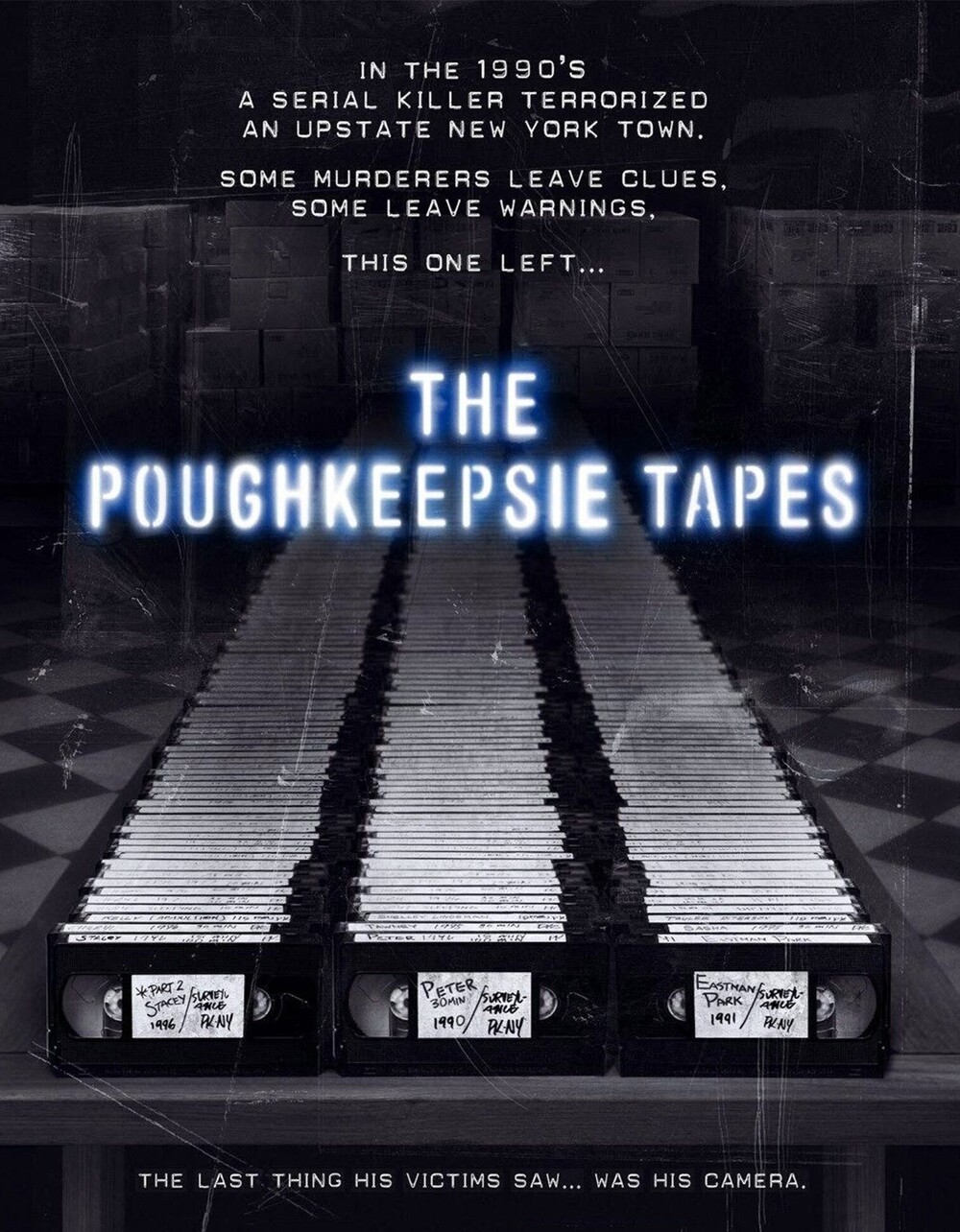
Review: The Poughkeepsie Tapes (dir. by John Erick Dowdle)


“She kept covering her eyes, whispering ‘please take me home, please take me home, please take me home…’ a week later I got her outta there and I brought her home… but she just kept repeating it. At that point I realized… she didn’t mean OUR home.” — Victoria Dempsey

The Poughkeepsie Tapes emerges from the shadows of independent horror like a grainy artifact unearthed from some forgotten police evidence locker, its found-footage aesthetic not merely a gimmick but a deliberate plunge into the abyss of real-world atrocity documentaries. Directed by the Dowdle brothers—John Erick and Drew—this 2007 effort masquerades as a television special pieced together from hundreds of VHS recordings left behind by a serial killer known only as the Waterworks Killer, operating in upstate New York during the late 1990s and early 2000s.

What sets it apart in the crowded found-footage subgenre is its unyielding commitment to procedural authenticity: interviews with beleaguered detectives, forensic psychologists, and shell-shocked family members intercut with the killer’s own unfiltered home movies, creating a mosaic that feels less like scripted cinema and more like a leaked FBI file. The film clocks in at a taut 86 minutes, yet its impact lingers far longer, burrowing into the psyche with the relentless persistence of damp rot. For those weaned on the polished shocks of mainstream slashers, this is horror stripped bare, a methodical dissection of evil that prioritizes psychological dread over jump scares or excessive gore.

From the outset, the mockumentary framework establishes an ironclad verisimilitude, opening with a SWAT raid on a nondescript Poughkeepsie home where authorities uncover not just dozens of bodies meticulously cataloged in black trash bags, but over 800 videotapes chronicling the killer’s decade-long reign of terror. These tapes, purportedly shot on consumer-grade camcorders, capture everything from mundane abductions in broad daylight to the most intimate depravities imaginable, all rendered in that telltale analog fuzz that evokes early 2000s true-crime broadcasts.

Edward Carver—unforgettably embodied by Ben Messmer—remains an enigma, never fully named in the tapes themselves, his face often obscured, voice distorted into a childish lisp that veers from playful taunting to guttural rage, embodying pure, motiveless malignancy without the monologuing backstory that humanizes figures like Hannibal Lecter. Messmer invests the role with a chilling physicality, his lanky frame clad in a grotesque yellow rain slicker becoming an iconic silhouette of suburban nightmare. Yet the film’s true brilliance lies in its restraint; rather than revel in spectacle, it lets the banality of evil seep through, as when Carver methodically dresses a victim in ballerina attire for a mock performance, or forces another into a twisted tea party, the domesticity amplifying the horror. This isn’t about blood sprays or final girls—it’s a taxonomy of sadism, each tape labeled with clinical precision: “Victim 31 – Jennifer,” “Victim 42 – Dance Recital.”

The ensemble of talking heads grounds the proceedings in stark realism, with standouts like Stacy Chbosky as Cheryl Dempsey, the survivor whose tormented recollections form the emotional core of the investigation. Their discussions—ranging from behavioral profiling to Carver’s fetishistic rituals—mirror actual criminology seminars, lending intellectual weight without descending into exposition dumps. These interludes humanize the victims, transforming statistics into shattered lives: a missing jogger here, a single mother there, their absence rippling through communities with quiet devastation. The Dowdles excel at pacing these elements, crosscutting between tape horrors and investigative fallout to build a suffocating tension, where the real terror is Carver’s omnipresence—he films himself stalking malls, taunting police press conferences, even infiltrating a family Thanksgiving. In a genre often criticized for laziness, The Poughkeepsie Tapes weaponizes its format, making viewers complicit voyeurs, questioning why we’re watching at all.

Thematically, the film probes the pornography of violence, echoing the likes of Henry: Portrait of a Serial Killer or the Paradise Lost documentaries, but with a rawer edge that anticipates the analog horror wave of the 2020s. It grapples with voyeurism’s allure, as detectives pore over tapes like addicts, one admitting the footage “gets into your dreams.” Carver’s escalating fetishes—binding victims in spiderwebs of duct tape, staging puppet shows with their limbs—escalate from perverse play to outright desecration, culminating in a sequence involving a captured police officer that tests even hardened viewers. Yet amid the depravity, glimmers of perverse artistry emerge: the meticulous framing of shots, the almost balletic choreography of assaults, suggesting a mind as creative as it is corrupt. This duality fascinates—evil as both banal and sublime—without ever excusing it. The film’s independent ethos shines through its low-budget ingenuity; shot on digital video run through VHS filters, it achieves a patina of age that rivals big-studio recreations. Sound design deserves special mention—the muffled whimpers, the hiss of tape rewind, the sudden shrieks—crafting an auditory assault that lingers in the ears long after the screen fades.

Of course, no film this ambitious escapes imperfection. The grainy visuals, while immersive, occasionally border on opacity, turning key moments murky when clarity might heighten the impact; a few tapes feel repetitious, padding runtime before the finale’s revelations. Acting varies—some interviews veer toward community theater stiffness, and the killer’s voice modulation can grate like a parody of itself. Pacing sags in the midsection amid procedural minutiae, demanding patience from those expecting non-stop carnage. Distribution woes didn’t help; shelved for years post-Tribeca premiere, it finally surfaced on home video in 2017, its cult status now cemented online but still niche. These are quibbles, though, in a landscape of forgettable slashers; they don’t undermine the core achievement.

Ultimately, The Poughkeepsie Tapes endures as a gut-punch reminder of horror’s primal function: to confront the void within humanity. It doesn’t titillate or moralize—it documents, with unflinching gaze, the machinery of monstrosity. Fans of vérité terrors like Lake Mungo or The Bay will find kin here, a film that trades spectacle for seepage, leaving stains no bleach can remove. In an era of sanitized streaming chills, its refusal to look away remains a defiant virtue. Seek it out on a lonely night, but keep the lights on after.
What Lisa Watched Last Night #210: A Mother Knows Worst (dir by Robert Malenfant)


Last night, I watched the latest Lifetime premiere, A Mother Knows Worst!

Why Was I Watching It?

Because it was on Lifetime!

Plus, I loved that title.  A Mother Knows Worst!  I’m seriously hoping that, once this lockdown ends, I’ll run into a really obnoxious woman who is carrying around a baby so that I can snap at her, “A mother knows worst!”

What Was It About?

Okay, so this is kind of a complicated movie and there’s no way for me to totally tell you what it was about without spoiling some of the film’s biggest twists.  So, I’ll just tell you what it pretends to be about while assuring you that there’s a few twists and turns that make this film a bit more interesting than you might think from just reading a rudimentary plot description:

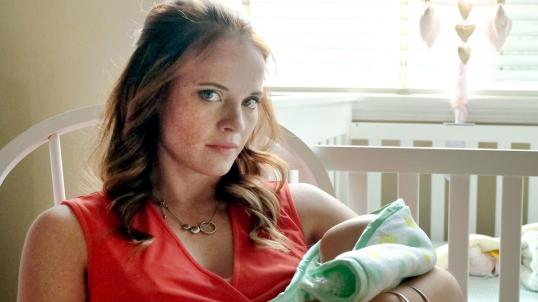
Olivia (Kate Leclerc) and Brooke (Victoria Barabas) both gave birth on the same night.  According to the hospital, Olivia’s baby died while Brooke’s survived.  6 months later, Olivia’s husband, Harry (Jeff Schine), has a job working for Brooke’s husband, Glen (Todd Cahoon).  When Olivia sees Brooke’s daughter, she says that she felt an instant connection to the baby, a connection that Brooke feels that she has yet to establish.  While Brooke is happy with the idea of Olivia helping to look after her daughter, both Harry and Glen are concerned that Olivia may be forming an unhealthy obsession with Brooke’s daughter.

Meanwhile, there’s a murderer on the loose and….

Well, that’s all I can really tell you.  I know it sounds like a typical Lifetime baby kidnapping film but you’ll just have to take my word for it that it’s actually a bit more complicated than that.

What Worked?

This film was full of twists and turns!  Seriously, I love Lifetime film but it’s rare that they take me by surprise.  In fact, one of the appeals of the movies they show on Lifetime is that they tend to be predictable.  A Mother Knows Worst, however, had some pretty effective surprises and it definitely kept you guessing as to who could be trusted and who should be feared.

Katie Leclerc and Jeff Schine both did a great job playing Olivia and Harry.  In fact, the whole film was pretty well-acted.  Everyone did a good job of keeping the viewers off-balance.

I loved Brooke and Glen’s house!  That pool was to die for.

What Did Not Work?

Unfortunately, towards the end of the film, there’s a lot of flashbacks and they tend to kind of bog down the film’s finale.  Though it’s a cliche, sometimes it’s best to just have the villain give a monologue explaining all of their evil deeds, especially when the other option is stopping all the action for a lengthy flashback.

“Oh my God!  Just like me!” Moments

Olivia had red hair just like me so, of course, I totally related to her and was on her side.  It’s a scary world out there and those of us blessed with the best hair color in the world have to stick together.

Lessons Learned

Take nothing for granted, not even the plot of the latest Lifetime film.

Cleaning Out The DVR: Family Vanished (dir by Mark Sanderson)


I recorded Family Vanished off of the Lifetime Movie Network on July 6th!

“Give me my wedding ring, you white trash bitch!”

— Lisa (Kelly Packard) in Family Vanished (2018)

Here’s two lessons that I learned from Family Vanished:

  1. Be careful how much information you post online.

Seriously, Lisa (Kelly Packard) thought it would be a good idea to post how much she had sold a painting for online.  She also thought it would be a good idea to let the world know that she, her husband (Madison Dirks), and her daughter (Elisa Luthman) would all be in Hawaii on a work vacation.

What happened as a result?  Well, Mike (Todd Cahoon), Carol (Jennifer Taylor), and their daughter (Megan Littler) saw Lisa’s posting.  And they decided that Lisa and her family must have a lot of money.  So, they broke into the family’s house.  They lived there for several days.  They tried on everyone’s clothes.  They slept in everyone’s beds.  They made the house their own and, since they never took off their black gloves, they managed to do it without leaving behind any DNA or fingerprint evidence.

Of course, they quickly discovered that Lisa and her family wasn’t as rich as they assumed.  In fact, a quick perusal of Lisa’s diary revealed that the family itself wasn’t particularly happy.  Still, Mike and Carol were determined to get something for all of their trouble so they stayed in the house until Lisa and the family returned from their vacation.

Second lesson learned:

2. You can only push people so far before they snap.

Sure, Mike and Carol had a lot of fun tormenting Lisa and her family.  They revealed that Lisa had been unfaithful.  They forced Lisa’s husband to bark like a dog.  They taunted Lisa’s daughter for having won so many trophies in school.  Mike and Carol had a lot of fun but they failed to consider just how far some people will go to get revenge.

When their initial ordeal finally ended, Lisa and her husband were not happy to learn that the police had no real leads as to where Mike and Carol went off to.  So, they decided to investigate on their own.  And when they did track down Mike and Carol, well, let’s just say that even the most normal-seeming people can be pushed too far…

So, Family Vanished was a film that I had mixed feelings about.  I’m not a huge fan of movies about people being held hostage.  Films about hostage situations are always a bit too predictable for me.  It always starts with the hostages pleading for their lives and then the nosy neighbor comes over and there’s the big tense scene where the main hostage has to try to get rid of him while someone stands behind the front door with a gun or a knife pointed at his back.  The hostage takers always start taunting the hostages.  I’ve seen it so many times that I just automatically get bored with the situation.

So, the first half of Family Vanished didn’t do much for me but then Lisa and her husband set out to get revenge and it became this totally different, wonderfully over-the-top movie!  I loved watching Kelly Packard and Madison Dirks get mean and vengeful.  Kelly Packard has appeared in many Lifetime movies but I think this is the first one where she actually gets to kick some ass and both she and Dirks seemed to be having a lot of fun with the role reversal.  Add to that, Mike and Carol were so obnoxiously cruel that it was impossible not to get some guilty pleasure out watching Lisa demanded the return of her wedding ring.

With its theme of a terrible crime leading to an even worse revenge, Family Vanished is what I imagine a Wes Craven-directed Lifetime movie would have been like.   It’s Lifetime’s Last House On The Left.

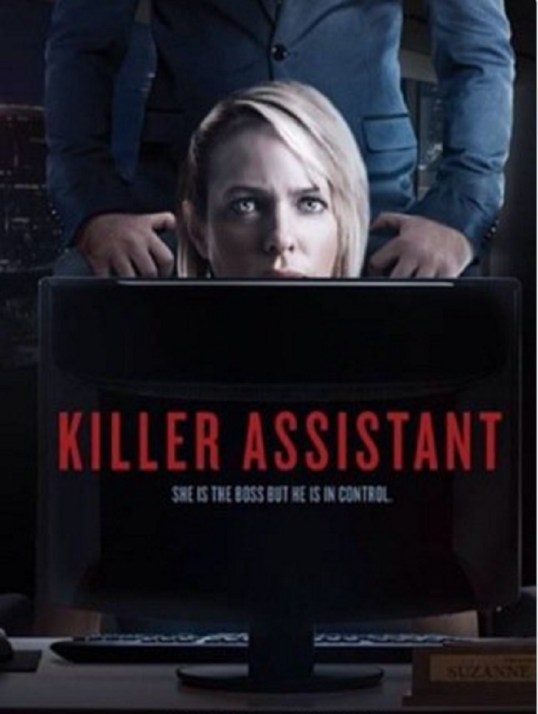
Cleaning Out The DVR, Again #36: Killer Assistant (dir by Danny J. Boyle)


(Lisa is currently in the process of trying to clean out her DVR by watching and reviewing all 40 of the movies that she recorded from the start of March to the end of June.  She’s trying to get it all done by the end of July 11th!  Will she make it!?  Keep visiting the site to find out!)

ka

The 36th film on my DVR was Killer Assistant (also known as simply The Assistant.)

Killer Assistant originally aired on Lifetime on June 20th and it won major points from me just because of the title.  Though often underappreciated, administrative assistants are the glue that hold most offices together.  If there were no administrative assistants, the entire world would literally stop spinning so I’m always happy whenever I see a movie in which the assistants finally get their revenge.

The assistant of the title is … well, he claims his name is David (Brando Eaton).  That’s not his real name, of course.  And he’s really not from a small town in upstate New York despite what he tells everyone.  He may be a shady character who stole someone else’s identity but that doesn’t mean that he’s not a good assistant!  He especially proves to be invaluable to Suzanne Austin (Arianne Zucker), an editor at a fashion magazine.  As Suzanne struggles to put together the magazine’s 50th anniversary edition (all the while being watched by her boss, who bare a probably not coincidental resemblance to Anna Wintour), David proves to be a great source of ideas.  When Suzanne thinks that she’s seen her husband (George Stults) cheating on her, David proves to be a great source of comfort.

Which is another way of saying that they end up having a one night stand.  How passionate do things get?  So passionate that the sex scene is actually shown in slow motion.  (You know that Lifetime is getting serious when they start using the slow mo.)  However, the next morning, Suzanne announces that the previous night was a “mistake” and tells David that he is fired.

David, however, has other ideas.  After all, he already went through the trouble of attacking one of Suzanne’s other assistants just to make sure that he’d be able to keep his job.  David tells Suzanne that he’s not going anywhere.  He’s going to continue to answer the phones for her and schedule meetings for her.  And if she has a problem with that, he’ll just show everyone the little film that he made of the two of them during the previous night.

So, Suzanne is stuck with David.  And David is now flirting with her rebellious teenage daughter, Calista (Natalie Lander).

Anyway, Killer Assistant is rather ludicrous but I enjoyed it because 1) it was about a crazy administrative assistant and 2) it took place at a fashion magazine and was, therefore, full of bitchy dialogue.  Plus, Brando Eaton did a really good job in the role of David.  He was just so clean-cut, helpful, and cheerful, no matter what terrible things he was plotting.  As I watched the film, I found myself imagining a possible spin-off in which Suzanne is a guest judge on Project Runway and David blackmails her into praising the ugliest dress.  It was fun!

(For those keeping track of my efforts to clean out my DVR, that’s 36 films down and 4 to go!)