Playing Catch-Up: Popstar: Never Stop Never Stopping (dir by Akiva Schaffer and Jorma Taccone)


Have you heard of Conner4Real?

If you haven’t, you’re probably just old or else you don’t keep up with what’s happening in the world of popular music.  His real name is Conner Friel and he used to be a member of the Style Boyz.  Of course, the Style Boyz eventually broke up.  Kid Brain became a farmer.  Kid Contact became a DJ.  And Kid Conner — well, he became Conner4Real and he became a bigger star as a solo artist than he ever was as a Style Boy.  His debut album, Thriller, Also, broke records.

But the follow-up, Connquest … well, Connquest wasn’t quite as acclaimed.  In fact, it was hated by just about everyone.  This is despite featuring classic songs like:

Finest Girl (Bin Laden Song)

Mona Lisa

and Equal Rights (featuring P!nk).

Fortunately, when Conner4Real was facing his greatest existential crisis, a film crew was present to record his struggle.  For those of us who were fascinated by the career of Conner4Real, Popstar: Never Stop Never Stopping is a chance to see how Conner dealt with everything from his terminally ill pet turtle to the elaborate marriage proposal ceremony that led to Seal being attacked by wild wolves.  We would have gotten to see Conner and his manager defeat a swarm of mutant bees but, unfortunately, that happened right after the only time that Conner’s manager asked the film crew to stop filming.

Oh well, these things happen.

So, as you should have guessed from all that, Popstar is not a serious film.  It’s a mockumentary, with the emphasis on mock.  It was also one of the funniest films of 2016, a spot-on parody of the silliness and pretensions of fame.  Conner is a combination of Justin Bieber and Macklemore at their shallowest, a well-meaning but thoroughly empty-headed singer.  In fact, if Conner was played by anyone other than Andy Samberg, he would be so annoying that the film would run the risk of being unwatchable.

But fortunately, Conner is played by Andy Samberg.  It’s hard to think of anyone who plays dumb with quite the same panache as Andy Samberg does.  There are plenty of lines in Popstar that shouldn’t work but they do, specifically because they’re being delivered by Samberg.  He brings just the right amount of sweetly sincere stupidity to the role.  Almost despite yourself, you find yourself hoping that things will work out for Conner and the other Style Boyz.  Conner may not deserve to be as big a star as he is but it was obviously going to happen to some idiot so why not a sincere one?

Samberg is not the only funny person in Popstar.  The movie is full of funny people, from Sarah Silverman to Bill Hader to the always underrated Tim Meadows.  It’s also full of celebrity cameos and I have to admit that I usually tend to cringe when I see too many people playing themselves.  But in Popstar, it works.  One need only rewatch something like Zoolander 2 to see how well Popstar pulls off its celebrity cameos.

Sadly, as funny as Popstar was, it was also one of the biggest bombs of 2016.  (The trailer, it must be said, did not do the film justice.)  However, I expect that it will soon develop a strong cult following.  In a few years, we’ll get a sequel.  It probably won’t be as as good.

Oh well.  These things happen.
Playing Catch-Up: The Accountant, Carnage Park, The Choice, The Legend of Tarzan


Continuing my look back at the films of 2016, here are four mini-reviews of some films that really didn’t make enough of an impression to demand a full review.

The Accountant (dir by Gavin O’Connor)

2016 was a mixed year for Ben Affleck.  Batman v. Superman may have been a box office success but it was also such a critical disaster that it may have done more harm to Affleck’s legacy than good.  If nothing else, Affleck will spend the rest of his life being subjected to jokes about Martha.  While Ben’s younger brother has become an Oscar front runner as a result of his performance in Manchester By The Sea, Ben’s latest Oscar effort, Live By Night, has been released to critical scorn and audience indifference.

At the same time, Ben Affleck also gave perhaps his best performance ever in The Accountant.  Affleck plays an autistic accountant who exclusively works for criminals and who has been raised to be an expert in all forms of self-defense.  The film’s plot is overly complicated and director Gavin O’Connor struggles to maintain a consistent tone but Affleck gives a really great performance and Anna Kendrick reminds audiences that she’s capable of more than just starring in the Pitch Perfect franchise.

Carnage Park (dir by Mickey Keating)

I really wanted to like Carnage Park, because it was specifically advertised as being an homage to the grindhouse films of the 1970s and y’all know how much I love those!  Ashley Bell plays a woman who gets kidnapped twice, once by two bank robbers and then by a psycho named Wyatt (Pat Healy).  Healy chases Bell through the desert, hunting her Most Dangerous Game-style.  There are some intense scenes and both Bell and Healy are well-cast but, ultimately, it’s just kind of blah.

The Choice (dir by Ross Katz)

The Choice was last year’s Nicholas Sparks adaptation.  It came out, as all Nichols Sparks adaptations do, just in time for Valentine’s Day and it got reviews that were so negative that a lot of people will never admit that they actually saw it.  Benjamin Walker and Teresa Palmer play two people who meet, fall in love, and marry in North Carolina.  But then Palmer is in a car accident, ends up in a coma, and Walker has to decide whether or not to turn off the life support.

As I said, The Choice got terrible reviews and it’s certainly not subtle movie but it’s actually better than a lot of films adapted from the work of Nicholas Sparks.  Walker and Palmer are a likable couple and, at the very least, The Choice deserves some credit for having the courage not to embrace the currently trendy cause of euthanasia.  That alone makes The Choice better than Me Before You.

The Legend of Tarzan (dir by David Yates)

Alexander Skarsgard looks good without his shirt on and Samuel L. Jackson is always a fun to watch and that’s really all that matters as far as The Legend of Tarzan is concerned.  It’s an enjoyable enough adventure film but you won’t remember much about it afterward.  Christoph Waltz is a good actor but he’s played so many villains that it’s hard to get excited over it anymore.

4 Shots From 4 Films: The Awful Truth, Notorious, North By Northwest, Charade


4 Shots From 4 Films is just what it says it is, 4 shots from 4 of our favorite films. As opposed to the reviews and recaps that we usually post, 4 Shots From 4 Films is all about letting the visuals do the talking.

Happy birthday, Cary Grant!

4 Shots From 4 Films

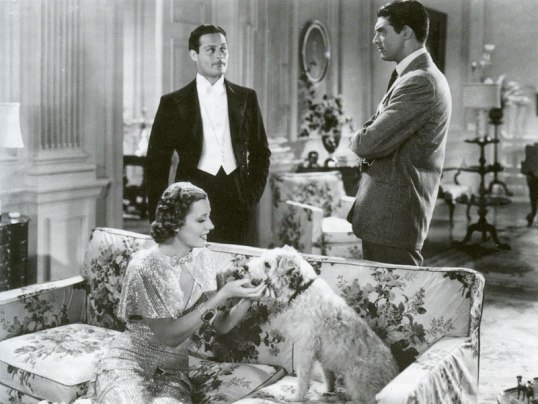
The Awful Truth (1937, dir by Leo McCarey)

The Awful Truth (1937, dir by Leo McCarey)

Notorious (1946, dir by Alfred Hitchcock)

Notorious (1946, dir by Alfred Hitchcock)

North by Northwest (1959, dir by Alfred Hitchcock)

North by Northwest (1959, dir by Alfred Hitchcock)

Charade (1963, dir by Stanley Donen)

Charade (1963, dir by Stanley Donen)

2016 in Review: Lisa Marie Picks The 26 Best Films of 2016!


Well, the time is here!  It’s time for me to reveal my picks for the best 26 films of 2016!

If there’s been any theme that I’ve found myself constantly returning to while looking back at the previous year, it’s that 2016 just wasn’t as good as 2015.  That’s certainly true as far as movies are concerned.  Whereas 2015 provided us with an embarrasment of riches, 2016 was — overall — a pretty bland year as far as cinema is concerned.

That doesn’t mean there weren’t some great films released in 2016.  I’m proud of this list below.  At the same time, I’m also a little bit frustrated.  As happens every year, there are a few films that, as of this writing, I have yet to see.  Weather permitting, I will see Silence and Jackie tomorrow and on Monday.  If I feel that they need to be included in my top 26, I will come back and edit this list.  And, of course, I still need to see some of the films that are no longer playing in theaters — Captain Fantastic, Hunt for the Wilderpeople, and some others.  The list below should be considered my picks for the best 2016 films that I actually got to see.

Also, I still need to write reviews for two of the films listed below.  Hopefully, I’ll be able to do that today.  As soon as those reviews are posted, I’ll add links.

With all that in mind, here’s the list!

american_honey_poster

  1. American Honey
  2. Arrival
  3. Kubo and the Two Strings
  4. The Neon Demon
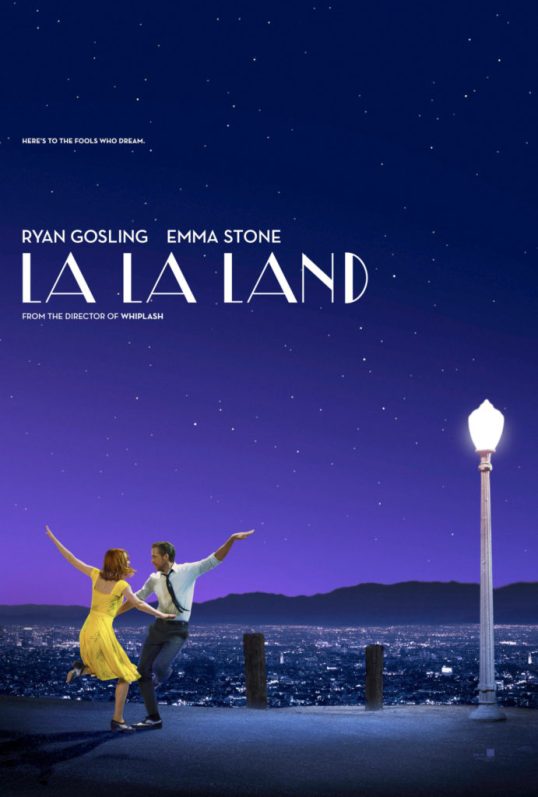
  5. La La Land
  6. Moonlight
  7. The Nice Guys
  8. Hell or High Water
  9. A Monster Calls
  10. Love & Friendship
  11. Sing Street
  12. The Witch
  13. Hacksaw Ridge
  14. Sully
  15. The Green Room
  16. 10 Cloverfield Lane
  17. Captain America: Civil War
  18. Finding Dory
  19. Popstar: Never Stop Never Stopping
  20. Fences
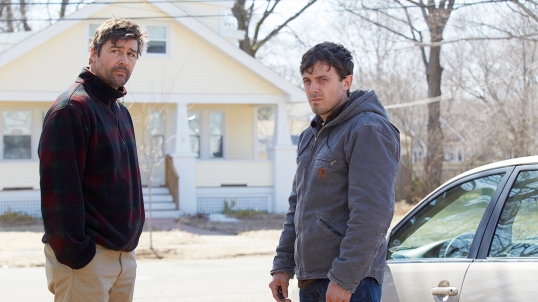
  21. Manchester By The Sea
  22. Eye in the Sky
  23. Hush
  24. The Conjuring 2
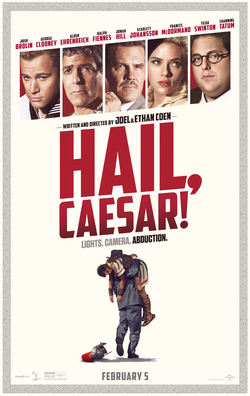
  25. Hail Caesar
  26. Everybody Wants Some!!

Hail,_Caesar!_Teaser_poster

You can check out my picks for previous years by clicking on 2010, 2011, 2012, 2013, 2014, and 2015!

Agree?  Disagree?  Have a list of your own?  Let us know in the comments!

Previous Entries In The Best of 2016:

  1. TFG’s 2016 Comics Year In Review : Top Tens, Worsts, And Everything In Between
  2. Anime of the Year: 2016
  3. 25 Best, Worst, and Gems I Saw In 2016
  4. 2016 in Review: The Best of SyFy
  5. 2016 in Review: The Best of Lifetime
  6. 2016 in Review: Lisa Picks the 16 Worst Films of 2016!
  7. Necromoonyeti’s Top Ten Albums of 2016
  8. 2016 In Review: Lisa Marie’s 14 Favorite Songs of 2016
  9. 2016 In Review: 10 Good Things I Saw On Television in 2016
  10. 2016 in Review: Lisa Marie’s 10 Favorite Non-Fiction Books of 2016
  11. 2016 in Review: Lisa Marie’s 20 Favorite Novels of 2016

Playing Catch-Up: Arrival (dir by Denis Villeneuve)


arrival_movie_poster

I cannot begin to express how happy I was when I learned that the Directors Guild of America had nominated Denis Villeneuve for his work on Arrival.

Arrival was one of the best films of 2016.  In fact, I would argue that it’s one of the best science fiction films that I’ve ever seen.  There were a lot of reasons for that, of course.  There was the brilliant script by Eric Heisserer.  There was the starring performance of Amy Adams, who is one of the best actresses working today.  There was a surprise and thought-provoking twist, one that forced you to reconsider everything that you previously believed.  There were so many reasons why Arrival was a great film but, ultimately, it call came down to Denis Villeneuve.

Working with material that would have led most directors down the road to bombast, Villeneuve instead took a deliberately low-key approach.  Whereas most directors would have encouraged their cast to play up the drama, Villeneuve encourages his actors to take a more inward and cerebral approach to the material.  Arrival is a rarity — a film about smart people in which the people actually seem to be smart.  For once, we don’t need expositionary characters to pop up and tell us that Louise Banks (Amy Adams) and Ian Donnelly (Jeremy Renner) are brilliant.  Instead, we simply believe they are from what we see on the screen.  Much like last year’s Sicario, Arrival proves that Villeneuve is a visionary director.

Arrival is a hard film to describe, not because it’s overly complicated but because there’s a huge twist that I really can’t reveal.  Before the twist, Arrival is simply a well-directed sci-fi film.  After the twist, it is something all together different, an intense meditation on faith, love, language, and destiny.  Since I’m reviewing the film late, chances are that you already know about the twist but I’m still not going to spoil it.

What I can tell you is that Arrival opens with the arrival of twelve spaceships, all of which land at different places across the world.  The Chinese have a spaceship.  The British have a spaceship.  I imagine that the Canadians have a spaceship, because who wouldn’t want to hang out with the Canadians?  And, of course, the Americans have a spaceship.  The aliens are inside the spaceships.  They’re octopus-like creatures, ones that almost look as if they could have come from one of Lovecraft’s Cthulhu stories.  The aliens may appear to be fearsome but they actually seem to be rather benevolent.  No one’s quite sure because the aliens communicate through a complex series of symbols and nobody can understand what those symbols mean.

Louise Banks is a linguist.  Ian Donnelly is a physicist.  The Americans bring both in to help translate the symbols.  Of course, the rest of the world has their own linguists and physicists working to translate the symbols and, humans being humans, it often seems that the Americans and the Chinese are less concerned with translating what the aliens are saying and more concerned with being the first to understand.  While Louise works, she continues to be haunted by dreams and visions of her daughter’s death from cancer.

And that’s really all I can tell you without spoiling the film and potentially making myself cry.  But I will say that if you haven’t seen Arrival, you must go out and see it now.  It’s one of the most thought-provoking and emotionally wrenching films of the past year.

Add to that, it’s probably going to be nominated for best picture.  It’s been overshadowed a bit by all the attention paid to La La Land, Moonlight, and Manchester By The Sea.  But Arrival is just as good a film as any of them.  In fact, in the future, we’ll probably look at Arrival and say that it was better than all of them.


Here Are The DGA nominations!


la-la-land-full-poster-image-691x1024

The Director’s Guild announced their feature film nominations earlier today.

A DGA nomination is one of the biggest prizes of the precursor season.  In general, if the DGA nominates a film then it’s likely that film will also get nominated for best picture.  There have been exceptions, of course.  (David Fincher was nominated for his bastardized rehash of Girl With The Dragon Tattoo.)  But, for the most part, the DGA is the most reliable precursor available.

Five directors were nominated.  The usual suspects were there — Lonergan, Jenkins, and Chazelle.  Fortunately, Denis Villeneuve picked up a nomination, which is good news for Arrival.  The fifth nominee was a bit of a surprise.  Garth Davis was nominated for Lion, which I guess means I’ll have to go see that movie now, even though I have little real desire to do so.

Martin Scorsese was not nominated for Silence, which probably means that the film will be dead-in-the-water as far as Oscar nominations are concerned.

Also not nominated — Tim Miller for Deadpool, a film that’s been doing surprisingly well with the precursors.  If Tim Miller had been nominated, heads would have exploded.  It would have been fun to watch the twitter reaction.

Instead, we just got this —

Just to make it official, here are the five DGA nominees:

Denis Villeneuve — Arrival

Damien Chazelle — La La Land

Garth Davis — Lion

Kenneth Lonergan — Manchester By The Sea

Barry Jenkins — Moonlight

manchester-by-the-sea-sundance-2016

Playing Catch-Up: White Girl (dir by Elizabeth Wood)


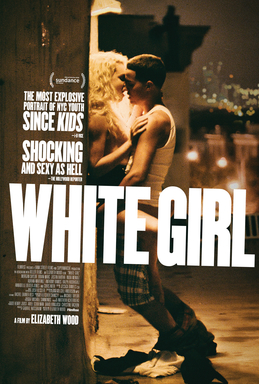
white_girl_film_poster

Ever since it premiered at the Sundance Film Festival, I’ve read the White Girl was the most “shocking” film of 2016.  You can take a look at the poster above and see that, according to The Hollywood Reporter, White Girl is “SHOCKING … AND SEXY AS HELL!”

Well, I finally got a chance to watch White Girl on Netflix and the only thing shocking about it is that so many (male) critics were apparently convinced that it was the most shocking movie ever made.  I certainly wouldn’t call it shocking.  (And considering that White Girl features two graphic rapes, I’d love to know why the critic thought “sexy as Hell” would be an appropriate description.)  A better description of White Girl would be “honest.”  Then again, considering the way that the movies usually present the experience of being young, female, and in the city, perhaps the fact that White Girl is an honest film is the most shocking thing of all.

Morgan Saylor plays Leah, a college student who, along with her friend, Katie (India Meneuz), moves into a New York apartment.  The apartment is located in a largely Spanish neighborhood, one that has yet to surrender to gentrification.  While Katie and Leah’s hipster friends are immediately suspicious of everyone else in the neighborhood, the Oklahoma-born Leah is far more adventurous (or perhaps reckless).  She approaches Blue (Brian Marc) on a street corner and asks him if he has any weed.

Blue has weed and a lot more.  He’s the neighborhood drug dealer and soon, he’s also Leah’s boyfriend.  When Leah isn’t getting high and having sex with Blue, she’s working as an intern at a magazine where, early on in the film, she’s sexually assaulted by her boss, Kelly (Justin Bartha, playing a predator who, for many, will seem disturbingly familiar).  Leah invites Blue to a party given by the magazine and Blue is able to make a lot of money selling cocaine to Leah’s wealthy co-workers.

For Blue, drugs are a business and he refuses to do hard drugs himself.  To Leah, it’s an adventure, one that she believes doesn’t have any real consequences.  Or, at least, that’s the way she sees it until Blue is arrested.  With Blue, a repeat offender, facing a life sentence, Leah manages to find a lawyer (Chris Noth, who will make you skin crawl) but she needs to raise the money to pay him.  Fortunately, Leah has a stash of cocaine that Blue was supposed to sell.  Blue tells Leah that she needs to return the cocaine to his dealer but instead, Leah decides to sell the cocaine herself.  Or, at the very least, she’s going to sell whatever cocaine she doesn’t end up snorting herself…

White Girl has been called shocking because of its open and nonjudgmental portrayal of both drugs and sex but, honestly, there’s nothing shocking about it.  It may be a generational thing but, to me, Leah’s story was a familiar one.  I’ve known a lot of Leahs and, personally, there were moments in White Girl that left me cringing just because I could relate to one of Leah’s naive notions or I could remember what it was like to feel like, no matter what I did, there would never be any consequences.  Leah may not always be a likable character but it’s not because she has sex or experiments with drugs.  Instead, it’s because she spends most of the film blissfully unaware of her own privilege.  Leah thinks that she understands the realities of Blue’s world but, as she learns by the end of the film, she’s really just a tourist.  And, unlike Blue and the rest of her neighbors, Leah can always leave whenever she wants.

So, White Girl was not a shocking film to me.  Instead, it was a very honest film.  It can currently be viewed on Netflix.

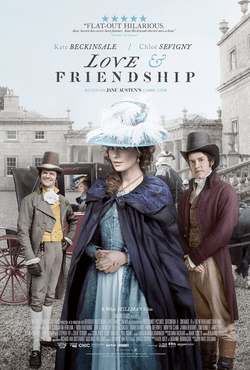
Playing Catch-Up: Love & Friendship (dir by Whit Stillman)


love__friendship_poster

Earlier this week, I named Pride and Prejudice and Zombies as the worst Jane Austen adaptation of 2016.  Of course, I understand that Pride and Prejudice and Zombies isn’t really a Jane Austen adaptation.  Instead, it’s an adaptation of a jokey novel that took Austen’s characters and combined them with zombies.  But you know what?  Nobody would have given a damn if the name of that book and that movie didn’t include three words:  Pride.  And.  Prejudice.  That’s the power of Jane Austen.

But anyway, my point is that Pride and Prejudice and Zombies was pretty much a low point as far as Jane Austen films are concerned.  Fortunately, 2016 also saw the release of a very enjoyable and entertaining Jane Austen film named Love & Friendship and, even better, Love & Friendship was based on something that Austen actually wrote.

Of course, though Austen may have written the novella Lady Susan, it wasn’t published until long after her death and there’s speculation that it was an unfinished (or abandoned) first draft.  In fact, it’s debatable whether or not Lady Susan was something that Austen would have ever wanted to see published.  While it shares themes in common with Austen’s best known work, it also features a lead character who is far different from the stereotypical Austen heroine.  Lady Susan Vernon is vain, selfish, manipulative, and unapologetic about her numerous affairs.  She’s also one of the wittiest of Austen’s characters, a woman who is capable of identifying and seeing through the hypocrisies of 18th century society.

In Love & Friendship, Susan is played by Kate Beckinsale, who does a great job in the role.  One of the best things about Love & Friendship is that it serves to remind us that Kate Beckinsale is a very good actress, even when she isn’t dealing with vampires and Lycans and all that other Underworld stuff.  Lady Susan is a recent widow and has been staying, with her daughter, Frederica (Morfydd Clark), at the estate of Lord and Lady Manwaring (Jenn Murray and Lochlann O’Mearáin) .  That’s a good thing because, as a result of the death of her husband, Lady Susan is now virtually penniless and homeless.  But, once it becomes obvious that Susan is having an affair with Lord Manwaring, she and Frederica are kicked out of the estate.

They eventually find themselves living with Susan’s brother-in-law, Charles (Justin Edwards) and Charles’s wife, Catherine (Emma Greenwell).  Susan, realizing that she needs to find not only a rich husband for Frederica but also one for herself, immediately starts to scheme to win the hand of Catherine’s brother, Reginald DeCourcy (Xavier Samuel).  Meanwhile, Susan also tries to arrange for Frederica to marry the hilariously slow-witted Sir James Martin (Tom Bennett).  Needless to say, things do not go quite as plan and it’s all rather chaotic and hilarious in its wonderfully refined way.

Director Whit Stillman, who has spent his career making refined and witty movies about morality and manners, is the ideal director for Austen’s material and he’s helped by an extremely witty (and, with the exception of Chloe Sevigny, very British) cast.  In the role of Susan, Kate Beckinsale is a force of nature and Tom Bennett is hilariously dense as Sir James, the type of well-meaning dunce who is literally stumped when someone asks him, “How do you do?”  Never before has dullness been so hilariously performed and Bennett’s performance really is a minor miracle.

Love & Friendship was a wonderful excursion into Austenland.  It didn’t even require zombies to be enjoyable.


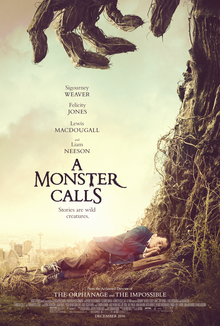
Playing Catch-Up: A Monster Calls (dir by J.A. Bayona)


a_monster_calls_poster

As our regular readers are undoubtedly aware, I was born in Texas and I grew up all over the Southwest.  I don’t believe in trigger warning and quite frankly, I lose respect for anyone who I hear whining about having to have one.  That’s the way we are down here.  If you can’t handle potentially being upset by something or someone, that’s you’re own damn problem.

That being said, I do feel like I should give everyone a heads up about A Monster Calls.  Don’t consider this to be a warning because a warning suggests that something bad is going to happen and A Monster Calls is actually a very good movie and one that I highly recommend.  But I do think I should say that I sobbed almost all the way through A Monster Calls and I wasn’t alone.  When I saw this movie on Sunday, there wasn’t a dry eye in the Alamo Drafthouse.

That’s just the type of film it is.  It’s a movie that deals very sincerely and very forthrightly with what it means to lose someone who you love.  It’s a coming-of-age story that deals with fear, loss, guilt, and those moments when — even while dealing with unbelievable pain and sadness — we can still find happiness in the moments that we have and in the imagination that all people — especially young people — possess.

Technically, A Monster Calls is a fantasy though it actually deals with very real emotions and events.  Conor O’Malley (Lewis McDougall) is a shy and introverted 13 year-old who is haunted by nightmares, one in particular.  His parents are divorced.  His father (Toby Kebbell) lives in America and is barely a presence in Conor’s life.  His mother, Lizzie (Felicity Jones, giving an amazing performance), gave up her own artistic ambitions when she became pregnant.  Now, she’s sick and every day, Conor is told that his mother is starting yet another new treatment because she’s “not responding as expected” to the previous treatment.

With Lizzie growing more and more ill, Conor finds himself living with his grandmother (Sigourney Weaver).  To Conor, his grandmother appears to be overly strict and unemotional but, as the film makes clear, she’s not.  If she seems strict, it’s because she knows that she will soon have to take over as Conor’s guardian.  If she seems unemotional, it’s because she’s trying to stay strong for both her daughter and her grandson.

Meanwhile, at school, Conor finds himself targeted by a strange bully named Harry (James Melville).  The scenes with Harry are some of the oddest in the film.  At times, Harry seems to look at the perpetually miserable-looking Conor with almost an expression of empathy and you wonder if he feels some sort of guilt over what he’s doing.  But whenever Harry approaches Conor, a viscous sadism emerges.  Though Harry always seems to be the one who is staring, he continually demands to know why Conor is always looking at him.  When another student tries to hit Conor, Harry announces that only Harry is allowed to hit Conor.

And then there’s the Monster.  At night, the Monster visits Conor.  A gigantic, humanoid tree, the Monster speaks in the voice of Liam Neeson and he alternates between being threatening and being almost paternalistic.  When Conor gets angry, the Monster encourages him to destroy things.  When Conor gets sad, the Monster taunts him for thinking that his sadness is somehow different from everyone else’s sadness.  The Monster is frightening but, at the same time, he seems to be the only thing in Conor’s life that he can depend on.  The Monster’s words may be harsh but there’s also something oddly comforting in their harshness.  It helps that he sounds like Liam Neeson.

The Monster tells Conor three stories, all of which are full of ambiguity and end with uncertain lessons.  The Monster tells Conor that, after he finishes the third story, Conor will be required to tell him about his greatest nightmare.  Conor finds himself both frightened and fascinated by the Monster but, as quickly becomes clear, his main fear is talking about his nightmare.

A Monster Calls is a beautifully done story about dealing with loss, one that will make you cry but, at the same time, will leave you feeling almost grateful for those tears.  The Monster is a truly spectacular creation and Liam Neeson does a perfect job voicing him.  What makes A Monster Calls so special is the way that director J. A. Bayona deftly balances Conor’s apocalyptic encounters with the Monster with the small, every day details of real life.

It makes for a powerful film.

Just make sure you’re ready to shed some tears.

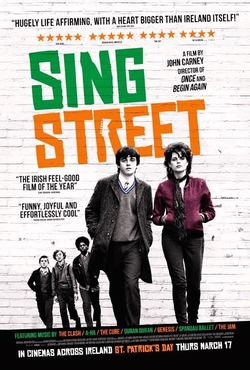
Playing Catch-Up: Sing Street (dir by John Carney)


sing_street_poster

The Irish musical comedy drama romance (that’s a lot of genres to take in, I know) Sing Street was one of the great and most sadly overlooked films of the previous year.  Fortunately, it’s on Netflix now and I seriously recommend that you watch it.  I watched it last night and I absolutely loved it.

Well, actually, it took me a while to realize that I loved it.  When the movie first started, I was kinda like, “Well, that’s cute and sweet but it’s not exactly blowing me away…”  It tells the story of a 15 year-old boy named Conor (Ferdia Walsh-Peelo) who is growing up in Dublin in the early 80s.  His father (Aidan Gillen) and his mother (Maria Doyle Kennedy) are constantly fighting and Conor suspects that they’re on the verge of separating.  His older brother, the charismatic but bitter Brendan (Jack Reynor), has dropped out of college and moved back home.  Brendan spends his days stoned and talking about music.

Because the family is short on money, Conor has been transferred to a free school, Synge Street.  It’s a far rougher school than what Conor is used to.  Bullies target him as soon as he arrives.  Meanwhile, the principal, Brother Baxter (Don Wycherly), has taken a somewhat disturbing interest in his newest student.  When Conor can’t afford to buy the black shoes that he’s required to wear to school, Baxter forces him to spend the school day in his socks.

Perhaps the only positive in Conor’s life is Raphina (Lucy Boynton), a 16 year-old who lives across the street from the school.  Raphina is an aspiring model with an older boyfriend and plans to move to London.  Conor tells Raphina that he’s in a band and that he wants her to star in a music video.  To Conor’s surprise, Raphina agrees.

Now, Conor just has to get a band together…

Sing Street was directed by John Carney, the same man who previously gave us the wonderful Once and the somewhat-less-wonderful-but-still-good Begin Again.  Much like those previous two films, Sing Street is a deliriously romantic and rather bittersweet little film, one in which love and emotion are expressed through song.  As a director, Carney has a real skill for capturing the excitement of creation.  The scenes in which Conor and his friend Eamon (Mark McKenna) work on their songs are just as enthralling as the scenes of Raphina and Conor falling in love.

And the music itself is wonderful.  While the soundtrack never quite reaches the heights of Once, it is a definite improvement over Begin Again.  The songs are all catchy and enjoyable but, even more importantly, they sound like the songs that actually would have been written by a talented but confused 15 year-old who has just started his own band.  There’s an aching sincerity to Sing Street‘s songs and they stay with you.  They remind you of how wonderful it is to know that you have your entire future ahead of you.

As I said, I didn’t realize how good Sing Street was until I had nearly reached the end of the movie.  Sing Street is one of those low-key films that kind of sneaks up on you.  At first, you think that you’re just watching another well-made coming of age film and then suddenly, you’re in tears.  You’re hoping that Raphina will make it to London and that Conor will find some sort of happiness.  The film ends on a somewhat ambiguous note but, in the end, you realize you really don’t need to know the exact details of what happened to Raphina and Conor in the future.  Instead, what’s important is that they had this wonderful experience when they were young.  Regardless of what happens to them in the future, you’re happy that they had the experience.

The whole film is undeniably well-acted but I want to make special mention of Jack Reynor, who brings a wounded dignity and rueful humor to the role of Brendan.  He dominates his few scenes and you find yourself happy that, regardless of how messed up the rest of his family may be, Conor has a brother like Brendan.

As I said at the start of this review, Sing Street is on Netflix.  And you should definitely watch it.