RIP, Dolly Parton.
RIP, Dolly Parton.
Welcome to Late Night Retro Television Reviews, a feature where we review some of our favorite and least favorite shows of the past! On Tuesdays, I will be reviewing Pacific Blue, a cop show that aired from 1996 to 2000 on the USA Network! It’s currently streaming everywhere, though I’m watching it on Tubi.
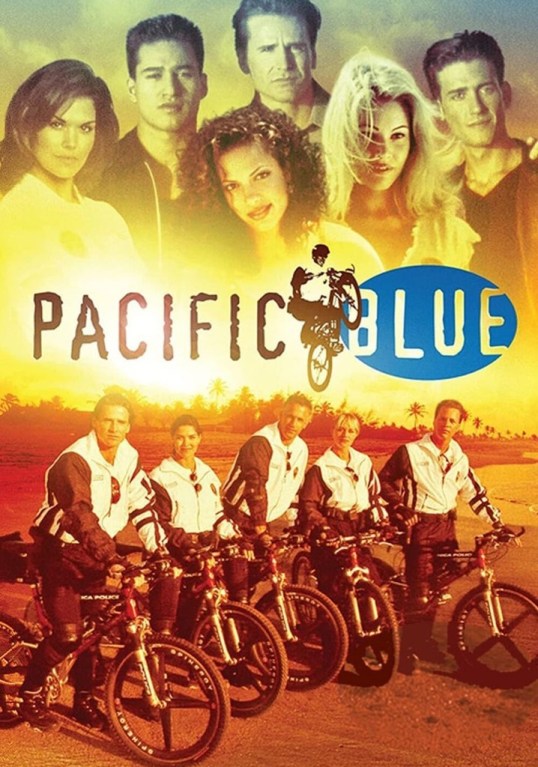
This week, Pacific Blue embraces the melodrama.
Episode 4.16 “Juvies”
(Dir by Jim Davidson, originally aired on February 28th, 1999)
Crazed narcotics officer Perry Marcus (Roger Floyd) is back!
This time, he’s forcing a group of juvenile delinquents to set up the most dangerous drug dealers on the beach. After Adrian (David Scott Lago) and Maurice (a very young Aldis Hodge) convince a dealer to step out of his limo, Marcus guns the man down and then has Maurice plant a gun. Marcus loves to kill drug dealers, but he’s also willing to kill cops who object to his methods.
Jamie is shocked to see her little sister, Jennie (Crystal Celeste Grant), running with Adrian’s gang. Jennie hasn’t seen Jamie since they were in the foster care system together and Jamie shot their abusive stepfather. Jamie wants to save Jennie from the gang life, but she also has to deal with Internal Affairs officer Susan Jessup (Holly Gagnier). Jessup, an insane nymphomaniac who used to date T.C., threatens to reveal that Jamie shot her stepfather unless Jamie helps her build a corruption case against Chris Kelly. Jessup is still in love with T.C. and wants to get his wife in trouble. Jessup is also sleeping with Perry Marcus and warns him that Jamie is threatening to expose all of his extralegal methods.
Got all that?
This episode of Pacific Blue made even less sense than usual, but it was entertaining because Roger Floyd and Holly Gagnier both went totally over the top in their performances. They understood the assignment and left not a single piece of scenery unchewed. While the regular cast is busy trying to look tough while wearing bicycle shorts, Floyd and Gagnier are totally embracing the melodrama, and it’s exactly the approach that this silly episode needed. The end of the episode suggests that Marcus and Susan are going to be recurring villains. I certainly hope so!
One final note: keep an eye out for Greg Grunberg, who shows up as the lawyer who gets the juvie gang out of jail.
Welcome to Retro Television Reviews, a feature where we review some of our favorite and least favorite shows of the past! On Tuesdays, I will be reviewing Saved By The Bell: The New Class, which ran on NBC from 1993 to 2o00. The show is currently on Prime.
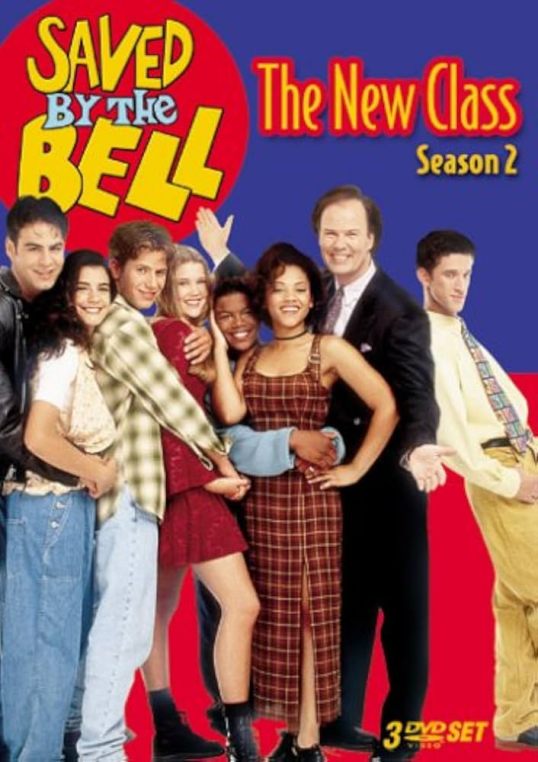
This week, while everyone is dancing, Lindsay is starving.
Episode 2.15 “A Perfect Lindsay”
(Dir by Don Barnhart, originally aired on October 29th, 1994)
TV’s “hottest show,” Club Jam, will be holding a dance contest at the school!
Brian asks Rachel to be his partner and is overjoyed when she says yes. (As I watched this episode, I had to remind myself that it was supposed to be taking place before the country club episodes, which explained why Rachel and Brian were not dating.) However, when Rachel sees that Megan is going to be dancing with some guy named Kent (Adam Bonfiant), she says that she and Brian don’t have a hope of winning.
Oh, don’t worry, Rachel. Brian has a plan! Brian tells Kent that the way to win the contest is to offer Belding a bribe. Because Kent is apparently an idiot, he does just that. Mr. Belding gives Kent detention and Megan dumps Kent as her dance partner. Fortunately, Bobby needs a partner. Unfortunately, shortly after asking him to be her partner, Megan discovers that Bobby can’t dance.
Meanwhile, Screech shows up at the Max and demonstrates his dance moves. It’s extremely cringey but the audience goes nuts. Dustin Diamond is so spastic and uncoordinated that the whole thing just feels cruel. I really wanted to step into time machine so I could travel to 1994 and shout, “They’re not laughing with you!”
Lindsay, meanwhile, fears that she’s fat. When Megan and Rachel mention that the camera adds 40 pounds, Lindsay has a fantasy where she dances with Tommy while wearing a fat suit. The audience laughs but Lindsay not amused. She skips a meal, which leads to both Tommy and Rachel theorizing that she has anorexia. When Tommy says that the dance contest isn’t worth risking her health, Linday dumps Tommy as her partner and instead teams up with Kent.
During the dance contest, Lindsay suddenly starts to feel faint. She has to go to classroom to rest her head on a desk. Brian gives up his chance to dance with Rachel and goes with Tommy D to help out Lindsay. Lindsay says she’s fine and then she faints.
With everyone else in the classroom, Megan and Bobby win the dance contest! It turns out that Megan only needed a week to teach Bobby how to dance like a pro. After the contest, a smiling Lindsay apologizes to everyone. Bobby nods and says, “Go eat something.” Lindsay happily trots off to do just that….
,,,,which is actually not how anorexia works at all. I mean, I appreciate the fact that the show was trying to warn its viewers about eating disorders but suggesting that anorexia can be cured by simply telling someone to go eat is really kind of irresponsible. This episode focuses on Lindsay not eating while ignoring why she stopped in the first place. Including a fantasy sequence where the audience laughs at Lindsay wearing a fat suit probably did more to promote anorexia than Bobby saying, “Go eat something” did to prevent it.
Oh well. At least Lindsay didn’t sing I’m So Excited.
Like most of America, I’ve always loved Dolly Parton. I’ve been to her “Stampede” in Branson at least 10 times in my life. I’ve always had a special place in my heart for her movie STRAIGHT TALK, because one of my all-time favorite actors, James Woods, was her co-star and played her love interest. They have a great chemistry in the film, and Woods has said, “Dolly Parton is the nicest person I’ve ever worked with…. She’s everything you imagine and so much more. Anybody who’s ever spent any time with her absolutely adores her.” That’s high praise, but it’s right on point with what almost everyone says about her.
In celebration of an incredible life, well lived, I thought I’d share this scene where Dolly and James first meet. Thanks for a lifetime of good music, good movies, and just being a good human being.
Today, on Sean Connery’s birthday, our song of the day is the theme for one of my favorite Bond films. I know that some people claim that Diamonds are Forever is a lesser Bond film but personally, I think it’s just silly enough to be effective. James Bond and Las Vegas are a match made in heaven.
Today’s scene that I love features Sean Connery, born on this day 95 years ago. In this scene from 1964’s Goldfinger, Connery needs only one simple line — “I must be dreaming,” — to create an iconic moment.
Daniel Craig could never have pulled this off. Indeed, Craig probably would have found the whole thing beneath him. Only Sean Connery could have made this scene unforgettable and that’s why Sean Connery will continue to be the Bond to which all others should be compared.
4 Or More Shots From 4 Or More Films is just what it says it is, 4 shots from 4 of our favorite films. As opposed to the reviews and recaps that we usually post, 4 Shots From 4 Films lets the visuals do the talking!
Today would have been Sean Connery’s 96th birthday. It’s time for….
4 Shots From 4 Sean Connery Films
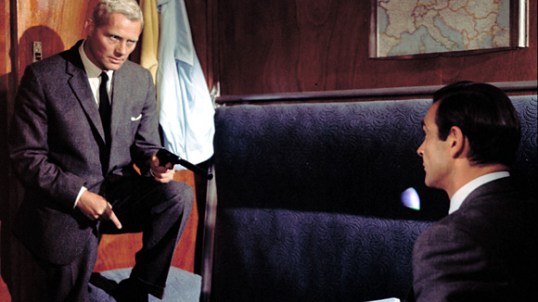
From Russia With Love (1963, dir by Terence Young, DP: Ted Moore)
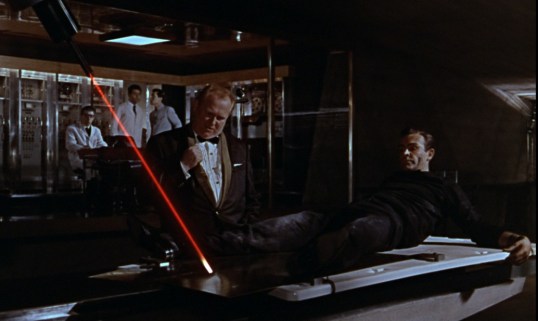
Goldfinger (1964, dir by Guy Hamilton, DP: Ted Moore)
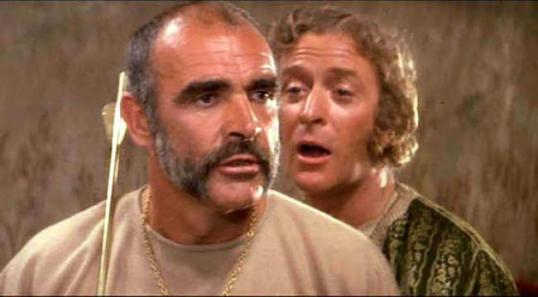
The Man Who Would Be King (1975, dir by John Huston, DP: Oswald Morris)
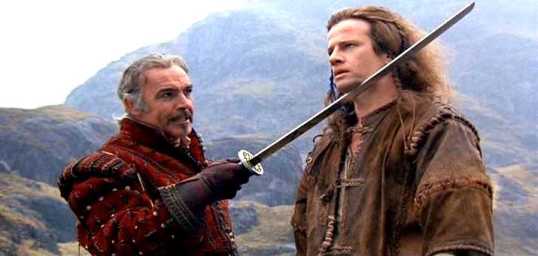
Highlander (1986, dir by Russell Mulcahy, DP: Gerry Fisher)
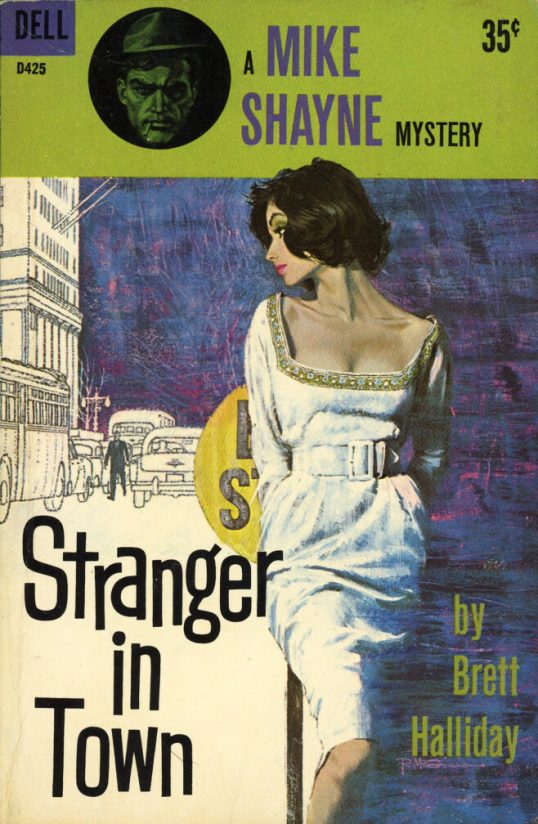
by Robert McGinnis
This cover is from 1961.
The video for this fan favorite was shot around what was then West Berlin. (This was before the wall came down.) Clive Richardson had also directed the video for Just Can’t Get Enough and the band turned to him, after previously working with Julian Temple, because they felt that Richardson could visually toughen up their image and help the band move away from the more self-consciously artsy style that Julian Temple had attempted to go with. The end result was a video that quickly went into regular rotation on MTV and a song that proved to be one of Depeche Mode’s most enduring hits.
Enjoy!
Welcome to Late Night Retro Television Reviews, a feature where we review some of our favorite and least favorite shows of the past! On Mondays, I will be reviewing CHiPs, which ran on NBC from 1977 to 1983. The entire show is currently streaming on Prime!
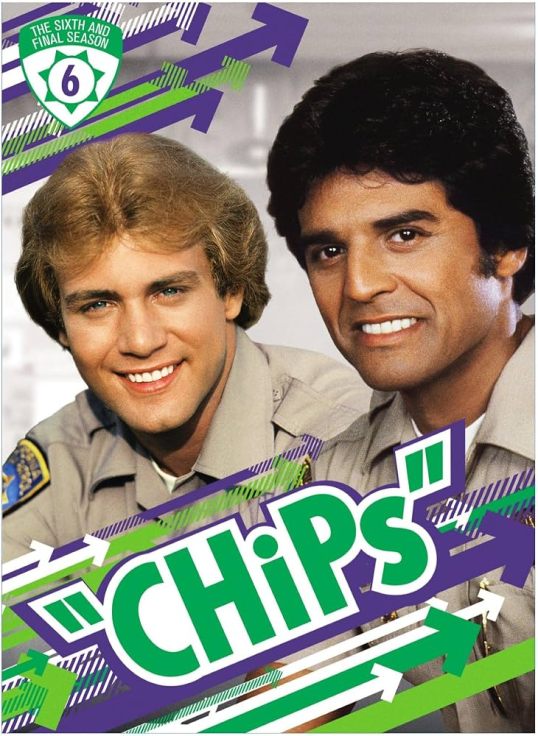
This week, we meet the future of the Highway Patrol.
Episode 6.5 “Speedway Fever”
(Dir by Chuck Bail, originally aired on November 7th, 1982)
This week, we meet Bobby’s younger brother, Bruce Nelson (Bruce Penhall). Bruce is both a world motorcycle speedway champion and a student at the Highway Patrol Academy. He hopes soon to be riding a motorcycle in the name of the law, just like Bobby and Ponch.
Unfortunately, Bruce has a hard time following orders. He likes to show off when he’s riding his motorcycle. He’s a good driver and a good shooter, but he’s struggling at the Academy. And when things start to get too tough for him, he decides to walk away from it. It’s an impulsive decision that he regrets. Can Ponch and Bobby talk the head of the Academy into giving Bruce a second chance? Of course they can! Ponch and Bobby can do anything.
Bruce Penhall was a real-life speedway champion. The footage of Bruce Nelson winning his race is actually taken from one of Penhall’s actual races. Judging from this episode, Penhall was a likable, if somewhat stiff, actor. In fact, watching this episode, I couldn’t help but notice that Bruce Penhall had better chemistry with Erik Estrada than Tom Reilly did. One gets the feeling that the purpose of this episode was to introduce Penhall as a potential replacement for Reilly. If nothing else, Penhall brought a good deal of earnest energy to his performance and provided quite a contrast to Tom Reilly’s rather spacey acting style.
This episode wasn’t entirely taken up with scenes of Penhall racing. There were two storylines. The more annoying one featured three 16-year-old girls (one of whom was played by Moon Unit Zappa) who would hitchhike and then use a water pistol to rob whoever picked them up. The girls introduced themselves as being from the Valley and spent the entire episode saying stuff like “For sure!” and “Gag me with a spoon!” (I’m not kidding; they said that more than once.) Frank Zappa’s “Valley Girl” played on the soundtrack whenever the girls showed up. It was kind of embarrassing all around. Between this episode, the Moloch episode, and the UFO episode, this season appears to have found CHiPs desperately struggling to stay culturally relevant.
As for the other storyline, it featured two motorcycle-riding thieves who were robbing couriers on the highway. One of the thieves was Bruce’s best friend, Ray (Robert Romanus). What a coincidence! Romanus, of course, played Mike Damone in Fast Times at Ridgemont High, which was probably still in theaters when this episode aired. He gives pretty much the same performance here that he gave in Amy Heckerling’s film. In the end, this episode left you wondering just how Mike Damone eventually ended up going so bad.
The episode ends with Bruce not only winning the world speedway championship but also returning to the Academy. It looks like the Highway Patrol is getting some new blood, and not a minute too soon!

