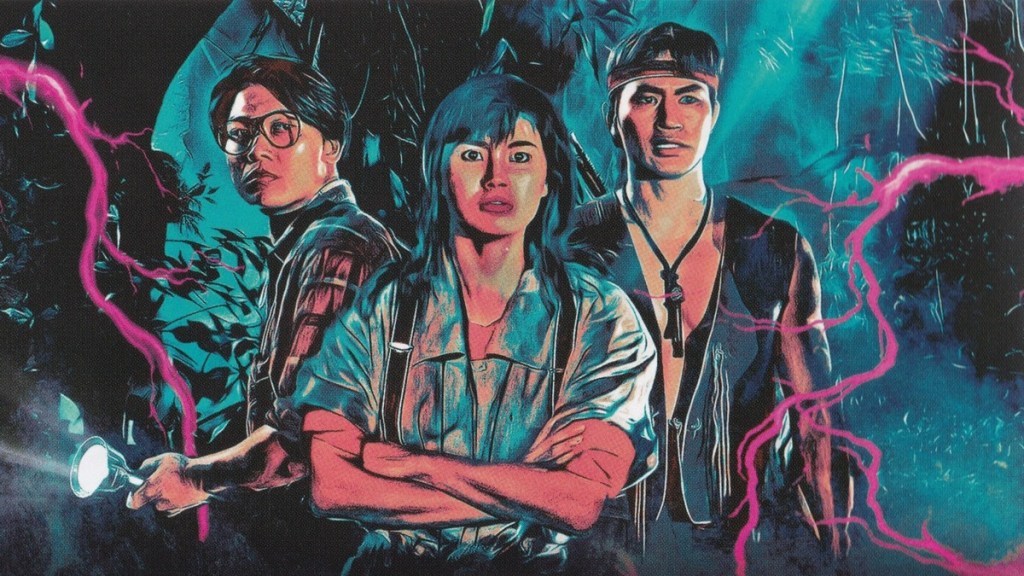
Early in THE SEVENTH CURSE, Dr. Yuan (Chin Siu-Ho) tells a story to his mentor and friend Wisely (Chow Yun-Fat). It seems he had visited Thailand exactly one year earlier, and while walking along a lake, a beautiful woman in a see-through blouse emerged from the water. The two visit for a moment before she ran into the jungle in fear. Later that evening, Yuan heard the sounds of native drums which seem to signal human sacrifices are taking place by the local “Worm Tribe.” Investigating the situation, he saw that same beautiful woman as she was about to be sacrificed to the “Old Ancestor” by the tribe’s sorcerer (Elvis Tsui). He rescued the lady, but he was also damned with a blood curse that will periodically burst through his legs. Luckily, the grateful beauty was able to slice a tumor out of her ample bosom that provided an antidote for one year. Well, the time is up and the bursts are back. Wisely, who puffs on his pipe and seems to be an expert on everything, advises Yuan to head back to Thailand and find a permanent cure before the final burst kills him. With help at various times from the badass Black Dragon (Dick Wei), the beautiful tribe woman we now know as Betsy (Tsui Sau-Lai), the annoying reporter Rainbow (Maggie Cheung), and Wisely, Yuan must find the cure before the final burst comes straight from the heart. It won’t be easy as they will have to defeat the evil sorcerer of the Worm Tribe, a demon baby animated by the blood of ground up children, and “Old Ancestor” himself, a powerful skeleton with glowing eyes who likes to suck out spinal cords before transforming into something really ugly.
Back in 1986, Chow Yun-Fat essentially filmed an extended cameo for this crazy film that could have only been made in Hong Kong. 1986 was also the same year that Chow Yun-Fat became a megastar all across Asia based on his success in John Woo’s A BETTER TOMORROW. Of course, the film was sold on his name, but he’s not in it very much, even if he does show up at the end with a bazooka. With that said, for those in the right frame of mind THE SEVENTH CURSE is an entertaining film, and I like Chin Siu-Ho in the lead role as Dr. Yuan. Part Indiana Jones style adventure and part jungle-terror, this film goes completely over the top with its gratuitous nudity and gore. “Restraint” for this movie means not showing children actually getting ground up so their blood can revitalize a demon baby, although we do see them being placed in the grinder and the blood coming out and being collected in bowls. The same restraint isn’t shown for the men who are torn apart by booby traps and Old Ancestor, impaled by spikes, rip their own faces off and have their spinal cords sucked out. For those of “WTF am I watching” cinema, this should be a fun viewing. The special effects aren’t particularly realistic looking which makes it easier for me to watch.
Overall, THE SEVENTH CURSE is definitely not a film for everyone. The budget is low, the acting isn’t great, it’s gory as hell, and Chow Yun-Fat may have ten minutes of screen time at most. But if my description of the gore doesn’t scare you away and you enjoy crazy cinema, this is probably a movie for you.
First published in 1979, Michael McDowell’s The Amulet takes place in a small Alabama town in 1965. It’s a town that is home to a factory that constructs rifles. The town’s entire livelihood revolves around the business of guns and, with the Vietnam War heating up, it looks like business is going to be good. Unfortunately, that’s little comfort to Dean Howell, a local man who is disfigured and left in an apparent vegetative state after a rifle that he’s testing explodes in his face.
Sarah, Dean’s young wife, tries to take care of Dean while also working at the factory and dealing with Dean’s incredibly spiteful mother, Jo. Angered over her son’s disfigurement, Jo seeks revenge by giving an amulet to Sarah’s boss. What Jo doesn’t tell anyone is that the amulet is cursed and whoever wears it will end up killing their family and then killing themselves. The amulet passes from one hand to another, leading to more and more violent deaths. When Sarah and her friend Becca realize what’s happening, they try to track down the amulet. It all leads to an increasingly over-the-top bloodbath and a twist ending.
The Amulet is an enjoyably gruesome horror story that works as long as you don’t spend too much time trying to understand the logic of the amulet. At first, it seems like a pretty simple curse. The person who wears the amulet is driven to kill their loved ones and then themselves. By the end of the book, though, the amulet seems to have the power to possess both buildings and machines which leads us to wonder whether or not machines actually have loved ones. As a writer, McDowell goes more for shock than narrative consistency but, fortunately, he writes with enough style that he pulls it off. McDowell shows a flair for macabre small town drama and the ending is appropriately unsettling.
This was Michael McDowell’s first published novel. He would go on to write several more novels, along with working on the screenplays for Beetlejuice, The Nightmare Before Christmas, and Thinner.
2018’s Lords of Chaos features one of the most disturbing scenes I’ve ever seen in a movie.
Jack Kilmer plays Pelle Ohlin, a Swedish singer who was horribly abused as a child—beaten so badly his spleen ruptured and he was clinically dead for a few minutes before they brought him back. He grew up obsessed with death, sometimes seeming to believe he already was dead. He took Dead as his stage name and became the lead singer of the Norwegian black metal band Mayhem. He’d found a following, but it didn’t seem to matter. Left alone in his attic bedroom, Dead takes a knife and slits his wrists in close-up. After staring at the blood running down his arms, he uses the same knife to slit his throat. That still doesn’t kill him. Even while he’s coughing up blood he finds the strength to write a note apologizing for the mess. Then he sits on the bed, puts the barrel of a shotgun to his forehead, and pulls the trigger. We see all of it. The gore effects are disturbingly real, and Kilmer’s performance captures the eerie detachment of someone too fascinated by death to care that he’s the one dying. It’s not an easy scene to watch.
What’s even more disturbing is the reaction of Dead’s “friend,” Euronymous (Rory Culkin). The founder and lead guitarist of Mayhem is the one who discovers the body. Instead of calling an ambulance, he drives to a store, buys a disposable camera, and takes pictures. Later he hands out necklaces he claims were made from fragments of Dead’s skull. He uses the notoriety of the suicide to launch a record label and brand Mayhem as the world’s most evil band.
After Dead’s death, Euronymous is approached by Varg Vikernes (Emory Cohen), a fan he’d once cruelly dismissed. Varg has remade himself as a neo-Nazi pagan musician. When Euronymous agrees to produce Varg’s debut album, Varg celebrates by burning down a church. Soon he’s on a church-burning spree. Meanwhile another of Varg’s acquaintances, Faust (Valter Skarsgård), brutally murders a gay man in a park. Euronymous, who built his fame on songs about death and destruction, suddenly finds himself surrounded by people who are actually killing and destroying. Eventually they come for him too.
I should state right now that I’m hardly an expert on Norwegian black metal. It’s not my kind of music. I’ve read a little about the murder of Euronymous and Varg Vikernes’s subsequent career, but I’m in no position to judge how accurate the film is. Plenty of people online were critical of the way it chose to tell the story. Having watched it, I don’t feel it gave me any real insight into what the black metal scene was actually about. If anything, it portrays Euronymous as something of a poseur. Toward the end he tells Varg the whole thing was just an act. Varg doesn’t take it well.
In real life Varg Vikernes served 15 years for the church burnings and the murder of Euronymous. During the COVID years he made a few comments critical of the lockdowns and of “wokeness.” I remember a fellow film critic (someone who’s never written for this site, I should add) was incredibly impressed and started telling everyone they needed to read him. A few of us pointed out that Vikernes was not only a convicted murderer but a neo-Nazi who hated America and was the last person she should be embracing, lockdown opinions or not. For weeks she refused to believe it. Eventually someone told her to read his Wikipedia page and she never mentioned him again.
As for the film itself, it does a good job of capturing the rebellion and directionless anger that could pull someone toward a band like Mayhem. Rory Culkin is strong as Euronymous, smug and arrogant at the start and learning a little humility only when it’s far too late. Emory Cohen has a few effective moments as Varg, but there are also stretches where the character and Cohen’s performance just comes across as being .… well, goofy. Director Jonas Akerlund may have started as a drummer for a black metal band but the film leaves you with the feeling that he doesn’t care much for the scene or have much use for the people who populate it and it’s difficult to get emotionally involved with a film that doesn’t seem to really care about its characters. It’s a well-made and at times disturbingly graphic film, but in the end it never quite convinces the uninitiated that they should care about this story.
This is movie should be called- Thank Goodness, my friends are all dead!
I don’t always hope for the death of comrades, but when I do I drink… well, it’s Pellegrino…
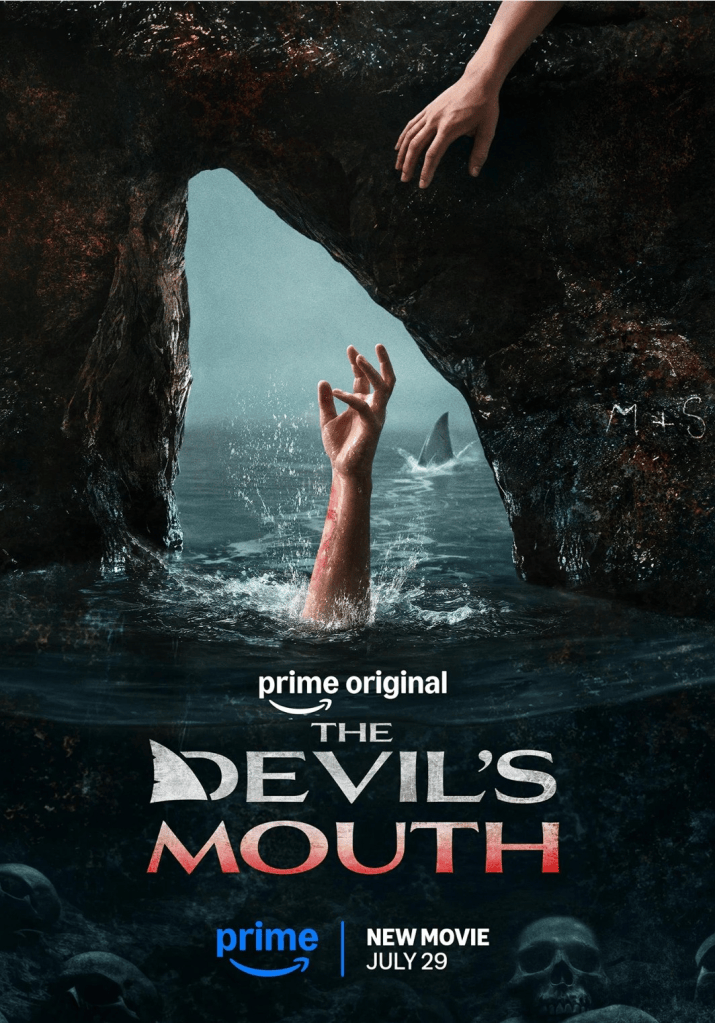
“The Devil’s Mouth” is a movie that looks more expensive that it is and that is actually a signature of the producer/director Jeff Wadlow. He budgets his films to have nothing left at the end; so, it looks like a studio film, but it was only 3.5MM.
If you’re trying become a filmmaker on a budget, watch an interview with Jeff Wadlow below.
This was a great way to begin my Horrorthon because I got to start it with Lisa. My regular readers know that Horrorthon films are a mixed bag, AT BEST. There are movies that don’t take themselves seriously and just have fun, there are short films that are masterworks, and there are Alex Magana films that strain my belief in humanity’s ability for redemption.
“The Devil’s Mouth” takes place in Thailand and Sara McKenna (Kathryn Newton) is on an caving trip with her MANY toxic friends. Five minutes into the film and the friends are all snorkeling; unfortunately, Sara decides to snorkel too, but her terrible friends mix themselves up and boat off and leave her behind “47 Meters Down” style. Then, she gets attacked by jellyfish and gets actual wounds. Her most toxic friend Max (Lana Condor) doesn’t even apologize. Max’s main personality trait is that she bosses people around the whole movie (badly) and gets most of the group killed.
Sara needs a tough love friend or dad to say, “Look, you’re comin home or I’ll meet you there. Leave that trash behind!”
Also, why are these 20 somethings going caving in the first place and not wanting to just drink and sleep around…ON LAND?! You’re in Thailand! You all should be trying create some souped up version of HPV.
Sara and her terrible friends go to this cave system that was flooded with salt water and it looks super creepy and Max demands the group ignore the guide and go in the evil cave system. It is really amazing that Max and her friends have lived as long as they have. They can barely swim, they have claustrophobia, relationship issues, and Max, the toxic garbage person, leading them.
Because the cave was flooded with salt water, bull sharks have come into the cave system and start eating them all. Unfortunately, Max stubbornly continues to live until the final 15 minutes. Sara valiantly fights of sharks and risks her life to try to keep the body count down, but the sharks just want it more!
Dario Argento spent years trying to bring his version of The Phantom of the Opera to life.
Argento has said that he’s always been fascinated by the story of the mysterious and deformed man living underneath the Paris Opera. He has described watching Arthur Lubin’s 1943 version of the tale as one of the formative events of his childhood. In the ’70s, when he was at the height of his popularity, Argento sought to film his own version of the story in Moscow. When that didn’t work out, Argento put his plans for the Phantom aside. It wasn’t until he was filming Trauma and caught a television airing of the 1925 Phantom of the Opera that Argento returned to the project. Argento’s version of The Phantom of the Opera was released in 1998 and was dismissed by most critics. Even today, it has a reputation for being Argento’s worst film. It’s also not an easy one to see. Whereas most of Argento’s films are always streaming somewhere, The Phantom of the Opera usually is not.
Argento’s Phantom of the Opera opens in Paris in the 19th century. A baby is placed in a basket and, much like Moses, is set adrift in a river. A group of empathetic rats save the baby. The baby grows up to be the Phantom of the Opera (Julian Sands), a classically handsome man who lives in the sewers and protects the rats from anyone who might try to harm them. (Just as rats are killed if they leave the sewers, humans are killed if they enter them.) After the Phantom hears Christine Daaé (Asia Argento) singing alone on the stage of the Paris Opera, he approaches her in the empty theater and tells her that her singing has brought light to his heart. The Phantom and Christine develop a telepathic bond, and she becomes the only person whom he allows to enter the sewers and live. Sometimes Christine loves the Phantom and sometimes she doesn’t. Sometimes the Phantom is a tragically romantic figure and sometimes he’s just a black-clad figure who bites people’s tongues out of their mouths. The Phantom becomes obsessed with Christine, and Christine becomes just as obsessed with the Phantom. Meanwhile, Christine’s other suitor—the aristocratic Raoul (Andrea Di Stefano)—smokes opium, hallucinates that Christine has turned into a prostitute, and languidly watches as two men jump into a pool and fight over the merits of Rimbaud. Painter Edgar Degas makes a cameo appearance but manages to avoid the Phantom’s wrath.
As I mentioned earlier, The Phantom of the Opera is not one of Argento’s more highly regarded films. It’s a slow-paced film, one in which the action often seems to go off on strange tangents that don’t really pay off in the long run. (The opium den brings to mind the deliberately ugly orgy scenes that Tinto Brass directed for Caligula, just without the subversive snap.) Argento attempts to portray the Phantom as both an achingly romantic figure and the type of sociopath who brutally kills anyone who enters the sewer. If he were only killing the rat catchers, the Phantom’s actions could be understood. But as soon as he kills two lovers who just happened to be looking for some privacy, it becomes impossible to sympathize with him. Argento’s attempt to portray The Phantom of the Opera as a story of romance sits uncomfortably with scenes in which the Phantom forces himself on Christine.
That said, I actually like Julian Sands’s performance as the Phantom. Argento’s Phantom is not disfigured in any way and, while that may go against the spirit of the story, at least it means Julian Sands didn’t have to wear a mask while filming his role. Sands exudes a cool, sexy danger, and that makes him just right for Argento’s version of the character. Asia Argento plays Christine as someone who only looks innocent, and it does bring an interesting subtext to the story. Indeed, if not for the prologue featuring the rats saving the Phantom as a baby, one could interpret the Phantom as a manifestation of Christine’s own psychosis. As for the rats, they are yet another example of Argento suggesting that animals have special telepathic powers. For all the criticism Argento has taken for the mystical animals he has included in his later films, it appears to be an idea Argento really likes. Personally, I think there’s a quirky charm to it, but I seem to be in the minority.
I can defend elements of The Phantom of the Opera, but I can’t really defend the film as a whole. It’s a bit too cluttered in its storytelling, and the mix of grand romance and brutal violence doesn’t really work. If this film had been made earlier in Argento’s career, perhaps he could have recreated the grandeur of Paris, but at a time when his films were no longer automatic box-office hits and when the Italian film industry itself was struggling, The Phantom of the Opera often looks cheap and unconvincing. Every director has the occasional misfire. Dario Argento has The Phantom of the Opera.
#TubiThursday is a weekly watch party that meets over Thursday at 10 pm et and watches a movie, preferably one that is on Tubi. If you join us, use the #TubiThursday hashtag.
One day, I stepped outside and discovered a turkey vulture walking through the neighborhood.
Usually, I love birds. I put out food for them. I like to take their picture. I’m sad when they leave for a season and I’m happy when they come back. I’m never happy to see a buzzard, though. Buzzards show up when something is dying or has just died. They’re scavengers and turkey vultures are the worst. They only show up after something has already died, mostly so they can get whatever the other scavengers left behind. Their heads are bald so that they can shove their faces into the dead without getting gore on their feathers.
The good thing was that this one appeared to just be visiting. Nothing had died in the neighborhood so it was just looking for a snack to sustain itself until something dead. It walked around and ate a few bugs. The squirrels ignored it. I don’t blame them.
Eventually, it left. Hopefully, it will not return soon.
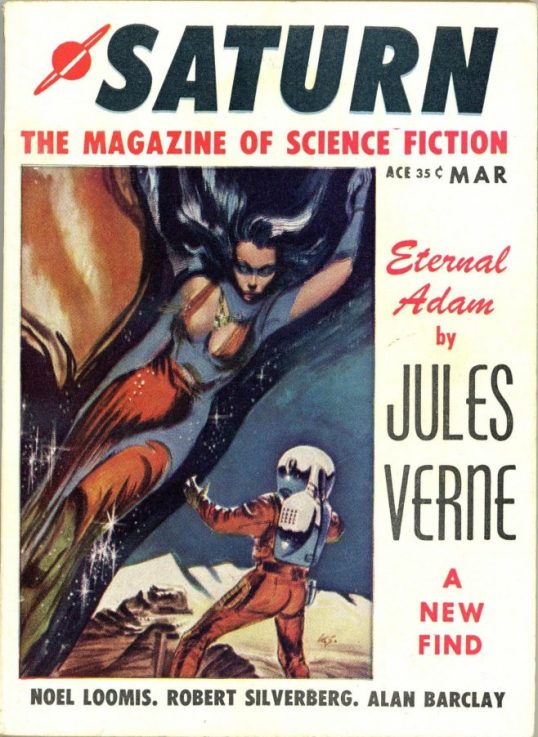
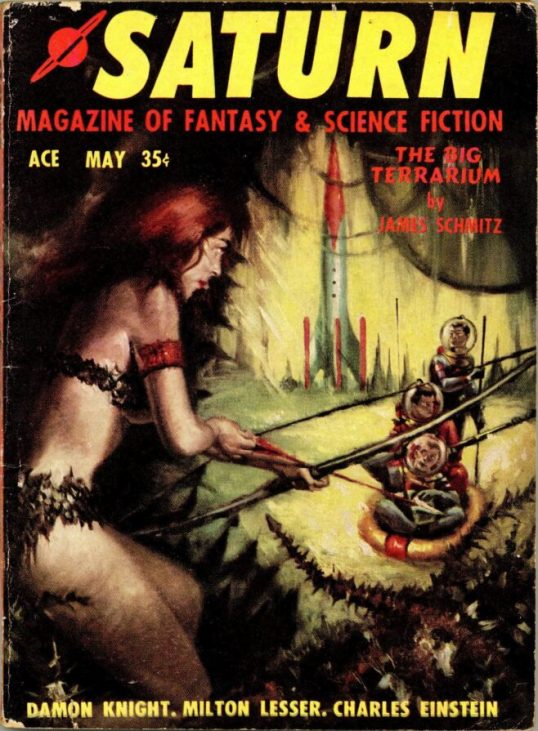
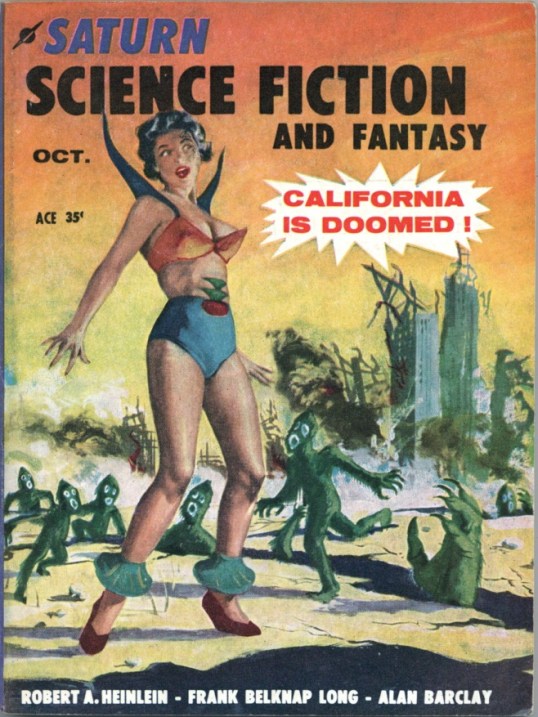
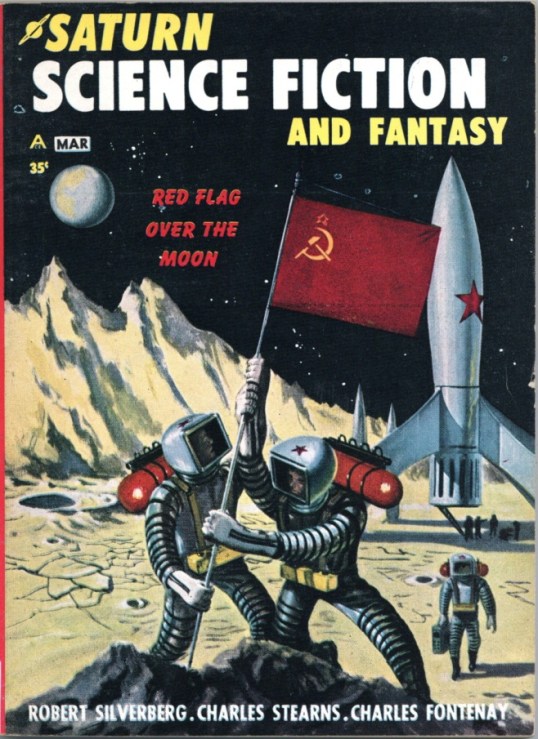
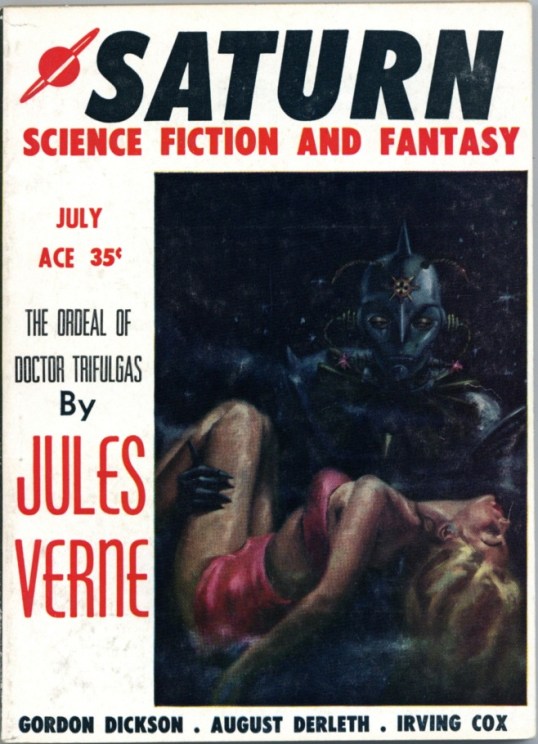
Saturn: The Magazine of Science Fiction was a sci-fi/weird tale themed pulp magazine that was published from 1957 to 1958. In 1958, the magazine’s name was changed to Saturn Web Detective Stories and then it was changed again to Web Detective Stories once it became obvious that people didn’t think “hardboiled fiction” when they saw Saturn.
Here are the five coves of Saturn, back when it was The Magazine of Science Fiction.
“You may think you’re getting off free, but there’s other justice in this world besides the law!” — Mrs. Ritter
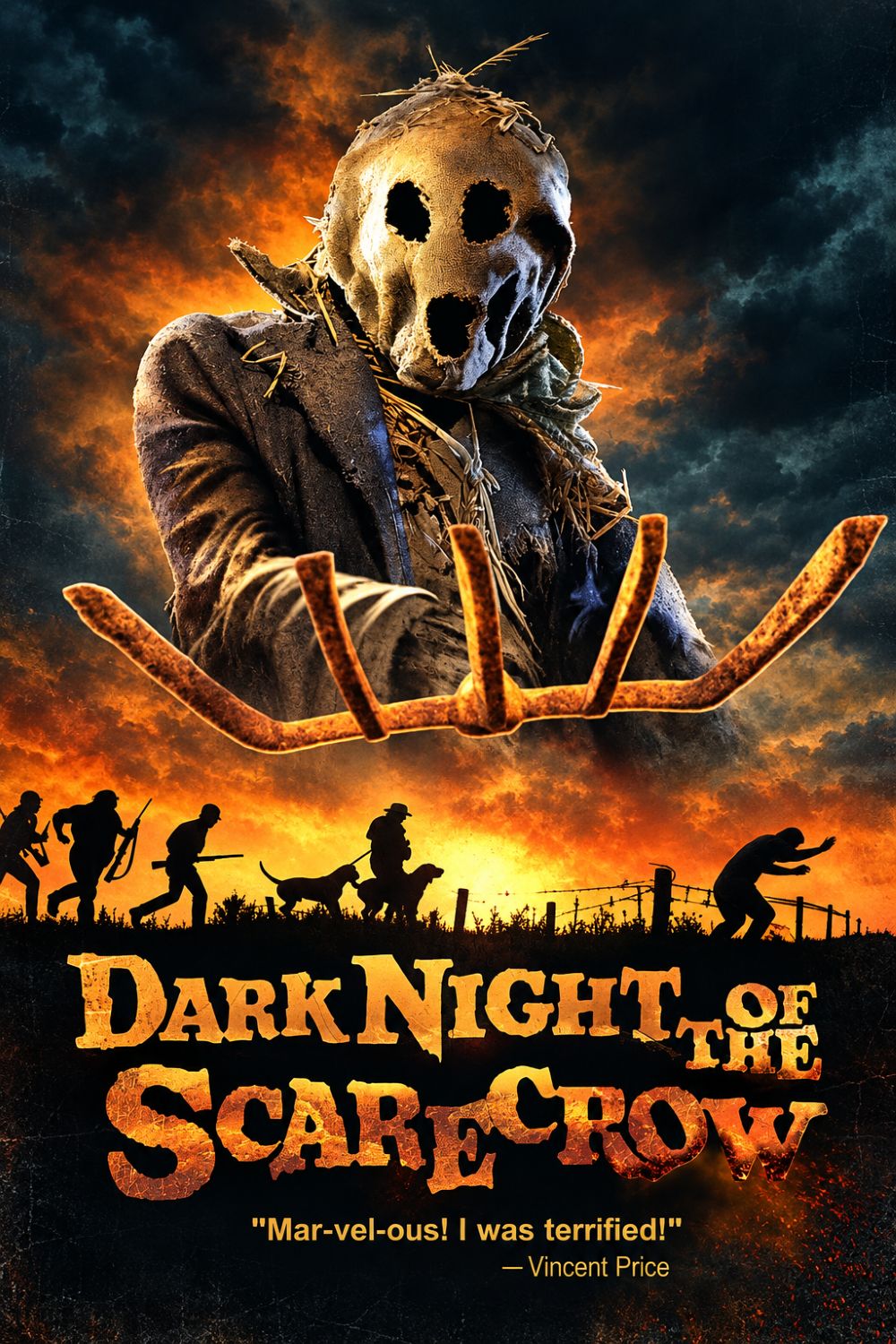
Frank De Felitta’s Dark Night of the Scarecrow is one of those deceptively modest horror movies that earns its power through atmosphere, patience, and an unusually bitter sense of injustice. Originally made for television in 1981, it has none of the glossy excess or elaborate effects work associated with many theatrical horror releases of its era. What it does have is a sharply constructed premise, a remarkable villain performance from Charles Durning, and a quiet rural setting that becomes steadily more unnerving as the story moves from tragedy into supernatural revenge. It is the kind of film that understands a scarecrow is already an inherently creepy image; it does not need to overexplain or overuse that image to make it work.
The story takes place in a small Southern town where Bubba Ritter, played by Larry Drake, is a gentle, developmentally disabled man whose closest friend is a young girl named Marylee Williams. Their friendship is innocent and affectionate, but it is viewed with suspicion by Otis P. Hazelrigg, a cruel local mail carrier with a personal grudge against Bubba. When Marylee is attacked by a dog and briefly goes missing, Hazelrigg turns the situation into an accusation, convincing three other men that Bubba has harmed the girl. Before anyone bothers to learn the truth, the men hunt Bubba down, shoot him, and stage the scene to make it appear as though he was armed. It is a brutal opening act precisely because the movie refuses to treat its central tragedy as an excuse for cheap melodrama. Bubba is not a monster, and the men who kill him are not panicked heroes making an understandable mistake. They are cowardly, angry men who allow prejudice and resentment to become a death sentence.
That foundation is what separates Dark Night of the Scarecrow from a standard slasher or revenge movie. The supernatural material only becomes effective because the human evil comes first. Bubba’s death is not merely a plot device to unleash a vengeful ghost; it is the film’s moral wound. De Felitta, a veteran novelist as well as the director, approaches the story with an eye for the emotional damage left behind by that act. The film slows down after the killing, allowing the town to sit with the consequences while Hazelrigg becomes increasingly paranoid that Bubba has returned from the grave.
Charles Durning is the movie’s secret weapon. Hazelrigg is one of those villains who is frightening not because he is physically unstoppable, but because he is such a believable bully. Durning gives him a sweaty, blustering confidence that gradually rots into panic. He is the sort of man who believes his position in the community gives him the right to make judgments about everyone else, and he has no trouble manipulating weaker men into sharing responsibility for his own cruelty. Durning never plays Hazelrigg as a cartoonish sadist. Even when he is snarling threats or trying to cover up the murder, there is something painfully recognizable about him: a man who has built his identity around authority and cannot bear the possibility that he has been exposed as morally bankrupt.
Hazelrigg’s hatred of Bubba also has a nasty layer of projection to it. The movie never outright says he is a pedophile, but it heavily implies it through his creepy interest in Marylee, the way he watches her, and Mrs. Ritter’s pointed remarks. That makes his obsessive claim that Bubba is a threat even more grotesque: Hazelrigg seems to be accusing Bubba of the impulses he cannot admit in himself. The implication makes his hostility toward their friendship feel less like misplaced civic concern and more like jealousy, possessiveness, and a desperate effort to hide his own corruption behind moral outrage. It is one of the film’s darkest touches, especially because it remains mostly beneath the surface rather than being presented as a blunt plot revelation.
Larry Drake has a more difficult task because Bubba spends much of the movie absent, concealed, or transformed into a possible supernatural presence. Yet his early scenes are essential. Drake makes Bubba sweet and childlike without turning him into an object of pity or a collection of mannerisms. His relationship with Marylee, played warmly by Tonya Crowe, gives the film its emotional center. There is genuine tenderness in the way Bubba helps her, plays with her, and treats her with uncomplicated kindness. That sweetness makes the later violence feel all the more ugly. Marylee’s grief also carries real weight, because she is one of the only people who completely understands that Bubba was innocent.
The scarecrow itself is used with admirable restraint. There are no elaborate explanations about ancient curses, possession, or elaborate rules governing the entity. The film instead lets the audience wonder whether Bubba’s spirit has actually returned, whether the scarecrow is a physical vessel for vengeance, or whether Hazelrigg is simply losing his mind under the pressure of guilt. That ambiguity gives the movie much of its lasting chill. A scarecrow standing in a distant field, visible at the edge of a frame or appearing where it should not be, is often more frightening than a clearly defined monster charging at the camera. De Felitta recognizes that the image is powerful because it is still, silent, and vaguely human without actually being human.
The television origins are noticeable in some ways. The pacing is deliberate, the violence is largely implied rather than graphic, and the production is understandably small-scale. But those limitations wind up serving the movie. The lack of gore forces the film to emphasize suggestion, shadows, sound, and the ominous openness of its rural setting. Cornfields, dirt roads, farm equipment, abandoned buildings, and dark porches all become part of the film’s horror vocabulary. It feels less like a slick studio shocker and more like a regional ghost story someone might tell you after dark, the kind where the details are simple but the moral is savage.
De Felitta also has a good sense of escalation. The revenge scenes are not huge set pieces, but they are memorable because each one turns something ordinary into a source of menace. The scarecrow’s presence becomes a warning that the men involved in Bubba’s death cannot escape what they did. Instead of relying on body counts alone, the movie builds suspense around Hazelrigg’s growing desperation. Every time he sees the scarecrow—or thinks he sees it—his confidence cracks a little further. The real terror is not just that the dead may be coming for him. It is that there may be no way to outrun the truth.
The ending delivers the kind of grimly satisfying horror-movie justice that the story has earned. It is not triumphant in a cheerful sense, because nothing can undo the tragedy that put the plot in motion. Still, there is a bleak pleasure in watching Hazelrigg finally face the consequences of his actions. The film’s revenge is measured rather than sadistic, and that makes it more effective. It feels like a judgment rather than a spectacle.
Despite its TV roots, Dark Night of the Scarecrow has become a very underrated horror film, with many genre aficionados lauding it as one of the best horror films made, period. That reputation is understandable. It is not the loudest or bloodiest horror film of the early 1980s, and viewers expecting a fast-paced scarecrow slasher may initially be surprised by how much time it spends on character, grief, and small-town malice. But that is exactly why it endures. The film has a soul beneath its scares, and its simple supernatural premise gains force from the cruelty of the world around it.
Ultimately, Dark Night of the Scarecrow works because it never forgets that its monster is born from human wrongdoing. The scarecrow is frightening, but Hazelrigg and the mob that follows him are worse because they are entirely plausible. Frank De Felitta turns a compact television movie into a haunting morality tale about prejudice, guilt, repression, and the terrible cost of refusing to see another person’s humanity. Its effects may be modest, but its mood is potent, its villain is unforgettable, and its final image lingers like something standing motionless at the far end of a field.
Hi there and welcome to October! This is our favorite time of the year here at the Shattered Lens because October is our annual horrorthon! For the past several years (seriously, we’ve been doing this for a while), we have celebrated every October by reviewing and showing some of our favorite horror movies, shows, books, and music. That’s a tradition that I’m looking forward to helping to continue this year!
First released in 1925, The Phantom of the Opera is today best known for both Lon Chaney’s theatrical but empathetic performance as the Phantom and the iconic scene where Mary Philbin unmasks him. However, the film is also a perfect example of early screen spectacle. The Phantom of the Opera was released during that period of time, between Birth of the Nation and the introduction of sound, when audiences expected films to provide a visual feast and Phantom of the Opera certainly accomplishes that. Indeed, after watching this film and reading Gaston Leroux’s original novel, it’s obvious that the musical was inspired more by the opulence of this film than by the book.
This film is also historically significant in that it was one of the first films to be massively reworked as the result of a poor test screening. The film’s ending was originally faithful to the end of the novel. However, audiences demanded something a little more dramatic and that’s what they got.