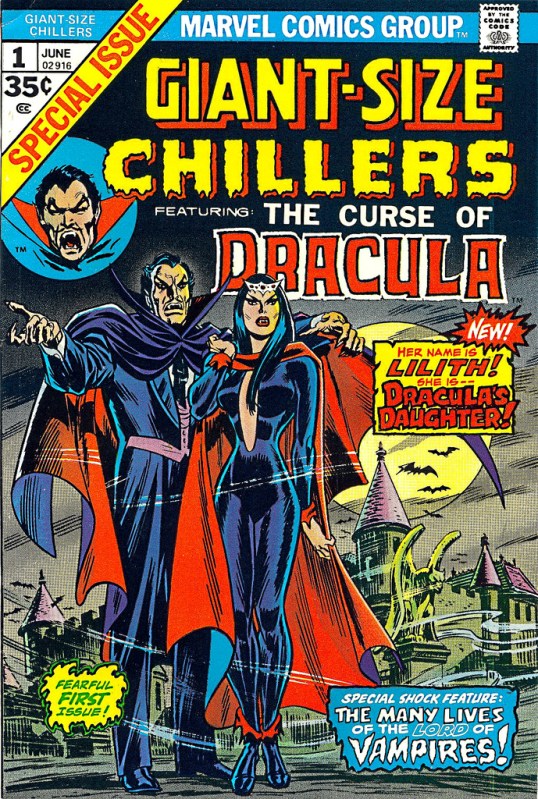
by Gene Colan
Have you been chilled today?
by Gene Colan
Have you been chilled today?
Frontier is from Dead Can Dance’s self-titled debut album. This is the sound that largely defined goth in the 80s.
Enjoy!
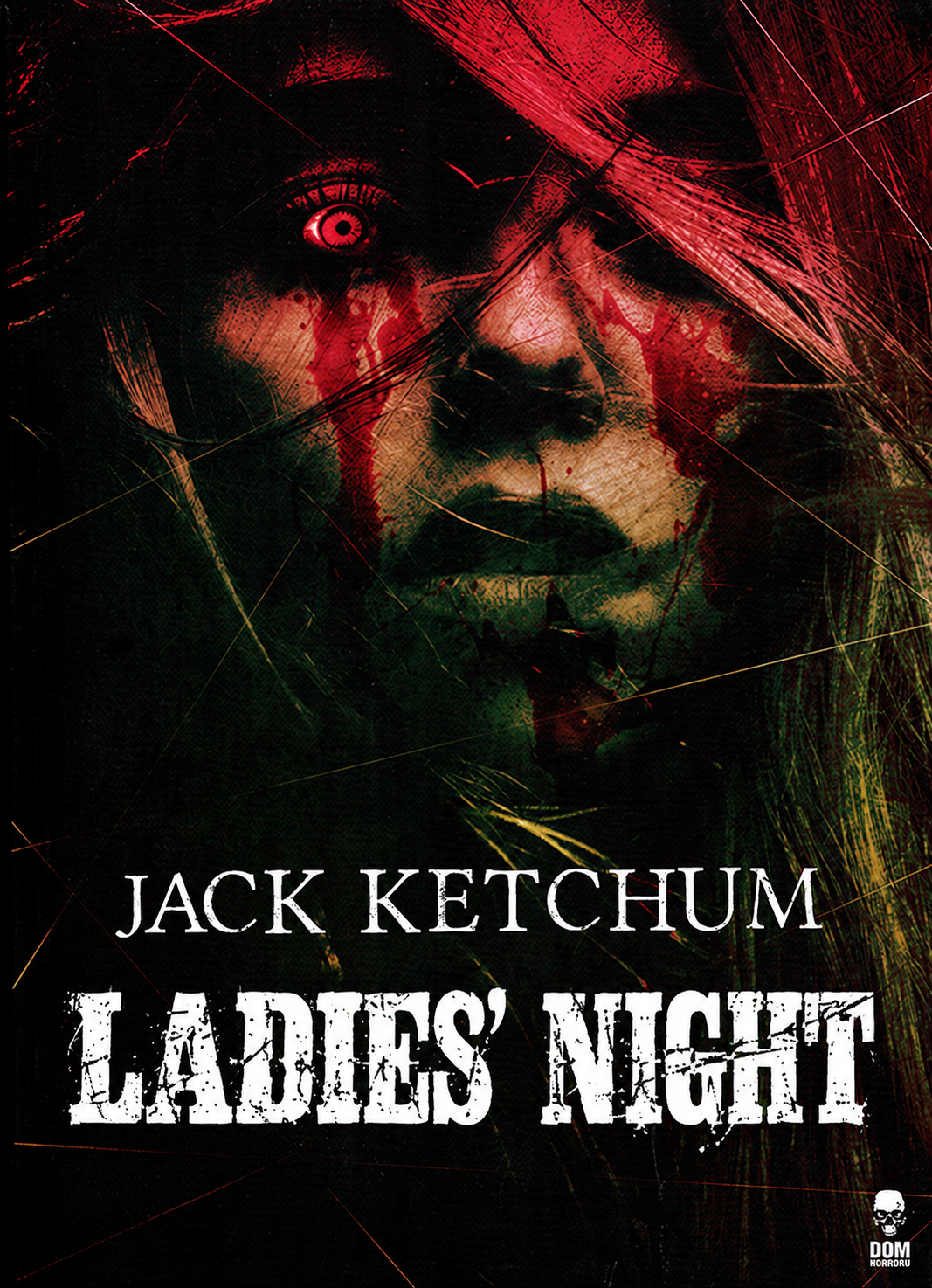
“In the War Between Men and Women the Shooting Has Begun.” — Jack Ketchum
Jack Ketchum’s Ladies’ Night takes a premise that sounds like the setup for a trashy midnight movie and follows it somewhere genuinely unpleasant. A chemical spill in New York City turns women into sexually aggressive killers, leaving men scrambling to survive a night of escalating violence. That description pretty much tells you whether you want to go anywhere near this book. What it doesn’t tell you is how effectively Ketchum can turn an outrageous concept into a tense survival story—or how often the concept threatens to swallow everything interesting about it. This is lean, nasty horror with considerable momentum and some serious limitations.
The central character is Tom Braun, a husband and father whose wandering eye gives him an immediate disadvantage in the likability department. When the outbreak erupts, his ordinary selfishness suddenly looks small beside the catastrophe unfolding around him. After escaping violence at a bar, he realizes his son, Andy, is back at their apartment with his wife, Susan, who may also be affected. Getting home becomes the story’s driving objective. It is a straightforward hook, but a strong one: surviving the streets means little if the person Tom needs to protect is trapped somewhere supposedly safe.
What works best is the collision between that intimate fear and the larger urban disaster. Tom has a specific destination, while the city around him keeps producing new obstacles. Ketchum doesn’t need an elaborate mystery to maintain suspense; he needs distance, uncertainty, and the knowledge that every delay could matter. The movement through a collapsing New York gives the book something of a nightmare journey’s rhythm. Each escape offers temporary relief rather than security. The comparison to The Warriors is especially apt because both stories turn crossing the city into a desperate struggle to get home (and, for the ancient history nerds out there, that film’s literary roots trace back to Xenophon’s Anabasis). Different circumstances, same nightmare of having a destination and far too many people between you and it.
Ketchum’s prose suits that urgency. The writing is direct, physical, and more interested in what happens next than in stopping to admire itself. That approach can look simple until you consider how easily a book like this could become exhausting or ridiculous. The narrative needs to keep its outrageous premise moving fast enough that the immediate danger remains convincing. For much of the novel, it does. The brevity helps, too. This isn’t a sprawling apocalypse with chapters devoted to explaining every institution’s response. It stays close to the panic, pushing its characters through an increasingly hostile environment.
Then there is the violence, which deserves more than a routine “not for the squeamish” warning. Ladies’ Night combines graphic injury, sexual aggression, and the destruction of familiar relationships. Its nastiness comes partly from making intimacy dangerous: attraction becomes a trap, and people who should offer comfort become sources of terror. That is more disturbing than simply putting monsters on street corners. At its strongest, the book makes the body itself feel unreliable, something that can be chemically commandeered and turned against other people. At its weakest, the same material feels like another opportunity to deliver a grotesque spectacle.
That distinction matters because the novel’s gender politics are impossible to separate from its entertainment value. Women become the threatening population, while men occupy the principal survival perspective. The setup also provides repeated circumstances in which violence against women becomes a matter of immediate self-defense. You can recognize that these women are victims of contamination rather than willing participants and still find the resulting arrangement uncomfortable. The issue isn’t simply that the book contains offensive material. It’s that its central mechanism keeps returning to a narrow, heavily sexualized vision of female monstrosity.
There is a potentially richer horror story inside that discomfort. A person being forced into murderous behavior is horrifying for the person losing control, not just for whoever stands nearby. But Ladies’ Night largely draws its momentum from the men trying to survive the consequences. That emphasis limits how fully the women register as people experiencing their own catastrophe. The book can therefore feel caught between two effects: the tragedy of human beings being transformed into threats and the lurid excitement of fighting those threats. The second is generally louder, which makes the first harder to feel consistently.
Tom adds some useful friction because he isn’t presented as an uncomplicated model husband. His infidelity puts an ugly edge on the rescue narrative: a man who has been neglecting his marriage now has to fight his way back toward his family. That doesn’t automatically make him a deeply developed character, but it gives the action a more interesting starting point than simple heroism. His concern for Andy supplies a credible emotional priority without requiring the reader to excuse his earlier behavior. The novel works better when those two judgments can coexist—he can be selfish and still desperately want to save his child.
The limitation is that momentum frequently substitutes for depth. Once the emergency takes over, there is little room for the characters to become much more than their immediate needs and reactions. That isn’t fatal in a short survival novel, but it affects how the violence lands. When characterization stays thin, suffering can become another event in the action rather than something with lasting emotional weight. Andy’s vulnerability gives the story an essential human anchor, yet the surrounding mayhem sometimes competes with that concern instead of intensifying it. The book is gripping more reliably than it is moving.
Ladies’ Night left me more impressed by Ketchum’s ability to sustain tension than by what he does with the ideas underneath it. As a fast, brutal urban nightmare, it delivers: the objective is clear, the danger keeps shifting, and the prose rarely lets the pressure ease. As an exploration of gender, intimacy, or the people caught inside its catastrophe, it is much less satisfying. Its provocations are stronger than its insights, and its nastiness occasionally feels like a shortcut rather than an achievement. Still, there is real craft beneath the exploitation premise. I’d call it a qualified recommendation for readers who enjoy extreme horror and can tolerate an ugly premise without expecting the book to fully interrogate it. It gets under your skin, but not always for the reasons that make a horror novel great.

2021’s The Order of Rights tells the story of two teenagers.
Emma Stein (Emma Elle Roberts) is artistic and creative and we know this because she’s working the lights for the current high school theater production. I have to say that I did a lot of high school theater and I always really disliked having to deal with the members of the backstage crew, They were always worried about something. Whenever I was waiting to make my entrance, I always knew some crew person was going to wander up and start talking to me about the lighting cues. And I would just be like, “Just make sure I look good.” Wow, that was mean of me. I feel kind of bad now.
Anyway, back to the movie….
Ethan (Ben Davies) is a jock. When know he’s a jock because he always wears his baseball cap backwards. For Ethan and Emma it’s love at first sight. Ethan is also a Christian and he feels really guilty after he and Emma give into temptation and have sex. He feels even more guilty after Emma informs him that she’s pregnant.
Ethan talks to his parents (Matthew Welling and Julie Silcott). They tell him that, before he was born, they found themselves in a similar situation. They weren’t married at the time so Ethan’s mother decided to have an abortion. They have always felt that they made a mistake. When they learn that Emma’s mother is pressuring Emma to get an abortion, they hire a lawyer (Richard Cutting) to file a civil case against Emma, claiming that Emma is denying her baby its rights under the 14th amendment.
The case becomes national news. We get a montage of real-life conservative podcasters and talk show hosts discussing the case. The second half of the movie takes place almost exclusively in the court room and if you enjoy scenes of people saying, “Objection!” and a judge replying with “Overruled,” rest assured that this film is full of them. Each side is given a chance to make its case. That said, it’s hard not to notice that Ethan’s lawyer is extremely earnest while Emma’s lawyer is extremely smug.
Much like One Nation Under God, this is a film that was largely made to annoy liberals and, judging from the reviews left on Letterboxd, it certainly managed to do that. It’s really not any more heavy-handed than most mainstream movies about abortion. It’s just, in this case, the film comes at things from the pro-life point of view as opposed to the pro-choice point of view. It’s a film that’s full of awkward scenes and there are quite a few performances that don’t work, especially during the film’s first half. The actors playing Emma’s theater friends offer up some of the worst line readings that I’ve ever heard. That said, Emma Elle Roberts probably gives a better performance than the film deserves and, regardless of what else you may want to say about the movie, it doesn’t turn Emma into a cardboard villain. In the end, one feels very sorry for her as both sides are just using her pregnancy to push their own agenda.
This film was released in 2021. A year later, Roe v Wade was overturned, making The Order of Rights feel very dated indeed.
Welcome to Late Night Retro Television Reviews, a feature where we review some of our favorite and least favorite shows of the past! On Tuesdays, I will be reviewing Pacific Blue, a cop show that aired from 1996 to 2000 on the USA Network! It’s currently streaming everywhere, though I’m watching it on Tubi.
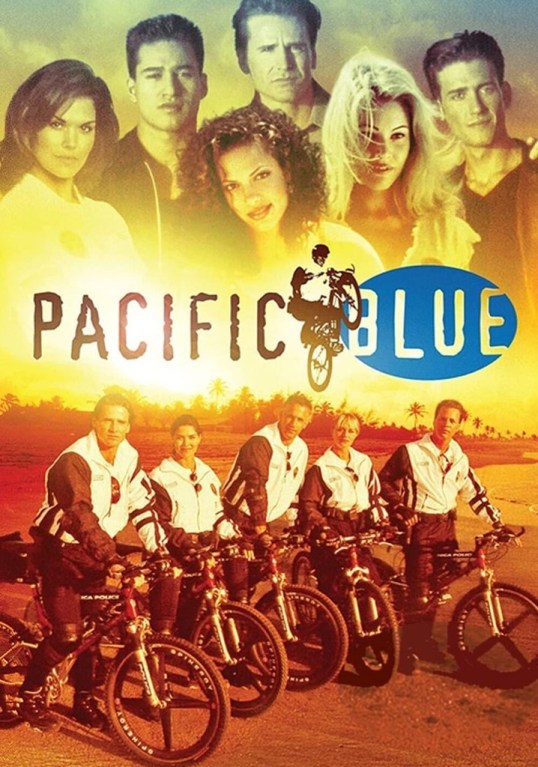
This week, everyone’s going undercover!
Episode 5.2 “The Naked Truth”
(Dir by Sara Rose, originally aired on July 25th, 1999)
When a wealthy sorority girl is found dead on the beach with her head caved in, it falls to the bicycle patrol to solve the case. Where are the Homicide detectives? We know that the Santa Monica PD has a homicide division because Chris keeps talking about transferring there. I know I bring this up every episode but it simply doesn’t make sense for the bike cops to be the ones investigating all of these crimes. I mean, essentially, they’re traffic cops. In the real world, they’re job would be to secure the crime scene and wait for the real detectives to show up.
Anyway, when Monica sees that the dead girl was wearing a sequined bikini, she immediately deduces that she was working as a stripper. (I’m not sure that logic would hold hope in court but whatever.) Why would a rich sorority girl be working at a strip club? Monica and Chris go undercover to find out. Chris is the new housemother at the sorority house. Monica is a new pledge. It turns out that working at the strip club started as a hazing ritual but now, all of the girls are being blackmailed (via email, we’re specifically told) into doing it.
Who is the blackmailer? That mystery is solved when Chris catches the local handyman going through her underwear. The handyman explains that he’s not a murderer, he’s just a pervert. He also says that all of the girls have expensive underwear except for one who owns “K-mart panties.” Because that girl is poor and a computer science major, Monica and Chris decide that she’s the blackmailer. (Again, I’m not sure that logic would hope up in court but whatever. I’m too tired to argue with this stupid show.) I guess the lesson here is to spend money on quality panties. Well, don’t worry, Pacific Blue! I buy and wear only the best!
As for the murderer, it turns out to be a cowboy with a country accent who is always hanging out at the strip club and requesting a private dance. It really wasn’t that much of a shock.
Pacific Blue always talks a big game about how women shouldn’t be objectified but then every episode opens with random bikini shots and this episode looked for every possible excuse to put Monica in a school girl outfit. I’d have more respect for Pacific Blue if it was just honest about what it is was doing as opposed to having the characters constantly spouting a lot of cliches about empowerment that the show itself doesn’t seem to take all that seriously.
The good thing about this episode is that it ends with Chris telling TC that they need some time apart. I agree! You can do better, Chris!
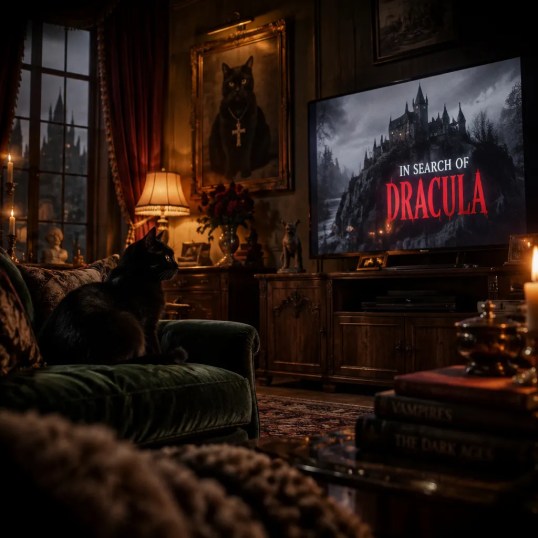
Tonight, Leonard Nimoy and In Search Of…. take a look at Dracula!
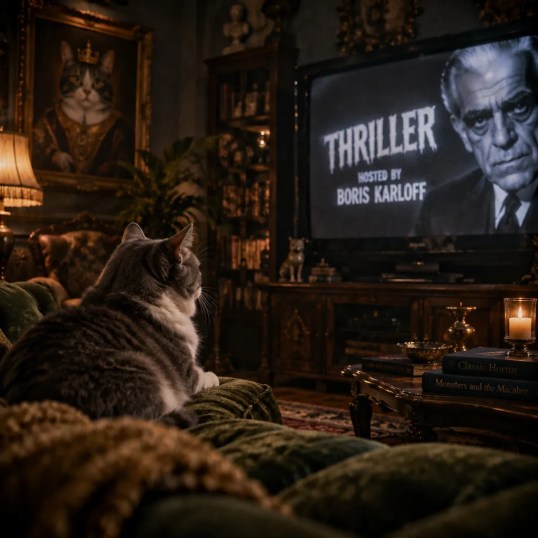
Tonight’s excursion into televised horror is the very first episode of Boris Karloff’s Thriller!
Thriller was an anthology series that lasted from 1960 to 1962. Each episode presented a new story of horror and/or suspense. What makes this series especially memorable is that each episode was introduced by none other than Boris Karloff! I’ve seen a few episodes of Thriller (the entire series is on YouTube) and, to be honest, it’s kind of a hit-or-miss show. But Karloff and that mischievous twinkle in his eye makes it all worth it!
This episode originally aired on September 13th, 1960. It’s called The Twisted Image and stars Leslie Neilsen as a man being stalked by two mentally disturbed individuals. This episode was well-directed by Arthur Hiller and, if it’s more of a suspense story than a horror story, it still has its creepy moments.
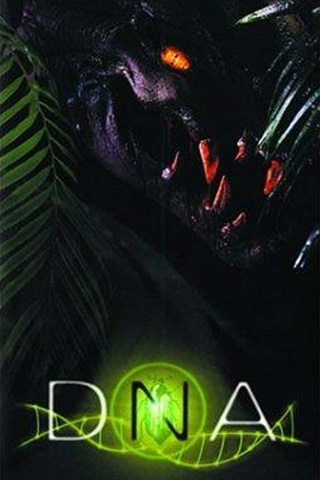
In 1996’s DNA, Mark Dacascos plays Dr. Ash Matteley, an American doctor who works to bring healthcare to the residents of Borneo. When Ash’s former boss, Dr. Carl Wessinger (Jürgen Prochnow), approaches Ash and invites him to take part in a jungle expedition to track down some beetles whose genetic material can cure all known diseases, Ash agrees. However, once Wessinger, Ash, and their native helpers find the beetles in an ancient tomb, it turns out that Wessinger has plans of his own. He shoots Ash in the shoulder and then makes his escape.
Two years later, Ash has long hair and he’s taken to wearing a Hawaiian shirt, but he’s still dedicated to taking care of the poor of Borneo. When CIA agent Claire Sommers (Robin McKee) approaches him and asks him to help lead her through the jungle, Ash says that he’s not interested. But when Sommers reveals that she’s looking for Wessinger, Ash realizes that he has no choice but to help her. For some reason, they take a child named Matzu with them. Why you would recruit a child for a dangerous mission that involves going upriver in a canoe, I’m not sure. Then again, I’m also not sure why Claire would wear a dress while exploring the jungle either, other than the fact that the film needed an excuse to have Ash look away and then sneak a peek while Claire undresses and changes into something more jungle-appropriate.
It probably won’t surprise you to learn that Dr. Wessinger has not been spending his time trying to cure all known diseases. Instead, he’s been splicing genetic material to try to bring an ancient creature back to life. Now, before you say that this sounds like a Jurassic Park rip-off, allow me to point out that Wessinger is not bringing back a dinosaur. Instead, he’s bringing back a big alien creature, one that perhaps crashed on Earth during the prehistoric age. This is not Jurassic Park. At most, it’s Jurassic Alien.
Or maybe it’s just Alien. Once Ash and Claire and the little kid make it inside Dr. Wessinger’s headquarters, there are a lot of scenes of people hiding in offices and nervously walking down hallways and hoping that the monster won’t jump out of nowhere and kill them.
Then again, maybe we should just call this movie Predator because eventually, the action moves back into the jungle and Ash finds himself being stalked by the alien, who is apparently a very good hunter and who lives for the hunt. Ash goes from being a hippie doctor to being a full-blown action hero. There’s even a scene where he and Claire and the kid have to run away from a crashing helicopter. Of course, the helicopter was obviously a model. Still, it was hard not to imagine Mark Dacascos saying, “Get away from da choppah!”
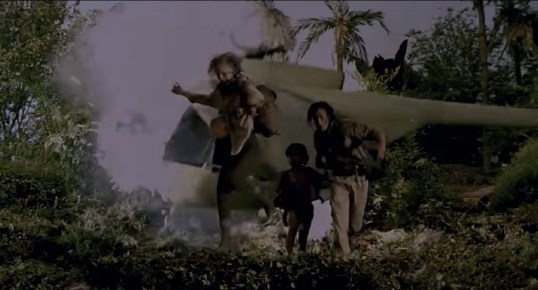
My point is that a lot of different DNA was spliced together to create this movie. Take a little from Indiana Jones and a little from Apocalypse Now and then toss in Alien, Predator, and Jurassic Park and you’ve got DNA. Unfortunately, the film still isn’t as entertaining as it should have been. Mark Dacascos barely gets to show off his martial arts skills while the film can’t even give us one good Jürgen Prochnow freak-out. Even with all of the shameless plagiarism, the film still feels like it’s just going through the motions. Sadly, DNA is never as much fun as it should have been.
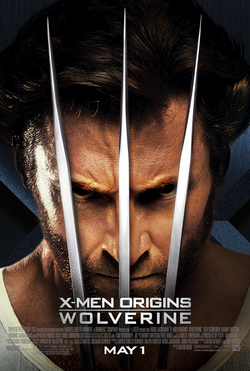 Decades before he joins the X-Men, James “Logan” Howlett (Hugh Jackman) is just another mutant with retractable claws and a super-healing ability that essentially makes him immortal. With his half-brother Victor Creed (Liev Schreiber), Logan fights in wars throughout the centuries. When both Logan and Creed (who share Logan’s healing abilities) survive being executed by a firing squad, they are recruited by William Stryker (Danny Huston) to serve as members of Team X. Eventually, Logan tires of being an assassin and goes off on his own. However, both Stryker and Creed have plans for him and all the other mutants that they’ve captured or killed over the years. Several familiar characters appear—Scott Summers (Tim Pocock), Gambit (Taylor Kitsch), and the Blob (Kevin Durand) amongst others—but none of them have much of the personality that made them popular to comic book readers. (Just imagine including Gambit in an X-Men film but not Rogue.) Those who made it to the end of the film were given a Patrick Stewart cameo, albeit one that used CGI to de-age Stewart and make him look like an automaton.
With the majority of the X-Men either dead or cured at the end of X-Men: The Last Stand, it only made sense to spin Hugh Jackman’s Wolverine off into his own series of films. Unfortunately, 20th Century Fox didn’t understand that the thing that made Wolverine so interesting as a character was that his past was shrouded in mystery. Their first Wolverine film revealed his origin and it turned out to be not that interesting. X2 had been filled with so many hints about Wolverine’s past that the origin story didn’t feel as if it was telling us anything that we hadn’t already figured out. Even the many fight scenes between Sabretooth and Wolverine felt dull because it was established that both of them were essentially immortal and impervious to pain.
Today, this movie is mostly remembered for featuring the first appearance of Wade Wilson, the mercenary who will eventually become Deadpool. There’s very little of Deadpool to be found in this film’s version of Wilson. He tells a few jokes before getting his lips sewn shut. Imagine introducing a character who is affectionately known as “the merc with a mouth” and then rendering him silent for the majority of the movie. In Deadpool 2, there’s a scene where Deadpool goes back in time and kills this earlier version of Wade Wilson (or Weapon XI as he’s called here). The audience I saw the film with cheered.
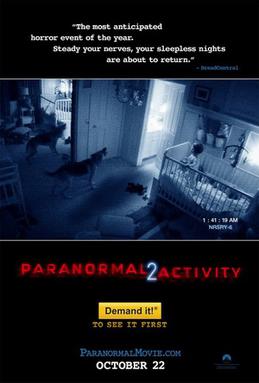 After a burglary, Kristi (Sprague Grayden) and her husband Daniel Rey (Brian Boland) install security cameras throughout their house. The cameras capture footage of Daniel firing the maid (Vivis Colombetti) for burning sage to ward off “evil spirits” and a visit from Kristi’s sister, Katie (Katie Featherston). They also capture doors opening and closing by themselves, a dog barking at nothing, and a possessed Kristi ominously staring at her newborn son, Hunter.
Paranormal Activity 2 begins a few weeks before the start of the first Paranormal Activity. By the end, the two movies have caught up with each other and the audience learns what Katie did after she killed Micah. The film also reveals what specifically led to the spirit going after Katie in the first place. (Daniel, you idiot.)
Considering that the sequel repeats the found-footage format and recreates many of the same scares from the first film, it’s surprising just how well it works. The stakes are a little bigger here, in that it’s established that the evil spirit is after baby Hunter. In the first film, nobody cared about Micah, but in this film we actually do care about Kristi, the baby, and Kristi’s stepdaughter, Ali (Molly Ephraim). We don’t care about Daniel because he’s a jerk. Kristi and Katie appear to have really bad judgment when it comes to picking a mate.
Lisa has already done an excellent job reviewing the third, fourth, and fifth films in this series. So I’ll be jumping forward to the sixth film tomorrow.

