In memory of Bela Lugosi on his birthday, here is today’s song of the day.
In memory of Bela Lugosi on his birthday, here is today’s song of the day.
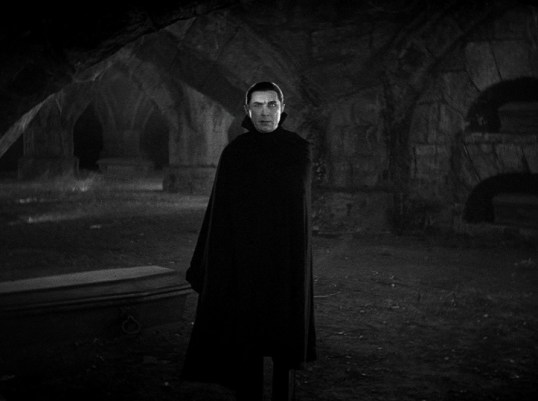
Dracula (1931, starring Bela Lugosi as the Count, Dir by Tod Browning, DP: Karl Freund)
On this day, 144 years ago, Bela Lugosi was born in what is now Romania. Lugosi began his career in his native country, appearing on stage. After serving as an infantryman in World War I, Lugosi moved into the movie industry and appeared in silent Hungarian films. The young Lugosi was an activist, involved in labor issues and trying to unionize the Hungarian film industry. When a new government came to power in Hungary in 1920, the politically-active Lugosi moved first to Germany and then eventually ended up in the United States. After a period of working as a merchant seaman, Lugosi returned to acting.
He first played Dracula on stage in New York City. In 1928, while touring in the role of Dracula, he moved out to California and quickly became a part of the Hollywood community. When Universal produced a film adaptation of Dracula in 1931, Lugosi was the obvious choice for the lead role. The film made Lugosi a star and it also typecast him. Lugosi never stopped acting, though the films varied widely in quality. By the end of his career, Lugosi was a member of the Ed Wood stock company. Even appearing in something like Bride of the Monster, Lugosi still made an impression.
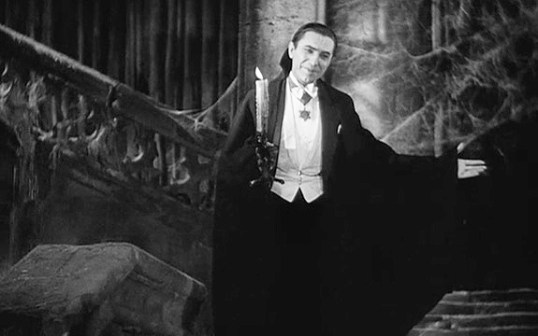
In the scene below, from 1931’s Dracula, Lugosi suggests that Edward van Sloan’s Van Helsing should perhaps leave the country.
4 Shots From 4 Films is just what it says it is, 4 shots from 4 of our favorite films. As opposed to the reviews and recaps that we usually post, 4 Shots From 4 Films lets the visuals do the talking.
144 years ago on this date, Bela Lugosi was born in Hungary. Today, we honor his memory with….
4 Shots From 4 Bela Lugosi Films

Dracula (1931, dir by Tod Browning, DP; Karl Freund)
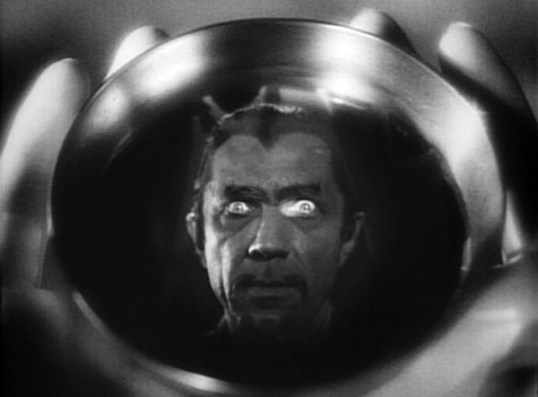
White Zombie (1932, dir by Vincent Halperin, DP: Arthur Martinelli)
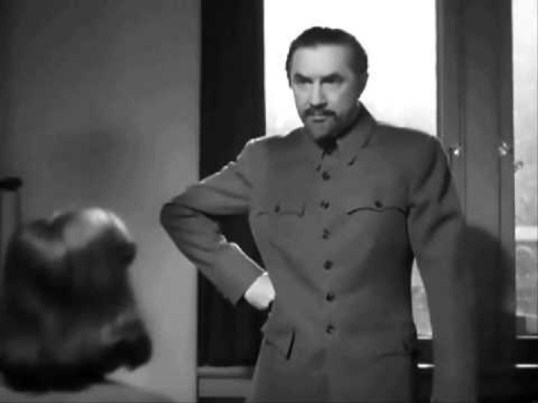
Ninotchka (1939, dir by Ernst Lubitsch, DP: William H. Daniels)

Bride of The Monster (1955, dir by Ed Wood, DP: Ted Allan and William H. Thompson)
The world is vampire
For a period of time in the 90s, you couldn’t go anywhere without hearing that. It was one of the original memes, thanks to both the song and the video that was made to promote it. The video, which was inspired by photographs of a Brazilian gold mine, was filmed in a quarry near Simi Valley. While the extras dressed like miners and were meant to represent the Biblical lepers who asked Jesus to heal them, the band goes for a glam rock look. It pays to be in the band.
This video was directed by Samuel Bayer, who has done music videos for everyone who is anyone.
Enjoy!
 Tonight, on In Search Of, Leonard Nimoy hosts the search for Atlantis!
To paraphrase Criswell, can you prove it’s not out there?
In this, the final episode of Freakylinks, Ethan Embry and the team try to prove that a murder was actually a supernatural occurrence. Their efforts are recorded for a true crime television show. The mockumentary approach is reminiscent of The Blair With Project, which was done by the same people who were behind FreakyLinks. So, there you go!
It’s too bad that there was never a Baywatch Nights/FreakyLinks cross-over.
Oh well. This episode aired on June 22nd, 2001 and it brought to an end the story of Derek Barnes.
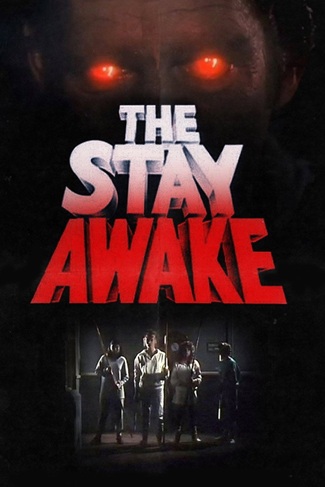
See if you can follow the plot of 1987’s The Stay Awake.
The film opens in 1969. A title card assures us that we’re in America. A serial killer has been tried, convicted, and condemned to die. Normally, this would lead to 30 years of appeals and moratoriums from bleeding-heart politicians. However, this guy is such a dastardly figure that he’s led to the execution chamber almost immediately after being convicted. Before he’s executed, he shouts that he’ll be back for revenge. Wow, scary!
We jump forward 25 years. A title card now tells us that we’re in “Europe.” It doesn’t specifically say where in Europe, but everyone that we see is speaking English. In all probability, we are meant to be in the United Kingdom. However, everyone also speaks with a South African accent. We’re introduced to a small group of students who are going to be doing a “stay awake” at their private school. Apparently, a stay awake is a type of slumber party where you don’t actually sleep. Instead, you stay awake and you watch movies and you play volleyball and, once morning comes around, you’ve somehow raised money for charity. It’s never really explained how they’re raising money by staying awake, but then again, in the UK, apparently you can raise money just by wearing a red nose. It’s a strange country.
Something is very slowly moving through the hallways of the school. Eventually, it kills the school’s security guard and then it proceeds to follow the students around. I’m going to assume that they’re being stalked by the spirit of the killer because otherwise, there’s no reason for the film to feature that scene in America. However, why would an executed American serial killer seek revenge by spirit-stalking a bunch of South African girls in Europe? I mean, they had nothing to do with his execution. The people who were responsible for his execution are probably never even going to hear about anything that the dead killer does in Europe. It’s a thoroughly incoherent film.
Usually, I can excuse a little incoherence if the film is at least visually interesting or features an unexpectedly good performance. Unfortunately, The Stay Awake is quite possibly the slowest horror film that I’ve ever seen. There are countless POV shots of the evil spirit moving through the school’s hallways, but the film is so ineptly edited that we’re never really sure where the killer exactly is in the school, especially in relation to the girls having the stay awake. While the film itself was clearly meant to take advantage of the ’80s slasher boom, there really aren’t that many deaths. Instead, the spirit seems to possess his victims rather than kill them. If they’re possessed, it would seem to stand to reason that they can still be saved if the killer’s spirit is vanquished. However, that would apparently require too much work on the part of the girls who haven’t been possessed. It’s easier to just blow up the school and, I guess, kill everyone.
The film’s title feels almost like a dare. I’m surprised I was able to stay awake while watching.
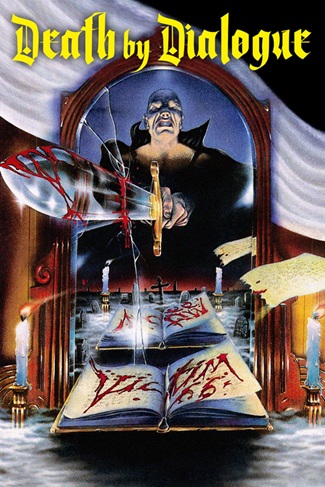 In this 1988 film, a group of college friends visit Uncle Ive (Theodore Lehmann), a crippled taxidermist who lives next door to a film set. (We never actually see this film set, but we are assured that it’s there.) Uncle Ive is taken care of by his devoted housekeeper, Ms. Camden (Judy Gordon). And he needs a lot of taking care of because, for some reason, there’s a haunted screenplay on his property. The title of the screenplay is constantly changing, but the one thing that remains consistent is the word “Victim.” The screenplay goes from being “Victim #69” to “Victim #70,” but what never changes is that there has to be a victim. The screenplay predicts how each person in the film is going to die. It’s not so much Death By Dialogue as it is Death By Rewrite.
Speaking of screenplays, this film has a strange one. It’s never really clear why the screenplay is on the property of Uncle Ive, but there are more than a few deaths that manage to be memorable. There’s a standard bursting into flames death. There’s a decapitation by scarf death. There’s a death by impalement on the blade of a bald demon. Strangest of all is the moment when one of the victims stumbles across an ’80s hair band that just happens to be performing behind some bushes. This leads to death by having one’s head smashed with a musical instrument. What’s odd is that we never really know where the band came from. Were they demons? Were they a legitimate band? What happened to them after the head smashing? How come no one heard them playing? Is this the sort of thing that regularly happens near film sets? I mean, I imagine that sort of thing happened at the Spahn Ranch on a daily basis, but I always figured that was the exception to the rule. Eventually, a big scary demon shows up and we’re left to wonder if he wrote the script and if he did so on spec. During WGA strikes, can the cursed screenplay still kill people, or do they have to hire a scab to write the death scenes until the strike is settled? Personally, if anyone wrote my death in a screenplay, I would hope that the studios would, at the very least, bring in an Oscar-winner to do an uncredited rewrite.
(Actually, now that I think about it, my best friend Evelyn and I wrote a pretty good slasher screenplay when we were in college. We gave the best death scenes to ourselves and the people we liked the most. The people we disliked just got dragged offscreen. I really should get it out of storage and do some work on it.)
Anyway, have I rambled enough? If this review seems a bit disjointed and random …. well, so does the film. But that’s not necessarily a bad thing. This is one of those films where the incoherent story actually works to the story’s advantage. It really does create the feeling of being at the mercy of beings that simply cannot be understood or reasoned with. Featuring a game cast and an intriguingly weird premise, Death by Dialogue is enjoyable almost despite itself. No rewrite was necessary!
First released in 1982, Piranha II takes place at a Caribbean resort. It’s a great vacation spot. There’s a beautiful beach. There are lots of boats. The locals are friendly and eager to take your money. Chief Steve Kimbrough (Lance Henriksen) does his best to maintain law and order and keep the tourists safe. There’s a shipwreck nearby, and Steve’s estranged wife, Anne (Tricia O’Neill), leads regular underwater tours. Just watching the first few minutes of Piranha II, I was totally prepared to book a vacation, despite the fact that those Trivago commercials have left me somewhat fearful of the whole resort experience. (“You didn’t use Trivago.” And how is that any of your business?)
Then the piranhas arrived.
Yes, the water is soon full of piranhas, the sharp-toothed fish that look scary in 3D and that destroyed an entire resort in the first Piranha film. However, these new piranhas are even worse than the ones that came before them. These piranhas can fly! Someone has been performing gene-splitting experiments and now, as a result, the piranhas not only have sharp teeth—they have wings! And they can even survive inside the bodies of their victims. (One poor morgue attendant discovers this to her own grave misfortune.) Why would anyone put wings on a piranha? I mean, seriously, who thought that was a good idea? Is that what my parents’ tax dollars were going to during the Carter years? Putting wings on piranhas?
Soon, both the water and the air are full of blood. Can Captain Kimbrough save some lives? Even more importantly, can he save the lives of his family? This is one of those movies where we’re really not supposed to care about anyone other than the main characters. A lot of people die, but what matters is whether or not they’re a Kimbrough.
This film, which is not particularly good, is infamous for being the first film on which James Cameron was credited as director. Cameron himself has said that he had little to do with the content of the film and therefore considers The Terminator to be his first real film. According to Cameron, he had nothing to do with editing the film and the majority of the scenes were directed by the film’s producer, Ovidio G. Assonitis. Cameron requested that his name be removed from the film’s credits, but the production company declined to do so because they were contractually obligated to have an American director. Now, how much of this is true and how much of it’s Cameron not wanting to be associated with something as bad as Piranha II is anyone’s guess. I will say that, watching the film, I saw absolutely nothing that would make me say, “Hey, I bet James Cameron directed this!” The only real thing that this film had in common with Cameron’s other early films was the presence of Lance Henriksen. (Tricia O’Neill did go on to have a small role in Titanic.)
Henriksen is the best thing about Piranha II. No matter how ludicrous the story or bad the special effects, Henriksen keeps a straight face and takes the film seriously. There’s a fairly nonsensical moment where Henriksen jumps out of a helicopter to rescue someone, despite the fact that this causes the unpiloted helicopter to then crash and explode, leaving everyone stranded in the ocean. Somehow, Henriksen sells the moment and makes ditching a helicopter seem like the most natural, common-sense thing in the world. That takes skill. That’s the sign of a good actor, and one can see why Cameron continued to work with him even after Piranha II.
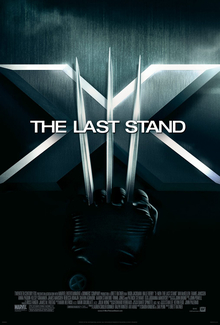 Just as the world seems to be finally on the verge of accepting mutants, industrialist Warren Worthington II (Michael Murphy) announces that he has developed a shot that will suppress the X-gene, therefore “curing” mutants of their mutation. Magneto (Ian McKellen), Mystique (Rebecca Romijn), and a host of other mutants break out of prison to try to stop Worthington from offering up his cure. Meanwhile, at Charles Xavier’s school, Rogue (Anna Paquin) wonders if maybe she should take the shot and become a “normal” person.
Professor Xavier (Patrick Stewart) and Logan (Hugh Jackman) have an even bigger concern than Magneto and the cure. Jean Grey (Famke Janssen), thought to have died at the end of the previous movie, has returned but has given in to her dark side, the so-called Phoenix. She’s already destroyed Scott (James Marsden), and it doesn’t take her long to disintegrate Professor X. Can Logan and the Beast (Kelsey Grammer) rally what’s left of the X-Men to defeat both Magneto and the Dark Phoenix?
I can still remember seeing X-Men: The Last Stand on the day that it was first released. As an X-Men fan, I was excited to see how the Dark Phoenix storyline would be adapted for the big screen. It’s difficult to put into words how disappointed I was when Jean killed Scott. That one scene told me that X-Men: The Last Stand was not going to do the story justice. In the comic books, Jean and Scott’s relationship was the heart of the X-Men. When Jean became the Dark Phoenix, she proved herself capable of destroying an entire planet, but she couldn’t bring herself to kill Scott. She chose to destroy herself rather than him. (Marvel being Marvel, Jean was resurrected a few years later.) The X-Men films never really knew what to do with the characters of Scott and Jean. They weren’t as flamboyant as Logan or even Rogue, but fans of the comic knew who Scott and Jean were and understood their importance to the series, and having Jean destroy Scott showed that, unlike the previous two films, the third X-Men film was not being made for the fans.
A large part of the problem was that director Brett Ratner didn’t seem to be interested in the characters. X-Men: The Last Stand is a collection of action scenes with none of the small character moments that made the first two films memorable. Kelsey Grammer is a welcome addition to the cast as the Beast. (The Beast always was basically Frasier Crane with blue fur.) Otherwise, this is the most forgettable of all the X-Men films.
Even though the Dark Phoenix saga is one of the key X-Men storylines, it’s never really been given its due onscreen. A second attempt to tell the story, in Dark Phoenix, also failed to capture the drama and emotion of Jean’s transformation. The X-Men are now officially a part of the MCU, so I imagine the story will probably be told again. Maybe the third time will be the charm.

