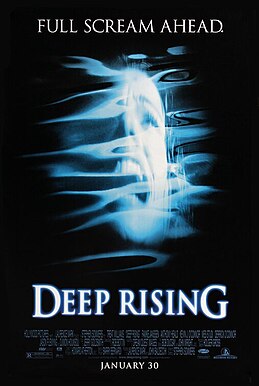
A group of mercenaries led by Hanover (Wes Studi) hires Captain John Finnegan (Treat Williams) and his crew to pilot their boat across the South China Sea so that they can loot a luxury cruise ship on its maiden voyage. The ship has been sabotaged by its owner, Simon Canton (Anthony Heald), who is hoping to collect a big insurance payment after Hanover and his men sink the boat. But before Finnegan, Hanover, and everyone else arrives, an undersea monster attacks the cruise ship and most of the crew and passeners end up dead. Finnegan, his crew, the mercenaries, Canton, and professional thief Trillian St. James (Famke Janssen) find themselves trapped on the ship and fighting to survive the chaos.
A B-movie that was made with an A-budget, Deep Rising never gets enough respect for being an enjoyable if mindless monster film. When it was released, it was dismissed as just being another Alien rip-off. While it does have some Alien DNA, the film really has more in common with the monster movies of the 50s and 60s. Treat Williams even looks like a leading man from that era, and his performance suggests that he was in on the joke. Famke Janssen is incredibly sexy as the incredibly named Trillian St. James. Anthony Heald and Wes Studi play two very different villains, and Studi gets a great final scene. There are also plenty of disposable characters who get picked off one by one. Some people will be disappointed that Finnegan’s comic relief sidekick (played by Kevin J. O’Connor) was not one of those characters, but these films always need an annoying sidekick. Someone has to make the audience laugh before the monster jumps out of nowhere.
Deep Rising is a entertainingly simple monster movie that doesn’t ask too much of its audience and delivers an entertaining 106 minutes of creature mayhem.
“Who will dare to face the challenge of the Funhouse? Who is mad enough to enter that world of darkness?” — Funhouse Barker
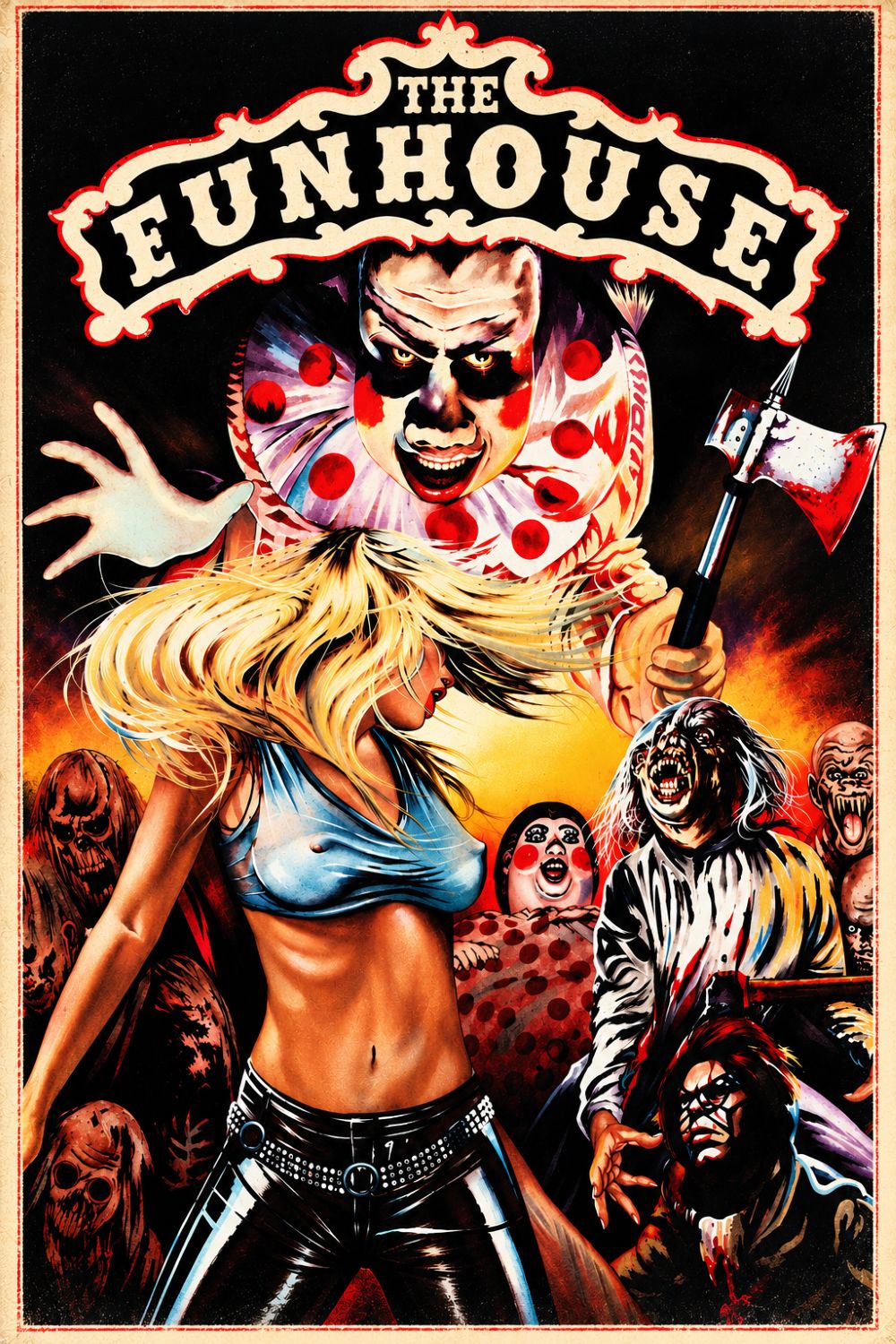
There’s something wonderfully sleazy about a horror movie that makes you feel like you need a shower before anyone has even been murdered. Tobe Hooper’s The Funhouse (1981) gets that feeling just right, turning a traveling carnival into a place where the entertainment seems questionable and whatever happens behind the scenes looks considerably worse. It’s not Hooper’s most relentless film, and its straightforward story sometimes struggles to justify the leisurely buildup. Still, there’s enough grime, menace, and visual imagination here to make a familiar teenagers-in-trouble premise feel like more than another ride around the slasher circuit.
The teenagers are Amy Harper, played by Elizabeth Berridge, her date Buzz, and their friends Liz and Richie. Their evening starts with the usual carnival activities: wandering around, checking out attractions, and looking for ways to entertain themselves. Eventually, they decide to hide inside the funhouse overnight. It’s the kind of bad idea that becomes irresistible when nobody wants to be the boring one who objects. After witnessing a murder involving a worker wearing a Frankenstein mask, they find themselves trapped inside with people who have a very good reason to make sure they never leave.
Before any of that, Hooper introduces a playful awareness of horror movies through Amy’s younger brother. He’s a horror fan whose enthusiasm spills into an elaborate prank, approaching Amy in the shower while wearing a mask. The sequence borrows from Halloween and Psycho, turning familiar suspense techniques into a kid’s obnoxious attempt to stage his own scary movie. It’s a neat little meta touch because horror already exists as entertainment within these characters’ lives. They recognize its costumes and enjoy its tricks. The trouble begins when that familiarity encourages them to treat danger as something they can safely play around with.
The carnival extends that idea on a larger scale. Its business depends on selling fear without consequences, and the teenagers arrive expecting every unsettling sight to be part of the experience. Hooper makes that expectation increasingly difficult to maintain. There’s a sourness underneath the attractions, a sense that the smiles and sales pitches barely cover the irritation of the people working there. The movie’s sleaze isn’t just a matter of dirty surroundings. It comes from the uneasy relationship between the customers looking for cheap thrills and the workers who seem to regard them with boredom, contempt, or something less easily identified.
Hooper spends a substantial amount of time letting us absorb that atmosphere. Depending on your patience, this either gives the movie its personality or makes the first half feel like an extended wait for something to happen. There are stretches where the teenagers’ wandering could have been tightened without losing much. On the other hand, rushing directly to the murders would sacrifice the sense that this place has an existence beyond the plot. By the time the group becomes trapped, the carnival feels less like a collection of convenient horror props than a shabby little world with its own unpleasant routines.
Once inside the funhouse, the visual design takes over. Mechanical figures, grotesque faces, and cluttered passageways make it difficult to separate an actual threat from another piece of scenery. Hooper gets suspense out of that uncertainty, giving your eyes plenty to investigate without always rewarding the effort with an immediate scare. The machinery keeps moving regardless of what happens around it, which becomes increasingly unnerving. Something designed to provide a few minutes of harmless excitement turns into an obstacle course whose mechanisms have no interest in whether anyone gets hurt. The attraction doesn’t become evil; its normal operation simply becomes dangerous.
The characters are less distinctive than their surroundings. Berridge gives Amy a believable vulnerability, and her discomfort never feels like an excuse for smugly announcing that everyone else should have known better. She’s simply a young woman whose evening gets horribly out of hand. Buzz, Liz, and Richie have enough personality to establish the group, but not enough to make their individual fates especially affecting. That’s the main limitation of the screenplay: the situation generates more investment than the people caught in it. You’re anxious about what might happen without necessarily feeling that you know these kids very well.
Kevin Conway adds a stronger dose of personality as three different carnival barkers, especially in his role as the masked killer’s father. His combination of aggression and warped protectiveness gives the horror an ugly domestic undercurrent. The creature is frightening, but his vulnerability makes the relationship more disturbing than a simple partnership between villains. The Frankenstein mask also pays off the movie’s interest in familiar horror imagery: a recognizable monster face initially offers something almost reassuring, until its removal destroys that comfort. The makeup is memorable, although the film’s use of physical difference as a source of monstrous terror remains an uncomfortable shortcut.
When the chase finally takes over, The Funhouse delivers tense, claustrophobic suspense without becoming an endless procession of elaborate kills. Its cramped spaces and unreliable hiding places make escape feel frustratingly difficult. The thin characterization and occasional sluggishness keep it from matching Hooper’s strongest work, but the setting remains potent enough to carry the film. From the brother playing horror director to the carnival packaging fear for paying customers, the movie keeps showing people enjoying pretend terror before confronting something they can’t control. It’s an effective, grimy little nightmare that makes the midway’s cheap pleasures look a lot less inviting.
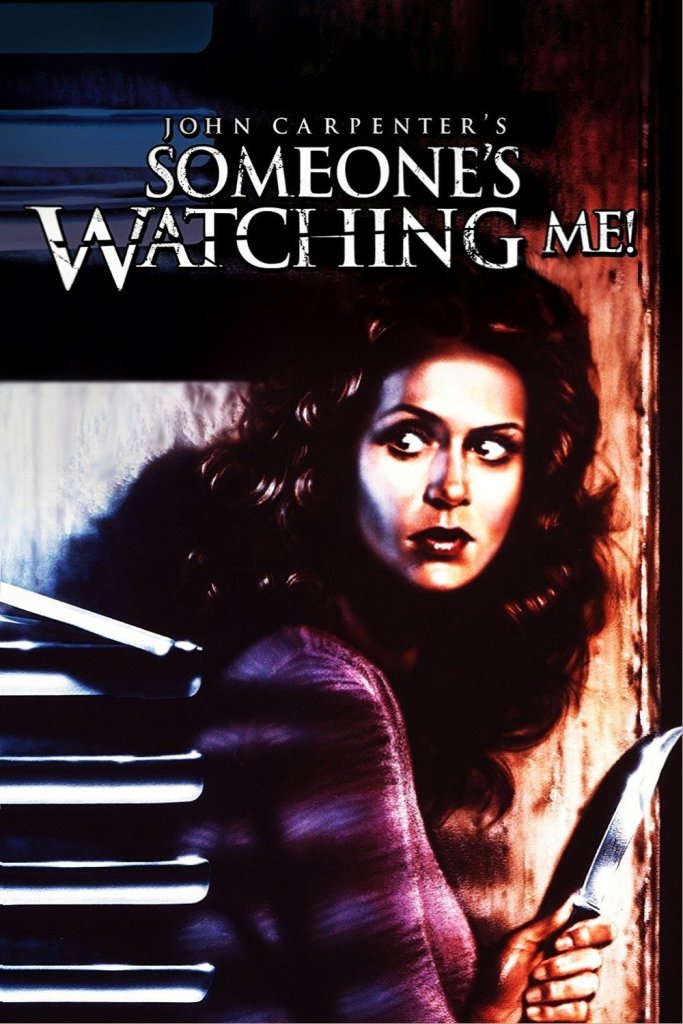
In my latest quest for a scary movie that looks interesting and that I haven’t seen, I came across the title SOMEONE’S WATCHING ME! from 1978. I did what I always do and did a quick search on IMDb to find out a little more about the film. I was definitely surprised when I saw that it was directed by John Carpenter, and that it premiered on television in November of 1978 a couple of weeks after his classic HALLOWEEN hit theaters. The film had been referred to as the “lost Carpenter film,” because for several decades it was not available on home video. For many years in the 80s and early 90s, I’d scour the shelves at my local video stores looking for that special find that I’d call a diamond in the rough. As I got older and married, whenever we’d go to Dallas, I’d head to the Movie Trading Company and scour their shelves searching for the same. Being a big fan of Carpenter, especially ASSAULT ON PRECINCT 13, ESCAPE FROM NEW YORK, and VAMPIRES, it was like I had found that lost jewel, and I couldn’t wait to fire it up.
Lauren Hutton stars as Leigh Michaels, a television director who moves into a high-rise apartment building in Los Angeles. She’s starting a new job and a new life, but things take on a creepy and scary turn when she begins receiving mysterious phone calls and unwanted gifts and letters. Before long, Leigh realizes that someone is watching her every move. Even worse, the police don’t seem very interested in helping her, leaving her to figure out who’s stalking her and what she can do to stop him.
First off, I really enjoyed Lauren Hutton as the lead in the film, which was a bit of a revelation for me. I remember her as the Countess in the 80s vampire comedy ONCE BITTEN, but I mainly remember that one because it was an early leading role for Jim Carrey. I’ve seen her in a lot of movies, but her characters had not stood out much to me. Here, as the focus of the movie, she’s likable, sexy and has this cute running dialogue with herself as she goes about her days. When bad things start happening, she’s not some helpless victim waiting for somebody else to rescue her, either. She’s smart, independent, and even tough enough to take matters into her own hands when she has to.
I also appreciate what John Carpenter is doing here as the writer and the director. A couple of years earlier, he had effectively played off of Howard Hawks with ASSAULT ON PRECINCT 13. This time he’s riffing on Alfred Hitchcock, especially movies like REAR WINDOW and VERTIGO. He accomplishes this through his settings, some of his shots, character traits, and especially, the building of tension. His premise is simple, but the idea that someone could be invading our privacy with bad intentions is a scary thought to all of us, and this movie takes it to the extreme. The screenplay builds on this natural fear with enough info that we realize our likable star is in true danger, and that was enough to draw me in. It also helps that I’m a sucker for these types of stories and characters. The made-for-TV limitations on the project are here, but Carpenter’s talent is also very evident. From the first moment I saw a shadowy character dash behind our heroine while she’s on the phone in her apartment, I knew he was going to have some fun with me. He would make me jump and my heart skip a beat several times over the course of the film’s 97 minutes.
It was also fun seeing some of the important actors and actresses that Carpenter has worked with over the years pop up in the movie. Adrienne Barbeau is especially likable and beautiful as Leigh’s friend and coworker, Sophie. She has this big smile and way about her that I found very appealing. She’s also a lesbian, which was probably a fairly unusual TV movie character trait at the time. Barbeau and Carpenter met on the set of this film and would get married less than a year later, on January 1st, 1979. Charles Cyphers, who’s so good as Sheriff Leigh Brackett in the HALLOWEEN series, shows up in the last half hour as the somewhat sympathetic Detective Gary Hunt. Cyphers also had a small, but pivotal role with Charles Bronson in DEATH WISH II, so I always enjoy seeing him on screen.
I’m not going to sit here and say that SOMEONE’S WATCHING ME! is as good as Carpenter’s classic theatrical features, but for me it was a fun discovery, and I really had a good time with it. The Hitchcock flourishes and Hutton’s excellent performance as our heroine, combined with Carpenter’s obvious talents as a writer and director, provided me with the kind of rare cinematic jewel that I had not found in a long time.
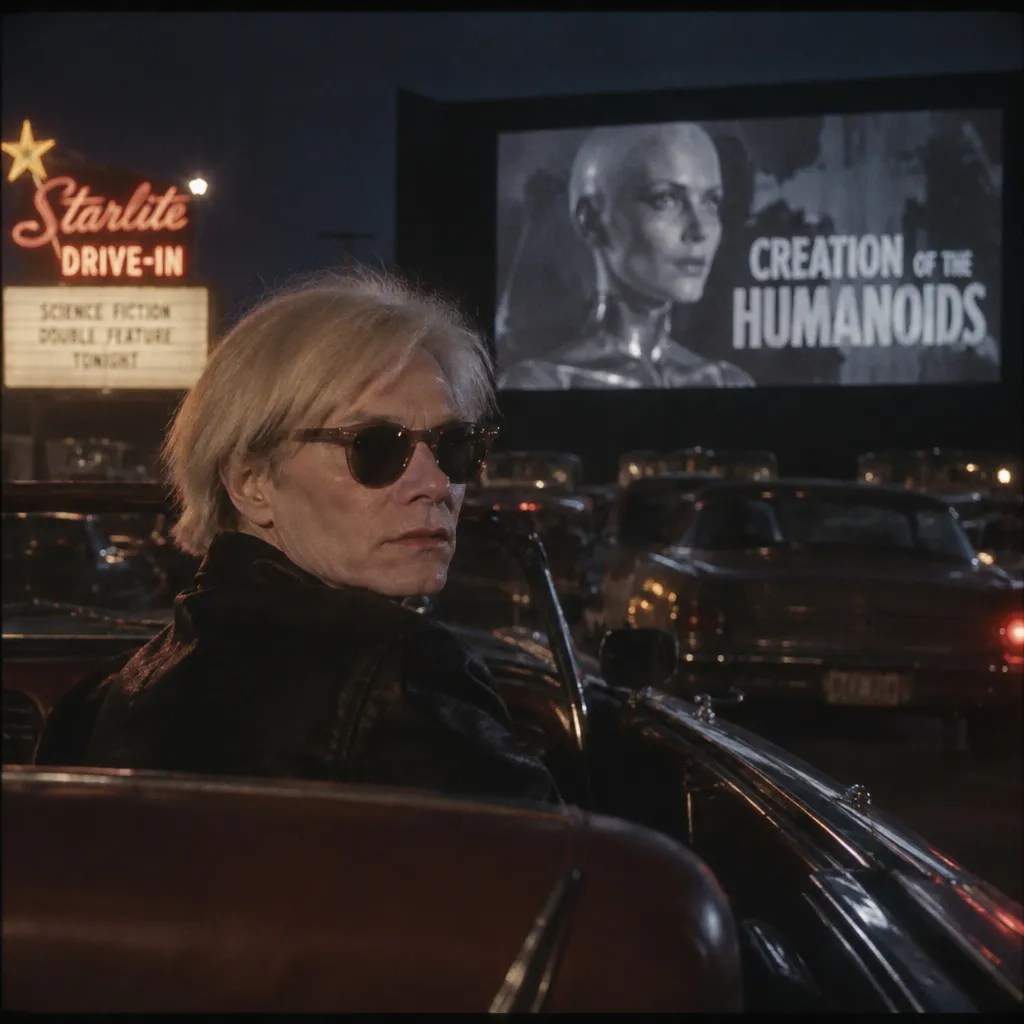
What makes us human? What does it mean to have free will? What is love? What is freedom? The questions and more are asked in the low-budget (and rather odd) science fiction epic The Creation of the Humanoids, which you can view below!
Now, I should warn that Creation of the Humanoids is an extremely talky film. And the plot is occasionally difficult to follow. There’s a lot of ennui to be found in this particular film, both from the humans and those who have been built to serve them However, I find it impossible not to love this one because it’s just such a strange movie. I love it for the colorful set design, the contrast between the resentful robots and the paranoid humans, and the fact that the film — despite being made for next to nothing — actually has more ambition than anything ever made by several of the more successful directors working today. And, while it may not really be a horror film in the way that some of our other October films are, it still feels appropriate for the Halloween season. It just has the perfect holiday atmosphere.
First released in 1962, Creation of the Humanoids was reportedly one of Andy Warhol’s favorite films. Keep an eye out for Plan 9 From Outer Space‘s Dudley Manlove.
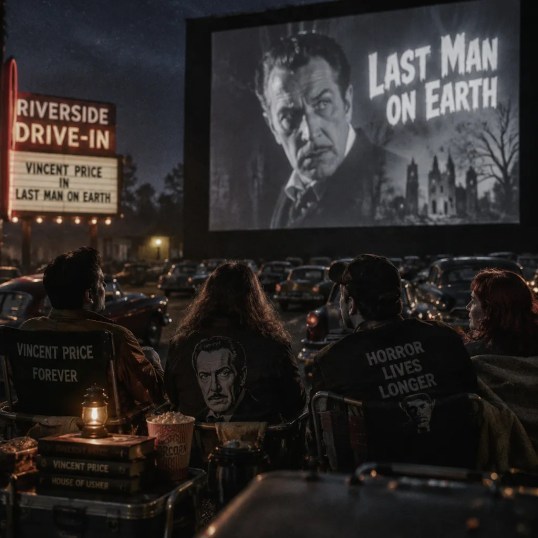
Today, I present to you one of the most important films in horror history. Though it wasn’t appreciated when it was first released back in 1964, The Last Man On Earth was not only the 1st Italian horror film but George Romero has also acknowledged it as an influence on his own Night of the Living Dead.
It’s easy to be a little bit dismissive of The Last Man On Earth. After all, the low-budget is obvious in every scene, the dubbing is off even by the standards of Italian horror, and just the name “Vincent Price” in the credits leads one to suspect that this will be another campy, B-movie. Perhaps that’s why I’m always surprised to rediscover that, taking all things into consideration, this is actually a pretty effective film. Price does have a few over-the-top moments but, for the most part, he gives one of his better performances here and the black-and-white images have an isolated, desolate starkness to them that go a long way towards making this film’s apocalypse a convincing one. The mass cremation scene always leaves me feeling rather uneasy.
The film is based on Richard Matheson’s I Am Legend and no, it’s nowhere as good as the book. However, it’s still a worthy adaptation and one that stays true to the tone of the text, including the fact that Price’s main tormenter was also once his neighbor and best friend. This is one of those films that just hits differently in the wake of 2020’s COVID hysteria.
And now, it’s time for The Last Man On The Earth….
Today’s song comes the hypnotic soundtrack of Paul Schrader’s Cat People. This song was so good that it later showed up and was used to equally strong effect in Quentin Tarantino’s Inglourious Basterds.
From the 1960s until his death in the early 90s, German actor Klaus Kinski was known for being the enfantterrible of world cinema. Kinski was a volatile talent, an often angry and occasionally violent performer who specialized in playing extreme characters and who reportedly took pride in his ability to drive directors crazy. Kinski appeared in good films and bad films and, in every one of them, he gave the type of unique performance that only he was cable of giving.
Kinski is best-remembered for his work with his frenemy, Werner Herzog. When Herzog and Kinski weren’t making films together, they were often criticizing each other in the press and sending one another death threats. In the documentary My Best Fiend, Herzog documented his partnership with Kinski. Even while Herzog talked about the time that he went to Kinski’s home with the intent of killing him, Herzog’s affection for his frequent star was obvious. Klaus Kinski was one of an unhinged kind.
In Werner Herzog’s 1980 film, Nosferatu, Kinski played the role of Dracula. In this scene, he comes to visit Isabelle Adjani’s Lucy.
4 Shots From 4 Films is just what it says it is, 4 shots from 4 of our favorite films. As opposed to the reviews and recaps that we usually post, 4 Shots From 4 Films lets the visuals do the talking!
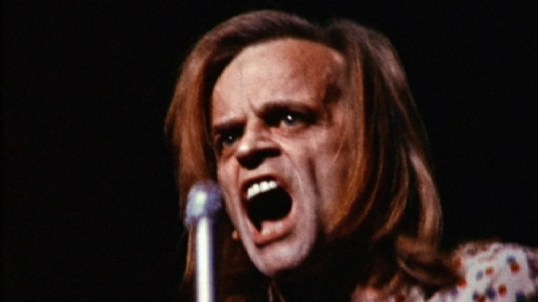
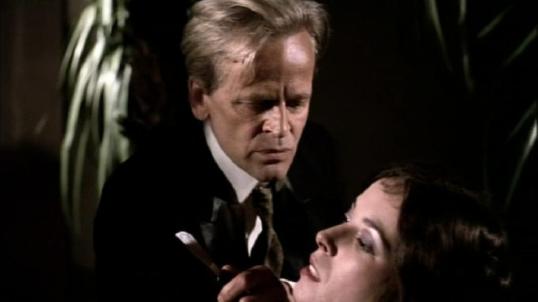
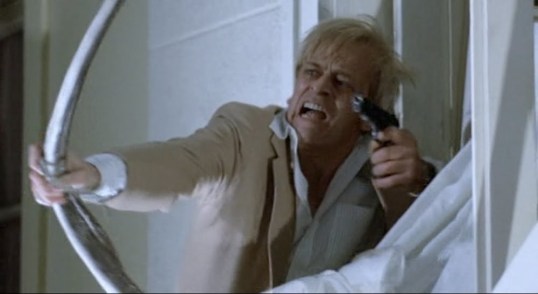
100 years ago today, Klaus Kinski was born in Poland. Kinski was a brilliant actor who, by all accounts, was an absolute monster in his private life. Werner Herzog worked with him on several films and reportedly considered murdering him on more than a few occasions. Herzog, himself, wrote about the time that he had spent in a mental asylum and the time that was diagnosed as being a psychopath. Because of his talent, he appeared in many great films. Because of his reputation for being a literal madman, he also missed out on a lot of great roles and spent much of his career appearing in low-budget exploitation flicks. Many of those films were in the horror genre.
Today, on the anniversary of Kinski’s birth, TSL presents….
4 Shots From 4 Klaus Kinski Films
Count Dracula (1970, dir by Jess Franco, DPs: Manuel Merino and Luciano Trasatti)
Jack the Ripper (1976, dir by Jess Franco, DPs: Peter Baumgartner and Peter Spoerri)
Nosferatu The Vampyre (1979, dir by Werner Herzog, DP: Jörg Schmidt-Reitwein)
Venom (1981, dir by Piers Haggard, DPs: Denys Coop and Gilbert Taylor)
“Never trick the treat. You never break a deal in Halloween because it’s the one night the devil can come for you.” — Sam Daniels
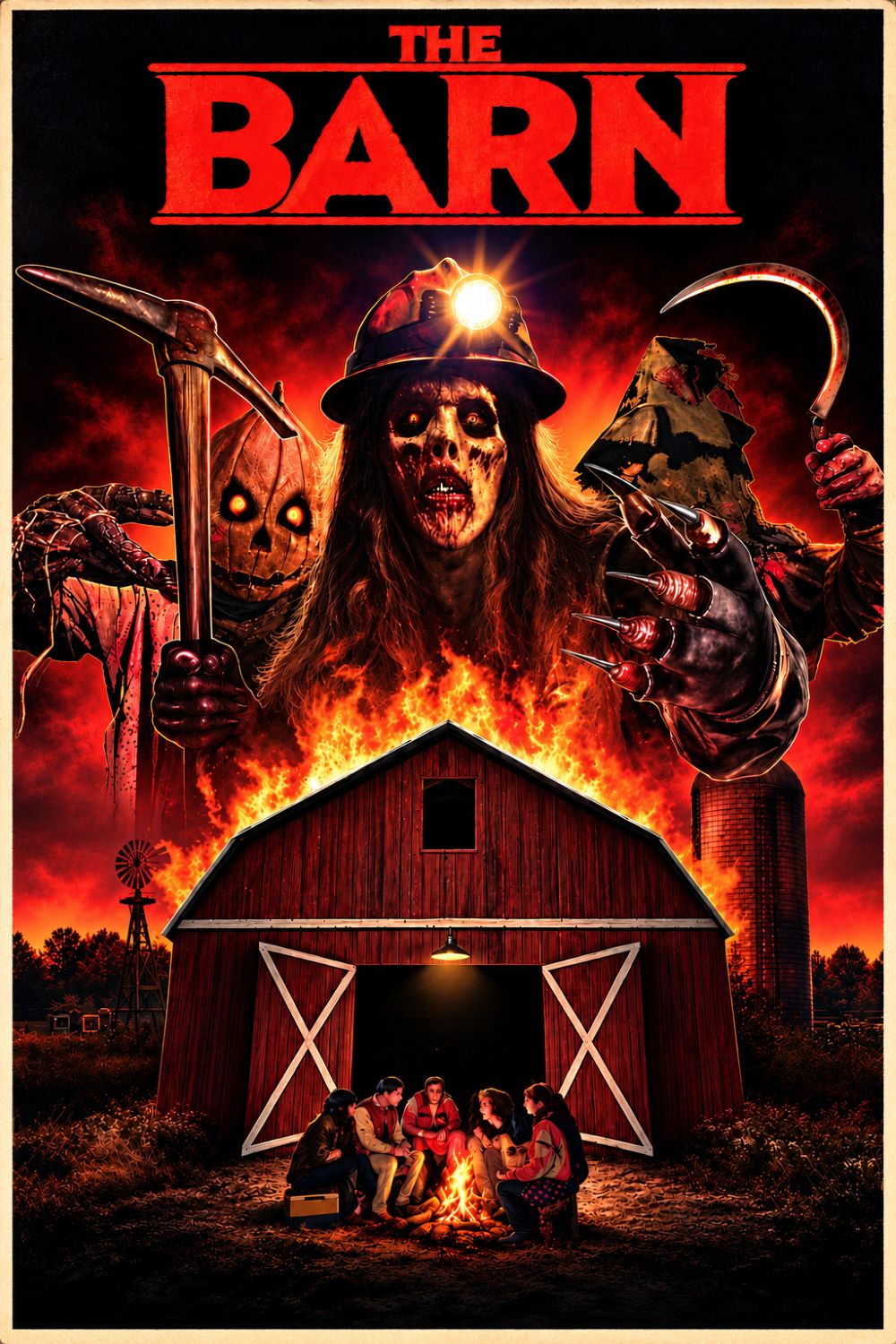
Horror fans who grew up renting VHS tapes from the local video store will find a lot to love in The Barn, a 2016 indie horror film that wears its ’80s influences on its sleeve with pride. Directed by Justin M. Seaman, this scrappy, affectionate throwback to the VHS-era Halloween slasher is built from rural legends, practical monsters, teenage misadventures, and a small-town setting soaked in October. It is not flawless, but it is sincere, energetic, and far more fun than its rough production values might initially suggest.
The story begins long before the main events of the film, in the small town of Wheary Falls, where a local tragedy involving children and a church sets the stage for an evil that has been waiting in an old barn. Decades later, it is Halloween 1989, and high school seniors Sam and Josh are determined to make the most of their final Devil’s Night before graduation. Their plan involves a road trip to a rock concert, but as often happens in horror movies, the night takes a turn. They and their friends encounter the forbidden barn, ignore the obvious danger, and awaken three supernatural killers: a scarecrow, a pumpkin-headed creature, and a miner boogeyman. What follows is a night of stalking, chasing, and bloodletting as the group realizes that the local legend is very real.
The premise is intentionally simple, and that simplicity is both a strength and a limitation. On one hand, it gives the movie a clear, classic horror structure: teenagers venture somewhere they should not, ancient evil awakens, and survival becomes the only goal. On the other hand, the plot does not offer many surprises. You can probably guess who will die, when the monsters will strike, and how the final confrontation will unfold. But The Barn does not seem especially interested in subverting expectations. It wants to deliver a familiar kind of Halloween fun, and in that respect, it succeeds more often than not.
The film’s greatest asset is its atmosphere. Seaman clearly understands that Halloween horror is about more than just a masked killer or a bloody kill scene. It is about the feeling of the season: dead leaves, cold nights, cornfields, porch decorations, costumes, campfires, and the sense that the world becomes a little stranger after dark. The Barn captures that feeling with impressive commitment. The rural Pennsylvania setting gives the movie a natural autumnal texture, while the period details help establish its late-’80s identity. The film does not have a huge budget, but it uses its resources well, creating a world that feels handmade and lived-in rather than sterile or overly polished.
The monsters are another major highlight. The three creatures at the center of the film are not especially complex, but they are memorable. The scarecrow has the classic rural-horror menace of a figure that should be harmless but is anything but. The pumpkin man is goofy in the best possible way, with a design that feels like it came straight from an old horror poster or a particularly ambitious haunted attraction. The miner is perhaps the most unsettling of the three, bringing a grimy, folkloric quality to the group. Together, they form a fun monster squad that gives the movie its personality. They are not trying to be terrifying in a modern, realistic sense; they are trying to be the kind of creatures you would rent a VHS tape to see, and they absolutely achieve that.
The practical effects and makeup work add a lot to their appeal. The blood and gore are not especially sophisticated, but they are tangible, messy, and playful. There is a physicality to the kills that modern horror often loses when it relies too heavily on digital effects. You can tell that people built these costumes, applied this makeup, and staged these effects with limited money but plenty of enthusiasm. That handmade quality gives The Barn a charm that bigger productions often lack. Even when a gag does not fully work, it feels like it was made by people who care about what they are doing.
The soundtrack also deserves praise. Rocky Gray’s score blends synth-driven horror music with a rock and metal edge that fits both the film’s setting and its tone. The music gives the movie momentum, especially during the early stretches when the group is heading toward the barn and the sense of danger is still building. It also reinforces the retro feel, echoing the kind of pulsing, atmospheric scores that defined so much of 1980s horror. The soundtrack helps The Barn feel less like a modern movie set in the past and more like an actual artifact from the era it is imitating.
The cast also gives the film some genuine ’80s horror credibility, most notably through the appearance of Linnea Quigley. As one of the definitive scream queens of the era, thanks to roles in films like The Return of the Living Dead and Night of the Demons, Quigley brings an instant connection to the kind of horror The Barn is trying to honor. Her presence may be brief, but it gives the movie real genre bona fides and makes the retro homage feel more authentic. Ari Lehman, the original Jason from Friday the 13th, adds another layer of fan-friendly horror history to the proceedings. These appearances do not transform the film, but they reinforce the sense that Seaman knows exactly whose legacy he is celebrating.
The acting is where the film’s limitations become most apparent. Mitchell Musolino and Will Stout, as Sam and Josh, have a likable enough friendship, but the performances around them vary in quality. Some lines are delivered awkwardly, some characters feel more like archetypes than people, and the dialogue occasionally lands with a thud. However, this is not necessarily a dealbreaker for a movie like this. The Barn is not aiming for naturalistic drama. It is aiming for the heightened, slightly wooden energy of low-budget ’80s horror, where teenagers often speak in a way that feels more like a movie version of teenagers than real people. If you accept that style, the acting becomes part of the movie’s charm rather than a distraction.
The screenplay is similarly uneven. Seaman gives the characters more personality and backstory than many microbudget horror films bother with, which is admirable. Sam and Josh are not just anonymous victims; they have goals, frustrations, and a sense of history with each other. The supporting characters also get enough definition to make their fates matter, at least a little. However, the movie sometimes tries to do too much. The road trip to a metal concert and the subplot involving a church food drive add texture and opportunities for cameos, but they also slow the pacing and make the story feel a little loose. The film is strongest when it focuses on the group, the barn, and the monsters. When it spreads its attention across too many threads, it loses some of its momentum.
The first two acts are where The Barn really comes alive. The buildup is fun, the atmosphere is strong, and the movie has a playful sense of discovery as the teens stumble deeper into danger. There is genuine excitement when the creatures begin appearing, and the film does a good job of making the barn and surrounding countryside feel like a place where bad things have always happened. The kills are inventive enough to keep things lively, and the movie’s sense of humor prevents it from becoming too grim. It is not trying to frighten you on a deep psychological level. It is trying to entertain you with spooky monsters, Halloween chaos, and a healthy dose of nostalgia, and for most of its runtime, it does exactly that.
The final act is where the movie loses some of its steam. The last half hour feels longer than it should, partly because the film keeps teasing an ending before gearing up for another confrontation. The methods the characters use to fight back are not as creative or satisfying as the buildup promised. Instead of escalating into a truly wild climax, the movie becomes more straightforward, and some of the fun drains out of it. The pacing issues are noticeable, especially after such an energetic first hour. It is not a disastrous ending, but it is the weakest part of the film, and it keeps The Barn from reaching the level of the best Halloween-themed horror movies.
Still, it is hard to stay mad at a movie this sincere. The Barn was made on a very small budget, and you can see the limitations in the production values, sound, and acting. But you can also see the passion in every frame. Seaman is not cynically imitating the ’80s to cash in on nostalgia; he is building the kind of movie he clearly wishes had existed on his shelf growing up. That enthusiasm matters. It gives the film a warmth that many more technically competent horror movies lack. The flaws feel like the flaws of a friend’s homemade haunted house: crooked signs, questionable acting, cheap props, but undeniable fun.
Comparisons to Trick ’r Treat are inevitable because both films treat Halloween as a night governed by rules, legends, and supernatural consequences. But The Barn is smaller, rougher, and more rooted in the slasher tradition. It is less polished than Michael Dougherty’s film, but it has its own scrappy personality. It is also more focused on monsters and practical effects than on anthology-style storytelling. If Trick ’r Treat is the polished Halloween party, The Barn is the slightly chaotic neighborhood haunt run by someone who really loves scaring people.
By the time the credits roll, The Barn has proven that a horror movie does not need a huge budget or a flawless script to leave a lasting impression; it just needs heart, atmosphere, and a clear sense of what it loves about the genre. Seaman’s film delivers all three, wrapping its flaws in enough retro charm, practical effects, and Linnea Quigley-powered ’80s credibility to make them feel like part of the package rather than detractions. It is a movie that knows what it wants to be and delivers it with a grin, even when the acting or pacing stumbles. The Barn may not replace the classics in your annual rotation, but it earns a place alongside them as a fun, scrappy Halloween treat.
In 2017’s Run, Levi (Josiah David Warren) marries Natalie Winters (Taylor Murphy). Natalie is a journalist who has made it a point to report on the growing problem of human trafficking. Her journalism makes her a target for low-life criminals like Jeff Connors (Stephen Baldwin). On their wedding night, Natalie is abducted by two men who are planning on selling her into sex slavery.
The police are useless. So is the FBI. It looks like Levi is going to have to rescue his wife on his own. While Natalie prays in the back of the van in which she’s being held prisoner, Levi hits streets, putting up missing posters and talking to motel maids.
Now, I’m going to post a spoiler here. You can stop reading now, if you want. Otherwise, you have been warned.
Levi does find his wife. He finds her because he just happens to be in the parking lot of a Florida motel when a maid walks by wearing his wife’s scarf. She tells him that she found it in a room. (No judgment from me! For one summer, I lived in a motel with my mom and my sisters and my mom paid for our board by working as a maid. Apparently, people leave stuff behind all the time.) The maid then goes on to say that she saw the van pulling out of the parking lot. She gives a perfect description of the make and the model. She recites the license plate number without hesitation. She then tells Levi exactly which street the van went down and which direction they were heading. Levi then manages to easily track the van down and get the police involved.
WHAT LUCK!
I mean, seriously, for all the time that this movie devoted to Levi trying to find his wife, it all comes down to one maid finding a scarf. I’m sure that some would argue that this is meant to be proof that God arranged for the maid to be in that parking lot at the exact same time as Levi. That’s fine. In the movie, it comes across as being a huge dues ex machina …. which is exactly the same thing, now that I think about it.
Anyway…..
Josiah David Warren has directed a handful of faith-based films and I have to admit that, as a reviewer, I haven’t always been kind to them. Warren’s biggest mistake is that he always casts himself in the lead. He’s not a particularly good actor and, with his perpetually tired expression and unshaven appearance, he tends to come across as being more a stoner than a preacher.
While that continues to be true here, Run is still better than the average Josiah David Warren film. The plot is full of contrivances and the editing is haphazard but Taylor Murphy gives a sympathetic and likable performance as Natalie. For that matter, the often-mocked Stephen Baldwin is convincing as the cocky and dangerous Connors. Baldwin doesn’t get much screentime but he sets a wanted poster on fire with skill and style.
Finally, I appreciated that the film ended on a note of forgiveness and redemption, indicating that there’s hope for everyone. That’s a good message and not one that seems to be particularly popular right now. The film deserves credit for that.
 A group of mercenaries led by Hanover (Wes Studi) hires Captain John Finnegan (Treat Williams) and his crew to pilot their boat across the South China Sea so that they can loot a luxury cruise ship on its maiden voyage. The ship has been sabotaged by its owner, Simon Canton (Anthony Heald), who is hoping to collect a big insurance payment after Hanover and his men sink the boat. But before Finnegan, Hanover, and everyone else arrives, an undersea monster attacks the cruise ship and most of the crew and passeners end up dead. Finnegan, his crew, the mercenaries, Canton, and professional thief Trillian St. James (Famke Janssen) find themselves trapped on the ship and fighting to survive the chaos.