What’s All This Then?
Hi there! Well, as of my birthday yesterday, I am now officially an adult. What does that mean for this site? Well, for the most part, it means that I’m going to be even more aggressive about giving my opinion. After all, I’m an adult now. Whatever I say matters, no matter how weird or random it may be! In fact, I’m such an adult that I’m not even going to worry about proofreading these posts anymore. Adults don’t have to worry abut makin typos.
So, what is Lisa’s editorial corner? Well, it’s a new weekly feature where I talk about whatever caught my eye during the previous week. Basically, it’s a way for me to embrace my inner know-it-all. Fear not, I’m going to keep it entertainment-related. You don’t have to worry about me using this feature to try to convince you to vote for Gary Johnson in 2016. (At least not yet…)
For instance, I might use this feature to talk about Gunnar Hansen…
On Gunnar Hansen and Andrew Bryniarski
On November 7th, Gunnar Hansen passed away from pancreatic cancer. He was 68 years old. When I first heard the news, I was out with my friends in the SBS (and I’ll explain what that stands for at a more appropriate time) and we were celebrating my upcoming birthday. I spent the day after that with my family and then it was Monday and it actually was my birthday and … well, long story short: I’ve only now gotten a chance to write about his passing on this site. And I feel really guilty about that because Gunnar Hansen was an iconic figure in film history.
Who was Gunnar Hansen? Well, you probably already know. He was Leatherface in the original Texas Chainsaw Massacre. Beyond that, he was also a teacher, a writer, an acclaimed poet, and reportedly one of the nicest guys that you could ever hope to meet. I never met Gunnar but every story that I’ve ever heard about him — whether it was from someone who met him at a convention or someone who knew him outside of the world of horror fandom — has been a positive one. As well, I’ve read many interviews with Hansen about the making of Texas Chainsaw and he always came across as being a very intelligent and well-spoken individual.
And it’s often overlooked just how good a performance that Hansen gives in Texas Chainsaw Massacre. Hansen may have been cast because of his large frame and he may have had to perform underneath a mask but he still turned Leatherface into a genuine character. It’s often overlooked that, out of the entire cannibal family, Leatherface is the only one who has any real responsibilities. He’s just trying to prepare everyone’s dinner and he keeps getting interrupted! No wonder he eventually ends up sitting down and slumping in frustration.
Now, upon until a few hours ago, I had absolutely no idea who Andrew Bryniarski was. Do you know who he is? Here’s a picture of him, with Gunnar Hansen:

Gunnar is on the right.
Why are Andrew and Gunnar posing together? Because Andrew played Leatherface in 2003 remake of Texas Chainsaw and in 2006’s Texas Chainsaw Massacre: The Beginning.
And here is what Andrew said on Facebook after several people tagged him in posts about Gunnar’s death:

Seriously, Mr. Bryniarski? Now, before you think that he “misspoke” or any of that, he went on to double down on his comments. When someone pointed out that, if not for Gunnar, Bryniarski would have never played Leatherface, Bryniarski wrote back, “I played the role twice without him.” Bryniraski then told another FB user to “suck Gunnar’s dead nutz.”
Seriously — what the Hell!?
For what it’s worth, Bryniarski has an official response to everyone who is upset with him. You can check it out here. As far as I can tell, it appears that he feels that, while promoting Texas Chainsaw 3D, Gunnar criticized the way that he played Leatherface.
There’s probably more to it than that but … well, it really doesn’t matter. If you’re going to speak ill of the dead, you better have a hell of a better reason that professional jealousy. End of story. Bryniarski’s comments and the outrage that greeted them only serve to remind us that Gunnar Hansen was a class act.
Gunnar Hansen, R.I.P.
On Jack The Ripper
Over 4 years ago, when I reviewed Murder By Decree, I wrote about my fascination with the unsolved case of Jack the Ripper. Well, after all this time, I’m still fascinated. So, needless to say, when I read that an Australian professor named Richard Patterson was convinced that he had figured out the identity of Jack the Ripper, I was intrigued.
Then I found out that Patterson thought that poet Francis Thompson was the murderer and I promptly yawned.

Poor Francis Thompson.
Seriously, most evidence (as opposed to the speculation of people who have seen From Hell) indicates that Saucy Jack was probably some psycho who lived on the margins of society. He got away with his murders because he committed them in 1888, a time when just taking fingerprints was considered to be advanced forensic science. He was never caught, he died in obscurity, and no one knows his name.
However, that’s no fun! Why spend so much time researching Jack the Ripper if the final solution is just going to be some creep that nobody’s ever heard of!? That’s why it seems the almost every Victorian of any sort of renown has, at some point, been accused of being the Ripper. Oscar Wilde, Lewis Carroll, Francis Thompson, and the painter Walter Sickert — all of them have been accused and, amazingly, all of them have had their creative work cited as evidence of their guilt.
You have to wonder if, 100 years from now, amateur criminologists will insist that Stephen King was responsible for every unsolved murder in New England…
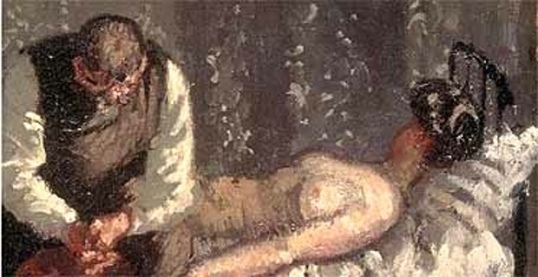
Speaking of Walter Sickert…
Here’s one of the infamous painting that’s always cited by people who are convinced that he was Jack The Ripper:
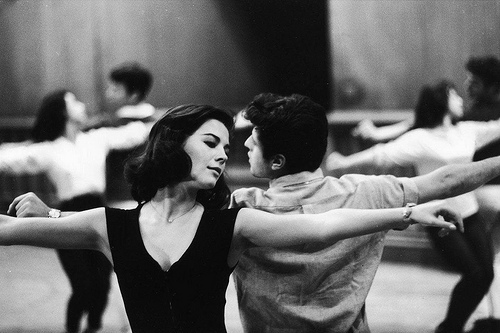
By the way, this is my new Facebook cover photo:
That’s Natalie Wood rehearsing for West Side Story!
Why not listen to a little music before you leave?
Hey — did you know that I have a daily music blog? Check it out: Lisa Marie’s Song of the Day! This is the song that I shared on my birthday because a lot of people have told me that it might as well be about me:
You know what you should do now?
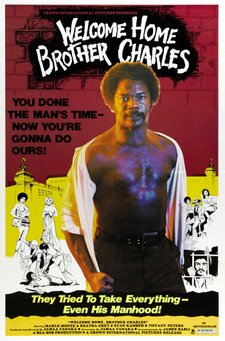
Since it’s the day after my birthday and all, why not go read the first review that I ever wrote for this site? Check out my thoughts on a strange little film called Welcome Home, Brother Charles.
Wait a minute! What does SBS stand for?
Sexy Bitch Squad, of course! (SBS FOREVER!)

Have a great week!


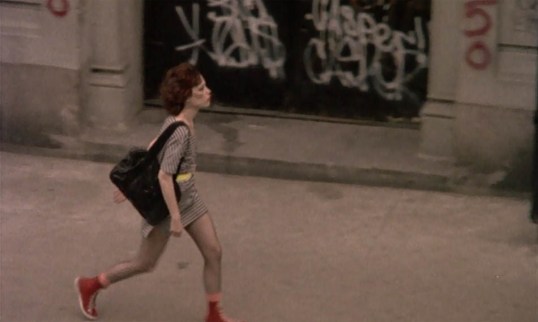
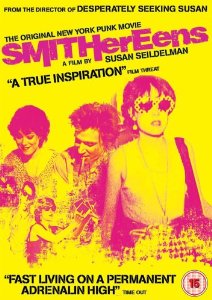 Shot guerilla-style during the waning days of New York City’s original punk scene, Smithereens tells the story of Wren (Susan Berman). Wren is a Jersey girl who, after being cut off by her family, comes to New York City. She moves into a run-down apartment, get a job making photocopies at a xerox store, and tries to break into the New York punk scene, despite having no talent or connections. The only thing that Wren does have is a lot of determination. When we first meet Wren, she is stealing another woman’s sunglasses and posting flyers of herself around New York City. Written under Wren’s picture: “Do you know me?”

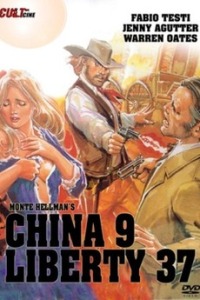 Directed by the legendary Monte Hellman, China 9, Liberty 37 is a revisionist take on the western genre. Fabio Testi plays Clayton Drumm, a legendary gunslinger who is about to be hung for murder. At the last minute, men from the railroad company show up and arrange for Clayton be released. They want him to kill a rancher who is refusing to sell his land. Clayton agrees but, before he leaves for his mission, he gives a brief interview to a writer from “out East.” Cleverly, the writer is played by director Sam Peckinpah, to whose films China 9, Liberty 37 clearly owes a huge debt.
 Catherine loves Matthew but resents his rough ways and feels that he treats her like property. One night, she and Clayton go for a nude swim and then make love. When Matthew finds out, he strikes his wife and, in self-defense, she stabs him in the back. Believing Matthew to be dead, she and Clayton go on the run.
 As a western, China 9, Liberty 37 is more interested in its characters than in the usual gunfights. There are no traditional heroes or villains and Monte Hellman emphasizes characterization over action. Even while he is relentlessly pursuing Clayton and Catherine, Matthew admits that he does not blame Catherine for leaving him. As for Clayton and Catherine, they are both consumed by guilt over their affair. This is one of the few westerns where the main character often refuses to fire his gun.
 Director Monte Hellman is as well-known for the films he did not get to make as for the ones he actually did make. (Originally, Quentin Tarantino wanted Hellman to director Reservoir Dogs. When Tarantino changed his mind and decided to direct it himself, Hellman was relegated to serving as executive producer. A lot of recent film history would be very different if Tarantino and Hellman had stuck to the original plan.) Like a lot of the films that Hellman actually did get to make, China 9, Liberty 37 was only given a sparse theatrical release and was often shown in a heavily edited version. It has only been recently that the full version of China 9, Liberty 37 has started to show up on TCM. It is an interesting revisionist take on the western genre and must see for fans of Monte Hellman, Jenny Agutter, and Warren Oates.