Review: Oldboy (dir. by Park Chan-wook)


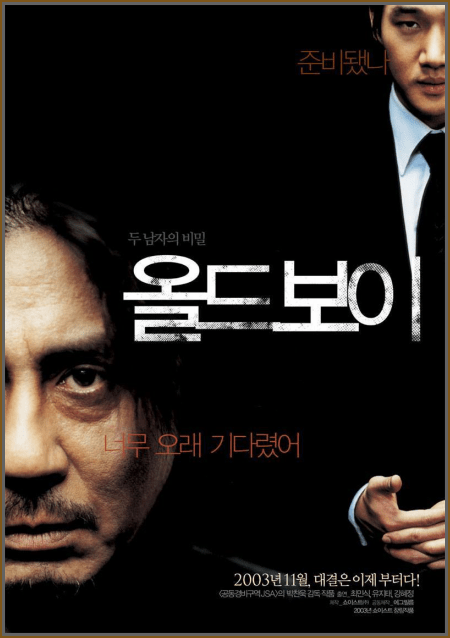
2003 would go down as the year a master filmmaker emerged from the ranks of the independent circles to the forefront of elite directors. Park Chan-wook was already well-known amongst the indie circuit as an innovative director coming out of South Korea’s burgeoning film industry. He’d already released such well-received films as Joint Security Area and Sympathy for Mr. Vengeance. In fact, the film in question that’s propelled Mr. Park to the forefront would be the second part of a film trilogy dealing with the existential nature of vengeance and its effect on all involved. Oldboy follow’s Sympathy for Mr. Vengeance like a sonic boom and inproves on the first leg of the trilogy in every way.

Oldboy at its most basic is a revenge film. It is a film about a man wrongly and mysteriously imprisoned for reasons unknown to him and to the audience. We see Oh Dae-su — the man in question — through his 15 years of mysterious imprisonment and we see him change from the Average Joe from before his kidnapping to a taut, volatile and somewhat insane individual whose only goal in life is to find whoever did this to him and make him pay. Oh Dae-su’s imprisonment takes a good part in the telling and makes up the first third of the film’s tale. As the years go by we see him spiral down to the lowest depths a man can get to before sanity leaves him. There’s no evidence that he didn’t go insane during his imprisonment, but Park does show us scenes that Oh Dae-su’s singular focus to find out why he was imprisoned and to exact revenge on those involved might have just unhinged the poor man in the process.

The second part of the tale being told occurs the moment Oh Dae-su was suddenly — as mysteriously as his imprisonment — released. One moment he’s still in his prison where his only contact with the outside world is the TV in his room and then he’s on the rooftop of a building with new clothes on and a suitcase with more clothes and his notebooks where he’s listed all the names he thinks may have caused him this wrong. From here Dae-su goes on a whirlwind search to find clues and information on who may have imprisoned him. Along the way he meets the young sushi chef Mi-do who seem to have taken some interest in Oh Dae-su’s well-being and who slowly falls in love with him. It is their journey through the maze and labyrinth of false leads and trails that dominate the second third of this tale. It is also the part of the film where Oh Dae-su’s monster persona takes precedence as he wreaks havoc on anyone and everyone who may have the information he needs to solving the mystery of his imprisonment.

Many have already mentioned the wince inducing pliers scenes and the single-take corridor fight scene. But it is the lovemaking scene between Oh Dae-su and Mi-do that I consider the most pivotal scene of this part of the tale. With the two characters finally consummating their mutual attraction to each other we see the two as not separate entities but a singular one where both will reap whatever their search will sow in the end. Mi-do becomes less of a sidekick and more of an equal partner in Oh Dae-su’s search. She knows that the only way she and Dae-su would find true happiness together is if she helps him finish his quest even if it means finding the truth that may not be to their liking.

The third and final part of this tale finally puts to light just who exactly is the mastermind of all that has transpired. The clues picked up by Oh Dae-su starts to fall into place and the puzzle that opens up for him and the audience is nothing less than tragic and Shakespearean. This third part really hits the audience between the eyes about the nature of vengeance and how all-consumming it can be if allowed to simmer, grow and take root. We see how it has already driven Oh Dae-su to the brink of madness and how he teeters just beyond the point of no return. Then on the mastermind of the whole thing we see how one slip of the tongue in the distant past of all involved has consumed this individual to exacting a complex and appropriate plan of revenge on Oh Dae-su. As the tragic and heartwrenching final part of the tale weaves and continues to its conclusion no one ends up being the victor. All have become just the victim of the cycle of violence and vengeance thats taken hold of everyone.

Park Chan-wook’s direction was flawless and there’s not a wasted scene from beginning to end. Every scene was shot and edited with a sense of purpose to convey the mood and feel of the situation. It didn’t matter whether it was a a slower-paced scene where the actors conversed in intelligent dialogue or a scene full of frantic energy where burst of violence seemed both randomly shot but choreographed at the same time. The composition of the scenes and his judicious use of wide-angle and static shots with little editing helps convey the single-minded focus of Oh Dae-su and his main antagonist. Some of the scenes even show hints and clues to the audience that — as unlikely as it might seem — the whole film might be a figment of Oh Dae-su’s fractured mind as a consequence of his imprisonment. Park Chan-wook doesn’t answer whether it is a figment of Oh Dae-su’s imagination, but the theory is there for people to ponder over.

The screenplay written by Park from the original Japanese manga was excellent and doesn’t waste unnecessary exposition to distract the audience from the main tale being told. Everything said and acted on the screen ultimately leads to the shocking climax in the end. In fact, I would say that the climax of the film doesn’t happen until the very last second of the film before everything fades to black and the credits roll. That’s how tightly written and focused the screenplay was from beginning to end.

Then there’s the three main characters as played by Choi Min-sik , Yu Ji-tae , and Kang Hye-jeong. These three actors play their parts to perfection. Choi Min-sik as Dae-su Oh was a picture of focused madness. We invest in his quest for vengeance and as the final secret was unveiled we truly feel his shock, horror and anguish. Yu Ji-tae plays the mastermind of the whole thing with icy calculation. This was a man who had spent half his life working on, preparing and letting loose the events that would lead to him finally getting his revenge on Oh Dae-su. The two, though after the same goal of vengeance, are diametrically opposed in terms of look and personality. Then we have Kang Hye-jeong as Mi-do, the young sushi chef caught in the middle of this duelling vengeance tale. She was both endearing, innocent and the pure soul that keeps Oh Dae-su from spiralling into final madness. It truly becomes tragic that the final consequences of the vengeance wrought by both male principals impacts the female in the middle and in the end she remains oblivious to the truth and Kang Hye-jeong conveys this sincere, innocent naivete to sweet perfection.

There’s much more to say about Oldboy, but its really just more accolades to be heaped upon a near-perfect film. A film exploring the darker side of man’s inhumanity towards one another to satiate their self-righteous quest for so-called “justice” and retribution. Like Cronenberg’s A History of Violence, Park’s Oldboy also shows the unending cycle of vengeance heaped upon vengeance in addition to the violence it inherently breeds. Like Cronenberg’s 2005 film, Oldboy doesn’t fully answer this existential question but leaves it up to the viewer to make their own decision. Park Chan-wook’s Oldboy is a film that comes but once in an era and helps redefine an era of its place in film history. Oldboy also continues the vengeance trilogy with Sympathy for Lady Vengeance (shortened to just Lady Vengeance here in North America). Oldboy marks the true arrival of one of the new masters of film and he joins the fine company of such people as Scorcese, Cronenberg, and Kubrick. A near-perfect film all-around.

Indie Short Film – Plague (dir. by Matt Simpson) w/ review


“Plague is a Horror short focusing on an isolated journey into the unknown. We follow Vilhelm, an illegal migrant and gun runner, who is trying to make a new beginning.

When he arrives in London, The dead rise and consume the living. can Vilhelm escape the bloodbath?”

Thus describes the premise for a fine of a short indie film by Australian filmmaker Matt Simpson. Plague has a running time of just over 17 minutes, but in that brief time he has crafted a well-made zombie short film. When I first heard of this film I was hesistant to check it out since I’ve been fooled and burned in the past about so-called great zombie short films done by aspiring filmmakers on a shoestring-to-no budget.

I finally decided to watch it and I am definitely kicking myself for not doing it sooner. Matt Simpson’s Plague is one of the best indepedent horror short film I’ve seen in quite awhile. Done on a very minuscule budget the film definitely looks like it was a labor of love from a filmmaker who knows the zombie subgenre and respects its traditions and trappings. Despite the shoestring budget this filmmaker deftly avoids giving his film that amateur home video appearance that seem to plague (no pun intended) most short films. The way this film was shot and edited tells me that Matt Simpson has a future as a filmmaker if he decides to continue on that path.

The story is pretty simple with dialogue kept at a minimum. Most voice-over use in films usually don’t come off well and seems to be more of a narrative gimmick to hide inadequate performances from  the cast. This time around the use of the voice-over makes sense since there’s only one speaking role and the rest zombies through most of the film. There’s two scenes where some dialogue between characters were required but they were handled well and fit the scenes. Joseph Avery who plays the role of Vilhelm doesn’t do the voice-over but instead left to one Costa Ronin who gives a very good reading with a Slavic accent without making it too heavy.

A zombie short film can’t be a zombie film without showing some zombies and the requisite gore the subgenre requires. The make-up effects on the zombies and the damage done to their victims does not look like amateur-hour. Most zombie short films use white paint, some heavy mascara around and eyes and maybe some whipped up blood to simulate a zombie. Simpson actually took the time to create zombie make-up effect appliances and uses enough of it to make the zombies look believable. While not all the effects work was perfect they were all done well enough to hide the “strings” so to speak.

All in all, Plague is a gem of a find in the dregs of most zombie short films which infests the internet. While the film still shows some growing pains for this aspiring filmmaker he does have a handle on not just the flow of storytelling, but in the editing process which assists in pulling the narrative together. Even the greatest screenplay could end up becoming a bad film when employing a bad editor and/or editing process. I hope that Mr. Simpson continues to hone his craft and finds a way to have his talent discovered by studio heads looking for the next young director to mentor.

PLAGUE – OFFICIAL SCREENER from Matt Simpson on Vimeo.

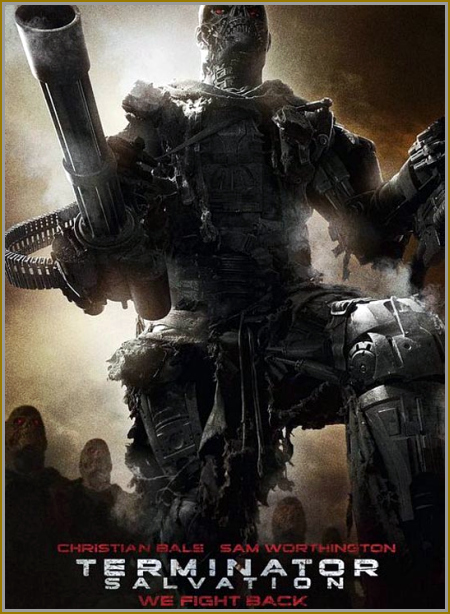
Review: Terminator Salvation (dir. by McG)


It has been 25 years since a certain James Cameron introduced the film-going public to the post-apocalyptic world of Judgement Day. While he’s never really fully shown the war-torn future ruled by the machines in the the two films he directed in the Terminator franchise he does show glimpses of it. It’s these glimpses of desperate humans fighting to survive against Skynet and its machine hunter-killing robots which have always intrigued and made its fans salivate at the thought of seeing it realized. Terminator 3: Rise of the Machines in 2003 tried to show how it all truly began, but again it just hinted at the future battlefield and not the full-blown war. It is now 2009 and the most unlikely filmmaker has finally shown what the future of Judgement Day looks like. McG’s Terminator Salvation succeeds and fails in equal amounts yet has laid the groundwork for the future of the franchise as a war series instead of of its past as installments of what really is one huge chase film.

There are many things which work in Terminator Salvation and one of them happen to be its director McG. A director who is much-maligned for his too campy Charlie’s Angels set of films would’ve been the last name to look to for a restart to the stalled franchise. His direction of this fourth entry in the series was actually very well-done. There’s none of the cartoony and way over-the-top action set-pieces of his Charlie’s Angels past. Instead he moves the film along in a brisk and energetic pace with very little downtime for much introspection. It is this pacing which makes this a good and, at times, an above-average action-film but also serves to make any of the scenes questioning what it is to be human (once again) and machine seem tacked on. The first three films in the series have delved into this theme and question too many times for a fourth attempt make it seem any more relevant than the previous times.

McG went out to make a war entry to the series and to an extent that’s what he did. While there are chases to be had it doesn’t necessarily mean its all about John Connor once again (though the film does make it a point of targeting him again in its own fashion). Terminator Salvation has finally shown what the world looks like after the events of the third film and what had been hinted and teased at in the first two. The world is a desolate place with ruins of landmarks to give the audience a reference point. We see Los Angeles a tumbling and crumbling wreck which looked eerily like something out of the recent Fallout 3 scifi-rpg game. Even San Francisco makes a post-apocalyptic appearance as a major Skynet headquarters. McG achieves this post-apocalyptic look by bleaching out the film’s color palette to the point that browns and greys dominate. He actually achieves to add grittiness to this film which his past films had never shown him having the ability to do. While this film won’t sway people to admiring his skill as a filmmaker it does show some  growth. Then again he does have a hold of a film series which is nothing but B-movies elevated through bigger budgets and access to the latest in film FX. If I have any gripe to point out about the action in the film it’s that there’s not enough of it to truly convey a “War Against the Machine” scenario. We get these tantalizing hints, but not something on par of what a fuure war should look.

The budget could be seen on the screen as the film uses a combination of CGI and practical effects to pull off a much more complex robotic army for Skynet. It’s the robots and machines which keeps bringing the audience back each and every time the series releases a new entry. We don’t just have the Human Resistance fighting the typical T-800 or even the more advanced T-1000 or T-X. We get the earlier versions of these human hunting and killing machines. From a brutish and zombie-like T-600 we see in the LA-scenes to newer and bigger specialized Skynet soldiers like the anime-inspired mech Harvester which towers several stories high and literally harvests humans it finds to take back to SKynet’s R&D bases. When the original Terminator does make an appearance it’s both a welcome and a surprise as McG’s technical wizards find a way to bring back the original exactly the way it’s supposed to look. I’m sure the Governator of California would want to have that physique and youth back.

As an action-film Terminator Salvation works well enough when the action appears on the screen. Now as a film that tries to delve into the philosophical trappings of the series it doesn’t so much as fail and sink the film, but almost does which would’ve been a shame. While not the worst in the series in terms of storytelling it does come across as very scattershot in what story it wants to tell. The film actually has three ideas which could’ve been used to make it’s own film. Is the film a story of John Connor and his rise to his prophesized leadership of the Resistance (he’s a leader of a branch of fighters, but not yet of the whole group in this film)? Or is this film about the search and attempt to make sure the person who will be Connor’s father stays alive to allow what transpired in the past to happen (time-travel can be a tricky and confusing thing to comprehend)? Or is Terminator Salvation the story of the new character Marcus Wright and his quest to find out just who, or what he is exactly? It’s all three of those and all three weren’t explored enough to make one care too much for the story being told. There’s great ideas in all three but trying to combine them into one coherent storyline mostly falls flat and uninsipiring for a film trying to be the war movie in the series. For what are war movies mostly but attempts to show inspiration in the face of desperation. There’s very little of that in this film. If the writers had been given a chance to further streamline the story into one major arc then this film would have benefitted greatly in the long run.

With acting very tightly tied-in with the story being told it’s only logical that the performances by the cast rarely go beyond acceptable. Christian Bale’s John Connor is always dour and brooding. He’s almost becoming a typecast for any role that requires for him to be the down man in any party. He does this ably, but he doesn’t bring anything to the role which hasn’t already been explored in past entries. His performance does show hints of mental instability as the weight of being the savior and prophet of the human race may be starting to get to him. The other two pivotal roles in the film have more meat to play around with. Anton Yelchin as the teenage Resistance fighter destined to become John Connor’s father in the past shines in the scenes he’s in as he elevates a bland script with some youthful energy and hints of the adult Kyle Reese fans of the series know so well. Then we arrive on the newest character in the series: Marcus Wright.

Little-known Australian actor Sam Worthington was recommended by James Cameron for the role of Marcus Wright. Like Anton Yelchin’s performance, Worthington’s work in the role of Wright saves the film from mediocrity. While it is not a start-turning performance by any means Worthington does make it difficult not to pay attention to him throughout the film. The man has presence and every scene he is in shows why Cameron himself has faith in being the latest to carry the Terminator torch. The rest of the cast is quite a throwaway in that we never really get to know any of them and invest anything in their well-being.

Terminator Salvation is a very frustrating film in that there’s so much great ideas to mine. The series has always tried to explore such themes as fate, predetermination and human free will. While the third film in the series was quite lacking in memorable action sequences this fourth entry makes a mess of trying to explore these themes. Again, it seems as if the film’s script was rushed into production with very little doctoring and as the production continued forward no one bothered to point out just how average and bland the storyline does sound despite being the most overly complex of the series.

One thing I am sure of is that the one person people thought would be the weakest link in this film instead happens to be its strongest. McG and some inspired acting from two newcomers keep the film from becoming a total failure. Terminator Salvation is an able and, for most of it’s running time, a very good action film with brisk pacing and energy in its action sequences. Enough of these elements keeps the film’s fractured and scattershot of a storyline from sinking the film into total failure. As a summer tentpole action film it delivers on some of what it promises, but it could’ve been more and better. Some would settle on calling this entry in the franchise a failure, but I am always an optimist and a fan of action thus I’ll land on calling this film a successful failure.

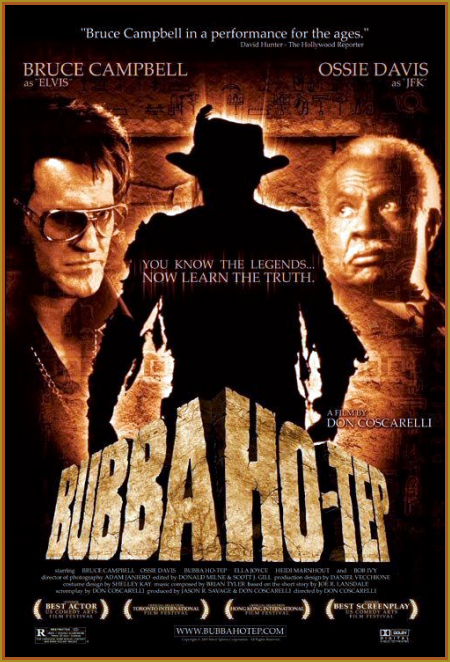
Review: Bubba Ho-Tep (dir. by Don Coscarelli)


Bubba Ho-Tep was one of those film projects which just screamed out “can’t lose” the moment it the people who were going to be attached to it were announced. I mean for people who grew up watching horror movies and other such fun things during the 80’s would know of the name Don Coscarelli. His Phantasm franchise scared and creeped out a large number of young kids and teenagers as they grew up during the 1980’s. Author Joe R. Landale is not as well-known for the unread but he also brings big smiles to people who also like their stories to be full of quirky humor, dry sarcastic wit in addition to pulp-style horror and thrills. But the major coup this film had which made all genre fans suddenly smile and grin like fools has to be hearing that genre-veteran and B-movie extraordinaire Bruce Campbell taking on the role of an aging Elvis Presley.

The movie was released in very limited screens in the summer of 2002. In fact, the movie really only got shown during the summer genre film festivals which dealt with genre movies like horror, sci-fi and other so-called low-brow genre projects which the more elitist film goers tend to shun. Luckily I wasn’t too elitist enough to be able to find Bubba Ho-Tep playing in the San Francisco Film Festival. To say that what I saw was pure cheesy fun would do the film a disservice. While it’s true that the film had it’s moment of horror, I mean it is a movie about a soul-sucking Egyptian Mummy let-loose in a Texas retirement home. What I was surprised to see as I watched through Bubba Ho-Tep was just how much more than a cheesy B-movie horror flick it turned out to be.

The film pretty much brings up the scenario of how it would be if the real Elvis Presley was still alive, in his 70’s and wasting away in a Texas retirement home. That the Elvis Presley who passed away sitting on a toilet at Graceland was actually an impostor who switched places with the real Elvis after the genuine article decided all the fame, groupies and excessiveness of being The King was just too much and wanted a break from it all. So, the real Elvis lost his chance to switch back with his double and thus ended up forgotten in a Texas retirement home where the employees and caregiver treat him like a child and don’t believe him when he tells them he is the real deal. To make matters worse he now has to deal with a cowboy hat and boots wearing Egyptian mummy whose sole source of nourishment are the souls of the old retirees who inhabit the retirement home. The way the mummy sucks the souls from its victims become a running joke within the film. Let’s just say it doesn’t try sucking the souls out through the old folks’ mouth or nose.

Bruce Campbell has always been a mainstay of the B-movie scene. His popularity as being “The Man” who has inhabited such iconic cult characters such as Ashley “Ash” Williams of Evil Dead fame has made him a well-known actor to genre fans everywhere. Campbell could’ve easily hammed it up in the role of the aging Elvis Presley in Bubba Ho-Tep. No one would’ve faulted him for such an over-the-top performance, but instead of going that route he instead plays the role with such an understated and subtle style which made the character more human and sympathetic. Campbell’s nuanced performance also turned a horror-comedy into something more sentimental and sad. Bubba Ho-Tep had turned into a horror-comedy which had a unique and sympathetic look at how the elderly have been treated and seen more as nuisances and less than human. It doesn’t help that their cries for help once the mummy targets them for feeding fall on deaf ears as those hired to help them consider their pleas as the senile ramblings of someone whose mental facilities have long left them.

Campbell’s performance as “The King” was supported quite well by the great, late Ossie Davis whose role as an elderly black man who thinks he’s John F. Kennedy brings new meaning to the film cliche: buddy movie. Davis’ character truly believes that he was and is President Kennedy who was turned black through some conspiracy by Lyndon B. Johnson to save his life. At first, we the audience are in on the joke but due to Davis’ wonderful performance we begin to believe that he may be right. If cowboy-attired Egyptian mummies and an aging Elvis look real why not him. The interplay between Campbell and Davis makes for some great acting and comedy. Without these two men the film would’ve been relegated to the direct-to-video level of filmmaking. Instead what we get is a wonderfully crafted film which despite its pedigree still became one of the better films of 2002.

Don Coscarelli does a fine job of balancing the scenes of comedy and horror with poignancy without ending up with a film that’s too maudlin for its own good. It’s a good sign that one of the 80’s master genre directors has found a nice project to show that he hasn’t lost the edge and skill when it comes to making genre movies. He has also shown with Bubba Ho-Tep that one can have a horror-comedy without drowning it in gore (which this movie had a surprisingly little of) and juvenile slapstick. Even joke sequences involving aging Elvis’ penis with it’s unidentifiable growth made for genuine laughs instead of laugh for laughs sake. The same goes for the double entendre from JFK involving his Ding Dong snack. I think with anyone else at the helm of this picture the movie would’ve fallen either too much into gorehound territory on one side or inane slapstick comedy on the other end.

In the end, Bubba Ho-Tep was one of those rare little genre gems which transcends its genre pedigree and beginnings without meaning to. Like I said with the convergence of Coscarelli, Lansdale, and Campbell making the project happen this was one little movie that was bound to not fail. I highly recommend this movie to anyone who hasn’t seen it. Despite it’s silly sounding title the movie is more than just the sum of its cover.

Review: The Girlfriend Experience (dir. by Steven Soderbergh)


“Sometimes clients think they want the real you, but at the end of the day, they say they don’t. They want what you want to be.” — Chelsea

In between his larger projects (the Che biopic) and studio work (Ocean’s 11 through 13), Steven Soderbergh has kept busy with low-budget, experimental films like Bubble and Full Frontal. His latest entry in this HD-shot, minimalist phase is The Girlfriend Experience. When it was first announced in 2008, much of the buzz centered on Soderbergh’s decision to cast real-life porn star Sasha Grey in the lead role. From that point through its festival run, discussion of the film fixated heavily on that choice. Yet The Girlfriend Experience is ultimately a more intriguing work than its casting gimmick suggests, attempting to draw parallels between the high-end sex industry and the power structures of modern capitalism.

First off, Sasha Grey is not the film’s weak link, despite expectations tied to her background. While her performance can be uneven, there are several moments where she displays clear presence and control. What some have interpreted as a flat or vacuous screen persona actually aligns closely with the character. Chelsea is a $10,000-a-night escort whose clientele consists of wealthy, powerful men—people accustomed to buying whatever and whoever they want. What they purchase from Chelsea is the illusion of intimacy: the “girlfriend experience.”

One of the earliest scenes illustrates this perfectly, as Chelsea spends time with a client in what initially appears to be a normal relationship between a successful man and a poised, younger partner. That illusion, however, defines the entire film. Chelsea is not simply selling sex; she is selling the performance of a perfect relationship. On the surface, everything appears polished and authentic, but beneath it lies something transactional and deeply artificial.

Grey captures this duality effectively. Where some may see a performer out of her depth, her detachment instead feels intentional—part of the character’s constructed identity. It becomes difficult to distinguish where Grey ends and Chelsea begins. Whether this translates into a long-term mainstream acting career is uncertain, but with the right material and direction, she shows potential beyond the limitations of typecasting.

Despite its subject matter, The Girlfriend Experience is less about sex than it is about the commodification of fantasy. Even Chelsea’s boyfriend, Chris (played by Chris Santos), participates in this economy of illusion as a personal trainer selling physical transformation and confidence. The film avoids sentimentality, and when it briefly leans in that direction, it feels out of step with its otherwise clinical tone. Its strength lies in exposing how fragile these constructed realities are once stripped away.

Chelsea herself embodies this contradiction. She is savvy and business-minded, clearly aware of how to leverage her work into future opportunities, yet she clings to a lingering naivete. As competition emerges and her client base becomes less secure, her vulnerability surfaces. Despite operating within a world of calculated transactions, she remains susceptible to the same power dynamics that define her clients’ world.

Shot quickly during the financial collapse of 2008–2009, the film subtly mirrors that instability. Soderbergh draws a parallel between Chelsea’s profession and the broader economic system—both built on selling aspirational illusions. Just as consumers were sold the dream of prosperity they couldn’t afford, Chelsea sells emotional intimacy that isn’t real. In both cases, the illusion eventually collapses, revealing a harsher truth underneath.

Soderbergh’s direction may be challenging for some viewers. The film unfolds in a non-linear, fragmented style typical of his more experimental work. Those familiar with his filmography will likely adjust, but audiences expecting something closer to his mainstream efforts may find it disorienting. Still, his continued experimentation with HD cinematography is notable. The image is strikingly crisp—sometimes to the point of artificiality—which reinforces the film’s thematic focus on surface versus reality. Beneath that clean exterior lies something far more complicated and unpolished.

Of Soderbergh’s work in this digital format, The Girlfriend Experience stands as his strongest effort so far. It is far from perfect—at times it feels visually and emotionally restrained for a filmmaker of his caliber—but it carries an unmistakable French New Wave influence, particularly reminiscent of Jean-Luc Godard. The film is unlikely to earn major accolades, and it may ultimately be remembered as a curious crossover moment for Sasha Grey. Still, its very existence speaks to a willingness—on both the director’s and the actor’s part—to take risks outside conventional boundaries.

In an industry often driven by safety and predictability, that alone makes The Girlfriend Experience worth noting. Whether or not it succeeds by traditional standards is almost beside the point; the film exists, invites interpretation, and leaves its audience to decide its value on their own terms.

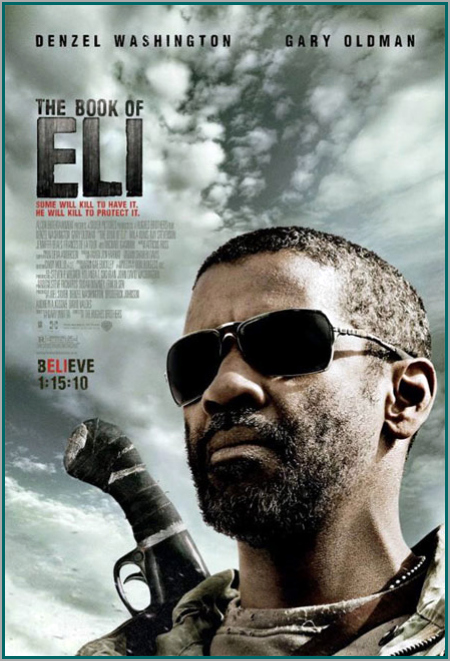
Review: The Book of Eli (dir. by The Hughes Brothers)


In 2001 the Hughes Brothers released their film adaptation of the celebrated and very dense graphic novel From Hell. A graphic novel meticulously researched and every detail reconstructed to tell the tale of Jack the Ripper and his killing spree in the London slum of Whitechapel during the turn of the 19th-century into the 20th. It was a film fans of the graphic novel have been waiting for years since it was initially announced. When it was finally released in 2001 the reception and reaction from both critics and audiences were a resounding thumbs down. The Hughes Brothers first major film outside of their comfort zone of the urban setting was seen as a colossal failure and for almost a decade they seemed to have put themselves into a self-imposed exile from Hollywood. It’s now 2010 and with a cas consisting of Denzel Washington and Gary Oldman on opposite sides it looks like the Hughes Brothers have returned from their exile with a very good post-apocalyptic Western called The Book of Eli.

I call The Book of Eli a post-apocalyptic Western because it’s what the film reminded me most of. The setting may be all ashen gray with the world and the environment decades into what the cast can only describe as “the flash” which ended everything. But with all that the film still felt like a throwback to the Westerns of Sergio Leone with equal parts Akira Kurosawa samurai epics. Taking cue from the screenplay by Gary Whitta, the Hughes Brothers set up the rules of the film from the very first frames. We see a world still raining ash even thirty years since a war (hinted as being caused and fought between the major religions of the world). It is a world where cats have become not just the source of food but also oil for chapped lips. If one bought into the world being presented in the very first ten minutes of the film then the rest the remaining hour and forty minutes would be easy going.

The very first twenty minutes of the film was pretty much free of dialogue as we see the No-Name walker (played by Denzel Washington) survive a day on the road inside an abandoned homestead with only an ancient iPod and the titular book to keep him company. When we finally hear his character speak it is in hushed tones, almost a whisper as if his time of wandering the blasted landscape in solitude has made speaking out loud something almost forgotten. In fact, throughout most of the film Denzel’s character rarely speaks and when he does it doesn’t bode well for those trying to keep him from the path he had been set on for the past thirty years since after “the flash.” It’s during these “encounters” when his character must protect himself that the Hughes Brothers show their unique style in how to film an action scene.

The action scenes owe much of their smooth, precise and deadly ballet to the work of stunt coordinator Jeff Imada and his team of stunt men and women. There’s none of the fast cut and edits to make an action scene seem more chaotic than it really is. Each brutal fight sequence from the hand-to-hand combat to the shootouts are shot with a wide lens to give the audience a clear view of every move, decision and attack made through the fight.  When the camera does move from combatant to combatant it flows from one to another without missing a beat. I will also say that the violence in these fights are quite sudden and brutal. Limbs and heads are cut off with ease that it takes several beats before the audience even realizes what has happened. While the film does have it’s share of action sequences the Hughes Brothers actually seem to hold themselves back from putting in more to keep the fast-pace moving. Instead they use these sudden burst of violence to break whatever monotony may set in during scenes of dialogue.

It is during these downtime from the action that the meat of the story shows itself. The book being protected by Washington’s character may seem to look like a MacGuffin from the onset as he tries to stay on path to deliver it somewhere West. It’s during his brief stop in an unnamed town that we find out just exactly what the book really is. It is also in this part of the film where the audience meets the opposite of Washington’s character in the Carnegie, the town’s dictatorial mayor played by Gary Oldman channeling his inner Stansfield from his time more than a decade ago on the film Leon: The Professional. There really is no one better right now when it comes to playing a villain with some sophistication to go with an equal amount of sociopathic tendencies. Oldman’s Carnegie gets most of the lines in the film and it’s from his lines of dialogue that we learn not just why but also the motivations for his need to have the book in Washington’s possession.

This section of the film where some explaining of the motivations from both leads bring up some interesting ideas about the nature of faith and religion and how both ideas which seem to share a common ground could also be so different from each other. While the ideas of faith and religion gets screen time there’s not much heavy-handed preaching to alienate the audience. Whitta’s script (with some extensive doctoring from a few individuals) gives the audience enough explanation without forcefeeding them. The film leaves it up to the individual viewer to make up their minds about what had been brought up. I do think that the script and the how the two leads in the film were drawn up left little gray area to be explored. We clearly see Washington’s character as the good guy trying to preserve civilization and society as the Good Book teaches while Oldman’s Carnegie wants to use the power of said Book to cement his power and hold over his town and beyond. There definitely could have been room for some more work on the script to actually complicate the two characters’ motivations where both could be seen as correct in what they want done. Instead there’s no delineation as to who is good and who is bad. It is only through Oldman’s performance that the character of Carnegie escapes becoming a one-note villain.

The rest of the cast perform ably enough but still just left to become plot device characters to help move the story forward. It was good to see Jennifer Beals in another major motion picture. The same goes to Ray Stevenson of HBO’s Rome. While their roles were quite small compared to the two leads they still did quite well with what they had to work with. I was surprised to see Tom Waits make an appearance as the town’s Mr. Fixit man and it was a delight to see. Even the small roles played by Michael Gambon and Frances de la Tour didn’t disappoint. Many in the audience, including myself, reacted quite positively to their slightly demented, but funny elder couple. Their time on-screen was brief but they sure made great use of the time they were given.

The one misstep that almost broke the film for me was the miscasting of Mila Kunis in the role of Solara. While I can understand why she looked quite clean in a town and world where everyone’s hygiene was really not a priority she just looked too clean. It seemed like she just stepped out of a Beverly Hills, 90201 remake by way of The Road Warrior. While her performance was good it still paled when compared to the rest of the principals she interacted with. When we finally see what happens to her in the end of the film there’s no reaction of rousing claps, but instead I could hear snickers and more than a few laughs.

While the story was quite good, albeit with some flaws, the film really stands out with its art direction and the work of DP Don Burgess. With the latter, The Book of Eli was given a very washed out looked of browns and greys. There was barely much any color outside of those two that the film, at times, took on a black & white quality in its visual tone. Burgess and the Hughes Brothers’ decision to use the Red HD-camera allowed the team to create a world that’s been turned on its head. This decision also allowed the filmmakers to combine live-action with the matte paintings to show the blasted landscape in the background. But not everything about the look of the film was perfect and/or well-done. At times some of the scenes clearly looked like they were filmed in front of a green-screen. Maybe it was a deliberate choice but one that, at times, became too distracting.

In the end, while not a perfect film, the Hughes Brothers’ The Book of Eli was a very good take on the current spate of post-apocalyptic films. While Hillcoat’s The Road was a depressing and agonizingly morbid take on the same subject, the Hughes Brothers were able to convey the same sentiments with their film but giving enough of a glimmer of hope. The ending doesn’t mean that society is saved by any means, but it does show that the chance for rebuilding is there if given the chance. So, whatever director hell the brothers have been relegated to for most of the last decade this film surely has brought them back from exile. While all was still not forgiven for their work on From Hell they’ve at least gotten back into the good graces of the film-going public and, hopefully, they’ve got more work to come.

Review: Hard Candy (directed by David Slade)


The film directed by David Slade and written by Brian Nelson seems disturbing enough for just the subject matter alone, but it’s also eerie in how timely it’s release has been. With reports of teenage girls becoming victims of internet sexual predators appearing in all types of news media, Hard Candy arrives in the theaters through a limited release to highlight this current trend. Slade and Nelson has created an disturbing and, at times, a very uncomfortable film that shows the many twists and turns that happens when the roles of prey and predator become interchangeable.

There’s no denying that Hard Candy aims to put a new twist on the exploitation subgenre of the rape-revenge films that dominated the late 70’s and early 80’s. Brian Nelson’s clearly channeling the influences from such rape-revenge fantasy films like Mastrosimone’s Extremities and the very disturbing and exploitative I Spit On Your Grave (Day of the Woman) by Meir Zarchi. From the beginning the audience is shown the set-up of an adult instant messenging another person with the screen name of Thonggrrl14. Thonggrrl14 is in fact a 14 year-old teenage girl named Hayley and the adult on the other end a 32 year-old photographer named Jeff who goes by the screen name Lensman319. Jeff has an unhealthy and disturbing penchant for pubescent girls as the subject of his camera lens.

From their first meeting meeting at a coffee house where Jeff gradually begins a flirtatious conversation with the young Hayley to the point in the first act when he finally convinces her to go back to his house whcih doubles as his studio. There’s really no denying the sense of unease that permeates the first act as Hard Candy gradually paints Jeff as the sexual predator that he is. There’s no denying the fact that a man of his age should not be flirting and behaving as if the girl across from him is a fully-grown and developed woman of similar age. Hayley also comes across during this first act like a teenage girl dazzled by an older man who treats her older than her real age. It’s really a disturbing look at just how easily an adult can seduce a child into doing things they normally shouldn’t be doing.

Hayley (played by Juno herself, Ellen Page) soons shows just how wrong and mistaken Jeff has been in picking her as his new prey. I don’t use that word loosely for that was what this film truly was when boiled down to its basic component. A one-on-one three-act play (Brian Nelson’s experience as a playwright shows in the stage-like sequences from beginning to end) between a predator and prey. This time around the prey has turned out to be the one who has done the hunting and the consequences on the wanna-be predator that is Jeff leads to a slow and deliberate set-up that looks like something out of Takashi Miike’s Audition. Hayley’s turning the tables on her stalker shows that girls her age are intelligent enough to know that what Jeff’s doing was wrong. Hayley’s answer to that is to be the hunter instead and fix Jeff’s “problem” through what she calls as “preventive maintenance.” What she calls “preventive maintenance” will definitely cause many men watching this film to sit very uncomfortably and wince on more than once occassion.

The acting job done by Ellen Page was dazzling and really showed why she was listed as an up and coming talent years before Juno. She was technically 15 year-old when the film was made and already she showed a keen grasp of the script which deals with disturbing topics. There’s a scene in Jeff’s car as they reach his home where a passing glance of the camera at her face shows not a gullible teenager, but a determined and somewhat oft-kiltered individual who knows what she will be doing in the coming hours will be medieval harsh but in her mind justified. Patrick Wilson as Jeff plays the would-be sexual predator admirably. His range of emotions go from outright denials of Hayley’s accusations to impotent rage and desperation as his fate is described to him in Miike-like detail by his teenage captor.

If there’s a flaw to mar the intense and suffocating atmosphere this stage-like film creates it would be in the script itself. At times the Hayley character becomes a one-note individual whose beyond her years demeanor seemed too cold and rehearsed. I really can’t put the blame for this on Ms. Page, but on the writer himself. It seems like Brian Nelson was trying too hard to add twist and turns on the story being told. He seems to enjoy overmuch his ability to tug back and forth on his audiences’ emotional investment in the film and the two characters. He actually pulls off the trick of making the sexual predator earn the audiences’ sympathy at what is about to be done to him. But instead of continuing on with that tangent and thus putting Hayley on a darker and more sinister light, Nelson backs off and pulls the audience back to wanting physical and emotional destruction to be visited on Jeff. Nelson used too much zig-zagging in making his script look more complicated than it ought to be. A rape-revenge film works best in its most simplest form.

The direction by David Slade (well-known as a music video director) was actually very subdued and deliberate in its pacing. Slade doesn’t fall back onto his music video experience with unnecessary quick-cut editing that’s plagued his music video director brethren. Slade managed to pull off a very Hitchcockian-style of directing by letting the stage and the actors speak for the scene without much bells and whistles to clutter things. There’s a few sequences where he lets the camera film things through one long, continuous take thus adding a sense of realism to the situation developing inside Jeff’s home.

The use of too much twists and turns in the script notwithstanding, Hard Candy is a tour de force piece of suspenseful filmmaking that borders on the great psychological horror films of the 70’s. In fact, the subject matter on the screen lends a sense of real horror to the film with its timely release and story. Any parent or adult who knows teenagers who use social networking sites like Facebook, MySpace and Twitter would think hard about wanting to know more of what their kids are doing on the net. Hard Candy can be brutal at times and almost suffocating at others with little or no levity to break the tension. It’s a difficult film to sit through and probably won’t be the type of film for some, but just watching the performance by Ellen Page is worthy of the price of a viewing. The subject matter is very adult and straddles the line of what constitute a rated R film and one strictly for adults only. Hard Candy definitely falls on the latter.

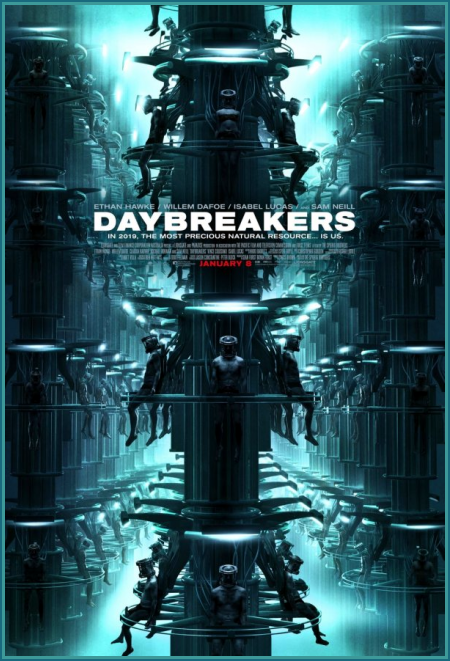
Review: Daybreakers (dir. by The Spierig Brothers)


In 2003 there was this little zombie flick from Down Under which flew under the radar of most film-goers, but definitely not of horror fans everywhere. The name of this film was Undead and while the film was a nice little genre mash-up of a romp it showed just how new to feature-lenght filmmaking it’s brother directors were. The Sprierig Brothers’ film seemed to have done well enough in the box-office and in the dvd market that they were soon offered by genre studio Lionsgate to make another film from their very own script. It was a vampire story which once again shows the brothers’ penchant for culling a story of different genres to create something familiar but with some originality peppered throughout. With a reported budget of $20-21million dollars, the finished product of Daybreakers arrives in the theaters in the early going of 2010 as a nice, albeit very flawed, change of pace from the so-called “Twilight”-style of vampire films.

The Spierig Brothers have set their vampire film in the near future of 2019 where it’s been 10 years since an unnamed vampiric virus has turned most of the world’s population into vampires. It is in the early 20-30 minutes of the film where Daybreakers really showed some genuine new blood (pardon the pun) in the vampire film genre. We’re shown a world which has adjusted to the turning of society from a human one to a vampiric one. While society has turned it’s people still clung to old habits they practiced when still human.

Schools are still in session but instead of morning and afternoon they’re now held at night. There’s still coffee stands for business people to get their cup of joe, but now spiked with real human blood. Even corporations have adjusted from their former human interests to one much closer to their new existence. Blood has become a rare commodity and traded as such on the world markets. One could see the filmmakers attempt to allegorize mankind’s addiction to oil and it’s finite supply to this new society’s need to harvest fresh human blood from human’s captured and turned into living blood banks. But like all precious natural resource this blood supply has begun to run low thus threatening not just the survival of a human race close to extinction, but damning those who turned into vampires into something mutated by blood-deprivation.

While the story had some definite merits to them. From the world-building by the Brothers to try and make the audience invest some interest in the film right down to the very Rated-R violence sorely lacking in most vampire films nowadays. Still with those to help garner interest in the audience, Daybreakers manages to make too many misses to the hits which tried to keep the audience’s attention.

Most filmmakers have a tendency to spell out to the audience what they’re watching. The skill to show rather than tell the film is a skill very rare in most filmmakers which is probably why we have many average-to-good ones and very rare great ones. The Spierig Brothers tried to show rather than tell, but they seem to have went a bit extreme in trying to show the story and forgot to add a semblance of a tight screenplay. The dialogue wasn’t bad, but what little there was seemed disjointed and almost tossed in to add a semblance of an explanation to what was happening. Characters and motivations were handled as if the audience should automatically understand when at times it just seemed like they came out of nowhere and were suddenly important to what was occurring on the screen. One particular character, who gets billing on the Daybreakers ad-campaign one-sheets, gets a mention in a passing bit of dialogue between two main characters and appears midway in the film only to be used as a plot-device to show how evil and heartless the main antagonist was. This is twice in less than a year where Isabel Lucas’ character gets this treatment. It happens more than once and shows just how much more work could’ve been done to the screenplay to really advance the original ideas the brothers wanted to film.

As with most films with a less-than-stellar screenplay the actors cast to act it out need to work double-time to salvage something very good to be presented in the final cut of the film. I couldn’t honestly say that there were any bad performances from all involved. While the overall acting performance from the cast wasn’t awful, or even bad, there was a sense of disinterest from several of the main characters which didn’t really help in trying to explain the motivations of why they did what they did on-screen. Ethan Hawke as Dr. Edward Dalton (vampire hematologist working on a blood substitute) almost sleepwalks through the entire film. We know soon enough that he hates being a vampire and won’t touch human blood, but he brings little life to his character and most of the cast do as well. It’s almost as if they couldn’t decide how seriously they should take the story they were filming and end up being one-note in the process. The only two actors who seem to realize the ridiculous, albeit fun premise, of the story was Sam Neill as head of the corporation providing human blood to the vampire population and Willem Dafoe as the human with a past secret who holds the key to finding a cure to vampirism.

Neill plays Charles Bromley with a certain amount of oily, snake-like panache we like to equate with captains of industries willing to sacrifice their own blood if it means turning a profit. He doesn’t stay immune from the script’s flaw, but he gamely trudges on to try and fully realize a well-rounded character. We could see why he does what he does even though we probably won’t agree with them. Willem Dafoe as the other bright star in an otherwise one-note character really got the best bits of dialogue in the film. His Lionel “Elvis” Cormac scene-chews through every second he’s on the screen. Dafoe’s own quirkiness and brand of craziness salvages from Daybreakers a semblance of a fun time.

I would say that despite the many flaws from the script and how it affected the performances of most of the cast in the end this was still a vampire film and a gruesome one at that. The year’s since Undead and the upping of a budget for this film hasn’t dulled the gorehound in the Spierig Brothers. Daybreakers was definitely not Twilight in every drop of blood in its celluloid veins. Blood really flows in this film and they flow a-plenty. The brothers don’t just stop in blood being spilled. He has the red liquid sprayed as if from intense pressure. But in addition to that particular brand of red nasty they add a bit of the zombie influence in the film as limbs are ripped asunder, heads torn off and flesh bitten and chewed on. This awesome display of gore and grue was a great cure for a case of the Twilight bug. It was in the last reel where the brothers ramp up the vampire violence where I truly felt like they were in their element. Maybe this was the film they should’ve gone for instead of trying to add some societal undertone to the film. Not every vampire film has to be an arthouse darling like Let the Right One In. Sometimes a filmmaker needs to realize their limitations as storyteller and stick to what they do best.

In the end, Daybreakers was definitely a missed opportunity to showcase a new fresh take on a horror genre being diluted by PG and ten-marketing sensibilities. It was a film with some very new ideas to add fresh blood in a staid vampire genre but these early hits were soon to be hampered by a weak screenplay and a cast that seemed truly disinterested in giving a spirited performance with a couple of exceptions. The film does salvages a bit of fun which made me enjoy enough of the film. The brothers take of their gloves in the final reel as the gore and violence almost reaches fun, goofy territory. It was this final reel which made me wish that Spierig Brothers had concentrated on right from the start. It definitely would’ve cut down the film into a much leaner and faster-paced film and maybe, just maybe, got everyone else to have fun on-screen the way Sam Neill and Willem Dafoe seemed to be having. The Spierig Brother definitely have a sense of style when it comes to horror, but they still have some ways to go before they could truly say that they’ve arrived as fully-rounded filmmakers.

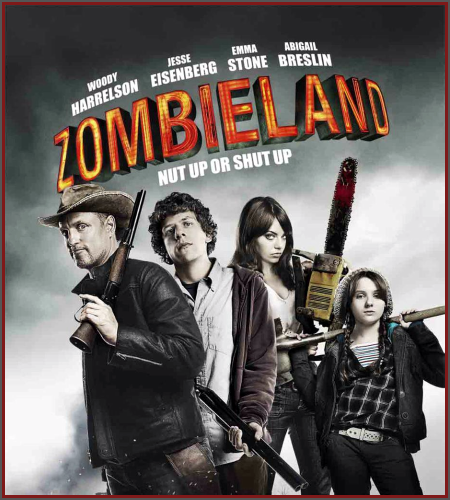
Review: Zombieland (directed by Ruben Fleischer)


Zombies have either oversaturated pop-culture and media or there’s just not been many good entertainment examples with zombies in it. Most zombies films usually end up taking the direct-to-video route or, even worse, the direct-to-cable path. The very good films about zombies are very limited in numbers. For every Shaun of the Dead we get truly awful examples like Zombie Wars, Automaton Transfusion and the Day of the Dead remake. I blame this flood of bad zombie films on what makes the zombie such an interesting monster for filmmakers to use: they’re a blank slate. The zombie as envisioned by Romero are quite young in comparison to other monsters of film. They do not have the culturual and mythical history of vampires and werewolves.

Zombie films are easy to make thus we get every amateur filmmaker thinking they’re the next Romero, pick up a digital camera and attempt to make the next zombie c!assic. What we get instead are dregs which give the genre a bad name. It is a breath of fresh air that Ruben Fleischer (using a screenplay penned by Rhett Reese and Paul Wernick) has made a zombie film which deserves to be seen in a theater and not on video or cable. Zombieland is a fun and hilarious romp which succeeds in delivering what it’s preceding hype had promised and ends up being a very good film despite first-time jitters from a first-time filmmaker.

Zombieland makes no bones about what it’s about right from the get-go. This is not a film where the audience watches the world fight for its existence against the growing undead. No, this film drops the audience to a world that’s beyond gone to hell and one that now belongs to the zombies which explains the title. We’re quickly introduced to the rules which now governs this new world. With narration from the film’s first lead (played by Jesse Eisenberg) we learn the so-called “rules” of how to survive zombieland. There’s a funny and inventive use of on-screen reminders of these rules throughout the film which looks similar to the captions Youtube uploaders add to their videos. The film quickly introduces Columbus’ (the film’s narrator) soon-to-be partner-in-survival. Where Columbus is quite obsessive-compulsive and more than just a touch cowardly Tallahassee (in a hilarious turn by Woody Harrelson) is the reckless, A-type personality and more than the opposite of Columbus. These two unlikely pair soon meet up with a pair of sisters who also happens to be veteran grifters who, on more than one occassion, give our hapless duo trouble in their journey through a devastated landscape.

The film has been called a zombie comedy and will be compared to the successful British zombie-comedy, Shaun of the Dead. While some are not wrong to compare Fleischer’s film to Wright’s the comparison really ends at both being zombie-comedies. While Wright’s film was a zombie film with comedic aspects mixed in it was first and foremost a horror film. Zombieland is the opposite and the way it starts, unfolds and finishes it’s really a comedy road trip like the National Lampoon Vacation films but this time with zombies instead of in-bred relatives, clueless motorists and tourist-traps. The film is quite funny froom beginning to end with the funniest and most hilarious being a surprise cameo of a well-known comedic actor playing himself right around the beginning of the second-half. This sequence got the most laughs and cleverly played up this actor’s particular quirks. Most of the comedy and gags in the film comes courtesy of the aforementioned rules and the interaction between the characters of Columbus, Tallahassee and the two con sisters, Wichita and Little Rock (they use the city of their origins for names throughout the film).

While the film’s story is quite basic what Fleischer and his small cast were able to do with them they did well. There really wasn’t a false note in any of the actors’ performances. Eisenberg and Harrelson played off each other well right from the time the two meet. Emma Stone as the punk-rock older sister Wichita to the younger Little Rock played by wunderkind child actor Abigail Breslin (girl has a future beyond her child role past). The road-trip of a story even has its own little quirks from Tallahassee’s irreverent quest for the final stock of Twinkies to the sisters’ goal of reaching the West Coast and an amusement park called Pacific Playland rumored to be free of the zombie menace.

Zombieland is not without its flaws. Some of the editing in the climacting reel of the film was to uneven at times. There were instances when the film was close to being bogged down but fortunately it never came to that end. The violence and gore in the film wasn’t as high as one would think for a film about zombies that have literally devoured the world. One could almost sense that the filmmakers were hedging their bet when it came to the grue and violence. It seemed as if they were being overly cautious about trying to get an R-rating instead of an NC-17. The film barely makes it past the PG-13 territory. While these flaws could be attributed to jitters and a somewhat unsure first-time director in the overall execution of the film all involved did very well in sticking to the plan.

Even the look of the film makes it seem more big-budgeted than it really was (rumored to be between 9-10 million). Most filmmakers with years to decades of experience make a mess of trying to shot a film fully inn HD using HD-cameras, but Fleischer and his cinematographer Michael Bonvillain acquit themselves in their use of Sony’s Gensis HD camera. The film looks crisp and clear, but without the glaring rough edges HD sometimes gives a film. The use of the Genesis camera makes possible the well-done intro sequence done in slo-mo to the tune of Metallica’s “For Whom the Bell Tolls”.

Zombieland is a good start to what could be a very promising career for one Ruben Fleischer. There’s skill in his work on this film despite some nitpicks that could be seen as flaws. The film in the end was very funny and fun to watch from start to end. While to story was very simplified (this probably helped in minimizing the pitfalls Fleischer had to avoid in his first major film production) with characters that was fleshed out just enough for the audience to connect with the final product delivered on the hypse which preceded this film. Zombie film fans would get a huge laugh and kick out of this very quick under-90 minute production while even those who are not into zombies much would still find themselves laughing and being entertained. Zombieland may not be scary in comparison to some of the great zombie films of past but it more than makes up for that with energy, life and a genius of a cameo scene that would be the talk of the town.

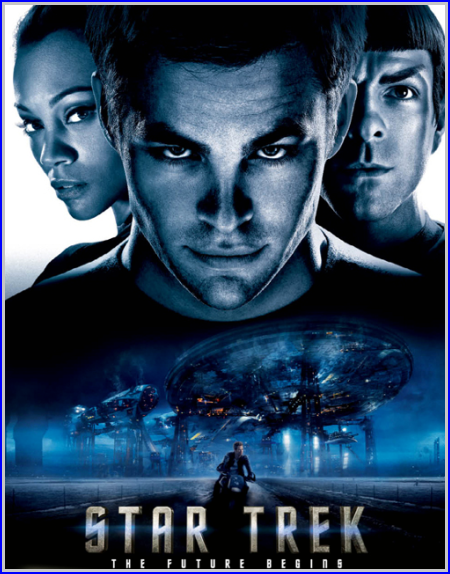
Review: Star Trek (directed by J.J. Abrams)


2009 marks the return of Star Trek franchise to the big-screen. It has been seven years since the last entry in the series with Star Trek Nemesis. The critically-panned and box-office failure of that tenth entry in the film series marked a major low-point for the franchise. The franchise was dead in space with no one seeming to be able to figure out a way to bring the franchise back to big-screen prominence. So, it comes as a surprise that it’s eventual savior happens to be a non-fan of the franchise. J.J. Abrams has confessed to not being a major fan of the series, but wanted to see how he could bring back the franchise to a high bar of standard it had set for itself through the decades of its existence. This latest and eleventh entry in the Star Trek film series marks a drastic improvement over the past decade of film entries in the series. Abrams has crafted an enjoyable and fast-paced film which includes equal amounts of details fans of the franchise love, but also creating a film which would appeal to non-fans as well.

To start off, I’m what one might call a Trekker who has pored over all the details of the franchise. Backstory, character bios and details of the expanded universe is bread-and-butter. When first announced that Abrams would be in charge of trying to bring the franchise back to prominence I was quite skeptical. I’m not the biggest fan and admirer of J.J. Abrams and his work. It didn’t help that his idea to bring in more non-fans to the fold smacked of pandering. I will say that I will be the first to eat my words as Abrams’ Star Trek has been the best entry in the film series for the last 15 or so years. It’s a fresh new take on Gene Roddenberry’s universe which has spanned over four decades starting with the original TV series and continuing with the many novels which continue to churn out year in and year out.

The casting of a relatively unknown actors by Abrams and his crew was a bold move as their performances of iconic characters beloved by tens, if not hundreds, of millions of fans could sink the film and put the final nail in the film series’ efforts to stay up on the big-screen. Fortunately, it is this cast of unknowns who make this film so fun to watch. Chris Pine as James T. Kirk does a fine job of not apeing and micmicking the Kirk of Shatner but instead makes the character his own while at the same time bringing enough of the self-confidence and charm Shatner brought to the role. As good as Pine’s performance as Kirk was the film really belongs to Zachary Quinto’s portrayal of a more conflicted and darker Spock. Where Leonard Nimoy’s work as Spock was more of a mature character whose conflicting dual-nature as an emotional human and logical Vulcan would resurface here and there throughout the decades Quinto’s Spock has that conflicted nature simmering right on the surface. We get a much darker Spock who hasn’t fully accepted his two warring sides. One might even say that this Spock was a much darker portrayal than what had been previously done of the character. Quinto’s performance was a star-making one and should make fans relieved to know that an iconic character was in good hands.

The rest of the ensemble cast do a commendable job in their roles with other stand-out works by Karl Urban as Bones McCoy and Bruce Greenwood as Capt. Pike. Urban, especially, does a remarkable job of channeling DeForrest Kelley’s McCoy without seeming to copy the man. Like Quinto’s Spock, Urban’s McCoy should resonate with fans and non-fans alike. Simon Pegg as Scotty, John Cho as Sulu, Zoe Saldana as Uhura and Anton Yelchin as Chekov all do good work but are not on the screen enough to show what they could really do. With the seeming success of this film I’m sure they’ll have more chance to grab a hold of their characters and make them their own. If there’s a weak link to the cast it would be Eric Bana’s Romulan Nero. The character of Nero wasn’t fully realized beyond the maddened, revenge-fuelled archetype for Bana to truly work his skills on. There’s just not enough in the character to make him a great Star Trek villain. There’s hints of Khan in the role but also hints of weaker villains in the franchise’s history. If the writers had done a better job fully realizing the character for Bana I think Nero would be spoken of on the same level as Khan, but he won’t be and that brings up the other weak link in this film: the writing.

I say the writing is a weak link not because of the dialogue spoken but of the the overall plot of the story. There’s a simple enough plot to hold the film together but writers Orci and Kurtzman tried to create an epic storyline which would keep both loyal fans and new people to the franchise happy. By doing this they oversimplified the story where details were left out that created huge plot holes in the story. Also, the way Kirk’s character meets up with each member of what would become his core group relied too much on timely coincidences. They tried to make each meeting to be a memorable one which ended up with action-sequences that could’ve been left out but added to make the next meeting interesting. Like another origins film of the summer, X-Men Origins: Wolverine, both Orci and Kurtzman tried to lump too much origin details into this prequel. The finished screenplay could easily have used one or two more doctoring to make it a much more leaner and streamlined story.

The good thing was that as simple and pedestrian the story ended up being it did create a way for Abrams to connect both the original stories created by previous films and tv series to this new film which now has given the franchise a new path to move forward on without forgetting the canon established in the previous four decades. Star Trek by Abrams could be compared closely to the James Bond reboot in Casino Royale and the Batman reboot with Batman Begins. All three films share similarities in that all three honors the canon of the expanded universes of their respective franchise but brings enough new ideas and changes to re-imagine the franchises to a new generation of fans. Like those two other films Star Trek has laid the foundation for new stories to be told and not having to worry about continuity problems. Now any future films in the franchise have carte blanche to boldy go where the series hasn’t gone before.

In the end, J.J. Abrams’ Star Trek turned out to be better than expected as he has created a film that is a fun, action-filled ride with a wonderful performance by the ensemble cast of unknowns. Even a weak villain and premise fail to damper and bring down the film. While it is not a great entry to the series it does bring back the franchise to a resounding return to the big-screen that should please most of its loyal fans while appealing to the casual audience. I, for one, cannot wait to see what Abrams has in store for the forseeable future of the crew of the U.S.S. Enterprise.