Embracing the Melodrama #49: Scarlet Diva (dir by Asia Argento)


Scarlet Diva

I’ve always loved Asia Argento because, as both an actress and a public personality, she is tough, hard, and sexy all at the same time.  She’s not one of those actresses who feels the need to hide who she really is.  Watching her on-screen, you realize that she doesn’t give a fuck whether you like her or not.  Instead, she’s going to do whatever it is that she wants to do and, if you’re lucky, you might get to watch.  Some hold her responsible for the erratic output of Dario Argento’s post-Opera career but those people far too often fail to take into account that Asia, with her naturally off-center presence, has often been the most interesting thing about Dario’s later films. (Say what you will about Trauma, The Stendhal Syndrome, and Mother of Tears, they’re all better with Asia than without her.)  Asia Argento is one of those talented actresses who could never have played Ophelia because no one would ever believe that she would so easily drown.  Instead, she’d simply pull herself out of the water and then go kick Hamlet’s ass for being so indecisive.

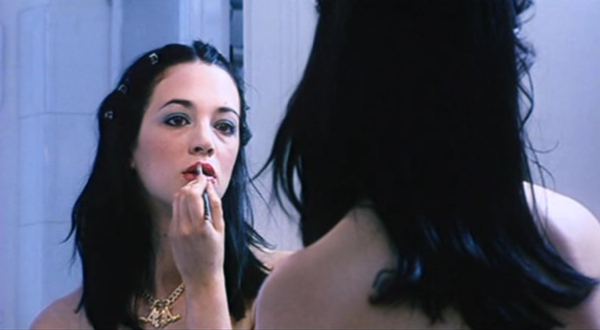
In the year 2000, Asia Argento made her directorial debut with the underrated Scarlet Diva.  In Scarlet Diva, Asia plays Anna Batista, a 24 year-old Italian actress who, having won both acclaim and awards in Italy, is now being tempted with offers to come out to Hollywood.  Over the course of this frequently (and intentionally) disjointed film, Anna is forced to deal with the dark reality of being young, rich, and famous.  (Yeah, yeah, I know you’re rolling your eyes but just calm down…)  After being told that she’ll costar with De Niro, she finds herself playing Cleopatra in a hilariously bad movie that does not co-star Robert De Niro.  She meets a sleazy producer (Joe Coleman) who invites her to his hotel room and then promptly undresses and demands that she “earn” a part in his next film.  Anna runs from him and the naked producer chases after her with the camera focused (in close-up) on his hairy ass all the way.  While dealing with all of that, Anna also find time to visit her best friend in Paris, just to discover that she has spent the last two days bound and gagged in bed.  She also buys drugs underneath a highway overpass and suffers from frequent dream sequences and flashbacks to growing up with her mentally unstable mother (played by Asia’s real-life mother, Daria Nicolodi).

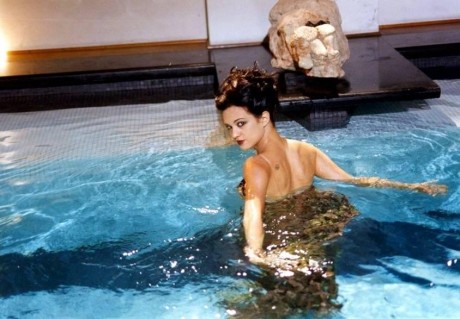
And yet, during all of this, Anna can still find happiness because she thinks that she’s in love with rock star Kirk Vaines (Jean Sheperd, playing a role that was written for Vincent Gallo).  When Anna discovers that she’s pregnant, she decides not to have her usual abortion and instead to keep the baby.  However, when Kirk reacts to Anna’s news with indifference, it leads to one of the longest (and most emotionally raw) running sequences that I have ever seen, as the pregnant Anna flees down the streets of Rome…
asia_argento_-_scarlet

Just to judge from the movies that various actor have made about the trials of being a star, fame is a special sort of Hell, the type that is dominated with surreal dream sequences and frequent claustrophobia.  That’s certainly true of Scarlet Diva, which is perhaps one of the most self-indulgent films ever made.  And yet, it’s that very self-indulgence that makes Scarlet Diva so much more watchable and, in its own way, likable than most debut films from actors-turned-directors.  For all the drama and pain that Anna goes through, Asia Argento seems to understand just how narcissistic this film truly is and, in a few scenes, it’s evident that she’s gently mocking her own “poor me” self-indulgence.

Ultimately, Asia seems to be saying that Anna (and probably, at the time she made this film, Asia herself, since she has said that this film is partially autobiographical) is her own worse enemy.  Hence, this film — which was made with an admirable lack of concern about going too far or for being TMI — is a massively cathartic work for all of the rest of us who are also occasionally our own worst enemy.

Yes, Scarlet Diva may be a self-indulgent, narcissistic film.  It’s also a very brave and honest film that deserves a lot more praise and attention than it has received.
Scarlet Diva

Embracing the Melodrama #48: Coyote Ugly (dir by David McNally)


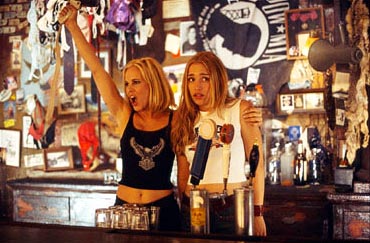
coyote_ugly

“Never give up on your dreams!” is such a familiar movie cliché that I have to admit that there’s a part of me that really wants to see a mainstream, big budget studio film that proudly declares, “Give up!”  We’ve seen so many films about photogenic people who leave pretty but predictable small towns and end up in big, scary New York City that we pretty much know exactly what’s going to happen as soon as they step off that bus.  They’re going to get robbed.  They’re going to end up at an all-night dinner.  They’re going to meet the lover of their dreams.  They’re going to get quirky friends.  They’re going to become a success.  And, most importantly, they’ll be advised to “never give up on your dreams!”  It’s not that I’m cynical or that I don’t enjoy watching people succeed.  It’s just all so predictable that I found myself yearning for a film that will not slavishly follow the formula.

Unfortunately, 2000’s Coyote Ugly is not that film.  In fact, Coyote Ugly is such a thoroughly predictable film that it’s perhaps not surprising to discover that it’s also a film that’s been embraced by a lot of people.  It never ceases to amaze me how, whenever Coyote Ugly shows up on cable, twitter is full of viewers declaring their love.

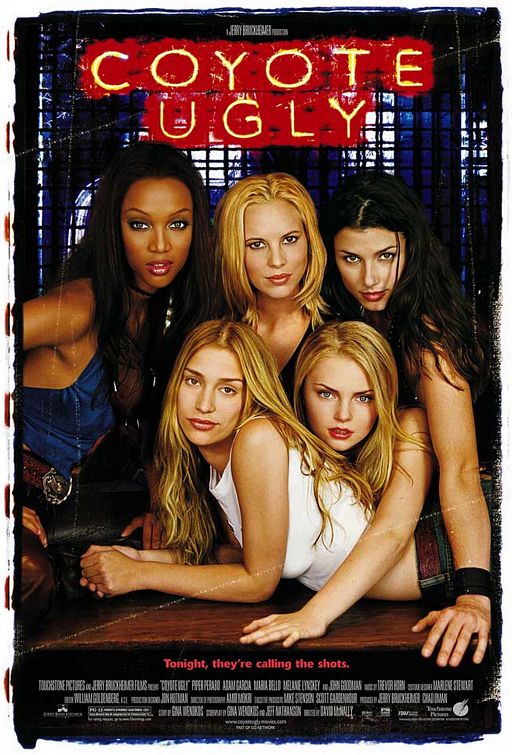
Coyote Ugly tells the story of  Violet (Piper Perabo), who may look like an ordinary waitress from New Jersey but who aspires to be a songwriter in New York City.  As the film begins, she is in the process of leaving her loving but overprotective father (John Goodman) and her best friend (Melanie Lynesky) so that she can move to the big city and never give up on her dream.  Before she leaves, she’s asked to sign a piece of paper so that it can be tacked to the wall of the local pizza place.  It’s a tradition, apparently.  Before anyone leaves town for New York, they’re asked to leave behind an autograph.  The wall is covered with signatures, indicating that apparently every waitress in New Jersey thinks that she’s a songwriter.

Violet moves to New York and, at first, it seems like she might not make it.  Her apartment is a dump and her neighbors get mad whenever she sings.  (Violet responds by setting up a small recording studio on the roof of her building.)  Nobody is willing to listen to her demo.  About the only good thing that happens to Violet is that she meets Kevin (Adam Garcia), an Australian who encourages her to never give up on her dreams.

Eventually, Violet finds herself in one of those all-night diners that always seem to pop up in movies like this.  She notices that the girls seated at a table near her seem both to be happy and to have a lot of money.  It turns out that they work at the Coyote Ugly Saloon and since one of them (played by Tyra Banks, in a cameo) is quitting so she can go to law school, that means that there’s soon going to be an opening at the bar.

After talking to the Coyote’s owner, Lil (Maria Bello), Violet manages to get a job as a bartender.  Along with serving drinks to a combination of hipsters, frat boys, and stock brokers, another part of Violet’s job is to jump up on the bar and dance.  Eventually, she even gets a chance to sing when it’s discovered that the sound of her voice (or, to be technical about it, LeAnn Rimes’s voice since Rimes provided Violet’s singing voice) can somehow inspire drunks to stop fighting and act civilized.  Violet bonds with her fellow bartender Cammie (Izbella Miko) while the other bartender, Rachel (Bridget Moynahan) takes an instant and almost pathological dislike to her.  Lili is tough, Cammie is a flirt, and Rachel likes to set things on fire.  That’s about all we find out about them.

Even when her father disowns her for working at the Coyote and even when she and Kevin have a fight over her extreme stage fight and Kevin’s refusal to talk about his troubled past, Violet never gives up on her dreams!

And, if you can’t guess every single thing that happens in Coyote Ugly before it happens, then you really need to start watching more movies.

Despite the fact that the movie is named after the Coyote Ugly Saloon and it’s full of scenes of Violet and her co-workers dancing on top of that bar, the Coyote Ugly itself is actually pretty superfluous to the overall film.  The film itself is all about Violet pursuing her dream to become a songwriter and the bar itself really doesn’t play that major of a role into her eventual success.  Instead, it’s just a place where she works.  Violet could just as easily have worked at a particularly rowdy Dave and Buster’s and the overall film would have turned out the same.

And that’s a shame because, while watching the film, it’s hard not to feel that a movie about either Lil, Cammie, or Rachel (or, for that matter, a film about Tyra Banks going to law school) would be a thousand times more interesting that any film about boring old Violet.  I mean, here we have a film named after a business that is owned by a woman and that specifically employs and potentially empowers other women and what does the movie do with all of this material?

It tells a story so predictable and so simplistic that it could just as easily been generated by a computer program.

Coyote Ugly is a massive mixed opportunity but, for whatever reason, some people seem to love it.

https://twitter.com/jhali_/status/487998680163561472

And good for them.

ii7t6bbe89ch6tbi

Embracing the Melodrama #47: Cruel Intentions (dir by Roger Kumble)


For the past 10 days, I’ve been reviewing some of the most and least memorable melodramas ever filmed.  Starting with 1916’s Where Are My Children?, we’ve been moving chronologically through film history.  We’re now coming to the end of the 90s and what better way to end that decade than by taking a look at 1999’s Cruel Intentions?

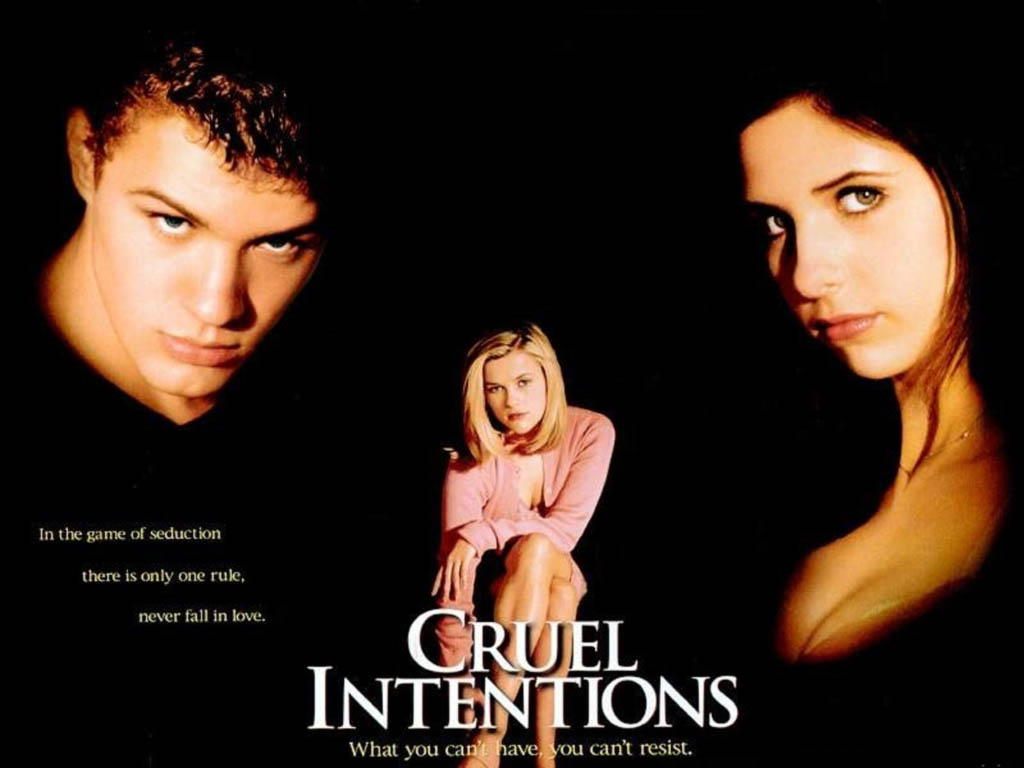
Cruel Intentions takes place in the upscale world of a New York private school.  Rich and popular Kathryn Merteuil (Sarah Michelle Gellar) is also a manipulative hypocrite who destroys reputations on a whim and carries cocaine in her ever-present cross necklace.  Kathryn is upset because her boyfriend has recently dumped her and is now dating the sweet and innocent Cecile (Selma Blair).  Kathryn asks her decadent cousin Sebastian Valmont (Ryan Phillippe) to seduce Cecile.  However, Sebastian refuses, saying that the challenge would be too easy.  Instead, he plans to seduce Annette Hargrove (Reese Whitherspoon), who has recently written an acclaimed essay about the importance of chastity and who also happens to be the daughter of the school’s headmaster.  Kathryn is intrigued by Sebastian’s plan and makes a bet with him.  If Sebastian manages to take Annette’s virginity than Kathryn will have sex with him…

Now, if you’ve already read my previous review of Dangerous Liaisons, the plot of Cruel Intentions probably sounds a bit familiar.  That’s because both of these films are based on the same source material —  Les Liaisons dangereuses by Pierre Choderlos de Laclos.  The main difference between the two films — beyond the fact that Dangerous Liaisons is set in pre-Revolutionary France and Cruel Intentions is set in 1990s New York — is that Dangerous Liaisons uses the material to comment on the excesses of the rich while Cruel Intentions is all about style.

And, to be honest, while Dangerous Liaisons is undoubtedly the better film, Cruel Intentions is a lot more fun.  I first saw Cruel Intentions shortly before I started my sophomore year of high school and I excitedly thought to myself, “So this is what high school is going to be like!”  Well, unfortunately, it turned out that I was wrong but oh well!  (Though, in all fairness to the film, I went to a public high school in the suburbs of Dallas as opposed to a rich private school in New York.)  The movie still a lot of fun, even if it didn’t quite match up with reality.  Everything from the costumes (I absolutely LOVED every single outfit that Sarah Michelle Gellar wore and, even before it was revealed to be full of cocaine, that cross necklace was to die for) to the ornate sets to the wonderfully melodramatic and self-aware performances — it all works towards creating a vivid and engrossing alternative universe.

So no, don’t take Cruel Intentions seriously.

Just enjoy the dance while it lasts.

cruel-intentions

Tomorrow, embracing the melodrama enters the 21st Century!

Embracing the Melodrama #46: Wild Things (dir by John McNaughton)


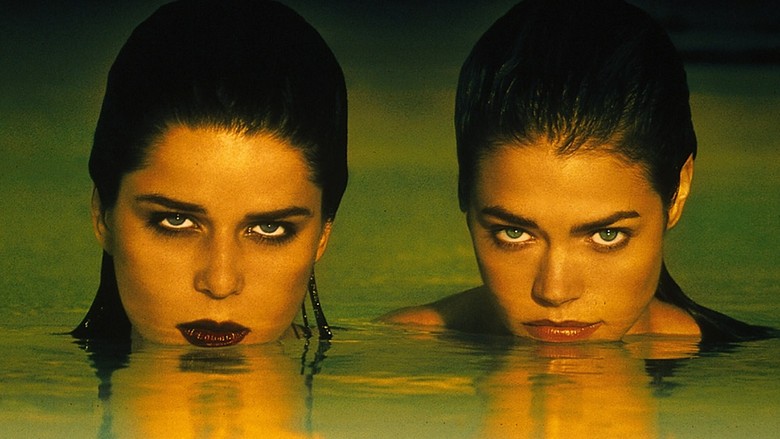
The 1998 film Wild Things starts out like a standard B-movie.  It take place in Florida so, of course, we get a lot of shots of the sun setting on the bayous and crocodiles staring at the camera as if to ask, “What are you looking for?”  Boats skim the water.  High school guidance counselor Sam Lombardo (Matt Dillon) walks across campus while all of the toned and tanned students stop to admire him.  Local rich girl Kelly Von Ryan (Denise Richards) smirks and says something snarky.  Detective Ray Duquette (Kevin Bacon) shows up in the background and stares at the world from behind dark glasses and a serious expression.  Meanwhile, local poor girl Suzie (Neve Campbell) goes back to her home, which happens to be located right behind an alligator farm.

Judging from the first few minutes, Wild Things could just as easily be an episode of CSI Miami.

But then Bill Murray shows up as Kenneth Bowden, a hilariously sleazy attorney who spends most of the movie wearing a neck brace, just in case the insurance company is watching him.

And then Theresa Russell shows up Kelly’s mother, standing on a balcony in a gold bikini and hitting on every passing man like the world’s most hyperactive cougar.

And then Carrie Snodgress shows up as Suzie’s mother, complete with an over-the-top white trash accent.

By the time that Robert Wagner shows up and literally growls at Matt Dillon: “You’re finished, Lombardo!  Finished!,” you realize that Wild Things is probably the most self-aware B-movie ever made and it’s all the better for it.

As for the plot — well, let’s see if I can keep track.  Suzie and Kelly both accuse Sam of rape.  Sam claims to be innocent but nobody in town believes him.  Sam is forced to hire the disreputable Kenneth Bowden to defend him.  During the trial, Kenneth is able to prove that Kelly blamed Sam for the suicide of her father while Suzie is angry that Sam once refused to bail her out of jail on a drug charge.  To get revenge, Kelly and Suzie decided to frame Sam.  Sam is acquitted and, again with Bowden’s help, is able to negotiate an 8 million dollar settlement for defamation.  True, Sam does lose his job but at least he’s a rich man now…

But wait a minute.

The movie still has a little over an hour to go.

Could it be that there’s more to this story?

Well, of course, there is.  It turns out that Sam, Kelly, and Suzie have been working together all the time.  The accusations, the trial, the defamation suit — it was all a part of a grand scheme to get the money.  Sam, Kelly, and Suzie celebrate their success with champagne and a threesome.

While everyone else in town seems to be ready to move on from the entire scandal, Detective Ray Duquette is telling anyone who will listen that he thinks that Sam, Kelly, and Suzie were all in on it together.  Even when Ray is ordered by his superiors to back off, Ray continues to investigate the case.

And why?

Because Ray Duquette is a cop who gets results!

Well, maybe.

Actually, it doesn’t take long to realize that there’s something off about Ray.  For one thing, his obsession with Sam really does seem to be a personal thing.  On top of that, Ray has a past connection with Suzie…

Wild Things has everything that you could hope for from a good exploitation film: a script that is full of double and triple crosses, unapologetically pulpy dialogue, over-the-top performances, and lots of sex.  Yesterday, I reviewed Normal Life and praised John McNaughton’s decision to play up the banality of the film’s characters and locations.  With Wild Things, McNaughton takes the exact opposite approach, playing up every sordid and tawdry detail to such an extent that the film itself eventually transcends such mundane concepts as good and bad.

Wild Things is a lot of fun and it’s also one of the best films of the 1990s.

Wild Things

‘Dawn of the Planet of the Apes’ (dir. Matt Reeves)


apes-poster-by-matt-ferguson

(Poster by Matt Ferguson)

When ‘Rise of the Planet of the Apes’ came out, I wasn’t excited; I didn’t even see it in theaters. I am a fan of the original franchise (one and three mainly), and still had the bad taste of the terrible Burton remake in my mouth. So the idea of a prequel/reboot was one of the last things I wanted at the time. Still, I gave it a chance when it was released on home video, and it blew me away. I, like so many, was surprised by just how good it was. So good in fact, that I desperately wanted a sequel. Luckily the film was a success (both financially and critically) and that inevitable, albeit desired, sequel was made. Having now just seen it, the question now becomes whether it lives up to both that first film and the enormous expectations I had built up between films (especially more recently with the “prequel” shorts). The answer, thank god, is a resounding “Hell yes!”

It was so good in fact that I’d go so far as to say that this franchise has become my favorite since Nolan’s ‘Batman’ films. This is why the easiest way for me to describe how this compares to the first film is to say that ‘Dawn’ is to ‘Rise’ as ‘The Dark Knight’ was to ‘Batman Begins’. ‘Rise’, like ‘Begins’, was an exceptional origins tale; but it was a story that felt rushed or overshadowed in place for the development and establishment of  only the central character. ‘Rise’ still had an emotional resonance, and the final twenty minutes are incredibly thrilling, but it ultimately felt incomplete.  With ‘Dawn’, like with ‘The Dark Knight’, the film makers were free to use what was already established with their new hero to tell a much more complete, more complex and emotional story on a much grander scale.

mal

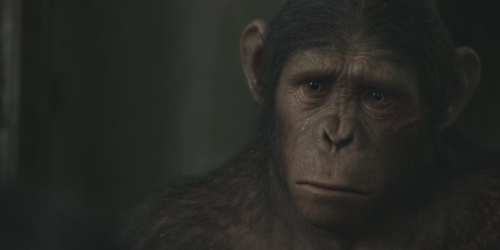
‘Dawn of the Planet of the Apes’ takes place ten years after the events of the first film. The world has been devastated by the Simian Flu. Humans have spent the last decade fighting the virus and themselves. They live in a post-apocalyptic world, struggling to survive, but are making progress. Caesar (Andy Serkis) and his troop on the other hand have built themselves a community, a tranquil home in the Muir Woods that is thriving according to their needs.  That peace is interrupted when a group of humans enter their territory. They are led by Malcolm (Jason Clarke), who is trying to find and fix a hydroelectric plant that could help bring power back to San Francisco. The actions of one in that group lead Caesar and his family to have little trust in their intentions, but allows them to proceed because they are clearly desperate. Caesar is one of the few apes that has seen the good in human’s and also knows cooperation could keep the peace.

As the bond between human and ape grows there is still one among Caesar’s troop that does not believe that peace is possible. That ape is Koba (Toby Kebbell), who was beaten, tortured and used for medical testing his entire life. Koba’s distrust only grows when he learns that the humans, led by a man named Dreyfus (Gary Oldman), have access to military stock piles and are willing to take control of the area surrounding the dam by force if it were to become necessary. Thinking Caesar is weak and too loyal to humans, Koba decides to take it upon himself to protect the apes, and his actions set off a chain of events that could only lead to only one thing…war.

ko

When the film ended and I walked out of the theater I felt completely satisfied with what I had just seen. My expectations for the film were already incredibly high, but I would be lying if I said this didn’t actually exceed them. What makes the film such a resounding success for me is the way in which the story puts everyone on equal grounds. There are no true villains here, and even those that assume that role do so for reasons that were easy for me to empathize with. Dreyfus may want to kill the apes, but he does so because he is a man who has lost everyone he ever loved and will do anything to protect the remaining humans that have put their trust in him. Koba, as selfish as some of his actions may be, is someone who was physically and mentally abused his entire life. His revenge might seem cruel, but one could hardly blame him for wanting it. Everyone is fighting for the survival of those that they love and the homes they established. I couldn’t help but want everyone to succeed. Unfortunately, as the story progresses, it becomes clear that the pain and damage under the surface of both man and ape make the idea of peace between the two impossible. Some differences are irreparable. There is definitely an allegory here of war that reflects current and past conflicts.

Luckily those themes of warfare, family and survival are all expressed effortlessly through the actions of its characters. It manages to be intelligent and complex without being thematically overbearing, while maintaing an intanacy. That is mainly because the film is handled with exceptional craftsmanship by Matt Reeves. The direction and cinematography, especially within Caesar’s settlement, is wonderful. It is never flashy, and is often much darker and moodier than one might expect. The editing and pacing is near perfect, which is rarely the case with these sorts of films. It only ever slows when it needs to, but the story is always moving forward. Every scene matters, even the quieter moments, for which there are many; again, something one might not expect, especially given the action heavy trailers. The score is perhaps the best Michael Giacchino has done since ‘Up’, adding to the moody atmosphere, and I LOVED his little nob to ‘2001: A Space Odyssey’ in the opening sequence. Everything here is done with purpose and execution of it all is nearly flawless.

blue

Lastly, I would be remiss to end this review without mentioning the performances, which were the soul of the film. Even with the way everything else was handled, I am not sure ‘Dawn of the Planet of the Apes’ would have worked without these specific performances. The human cast of Clarke, Oldman and Russell were all fantastic. The film’s only real flaw was that there actually wasn’t enough focus on them. I understand that the heart of the story is Caesar and his apes, but the human characters could easily have been developed more. Still, what development and emotional connection we did get was due mainly because of the actors portraying them. They make us care for these people, making the inevitable conflict even harder to bear as the film approached its climax.

The motion capture for the apes was mind blowing. Andy Serkis is in a class of his own. The visuals and animation here are some of the best I think I have seen; but it is the emotion and talent of the actors behind all that CGI that makes those ape characters feel so real. Serkis plays Caesar as someone filled with grief and the weight of the responsibility of caring for his troop bleeds through. Toby Kebbell plays Koba with a ferociousness that is equally terrifying and mesmerizing; and I also really loved Nick Thurston, who played Caesar’s eldest son Blue Eyes, and how he managed to expressed so much in just his gaze. I mentioned early in this review how this film compares on some level to ‘The Dark Knight’ for me. That film was speculated to be in the run for an Oscar nomination for Best Picture but it never happened. The backlash was so strong that some think it was the reason the Academy increased the number of films that could be nominated. I truly hope that Serkis will receive some form of recognition for his work here; and if not, I hope all of us praising him so greatly now will be vocal enough when the time come that maybe the Academy will make another change to who and what it nominates.

tumblr_n5iytsG7cZ1s7gti8o3_500

I am not sure where I would place this film among others I have seen in 2014 but I know I’d put it somewhere near the top. This isn’t just another intelligent summer blockbuster; it is really an exceptionally crafted epic, a thrilling action-drama with an emotional and thematic resonance that future films should make a note of. And, as I felt when I first watched ‘Rise of the Planet of the Apes’, I eagerly await the next installment – which will thankfully be directed again by Matt Reeves.

Embracing the Melodrama #45: Inventing the Abbotts (dir by Pat O’Connor)


First released in 1997, Inventing the Abbotts is a small town, romantic melodrama about two families in the 1950s.  One family is poor.  One family is rich.  As you can probably guess, each is fated to determine the destiny of the other.

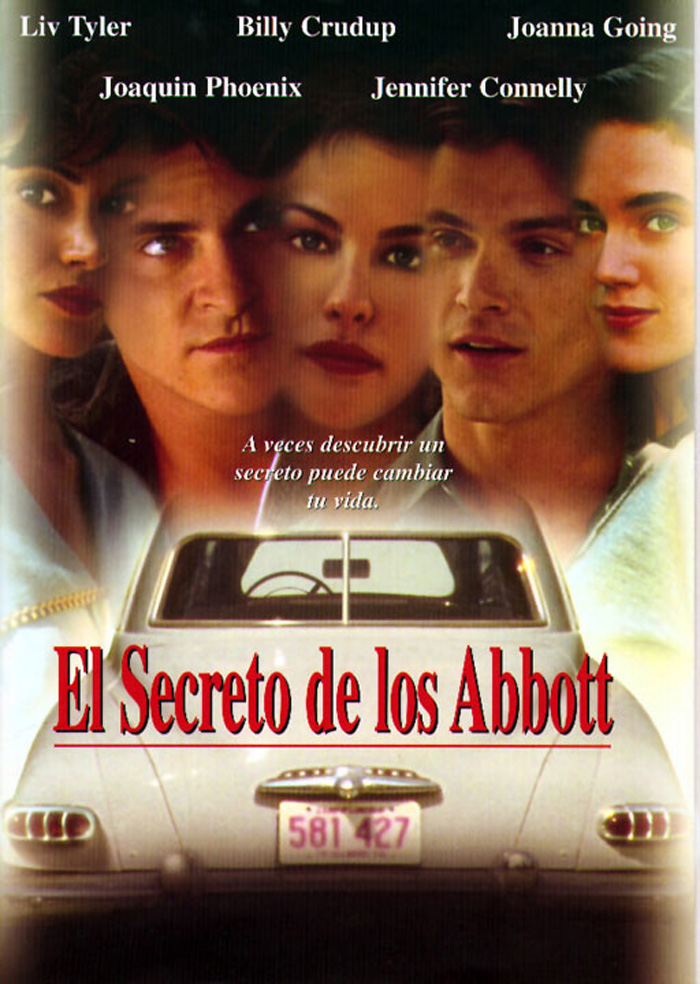
Decades ago, Lloyd Abbott (Will Patton) and Holt were business partners.  However, after Lloyd had an affair with Holt’s wife (Kathy Baker), their friendship ended.  Lloyd eventually becomes the richest man in town and has three beautiful daughters: dutiful Alice (Joanna Going), wild Eleanor (Jennifer Connelly), and virginal Pam (Liv Tyler).  Holt is long since dead and his two sons, Jacey (Billy Crudup) and Doug (Joaquin Phoenix) live next door to the Abbotts.  While the bitter Jacey is obsessed with the Abbott family and ends up pursuing both Eleanor and the married Alice, Doug claims not to care about the Abbotts.  However, despite his claimed indifference, Doug soon finds himself falling in love with Pam.  Will Doug and Pam be together or will Lloyd succeed in keeping them apart?

To be honest, Inventing the Abbotts is not a particularly good film.  It moves way too slowly, Doug and Jacey frequently swtich personalities whenever the plot demands it, the story is way too predictable, the voice over narration is way too obvious, and Jennifer Connelly’s character leaves the film way too early.  This is one of those films that is determined to make sue that you never forget that it’s taking place in the 50s and you can be sure that every cliché that you associate with that decade will pop up at least once.  There are a few scenes that could have been easily been replaced with a picture of Joaquin Phoenix holding a sign reading, “It’s the 50s,” without causing us to miss out on any important information.

And yet, I still liked Inventing the Abbotts.  I think it really comes down to the fact that I’m the youngest of four sisters and therefore, I have a weakness for movies about sisters.  And the sisters in Inventing the Abbotts are all perfectly cast and believable as siblings so, for me, the movie was redeemed because of the number of scenes to which anyone who is a sister or who has a sister will be able to relate.

As such, despite its flaws, Inventing the Abbotts is definitely a guilty pleasure for me.

Your results may vary.

Inventing the Abbotts

Embracing the Melodrama #44: Normal Life (dir by John McNaughton)


Digital StillCamera

Out of all the sin-in-the-suburbs films that I’ve watched recently, 1996’s Normal Life is one of the best.  Judging from the lack of reviews of this film online, it also appears to be one of the least known.  So, allow me to rectify that by telling you a little about Normal Life.

In Normal Life, Luke Perry plays Chris Anderson, a seemingly naive police officer.  From the minute that we first see Chris, it’s obvious that he’s a cop.  With his thinning hair, his anonymous mustache, and his deliberately calm and controlled manner, there’s no way that Chris could be anything else.

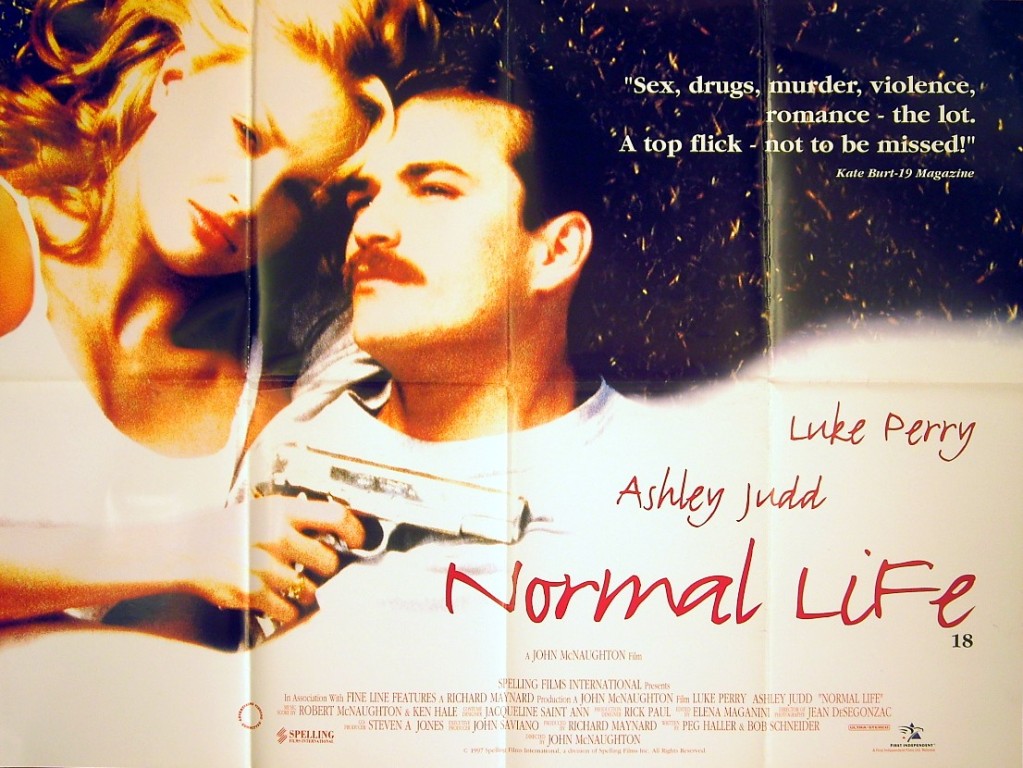
One night, Chris goes out to a bar and sees Pam (Ashley Judd) getting into a fight with her date and cutting her hand.  Chris, playing the hero, bandages it and then asks her for a dance.  For him, it’s love at first sight.  Soon, Chris is taking Pam on dates to the shooting range and, before you know it, they’re married.  Pam, it soon becomes obvious, is emotionally unstable.  She deals with disagreements by threatening to kill herself and trashing the apartment that she shares with Chris.  She makes little secret of how little respect she has for Chris’s family and she often goes out of her way to embarrass him.  However, Chris will never leave her because he’s in love with the idea of being the only one who can save her.  And, even though Pam may not admit it, she wants to be saved.  Chris gives her stability while Pam gives Chris a taste of excitement that his life would otherwise lack.

Unfortunately, even after Chris loses his job, Pam continues to spend money extravagantly.  Soon, in order to support his wife, Chris starts to utilize his law enforcement experience by robbing banks.  Now that they finally have money, they are able to move to a perfect house in the suburbs and Chris is able to pursue his lifelong dream of opening and running a small used bookstore.

However, Pam eventually discovers that Chris is a bank robber and soon decides that she wants to rob a bank with him.  Chris knows that it’s a mistake to involve the unpredictable Pam but, as the film makes clear, he will always chose her happiness over everything else…

Normal Life was directed by John McNaughton, who also directed the seminal serial killer film Henry: Portrait of a Serial Killer.  And while Normal Life is a far less disturbing film than Henry, it does utilize a similar technique of emphasizing just how banal Chris’s suburban lifestyle really is.  When Chris isn’t robbing banks or dealing with his suicidal wife, he’s essentially a rather boring guy who is perfectly happy to spend his days running his little bookstore.  The best scenes in the film are the ones where Chris simply walks to the doorway of his house, the placid calmness of the suburbs providing a strong contrast to what we know is going on inside that house and inside Chris’s head.

Of the two lead performers, Ashley Judd has the showier role and she does give a fantastically brave performance, providing an honest and sympathetic portrayal as a character who is not always pleasant to watch.  Luke Perry, however, is even better.  Whereas Judd is playing a character who is literally incapable of hiding her emotions, Perry has to play a character who keeps all of his emotions hidden.  Judd’s performance is almost totally external while Perry’s performance is largely internal and, when those two techniques come together, it tells us all we need to know about why Chris and Pam are fated to be together.

Normal Life is a film that you need to see.  And you can watch it below!

Embracing the Melodrama #43: The Piano (dir by Jane Campion)


I recently watched the 1993 best picture nominee The Piano and all I can say is that it is going to be a struggle to put into words just how much I loved this film.

Taking place in the 19th century, The Piano tells the story of Ada (Holly Hunter), a Scottish woman who hasn’t spoken since she was 6 years old.  Like many things in this enigmatic film, the reason why Ada stopped speaking is never clearly stated.  What is known is that she communicates through sign language and by playing her piano.  While Ada is usually a black-clad and somber figure, she comes to life when she plays the piano.  Ada also has a daughter named Flora, the result of a brief affair that Ada had with one of her teachers.  Unlike her mother, Flora (played by 10 year-old Anna Paquin, long before True Blood) is rarely silent and delights in telling elaborate lies about how her father died.

the-piano-01

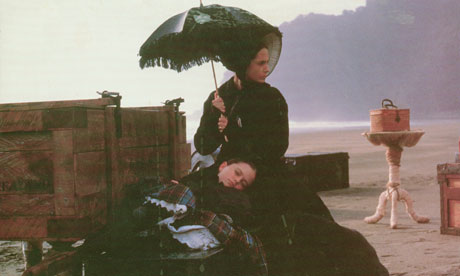
Ada’s father sells her into marriage to a New Zealand frontiersman named Alisdair (Sam Neill), a man who Ada has never even met.   When Ada and Flora first arrive in New Zealand, they are dropped off on the beach and forced to wait a night until Alsdair can meet them.  In the film’s most hauntingly beautiful scenes, Ada plays her piano on that beach while Ada dances in the surf.  It’s during those scenes that The Piano reveals three of its greatest strengths: the lush cinematography of Stuart Dryburgh, the haunting score composed from Michael Nyman, and the fact that Hunter and Paquin are totally believable as mother and daughter.  Not only is it easy to imagine Paquin growing up to look like Holly Hunter, but the two actresses even manage to perfectly imitate each other’s gestures and facial expressions.  Most of the reviews that I’ve read of  The Piano tend to emphasize the film’s focus on the conflict between the sensual and repressed but to me, the film works just as well as an exploration of the strong bonds that naturally exist between mothers and daughters.  I’m not ashamed to admit that when I look at the picture above, I reminded of how, when I was Flora’s age, I also used to hide behind my mom whenever I saw anyone that I didn’t know coming our way.

When Alisdair does finally show up to take them to their new home, he proves to be a rather cold and distant figure.  It would have been very easy for the film to portray Alisdair as being a completely heartless villain but, as played by Sam Neill, Alisdair is potrtayed as being less a traditional villain and more as just being a painfully unimaginative man who is incapable of understanding why Ada’s piano is so important to her.  To Ada, the piano and its music equals the life and freedom that she’s not allowed to experience.  To Alisdair, the piano is simply a bulky object that will not fit into his small house.  Over Ada’s objections (luckily, Flora is on hand to translate her sign language), Alisdair first leaves the piano on the beach and then agrees to sell it to Baines (Harvey Keitel), another white settler who — unlike Alisdair — is comfortable with the natives and their customs.

Baines, however, allows Ada to come over to his hut and play the piano.  He offers to give the piano back to her — key by key — if she agrees to continue to come to his hut and play while he watches and “pleasures” himself.  Reluctantly, Ada agrees but soon, she and Baines are falling in love.

Needless to say, when Alisdair finds out what has been going on at Baines’s hut, he is not happy.  As he largely considers to be his property, bought and paid for, he also feels that he has the right to decide whether or not she’s capable of playing her piano…

The Piano: Holly Hunter and Anna Paquin

The Piano is a simply an amazing and visually sensual film that is blessed with excellent lead performances from Hunter, Keitel, Neill, and Paquin.  As directed by Jane Campion, The Piano plays out as both a delirious homage to gothic romanticism and a feminist parable about the way that even women who aren’t mute are still punished for expressing their honest desires.

And, of course, there’s that amazing score:

Embracing the Melodrama #42: Indecent Proposal (dir by Adrian Lyne)


This one is just dumb.

First released in 1993 and something of a perennial on AMC, Indecent Proposal tells the story of David (Woody Harrelson) and Diane (Demi Moore), two kids who meet in high school, get married, and end up living what, in Hollywood, passes for an average, middle class lifestyle — which is to say, Diane is a successful real estate broker, David is an architect, and they’re in the process of building their dream house on the beach.  (Just like everyone else you know, right?)  However, the economy goes bad, David loses his job, and they find themselves deep in debt.

Desperately, they decide to take a gamble.  Literally.  They go to Las Vegas and, at first, it seems like everything’s going to be alright.  David has a run of luck and makes a lot of money.  They make so much money that David and Diane end up having sex on top of it.  Now, I have to admit, if I ever won $25,000 dollars in Vegas, I would probably spread it on a bed and roll around naked on it as well.  But only if it was paper money.  Coins would probably be uncomfortable and I’d hate to end up with a hundred little impressions of George Washington’s profile running up and down my body.

But anyway, David and Diane make the mistake of sticking around in Vegas for a second day and they end up losing all of the money that they previously won and you better believe that when the chips are pulled away, Diane is shown trying grab them in slow motion while going, “Noooooo!”  Soon, David and Diane are sitting in an all-night diner and trying to figure out what to do next.  A waitress overhears them and sadly shakes her head.  Obviously, she’s seen a lot of movies about Las Vegas.

Anyway, this movie is too dumb to waste this many words on its plot so let’s just get to the point.  David and Diane meets John Gage (Robert Redford), a millionaire who offers to give David a million dollars in exchange for having one (and only one) commitment-free night with Diane.  David and Diane agree and then spend the rest of the movie agonizing over their decision.  Eventually, this leads to Diane and David splitting up, John Gage reentering the picture and proving himself to be not such a bad guy, and David eventually buying a hippo.

It’s all really dumb.

Anyway, I was planning on making quite a few points about this set-up but, quite frankly, this film is so dumb that I’m getting annoyed just writing this review.  So, instead of breaking this all down scene-by-scene, I’m just going to point out a few things and then move on to better melodramas.

1) Every character in the movie has a scene where they eventually ask what we (the viewing audience) would do if we were in a similar situation.  “Would you have sex for a million dollars?”  Well, let’s see.  Basically, the deal seems to be that you have safe, non-kinky, missionary position sex with a millionaire who you will never have to see again after you get paid.  And you’re getting a million dollars in return.  Would I do it?  OF COURSE, I’D DO IT!  It’s a million dollars, it’s just one night, and it’s not like you’re being asked to fuck Vladimer Putin or something.  If the film wanted to create a true moral dilemma, they should have cast someone other than Robert Redford as John Gage and they should have had Gage propose something more than just one night.  If Gage had been played by an unappealing actor (or perhaps if the film were made today with Redford looking as craggly as he did in Capt. America or All Is Lost) or if it had been a million dollars for Diane to serve as a member of Gage’s harem for a year, the film would have been far different and perhaps not any better but at least all of the subsequent angst would have made sense.

2) What really annoyed me is that, after Diane returns from her night with Gage, neither she nor her husband ever cash that million dollar check.  If you’re going to agree to the stupid deal, at least take advantage of it.

3) Finally, why would you accept a check for something like that?  Did Gage write, “For letting me fuck your wife” in the memo line?  Why not get paid in cash so, at the very least, you don’t have to deal with IRS?

Seriously, this movie is just dumb.

Original Cinema Quad Poster - Movie Film Posters


Embracing the Melodrama #41: Poison Ivy (dir by Katt Shea)


“I still think about her. I guess, still love her. She might have been even more alone than I was. I miss her.” — Syvlie Cooper (Sara Gilbert) reflects on her murderous BFF Ivy (Drew Barrymore)

1992’s Poison Ivy is narrated by alienated and confused Sylvie (Sara Gilbert), a teenager who describes herself as being  “the politically / environmentally-correct feminist poetry-reading type.”  Syvlie has issues.  Her father (Tom Skerritt) is a self-righteous television pundit while her mother (Cheryl Ladd) is stuck at home, confined to bed and slowly dying.  Ivy’s only friend is her dog, Fred.  Sylvie deals with her alienation by constantly lying, often claiming that her real father is actually a black man who had an affair with her mother.

When Sylvie sees a girl (Drew Barrymore) brazenly swinging on a rope with her skirt around her waist, she is immediately fascinated. After spending a while obsessing over the girl’s physical appearance, Sylvie tells us, “Maybe I’m a lesbian…no definitely not.  I really wish we could be friends.”  Her desire for friendship continues even after Sylvie witnesses the girl violently euthanize a dog that’s been hit by a car.

Later, at school, Sylvie finds herself sitting in detention for calling in a bomb threat to her father’s show.  When the girl joins her in detention, Sylvie strikes up a conversation with her.  It turns out that the girl knows who Sylvie’s father is and that she considers him to be “an asshole.”  However, that still doesn’t prevent the girl from accepting a ride home with Sylvie and her father.  When introducing the girl, Sylvie calls her “Ivy,” presumably after one of the girl’s tattoos.  What’s interesting — and probably often missed — is that the girl herself never introduces herself as Ivy.  It’s a name given to her by Sylvie.

Not wasting any time, Ivy is soon Sylvie’s best friend and is even living in Sylvie’s house.  At first, Ivy is exactly the best friend that Sylvie needs, encouraging her to come out of her shell, take chances, and even get a tattoo.  However, soon, Ivy is not just helping Sylvie do everything that she’s ever wanted to but she’s also acting on all of Sylvie’s subconscious desires as well.  Ivy first manages to bond with Sylvie’s mother and then proceeds to seduce her father.  Finally, even Fred finds himself preferring the company of Ivy to his original owner…

Is there anything more wonderful than female friendship?  I think not but then again, that’s really not relevant to Poison Ivy because this film has not interest in being a realistic look at the relationship between Sylvie and Ivy.  Instead, it’s a hyper-stylized take on the type of material that you would normally expect to find in a trashy novel and the movie is all the better for it.  Fortunately, the movie was directed by Katt Shea who brings a sensitivity to material that a male director would probably only view as an excuse for titillation.

I think the film is best interpreted as being Sylvie’s fantasy.  In fact, I would argue that the case could be made that the entire film takes place in Sylvie’s head.  It’s her fantasy of having the type of uninhibited friend who will encourage her to conquer all of her fears and who will accept her for all of her strange quirks.  However, that’s not just Sylvie’s fantasy.  That’s a universal fantasy that every teenage girl has had (and probably a few teenage boys as well).  Is there any wonder that the film ends with Sylvie admitting that she still misses Ivy?

992POI_Drew_Barrymore_001