Review: Zulu (dir. by Cy Endfield)


“Because we’re here, lad. Nobody else. Just us. — Color Sergeant Frank Bourne

Cy Endfield’s Zulu is one of those old-fashioned war films that earns its epic reputation less through grand speeches or sentimental manipulation than through patience, physical detail, and an almost brutally simple premise: a small British force at Rorke’s Drift must hold its position against a vastly larger Zulu army. Released in 1964 and set during the Anglo-Zulu War of 1879, the film takes a historical event that could easily have become a stiff patriotic pageant and turns it into something tense, visually overwhelming, and surprisingly measured for its era. It is certainly built around British soldiers as its main point of identification, and it cannot fully escape the colonial framing of its story, but it gives the Zulu fighters a degree of discipline, courage, and humanity that many comparable films of the period would have denied them.

The opening has a deliberately sober quality. Before the siege gets underway, Endfield establishes the aftermath of the British disaster at Isandlwana, an event that hangs heavily over every decision made at the isolated mission station. Lieutenant John Chard, played by Stanley Baker, is not introduced as an obvious hero. He is an engineer officer who finds himself unexpectedly in command, unsure of what authority he truly has and visibly aware that the situation may be hopeless. Michael Caine, in one of his early major roles, plays Lieutenant Gonville Bromhead as the more aristocratic and initially dismissive counterpart. Their relationship is a familiar clash of temperaments, but the actors keep it from becoming too cartoonish. Baker gives Chard a practical, weary steadiness, while Caine makes Bromhead’s pride feel like both a weakness and a defense mechanism.

What makes Zulu work so well is how clearly it understands the mechanics of a siege. The film takes time to show men sorting supplies, moving mealie bags, organizing firing lines, reinforcing walls, and deciding which buildings can or cannot be held. That attention to logistics gives the action real weight. When the Zulu army finally appears along the hillsides, it is not just a cue for spectacle. It is the moment when every earlier decision becomes frighteningly important. The defenders are not winning through superhuman skill; they are surviving because they build, adapt, reload, retreat, and improvise faster than the situation can collapse around them.

Endfield’s command of scale is still impressive. The broad South African landscapes make the station seem tiny and exposed, while the formations of Zulu warriors moving across the terrain have a force that CGI-heavy battle scenes often struggle to recreate. The action is not especially graphic by contemporary standards, but it is physically convincing. Bodies fall, rifles jam, ammunition runs low, and the walls that seemed secure a few minutes earlier suddenly look inadequate. The battles have a clean visual geography as well. You can generally understand where the soldiers are positioned, where the attacks are coming from, and why a breach in one area threatens everyone else. That clarity is a major reason the film remains so watchable.

The Zulu warriors are filmed with genuine awe. They are the opposition in a military sense, but the movie rarely treats them as faceless monsters. Their attacks are coordinated, their persistence is formidable, and the British soldiers repeatedly acknowledge their courage. One of the film’s strongest ideas is that the men on both sides are forced to recognize the ability of the other. The final exchange of salutes is still powerful because it does not feel like a cheap declaration that war is noble. Instead, it feels like exhausted recognition after a catastrophe that has demanded terrible losses from everyone involved.

The film deserves credit for this, particularly considering the era in which it was made, although it still gives the Zulu perspective far less interiority than the British one. Individual British soldiers receive backstories, doubts, comic beats, and personal arcs; the Zulu fighters are mainly presented as a collective force. That limitation matters because the actual Anglo-Zulu War was not simply a neutral contest between two equally situated military forces. It occurred within the larger reality of British colonial expansion, and the film only lightly touches the political forces that made the battle possible. Zulu is more respectful than many older war movies, but it is not free of the assumptions of its time.

The historical side of Zulu is one of its most interesting qualities. The film does a very good job at historical accuracy, which is a rarity for films depicting real-life historical events, especially in the way it presents the basic structure of the defense at Rorke’s Drift: a badly outnumbered British garrison fortifying the station and enduring repeated Zulu assaults. Its investment in terrain, formations, material conditions, and the general progression of the battle makes the event feel researched rather than casually invented. The staging has a sense of military procedure that helps sell the defense as something grounded in a real crisis rather than merely a legend inflated for the screen.

That said, the characterization of the historical people involved was not as accurate, which is where the dramatic license comes in. The most famous example is Private Henry Hook, played with rough comic energy by James Booth. In the film, Hook begins as an unruly alcoholic and apparent coward before proving himself under fire. The real Henry Hook was a disciplined soldier and a teetotaler, making the movie version an almost total reinvention built around the satisfying “unlikely hero” arc. Bromhead is also simplified into a more inexperienced upper-class officer than the historical man appears to have been, while Colour Sergeant Bourne is made into a weathered older veteran despite having been only 24 at the time. These choices make sense as storytelling devices, but they are worth recognizing because they shape the viewer’s emotional understanding of the people involved.

There are other liberties that are harder to overlook once you know the history. The film presents the 24th Regiment as strongly Welsh and builds toward the memorable use of “Men of Harlech,” even though the regiment was not formally the South Wales Borderers at the time and the song was not its regimental song during the battle. The famous singing exchange between the defenders and the Zulus is also pure cinema rather than a recorded historical occurrence. It is a great scene on its own terms—moving, tense, and an effective pause before the final strain of the battle—but it also shows how Zulu turns history into myth. The movie is at its best when its embellishments intensify the human stakes without pretending that they are literal fact.

The performances throughout are solid, even when the writing leans into broad types. Stanley Baker holds the center with quiet authority, avoiding the temptation to make Chard a conventionally inspirational leader. Michael Caine is more visibly theatrical, but that suits Bromhead’s gradual shift from aloofness to responsibility. Jack Hawkins brings warmth and moral conviction to Reverend Witt, while Nigel Green’s Colour Sergeant Bourne provides the hard military backbone of the defense. James Booth is entertaining as Hook, even if the character’s historical distortion is unfortunate. The ensemble works because the film makes room for fear, resentment, class tension, and stubborn professionalism. These men do not suddenly become perfect comrades; they simply realize they have no choice but to depend on one another.

John Barry’s score deserves mention too. The music has the grandeur expected from a film of this size, but it does not overwhelm every scene with triumph. It often emphasizes rhythm and mounting pressure instead, helping the battle feel like a sustained ordeal. The sound of rifle fire, shouted commands, and the Zulu war chants combines with the score to create an atmosphere that is both stirring and unnerving. Even viewers who know the outcome can feel the uncertainty of each new attack because the film never lets the defense seem comfortably under control.

Ultimately, Zulu is a compelling and visually magnificent war film that remains worth watching precisely because it is not as simple as its reputation might suggest. It can be thrilling without being entirely celebratory, respectful without being fully equitable, and historically attentive without being historically pure. Its battle reconstruction is unusually convincing, while its treatment of real individuals often bends the truth to create clearer dramatic roles. That tension is part of what makes the film so fascinating. It is a classic piece of large-scale filmmaking, anchored by memorable performances and superb action staging, but it is also a reminder that even a relatively careful historical movie can turn real people and complex colonial history into a more streamlined story. Zulu does not offer the final word on Rorke’s Drift, but as cinema, it remains tough, exciting, and far more thoughtful than a standard war spectacle.

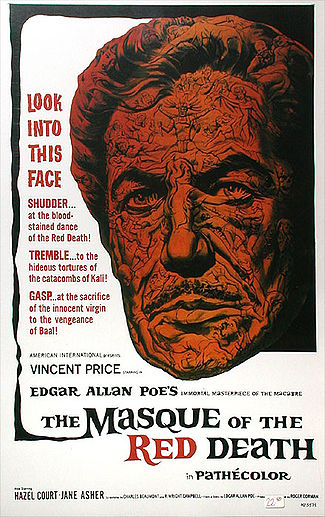
Horror Film Review: The Masque of the Red Death (dir by Roger Corman)


In 1964’s The Masque of the Red Death, Vincent Price stars as Prospero.

Prospero is a nobleman in medieval Italy, a decadent tyrant who rules his villages with an iron hand and who proudly and openly worships Satan.  When an old woman in one of the villages dies of the plague, Prospero orders the village to be burned to the ground.  He returns to his castle where, with his mistress (Hazel Court), he plans to throw a masquerade for the local nobility.  His plan is for everyone to hide out in the castle until Death has passed.  The problem, of course, is keeping Death from sneaking into the castle and claiming everyone within.

Prospero also abducts three villagers, Ludovico (Nigel Green), his daughter Francesca (Jane Asher), and Francesca’s boyfriend, Gino (David Weston).  The three villagers find themselves in a decadent world, where Prospero and his attendants are motivated by their own greed and petty jealousies.  Keeping Death from entering the castle would probably be a lot easier if the people in the castle would stop trying to kill each other.  It’s an odd atmosphere within the castle.  Everyone fears Death and yet, everyone seems to be doing all that they can do invite it in with them.  Can anyone, even a worshipper of the Damned liked Prospero, truly escape Death?

The Masque of the Red Death is not only the best of Roger Corman’s Edgar Allan Poe adaptations but it’s also the best film that Corman ever directed.  Working with cinematographer Nicolas Roeg (who was himself destined to have quite a career as a director of enigmatic films), Corman fills the screen with vivid colors and scenes of medieval decadence.  Price gives one of his best performances, playing Prospero as someone who is in love with his own amoral nature but whose arrogance quickly gives way to fear when he starts to suspect the Death has somehow managed to enter the castle.  The inhabitants of the castle are all memorably eccentric and, in many cases, evil.  A man in an ape costume is burned to death and hardly anyone seems to notice or care.  Prospero and his nobles think that they’re above death because of their wealth and their place in society but, of course, no one can escape Death.

David Weston and Jane Asher are both well-cast as the two lovers, though Asher is clearly more a product of the swinging sixties than medieval Italy.  Patrick Magee and Skip Martin are both memorable as members of Prospero’s court, with Skip Martin giving an especially diabolical performance as a murderous court jester.  In the end, though, this film truly belongs to Price, Corman, and Roeg.  Roeg’s cinematography is dazzling, with the use of red foreshadowing his later film, Don’t Look Now.  Corman’s direction puts the viewer right in the center of Prospero’s court.  And Vincent Price gives one of his best performances as the self-amused but unashamedly evil Prospero.  The Masque of the Red Death remains a classic of 60s pop art and the best of Corman’s many films.

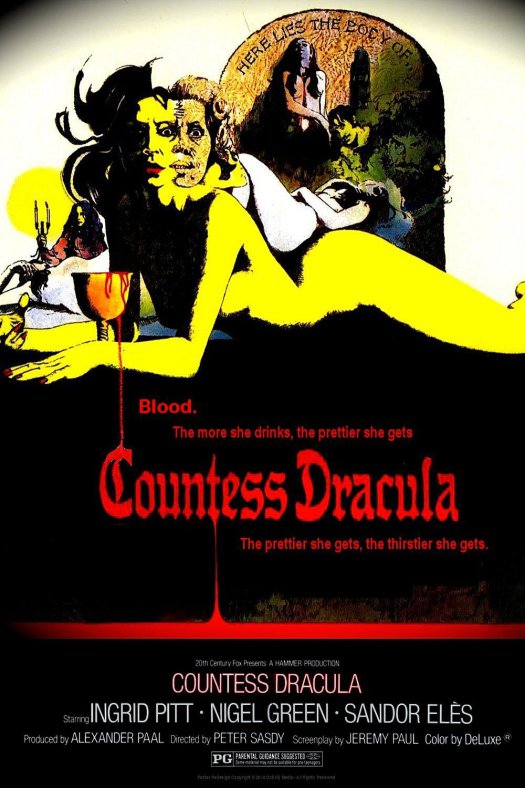
Forever Young: Ingrid Pitt in COUNTESS DRACULA (20th Century Fox/Hammer 1971)


gary loggins's avatarcracked rear viewer

Iconic Ingrid Pitt became a horror fan favorite for her vampire roles in the early 1970’s.  The Polish-born actress, who survived the horrors of a Nazi concentration camp as a child during WWII, played bloodsucking lesbian Carmilla in Hammer’s THE VAMPIRE LOVERS, based on the classic story by J. Sheridan LeFanu, and was a participant in the Amicus anthology THE HOUSE THAT DRIPPED BLOOD opposite Jon Pertwee in that film’s best segment. Finally, Ingrid sunk her teeth into the title role of COUNTESS DRACULA, a juicy part where she’s not really a vampire, but a noblewoman who gets off on bathing in blood, loosely based on the real life events of Hungarian Countess Elizabeth Bathory.

Portrait of the real Elizabeth Bathory

Bathory (1560-1614) was the most infamous female serial killer in history, officially found guilty of 80 murders, yet a diary allegedly found puts the count as high as 650!…

View original post 383 more words

Horror on The Lens: The Masque of the Red Death (dir by Roger Corman)


MasqueOfTheRedDeath(1964film)

So here we are, 24 days into October, and I have yet to share an old Vincent Price film!  It’s not October without at least a little contribution from Vincent.  Well, allow me to correct that with today’s horror on the lens, the 1964 Roger Corman film The Masque of the Red Death.

Based on the classic story by Edgar Allan Poe, this film features Vincent Price giving one of his best performances as the doomed and decadent Satanist Prince Prospero.  The film’s cinematographer was future director Nicolas Roeg and The Masque of the Red Death is probably one of the most visually impressive of all of Corman’s films.

Enjoy!

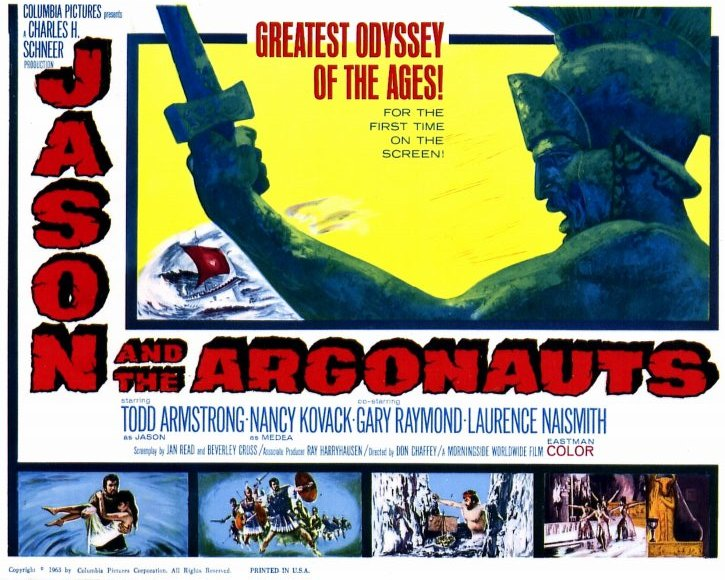
Quickie Review: Jason and the Argonauts (dir. by Don Chaffey)


While I have been buying and collecting dvds for some ten years now (collection around 2500-3000 titles) I have seen those purchases dwindle and wane to almost just a few a year now. I blame the convenience of Netflix and my resurgence in gaming with my Xbox 360 as the main cause for my slacking off in the dvd collecting. While  I still see myself collecting dvds and, most likely, moving onto blue-rays, I have seen why people love their Netflix accounts so much. Last night I was able to combine my love for my Netflix and my Xbox 360 and feed my need to always be watching a film. Using Netflix Instant I was able to watch streaming over my Xbox 360 one of the classic fantasy films ever made.

The film I speak of is the 1963 classic fantasy meets Greek mythology simply called Jason and the Argonauts. It is one of those films which has stood the test of time. I know of no film lover who hasn’t seen this at least once. It’s beloved and admired by millions of people of different generations for its simplicity and for the work of one man whose name overshadows everyone on the film from the director to the actors. This was the film which established for eternity the genius and imaginative creative of special effects guru Ray Harryhausen.

Jason and the Argonauts takes one of the more popular Greek myths about a son looking to re-take his father’s kingdom from a usurper but in the process goes through a journey that pits him against monsters, betrayers and the Gods themselves. The titular character and his crew must travel to the fabled island of Colchis at the edge of the world to find the legendary Golden Fleece purported to have magical properties of healing and even to grant peace throughout the land. I say that’s a piece of item worth fighting off a giant bronze warrior statue, screeching harpies, tempermental seaside cliffs and up to a many-headed hydra and skeleton warriors spawned from it’s teeth.

The acting is typical of most fantasy films of the 60’s and that’s they’re all bombastic, full of vigor and turns even the most simple dialogue into pronouncements of epic deeds to be done. Todd Armstrong leads a cast of British actors including such luminaries of their era like Nigel Green, Nancy Kovack, Honor Blackman and Douglas Wilmer. While the acting may seem quaint by today’s standards I still believe it’s what gives the film it’s timeless energy and quality. It makes the film flow like an epic poem that gave birth to it’s source material to begin with.

But what really makes this film stand out years after years and decade after decade since it’s release is the stop-motion animation effects created by the king of stop-motion effects himself, Ray Harryhausen. To say that the quieter moments where characters interact with each other almost feel like fillers to move the story along until it reaches one of several action sequences featuring Harryhausen’s work. It doesn’t diminish the work done by the actors or the efficient direction by filmmaker Don Chaffey. It just means that Harryhausen’s stop-motion work were so impressive that the audience just wants to see what new magic he has up next.

The climactic fight between Jason and his men versus skeleton warriors born from the teeth of a slain hydra (a stop-motion sequence which was in itself quite impressive) still goes down as one of the most impressive feats of filmmaking married with special effects today. There’s something to be admired about a four and a half minute action sequence where Harryhausen spent 4 months of meticulous frame-by-frame work to make the skeletal opponents come to life. There’s a reason why so many special effects magicians since then have pointed to this scene as one of their favorites and one reason why they got into the FX work to begin with.

Jason and the Argonauts may not have the technical wizardry of today’s fantasy epics and films with their million-dollar budgets spent on CGI-effects. It may not have the seriousness that today’s fantasy films have taken to heart (losing some of the fun, innocence of what makes fantasy films so great). What it does have is great storytelling which harkens back to a more innocent, hopeful and simple time. It also has the finest work of one of film history’s master magicians in Ray Harryhausen and that, in the end, is what makes this film of the the greatest of its kind and one every kid should be introduced to.