A Movie A Day #163: Captain America II: Death Too Soon (1979, directed by Ivan Nagy)


America’s most patriotic beach bum is back!

The infamous international terrorist, Miguel (Christopher Lee), is demanding millions of dollars from the U.S. government.  If he doesn’t get his cash, Miguel will unleash a formula that causes rapid aging.  Who else can stop him but Captain America (Reb Brown)?  While Cap searches for Miguel in a small town that appears to be full of bullies, comely single mothers, and children in desperate need of a father figure, Doctors Simon Mills (Len Birman) and Wendy Day (Connie Sellecca) search for a way to reverse the aging process.

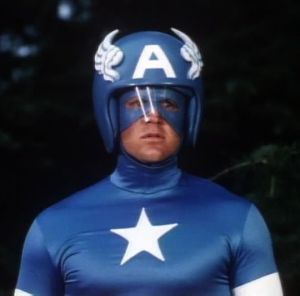
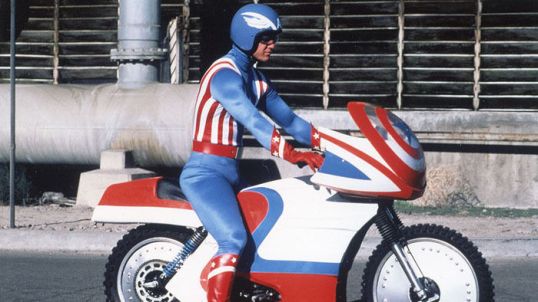
This is the second of two pilots that were produced in 1979 in an attempt to start a weekly Captain America television series.  This Captain America had little in common with his comic book counterpart.  In the two pilots, Steve Rogers was a laid back beach bum who drove a Chevy Van and owned a really groovy, red, white, and blue motorcycle.  Having recently gotten out of the army, Steve would have been just as happy to spend his time sketching the beach as saving the world from HYDRA.  Whenever he put on the costume of Captain America, he carried a transparent shield that was supposed to be bullet proof but which looked like it was made out of flimsy plastic.  In Captain America II: Death Too Soon, Cap uses his shield to protect himself from a wild dog and the shield literally bends when the dog jumps against it.  Reb Brown played Cap in both pilots and, while he was more likable than Matt Salinger, he was no Chris Evans.

Still, the presence of both Christopher Lee and Connie Sellecca help to make the second pilot a marginal improvement on the first one.  The second pilot is almost good enough to make the case that, if not for that damn transparent shield, a weekly Captain America television series would not have been that bad.  It was not to be, of course.  It would be over 30 years before a movie finally got both Captain America and his shield right.
A Movie A Day #162: Captain America (1979, directed by Rod Holcomb)


Captain America drives a Chevy Van!
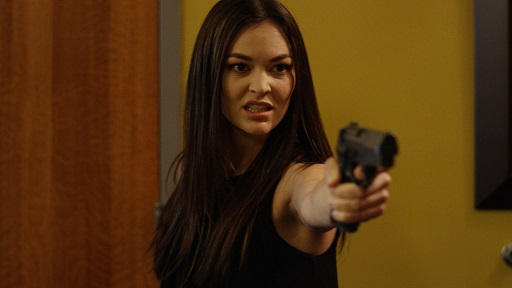
In this attempt to turn one of Marvel’s first heroes into a weekly television star, Steve Rogers (Reb Brown) is a laid back 70s dude who has just gotten out of the Marines.  He owns a van (“a mellow set of wheels”) and he just wants to drive around America, drawing pictures, and doing his own thing.  Doctors Simon Mills (Len Birman) and Wendy Day (Heather Menzies) want Steve to follow in his father’s footsteps and get injected with the super powered FLAG formula.  Steve is just not interested.  The only Captain America that he’s interested in emulating is Peter Fonda in Easy Rider.  “I just want to kick back and find out who I am,” Steve says.

Steve does not really have a choice, though.  Evil billionaire Lou Brackett (Steve Forrest) wants the FLAG formula and attempts to have Steve killed.  In order to save Steve’s life, Dr. Mills injects Steve with the FLAG formula.  Not only does Steve now have super strength but, in the style of Col. Steve Austin, he now has super vision and super hearing.  To help Steve in his new life as crime-fighting super hero who will “stand up for the little guy,” Dr. Mills modifies both Steve’s Chevy Van and his motorcycle.  He also gives Steve a bulletproof shield.  Vibrainium is never mentioned and, for some reason, the shield is transparent, which makes it look like its made out of plastic.  At first, Steve wears his father’s old costume but then he designs a new one.  A super hero has to have super threads.

This was the first of two pilots for a proposed Captain America television series.  Unlike both The Incredible Hulk and The Amazing Spider-Man, Captain America never made it past the pilot stage.  Like many early comic book adaptations, Captain America‘s first pilot makes the mistake of straying too far from its comic book origins.  Instead of being an almost comically old-fashioned, straight arrow patriot, this Steve Rogers is a beach bum who gets his own groovy, bass-heavy soundtrack while riding his motorcycle up and down the coast.  Forget about the Red Skull, Baron Zemo, the Secret Empire, the Serpent Squad, or any of Captain America’s other regular enemies.  This Captain America specializes in more conventional, less interesting menaces.

Reb Brown is okay as this film’s version of Steve Rogers but there is nothing that makes the character special.  He’s just a big guy wearing a silly costume and carrying a transparent shield.  With his new origin story and his modified powers, this Captain America has more in common with The Bionic Man than Joe Simon and Jack Kirby’s original character.

The van’s cool, though.

Captain America’s Bitchin’ Van

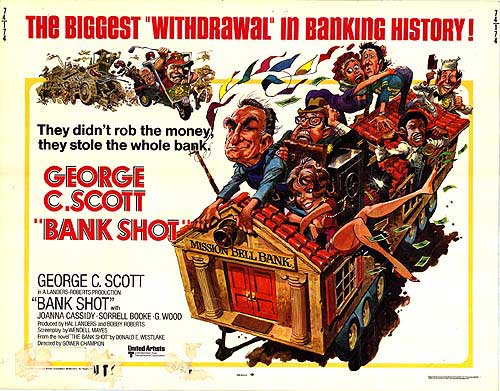
Criminally Underrated: George C. Scott in BANK SHOT (United Artists 1974)


gary loggins's avatarcracked rear viewer

I’m a big fan of the novels and short stories of Edgar Award-winning writer Donald E. Westlake , named a Grand Master by the Mystery Writers of America. His comic-laced crime capers featuring master planner Dortmunder were well suited for films and the first book in the series, THE HOT ROCK, was filmed by Peter Yates in 1972 with Robert Redford as the mastermind. Two years later came BANK SHOT, the second Dortmunder novel, starring George C. Scott but changing the character’s name to Walter Ballentine due to legal issues. Dortmunder or Ballentine, BANK SHOT is a zany film with a fine cast of actors that deserves another look.

Ballentine is doing life in Warden “Bulldog” Streiger’s maximum security prison, but when his shady “lawyer” and confidant Al G. Karp visits with an idea for a new “shot”, the hardened criminal makes his escape. Karp needs Ballentine’s expertise to plan the robbery of Mission Bell…

View original post 334 more words

What Lisa Watched Last Night #167: The Killing Pact (dir by John Lyde)


Last night, I watched The Killing Pact on Lifetime!

Why Was I Watching It?

Because it was on Lifetime, of course!  Y’all know that I can’t resist a Lifetime movie, especially one that has the word “killing” in the title.  At the very least, I figured The Killing Pact would feature the over the top melodrama and tasteful interior design that we’ve all come to expect from Lifetime movies.

(That said, The Killing Pact was advertised as being a premiere but, actually, it aired on the Lifetime Movie Network last month.  I DVR’d it when it first aired but I hadn’t gotten around to watching it yet.  By watching it on Lifetime last night, I was able to clear a little more space on my DVR.  Yay!)

 What Was It About?

Strangers In An Uber!

Strangers In A Train Without The Train!

Take your pick, they’re both adequate descriptions of what was going on in The Killing Pact.  When Hayley (Emily Rose), a single mother and Uber driver, gives a ride to two weirdos (Melanie Stone and Brandon Ray Olive), she is drawn into an unexpected situation.  It turns out that all three of them have people in their lives that they wish were dead.  So, why not agree to a killing pact?  At first, Hayley thinks it’s all a joke but then her sleazy loser of an ex-husband is brutally murdered.  Hayley’s new friends have kept their end of the bargain.  Now, it’s time for Hayley to do her part…

What Worked?

I liked the look of the film.  Almost every scene was drenched in this moody, overcast atmosphere and, as a result, the film was almost always interesting to look at, even if the plot didn’t always work.  There was one scene — of Hayley pulling up in front of a cheap motel — that I thought was especially well put together.  The dark clouds, the wet pavement, the dilapidated motel — the whole scene was full of menace.

What Did Not Work?

For the most part, this film just didn’t work for me.  At first, I was a little confused as to why the movie was doing so little for me but, the more I thought about it, the more I realized that the film just moved way too slowly, especially for a movie that was frequently interrupted by commercials.  The typical Lifetime film has 8 acts.  That means that, over the course of a typical Lifetime movie, there are at least 7 cliffhangers, all designed to make you stick around through the commercials so you can see what happens during the 8th act.  The Killing Pact, however, felt more like a three or four act movie.  There was no forward momentum to hold your interest even through the commercial breaks.  The film’s pacing was definitely off and Lifetime films are all about maintaining a steady pace.

“Oh my God!  Just like me!” Moments

One of the murders involved an autocratic theater producer.  It reminded me of all the murders that nearly occurred during a community theater production of Little Shop of Horrors that I was once involved with.

Lessons Learned

Pacing is everything!

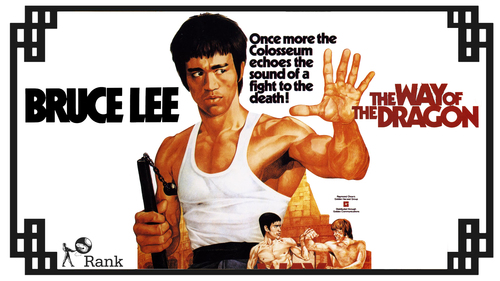
A Movie A Day #161: The Way of the Dragon (1972, directed by Bruce Lee)


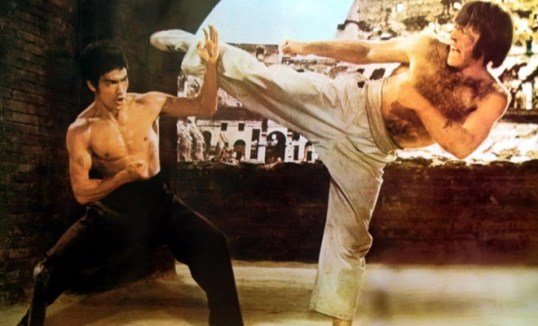
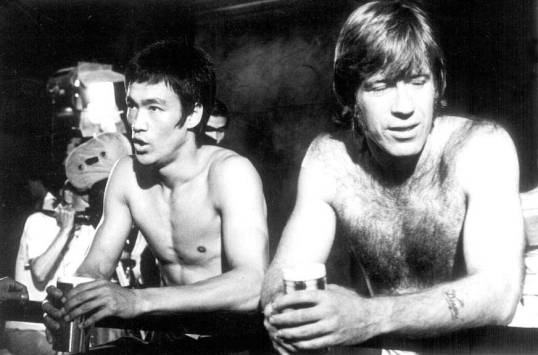
Bruce Lee vs. Chuck Norris in a battle to the death!

That alone makes The Way of The Dragon worth seeing.  This was Bruce Lee’s only completed directorial effort and it was the last of his films to be released during his lifetime.  (Lee’s best known film, Enter the Dragon, was released 6 days after Lee’s death.  When Lee died, he was directing Game of Death.)  In Way of the Dragon, Lee plays Tang Lung, a martial artist who travels from Hong Kong to Rome to help protect the owners of a restaurant from the Mafia.  At first, everyone dismisses Tang Lung as being an unsophisticated bumpkin and he does little to convince them otherwise.  But when the Mafia tries to intimidate him, Tang reveals how dangerous it is to underestimate him.

The only version of Way of the Dragon that I have seen is the badly dubbed version that was released in the United States so it’s hard for me to judge either the script or the acting, through Bruce Lee was a natural-born movie star and, even when dubbed, as charismatic as ever.  During the first half of the film, there is so much humor that it almost seems like a comedy but, unless you find Bruce Lee begging someone to tell him where the bathroom is, a lot of that humor falls flat.  Far more interesting is the scene where Tang and a waiter debate the merits of Japanese vs Chinese martial arts.  This scene reveals that Lee was just as serious about the philosophy behind the martial arts as he was about the actual fighting.

Most people who watch The Way of the Dragon will do so for the fighting and the film does not disappoint.  The Way of the Dragon features some of the best martial arts action ever captured on film.  The Mafia hires three martial artists to take on Tang, which means that, along with the usual collection of Mafia thugs, Bruce Lee also fights Bob Wall, Hwang In-shik, and Chuck Norris.

Bruce Lee’s final battle with Chuck Norris is The Way of the Dragon’s most famous scene and perhaps one of the greatest scenes in the history of world cinema.  Both Norris and Lee are in top physical form and the two real-life friends held nothing back.  The fight was filmed in the Roman Colosseum, confirming that Norris and Lee are meant to be modern-day gladiators, battling to the death but never viewing each other with anything less than respect.  Neither Norris nor Lee say a word during their climatic face-off.  They let their fists and their feet do the talking.  It’s a brutal battle between not just two men but also two different philosophies of fighting.

The Way of the Dragon was Lee’s biggest hit during his lifetime.  A modest success when first released in the west, it was re-released following Lee’s death and was retitled The Return of the Dragon.  While the American co-production Enter The Dragon is a bigger and slicker production, The Way of the Dragon is the best of Lee’s Hong Kong films and his final battle with Chuck Norris remains the perfect showcase for his skill as a fighter.

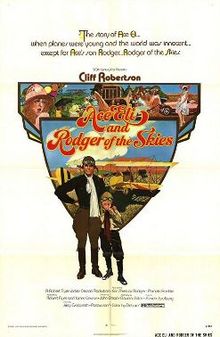
A Movie A Day #160: Ace Eli and Rodger of the Skies (1973, directed by John Erman as “Bill Sampson”)


Sometimes, the story behind a movie is more interesting than the movie itself.

A young Steven Spielberg received a “story by” credit for Ace Eli and Rodger of the Skies but, at one time, he was going to be credited with much more.  Spielberg wrote the treatment for Ace Eli and sold it to 20th Century Fox because he was hoping to make his directorial debut with the film.  However, shortly after selling the story, there was an executive shakeup at the studio.  Spielberg’s supporters were out and the men who replaced them gave the treatment to another screenwriter and director.  Spielberg was so angered by his treatment that it would be close to thirty years before he ever again worked with 20th Century Fox.  (In 2002, 20th Century Fox co-produced Minority Report with Dreamworks.)  Ace Eli ended up being directed by television veteran John Erman, who was so upset by the studio’s final edit of the film that he demanded to be credited under a pseudonym.

The plot of Ace Eli and Rodger of the Skies is recognizably Spielbergian.  Ace Eli (Cliff Robertson, who was a pilot in real life and who, after he won his Oscar of Charly, was involved in several flying films) is a stunt pilot in the 1920s.  After his wife is killed in a crash, Eli and his 11 year-old son, Rodger (Eric Shea), set off on a barnstorming tour.  Going from small town to small town, Eli deals with his pain through nonstop womanaizer.  With Eli refusing to take any responsibility for his actions, Rodger is forced to grow up quickly.  It is a typical Spielberg coming of age story, combining a nostalgia for the past with a clear-eyed portrayal of irresponsible adulthood.

In fact, it is easy to imagine the approach the Spielberg would have taken if he had been allowed to direct his story.  Unfortunately, Spielberg did not get to direct the film and John Erman takes an impersonal approach to the material.  Whereas Spielberg would have captured the excitement of both flying and life on the road, Erman keeps the audience at a distance.  An underrated actor, Cliff Robertson is still miscast as the irresponsible Ace Eli.  The reason why Cliff Robertson was perfect for the role of Uncle Ben in Spider-Man is the same reason why he feels all wrong as Ace Eli.  He is just too upstanding a citizen to be as impulsive as Eli often is.  An actor like Warren Oates would have been perfect for the role.

Steven Spielberg directing Warren Oates in Ace Eli and Rodger of the Skies?  That would have been something worth seeing!

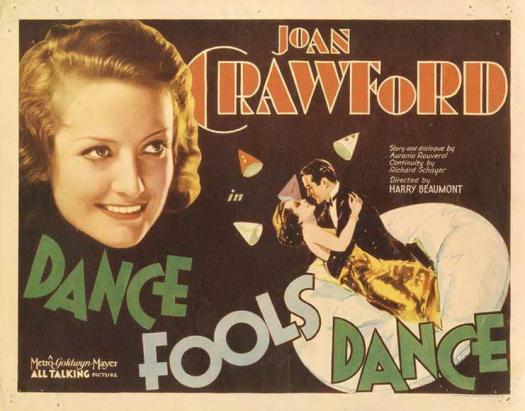
Pre Code Confidential #12: Joan Crawford in DANCE, FOOLS, DANCE (MGM 1931)


gary loggins's avatarcracked rear viewer

MGM co-starred Joan Crawford and Clark Gable for the first time with their 1931 gangland saga DANCE, FOOLS, DANCE. Well, not exactly co-starring; 27-year-old Joan was already a screen veteran and a star, while 30-year-old newcomer Gable was billed sixth in this, his third picture (not counting his extra work). Regardless of billing, the pair had a definite sexual dynamic between them onscreen (and offscreen as well, if you know your Hollywood history), and the studio would team them again in seven more films.

Joan is carefree Chicago socialite Bonnie Jordan, with a twit of a boyfriend (Lester Vail) and a wastrel brother named Roddy (William Bakewell) who’s got a penchant for booze. When the stock market crashes and their Pop croaks on the exchange floor, the kids are left with neither money or marketable skills. Bonnie’s upper-crust boyfriend Bob offers to do the honorable thing and marry her, but that horrified look on her face says it all! Rejecting the twit, Bonnie’s determined…

View original post 556 more words

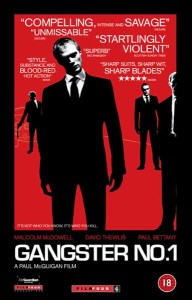
A Movie A Day #159: Gangster No. 1 (2000, directed by Paul McGuigan)


While at a boxing match, an aging gangster (Malcolm McDowell) learns that his former mentor and eventual rival, Freddy Mays (David Thewlis), is about to be released from prison.  The gangster flashes back to when he was a young man (played by Paul Bettany) who worked as an enforcer for and eventually betrayed Freddy.

Gangster No. 1 came out at the height of America’s fascination with British gangsters but this is no Guy Ritchie heist film.  Gangster No. 1 is brutal and violent, with little humor to alleviate the savagery.  Even though Gangster No. 1 does a good job recreating and capturing the look and feel of the swinging London of the 1960s, it still does away with almost all of the romantic revisionism that made many British crime films so popular in the late 90s and early aughts.  The gangster (who is nameless throughout the film) is not an eccentric anti-hero.  He’s not a Kray brother.  Unlike Freddy, who has integrity and is redeemed by his love for Karen (Saffron Burrows), the gangster is a violent sociopath who, when young, will do anything to be number one and who, when old, is disillusioned to discover just how empty life is at the top.  As violent and uncompromising as it is, it may not be a film for everyone but it still an interesting twist on the typical gangster film.

Even though it is hard to imagine Bettany growing up to look like McDowell, they both contribute good and complimentary performances as the same character.  David Thewlis also gives a good performance as Freddy Mays.  Since Thewlis is usually typecast as a villain, it’s always interesting to see him play a hero (or as close as anyone in Gangster No. 1 can come to being a hero).


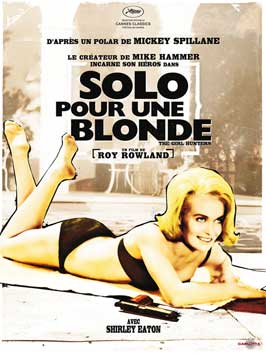
A Movie A Day #158: The Girl Hunters (1963, directed by Roy Rowland)


Private detective Mike Hammer (Mickey Spillane) has spent the last seven years in the gutter.  Ever since his secretary, Velda, disappeared, Hammer has stopped working cases and, instead, spends all of his time drinking and passing out in alleys.  That is where he is found by his old friend, Captain Pat Chambers (Scott Peters).  Pat tells Mike that there has been a shooting.  A man named Richie is dying in the hospital and want to speak to him.  According to Richie, he was shot by the Dragon, the same communist super villain that Velda is currently hiding from.  That sobers Hammer up.  In fact, Mike Hammer is so tough that it only takes him a few minutes to shake off seven years of alcoholism.  Mike discovers that Richie’s murder is also connected to the murder of a senator.  Mike’s investigation leads him to both the senator’s bikini-clad wife (Shirley Eaton) and a communist conspiracy to take over the world.  What is strange is that it never leads him to Velda.  Maybe he would have found her if The Girl Hunters had gotten a sequel.
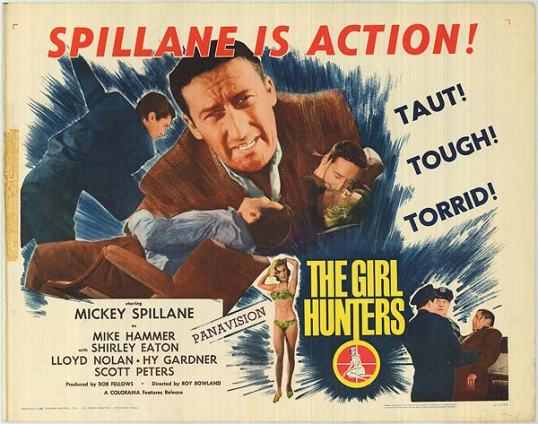
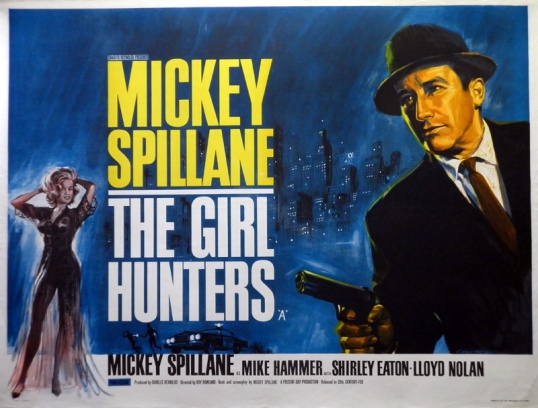
Many films were based on Mickey Spillane’s Mike Hammer novels but The Girl Hunters is unique because it stars Mickey Spillane as Hammer.  Spillane was not much of an actor but he was a genuine tough guy who, even after he became a successful writer, still looked like he had gone a few rounds with the world so he was not necessarily miscast in the role of Hammer.  The main problem with The Girl Hunters is that the mystery is not that interesting.  Mike Hammer does not really investigate anything.  He just goes from fight to fight.  At the end of the movie, he does come up with a clever trick to catch the killer but since there is only one suspect, the killer’s identity is not a surprise.s   The Girl Hunter is worth seeing for Shirley Eaton in a bikini and the novelty of Mickey Spillane playing his most famous creation but Kiss Me Deadly is still the best Mike Hammer film.

The French poster leaves no doubt about The Girl Hunters’ main selling point.

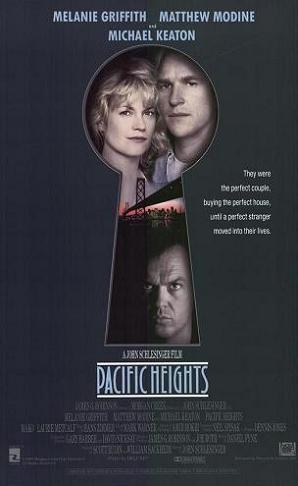
A Movie A Day #157: Pacific Heights (1990, directed by John Schlesinger)


Michael Keaton is the tenant from Hell in Pacific Heights.

In San Francisco, Patty (Melanie Griffith) and Drake (Matthew Modine) have just bought an old and expensive house that they can not really afford.  In order to keep from going broke, they rent out two downstairs apartments.  One apartment is rented by a nice Japanese couple.  The other apartment is rented by Carter Hayes (Michael Keaton).  Carter convinces Patty and Drake not to check his credit by promising to pay the 6 months rent up front.  The money, he tells them, is coming via wire transfer.

The money never arrives but Carter does.  Once he moves into the apartment, Carter changes the locks so that no one but him can get in.  At all hours of the day and night, he can be heard hammering and drilling inside the apartment.  Even worse, he releases cockroaches throughout the building.  When Drake demands that Carter leave, the police back up Carter.  After goading Drake into attacking him, Carter gets a restraining order.  Drake is kicked out of his home, leaving Patty alone with their dangerous tenant.

Pacific Heights is the ultimate upper middle class nightmare: Buy a house that you can not really afford and then end up with a tenant who trashes the place to such an extent that the property value goes down.  As a thriller, Pacific Heights would be better if Drake and Patty weren’t so unlikable.  (When this movie was first made, people like Patty and Drake were known as yuppies.)  Much like Drake’s house, the entire movie is stolen by Michael Keaton’s performance as Carter Hayes.  Carter was not an easy role to play because not only did he have to be so convincingly charming that it was believable that he could rent an apartment just by promising a wire payment but he also had to be so crazy that no one would doubt that he would deliberately infest a house with cockroaches.  Michael Keaton has not played many bad guys in his career but his performance as Carter Hayes knocked it out of the park.

One final note: Keep an eye out for former Hitchcock muse (and Melanie Griffith’s mother) Tippi Hedren, playing another one of Carter’s potential victims.  Her cameo here is better than her cameo in In The Cold of the Night.