Quick Review: Malignant (dir. by James Wan)


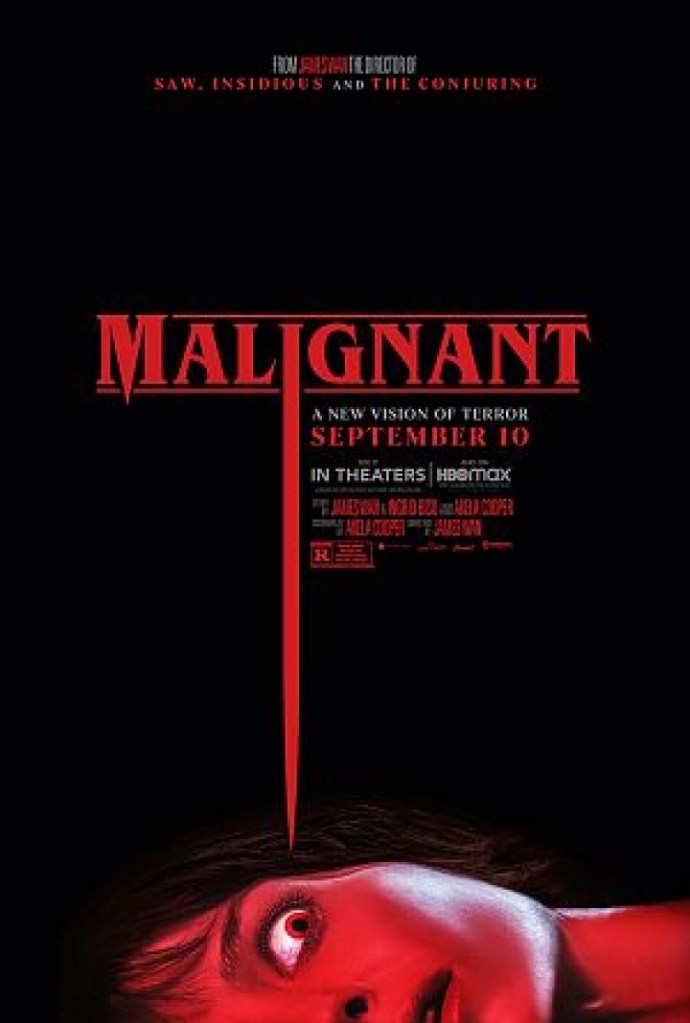
James Wan’s newest horror film, Malignant is something that really needs to be seen without any prior input on it. If there’s any way you can watch it – whether you see it in theatres or on HBO Max up until October 10th – It’s definitely worth it. Right after watching it, I contacted my cousin and begged her to watch it without moviepooping it. She never watches a movie without already knowing the outcome – who lives, who dies. If she doesn’t, the anxiety that hits her is great. She twitches in her chair, covers her face, screams and gives every reaction you to hope to experience in a movie theatre. She agreed to do so, and I can’t wait to hear her thoughts on this. I’m almost compelled to head out to a theatre, sit in the back and watch the audience.

You’re better off not reading this and just coming back later, after you’ve seen it. I’ll try not to give too much away.

When I think of popular couples in horror, the first one that comes to mind is Mike Flanagan and Kate Siegel. James Wan & his wife, Ingrid Bisu may be joining that group. Along with screenwriter Akela Cooper (The 100), the three writers provide Malignant with enough jumps and mouth covers for me to enjoy the ride. Is it perfect? No. It might actually be offensive and/or triggering to a few people, depending on what they’re going through in life, but every movie has the capacity to do that without realizing it.

When mother to be Madison (Annabelle Wallis, Annabelle) suffers an injury, she begins to have visions of a figure causing murders. Much like Neil Jordan’s In Dreams, Madison visions give her a tie to the killer, who may be someone from her past. With the police involved in the form of Agent Kekoa Shaw (George Young, Containment) and his partner, Regina Moss (Michole Briana White, She Hate Me), they work with Annabelle to pursue the killer.

Malignant has it’s share of great shots. There’s one wonderful overhead sequence that takes place which reminded me a little of Minority Report, along with Wan’s usual work with lights and shadow. Smoky alleyways and barely lit hallways just add to Malignant’s creepiness. All of this is anchored by both Wallis’ performance, a mix of quiet tension and wide eyed horror, and by Maddie Hasson (Underdogs), who plays her sister Sidney. Sidney is the source of Malignant‘s more comedic quips, along with Ingrid Bisu, who plays the Forensic Investigator. The movie strikes a good balance there, I felt.

From a writing standpoint, there’s enough misdirection to keep the audience guessing, but it doesn’t do in a way that lies to them. On my 2nd viewing (I’m on my 3rd while writing this), the elements that seemed strange really do make sense. There’s also tidbits of humor placed throughout the movie. It doesn’t make it a comedy by any means, but it’s nice to be to chuckle once in a while. It does make one huge mistake (for me, anyway) that almost completely lost me early on, a conversation between sisters that made me wonder why such information wasn’t already known between them over all the time they knew each other. You’ll probably be able to recognize it when it occurs.

Malignant is a tight 1 hour and 51 minutes, but it’s paced so well that the film feels like it’s almost over before you know it. As much as I enjoyed it, that was one of the other problems I had with the film. Not a terrible thing in any way. It hooks you from the start, gives you some great jumps and reveals through the middle. The 2nd half of the movie kind of pushes the pedal to the floor and guns it. I can think of at least two films that Malignant references, but I’ll maybe write about them some other time.

Overall, Malignant is a great Halloween treat, with James Wan & Co. showing everyone how it’s done. It gets strange, but when all’s said and done, you’ll be thankful for the ride. Just go in blind, turn off all the lights, take it for what it is and enjoy.
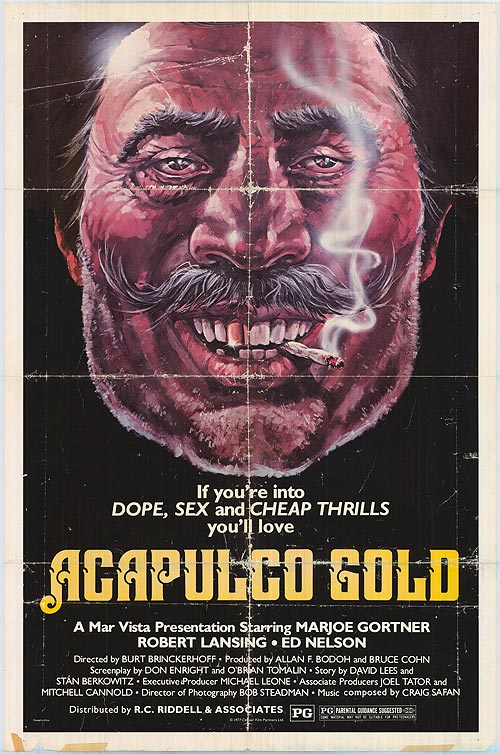
Film Review: Acapulco Gold (dir by Burt Brinckerhoff)


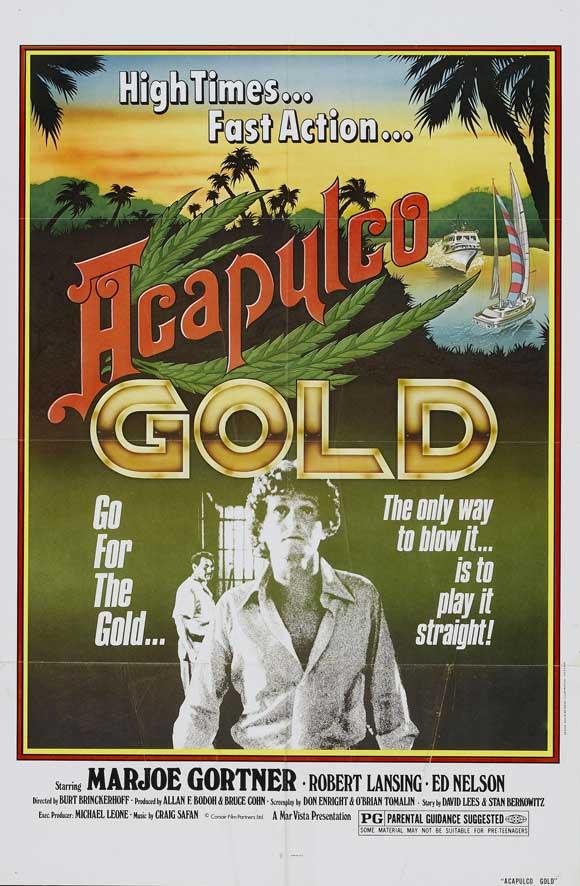
The poster is better than the film.

I just finished watching Acapulco Gold, a rather goofy 1976 film about …. well, who knows?

The film starts with some well-shot footage of marijuana farmers checking out their crop but then it abruptly abandons all of that to follow an American insurance salesman named Ralph Hollio (Marjoe Gortner). Ralph is at an airport in Acapulco, waiting to board a flight back to America. He’s approached by a nun who asks him to carry a piñata for her. Ralph says sure but — oh no! — that piñata is actually full of heroin! Ralph’s an unwitting drug mule and not a very good one because it doesn’t take long for him to get himself arrested and sentenced to 40 years in a Mexican prison.

Despite this run of bad luck, Ralph remains surprisingly cheerful. One is tempted to almost describe him as being a Candide-like figure but that would probably be giving this film too much credit. In prison, he meets another prisoner, a boat captain named Carl Solberg (Robert Lansing). Carl is sprung from jail by local businessman, Morgan Frye (John Harkins). Frye wants Carl to sail a boat from Mexico to Hawaii. Carl agrees but he insists that Morgan also pull some strings so that Ralph can serve as his first mate. Morgan, of course, agrees.

The film’s “action” shifts to Hawaii, where it turns out that Ralph and Carl are being used as a part of a much bigger plot. Or something. To be honest, it’s a bit difficult to figure out just what exactly is going on. Acapulco Gold has a make-it-up as you go along feel to it. Occasionally, it’s amusing. Often, it’s frustrating. As soon as you start to get in any way interested in one storyline, it gets abandoned. The film doesn’t have a plot as much as it has a bunch of scenes that we’re left to assume are meant to be somehow connected.

For instance, there’s an elderly couple who keep showing up at inopportune times, providing what I guess is meant to be comedic relief. At one point, it appears that the couple is surely doomed but, several scenes later, they show up at a golf course and they look none the worse for wear. There are lengthy sailing scenes, mixed in with lengthy helicopter scenes. None of them add much to the plot but the Hawaiian scenery is frequently nice to look at. Ralph falls for Morgan’s girlfriend (Randi Oakes) while a Congressman and a corrupt DEA agent use huge, oversized walkie-talkies to communicate with two people who we occasionally see wandering around in the jungle. There’s a golf cart chase, which ends with a labored joke about a two-strike penalty. And, since this is a low-budget 70s film, there’s a day-for-night sequence that is so ineptly lit that we can barely see anyone for several minutes of the movie. (Though his face may not be visible, one can always spot Marjoe Gortner by his hair. 70s Marjoe had a lot of hair.)

At its best, Acapulco Gold is a charmingly incoherent time capsule, a chance to hop in a time machine and go back to 1976. At its worse, it’s a total mess. That said, it’s short enough that it’s never exactly boring and the randomness of it all occasionally lends the film a dream-like atmosphere (albeit one of those dreams that you forget about after you’ve been awake for 87 minutes). As I previously stated the Hawaiian scenery is lovely and some members of the cast — Robert Lansing and Ed Nelson, in particular — do the best that they can with their inconsistently written characters. The whole thing is such a slapdash affair that it becomes oddly fascinating to watch.

As for the film’s star, Marjoe Gortner was a former child evangelist whose claim to fame was being the subject of Marjoe, a documentary in which he admitted that he didn’t believe in anything that he preached and that he was just scamming people out of their money. Perhaps not surprisingly, Gortner was usually best-cast as villains or unpredictable rogues. (His best performance was as a morally ambiguous space pirate in Starcrash.) In Acapulco Gold, Gortner is playing a normal, ordinary guy who finds himself caught up in the drug underworld. Gortner is miscast as a naive innocent and, instead of projecting any sort of shock over anything tht he experiences, Gortner’s laid back performance suggests that there were multiple reasons why this film was called Acapulco Gold.

Acapulco Gold is currently viewable on Prime. It’s not a particularly good film but Hawaii has always looked great.

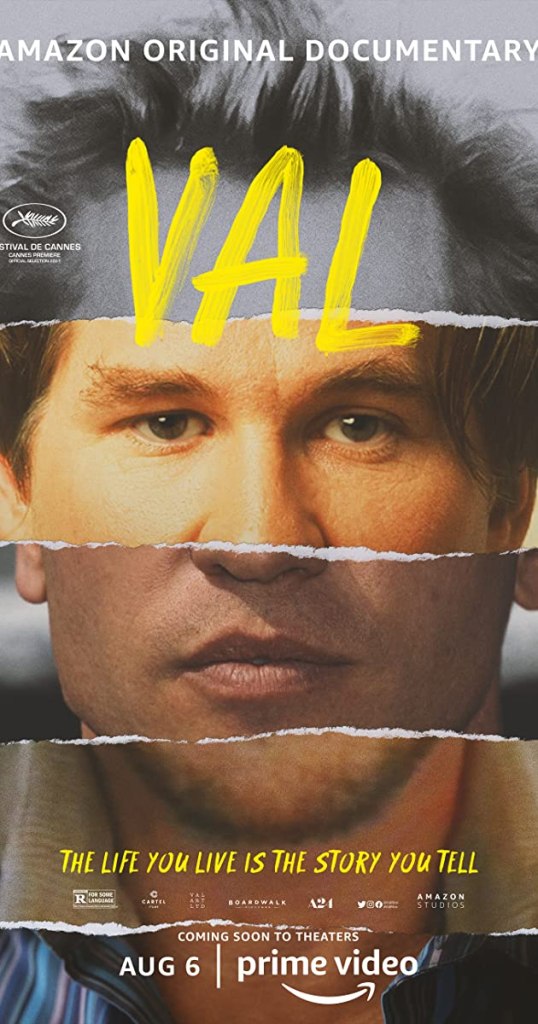
Documentary Review: Val (dir by Leo Scott and Ting Poo)


Throughout the documentary Val, modern-day Val Kilmer continually assures us that he feels better than he looks.

It’s a sad statement to hear, not just because Val Kilmer is himself admitting that he doesn’t look particularly healthy but also because it shows that Kilmer is very aware that many viewers will take one look at him and believe that his time has passed.  Val Kilmer went from being a rising star in the 80s and the 90s to being a Hollywood outcast, largely due to a reputation for being eccentric and difficult to work with.  While his legions of fans remembered and continued to celebrate Val Kilmer as Iceman, Jim Morrison and Doc Holliday in Tombstone, the real-life Kilmer was aging, struggling financially, and often appearing in movies that were ignored by the same public who loved his old films.  Kilmer started to make a comeback by playing Mark Twain in an acclaimed one man show but a battle with throat cancer left him without his voice and the ability to feed himself.  No, Kilmer doesn’t look particularly healthy in Val but, as quickly becomes apparent, his mind is as sharp as ever.

Val is really two documentaries in one.  Half of the film is made up of footage of the young Val Kilmer, much of it shot by Kilmer himself.  We see him hanging out with an impossible young-looking Sean Penn.  We also see some behind-the-scenes footage of Tom Cruise in Top Gun and we’re left to wonder how Tom Cruise can look exactly the same in 2021 as he did in 1986.  Kilmer, it turns out, was obsessive about filming his life, leaving you to wonder how much of it was about recording events and how much of it was about maintaining a wall between him and anyone who might get too close.  (By filming everything, Kilmer made sure that no one stopped acting.)  In the late 80s and early 90s, Kilmer went so far as to film unsolicited audition tapes for the directors with whom he wanted to work.  There’s a touching earnestness to the three auditions he filmed for Stanley Kubrick while his attempts to convince Martin Scorsese to cast him in Goodfellas led to Kilmer apparently making a mini-gangster film of his own.  In the footage of the young Kilmer, there’s a mix of good-natured arrogance along with an eagerness to please.  Kilmer knew he was handsome and he knew he was talented but you get the feeling that what he really wanted were for his filmmaking heroes to acknowledge those things.

The other half of the film features the older Kilmer, humbled by poor health and years of personal struggles.  This the Kilmer who can only speak in a rasp of a whisper.  The film follows him as he goes from convention to convention, singing pictures for fans who inevitably ask him to write down catchphrases from either Top Gun or Tombstone.  Kilmer says that a part of him hates having to work the circuit but, at the same time, he’s obviously and sincerely touched to have so many fans.  In one of the films most powerful moments, the older Kilmer watches the younger Kilmer in Tombstone.  Though the modern-day Kilmer insists that he’s doing better than he looks, it’s obvious that he’s now very much aware of his own mortality and there are parts of the film that come dangerously close to sounding like a premature eulogy.  But when Kilmer watches himself as Doc Holliday, it’s obvious that Kilmer knows that, no matter what the future holds, his performances will live forever.

That said, I imagine that there are a lot of people who will watch this film just to see what Kilmer has to say about his legendary reputation for being difficult.  Kilmer admits to being a perfectionist and he says that he sometimes pushed too hard.  There’s a montage of various entertainment reporters, all reporting on Kilmer being “difficult” on the sets of Batman Forever and the Island of Dr. Moreau.  Kilmer, himself, however doesn’t seem to view himself as being unnecessarily difficult and why should he?  While other may have called him eccentric, one gets the feeling that Kilmer would simply say that he was just being himself.

Kilmer reveals a lot about himself and his career in Val.  At the same time, it’s obvious that there are still certain walls that he will never completely let down.  When he discusses his family and his childhood, it’s with a mix of regret and a need to believe that things really weren’t as bad as he remembers them being.  He talks about how his family fell apart after the death of his brother.  His father walked out on the family and, after Val became a star, cheated his son out of a fortune.  One would expect Val to rail against his father but instead, Kilmer just accepts it as something that happened.  Still, the amateur psychologist will be tempted to say that a lot of Val’s perfectionism came from his desire to please his father.  (When Kilmer discusses Iceman in Top Gun, he says that he imagined that Iceman’s competitive nature came from having a father who was never happy with him.)  Perhaps the documentary’s most revealing moment comes when we listen to audio of Val Kilmer arguing with director John Frankenheimer on the troubled set of The Island of Dr. Moreau.  Kilmer says that he can’t do the scene because he’s too upset over Frankenheimer saying that he was considering walking off the picture.  At that moment, one gets the feeling that the film set represented the childhood that Kilmer wanted and working with directors like Frankenheimer and Joel Schumacher threw him back into the mindset of the teen who watched his father walk away when things got too difficult.

Val is a documentary that sticks with you, a mediation of fame, aging, regret, and mortality.  (Let it sound too sad to watch, rest assured that Val Kilmer does have a sense of humor and it is on display in the film.)  Here’s hoping that Val Kilmer is with us and being difficult for a long time to come.

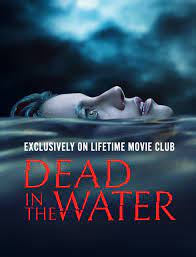
Lifetime Movie Review: Dead In The Water (dir by Nanea Miyata)


When she was a teenager, Tara (Catherine Lidstone) was the only witness to the drowning of her brother, John (Michael Blake Kruse). He fell off a bridge after taunting her about her desire to be a professional photographer and telling her that their parents would be forever disappointed in her. Ouch!

Ten years later, Tara is still struggling with her brother’s death. She spends her time vlogging about photography, working a demeaning waitressing job, and carrying on a toxic relationship with Derek (Sam Krumrine). When Tara discovers that Derek has been cheating on her, she starts to spiral into depression. Fortunately, her best friend — Amy (Angela Gulner) — has a solution!

It turns out that Amy’s family owns a really nice house on the beach! Amy suggests that she and Tara spend a weekend up there, without phones, without WiFi, without any connection to the outside world. (Sure, how could that go wrong?) Tara is reluctant but she finally agrees to Amy’s plans.

At first, it seems like the perfect getaway. The house is big. The scenery is beautiful. And yet, Tara can’t help but feel that something is amiss. She hears strange sounds in the house. Some of her possessions end up disappearing. Even though she’s with her best friend, it soon becomes clear that there are some unspoken tensions between Amy and Tara. Amy is sick of Tara feeling sorry for herself. Tara feels that Amy is spoiled and has never had to struggle. Fortunately, since it’s only the two of them, they should be able to work through any issues pretty easily, right?

Then, Lucas (Peter Porte) shows up. Lucas is handsome and charming and really good at fixing things. He also says that he just happens to be a huge fan of one of Tara’s favorite books, Wild by Cheryl Strayed. When Amy says that she’s never heard of the book, Tara says, in shock, “But I did a whole vlog about it!” Hmmmm…..

Soon, Lucas is staying in the house with Tara and Amy. Tara likes him. Amy likes him. Does Lucas have an agenda of his own?

Of course, he does! And, let’s be honest, you figured that out as soon as I mentioned him. As I’ve said before, the best Lifetime films are always a little bit predictable. You don’t necessarily watch these films to be shocked. You watch them so that you can talk back to the screen as the characters in the movie make the most obvious mistakes possible. That’s part of the fun of a good Lifetime film. From the minute that Lucas shows up, it’s obvious that he’s not just some innocent hiker who happened to stumble across the beach house. It’s obvious to everyone but Tara and Amy.

But that doesn’t really matter. Though it may be predictable, Dead In The Water is still a lot of fun. In fact, it’s probably one of the more enjoyable films that I’ve seen on Lifetime recently. This film delivers exactly what you want from a movie like this — attractive people in attractive locations dealing with sudden melodrama and a lot of sexual tension. Director Nanea Miyata does a good job of generating suspense, especially early on in the film when Tara is struggling to figure out whether or not there’s really someone in the house or if her own paranoia is getting the better of her. In the two main roles, Angela Gulner and Catherine Lidstone both give good performances. You believe them as best friends, right down to their occasional disagreements. Seriously, the occasional disagreements are a key part of having a best friend. You love them even when you know you’re driving them crazy.

Dead In The Water was a lot of fun. Keep an eye out for it.

Lifetime Movie Review: Doomsday Mom: The Lori Vallow Story (dir by Bradley Walsh)


Doomsday Mom is a Lifetime true crime film, based on the disappearance of 16 year-old Tylee Ryan and 7 year-old J.J. Vallow and the subsequent arrest of their mother, Lori Vallow, and her new husband, Chad Daybell. Both Lori and Chad were heavily involved in the Doomsday movement, the belief that the end times were quickly approaching and that only the righteous would be saved. (Hence the title, Doomsday Mom.) Apparently, before the children disappeared, Lori and Chad had said that they had become demonically-possessed zombies. While the police were investigating the disappearances of Tylee and J.J., they also uncovered evidence that suggested that Lori and Chad may have been involved in several more deaths and attempted murders, including those of Lori’s ex-husband and her brother and Chad’s first wife.

It’s a disturbing story but it’s also one that hasn’t been resolved yet. Both Lori and Chad are currently in prison, awaiting trial. While the state of Idaho has ruled the Lori is not mentally competent enough to stand trial for murdering her children, the state of Arizona has still indicted her for attempting to kill one of her ex-husbands. Meanwhile, Chad will be facing the death penalty when his trial finally begins. Because neither has been convicted of any crime, they are still considered to be innocent until proven guilty in a court of law. If they are found guilty, there’s still the question of how many of the mysterious deaths that occurred within their orbit were the result of foul playe and how many were just coincidences. (Lori’s brother, for instance, died at a rather convenient time for Lori but everyone still seems to agree that he had been in poor health long before Lori even met Chad.) There’s also the question of whether or not Lori is actually legally insane or if she’s just faking it to get out of being sent to death row.

That proves to be a bit of a problem for Doomsday Mom, which is a film that suggests a lot of things but can’t actually come out and take a definite stand on anything, beyond the fact that Lori and Chad were a creepy couple who believed in some strange things. Though the film clearly believes that both Lori and Chad are guilty, it still has to try to maintain some sort of ambiguity. Hence, we learn that people have died but we never learn much about the circumstances of their death. We learn that Tylee was rebelling against her mother’s strict rules but we don’t learn much details about those rules, beyond Lori insisting that Tylee stay home to babysit so that Lori could go to church whenever she felt like it. We don’t see much of Chad’s first wife, nor do we learn much about his family.

Perhaps most importantly, we don’t really learn much about Lori and Chad’s doomsday beliefs, beyond the fact that they were convinced the world was ending and that the people around them were being possessed by demons. The film suggests that both of them were motivated by their own ego. Lori and Chad enjoyed being mini-celebs in the Doomsday movement. But, by not exploring how they came to have such beliefs in the first place, it’s hard not to feel that the film is refusing to give us some very important clues to understanding how all of these murders could have occurred in the first place. Presumably because the question of Lori’s mental competence is still in the air, the film cannot take a clear stand on whether Lori really believes all of the things that she says or if she’s just using all of the doomsday talk as a cover for her own selfishness. As often when happens when a film about a true crime case is rushed into production, Doomsday Mom often leaves the viewer with a number of unanswered questions.

On a positive note, both Lauren Lee Smith and Marc Blucas are chilling in the roles of Lori and Chad. Smith, in particular, is frightening as she switches from being a normal, overprotective mother to a wild-eyed religious fanatic, seemingly at random. Playing the role of the concerned grandparents of the missing children, Patrick Duffy and Linda Purl do a great job of capturing their desperation as they start to realize that, despite all of their hopes and efforts, they will probably never see their grandchildren again. The scene were they learn the fate of Tylee and J.J. is poignantly portrayed by both Duffy and Purl.

I always have a slightly problem with films like Doomsday Mom. I’m not a fan of rushing films into production to take advantage of a tragedy still being in the news. But Doomsday Mom is a well-acted and well-directed film, even if it can’t provide us with the answers that we may be looking for.

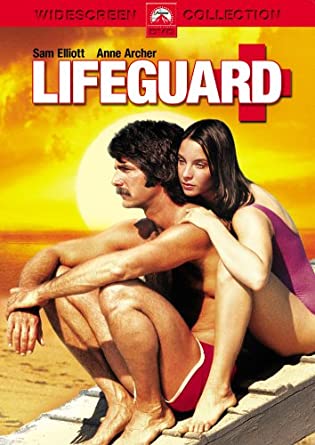
Cleaning Out The DVR: Lifeguard (dir by Daniel Petrie)


I had a long day on Wednesday so I unwound the only way that seemed appropriate.  I watched Road House, the classic film in which Patrick Swayze plays Dalton.  Dalton is the second-greatest bouncer of all time.  Who is the greatest?  None other than Dalton’s mentor, Wade Garrett!

Now, there’s a lot of reasons to love Road House but the performance of Sam Elliott in the role of Wade Garrett is definitely one of them.  If you don’t cry a little when Ben Gazzara’s goons murder old Wade, you just don’t have a heart.  In the end, of course, Wade’s bloody corpse gets left on top of the bar and, honestly, I think that’s the way Wade would want to go.

Anyway, watching Road House reminded me of just how awesome Sam Elliott is so I decided to follow it up by watching another Sam Elliott film, one that I had previously DVR’d off of TMC last week.  Filmed in 1975 and released in ’76, Lifeguard features a youngish Sam Elliott as the title character.  Even though the lifeguard in question might be named Rick Carlson, it’s hard not to think of this film as essentially being Wade Garrett: The Early Years.

When Lifeguardopens, Rick Carlson is 32 years old.  He’s been a lifeguard since he graduated high school.  In his youth, he was a championship-winning surfer.  Now, he’s an aging beach bum who is content to spend both the summer and the winter sitting in his lifeguard tower, watching life on the beach and occasionally saving someone from drowning.  Rick has a small apartment, several girlfriends, and a legion of adoring fans.  Younger lifeguards like Chris (Parker Stevenson, who would later co-star on Baywatch) view him as being a mentor.  Beachgoers view him as being an authority figure, the type that can go to if the surfers are being obnoxious or if some old perv is wandering around exposing himself.  17 year-old Wendy (Kathleen Quinlan) flirts with him and, against his better instincts and common sense, Rick often flirts back.  Despite a bit of gray in his hair and the fact that he gets winded a bit easier, Rick is still living the same life that he was living when he first graduated high school and he’s happy with that.

Or, at least, he is until he gets an invitation to his 15 year high school reunion and he discovers that everyone else is actually living a real life with real responsibilities.  When he discovers that his former girlfriend, Cathy (Anne Archer), is now divorced, Rick starts to think about what could have been.  When another former high school friend, Larry (Stephen Young), offers Rick a high-paying job selling cars, Rick finds himself wondering if it’s time to leave the beach and finally get a “real” job.

Lifeguard is an episodic film, a mix of comedy and drama that has an unexpectedly melancholy feel to it.  For the most part, the film asks us to sympathize with Rick’s desire to spend the rest of his life on the beach but, at the same time, it also doesn’t deny that there are drawbacks to Rick’s lifestyle.  Rick’s living the life he wants but he’s largely doing so alone, unable to build up any sort of personal connection with anyone who isn’t 16 years younger than him.  Interestingly enough, for a film called Lifeguard, we really don’t see Rick rescuing many people or doing anything else that you might expect to see a lifeguard doing.  Modern viewers will probably spend the entire movie waiting for Rick to give a speech about why being a lifeguard is a holy calling but that moment never happens.  Instead, it’s pretty clear that Rick mostly just enjoys hanging out at the beach and being a lifeguard allows him to get paid to do just that.  Watching the film, I could not help but compare Rick’s laid back attitude to the overly earnest lifeguards who populated Baywatch.  Mitch Buchannon would have kicked Rick off the beach for not taking the job seriously enough.  As well, as opposed to the vibrant cinematography that we’ve come to expect from beach movies, the visual style of Lifeguard is often moody and underlit.  At times, the beach itself looks like it’s suffering from an existential crisis.  The sand looks dull.  The skies above the water often appear to be gray and full of clouds.  Rick has apparently decided to spend the rest of his life on the ugliest beach in California.

It’s a flawed film, to be sure.  The attempts to mix drama and comedy often lead to uneven results and Anne Archer, Parker Stevenson, and Stephen Young are stuck with underwritten characters.  (The film’s script especially lets Young down, making Larry such an obnoxious character that it’s hard to believe that he and Rick would have ever been friends in the firs place.)  When the film does work, it’s due to the performances of Kathleen Quinlan and Sam Elliot.  Though her character is a cliché (the rebellious teenager who isn’t as worldly as she thinks she is), Quinlan does a good job of giving the character a personality that makes her more than just a stock temptation.  

The film belongs, of course, to Sam Elliott and he is perfectly cast.  As he would do decades later in The Hero, Elliott does a wonderful job of suggesting the little doubts that lurk underneath the laid back surface of his character.  His strongest moment occurs not on the beach but when Rick goes to his high school reunion and realizes that he no longer fits in with his former classmates, all of whom have careers and families.  Rick goes from being cocky to insecure in a matter of minutes and Elliott captures Rick’s emotions beautifully.  At that moment, it’s hard not to feel sorry for Rick.  One can understand why he’s tempted to leave the beach for the real world but, at the same time, one can also see that Rick understands that it might be too late for him to do so.  He’s spent the last 15 years in a perpetual adolescence and the rest of the world has moved on.  Elliott perfectly captures the moment when Rick realizes that his happiness has come with a price.  Rick is a flawed (if ultimately good) person but Sam Elliott gives a flawless performance in the role.  Just as surely was Wade Garrett rescued Dalton when Wesley’s men tried to stop the beer delivery, Sam Elliott saves Lifeguard.

Documentary Review: Kids Who Kill (dir by Andy Genovese)


It’s currently True Crime Week on A&E, with every day being filled with programming about murders, court cases, and unsolved mysteries.  It’s all a bit icky but I do have to admit that I have a weakness for true crime.  That’s why, when A&E aired the 2017 documentary Kids Who Kill yesterday, I ended up watching.

As soon as Kids Who Kill started, I found myself wondering if I had watched it before.  It turned out that I hadn’t.  Instead, my sense of Deja Vu was due to the face that I had seen all of the stories featured in Kids Who Kill on numerous other true crime programs.  One reason why there are so many true crime programs is that they’re cheap and easy to make.  Most of the information is in the public domain and you can always grab footage from the local news broadcasts of the time.  The reporters who covered the murders and the trials are always willing to build their brand by appearing on the program and saying stuff like, “Things like this just didn’t happen in our town.”  If the actual murderer is still alive and willing to be interviewed, chances are that his story will be told on at least a dozen different programs.

That’s certainly the case with Eric Smith, who was 13 years old when he murdered a 4 year-old boy.  Smith has been incarcerated since 1994 and his willingness to be interviewed has led to him being featured on several different programs, including this documentary.  In every interview, Smith says, not surprisingly, that he was an abused and emotionally neglected child who, having been bullied his entire life, lashed out in one terrible moment and that he’s no longer that child and that he deserves to be released from prison.  (You can always tell if the program is sympathetic to Smith by whether or not they include the fact that he sodomized the boy that he killed.  Kids Who Kill leaves out that fact.)  What Smith always seems to miss is that one can very legitimately say, “That sucks you were abused and you never really had a chance but, at the same time, you strangled and beat a four year-old to death so fuck you.”

Kids Who Kill tells several stories about people like Eric Smith, who committed murder when they were just a minor and who were subsequently sent to prison, often for life.  It’s full of contemporary news footage and psychoanalysts offering up theories about why kids kill but it never really digs too deeply into the subject.  There are several prison interviews with the killers.  At least two of them blame “first shooter video games.”  (While I would certainly be concerned about someone who spent 24 hours a day playing a violent video game, it’s also hard to buy that a 16 year-old couldn’t tell the difference between Doom and real life.  If you thought Doom — or Halo, as another shooter claims — was real life then you obviously had issues before you even picked up your first controller.)  Every killer interviewed expresses remorse but, with the exception of Nathan Brazill, who was convicted of shooting a teacher, none of them seem particularly sincere about it.  Then again, one could argue that they seem insincere because a lifetime in prison has conditioned them not to express any emotions that could be mistaken for weakness.  Perhaps I was being too quick to expect tears from men who live in a confined society where tears can lead to being targeted.

It’s a complex subject, kids who kill.  Can we forgive?  Can murderers be rehabilitated?  Can someone mature into becoming a different person than they were when they were 16?  Is it more important to punish or to rehabilitate?  These are important questions and, unfortunately, they’re not the type of questions that are really explored in any sort of depth by most true crime shows and documentaries.  Kids Who Kill offers up some disturbing stories but it never scratches beneath the surface.

Happy Friday the 13th From The Shattered Lens


Originally, Jeff and I were planning on going up to the lake this weekend.

It’s something that we’ve been wanting to do for a while, just to get away from everything for a day or two. It’s summer in Texas, which means that it’s incredibly hot right now. The lake is awfully inviting in the summer. Originally, we thought we might go last week but I ended up getting sick and spending almost the entire week in bed. So, it made sense to just go this week, right?

Except …. well, did you happen to notice what day it is today?

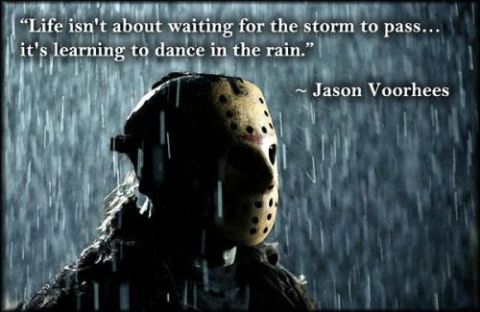
Listen, at heart, I’m a skeptical person. One reason why horror films don’t bother me is because I don’t believe in ghosts or witches or magic or zombies or death curses or any of that other stuff. I don’t even believe in aliens. I’m not a superstitious person and I have to admit that I always find myself a bit confused whenever I talk to anyone who is. And yet, even I know better than to tempt fate by going up to the lake on the weekend of Friday the 13th. That’s the power of the tale of Jason Voorhees, his mother, and a New Jersey camp called Crystal Lake. Even the most skeptical among us know better than to mess around with Jason. There’s a 99.9% chance that Jason doesn’t exist and, even if he did, he would be way up in New Jersey but still, just the fact that there’s a .1% chance that he might be out there somewhere …. that’s enough to keep me home for the weekend!

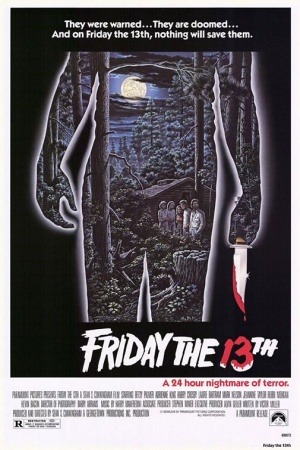
With that in mind, Happy Friday the 13th! I’m celebrating by watching the original films, the one that were produced by Paramount Pictures in the 80s. By that, I mean the films that came out before Jason Goes To Hell turned everyone’s favorite hockey masked serial killer into a space slug. Say what you will about these films, they are an undeniable part of our culture and they’re amongst the most influential movies ever made. Personally, I prefer the first film, the 2nd film, and the 4th film. I’ll also defend Friday The 13th: A New Beginning because I enjoy being a contrarian. At its best, the franchise was an American tribute to giallo. At its worst …. well, we’ve all seen Part 3, right?

However you celebrate, stay safe! And maybe we’ll see you up at the lake next week!

(And if you need something to do, be sure to check out this article, full of Friday the 13th trivia, that I wrote a few Friday the 13ths ago!)

Film Review: Falling (dir by Viggo Mortensen)


If you’re one of the many people who watched The Father and thought to yourself, “Good movie but I wonder what it would have been like if every character involved had been thoroughly unlikable and one-dimensional,” Falling might be for you.

I almost felt guilty writing that paragraph because Falling is the directorial debut of actor Viggo Mortensen and Mortensen has been very open about how several members of his family have struggled with dementia. He lost both his mother and his father to dementia and he served as his father’s caretaker during the last year of his life. As Falling is film about a man taking care of his father when the latter develops dementia, it’s easy to see that this film is a very personal one for Mortensen. Unfortunately, as both a director and a screenwriter, Mortensen basically leads his story straight into a dead end.

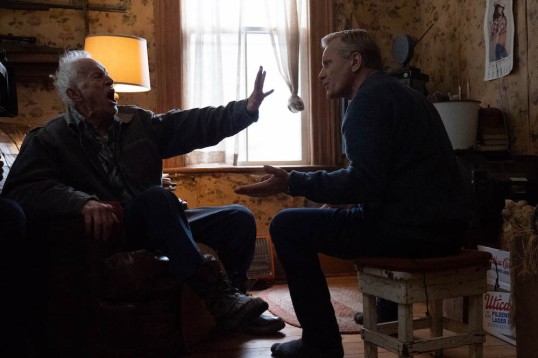
Lance Henriksen plays Willis Peterson, a bigoted and angry old farmer who is being taken care of by his estranged son, John (Viggo Mortensen) and John’s husband, Eric (Terry Chen). John hopes to find Willis a new and nearby place to live so that he and his sister, Sarah (Laura Linney), can check in on him. Willis is occasionally charming in a irascible old man way but, usually, he’s just abrasive, abusive, angry and a bit of a homophobe. He’s also losing his memory, continually forgetting that his wife is dead and talking about all of the ways that John and Sarah disappointed him when they were teenagers.

The film asks whether or not Willis was always an asshole or if he’s just asking like this because he’s suffering from dementia. That would be an interesting question if not for the fact that the film is also full of heavy-handed flashbacks that reveal that, without any doubt, Willis was always an asshole. The problem is that, once you realize that Willis was an unbearable young parent and an unbearable middle-aged crank, it becomes difficult to care much about him once he becomes an unbearable old man. If The Father showed how dementia changes one’s personality and way of looking at the world, the message of Falling seems to be that terrible things also happen to terrible people. And while that’s a certainly true statement, it doesn’t make for a particularly compelling narrative.

One does have to give Mortensen some credit for giving Lance Henriksen a leading role. Henriksen not only looks like he could conceivably by Viggo Mortensen’s father but he does what he can to suggest that, under all of the bluster and the anger and the hateful words, Willis is ultimately a man who is scared because the world is transforming into one that he’s not capable of understanding. That’s a idea that is present in the film almost solely due to Henriksen’s performance and the few scenes that are genuinely interesting to watch are almost all due to his efforts. There’s no winking at the audience during Willis’s many abrasive moments and Henriksen deserves credit for fearlessly and honestly playing a character that most viewers aren’t going to like.

Unfortunately, the rest of the film doesn’t live up to the promise of Henriksen’s performance. The script often feels repetitive and neither Mortensen nor Linney make much of an impression as Henriksen’s children. (Linney, as happens far too often, feels especially wasted, leaving viewers to wonder what happened to the actress who, long ago, gave such a fierce performance in Mystic River.) The scene where Henriksen meets Linney’s children is especially poorly-written and seems to go on forever. It becomes clear that, as a director, Mortensen has a good visual eye but no idea how to build or maintain narrative momentum with a story that centers on characters who are incapable of moving forward.. One watches the film and admires Mortesen’s intentions but emotionally, the whole production feels remote and overly studied. Falling underwhelms.

Scenes That I Love: Billy Jack Learns About The Three Levels In The Trial of Billy Jack


Monday would have been the 90th birthday of Tom Laughlin, the actor who revolutionized independent American cinema through his Billy Jack films.

In four films, Laughlin played Billy Jack, an American Navajo, a former Green Beret, a veteran of the Vietnam War, a hapkido master, and a man who just protects children and other living things.  When he first appeared in 1967’s The Born Losers, he was protecting a woman from bikers.  In 1971’s Billy Jack, he was protecting the Freedom School from ignorant townspeople.  In 1974’s The Trial of Billy Jack, he was …. well, in that film, Billy Jack did a little bit of everything but the National Guard still ended up destroying the Freedom School.  Finally, in 1977’s Billy Jack Goes To Washington, Billy was appointed to the United Stated Senate because what else are you going to do with someone who has killed a tremendous amount of people over the course of three films?

(Of course, in Senator Jack’s defense, they were all bad people.)

Laughlin not only starred as Billy Jack but he also directed all four of the films and, starting with Billy Jack, he also handled the distribution of them.  A huge box office hit, Billy Jack is considered to be a seminal counter culture film.  The other three films are a bit less acclaimed and Trial of Billy Jack is often cited as one of the most pretentious and self-indulgent films ever made.  But, regardless of their individual artistic merits, all of the Billy Jack films share an appealing mix of sincerity and silliness.  Laughlin was a good actor and, visually, he was a stronger director than he was often given credit for. Some of the shots in the original Billy Jack are breath-taking.  At a time when even self-styled progressive films still portrayed women in the most condescending and demeaning way possible (check out Getting Straight or R.P.M., if you dare), the Billy Jack films were as much about Jean (played by Delores Taylor, Laughlin’s wife and creative partner), the founder of the Freedom School, and her beliefs, as they were about Billy Jack and his struggles to accept pacifism.  If nothing else, the Billy Jack films featured actual conversations and debates about actual ideologies and philosophies, as opposed to the usual shallow Hollywood politics.  Unfortunately, Laughlin was also a heavy-handed storyteller and a terrible editor.  The Trial of Billy Jack goes on for three hours.

And yet, of all the Billy Jack films, The Trial of Billy Jack is my favorite.  It’s just so weird that it’s hard not to like it.  It’s a film that doesn’t really work but, at the same time, you can’t help but appreciate all the effort that was put into it.  Whatever else you might be able to say about him and his films, it’s obvious that Tom Laughlin truly did think that the movies could make a difference.  There’s an aching sincerity to Laughlin’s work that pretty much cannot be found in the majority of today’s films.

In honor of Laughlin’s birthday and his legacy, here’s a scene that I love from The Trial of Billy Jack.  In this scene, Billy goes on a vision quest and experiences the Three Levels.  I would be lying if I said I really followed much of the logic in the scene but at least we get to see Billy hit a hippie professor.  Billy also smacks Jesus, which isn’t cool but Jesus shows exactly how to handle that type of belligerence and hopefully, he provides a lesson for us all.

Learn about the Three Levels, with Billy Jack.  And be sure to spare a thought for the hard work of Tom Laughlin.