Scenes That I Love: Billy Jack Learns About The Three Levels In The Trial of Billy Jack


Monday would have been the 90th birthday of Tom Laughlin, the actor who revolutionized independent American cinema through his Billy Jack films.

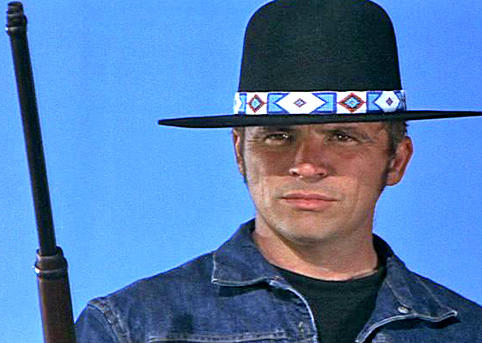
In four films, Laughlin played Billy Jack, an American Navajo, a former Green Beret, a veteran of the Vietnam War, a hapkido master, and a man who just protects children and other living things.  When he first appeared in 1967’s The Born Losers, he was protecting a woman from bikers.  In 1971’s Billy Jack, he was protecting the Freedom School from ignorant townspeople.  In 1974’s The Trial of Billy Jack, he was …. well, in that film, Billy Jack did a little bit of everything but the National Guard still ended up destroying the Freedom School.  Finally, in 1977’s Billy Jack Goes To Washington, Billy was appointed to the United Stated Senate because what else are you going to do with someone who has killed a tremendous amount of people over the course of three films?

(Of course, in Senator Jack’s defense, they were all bad people.)

Laughlin not only starred as Billy Jack but he also directed all four of the films and, starting with Billy Jack, he also handled the distribution of them.  A huge box office hit, Billy Jack is considered to be a seminal counter culture film.  The other three films are a bit less acclaimed and Trial of Billy Jack is often cited as one of the most pretentious and self-indulgent films ever made.  But, regardless of their individual artistic merits, all of the Billy Jack films share an appealing mix of sincerity and silliness.  Laughlin was a good actor and, visually, he was a stronger director than he was often given credit for. Some of the shots in the original Billy Jack are breath-taking.  At a time when even self-styled progressive films still portrayed women in the most condescending and demeaning way possible (check out Getting Straight or R.P.M., if you dare), the Billy Jack films were as much about Jean (played by Delores Taylor, Laughlin’s wife and creative partner), the founder of the Freedom School, and her beliefs, as they were about Billy Jack and his struggles to accept pacifism.  If nothing else, the Billy Jack films featured actual conversations and debates about actual ideologies and philosophies, as opposed to the usual shallow Hollywood politics.  Unfortunately, Laughlin was also a heavy-handed storyteller and a terrible editor.  The Trial of Billy Jack goes on for three hours.

And yet, of all the Billy Jack films, The Trial of Billy Jack is my favorite.  It’s just so weird that it’s hard not to like it.  It’s a film that doesn’t really work but, at the same time, you can’t help but appreciate all the effort that was put into it.  Whatever else you might be able to say about him and his films, it’s obvious that Tom Laughlin truly did think that the movies could make a difference.  There’s an aching sincerity to Laughlin’s work that pretty much cannot be found in the majority of today’s films.

In honor of Laughlin’s birthday and his legacy, here’s a scene that I love from The Trial of Billy Jack.  In this scene, Billy goes on a vision quest and experiences the Three Levels.  I would be lying if I said I really followed much of the logic in the scene but at least we get to see Billy hit a hippie professor.  Billy also smacks Jesus, which isn’t cool but Jesus shows exactly how to handle that type of belligerence and hopefully, he provides a lesson for us all.

Learn about the Three Levels, with Billy Jack.  And be sure to spare a thought for the hard work of Tom Laughlin.

Film Review: Macho: The Hector Camacho Story (directed by Eric Drath)


It has been nearly ten years since Hector “Macho” Camacho was murdered in Puerto Rico.

He was shot while sitting in a parked car, by several gunmen who fired from a passing SUV.  The driver of the car, Camacho’s childhood friend Adrian Mojica Moreno, was also shot.  Moreno died at the scene.  Camacho died four days later.

Since then, there’s been a lot of speculation about who may have ordered a hit on Camacho.  At one time, Camacho was one of the world’s biggest celebrity athletes, a boxer who was both loved and hated by boxing fans.  He was also well-known for his struggles with addiction and his self-destructive behavior.  After he was shot, nine bags of cocaine were found in his car, leading many to suspect that the hit was the result of drug deal gone wrong.

However,  not even the details surrounding his death could overshadow Camacho’s accomplishments inside the ring.  His flamboyant antics and costumes may have driven purists crazy but Camacho was a fighter who could usually be trusted to back up his bluster once the fight began. From 1980 to 2010, he fought 88 professional fights and compiled a 79-6-3 record.  Along the way he won and lost multiple titles, went from being viewed as a scrappy underdog to a villain, and he fought everyone from Oscar De La Hoya to Julio Cesar Chavez to Sugar Ray Leonard, Roberto Duran, and Vinny Paziena.

The documentary Macho: The Hector Camacho Story takes a look back at Camacho’s career in the ring and his life outside of it.  While it doesn’t shy away from discussing his struggles (and the final thirty minutes are dominated by his murder), the best part of the documentary is the footage of Camacho in his prime, throwing punches and defeating opponent after opponent.  The film shows why Camacho was one of the best boxers of his era while also acknowledging why his success drove so many fight fans crazy.  This is a documentary that will be appreciated by those who remember what the sport of boxing once was, when the fighters could not only play to the stands but could throw a punch as well.  It’s both an exciting boxing film and a study of a fighter who could beat almost any opponent but not his own demons.

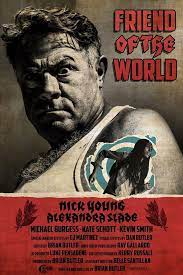
Film Review: Friend of the World (dir by Brian Patrick Butler)


At the start of 2020’s Friend of the World, we know that something bad has happened to the world but we don’t know what. An aspiring filmmaker named Diane (Alexandra Slade) wakes up in what appears to be a room in an underground bunker. Dead bodies surround her. When one turns out to be not quite dead, Diane shoots him in the head. Is it a mercy killing or is it an act of self-defense?

As we soon learn, Diane is not alone in the bunker. There’s a man named Gore (Nick Young), who appears to be some sort of military office and who, on occasion, even sound like he could be a direct descendant of Jack D. Ripper, the paranoid general played by Sterling Hayden in Dr. Strangelove. When we first see Gore, he’s standing directly over Diane, speaking as he shaves. Shaving cream falls from his face, down on Diane. Gore never apologizes, not for that or anything else. And while it quickly become clear that the world is no longer place where apologies and rudeness are anyone’s number one concern, it’s hard not to suspect that Gore probably wasn’t the apologizing type even before the world ended.

Gore leads Diane through the bunker, explaining how and why the world has ended and speaking rather ominously about how it’s going to fall to the survivors to repopulate the world. While Diane worries about the fate of her girlfriend, Gore smokes cigars and randomly fires guns. When they speak to each other, it’s often in somewhat bizarre cadences and phrases, the type that leave us to wonder if they’ve really just met or if we’re watching some sort of ritual develop.

We also discover that the two of them are not alone in the bunker. Others make brief appearances, as the situation grows more claustrophobic and more bizarre. One man bursts out of another, in a scene that will bring to mind the infamous chest bursters from Alien. Another mysterious figure shows up to repair a chair while moving in a herky-jerky fashion that almost suggests he might be an puppet on a string. When a more familiar figure shows up, Diane is forced to not only realize how much the world has changed but also consider her new role within it.

Clocking in at a little under an hour, Friend of the World is a surreal look at the end of the world, one that mixes the body horror of David Cronenberg with the dark humor and circular conversations of Samuel Beckett with just a hint of Kubrickian satire. For all the horror elements that are found in the film (and for all of the memorably gruesome special effects), the ultimate horror of Friend of the World comes from the knowledge that, should you survive the apocalypse, you’ll still have little control over who survives with you.

Director Brian Patrick Butler emphasizes the claustrophobic conditions of the bunker, a version of Hell from which there really is no exit. The scenes in the bunker are shot in harsh black-and-white while Diane’s memories of her girlfriend and a few scenes shot above ground are filmed in almost garish color, a simple technique that pays off surprisingly well. Both Alexandra Slade and Nick Young do a good job of bringing their enigmatic characters to life, with Slade especially capturing Diane’s mix of confusion, fear, and anger. As well, Kathryn Scott makes a strong impression with limited screen time in the small but key role of Diane’s girlfriend.

Friend of the World provides an intriguing look at the end of the world.

Film Review: Override (dir by Richard Colton)


In the middle of the desert, there sits an isolated pink house.

And inside the house, there lives a woman named Ria (Jess Impiazzi), who wakes up every morning to a neon sign that wishes her a good morning. Every morning, she stands in front of a mirror in her underwear and she asks the world what “fun adventures” it has in store for her today. She then carefully selects her outfit and the color of her lipstick. She goes into the bedroom and awakens Jack, who is sometimes her husband and sometimes her best friend but who is always a different person.

During the day, she does “chores” around the house. She is always smiling. She is always positive-minded. Every day, at the exact same time, Ria asks Jack to dance with her. Every night, she talks about how she can’t wait to watch the latest episode of her favorite television program. She has a strange habit of holding up everyday products and announcing how much they cost and whether or not there are any special offers associated with them. She talks frequently about how happy she is to be a housewife, which she believes is the important job that anyone can have. At 9:00, she and Jack retreat in to the bedroom. At 7:00, the next morning, she wakes up and does it all over again with a different Jack.

As you may have guessed, Ria is not quite human. In fact, she’s not human at all. She’s an android, built and programmed to be everyone’s fantasy companion. She’s also the start of her own TV show, “A Day With Ria.” People across the country compete for the chance to be Jack for a day and to spend their time using Ria to fulfill their own fantasies. One of the Jacks (played by Luke Goss) seems to truly care about her. Another Jack viciously abuses her, which Ria accepts without question. Another Jack is just so excited to spend her day with her best friend, Ria! (They have a pillow fight.) Meanwhile, the audience at home votes on what Ria should wear and what meals she should prepare for each Jack. Everyone seems to love watching A Day With Ria, even the vice president of the United States (played by Dean Cain).

Override gets off to a surprisingly good start, doing a good job of bringing us into Ria’s bizarre world. The house in the desert is especially a triumph, a cleverly designed tribute to kitsch that, in all of its pink glory, manages to be both grotesque and inviting, depending on which angle you’re look at it from. Jess Impiazzi does a good job bringing Ria to life and Luke Goss is well-cast as the most sympathetic of Jacks. Director Richard Colton has worked extensively as an editor and there’s a wonderfully composed montage in which Ria goes from one Jack to another. Even the film’s low budget works to its advantage, as most reality shows are produced as cheaply as possible. (Seriously, just watch the Big Brother live feeds sometime.)

Unfortunately, during the second half of the film, things get bogged down with a political conspiracy plot and the attempts to satirize reality TV become increasingly heavy-handed. (One problem with satirizing reality TV is that most reality television show already feel like a parody. No movie or book can make a show like The Bachelorette or, again, Big Brother appear any more ridiculous than an actual episode does.) As strong as the first half of the film was, the second half is a bit of a mess and nowhere near as compelling. A strong beginning leads to a disappointing (and rather drawn out) ending.

While it’s a shame that the movie couldn’t maintain its narrative momentum, Jess Impiazzi’s performance remains strong and both Luke Goss and Dean Cain do the best that they can with their slightly underwritten characters. The film doesn’t really work as a whole but it still has enough good moment to make the watch worthwhile.

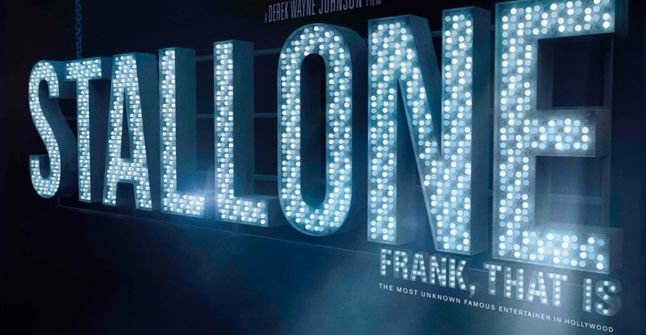
Film Review: Stallone, Frank That Is (dir by Derek Wayne Johnson)


Frank Stallone is a great musician and a talented guy and you should really spend some money to see him perform.

That would seem to be the main message of the new documentary, Stallone: Frank That Is. This documentary, which profiles the brother of Sylvester Stallone, was produced by Frank himself so we perhaps shouldn’t be surprised that it’s full of people attesting to what a great entertainer Frank is. Billy Zane, Billy Dee Williams, Christopher McDonald, Joe Mantegna, Duff McKagen, Richie Sambora, and Frankie Avalon all pop up and assure the viewers that Frank is a talented musician. Arnold Schwarzenegger tells us that Frank deserves to be known as more than just Sylvester Stallone’s younger brother. Sylvester Stallone himself shows up, to tell stories about how he and Frank once lived in a condemned apartment building and how they smashed a hole in the wall so that their two apartments could become one big loft.

What’s interesting is that, despite the fact that the film often seems like it was largely made to provide Frank Stallone with some encouragement and an ego boost, it also convinces us that Frank does deserve to be known for being something more than Sylvester Stallone’s brother. There’s enough performance footage to show that Frank Stallone actually is a pretty decent singer. Though the film is honest about the quality of most of Frank’s filmwork, there’s still enough footage from the 1987 film Barfly to convince us that, when cast in the right role, Frank Stallone is capable of giving a memorable performance. When he’s interviewed on camera, Frank Stallone comes across as being likeable and a good raconteur. He’s someone who you might want to have dinner with, just so you can listen to his stories about being a struggling musician in New Jersey in the late 60s. (Be sure to ask him about the time that he and his band opened for Bruce Springsteen.) Frank is also honest about how much of his career his owes to his brother, even if he never comes across as if he’s really made peace with that fact.

In fact, Frank Stallone is actually pretty forthright when it comes to admitting that being permanently overshadowed by his older brother totally sucks. After spending several years struggling to make it as a musician, Frank wrote a song for Rocky. Sylvester admits that the main reason Frank was asked was because the budget was too tight to hire anyone who wasn’t a relative. Frank and his band appeared in Rocky, as well as the film’s sequels. He went on to record songs for several of Sylvester’s films, most famously for Staying Alive. And while working on Sylvester’s films made Frank known and even helped him achieve a brief stardom when one of his Saying Alive songs reached the top of the charts, Frank also knew that everyone assumed that he only got hired because he was Sylvester’s brother. When Frank would perform at clubs, he would be credited as being “Rocky’s brother, Frank Stallone.” Understandably, Frank was not happy about that. (Sylvester at one point says that Frank was bitter and that “Frank’s still bitter and that’s one reason why I love him, he’s consistent.”) The only people less happy about the situation than Frank were Frank’s bandmates who found themselves overshadowed by the guy who was best known for being overshadowed by his brother. Frank admits that he often struggled to deal with his odd claim to fame and, as a result, his alienated a lot of people around him.

For all of the celebrity testimonials and funny stories, there’s also wistful sadness that runs through this documentary. As positive and upbeat as Frank Stallone tries to present himself, there’s always a feeling that there’s a lot of regret right underneath the surface. Being Sylvester Stallone’s brother comes across as being both a blessing and a curse. On the one hand, it opened doors for Frank that probably would never have been opened, On the other hand, it also ensured that Frank is always going to struggle to get people to take him seriously as anything other than a famous sibling. (Even in this documentary, some of the most memorable moments come from Frank imitating Sylvester’s trademark deep voice.) Stallone: Frank, That Is does a good job of suggesting that Frank deserves to be known for more than just his family while also admitting that it probably won’t ever happen.

Space Jam – A New Legacy (Dir. by Malcolm D. Lee)


Basketball’s not exactly my sport. I’ve always been a fan of Hockey, but I understand that I’m not the target audience for Space Jam – A New Legacy. Watching the movie, I get the feeling that Warner Bros. finally figured out just how large it is. Just as Disney did with Ralph Breaks the Internet, there are tons of references to the WB’s home grown content. Castles from Harry Potter, outfits from The Matrix, Mad Max: Fury Road, Game of Thrones and even Pennywise the Clown make an appearance in the movie. It’s nice to see, but a lot of it pulls away from the story in the same fashion that Ready Player One did. I found I was so busy watching the background that I didn’t care too much about LeBron James and his kid.

Space Jam – A New Legacy does have some new elements. LeBron James (playing himself) is a little at odds with his son, Dom (Cedric Joe). Dom really isn’t into basketball, though he does have a basketball themed video game he’s designing. LeBron would rather he be into the actual sport. When the WB’s AI, known as Al G. Rhythm (Don Cheadle, Avengers: Endgame) makes a failed pitch to LeBron on behalf of the Warner Bros, he decides to get revenge (and recognition) by way of pulling both Dom and LeBron into the Warnerverse for a basketball game to end all games. If LeBron wins, he gets his son back (who happens to be playing against him), and if he loses, he and the entire audience – everyone – will be trapped inside of the Warnerverse, forever.

Just writing that feels a little strange. Stuck in HBO Max because of a bad basketball game?

Either way, he finds Bugs Bunny and together, they form an All Star team based off of the other Looney Tunes. The film does address one thing I liked. Since they had the entire Warnerverse at their disposal, it would be easier to build a team off of superheroes. The story finds a way around this.

Now, let’s not act like the original Space Jam was ever part of the Criterion Collection. It was a fun film with a major star playing among cartoons. There wasn’t a whole lot to expect, though it was enjoyable and I have the soundtrack for it. Michael Jordan had the benefit of Danny DeVito, Wayne Knight and Bill Murray to help him out for comic relief. Here, it’s more or less just LeBron vs the Goon Squad. When it comes to acting, LeBron James is okay. Most of his lines are centered around informing the toons and the audience that he has to get him back.

I do have to say that Don Cheadle does great here, which is expected. The same can be said for Sonequa Martin-Green (Star Trek: Discovery) and Lil Rel Howry (Get Out)There are some moments in A New Legacy that do work (Granny’s scenes in particular are standouts that made me laugh, along with a great Wile E. Coyote Fury Road moment), but that’s only because of the connection between all of the other WB franchises. It’s as if they didn’t feel comfortable enough with the story they had, so they said “Why not just litter the screen with everything we’ve got – King Kong, It, The Matrix, Harry Potter, and see what we get?”

Warner Animation Group does appear to be getting better over their previous attempt in Tom & Jerry. Maybe it’s because it’s easier to interact with cartoon characters that can talk back, but some of the animations (particularly the CGI ones) are good. They’re just incredibly overused. Malcolm D. Lee’s direction is also good, for what he’s given. It’s not Roll Bounce or Undercover Brother, but the flow of the story moves well. Before you know it, you’re in the Big Game.

Space Jam – A New Legacy isn’t the worst thing out there, it’s just stuffed with more content than it needs. It’s not on Tom & Jerry’s level of bad. Besides, it’s for Kids. If you love Basketball, LeBron, Looney Tunes or anything Warner’s Related, you should be good here. Just take it for what it is and enjoy. Thankfully, if you have HBO Max, it’s free to watch for the next 30 days (as of this writing). It just don’t see myself running back to it.

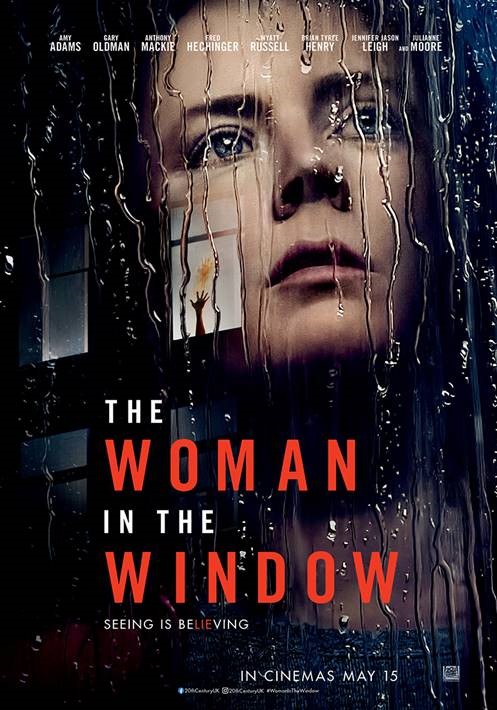
Film Review: The Woman In The Window (dir by Joe Wright)


Joe Wright’s The Woman In The Window is a film that was kicked around a bit before it was eventually released.

Based on the best-selling novel by A.J. Finn, The Woman In The Window was filmed in 2018 and was originally set to be released in October of 2019.  At the time, there were many who predicted that this would be the film for which Amy Adams would finally win an Oscar.  However, after a few poor test screenings, the release of Woman In The Window was pushed back.  The film’s producer, the now-infamous Scott Rudin, reportedly brought in Tony Gilory to re-shoot a few scenes.  The film was finally set to be released in May of 2020 and, needless to say, it was no longer expected to be an Oscar contender.  Then, the pandemic hit and, like so many movies, The Woman In The Window was left in limbo.  With its theatrical release canceled, the film was eventually purchased by Netflix.  Netflix finally released it in May of this year.  With all of the delays and the bad buzz, the critics had plenty of time to sharpen their knives and I don’t think anyone was surprised when the film got scathing reviews.

Though the film was completed long before the lockdowns, The Woman In The Window does feel like a COVID thriller.  Anna Fox (played by Amy Adams) is a child psychologist who is afraid to leave her Manhattan brownstone.  She has agoraphobia, the result of a personal trauma.  She’s not only scared to leave the safety of her apartment but she’s also terrified of anyone else getting inside.  She spends her days spying on the neighbors, drinking wine, and watching old movies.  Of course, that’s also what many people in the real world spent most of the past year doing.  As I watched Anna freak out over some trick or treaters throwing eggs at her door, I was reminded of my neighbor who, a few months ago, nearly had a panic attack because she saw someone walking past her house without a mask.  One could argue that the world itself has become agoraphobic.

Despite her housebound status, Anna does still have a few contacts with the outside world.  For instance, a psychiatrist (played by Tracy Letts, who also wrote the script) comes by every weekend.  She has a tenant named David (Wyatt Russell) who lives in her basement.  She regularly has conversations with her husband and her daughter, who she says are both living in another state.  And eventually, she meets Ethan (Fred Hechinger), the 15 year-old who has just moved in across the street.  When Anna thinks that she’s witnessed Ethan’s father (Gary Oldman) murdering his mother (Julianne Moore), Anna calls the cops.  However, when a totally different woman (Jennifer Jason Leigh) shows up and claims to be Ethan’s mother, Anna is forced to try to solve the mystery herself.

The Woman In The Window is a disjointed and rather messy film but I’d be lying if I said that I didn’t enjoy it.  The novel (which I also greatly enjoyed) was told entirely from Anna’s point of view, which means that we saw everything through the eyes of a sometimes unreliable narrator.  The novel did such a good job of putting us inside of Anna’s head that it didn’t matter that the story itself was full of improbable coincidences.  Director Joe Wright tries to recreate the novel’s uneasiness through garish lighting, crooked camera angles, and abrupt jump cuts.  Sometimes, it’s effective (as when Anna tries to leave her apartment in the rain, just to pass out after having a panic attack) and other times, the technique feels a bit too obvious.  And then there’s other scenes — like when Anna suddenly sees an overturned car in the middle of her living room — where it becomes brilliantly bizarre.  It’s in those scenes, in which the film carefully balances on the line between the surreal and the silly, that Wright seems to be most comfortable as a director.  Much as he did with Anna Karenina, Wright fills The Woman In The Window with scenes that suggest that, on some level, the characters are aware that they’re just characters in a B-melodrama.

Indeed, despite being directed by a great filmmaker and featuring a cast of award-winning actors, The Woman In The Window is a B-movie and, when taken on those terms, it’s an entertaining melodrama.  Interestingly enough, it actually helps that almost everyone in the film has either been miscast or is too obvious a choice for their role.  Gary Oldman is such an on-the-nose choice to play a tyrannical authority figure that it actually makes sense that a film buff like Anna would automatically assume the worst about him.  Julianne Moore has even less screen time than Oldman but she makes the most of it, playing yet another one of her talkative characters who doesn’t appear to have the ability to filter her thoughts.  It’s the type of role that Moore specializes in and one that she could probably play in her sleep but she and Adams establish a good rapport and the scene that they share is one of the best in the film.  Speaking of which, Amy Adams is so incredibly miscast as Anna that you actually find yourself rooting for her to somehow bring the character to life.  Amy Adams is one of the few performers who can make being cheerful compelling so it seems like a bit of a waste to cast her as a self-destructive agoraphobe who can’t leave her apartment  And yet, much as in Hillbilly Elegy where she was similarly miscast, Adams seems to be trying so hard to make her casting work that you appreciate the effort, even if she doesn’t quite succeed.  She’s just so likable that you sympathize with her, even if she isn’t quite right for the role.

(Myself, I pictured Naomi Watts in the role when I read the book.)

As a film, The Woman In The Window shares the book’s flaws.  The plot is a bit too heavy on coincidences and we’re asked to believe that Anna, who can’t leave her house without having a panic attack and who is terrified of someone getting into her house without her knowledge, would also invite Ethan to visit her and allow David to live in her basement.  As well, it’s hard to watch the movie without wondering which scenes were reshot by Tony Gilroy.  (The final scene especially feels out-of-place with what came before it, leading me to suspect that it may have been added in response to those negative test screenings.)  But, while the film’s defects are obvious, I still enjoyed it.  It may be flawed but it’s hardly the disaster that some have made it out to be.

The Woman in the Window

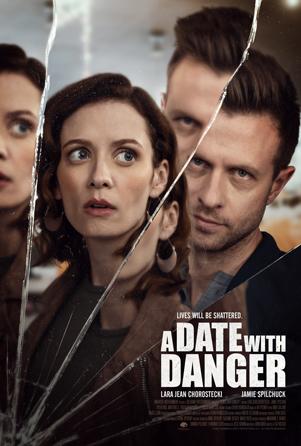
Lifetime Film Review: A Date With Danger (dir by Cat Hostick)


After a messy divorce, Nikki (Lara Jean Chorostecki) is ready for a new beginning! She does what every recently divorced woman in a Lifetime film does ….. she moves to a small town, gets a job in a trendy boutique, and starts dating a handsome man.

At first, it seems like everything’s perfect. The boutique’s owner, Liz (Ispita Paul), is not only Nikki’s boss but soon becomes her best friend and mentor as well. Nikki’s teenager daughter, Brooke (Jaida Grace), befriends Liz’s daughter, Anna (Kayla Hutton). While it is true that Liz’s relationship with her ex-husband, Dan (Matt Wells), is a volatile one, that just gives Liz and Nikki something to bond over. Finally, there’s Gavin (Jamie Spilchuk). Nikki thinks that Gavin is just the perfect man, even though Liz has her doubtts.

Then, one day, Liz vanishes. The police suspect that Dan could be involved but, when they discover that Liz has rewritten her will to leave the boutique to Nikki, they start to suspect that Nikki could somehow be involved as well. Dan seems like the obvious culprit but as Nikki starts to investigate the disappearance on her own, she discovers that everything is not how it seems….

A Date With Danger is a pretty typical Lifetime film. If you’ve ever seen a Lifetime film before, you know who kidnapped Liz and you can probably guess why. Ordinarily, the fact that Lifetime films are kind of predictable is actually one of their strengths. These are movies that you watch so you can yell back at the TV and wonder in amazement whether or not any of the characters have actually watched a movie before. That said, it was hard not to feel that A Date With Danger would have benefitted from a few more characters. When there’s only three suspects and one of them is eliminated by virtue of being the film’s main character, it’s fairly easy to guess who is going to turn out to be the guilty party. A Date With Danger even acknowledges this fact by revealing the identity of Liz’s kidnapper rather early on.

The title’s a bit misleading, as Nikki does go on a date but it’s hardly the center of the film and one never really gets the feeling that she’s in any danger during the date. That said, the title is a good example of Lifetime showmanship. Danger is a word that will always catch your attention. As well, it brings to mind the classic Mother, May I Sleep With Danger? Date With Danger, unfortunately, never reaches the heights of that classic exercise in over the top melodrama and that’s a shame. Indeed, Date With Danger is surprisingly subdued for a Lifetime film. It’s possible, of course, that I’ve been spoiled by all of the recent “Wrong” films as I spent most of Date With Danger wondering when Vivica A. Fox was going to show up and say, “Looks like you went on the wrong date with danger.”

A Date With Danger is a bit too low-key for its own good, never quite embracing the melodrama with the enthusiasm that people like me have come to expect from a Lifetime film. That said, the small town setting looked really nice and Jamie Spilchuk was well-cast as the enigmatic Gavin. Even if it wasn’t particularly memorable by Lifetime standards, A Date With Danger did its job efficiently.

Film Review: Romeo & Juliet (dir by Simon Godwin)


It’s a shame, really.

Romeo & Juliet, which as you can probably guess is a cinematic adaptation of Shakespeare’s classic play about the doomed lovers and the warring families, is one of the best films that I’ve seen this year.  Under normal circumstances, I would probably have it listed as the 2nd best film of the year so far, right underneath The Father.  Unfortunately, Romeo & Juliet did not receive a theatrical release.  Instead, in the United States, it was aired on PBS.  Though it was submitted for Emmy consideration, it was unforgivably snubbed when the nominations were announced earlier today.

And that’s a shame because this film adaptation of Romeo & Juliet is one of the best that I’ve seen, one that celebrates the story’s theatrical origins while also working as a wonderful display of cinematic artistry.

The production was filmed over 17 days at London’s Royal National Theater.  Because it was filmed at the height of the Coronavirus pandemic, there’s no audience.  Instead, the film opens with a small company of actors, all dressed in modern clothing, walking through the theater.  Director Simon Godwin emphasizes the emptiness of the theater and the almost eerie silence as the actors take their seats around a table and start to recite their lines.  We immediately recognize some members of the cast.  Jessie Buckley plays Juliet while Josh O’Connor plays the role of Romeo.  Adrian Lester is cast as the Prince while Tasmin Grieg plays Lady Capulet.  As the actors recite their lines, they stand up and start to move around the theater and, before our eyes, they transform from being actors to being the characters from Shakespeare’s play.  Suddenly, we’re no longer watching Jessie Buckley and Josh O’Connor.  Instead, we’re watching Romeo Montague and Juliet Capulet.

As the action moves to the stage, Simon Godwin continues to emphasize the eerie emptiness of the theater and the desolate look of the play’s ornate but still rather simple sets.  Even with the presence of the actors, the streets of Verona still seem as deserted as the streets of London and every other major city were during the worst days of the pandemic.  Watching the story unfold, it’s hard not to feel that Romeo and Juliet aren’t just rebelling against their warring families but they’re also rebelling against the sense of hopelessness that afflicted so many people in 2020.  Romeo and Juliet’s refusal to surrender their love takes on an extra poignancy when filmed against the backdrop of the pandemic.  At a time when many people were saying that civilization was collapsing and the world was on the verge of ending, Romeo and Juliet refuse to surrender their love.  If their world is going to end, it’s going to end on their terms.

As opposed to other cinematic adaptations of Shakespeare’s plays, this version of Romeo and Juliet does not attempt to hide its theatrical origins.  Instead, it embraces them, right down to the obviously fake moon that is lowered from the rafters whenever a scene takes place at night.  And yet, the actors give such good performances and Simon Godwin directs with such confidence and skill that the viewer still gets wrapped up in the story.  Like all good works of theater, Romeo & Juliet succeeded in convincing the viewer of two contradictory things, that they’re both watching a production in a London theater and that they’re watching the Capulets and the Montagues as they walk through the deserted streets of Verona.  This production of Romeo & Juliet is one that celebrate both the power of the stage and the power of cinema.  Perhaps most importantly, it celebrates the power of Shakespeare’s classic tale, with the mix of the actor’s modern costuming and Shakespeare’s Elizabethan language reminding us that great art is universal and timeless.

Jessie Buckley and Josh O’Connor both give compelling performances as the film’s doomed lovers, with Buckley bringing a good deal of inner strength to the role of Juliet while O’Connor wisely underplays the scenes that would tempt a lesser Romeo to go overboard.  As opposed to what we often see in lesser productions of this play, Buckley’s Juliet is never foolishly naïve and O’Connor’s Romeo never surrenders to shrill self-pity.  Instead, they’re two lovers who know what they’re getting into but who are still willing to take the risk, even at the most bleak of times.  When Buckley and O’Connor first show up in the film, walking through that empty theater, they look like themselves, two talented performers in their early 30s.  But, as they perform their roles, they transform before our eyes into Romeo and Juliet and it’s thrilling to watch.

One has to applaud the National Theatre for filming this production.  One also has to applaud PBS for airing it in the States.  But still, how I wish Romeo & Juliet had been given a theatrical release or, at the very least, a Netflix or Prime release!  This is a production that I wish more people had seen, a great work of theater, film, and art.

Romeo-and-Juliet-First-look-26.01.21-1-copy-1618268389

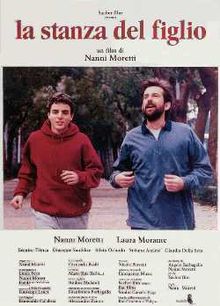
Lisa Reviews A Palme d’Or Winner: The Son’s Room (dir by Nanni Moretti)


With the 2021 Cannes Film Festival underway in France, I thought this would be a good opportunity to spend the next few days looking at some of the films that have won the Palme d’Or in the past.  As of this writing, 100 films have won either the Palme d’Or or an earlier version of the award like the Grand Prix du Festival International du Film.  Some of those films — like Parasite, The Tree of Life, The Piano, Pulp Fiction — went on to American box office success and Oscar renown.  Others, like 2001’s The Son’s Room, may have been snubbed by the Oscars but they went on to great success in their home country.  The Son’s Room, for instance, won Italy’s David Di Donatello award for the best film of 2001.

The Son’s Room is a film about a family trying to deal with an unimaginable tragedy.  Andrea (Giuseppe Sanfelice) is the 17 year-old son of therapist Giovanni (Nanni Moretti, who also directed) and Paola (Laura Morante).  Andrea, it is quickly  established, is an almost ideal teenager.  He doesn’t resent his parents.  He doesn’t get into any sort of major trouble, beyond stealing a valuable fossil as a part of a prank that goes wrong.  His parents know that he occasionally gets high but they also understand that it’s no big deal.  It’s just a part of being a teenager.

One day, when Giovanni and Andrea have made plans to go jogging, Giovanni gets a call from a patient who has received some troubling news and who needs to see him immediately.  Giovanni has to cancel their plans.  Andrea instead goes diving with a friend and, in a freak accident, drowns.  Giovanni, Paola, and and their daughter Irene (Jasmine Trinca) are left to mourn and to try to find some sort of meaning in Andrea’s death.

The Son’s Room is hardly the first film to be made about the untimely death of a family member.  In 1980, Ordinary People won the Oscar for Best Picture for telling a story about a similarly upper class family trying to come to emotional teams with the loss of a brother and a son.  What sets The Son’s Room apart from Ordinary People and other similar films is what doesn’t happen.  As opposed to what happens in so many other films about families dealing with loss, the death of Andrea does not reveal that his family was secretly dysfunctional.  His family doesn’t discover that Andrea was deeply depressed or that his death wasn’t a random accident.  Instead, the point of the film is that, even though the family was strong and even though Andrea was happy and had everything to look forward to it, he still died because sometimes, happy people die in freak accidents.  It’s not just dysfunctional families that suffer.  Even  a strong family struggles to deal with grief.

The film follows the family through the stages of grief.  At first, the family members fixate on imagining what life would be like if Andrea hadn’t gone swimming that day.  They resent Giovanni’s patient, even though the patient couldn’t have known what was going to happen.  They try to find someone to blame for Andrea drowning, just to discover that everyone did everything that they were supposed to do.  Andrea’s death was random, as death so often is.  Then, they’re contacted by a casual acquaintance of Giovanni, a girl named Arianna (Sofia Vigilar) and they’re finally given a chance to find some sort of meaning in what happened.

The Son’s Room is a deeply affecting movie, one that works because it largely eschews the type of melodrama that we’ve come to expect from films like this.  The film’s refusal to idealize, blame, or demonize any of its characters makes it a film to which anyone can relate.  It’s an honest look at grief but it’s also a film that earns the right to suggest that there’s no need to feel guilty about eventually moving on from sadness.  It’s a film that acknowledges that life can be random and scary but it can be pretty wonderful as well.

It’s an effective film, one that was reportedly a popular winner at the 2001 Cannes Film Festival, where its competition included Shrek, The Man Who Wasn’t There, The Piano Teacher, and Mulholland Drive.  (Fear not, Mulholland Drive still won the directing award for David Lynch.)  20 years after it was initially released, The Son’s Room holds up well as a look at both grief and the love of a strong family.

220px-La_stanza_del_figlio